Monthly Archives: November 2021

Russian public memory of Gulag and Terror will never be adequate. But that’s not forgetting

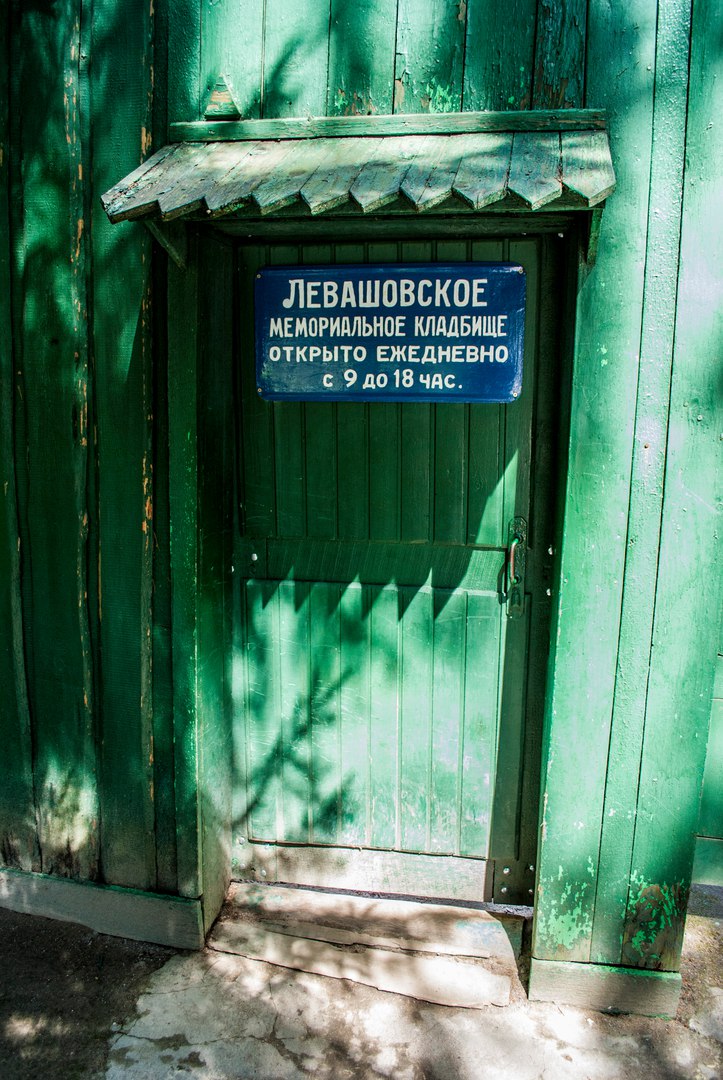
The entrance to Levashovo memorial site to a mass grave. Source: https://pilgrim-spb.livejournal.com/7887.html

People are mourning the imminent closure of the Russian NGO Memorial today and so am I. Yes it is a symbolic blow to a symbolic human rights organization. Yes, it does important work on Terror and Gulag victims and perpetrators as well as other work. It is best known for collecting copies of state documents about the Gulag that were first publically available in the early 1990s. However, it’s work was only every a drop in the ocean and could never substitute for a truth and reconciliation commission from the top, or even lustration, as was carried out in some other former communist countries.

For years, Memorial has been losing ground to other groups, including the Church. On the topic of the Terror, Putin even seems out of step with public opinion in his comments by calling it a ‘tragic period’. For most Russians today the operative word would be ignorance. Cultural practices of memory ‘are inadequate to these losses’, as Alexander Etkind writes [opens as pdf]. But are they anywhere? Indeed, in his next sentence Etkind remarks that in contrast to an ‘amnesia’ thesis, Russians remember Soviet terror all too well. One of the reasons being the enormous and expanding arbitrary punitive power of the state today. Something I wrote about in relation to cultural politics recently.

What has happened is that the Russian Foreign Agents Law has enabled the prosecution of any organisation that takes grants from abroad on paper-work reporting technicalities – a bit like if you’re late with your tax return, but with rather more serious results. Once on the statute book these laws take on a life of their own in a country where there are political entrepreneurs at all levels aiming to show ‘loyalty’, find enemies of the regime and root out foreign influence. They might not even be ‘political’ in reality – instead getting a Foreign Agent punished could get you a nice promotion or a posting in Moscow. And here is also part of the truth of the Stalinist Terror – some of it was about social mobility and the rise of a security ‘middle-class’.

But it’s exaggerating to argue, as Tanya Lokshina does today in the Moscow Times, that Memorial is the country’s moral conscience and the backbone of the human rights community. That might have been true in the past, but this view does not do justice to the many lawyers and activists who are not affiliated with any human rights org, but who defend individuals and organisations, sometimes at significant personal risk. These are often professional (and paid) services but they’re still human rights work (For example the Military Bar Association). And then there’s the new ‘political’ society actors that Regina Smyth and I are writing about along with Russian authors (book comes out next year). These actors make claims about entitlements and worthiness to the Russian state and engage in dialogue and pressure, as much as they articulate a ‘rights’ dialogue. This relates to a scholarly take on activism and contention that is suspicious of the ‘civil’ in ‘civil society’, especially outside of Europe and the US. It’s partly inspired by approaches like that of Partha Chatterjee on ‘popular politics’  in the most of the non-Euro-American world.

Similarly, Lokshina’s view perpetuates a dangerous misinterpretation about Russia – that there is an intellectual class in opposition to authoritarianism. This is obviously false on two counts. As I frequently remark in this blog, there’s nothing particularly progressive about Russian self-appointed ‘intellectuals’ or ‘intelligenty’, just as there’s nothing particularly progressive or liberal about the metropolitan bourgeoisie in Russia. By the same token, much ‘activism’, ‘resistance’, and indeed, thinking about a different future for Russia (even if only a little-bit-different) comes to me from ordinary people and organic intellectuals.

When it comes to the Terror, there is shameful ignorance, for sure. ‘They didn’t kill people that didn’t deserve it.’ Is something I hear all the time.  But when it comes to the Gulag, I don’t think this is something that’s in danger of being forgotten, nor of being instrumentalized by the Russian state. There’s so many millions of living Russians whose ancestors were arrested that it’s still a ‘living’ traumatic memory and an important part of oral history. There’s an excellent book edited by Khanenko-Friesen and Grinchenko on how oral history in Russia has made important contributions to the ‘pluralisation’ of society – providing different accounts of traumatic experience, including of the Gulag. In my experience, oral history is in no danger of failing to pass on the horror and injustice of Gulag victims. But with pluralization comes fracturing of meaning. Many times it remains personal, or is politicized in unpredictable ways. It’s perhaps naïve to think there could ever be a socially-shared meaning of these events and comparisons to Germany ignore how shallow the public discourse there remains, perhaps precisely because it is an ‘officially sanctioned’ form of remembering and ascribing blame and victimhood.

Maybe Putin is aligned with public opinion after all. Most people I talk to agree with his comments, perhaps more sincerely than they were intended. Remembering ‘does not mean settling scores. We cannot push society to a dangerous line of confrontation yet again. Now, it is important for all of us to build on the values of trust and stability.’ Legal recognition and symbolic compensation to the victims of political repression remains, if not more substantial recompense. A good primer on the issue of public memory is here, by Elisabeth Anstett and there are other important scholarly and documentary works by the SciencesPo Paris Mass Violence and Resistance Research Network.

EDIT: A Facebook commenter makes a valuable counter argument: “Memorial is an important piece of civic infrastructure, and one that has been much more welcoming to all sorts of political opinions and trends (inc on the left) than hardcore liberals. I am also not a fan of the moral conscience language, personally, but I worry that we miss Memorial’s contribution, too, here.

They have also collected info on what happened to the Left Opposition (https://socialist.memo.ru/) and as Ilya Budraitsksis mentioned, they were one of the only orgs to really try and investigate what happened in Oct 93 (and have held exhibitions on the topic which are fantastic). They host events where democratic left folk appear AFAIR, and obvs on human rights issues collaborated with people like Stanislav Markelov, too. That’s very brief and someone more knowledgable could jump in to give a fuller picture I’m sure, but I guess I have always appreciated that lack of dogmatism. I also think they have been incubators, in effect, of so many important initiatives – though your point in the article on those actors that don’t fit into this paradigm is well taken.
How to start a gender transition in Russia

This is a short post ‘answering’ my own question on Twitter: What is life really like in Russia for transgender people seeking to transition when they interact with the very ‘medical gaze’ of the state?

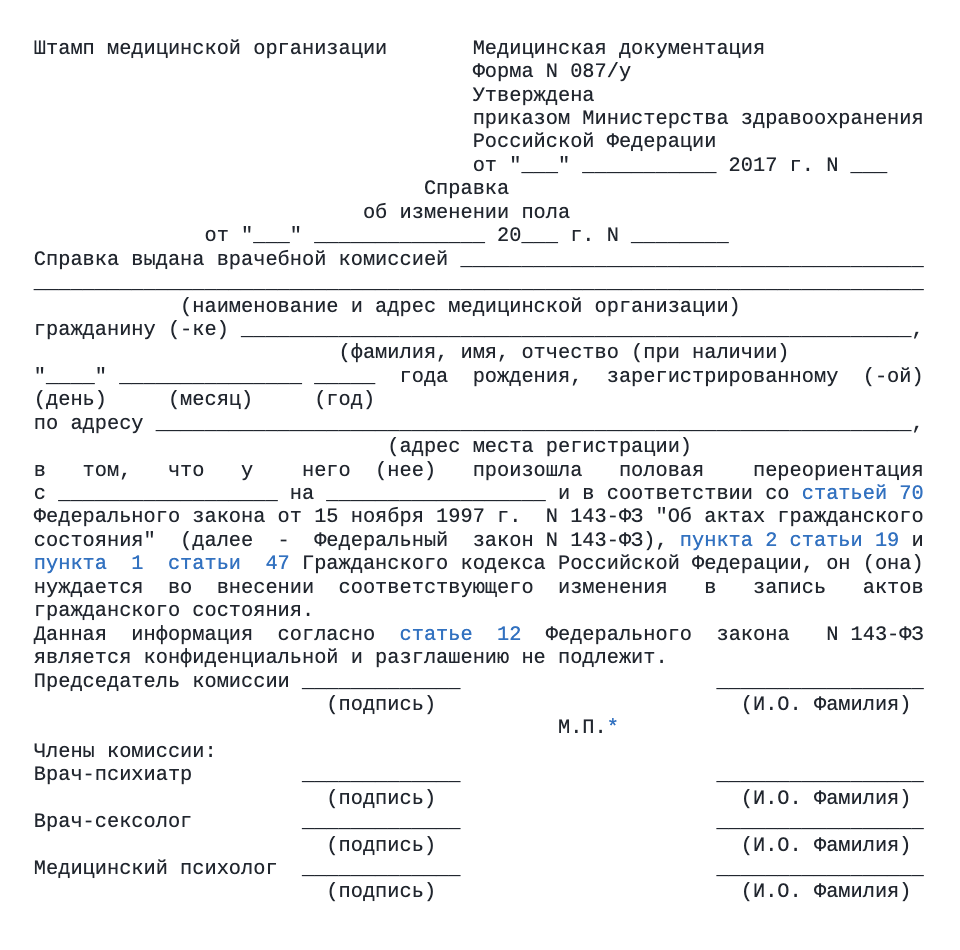
A medical commission certificate allowing an individual to proceed with ‘changing their sex’ [sic].

I didn’t get any answer on Twitter so I found out for myself (as far as possible). This is pertinent to my research for three reasons – one, I struggle to explain to my students the nuances of the gender-sexuality reality in Russia. Two, I have a research participant in Russia who wishes to transition. Three, I am writing a follow-up to a piece published this year on ‘everyday homophobia’ [opens as PDF – publisher version here]. That piece got some negative and positive feedback for obvious reasons. See two recent posts I made on this site about homophobia here and here from 2021. The original one from 2019 is here. My follow-up article will touch on the case of my research participant (though in a heavily anonymized and obscured way for ethical reasons).

A key reference point is the ICD standards, published by the WHO. The International Classification of Disease 11th edition is the latest health standard in effect from January 2021 (though unevenly adopted). This ‘update’ in defining disease is important because the 10th edition is 28 years old (though it was revised up to 2016). For a good sociology of science article on how the ICD works in relations to defining sexual health and disease (whose definition is wider than lay people normally use), see this article by Steven Epstein.

Why is this important? Because in the 10th edition of ICD, the diagnosis of ‘transexualism’ (including severe ‘gender identity disorder’ and ‘gender dysphoria’) was defined as a psychological disorder. In the 11th edition transgender identity is described in a separate section and not defined in psychiatric terms, although ‘gender incongruence’ is still a ‘diagnosis’ that a practitioner can make, albeit only in combination with another disorder. In Russia at present even the 10th edition is not consistently applied.

A resource in Russian is this article from Tinkoff journal that talks about the accepted terminology of ‘transition’, versus ‘sex change’. “Переход” not “смена пола”, and associated discussion. This article is useful because it outlines the various things one could do in Russia to transition, pointing out that not all are necessary for varieties of переход. 1. Psychiatric consultation, 2. Medical commission examination (пройти – to undergo) 3. Hormone therapy, 4. Storage of reproductive tissues, 5. Surgery, 6. Change of documents. The standard pathway in Russia at present is to get a medical professional to diagnose ‘transexualism’ under the 10th edition standard. This gives the person a ‘spravka’ – that all-important official document of Russian bureaucracy.

Now ‘spravka’ deserves to be left in Russian because while ‘official’ in some senses, these documents also contain within them the sense of an ex-officio judgement on a case where potentially more than one outcome is possible. In today’s Russia they are often equal to a clarification in a point of dispute/incoherence in a citizen’s encounter with some machinery of state. This summer I sought and obtained a spravka from my village administration head to clarify a legal question. My neighbour also applied (‘supplicated’ would be a better word). He did not get his spravka. No one can clearly define in terms of laws and regulations why. It’s a matter of ‘injustice’ for him. On the unclear boundaries between moral entitlements and legal rights in Russia, see Elena Bogdanova’s new book on complaints [academics among you – tune in our discussion of this book 2 December], or a book I just finished by Mark B Smith on Soviet housing.

It’s possible that the state clinic psychiatrist will not issue a spravka (for multiple reasons including ignorance (those living with lesser known/accepted chronic and psychiatric disorders outside Russia will find little difference here between their own experience and that in Russia), The article gives the following commentary:

“Previously, when more scientific medical ideas about transgenderness трансгендерность had not yet been formulated, a person was often refused help due to the fact that the patient did not outwardly resemble the person of the gender in which he positioned himself. It would be funny if it were not sad, because it is precisely because of this discrepancy that people with gender dysphoria suffer.”

So the recommended pathway is to pay for a private consultation. The cost of this is likely to be only a little more expensive than the state ‘spravka’ – between 25-75 Euros. This spravka in theory gives a person access to hormone treatment and/or the possibility of surgery

A next step is satisfying a medical commission: this is necessary to get a SECOND spravka – in order to get one’s legal documents amended. Interestingly, this second spravka can allow the legal ‘change of pol [sex]’ without undergoing actual medical/hormone intervention. [interestingly, in the article there’s some use of language that indicates ‘pol’ is not only used to mean biological sex, perhaps indicating the incomplete adoption of ‘gender’ as a word. Elsewhere the authors use the term ‘gender-marker’ in place of ‘pol’]. This second spravka is needed in order to approach ZAGS – the civil registration service that can then amend a birth certificate. You need four signatures on the second spravka (see the image above).

The short version: the coverage is patchy in Russia and typically blurs the boundaries between state and private sector: medical commissions may operate within private clinics. Commissions with sexologists don’t exist in some regions and even then are mainly in large towns.  As a private service, the commission may charge a very large fee – up to 600 Euro.

Moving on, we get to one of the most painful experiences of any Russian citizen – renewal of official documents. An interesting point here is that you can simply ditch your patronymic name – which of course inevitably marks gender. I’ve noticed that recently online forms have started to move away from obligatory use of patronymics, even for Russians. Another point is that you might need the services of lawyer to persuade ZAGS to allow you to change your name to a gender neutral one.

Meduza also have a useful article in Russian on this topic, including a description of the term ‘TERF’. There is a Moscow-based legal support project on VKontakte and Facebook in support of transgender people that seems active as of November 2021. They also carried out research on transgender people in Russia in 2016 and 2017. [opens as a pdf]. A more detailed link to case studies of transgender Russians who successfully and unsuccessfully ‘passed through’ medcommissions and so on is here.

Russia as vanguard: authoritarian governance in symbiosis with rent-seeking (final part VI in the series)

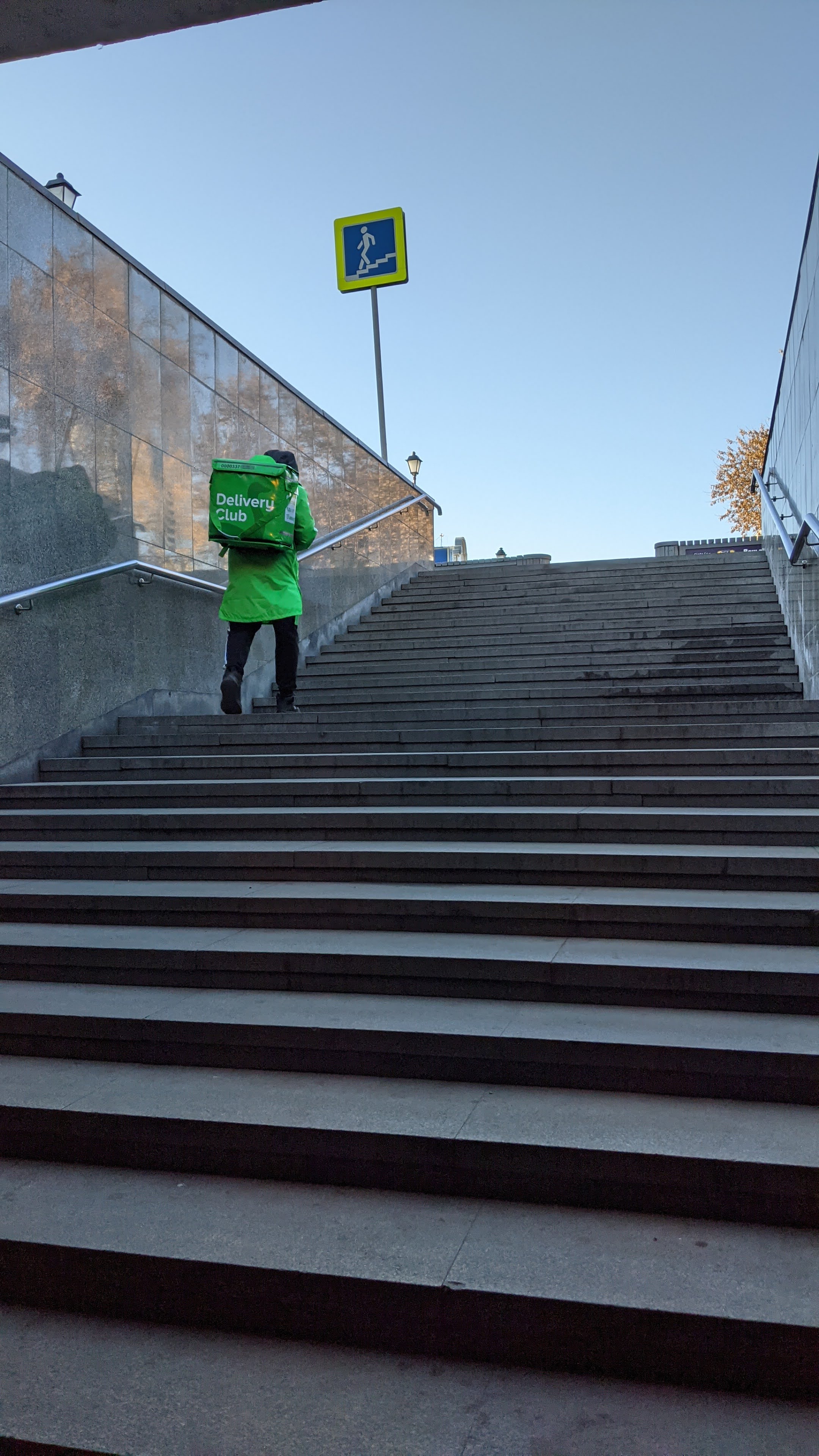
A lonesome food courier in demand during Moscow’s autumn 2021 lockdown

In the previous post I started to discuss the Russian experience of Covid and how it shows authoritarian governance as contributing to the accelerating implementation of surveillance practices.

What we often miss in this equation is a mutual benefit for states and corporations, including state-owned enterprises .  Using the control society, further pressures are brought to conform or internalize behaviours, practices and mindsets that entrench neoliberal thinking and allow the biopolitical to undermine any alternative ‘mechanisms of accounting’ (Hardt and Negri 2004: 148). Local researchers like David Hurma are right at the heart of Russian research that opens up this contradiction – we are supposed to internalize discipline, but this goes hand in hand with increased surveillance of work processes. This conjunction of state and capital power can be observed everywhere, but I want to end with two further brief examples of Russia as ‘vanguard’.

Russia offers a good example of the broad and deep roll-out of the surveillance state due to its particularly fruitful experience since the 2000s of aligned state and capital interests in extracting economic rents from populations. In just the most obvious example, the peppering of public (and increasingly private) highways with revenue-generating traffic enforcement cameras should be seen for what it is: an authoritarian technical solution to overcome limits on rent-seeking elsewhere. The plethora of these cameras puts every other developed country’s efforts to shame.[1] Truly, in linking the control society to rent-seeking it is as pure a public-private partnership you can wish for. A part of the proceeds goes to regional budgets, but the ‘take’ from private companies supporting the cameras’ operation is 15-times greater than their real cost.[2]

And of course, in case there’s any doubt, petty corruption by police does not end because of the camerification of roads, it just metastatizes into preying on goods vehicles and taxi-drivers instead of ‘ordinary’ motorists who are caught by the cameras alone (like me – I pay around 3-4 fines a year for road infractions that are almost impossible to avoid). I personally saw three bribes extorted from such drivers in just a dozen trips last month.

To move to a different scale – that of the individual, a similar process can be observed in the microproletarianization of workers such as food couriers and taxi-drivers. They, as elsewhere, are subject to algorithmic control for maximum extraction of surplus value within shadow corporations – see Andrey Shevchuk’s work on this concept [opens as pdf]. This happens of their own ‘volition’, via internalization of the demands of maximal self-exploitation and the delegation of all externalities to the individual and wider society (health costs, accidents, insurance, pollution) by the platforms themselves. However, here again we observe the imbrication of state (which owns bonds in such companies, allows them to operate as quasi-monopolies, and sustains anti-labour legal environments) and financial and political elites who own such companies. The scaling effect of microproletarianization of swathes of economic activity in Russia via concentration of market share is unprecedented outside of China.[3]

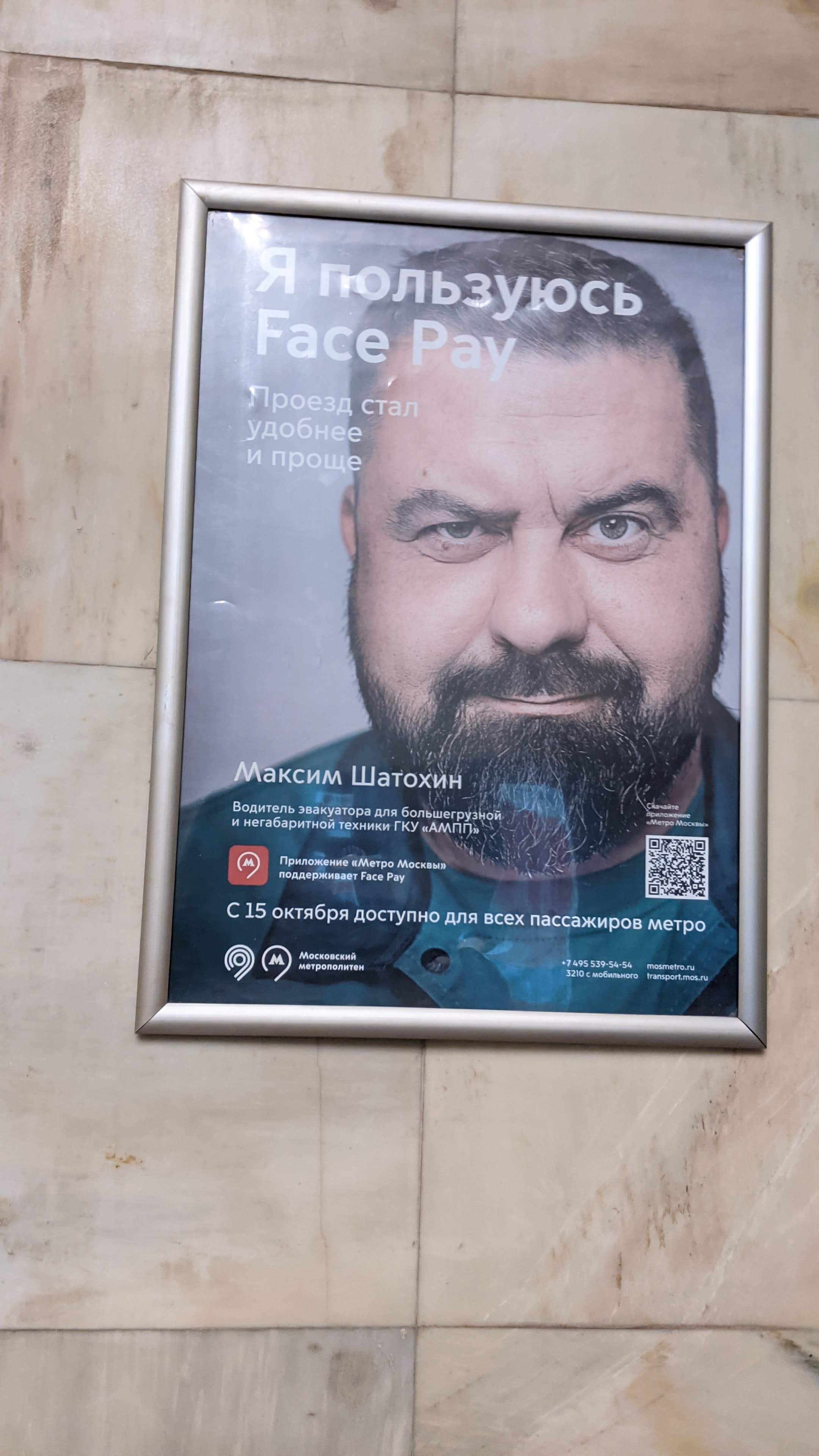
“I use Face Pay. Travel became more convenient and simpler”

In conclusion, we should view Russia as just another ’‘normal’ country, just not in the optimistic sense Daniel Treisman and Andrei Shleifer (2005) predicted: a middle-income country facing typical developmental challenges. Instead, I would contend that Russia is ‘normal’ in a ways that reflect its peripheral-as-vanguard authoritarian neoliberalism. Its characteristics are the dominant politics of “austerity” (the phobia of fiscal expansion, a continuously residualizing social state) accompanied by the other disciplining factor of real incomes falling over protracted time periods;  limited social mobility and the privatizing of educational opportunity leading to a small plutocratic class or caste; the expansion of indebtedness and precarity in the population; social reproduction as largely responsibilized and privatized; the expansion of the horizons of the rentier alliance between state and capital interests and a modest cementing of multinational corporations’ clout and the intensification of their role in the economy (a process actually accelerated by sanctions; see Gurkov and Saidov 2017). All watched over by the nascent digital control society.

Doug Rogers in his book The Depths of Oil (2016) cautions against ‘uniting things under the theoretical sign of the “neoliberal”’, but at the same time agrees with the need for a more serious ethnographic examination of how flexible labour regimes, SOEs and the neo-authoritarian state are linked. As I argue here these linkages intensify the politics of resignation on the part of ordinary people, at the same time as they are further incorporated into neoliberal (self)governmentality. The only limits on incorporation are certain incoherences of the state-capital accommodation-assemblage. As Rogers (2016) noted in his study of the oil and gas industry in the Urals, capitalist ‘incorporation’ via privatisation after communism does not necessarily mean coherence or coordination in governance and corporate identity. In addition, the term ‘incoherence’ is distinct from ‘hybrid assemblages’ (Ong 2006) or ‘parasitical co-presences’ (Peck 2004). ‘Deregulatory’ governance (in the sense that it lacks finality or fixity) inevitably and often unintentionally opens up holes in the fabric of economic and social relations.

Emergent practices both reinforce but also undermine economistic and bureaucratic rationality (Molyarenko 2016, Morris 2019) in what Ananya Roy (2009: 80) calls ‘law as social process’. Conjuncturally, Russia is notable for the continuing expansion of the informal economy in tension with state and capital surveillance – even though, as I have argued before, informality entails in part internalisation of neoliberal governmentality (Morris 2019). As a space for autonomism, non-market orientated exchange and labour its potential is limited. Nonetheless for imagining non-capitalist alternatives, its sheer size means informality is important. Informality in Russia should be seen as offering similar counter-hegemonic potential as that of models that derive from ‘deregulated’ and informal systems from below in other global contexts – such as horizontalism (Sitrin 2012), baroque economics (Gago 2017), and ‘insurgent’ citizenship practices. These are beyond the scope of my essay, but deserve equal attention in any approach that proposes an everyday political economy with a view to uncovering space for the emergence of ‘commons’ beyond state and market (Caffentzis and Federici 2014, Fournier 2013).


[1] The world speed camera database records 15,000 control devices in Russia – likely an undercount – the GIBDD counts nearly 19,000 devices in 2020. This is 9000 more than the next highest European state and four times the number in the USA and 20 times the number in Canada.   https://www.scdb.info/en/stats/

[2] http://lse-ikb.com/activities/blog/201-kuda-idut-shtrafy-gibdd. See  also https://www.rbc.ru/rbcfreenews/60334c9f9a79475eb6162883?from=from_main_9.

The road tax system known as Platon has some similar characteristics https://www.forbes.ru/kompanii/344145-platon-mne-drug-no-istina-dorozhe-kuda-uhodyat-vznosy

[3] For example, the most popular search engine in Russia also owns the main social network, the most popular email service, and controls both the main ride-hailing app and an increasing share of the food courier business.