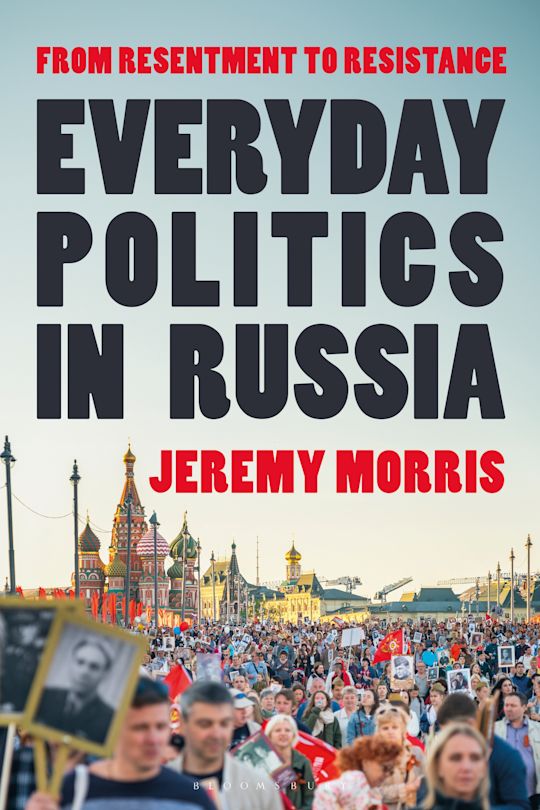
This is the third post about my book. The previous post is here.
That politics in Russia is mostly ordinary and local and insidious is an observation that partly builds on the insights of scholars like Samuel Greene and Alexandrina Vanke. One of my additions is that such a politics can contain traces of a social, and indeed, communitarian political drive. If we don’t like communitarianism then we can think of a more amorphous idea of social recovery, in particular the idea that a meaningful role in society should be available and that this in turn links to the idea of building and striving towards common aims for society made more or less explicit by state ideologies.
I avoid the term utopian, and I spend a lot of time arguing against the idea that this is a form of Soviet nostalgia, or that this impetus masks imperialist and great power instinctual needs among the majority of Russians. At the same time, I do take seriously that minority who express full-throated enthusiasm for maximalist war aims and for the Russian state-regime as it is presently constituted. But I only afford them the attention they deserve. What’s more striking are the common aims and desires of the majority. And this social-striving towards a common purpose (which contains different ideas of ‘the good’) is what connects both eco protestors and people like Felix. Felix is a composite of what are usually considered passive regime or war supporters. In a dramatic finale in the book, I represent the dialogue that is still possible today between those ‘patriots’ who collect aid for Russian soldiers and the people like Polina who are seemingly implacable opponents. In subtle and not-so subtle ways, their political articulations intersect in a defensive consolidation around recovery of the nation from social injury.
Defensive consolidation (author copy here) is a response I started writing about almost immediately after the start of the war. The potential stakes of the war bring into focus longer-term feelings of loss and hurt – glossed in the book as post-Soviet ressentiment. These include the loss of a master code, or Russian project, to replace the Soviet one that stood in for the absence of a meaningful Russian national identity. So, consolidation is this spectrum response, from pro-militarist *literal* defensive consolidation that is pro-mobilization, aggressive, to almost Tolstoian – the idea that the only viable social response is a return to rural forms of disengagement with the state which now have a quite a following in the form of eco-settlements, but which are no less a form of grassroots patriotism and striving for the social good than that of the jingo-patriots.
Much more typical is how the war pushes people to consider how to reignite the social imperative to care for Russia and Russians in the immediate now and here. And once again, modestly, I must say there’s nothing new in this argument – it is essentially derived from Samuel Greene’s insights about ‘aggressive immobility’. Nonetheless what I try to tease out is how the war pushes people together and then into forms of collective action – some of which become political demands – whether around receiving entitlements, to better infrastructure, to public safety, to environmental security, to socially-reproductive dignity. And of course, it’s not that the war suddenly means an uptick in visible politicking. Not at all. The point is that the war intensifies these socially-striving feelings that simmered away in hurt for a long time, particularly after the disappointment of the misnomered “Crimean Consensus” in 2014.
‘Okay’, I hear a thousand Russia watchers object, ‘but how can you make these claims that seem so far from what we hear from other researchers?’ That brings me full-circle to the initial purpose of the book as I had been planning it since 2018 – to give voice to the inherently and intensely political talk and action of ordinary people in Russia. Time and again, the level of the ordinary and the political were mutually exclusive zones of scholarly consideration of Russia. People were seen as cynical, apathetic, atomized, traumatized into consent, willing accomplices, imperialists, civilizationally-incompetent, harbouring nostalgic false consciousness, or at best authoritarian personalities. But so often these theses about Russian political values were detached from the reality I observed in the 16 years of fieldwork relations and the ten years prior to that that I lived among people who would later become some of my informants. And that’s not to say that any of these theses are entirely wrong or not based on empirical evidence. Just that that evidence was mainly second-hand and very often informed by an out-dated common sense. Proactive, prefigurative, personally and locally networked negotiation around political issues of all stripes is present in Russia, even since 2022. Most of the book is about the period from 2014 onwards, but wherever I talk about events before the invasion of Ukraine, I try to update and fill-out the picture without romanticizing and without omission.
So, a book about politics in Russia is itself political in how it decides on what counts in the representation of public values, political action, and scientific knowledge about a society. Big politics is never divorced from small or quiet politics. The political content of ordinary people’s lives can have a huge influence on so-called big politics. Just look at failed military mobilization in 2022.
But with my political decision to give voice to small politics with big resonance, comes difficult ethical decisions. Even before the full-scale war I knew that I would have to obscure the identity of some interlocutors. This means that some of the evidence I present has to be schematic, superficial even. To try to address this problem I created composites – combinations of real people and real interview materials and observations. This means that individuals themselves cannot easily be identified. This is especially important because the majority of people I talk to remain active doing what they do in the book – antiwar activities, municipal political campaigns, eco and labour organising. Nonetheless, I do my best to give extended interview excerpts, and a lot of observations taken from the field, not only in Kaluga region where I focus on a few villages and towns, but also Moscow and my very diverse set of interlocutors from further afield.
To conclude, I argue for better and more serious attention to the ordinary and the micro-scale. Even in a high compliance regime like Hafiz Al-Assad’s 1990s Syria, Lisa Wadeen was careful to put ‘authoritarian’ in inverted commas – why? Because performative support never equated to belief or action on the part of Syrians. Just as authoritarianism needs ‘peopling’ if we are to understand today’s limits of consent to rule and tomorrows possible refusals, so too does a critical political economy, and that is also part of the book though beyond the scope of any short introduction. So, in concluding I argue that politics can’t be fully grasped without the inclusion of the people-scale, and the same is true of the economy. So important to understanding sources of support and opposition to the war, the economic needs an ‘everyday lens’, as various feminist and critical scholars have proposed. Following on then and acknowledging once again the work of others on these topics, there are chapters in the book about municipal infrastructure renewal and the right to the livable city, labour migration and garage economies. I aim to bring to the fore the way economics and politics can’t be disaggregated when it comes to the kind of active, striving life observable, even if it is played out in a landscape dominated by a feeling what Alexander Vorbrugg has described as Russia’s ‘slow violence’.
 Postsocialism
Thanks, postsocialism.
Insightful and original perspective on grassroots politics in Russia.
LikeLike