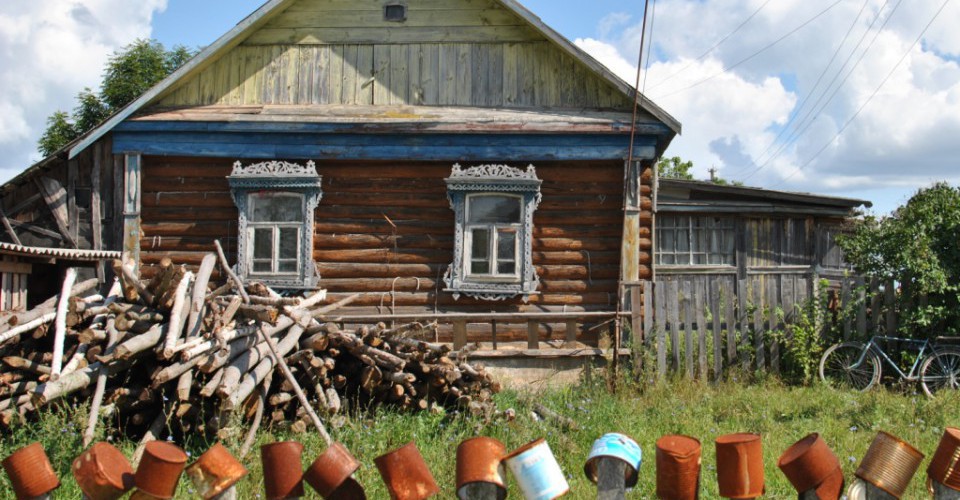


Blogging as ‘public dissemination’ for academics is largely a thankless task. Indeed, a blog like mine arguably brings more costs than benefits to me professionally, while to do it properly takes time. From early 2022 onward I blogged a lot more for obvious reasons and 2022 saw more visitors to this website than before or since. However, looking at the stats for 2025 has cheered me up as they are consistent with 2024 and only a bit lower than 2022 when I was arguably ‘overposting’. Certainly, with long-form scholarly blogging, less is more.
Late 2025 saw an interesting shift in my audience. China is now my secondary audience after the USA. In 2026 I estimate it will become my primary one based on current trends. For some reason unknown to me, in November 2025 I had three times the number of Chinese visitors as those from the USA. The last month (December) has been similar. By contrast, in June 2025 over 50% of my audience was in USA and UK, with 0.3% of readers coming from China. Russia is a tiny and waning fraction of my audience (1.6% in December), although many may be using VPNs there. Not sure what to make of all of this.
What is this blog for? I remain committed to writing things that are a mix of current affairs, more academic stuff, and promoting non-anglo writing/research about Russia. I do this not for any particular audience or for career purposes. In comparison to similar blogs, my audience seems healthier and bigger – the downside of WordPress versus Substack is that few people want to register for the former so my subscribers count is low on WP.
So what are my highlight posts of 2025?
I kicked off 2025 with a theme I would revisit in the blog and in other publications: the divergent economic experiences of the war within Russia. I feel like I’ve been repeating myself since then saying similar things to this:
“many focus on a mistaken idea that a significant segment of Russians are feeling economic benefits, or that wartime spending means real gains (as a share of GDP) for labour (i.e. that gains are redistributive).”
Since then, I have become a dedicated fan of Nick Trickett’s work. He features a lot in my writing about this and I look forward to his 2026 book.

In January and February I summarised some of Denys Gorbach’s book on the Ukrainian working-class. I recommend this book!
Then in March-April when my Bloomsbury book came out, I made some posts about its content, reusing its original working title: the micropolitics of desire. Here’s the final paragraph of the first post:
“It turns out that the common assumption to dismiss small acts, incremental thinking, and prefigurative desires is self-fulfilling. If we don’t believe in even a small politics and changes, then there will be no change. At the end of my book, I visit a housewife in a small town in Russia. At Eastertime in 2024 she gives out to neighbours some home-baked cakes decorated with icing. The icing spells out the abbreviation “XB”, which can be interpreted as representing ‘Christ is Risen’, or ‘Fuck the War’. Some of the cakes were more explicit than others. Why did she did this? Because she needed to acknowledge others and be acknowledged by them as a political actor.”
In April I blogged about the possibilities of a ceasefire. Here’s the opening of that post:
“Tl/dr: yes, Russian society wants an end to war, but the core hawkish elite craves recognition, at least for Crimea and thinks maximalist extraction from Ukraine via Trump is possible.
Firstly, it’s important reiterate a point I’ve made many times: treat public opinion measurements in Russia by Levada, Vtsiom and others with a healthy dose of scepticism. They of course, do give us a picture of what most Russians perceive to be the politically correct answers to the questions they are being asked. Even Vtsiom admits that only a small minority of people polled believe that their participation in surveys allows them to express their opinion. This figure is 22%. And only 18% of people believe that the authorities are interested in their opinion. This has significant implications for how seriously we should treat surveys as a reliable barometer of public sentiment.
What’s more helpful is tracking over time the proportion of people who answer that they would support withdrawal from Ukraine without reaching Moscow’s military goals.”
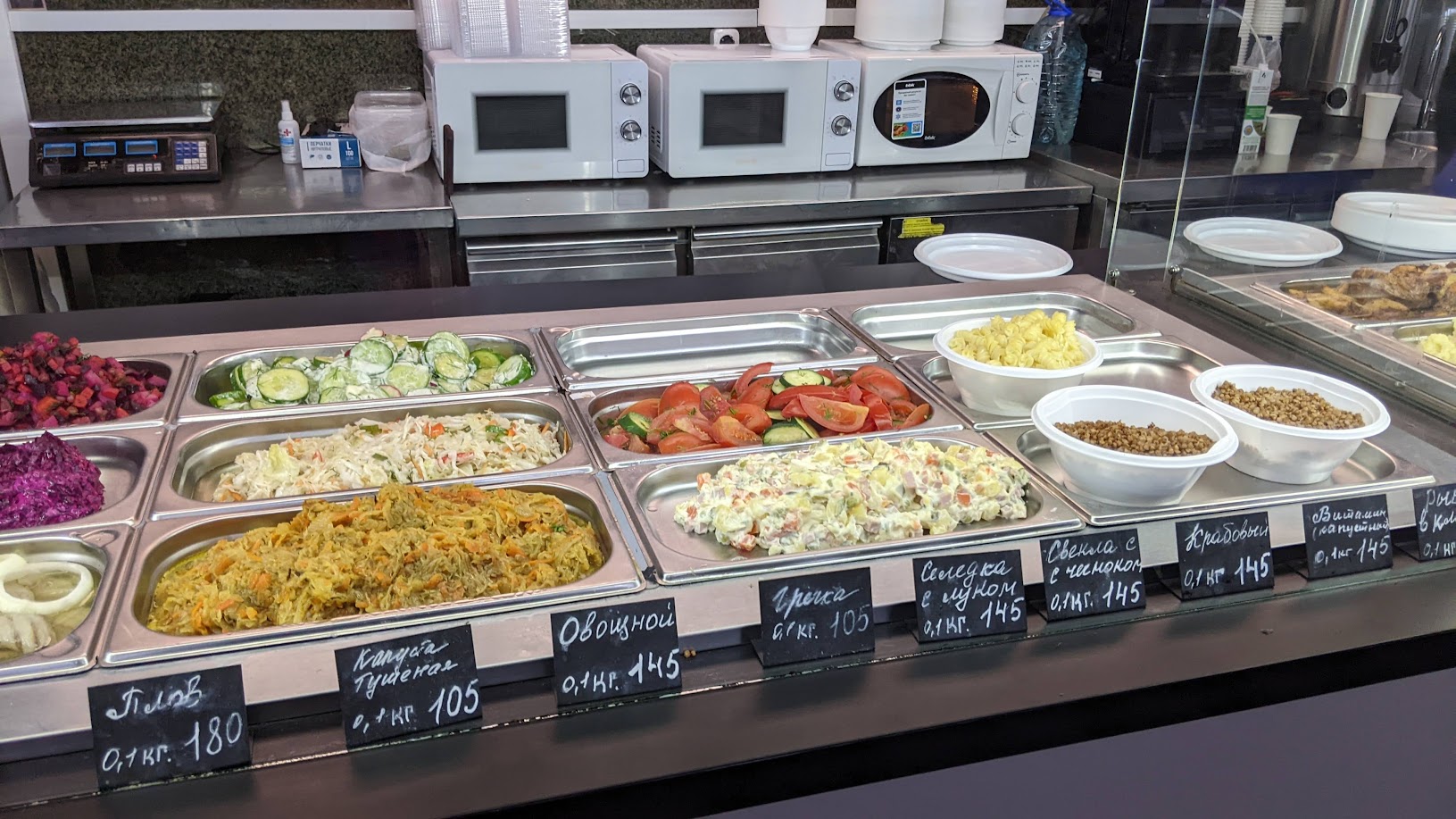
I made a conscious decision not to ‘liveblog’ my fieldwork* in summer 2025. But I did condense some of my experiences in three blogs in September and October about ‘comfort-class authoritarianism’, about the spiritual values of the booze shops, and about the loneliness of the long-distance war supporter. These were among my most read posts of 2025 – particularly the war supporter one. In that post I talked about how
“irritability should maybe get more attention as a social barometer in contexts like the one Russians are facing. Irritability pairs with cognitive dissonance, but in turn that dissonance expresses a form of knowledge and a rational reflection of (constrained) material circumstances. That things are not as they are presented. […] Normalization – even in a war – has to be reproduced (and become validated) socially somehow. But think for a minute and this isn’t really possible for a lot of people in Russia.”
*for legal purposes I must state that I did not carry out any employment-based or remunerated fieldwork in 2025.
I then in October and November posted a critically supportive review of Marlene Laruelle’s new book on Meaning Making under the Putin Regime. This review was informed by some of the fieldwork posts of the autumn where I argued that Putinist ‘ideology’ as legitimation is very much over-egged for structural reasons in the West.
But my most popular post published in 2025 was done as something as an afterthought. Not a week goes by without a colleague (usually one who has never conducted fieldwork) or journalist questioning my ‘intellectual credentials’ in a way that few other social scientists experience. I did a long (as yet) unpublished interview with one of the biggest broadsheets of a large European country and again, despite the very sympathetic journalist, I was required to rehearse an argument justifying ethnography, and anthropology, more broadly. This is tiresome. So I finally did a quick run down of why ethnography is a perfectly normal and respectable method in the social sciences. It really is something that in the year of our Lord 2025 I had to rehash some basic social research textbook stuff and even my own powerpoints from the 1990s on this. I guess I just interact a lot more now than ever before with folks for whom post-positivism never really happened, and of course with the mainstream in Russian social science which pines for the days of Talcott Parsons c. 1959.
“Of course, it’s no coincidence I mention Mills’ example of polls and voting behaviour. For this is still the main way that social reality in Russia is translated and presented for Western audiences. Ethnographers would assume that data are never just ‘gathered’ like fruits in the wild but actively produced in the interaction between the researcher and the human interlocutor. This is what Anthony Giddens refers to as the ‘double hermeneutic’. It means that stating we are ‘objective’ in recording our observations is insufficient grounds for claiming we have generated reliable ‘facts’ and knowledge. The main challenge to positivistic versions of social science (incl. polling) is ‘interpretivism’: we can only know the social world we study via the meanings attached to it by human subjects. Because meanings are different and changing, and contested, we can’t keep a firm hold on to the idea of a stable external social ‘reality’.”
In total I wrote 20 posts in 2025, including this one. A few posts older than 2025 remain more visited than ever. By far and away the most visited is a post from April 2023 criticizing the methodological nationalism, western-centrism, and blinkeredness of some ‘decolonizers’.

My favourite post of the last year was exactly a year ago today – 30.12.2024 – in response to yet another émigré researcher justifying survey methods – in my view because of the inherent methodological and political biases of many social scientists from Russia who are ‘radical pessimists’ and very comfortable in their new roles serving the neoconservative foreign policy community of the US.
“Snegovaya tries to put to bed many of the criticism I and (much better qualified) others have made of the usefullness of survey polling in Russia. She paints a depressing picture, arguing that young people increasingly align with conformist and conservative views due to exposure to propaganda and the normal process of ageing. Further, she emphasizes the view that alignment with regime narratives due to cognitive dissonance is the norm. She also argues for a strong ‘rally-round-the-flag’ effect in Russia.”
And now to what didn’t I post about (and no promises I will get to these topics in 2026, mind!). I didn’t post about how I tried to use AI to help my research and ended up with a completely hallucinated set of Russian scholarly and newspaper citations! I didn’t post about the cottage industry in research – one which I think is intellectually dishonest – which paints a black and white image of youth indoctrination in Russia (though I did podcast about it). I did not post about what the anglo-left gets right and wrong about the domestic causes of the war (basically a review of all the coverage in Jacobin and New Left Review since February 2022). I did not post about the best book on Russia-Ukraine politics in English (teaser). I did not post about the three main emergent elite groups in Russian politics and their corresponding publics which will all outlast the war (teaser number two). I did not post a summary of the good empirical work being done in Russia by sociologists (feels bad). I did not post about many interesting fieldwork findings, for example regarding wartime corporatism. Maybe I will have time in 2026, or maybe not!
Finally, there’s the question of what platform is the future for this kind of ‘content’. Is it in the walled garden with maximum control on WordPress or is it on the new cool-kids’ Twitter: Substack? Is it in abandoning content based on the written word for the podcast or videocast world? Peer-reviewed scholarship is dying yet the new online world of research blogging struggles to be born. Let me know your thoughts so I can at least plan which extractive monster, I mean ‘platform’, to pay my rent to.
Here’s the Substack, because some prefer that: https://open.substack.com/pub/postsocialism/p/my-2025-roundup-the-old-world-is?r=o206x&utm_campaign=post&utm_medium=web&showWelcomeOnShare=true
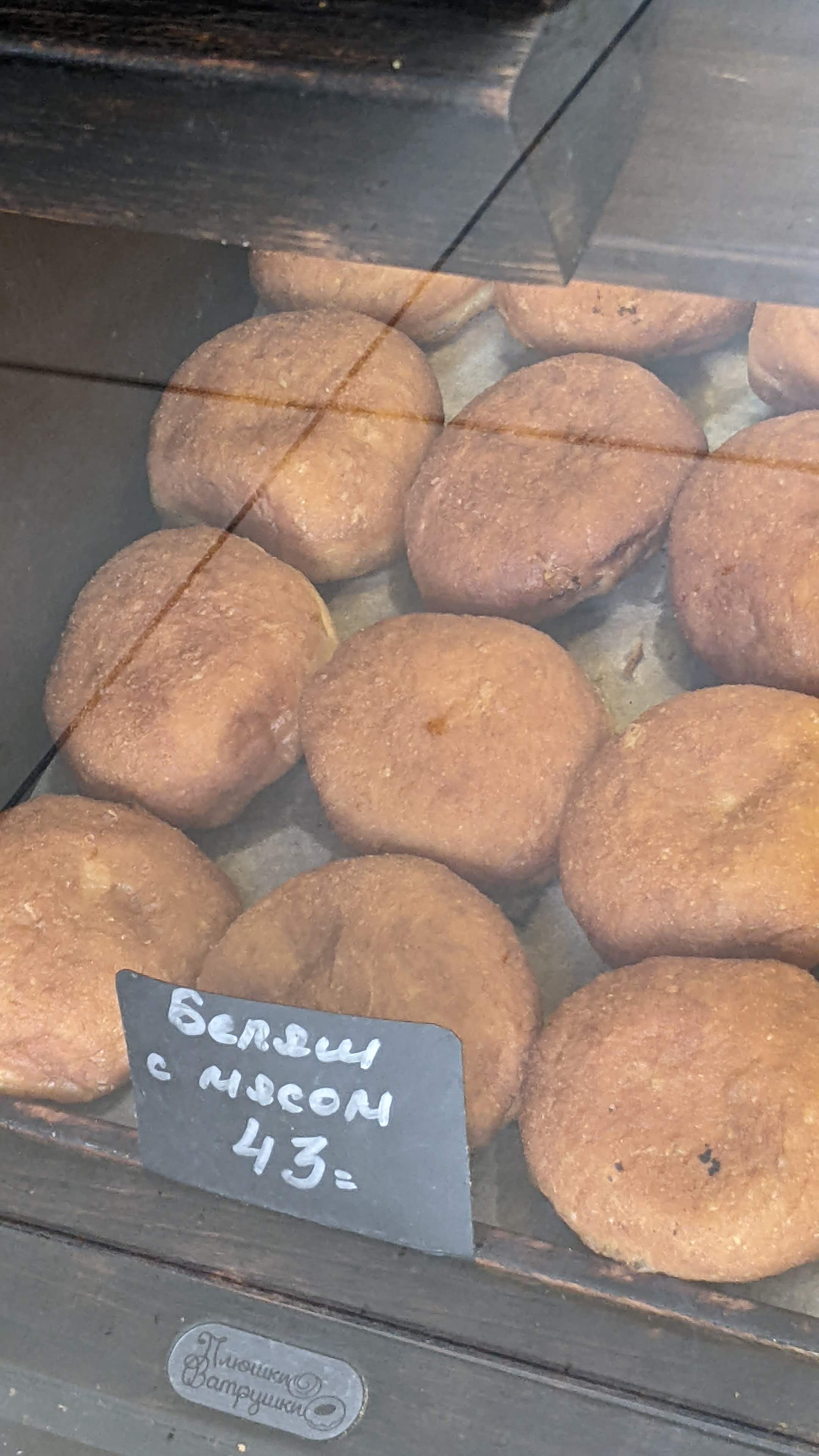
Here, have a meat pie to celebrate the end of 2025 – only don’t inquire too closely as to its ingredients:
 Postsocialism
Happy (extremely belated) New Year!
Regarding your final question about which extractive monster is the future:
Thing is, everything everywhere is saturated. But…
If you care most about getting your ideas out there, focus on Substack. It’s optimized around pushing content to subscribers and it’s got the eyeballs.
If you care most about getting your face out there, prioritize videocasts. But also be prepared for a different caliber of commenter.
If you appreciate the occasional mimokrokodil, choose WordPress. AFAIK you have to have a Substack account to comment on a Substack post.
If aesthetics matter to you, choose WordPress. Substack is a bit barebones. Homepages support recommended blogs and links, but AFAIK widgets are more limited than on WordPress.
If you want to do hop between formats, go with Substack as it has built-in support for all.
Personally, I prefer to follow you via WordPress, but that’s partly because I’m already part of the ecosystem and have been for a long time. If I ever close my site, I’ll just resubscribe to you via Substack. I’ll wager, though, that if Substack really is as popular as everyone’s saying, you’re getting more new subscribers there. So maybe that’s where you should focus.
Really, your choice of platform boils down to what’s most important to you – volume or visibility or control.
LikeLike
This chimes with what I feel about WordPress/Substack. Also, I feel that probably Substack is already too mature a platform for someone like me to get a foothold and build audience. It certainly is continuing to emerge as a kind of half-way house between what was Medium and Twitter. Not sure there’s a space there for my work unless I’m willing to offer endless hot takes.
LikeLiked by 1 person
Good point regarding the twitteresque. WordPress might be the way to go then.
LikeLike