Author Archives: Jeremy Morris

Unknown's avatar

About Jeremy Morris

I write about Russia as an academic. But don't let that put you off.

К нерепрессивной повестке региональных исследований

[Russian version of this recent post]

Война подрывает академические рутины. И это неплохо. Она дает нам возможность переосмыслить экстрактивные практики, отменить (преодолеть) методологическую и дисциплинарную замкнутость, деколонизировать эпистемологические основания наших знаний. Война заставляет нас столкнуться с проблематичностью того, как знание становятся публичным.

Вот мой список этих проблем, дополненный рядом примеров.

  1. Экстрактивные практики производства знания увековечивают несправедливость. Среди прочего я имею в виду невидимость труда местных экспертов, исследователей и партнеров. Как обеспечить равное внимание знаниям, производимым на местах?
  • Ученые сплошь и рядом возделывают собственные делянки в науке. Внимание публик и медиа к войне заставило некоторых коллег освободиться от дисциплинарной узости, преследующей академию. Как закрепить и усилить этот тренд? Расширяя эпистемологическую палитру профильных журналов и демократизируя доступ к ним авторов из негегемонных сред?  Развивая научный активизм и осваивая соседние журнальные площадки?  Включаясь во все новые  научные ассоциации и поддерживая гетерогенные связи?
  • Деколонизация» начинается тогда, когда парадигмы, спроектированные в соответствии с западными дисциплинарными традициями и структурами, ставятся под вопрос изнутри ключевых институтов производства знания на местах. Как поддерживать критические разговоры, стимулирующие развитие и расширение  интерпретативных перспектив акторов?
  • Что делать с доминированием публичных интеллектуалов во взаимодействии экспертных сообществ с медиа? Могут ли они приносить общественную пользу  или для начала должны повысить свою квалификацию , чтобы не повторять банальности и дискредитированные истины? На что опираться для улучшения взаимодействия исследователей, еще не утрAтивших связи с полем, с медиа?

Используя эти положения в качестве отправного пункта для дискуссии, я бы хотел сделать ряд пояснений по каждому из них.

Инклюзивное производство знания взамен экстрактивного:

Этические вызовы, с которыми сталкивается исследователь и эксперт по Восточной Европе, нарастают по мере нарастания трудностей со сбором эмпирических данных в России (и Украине). В статье для PostSoviet Affairs опубликованной в 2022 году, я говорил об усилении невидимости местных проводников, фиксеров и сборщиков данных. В качестве примера я приводил случай исследовательницы из Центральной Азии, изучающей ‘contentious politics’. Ее знания локального эксперта были извлечены Западными коллегами, но ее саму так и не упомянули в качестве равноправной участницы процесса производства знания. Я сам вынужден признавать, сколь соблазнительно было бы представить полевые находки  как свои собственные достижения, тогда как на деле они исходят от моих собеседников, которых не принято рассматривать в качестве коллег. И хотя лабораторные естественные науки печально известны своей иерархичностью и автократичностью, почему бы нам – поинтересуюсь я провокативно – не перенять у физиков и химиков практику расширения числа соавторов за счет включения в их число широкого круга участников? Почему бы не позаботиться о систематическом выявлении оснований и обеспечении видимости органического интеллектуализма?

Освобождение заложников собственных делянок:

Недавно я мониторил последние выпуски профильных журналов, относящихся к трем смежным предметным областям, чтобы отследить, как осмысляется и контекстуализируется интересующее меня понятие. Тут я получил лишнее подтверждение тому,  что все осознают, но никто не любит говорить: допустимо не знать о параллельном рассмотрении темы или концепции в соседних дисциплинарных полях, а стимулы к выходу в эти области отсутствуют. Относительная восприимчивость профильных журналов по Area Studies, как мне представляется, недостаточна для того, чтобы решить эту задачу. Может, стоит объединять усилия для распространения информации способами, превосходящими и преодолевающими модель дисциплинарного журнала ХХ века? Или же проблемой становятся институциональные барьеры встающие на пути сотрудничества, выходящего за границы кафедр и факультетов?

Деколонизация как эпистемологически открытая исследовательская практика:

Деколонизация знания отчасти связана с отрывом от собственных делянок. Только через налаживание диалога между разными интеллектуальными традициями и эпистемологическими позициями мы можем избежать старых ловушек, когда исследование завершается эссенциализацией. Есть хорошие примеры междисциплинарных дискуссий, которые дают старт этому обсуждению. Но как их оживить и распространить? Я думаю о двух свежих примерах.

Майрон Аронофф и Ян Кубик описали ловушку, в которую раз за разом попадают социальные исследователи, когда приписывают местному населению цивилизационную некомпетентность в силу своей либеральной разочарованности результатами 1990-х На постсоветском пространстве.  Есть и другие примеры. Гульназ Шарафутдинова и Сэмюэл Грин, развивающие сходную критику, используют междисциплинарные находки в области социальной психологии для оживления политической социологии. К чему нам стоит отнестись серьезно, так это к вернакулярному знанию, позволяющему заполнить пробелы в социальной науке, которая все еще остается слишком натуралистичной (исходит из того, что мы все в игре), слишком позитивистской (утверждает, что большие данные генерируются на основе сведений от дезагрегированных единиц) и слишком однонаправленной (верит, что теоретизирование ведется сверху вниз – из перспективы глобального, национального, регионального контекстов (Aronoff and Kubik 2013: 281).

Более последовательную фокусировку на вернакулярном знании можно найти в работе Дэвида Оста (2018) о полупериферийных инновациях. Ост утверждает, что деколонизация означает дрейф исследователей от открытия Востока для себя к переосмыслению его происхождения как источника идей. Его примерами восточно-европейских инноваций стали бренды автономии  (рабочее самоуправление «Солидарности») и переизобретения гражданского общества В. Гавелом, вернувшим «активное гражданское сопротивление» Западу. Потом Запад теоретически осмыслил это сопротивление, исходя из того, что Восток еще может порождать инновации, но никак не систематизировать и теоретически осмыслять их. По мнению Оста, этот ре-импорт оживил антигосударственный здравый смысл на Западе. Здесь должны быть упомянуты два инновационных движка, доставшихся нам от Востока и  доминирующих сегодня в социальной реальности. Это консервативный поворот рассерженных правых радикалов и полигоны для испытания неолиберальных технологий. Ост размышляет о том, что если радикальные правые в конце концов одержат большую победу на Западе, то это произойдет отчасти благодаря работе, идущей на полупериферии.

Перспективные компаративные исследования (в отличие от исследований сопоставительных) избегают нормативного позиционирования «эта (политическая система) похожа или не похожа на ту (превосходящую политическую систему)» (Schaffer 2021). Сравнение – это инструмент натурализовать наши собственные категории, не признавая этого. Категории, которые могут ввести нас в заблуждение относительно уместности объекта в другом контексте. Классический пример – то, как антропология в 1970-е годы поставила под сомнение всю концепцию «родства», на которую прежде опиралась в сравнении политических порядков. Оригинальным перспективным компаративистом был Макс Вебер, соположивший капитализм и религию.

Работа по выявлению стратегических сходств может помочь нам в дальнейшем продвижении. Ее отражение можно найти в использовании мною Делеза для объяснения детерриториализованного политического активизма в современной России. Кажется, что подход, ориентированный на работу с гетерогенностями, едва ли прояснит что-то в политической жизни авторитарной России. Однако, делая ставку на перспективизм, я доказываю обратное.  

Содействие коммуникативному обмену

Ученые часто слишком заняты для того, чтобы общаться с журналистами, или избегают контактов с медиа из страха, что те опозорят их, переврав слова и выдернув отдельные цитаты. Исходя из моего опыта,  журналисты по большей части открыты для обучения и подстройки под эксперта из академии. На деле они куда менее экстрактивны, чем сами ученые. Куда более проблематичной представляется мне возросшая  самоуверенность публичных интеллектуалов, высказывающихся по вопросам, где не признают своей зависимости от источников, на основе которых они делают свою заключения. Здесь у меня есть не конкретные предложения, но наблюдение:  освещение войны, по крайней мере то, что ведется по-русски, приобретает все более узко конфессиональные рамки.

Возьмем, к примеру, международную конференцию «Страна и мир» в Берлине в ноябре 2024 года. В ней участвует несколько передовых ученых, но основную массу составляют эксперты, промышляющие аналитикой в медиа.  Некоторые из них делают большое дело, выступая в качестве популяризаторов. Однако докладчики, имеющие научно обоснованные подходы  к изучению современной России, остаются в меньшинстве и едва ли будут услышаны. Можно ли лучше вообразить актуальное состояние взаимодействия между учеными и журналистами? Как полагаете? Популярное знание сегодня необходимо, как никогда. Но должна ли политическая наука о России быть популярной и востребованной в силу того, что рассказывает нам то, что мы хотим услышать (и уже много раз слышали)? Или она все же должна содействовать становлению у аудитории альтернативного социологического воображения, не гарантируя эпистемологического (идеологического, аффективного) комфорта?

Trump and the Russians (vernacular politics again)

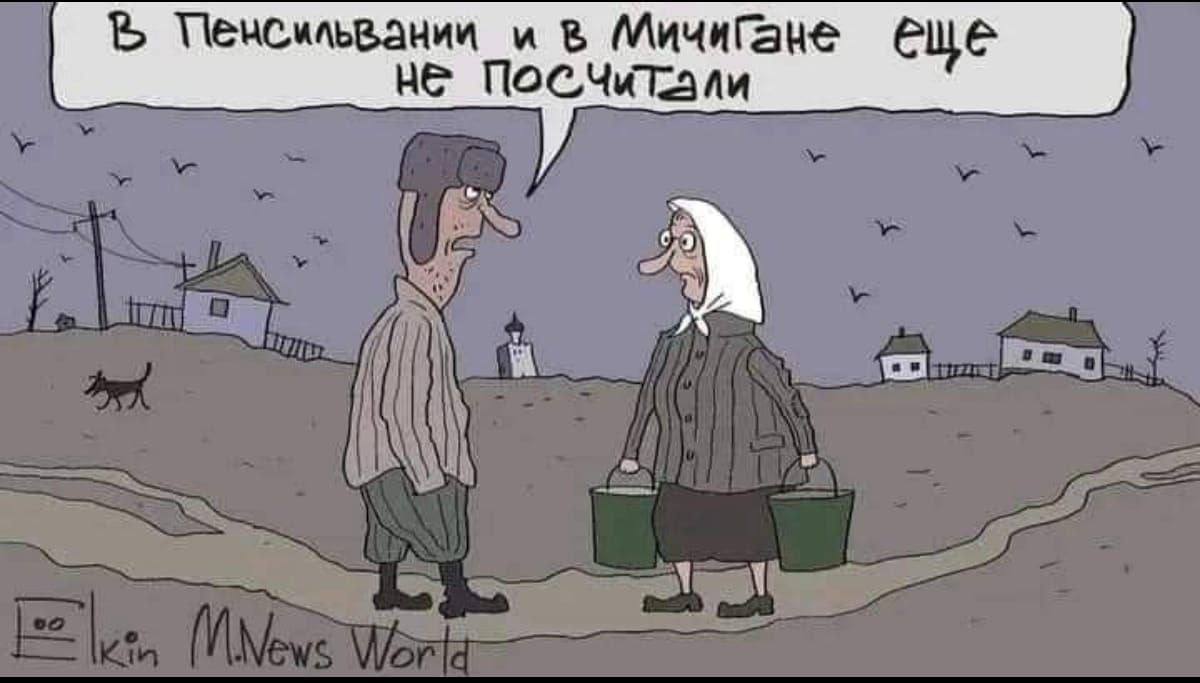
old memes about the count in Michigan are best

In 2016 I asked: what have Trump and Russia got in common? At that time there was a debate – still visible – about a revolt against ‘the elites’. But electorally, there has never been a consistent way for Russians to express similar sentiments – although in 2016 I tried to show how the many Russians still meaningfully cast ‘social’ protest votes. One observation at the time was the ‘insiderness’ of figures like Nigel Farage, Trump, and indeed Zhirinovsky, was irrelevant to voters. Such figures channelling of impotent and inchoate anger was much more animating. While Russians still have no meaningful way of expressing discontent electorally, surely, in 2024, emotional resentment as a global political vernacular fully come of age.

More than a few people note the misunderstanding about Trump’s undeniable ‘charisma’ among a swathe of people who’d like to stick it to the ‘man’. Or among those who misguidedly think he can improve their material lot by deporting illegals and imposing tariffs. What’s surprising was the number of observers puzzled by the Biden-Harris punishment for an economy than on paper is supposedly booming. This for me is indicative of the tyranny of ‘presentism’ as revealed in the pundit’s favourite type of analysis. We’ve had growing consumer spending, growing wages, falling inflation – surely voters would thank Biden-Harris for that? What this ignores is that people have a feel for the longer-term rises in inequality and increases in economic insecurity, the very real hollowing out of the middle-class, not to mention lower-middle. There’s good evidence that the latter are core to Trump’s support. Russian (not quite) parallels too: the big war spending by the government hardly fools people. They know that they are net losers from the war. And this sentiment is growing ever larger.

Another point of connection (between vernacular politics in Russia and America) is the substitution of muscular foreign policy in the absence of meaningful policies addressing domestic crisis. In the liberal Twitter bubble we see endless expressions that Harris lost part of her ‘base’ because of her business-as-usual attitude towards Israel. But more open-ended group studies have found that, unprompted, some opted for Trump because of anxiety about the USA’s loss of prestige and ‘face’ in the world. Rings any bells in the Russian context? Is this another ‘resentment’, or an ‘anxiety’? Is it a sublimation of domestic fears? Or deep-seated imperial thinking? It’s getting to the point where we might have to unpack these words a bit better.

In my 2016 work I pondered the paradox of ‘outsider-loyalty’ identity among Russian voters. This was my ethnographic version of the ‘Crimea consensus’ view among my political science colleagues. That people might harbour deep resentment about elite corruption, social decay, and the hegemonic discourse of social Darwinism that reigns in domestic politics, but that geopolitical victory over adversity had the potential to consolidate diverse people around the symbol of the leader. But this consolidation, like the current Ukraine-war-based one is hollow and brittle because it offers no satisfaction beyond the immediate distraction from worldly cares.

Another topic back in 2016 was that of competing ‘structuring feelings’. If the political histories weren’t so different, it might be worth comparing Russia to the Jacksonian world-view of middle- and lower-class Americans that is argued swung Trump’s 2016 and 2024 elections. Jacksonian tradition is not an ideology, but a political ‘feeling’ of self-reliance, opposed to big federal government and in favour of the 2nd amendment. It’s a ‘folk belief’ opposed to the other Jeffersonian and Wilsonian traditions when it comes to foreign policy, channeling atomized and lonesome feelings about a hostile world (of ‘chaos and darkness’) in which the US needs to act tough merely to maintain its position. If you object to this rather gauche characterization of Americans, pause for a minute to think about the broad strokes painted about Russian historical (or maybe even ‘genetic’) ‘disposition to tyranny’ that a respectable scholar near you is pitching as we speak.

But we can turn this around another way. Stories about national values are also about who has the right to tell them. And we’re all affected by the fact that Americans tell the best stories about themselves. Jacksonians are ‘rugged individualists’ and all about ‘self-reliance’. Surely that’s a good thing? Once again, turn that around and it maps uncannily on to a set of values that scholars have imposed on post-1991 Russians but negatively: focussed on a ‘cult of the winner’, ‘aggressive pursuing of self-interest’, seeing ‘personal independence as the new ideology’. Or, from a different school of thought, Russians are like Trump voters in another deficient way: they are ‘unable to adapt to liberal values’, lack empathy for those unlike them, are cultural incompatible with contemporary modernity and all its complexities.  Does every (post-) imperium have its intersectional politics that allow domestic hurt to be sublimated into resentment of the Other? Or are so many of these deficiencies actually symptoms of our own search for a too simple answer to the question: ‘why Trump?’ Like in Russia, America must just have the wrong kinds of people (ne tot narod).  

[I could say more about the Jacksonian tradition and foreign policy: skip this if you like. As one observer pointed out back in the Bush era: it is not so much that the US public takes pride in the overwhelming superiority of firepower at the disposal of the United States, it needs to see it demonstrated from time to time. ‘Realist’ emotion is also a thing. (Proxies in Isreal don’t cut it – if anything they make it seem like the MIC is not acting in the interests of the United States). If it’s not clear what the point of a digression about US ‘values’ is, then perhaps you haven’t been paying attention to what this blog is about.]

The inadequacy of an interpretation of Trump as ‘white working-class’ identity politics writes off more intersectional and structurally feeling-based approaches relating to resentment. Again, Arlie Russell Hochschild’s Strangers In Their Own Land: Anger and Mourning on the American Right (2016) should be getting renewed attention. Hochschild links anti-establishment voting and ‘deep story’ – internalised emotional value systems. Deep story for lower middle-class white Americans, for Hochschild, is a story of resentment of being overtaken by Others, of exclusion and neglect. Hochschild followed this up later with another book more squarely focussed on Trump voters.  

To revisit a point made in 2016: whether we’re looking at Russia or the US, we must move closer to the social worlds that quantitative social science largely fails to adequately represent.  How to plot the intersection of ‘unfairness’ and ‘prospectlessness’ as a representation of resentful values? These are, essentially, the Hochschildean ingredients for Trump’s (mercurial) popularity. Whatever else he is, he can channel dark desires of the moment.

Dominant narratives attempting to explain the war continue to focus binaries (pro- or anti-war) which continue the ‘pro or anti Putin’ tales we’ve been subject to for a long time. But thinking again about the adequacy of interpretation, unfairness and prospectlessness, the long-term structuring of feelings of hurt are intersectional ‘deep stories’ which animate the Russian people in my research. And war only exacerbates them. More on this soon.

Towards non-repressive research in Area Studies

This post summarizes a forthcoming talk at a roundtable on Russian civil-society/indi media/researcher dialogue.

The war disrupts academic practices and that’s a good thing. It give us an ‘opportunity’ to rethink extractive practices, to undo methodological and disciplinary siloing, to decolonise our epistemological foundations (how we know what we know). It forces us to confront problems of how knowledge is made public.

Here’s my summary of the problems and a set of examples follow after.

  1. Extractive practices perpetuate injustice – these include the invisible labour of local scholars, researchers and ‘partners’. How to equalize the attention given to knowledge produced locally?
  2. Siloing. Public and media attention to the war has jolted some colleagues out of the disciplinary narrowness that plagues academia. How to sustain this? Pluralising area journals? Activist scholarship (camping on lawns of other journals)? Entryism to scholarly associations?
  3. ‘Decolonization’ begins when paradigms produced to fit Western disciplinary traditions and structures are questioned by the those themselves who work within those core institutions. How to sustain critical conversations that promote insider interpretive perspectives?
  4. What to do with the dominance of public intellectuals interfacing with media? Can they be leveraged for good, or do they require better ‘education’ to avoid them repeating banalities or discredited ‘truths’? What is a sustainable basis for better communication and learning between researchers – who may still have good contact with ‘the ground’ in Russia – and media?

The four points serve as a starting point for discussion, but here I offer some elaboration.

Inclusive, not extractive knowledge production:

This ethical challenge is made starker by the more difficult sourcing of empirical data from Russia (and Ukraine). In my Post-Soviet Affairs article from 2022, I talked about the invisibilization of local gatekeepers, fixers and data gatherers. I used the example of a Central Asian scholar working on contentious politics where her local knowledge was extracted, but she was not credited or legible as a producer of knowledge. Even in my own work I am forced to reflect on how tempting it is to present insights from fieldwork as spontaneously my own when in fact they come from interlocutors who are not ‘colleagues’. Provocation: while lab-based science is notoriously hierarchical and autocratic, why do we not adopt the practice of having more co-authors on papers? Why shouldn’t organic intellectualism be made more visible systematically?

Digging out the prisoners of Silos:

I had an uncanny experience recently when I was reading back issues of journals in three related subject areas to look at how a particular concept is discussed and contextualized. It reinforced for me a topic no-one likes to talk about, but everyone is aware of: how publication practices in particular mean that one can be blissfully unaware of a parallel treatment of a topic or concept and that there are no incentives to engage with it. It seems to me that the relative receptiveness of Area journals is inadequate to the task. Is the answer to argue more collectively for dissemination solutions that surpass the twentieth-century model of the disciplinary journal? Is the problem deeper – in the institutional barriers to collaboration across departments, faculties?

Decolonization as epistemologically-open research practice:

Decolonizing knowledge is partly related to desiloing. Only by better dialogue between intellectual traditions and epistemological positions can we hope to avoid falling into the same traps where research ends up essentializing or emphasising deficiency. There are good examples of interdisciplinary discussions that kick this discussion off, but how do we invigorate these and spread the word. I’m thinking of two recent examples.

Myron Aronoff and Jan Kubik in 2013 wrote about how social science repeatedly falls into the trap of imputing civilizational incompetence to populations because of the intellectual bias in research due to the political disappointments of liberal researchers since the 1990s. There are plenty of other examples. Gulnaz Sharafutdinova and Samuel Greene have developed similar critiques and tried to use interdisciplinary insights to reinvigorate political sociology (they draw much more on social psychology). A common call seems to be for vernacular knowledge to be taken seriously as filling the gaps of a social science that is too naturalistic (supposedly we’re all game-players) too positivist (only the disaggregated individual builds bigger data), and too unidirectional (theorizing ‘down’ based on larger contexts: globalized, national, regional) (Aronoff and Kubik 2013: 281).

A more systematic focus on this kind of approach to vernacular knowledge can be found in David Ost’s writing (2018) on ‘semi-peripheral’ innovation. Ost argues that decolonising means research moving away from ‘discovering’ the East for itself, instead taking seriously its origin as a source of ideas. He notes also that semi-periphery is a nested concept – W Ukraine is semi-periphery for Poles, and so on. His examples of Eastern innovation are brands of autonomism (work self-management), the reinvention of civil society via Solidarność and V. Havel, who ‘returned’ ‘active civic resistance’ to the West, which of course then theorized it (because the East is allowed innovation but is not systematic or theoretical). In Ost’s view, reimportation reinvigorated antistate ‘common sense’ in the West. Relatedly there are twin innovation engines bequeathed to us from the East which dominate social relatiy: the radical-conservative resentful Right, and the spatial idea of neoliberal weapon-testing ground. Ost muses that if the radical Right eventually does win big in the West it will be in part thanks to the work of the semi-periphery.

‘Perspectival’ rather than juxtapositional-comparative research avoids the normative positioning of ‘this (political system) is like or unlike that (superior political system)’ (Schaffer 2021). Juxtaposition is to naturalize our own categories without admitting it. Categories that may end up misleading us as to the relevance of the object in the ‘other’ context. The classic example is how anthropology ended up questioning the whole concept of ‘kinship’ in the 1970s, even though it was the ordering concept of comparison of political orders up to that point. The original ‘perspectival’ comparativist was probably Max Weber on capitalism and religion. In short, analogical reasoning might serve us better moving forward. This is reflected in my own use of Deleuze to explain deterritorialized political activism in Russia today. This approach seems unlikely to elucidate the situation of Russian politics, but I argue it does so thanks to perspectivism. Schaffer’s example is instructive in Ost’s examples: political loyalty in the East is not just about transactionalism – that’s an American comparative imposition that ‘may not travel well’.

On furthering communicative exchange:

I’ve written before that academics are often too busy to talk to journalists or fear being misrepresented and that this is a shame. In my view, journalists are in general open to learning and adjusting. They are, in fact, less extractive than academics themselves. What is more problematic is the inevitable tendency of public intellectuals to become overconfident and start to hold forth on matters they are not qualified to comment on. Similarly, the extractive work is visible here too, when public intellectuals do not acknowledge their reliance on particular sources, especially when they themselves have no claim to knowledge in an area. On this last point I have no real suggestions, beyond the observation that war coverage at least among Russophones, increasingly looks narrowly framed. Take the example of Strana i Mir (Country and World) international conference in Berlin in November 2024. Now, a number of cutting-edge scholars, but the greater weight of analysis is unequivocally that of the entrepreneur pundit class.  Some of these do a great service in popularising science, but the few speakers with evidence-based social science approaches to contemporary Russia will be hard-pressed to be heard. Could a discussion between scientists and journalists be better imagined? You tell me. Popular science is needed more than ever before, but should it be popular because it tell us what we want to hear (and indeed have already heard many times) or should it aim to instil an uncomfortable sense of alternative sociological imaginations in the audience?

What can we learn about Russia-Ukraine from the longest interstate war of the twentieth century?

March 1986. Revolutionary Guards celebrate their victory after capturing the al-Faw peninsula. One year later the Battle of Basra would end in a bitter Iranian defeat.

I’d been meaning to read this book for a long time and finally got around to it. I’ve repeatedly said that historical parallels are problematic, but what the heck, here goes. Iran-Iraq, from 1980-1988, saw a regional war between unequal powers threaten to spiral out of control, involved energy dependence as a weapon, a lot of miscalculations about opponents, ideological blinkeredness, swinging fronts and stalemate, and human-wave attacks after one belligerent’s technological base for waging modern war was almost exhausted.

Pierre Razoux’s 2015 book is really readable, though a little weaker on Iran because he focusses on the better sources about Saddam’s reasoning, thanks to the US-captured audio cassettes spanning much of his time in power. It’s genuinely refreshing to read an author who is not afraid of confronting his own country’s rapacious and cynical mercantilism in the war, and the horrible cost to French citizens. One can hardly imagine so penetrating an account from an Anglo-Saxon pen. Indeed, the Americans come out of it the worst – completely rudderless and reactive in their responses to Iraqi aggression, and also Iranian desires for recognition to cement their new revolutionary regime.

What else? While 8 years is a long time to be at war, Razoux is able to show how each side had to reinvent its approach to waging war again and again and that the technology, and also metis, of war had become unrecognizable by the end – not least thanks to the flooding of the battlefield with newer Western tech and newer aircraft. At the same time, the old chestnut of generals fighting the last war is given stark illustration in the way the Iraqis partially drew on a 1941 plan by the British as a model for their initial (not very successful) ground assault. So despite the war beginning as a poorly coordinated mid-20th-century regional conflict and ending as essentially a 21st-century war (because of the entry of modern aircraft and ballistic missiles) belatedness is a key experience: not being up to date on all the resources needed to fight a big war; not considering current economic reality; dismissing basic military theatre requirements like air superiority and logistics; not having the right weapons in the right place at the right time. Some of it does ‘recall’ the disastrous Russian improvision of 2022 after the rush to Kyiv had failed.

Along with belatedness (and attrition of capacity which led to devolution of the Iranian effort into human waves) there is incompetence and purposeful ignorance: failure to acknowledge on the Iraqi’s part the force needed for the task of invading Iran (a massive country with lots of natural obstacles like mountains), a lack of coordination (Iran’s obtuseness regarding its superior airpower), delegation in a negative sense by Saddam (‘just get on with it and bring me results’). Saddam was remarkably ignorant about how his campaign would destabilize the region and affect the US and USSR, even if he was smart in blackmailing and playing Arab countries. However, this ignorance pales in comparison to the Americans’ massive intel failure and woeful response: they were completely wrong in seeing Iraq as Soviet-aligned; the US had no Iranian expertise (no one with Farsi or knowledge of the revolution was allowed anywhere near policy) and misunderstood that the Iranian revolution was not just about religion (ideology) but about state-making and regional recognition. At every turn, Western powers made belated decisions based on poor rationalization, political expediency, and worse.

Like Putin, Saddam quickly realized he’d bitten off more than he could chew. His recourse to terror and war crimes backfired and the war ‘made’ the Iranian post-revolutionary nation and state. A state that is quite capable of reproducing itself today and still strongly shaped by the experience of that war. Of course, it would be a mistake to map Russia-Ukraine onto Iraq-Iran for many, many reasons, not least size, religion, geography, outside aid, etc.

Razoux concludes with something we should pay attention to much more than tech, strategy, tactics, esprit de corps, or demography. After 500+ pages of battles, intrigue and horrible accounts of child soldiers and chemical weapons, he curtly turns to the reader to say that what’s of cardinal importance is none of that stuff, but instead the economic war. Only when Iran’s capacity to make money from oil was significantly degraded (they had no access to credit), and only when Iraq was mortgaged to the hilt and also threatened with significant economic repercussions, did the conflict end. Pretty much where it started.

Once again, most historical comparisons are downright dodgy. However, the Iran-Iraq war certainly led to the destabilization of the whole region and untold damage to both countries whose societies became exhausted by war. Certainly, Charles Tilly was right: “war makes the state”. (what he actually meant was that war transforms states in quite unpredictable ways) But which one is Ukraine? Is it Iraq – which transitioned to a hyper-modern, and quite effective militarized state where even the leader was in some respects beholden to the army? [spoilers, the US couldn’t put up with that, even as it had recently turned a blind eye to Iraq committing some of the worst atrocities since WWII]. Or is it Iran? Steeled in blood, collective suffering defines national identity and leads to consolidation around what is a factionally-divided revolutionary government (and not universally legitimate at that). Iranian domestic politics today is still the politics of a war that ended 36 years ago.

Childfree for me, but not for thee; Putin as Saddam; overheating Russian economy; the end of Area Studies as we know it

Parents of quadrobers, ‘kvadrobery’, are to be fined according to proposed new laws

Another post this week reviewing some goings-on in the Russia-sphere.

Biopolitical entrepreneur Katya Mizulina and head of the ‘Safe Internet League’, who is the daughter of politician Elena Mizulina – herself a pioneer in socially conservative legislation –  was asked at an event by a brave journalist why she rails against Western ‘child-free’ ideology while not having any children of her own. ‘Child-free ideology’ (sic) is just the latest addition to the not-very convincing attempt to consolidate Russian identity around the message that ‘we’re the protectors of the real Judeo-Christian tradition unlike the decadent Ukraine-nazi-supporting West’.

My new book (announcement forthcoming) opens with a look at the imposition of a new kind of civics lessons on school children. The very first ethnographic scene features a middle-aged male Life Skills and Personal Safety teacher who implores a room of teenagers to read the bible and recant of their pro-Western attitudes. Let’s just say these unwelcome distractions from the curriculum by unqualified and under-prepared instructors don’t go down very well with children and parents alike. Unlike the new social conservatism, there is an audience for patriotic education classes, where they are accompanied by genuine social and economic resources like preferential places at university. Young people are just as entrepreneurial as politicians in using political agendas in education to get ahead.

I’m not much of a fan of podcasts, but the Meduza Russian-language ones are often hidden gems. Like this talk with Maksim Samorukov about the informational isolation and blinkered world-views which ‘informed’ Saddam Hussein’s decisions to invade Iran and Kuwait. In making links to Putinism, Maksim stressed how subsequent endless uprisings were easily put down, even after military defeat… And that society’s dissatisfaction just isn’t part of regime calculus once elites get used to the idea of supposedly limited wars as a substitute for domestic programmes and legitimacy.

Maksim also emphasized the irrelevance of ‘new’ or contradicting information for these leader-types. Revelations that to you and me could challenge our priors (like the effect on US foreign policy of an election year – very topical) is merely incorporated into the existing world-view of the isolated person (Mr Putin, or Saddam). This podcast prompted me to finally start reading this book about the Iran-Iraq war. Some day I’ll do a post on the parallels between that war and the current Russo-Ukraine conflict. An interesting note about Saddam’s decision-making: some argue we have a really good idea of this because he recorded himself so much on audiotapes which were subsequently captured by the Americans.

There’s so much being written right now about the looming problems in 2025-26 for the Russian economy and I can’t fit it all into this short post. In 2019 I discussed neo-feudalization of Russia’s political economy (“people as the new oil”). Many others have takes on this, from the idea of a new caste-like society with state bureaucrats as an aristocracy, to a more nakedly transactional ‘necropolitics’ where blood is exchanged for money (death payments for volunteer troops). Nick Trickett’s piece in Ridl argues against the ‘hydraulic Keynesianism’: that military spending boosts economic growth. Demographic decline and war are like a Wile E. Coyote cliff-edge for growth, a precipice towards which the Russian war stimulus merely accelerates the economy. Monetary policy like a 20% bank rate, ‘cannot tame what’s driving inflation’.

One of my informants on a very good blue-collar supervisor wage played ‘jingle-mail’ recently and moved back in with his parents. He’s 39 with no children and working in a booming manufacturing sector. He’s also working double-shifts to keep up with demand, but there’s a human limit to over-working in place of capital investment. Nick’s piece points to the stagnation in productivity in Russia.

Another sign of the endless war to make citizens fiscally-legible to the state is this story about ratcheting up penalties for Russian drivers who obscure or hide their number plates. Traffic cameras are, to an absurd and unpopular degree, relied upon to raise tax revenue in Russia. I’ve written about this many times on this blog.  The details this time are not so important, but the story illustrates a number of things – penalties are still pretty low for all kinds of avoidance and ‘resistance’; Russians are ingenious in making their fiscal radar-signature as small as possible; the technocratic approach (blocking an AliExpress webpage selling revolving number plates) of the government is wholly ineffective because the state is losing capacity due to the drain of the war.

Does this shorter and more frequent posting by me signal a trend (a move towards the style of Sam Greene’s excellent, short-form weekly posting)? We’ll have to see. Though the news from my Dean of Faculty that she proposes closing all language-based Area Studies degrees may indicate I will have more time on my hands in the future. At Aarhus University we’ve developed unique programmes where students attain a high competency in one language out of Russian, Chinese, Japanese, Hindi, Brazilian Portuguese, and then can go on to a Masters degree where they are team taught by experts beyond their region. So a Russian student gets exposed to expertise in Chinese politics, Brazilian environmental studies, and so on, regardless of their continuing focus on a single language. We also just began to expand Ukrainian studies and have two Ukrainian scholars working with us now. ‘Dimensioning’ [Danish Orwell-speak for cuts to staff and student numbers] of Area Studies will likely mean no language teaching in these areas in the future. We live in a time of narrowing horizons for students, unfortunately.  

I leave you with this advertisement for war-time intimacy from Rostov: ‘If you’re at war I can provide a service to support you. We’ll communicate as if we love each other and support each other. Photos and video for an additional fee. Agreement about price subject to personal negotiation.’

Russian expert media monitoring – September 2024

This will be a short review (well, actually not short) of some Russian media commentary (A. Pliushev, E. Schulmann, N. Zubarevich) and my reactions. If you think this kind of post is useful, let me know. It is often the case that informed discussion in Russian language on YouTube never really cuts through to anglophone audiences for Russia content. I don’t ‘endorse’ the persons or positions of any of these public intellectuals and journalists, but this kind of content is important for non-Russian speakers to get access to.

Virtual Autocracy?

At the beginning of September there were simultaneous elections of various kinds throughout Russia. The results were not very interesting but the strong push to ‘virtualize’ voting as much as possible is. Why not continue to rely on the physical and very visible power expressed in falsifying actual ballot papers and busing in people to vote on pain of losing benefits? The resort to a virtual electoral autocracy shows the authorities have a good idea of their genuine unpopularity and the continuing risks, even now, of all kinds of upsets. Not only that, they also understand the advantages of digitized authoritarianism (I’m hoping to do a big write up of this soon). You can geolocate voters in the app they use and this exerts a coercive power of its own.

But, as Ekaterina Schulmann pointed out in her review of the elections, getting rid of the spectacular in-person falsification reduces two powerful indirect effects: the visible demonstration of loyalty by voters to the state (which goes back to Soviet times) and which speaks to the main reason for elections in autocracies – the idea that legitimization still needs a public audience. Secondly, in the Russian case, virtualization means that the army of state workers – mainly schoolteachers and local council employees– are ‘let off the hook’ they’d previously been sat on: being implicated as ‘hostages’ in the falsification process as counters and electoral polling workers. Cutting out the middleman is interesting and perhaps reveals a real buy-in among the elite to the idea of “full-fat digital autocracy” maintained by technocratic management of populations. But, thinking sociologically, normalization of involving the morally-important category of teachers in illegal compliance with the diktats was the strongest spectacular effect of Putinism. Here, I’m also reminded of the big conflicts even now between parents and teachers over the disliked patriotic education lessons, with the latter stuck in the middle and largely unhappy at carrying out this task (more on this in my forthcoming book).

The election also revealed other indirect information about the emerging post-2022 Putinism ‘flavour’. There’s no sign of the much-expected ‘veteran-politician’ wave. Special Mill Op vets are not getting elected positions – many supposed examples of this in the media are just low-level bureaucrats who had to go to the ‘contact zone’ (frontline) to exculpate some disgrace and then came back. A big thing to watch for in 2025 also related to the war is the fact that on paper, the proportion of the national budget devoted to defence is due to fall according to the Finance Ministry. Watch this space.

The non-appearance of the Great Russian Firewall

On media use, Alexander Pliushev looked into VPN usage, and estimated that around 50% of internet users in Russia are now forced to use these services to access content, but probably not because they’re looking for subversive information. But there are plans afoot to root out VPN usage, along with the slow-down on services like YouTube. However, it is estimated to take years to root out VPNs, and this doesn’t take into account measures to develop new forms of avoiding blocks. Pliushev feels confident in this because while number of views of his content fell a lot from Russia, the overall picture is unchanged – meaning people just switching to VPNs. He should know: the ex-Moscow Echo journo has an audience of 300k viewers on Bild, and 700k viewers on his own channel. Already we see the emergence of IT service providers of ‘partisan’ packages to customers which improve the speed of YouTube.

Television as domestic wallpaper

A good accompanying piece on TV and media use came out in July by Denis Volkov of Levada.  In this piece he claims TV as a source of information is still really important, and I have some questions about that. It’s true, as he says, that the TV news is always on in the background of people’s homes, but other sources have reported that TV ad revenue has ‘followed’ the decline in audiences since 2022 because people are generally turned off by the very visible war coverage on main channels. Indeed, at one channel I know intimately, worker’s contracts are not being renewed and people are not getting the pay increases they expect. What’s more interesting about the Volkov piece is how rapidly the coverage of social media has changed – the rise in Telegram: readers of ‘channels’ there (mainly news and current affairs) has gone from 1% to 25% of the population since 2019. This is a sobering reminder to be cautious about state’s capacity to control informational dispersal. The unparalleled rise in the onlineness of Russian means we should also avoid too many historical parallels (Vietnam war, Afghanistan, WWI, WWII). We really do live in a different age.

There’s a lot I don’t agree with in the Volkov piece, but it’s worth a read. As I’ve frequently written here, if you’re attentive then stuff like this from Levada people reveals deep-seated ideological assumptions about Russian society that can surely be questioned. I don’t agree with his insistence on uncritical media consumption and the simplistic ideas about how TV shapes views. Nonetheless we get more interesting points – like that 28% of people don’t watch TV at all, that the audience for Twitter and Facebook is tiny at 2%. Late in the article we get the statement that the share of television as a news source fell by 33% in the last 15 years, somewhat undercutting Volkov’s insistence on the relevance of TV as a regime-population conduit for propaganda.

“It’s the regional economy, stupid!”

Moving on to Natalya Zubarevich’s frequent and detailed online talks (with Maxim Kurnikov here in mid-Sept) about regional economy and demography in Russia, she lets slip some interesting observations beyond her usual scrupulous (and self-censoring) focus on the ‘facts and figures’ from official documents. She talks about how noticeable it is that in military recruitment in Moscow there are few young faces and a preponderance of ethnic minorities. She talks about the current ‘hostile migration environment’ led to harassment of gig workers in taxi-apps (Yandex). But not due to war-recruitment pressure, rather to increase bureaucratic monitoring of taxi drivers in the capital, reiterating the point above about the government staking more on digital control. She says we have good evidence for this squeeze because of the rising visibility of Kyrgyz drivers for whom there are fewer migration hurdles. (Gig workers from Kyrgyzstan represent a case study about the gig-economy in my forthcoming book).

Zubarevich makes the point that low paid blue-collar workers are being sucked dry by the war machine. If we accept the national soldier replacement rate target is 30,000 recruits a month then yearly Russia is losing around 1% of the available male workforce – but it hits harder in logistics, warehousing, manufacturing, and so on and hardly at all in, for example, local government. She also provides good examples of agency within the state: where the Agriministry was able to get the enlistment offices to back off men who work as mechanics for farms.

Some criticise Zubarevich for her insistence on talking only about published statistics. Here, without openly saying it, she pours cold water on the idea of sustained income rises keeping pace with inflation. She doesn’t believe the figures of high annual percentage rises in salaries as sustained or ‘real’ (net effects). She also points to clear slowing in wage inflation in 2024. This then allows her to demolish part of the military Keynesianism argument. Low incomes have seen big increases but from very low base starting points (an apple plus an apple is two apples for the blue-collars; but the people in white collar jobs were already earning 10 apples. If you given them one more apple do the blue-collars feel less unequal?). Periphery growth (in regions including war factory locales) is not significant because it does not begin to affect the overall level of inequality in society.

What conclusions do we draw from Zubarevich’s dry statistical analysis? It’s a paradox that in Russia’s ‘necrotopia’, where multiples of annual wages can be earned for surplus people by offering themselves as victims to the death machine, the overall value of blue-collar labour has increased to a degree that alters the bargaining power of workers who remain uninvolved directly in the business of dying for cash. Nonetheless, productivity, whether in military or other parts of the economy has not increased at all because of human and technological limits. You can introduce another shift, pay people 30% more, but that doesn’t mean that the output/hour of tanks, or washing machines or nuts and bolts (another case study in my book) goes up. Zubarevich comes around to a quite conservative position. It might seem like the war has the potential to break a pattern of decades of very high income inequality and massive underpayment of ‘productive’ people, but the inflationary effects of war are already bringing the pendulum back to ‘normality’. She also reminds us that inflation and the isolation of the Russian economy mean that ‘veteran’ incomes will never have significant levelling effects on inequality either.

On the Russian Defence Ministry shake out

Back to Schulmann in conversation here with Temur Umarov. The purges in the Defence Ministry are like the Malenkov-Khrushchev pact after Stalin’s death. A new deal: not only will you not be physically exterminated in the war-of-all-against-all where there are no institutions to regulate political life, we won’t punish your relatives either.

What’s happening in the Defence Ministry is a Putin-style purge: not based on ideology, one could even call them ‘nihilistic arrests’, supporting the idea of nihilism at the heart of Putinism. And as Schulman says, this only serves to destroy any idea of narrative structure to the war aims. Umarov: it is Stalinist in the one sense that it’s a structural process of social mobility: unblocking of avenues for advancement for sub-elites. This should also give us some ideas about ‘where we are’ in the maturing or even autumnal days of this regime. Are these arrests signs of sub-elite impatience for more radical regime transition (in terms of personnel, not necessarily politically)? Stalin-Khrushchev-Brezhnev? It is probably a mistake to interpret this in terms of anyone thinking that these new faces will be ‘better’ at the job of war. Schulmann asks: are these repressions for the war, or repression instead of war? What she means is that instead of the fantasy that the overturn of corrupt military elites will allow real competence and patriotic leaders from the ‘ranks’ to emerge, in reality we just get new clients and relatives of those still at the top.

Schulmann reveals perhaps more than usual in this ‘academic’ talk setting. Her view now is that the core hawkish elite really did want to go to war in 2020 and only Covid intervened. There was a test run of an alternative ‘institutionalization’ of elite wealth and status transference in the 2020 constitutional amendment. It was a groping towards cementing the ‘rules of the game’ to lock in elite self-reproduction. But in reality few could believe that this this compact would survive Putin.  For Schulmann the rejection of this compact as unworkable, and subsequent turn to war as a ‘solution’ for the problems of elite consolidation really, shows the genuine narrowness of political imagination in Russia – no one really believes institutionalization is possible, and that even in the West it must also somehow be a ‘show’ or ‘fake’.

Russians: We don’t know what the war is for

One final nugget is the latest Russian Academy of Sciences’ sociology centre monitoring report from April 2024.  There are many surprises, but one stat stands out. People are asked, towards the end of a questionnaire containing sometimes absurdly slanted questions, about the Special Military Operations’ “solution”. They don’t get to choose their own answer, only pre-selected ‘options’.

Comparing the mid 2022 version with mid-2024, the results are interesting:

What should be the aim of the SMO on demilitarization of Ukraine and liberation from nationalists?

Liberate all Ukraine: 2022: 26%, 2024: 16%

Liberate Donbas: 2022: 21%, 2024: 19%

Liberate ‘Malorossiia’: 2022: 18%, 2024: 20%

Liberate UA minus west: 2022: 14%, 2024: 20%

Other opinion: 2022: 3%, 2024: 1%

Difficult to answer: 2022: 18%, 2024: 25%

There we have it: the plurality are ‘don’t knows’. The ‘other opinion’ includes the possible selections, destroy fascism, destroy Nazism, end Ukraine as a state, destroy Banderism, preserve Russian territory, keeping only Crimea. (A bit ambiguously worded, that. Did they mean to write: ‘keep Ukraine as it was, but leave Crimea to Russia?) Who knows. As my interlocutor writes: likely this document was heavily ‘curated’ and then the sociologists tried to rewrite it to make sense while not annoying the powers-that-be. Imagine a guy in epaulettes standing behind the bozo writing the report.  

Imagining Kursk. On Russia’s metaphorical blockade economy

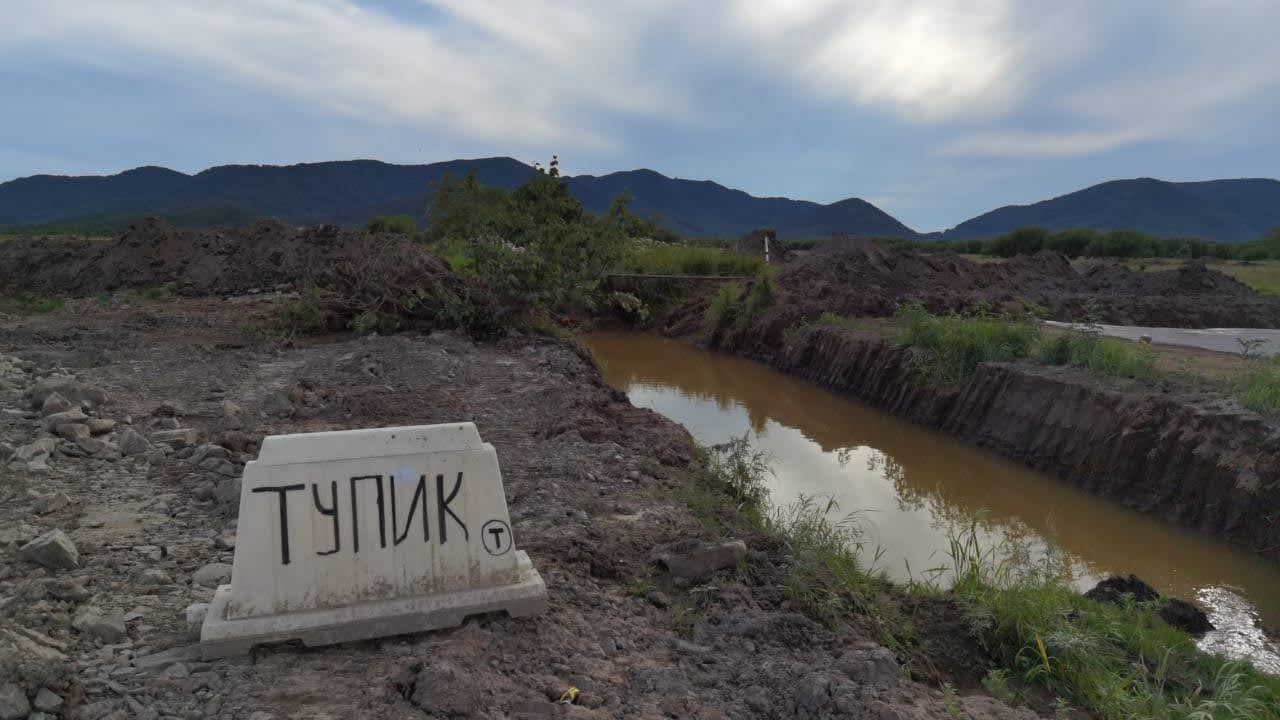
The sign reads: ‘no-through-road’

I had been meaning to write a ‘roundup’ summer post, but didn’t get around to it. The Ukrainian push into a part of Russia’s Kursk region was obviously the most relevant event to write about, but even now there’s questionable value in trying to interpret. Here, though, I try to offer a number of quick summaries of events. And then some more speculative stuff. If you think this more topical genre worth reading, let me know.

Kursk is a kind of nowhere region in the Russian imagination (1943 tank battle not withstanding). It is not quite steppe country, not Cossack country, but neither is it core European territory either. Nikita Khrushchev was born here, but his formative years were in Donbas. Today, Kursk is a landscape of relatively successful black soil farming broken up by river ravines. I went on a road trip there in the late 2010s and one of my key interlocutors is going there next month for a family visit. When we visited together, despite the agricultural pride of the region, our hosts asked us to bring processed meats and cheeses (too expensive locally for poor people to afford), and essential medicines. The final leg from Kursk city took nearly as long as the one from Kaluga-Kursk along the highway.

In some ways Kursk’s dismal demographics and patchy economic geography are quite comparable to other regions – population depletion everywhere but the capital; agroholding expansion into spaces vacated by surplus populations; some economic specialization (iron and agri) despite not really having a competitive advantage; neglect from the centre and the pitiless poverty of rural life reminiscent of 19thC novels. Kursk is kind of representative in size too of many ‘central’ Russian regions. Kursk, Jutland (where I work), Maryland, and Belgium cover similar areas but compare populations. Jutland – 2.5m, Maryland – 6m, Belgium – 12m. Kursk, by comparison, is almost empty (well below 1 million inhabitants – and probably less given that population stats are inflated for budgetary reasons by the local authorities). Nearly 45% of the region lives in the single large city.

“What to say about Kursk?”

No, that’s actually the response my Russian interlocutors would likely say, if I was guileless enough to bulldoze them into talking about it. I did an experiment. I purposefully didn’t mention it to them for the whole of August (recall incursion began 6th August). By now, most people have had time to digest, but it still doesn’t have a political shape in Russian society. This is not because of propaganda, nor ‘indifference’. To some degree it illustrates the normalization of sequentialness of ‘externalities’ of the Russo-Ukrainian war. Invasion, routing of ‘our’ forces, war crimes, missile strikes on the mother of ‘Russian’ cities (Kyiv), counterattacks, drone strikes by Ukraine. Most ‘real’ is the indirect effect of inflation, loan terms and percentages, labour shortages, ‘opportunities’ for those able to relocate jobs. A handful of people reference Kursk. They’re not callous. They mention, wryly, the conspicuous absence of it on TV. They talk about helping displaced persons. They collect money and send it on. They bring collections of food, clothing and money to the temporary accommodation points (summer camps, ‘sanitorii’, disused student halls). Part of the story is one of the belatedness of meaning. It’s too early to say what the meaning of Kursk is on any level. We’ll incorporate it into the ‘meaning’ of 2024 probably long after New Year’s eve of this year.  

“There aren’t enough men”; alarm versus calm

“There aren’t enough men”, was heard from that most loyal source. A ‘security-adjacent true believer’. Don’t ask me what that means, for now. Certainly ‘throughput’ or ‘flow’ of meat (because that’s what it is, and on the Ukraine side too) is inadequate. Something, somewhere will break. Or is right now breaking. Concerning a new mobilization wave I have many contradictory thoughts. On the mobility and ‘small tricksterness’ of post-socialist populations. On the tiredness of ordinary Ukrainians and Russians alike. Could mobilization just mean continuity? Yes, but continuity of what? Would it accelerate tectonic changes. Yes, that too. But that’s the point. We stand, as sociologists, reading a seismograph that’s too far from the epicentre to make predictions.

Ekaterina Schulmann in one of her August podcasts: ‘deprivatization and transfer of property in Russia is far more alarming to the elites than any loss of bits of Russian land, whether that land is canonical or non-canonical’. Schulmann in the same broadcast warned that direct measuring of public opinion is futile, but even the official pollsters can’t hide a real fall in the confidence of people in the centre.

‘It is better to look at proxies’ for public opinion, is pretty much what everyone says now. There’s media consumption, internet search terms, politically ‘safer’ polls like the one about Russians’ biggest ‘fears’. But even here, Kursk does not register as much as one would expect. Schulmann gives a nice history of the relationship between ‘things are alarming/things are calm’ polling. In Feb. 2022 the split between alarming/calm was 55/39; Mobilization in late 2022: 70:26; Moscow drone strikes: 53/42. Now, post-Kursk: 46/46.

calm is green, fearful is orange

You can’t imitate Schulmann’s ironic style. She points out that when you ask Russians about the ‘Special Military Op’ they invariably speak like “schizos”: ‘Everything is going great… Let’s make peace right now!’ For Schulmann, we can compare Russian society to a person being smothered with a cushion while around them the world burns. In some sense they want to be smothered.

Viacheslav Inozemtsev, the Russian economic observer, covered the Kursk incursion in an interesting way. He notes that Kursk and Belgorod are centres of pork, poultry and milk production – 25% of pork production, in fact. Inozemtsev is more forthright than usual in the piece, arguing that new mobilization might be forced on the Kremlin by events like those in Kursk and that this would entail the defacto dismantling of Putinism. What he means by this is the ability of people to detach themselves from political life in the country, content that they will be largely left alone. If mobilization is needed, he seems to say, the system would have to fundamentally change, in order to survive.

Alexei Levinson, of Levada argues that Russians are indifferent to what’s happening in Kursk, citing, as usual, his brand of Wizard of Oz sociology: ‘focus group data showed that there was no significant concern’. He cites emotional anesthesia and numbness in the population, who seek denial and escape. This is a long interview and some readers will know I criticize Levada-type sociology on methodological grounds and more. Objection here, here, and here. But you don’t have to listen to me. Here are the words of Professor Gulnaz Sharafutdinova of KCL in her latest book on Rethinking Homo Sovieticus. Writing about the obsession of Levada with the totalitarian paradigm and the accusation of moral failure of the Russian people, ‘such a mixing of the political, the ethical and the analytical created “a blind spot” that many scholars did not see’ and that ‘labelling an entire society with the use of ideas from the 1950s is lamentable’. Why do observers like Levinson remain so wedded to the idea of inertia and atomization? (Rhetorical question. The answer is here)

That Levinson comes out with such a strong claim reveals more about the universe of ideas he lives in, than any empirical reality. I can’t help but mention a different ‘data point’ –  vox pops that BBC’s Steve Rosenberg did in Aleksin after the Kursk incursion. Even though people knew they were talking to a foreign journalist with a camera, a very different, and charged atmosphere was evident (the subtitles are a bit misleading, by the way). And that chimes well with what I hear from people who are able to speak without restrictions to their friends, colleagues and relatives.

Holy war falls flat

One interlocutor noted that people struggle to connect with WWII tropes (resisting invasion as holy war) as a useable emotional catalyze, and that this has destabilizing effects, even as they are forced into using some of those same limiting tropes: heroism, sacrifice, faithfulness to the fatherland. Does this mean that through war, via ‘dialogic’ interaction of old tropes which are inadequate with the ‘new’ reality, a novel orientation towards the future might emerge? I can’t help think of a different kind of belatedness, this time relating to hegemonic cultural orders. In a society like Russia we must be doubly sensitive to the notion that organic crises (which we can argue Russia has been in for at least 15 years, or longer) eventually culminate with such unpredicted rapidity, that they overtake even the key actors involved. Indeed, this isn’t about the end of the Russian state or Putin – they may both ‘continue’ seemingly in their present form, even while overall the system transitions to a new steady-state and new forms of ‘common sense’ take over. Essentially the crisis might even resolve itself before we know it has, and be recognizable as such only much later. ‘Everything must change, so that everything remains the same’. Is this so different from Andrei Pertsev’s musings here on the cross-over in trends for relative popularity of Head of State and government

But back to those vox pops and my own interactions: when people use familiar tropes of heroism, these is a strange hybrid of sacredness and meaninglessness and also criticism of the army and civilian authorities.

If emotions performed publicly are political performances, then Kursk shows that the mechanism of performance itself is broken. This is even visible in the comments about it from people like Kara-Murza. Because rationality and emotion collide in his answer, his usually eloquent expression is literally blocked. He has to go off on a long tangent to get to the point of saying, rather tiredly, that he doesn’t like seeing Russians being killed just as he doesn’t like seeing Ukrainians murdered. ‘Strashno… strashno…. Strashno… bol’… strashno.’ [horror, horror, horror, pain, horror] overtake his whole commentary for a while. Until he comes out with the trite: ‘all they that take the sword shall perish with the sword.’

In the end there can be neither rationality nor affectivity: things that the surveys like Levinson’s are aimed at measuring, as if they can be extracted as distilled fractions. Instead, there is a large (or small), depending on the person, black hole, about which there is nothing to say. Because the blockage of different orders of expression and feeling is right inside you. You can only shout into a void. But this too is not normalization of war, but like an explosion in the deep and dusty places where different available hegemonic discourses are stored.

For a while now the sociological person has ‘died’; it’s not that they are traumatized, which might be more true of Ukrainian victims. It means they are living in what Irina Sandomirskaya calls a ‘blockade economy’ a ‘powerful proving ground for the testing of technologies of power’. One in which money and power, and death and destruction overwhelm the capacity to gather together one’s own circulating and contradictory thoughts as meaningful currency.

Brokering instead of politics – about the release of Russian political prisoners

Feb 2024 rally in Berlin. Source: wikipedia: By A.Savin – Own work, FAL, https://commons.wikimedia.org/w/index.php?curid=145536868

With co-author Charlie Nail

While it was an unalloyed good to see so many people released from wrongful custody in Russia, the congratulatory and celebratory rhetoric surrounding the events was a distraction; the vast majority of prisoners without any media profile remain in custody and some may die in prison, as the musician Pavel Kushnir did on 27 July. The response: ‘getting anyone out is a victory’ obscures the fact that especially among the Russian nationals released this happened because they had vocal or powerful supporters, or because it was in the interest of the Russian state.

The hard truth is that thousands of victims remain in prison, if we include Belarus in the equation. Secondly, the moral victor/victory tone – as well put by vlogger Vlad Vexler – obscures the hollow political meaning of events. Partly it could be explained by an emotional shock of the speakers who just a few hours previously were in prison. But it shows the fruitless search for a viable political language through which people – whether in exile or still in Russia – can engage with compatriots and provide counterarguments to the broad consensus around ‘encirclement’ and ‘my country, right or wrong’ that’s increasingly apparent in Russia.  

To be fair, this was actually the main opening message of the group. Yashin spoke very movingly of how much he wishes he could go home – surely because he knows that his political career ends in exile. The point of saying ‘Putin does not equate to Russia’ – made by more than one speaker – was not, as widely interpreted, about denying collective responsibility or deflection, but correctly identified the main political problem – how to drive a wedge, how to begin to create an alternative imagined future for Russia among Russians.  

However, an unfortunate side-effect of that correct deduction was the focus, right at the beginning of the presser, on dubious things like educational visas for Russian youth as a form of educational soft diplomacy. The presser provoked predictable howls of outrage from the usual suspects, unhappy that some speakers had gone even further and made a point of arguing against sanctions – on the grounds that Russians and the regime were not the same thing. This was indeed ill-advised, particularly by Kara-Murza. Surely this can’t have been the priority? In 2022 this argument might have had legs but not in 2024. Now, I’m on record as arguing that blanket visa bans and the like are counterproductive. I’d still argue that allowing ALL Russians to easily leave Russia (and the EU is the closest set of countries to find work or to experience the reality that the west is not a Russophobia machine) would be a pretty effective anti-regime policy.

However, in reality, those who yesterday spoke against travel bans and sanctions were consciously or not arguing for the restoration of their rights *as a class* of extremely privileged Russians – and not on behalf of the majority of Russians who have never had an opportunity to travel or study abroad (69% according to Levada-Center 2022 poll)  This is why, although they might sincerely think they are speaking in defence of their national collective, in reality they are arguing for class interest and inadvertently revealing how the main discourse among the small but vocal group of Russian ‘opposition think-leaders’ in Europe and the US is really about an ‘antipolitical’ technocratic approach. In addition, this quite narrow interpretation of Russian rights (travel to the West) gives more fuel for regime propagandists to deflect growing dissatisfaction of ordinary Russians by the war: ‘look, these westernized traitors are self-serving’…

It’s hard to say how strong the influence of Mariia Pevchikh is. She’s Navalny’s FBK successor in all but name and she was at the heart of the photo-ops, claiming to have helped put together the list. We detect even in these hurriedly put together speeches further competition for brokerage vis-à-vis Western elites under FBK’s (Pevchikh’s) tutelage. The ‘drop sanctions’ = restore visa/bank account facilitation is a dead giveaway. Nothing could be further from 1. How to help Ukraine ensure its sovereignty and security (even short of ‘victory’) and 2. How to address as political subjects the vast majority of Russians who have never even travelled outside their own geographical region within Russia. Whether the released prisoners are conscious of it or not, the talk reveals more deployment of rhetoric (here it was understandably moral and emotional) to perform deservingness and be ordained as one of the ‘good Russians’. To serve as a filter for other good Russians – in the cause of retaining ‘civilized’ rights as global citizens.  

Back to the circumstances of those released. Mariia Pevchikh in claiming ownership of the list was, to reiterate, staking claim to brokerage – and to political influence over Western decision-making on behalf of the organization FBK, now a completely transformed political animal. This was as distant as one could get from the ideals of Yashin – who said he’d been traded against his will and only wished he could go back to Russia, where, unlike many savvy exile brokers, he has been already elected once as municipal deputy. While Pevchikh’s first words sounded unguardedly celebratory – as if she welcomed the continuation of exchanges in order to benefit from the PR, she more carefully checked herself, saying ‘not at the expense of Putin catching more foreign journalists’.

Kara-Murza got a lot of flak for his comments in opposition to sanctions ‘against ordinary Russians’. Who is Vladimir Vladimirovich K-M? A third-generation very well-placed journalist who came to prominence in opposition politics thanks to the sponsorship of oligarch Khodorkovsky. He strikes us as a sincere person, survived several assassination attempts, but the fact is that 99% of Russian people have never heard of him (and if they know his name it’s more likely they are thinking of his father). Indeed, he is what Russians call a classic ‘mazhor’ (a ‘major’ – which could be translated as ‘gilded youth’, ‘silver-spoon’, or ‘nepo-baby’: people whose family provided them with every study and career opportunities closely connected with the privileges of the ruling elite but unavailable for ordinary people). In the Russian world of undeserving clientelism it has a decidedly bitter and unpleasant connotation since the Soviet times.

Alongside Ilya Yashin, K-M even looks rather incongruous. Once again, one need not doubt his motives or sincerity to see the contrast. Yashin, in our view was expelled for good reason by the regime. He remained one of the few well-known charismatic leaders of anti-war protest. He might even have been more dangerous in the long run than Navalny. He is not a rich kid (unlike Kara-Murza), he has a biography that is understandable to Russians (his mum and dad are engineers, he earned money through ability alone and served as a municipal deputy). He is a master of protest actions. Now he’s abroad, he is no longer ‘with the Russians’. Both the government and Yashin understand this perfectly well. Yashin said wisely yesterday that he will watch and listen to the emigres, but the main politics should be in Russia (It is amazing how fresh his head is for someone who has served time). Yashin has been consistent on the need for consolidation among opposition, for olive-branches, and for building street protest to show ordinary Russians how not to be afraid. David White wrote about these strategies and tactics in 2015.

We are not the only people to note how the discourse about ‘deserving’ and undeserving among the émigré oppositionists reflects ideas about hierarchy and privilege no less ingrained than among the regime players themselves. The moral purity arguments about ‘good Russians’ so visible among these emigres, and all the talk of lustration carried out by brokers has probably been internalized thanks to easy translation of cultural capital by people like K-M – graduate of Trinity Hall, Cambridge University (where of course he researched dissident movements in the USSR) into political capital in his reception by the US State Department – ‘I can explain who the goodies and baddies are and how to change Russia’.

But Yashin worked like everyone else (and was not ‘placed’ there from birth, like others), sat like everyone else (but not K-M) in a common prison cell. As soon as he was taken out (allegedly at the instigation of Pevchikh), he becomes different from everyone else. This is the goal of the authorities – to show people that he is one of those ‘globalists’ and not really Russian. That’s why they kicked him out without a passport, but formally retained his citizenship – it might be to give him a reason to promote the idea of ​​a “good Russian passport”, which the Russian Antiwar Committee had already been discussing and which post-Navalny’s FBK had rightly called ‘all that crap’.

What’s the upshot? The deep class division that existed in pre-war Russia has only worsened and everyone became completely atomized. The rich, who had enough money to emigrate or left early, and who now are asked where their money came from, are behind the idea of ​​special passports, special accounts and lustrations (Schulmann, Pevchikh, Volkov, Kara-Murza, Katz, Margolis, Gudkov). They are the loudest. The poor emigrants survive in ‘second-rate’ Tbilisi or refugee status. They are ‘the mass’ used by our wonderful brokers to show their popularity and representativeness of the emigrants. Russians within the country are not taken into account.

Having realized that she won’t get any dispensation from Ukrainians, Pevchikh seeks to use 1. Kara-Murza to exemplify her ability to select good Russians from the clutches of the regime, State Department approved; 2. Yashin represents the selection of good Russians minted by anti-war movement of Russians themselves inside Russia (whether he was on the original list or not is irrelevant); 3. Skochilenko represents a kind of legible westernised sexual minority and art communities) and, 4; we mustn’t forget the coordinators of Navalny’s headquarters who did not earn enough money to emigrate early enough (‘we don’t abandon our own’). That’s why there are even more urgent cases who didn’t make the cut about whom Yashin spoke yesterday (Gorinov and others, and also people like Pavel Kushnir) – they are no-names, there are no ‘target groups’ for their release. But their release would be more dangerous for the regime: it would be a signal to the intimidated Russians: ‘look, the rich kids and Europe are taking care of ordinary Russians.’ Russians might start wondering if Europe is really that bad, and the regime really wouldn’t like that. It’s convenient for them when there’s their image as a ‘bloody regime’ on one side and a rotten West on the other.

Pevchikh and others played right into Putin’s hands. They worked precisely on the target audiences needed by the regime in order to emphasize how alien the liberated Russians are. And at the same time, she worked according to the Western agenda, providing a serving of ‘legible’ victims according to the West’s  target audiences. If Yashin gets the hang of this new vista and shapes his own agenda:  great. If he starts promoting an anti-sanctions agenda for those who have already left then it means he has fooled himself. As for K-M, his fantasy-dream CV (elite job in Russia since age 16, Cambridge education, US residence permit, reception in US govt bodies, and political sanctification by the age of 30) is why he was kept in solitary in prison – the authorities were worried he’d be killed by other prisoners. What a perfect way to continue discrediting the opposition by releasing him back out to the wild.

Not quite seeing like James C. Scott

There were many responses to the news that James Scott has died. Most of them related to the debates around his later work – in particular the 1998 book ‘Seeing Like a State’. A landmark in showing the folly of state-led utopian engineering, Seeing Like also received critique from many different quarters.  Ayça Çubukçu memorably asked – if Scott is against ‘imperial knowledge’, then what kind of knowledge would be anti-imperial? For Çubukçu, Scott’s position is indebted to Kropotkin and Bakunin and the anarchistic autonomy tradition. But at the same time, Scott remains bound up in a contradiction whereby his position is ‘itself a product of high modernism […] not unlike the utopian state projects he critiques’.

Perhaps most importantly for me, Scott’s work on the state clarified the importance of ‘legibility’ as a concept describing the relationship between state power and (often voiceless) subjects. Particularly in my forthcoming book (Everyday Politics in Russia: From Resentment to Resistance), the ongoing struggles around legibility provide the main drama of state power in Russia. In one chapter I use undocumented garage spaces as a good example of the incomplete penetration of the state into autonomy-seeking lives of Russians. I also use the idea of making-legible to briefly relate my discussion of humdrum provincial Russia to the much more overtly violent processes of ‘Russification’ in the occupied territories of eastern Ukraine.

Making legible subjects has always been a ‘comprador’ arrangement – it doesn’t matter whether the human resource is in Yakutia, Kaluga or Mariupol – human material needs to be fixed in document form in order to aid extraction of rents. I choose the most mundane examples – cadastral fees, fines for residents who don’t cut their grass, or who fail to pay their metered water bills. And this brings me to the second point of discussion around Scott.  ‘Weapons of the weak’ was a term he popularized and which describes the ability of seemingly powerless people to set hard limits of state legibility-making. One of the main arguments of my forthcoming book is that there are many political ways for ‘the subaltern to speak’ in Russia today.  

Accordingly, my work overall – including the current book – engages more with Scott’s earlier work – in particular his 1985 book Weapons of the Weak and Domination and the Arts of Resistance (1990). When Regina Smyth, Andrei Semenov and I were putting together our 2023 edited book Varieties of Russian Activism, we were a bit surprised that scholars of contemporary Russian politics hadn’t made more of Scott’s insights. For example, V. Morozov’s Russia’s Postcolonial Identity makes liberal use of the term ‘subaltern’, but resistance is nowhere to be found. The scholars who have tried to think with Scott about contemporary Russia can be counted on one hand: Christian Fröhlich and Kerstin Jacobsson, Karine Clément and Anna Zhelnina and, more recently, Svetlana Erpyleva and Eeva Luhtakallio.

Inspired by these scholars, my co-editors and I wrote in our introduction that ‘social conflict grows the shoots of activism, or at least counterhegemonic practices, revealed when Scott’s “imaginary overturnings of the social order” become commonplace, en­abling more legible actions. It is clear in our case studies that, even when faced with threats from powerful actors, Russians organize public campaigns, file petitions, contact officials, air grievances in the media and on the internet, form coalitions with other groups, and participate in elections.’ Written before the invasion of Ukraine, it might have seemed that the infrapolitical frame of our edited book was quickly proven inadequate to describe Russian reality. However, with the exception of the work of Navalny campaigners, most of the activism described in the volume endures even in wartime conditions.

Turning to my new book, hopefully going into production in late 2024, along with ‘legibility’ of citizens to the state, the greater part is inspired by Scott’s imperative to uncover less visible forms of resistance to tyranny: the ‘fugitive political conduct of subordinate groups’. Even in circumstances of harsh oppression, ‘creative and subversive…forms of resistance’ mean that claims to active citizenship are possible (Frölich and Jacobsson 2019: 1146). Everyday and microscale anti-war activism remains vibrant, from the mundane to the spectacular: stickering, graffiti, ironic speech in public, underground organized groups promoting escape for soldiers, and even covert sabotage. However, in paying attention to forms of resistance from below, I also heed criticisms of this frame which call for a better contextualization of practices and talk that appears oppositional. In other words, we should always consider and interrogate, and not romanticize what look like infrapolitical acts of resistance. Do they have substance, and can we move beyond the world of ‘talk’ to examine micropolitical resistance in sets of practices that may not even be exceptional, but embedded in dispositions and ordinary ways of the lifeworld? That’s one of the big questions I ask in the book.

Overall, my answer is that approaches like Scott’s remain anthropologically naïve (not for nothing his reception in anthropology was much more lukewarm than in other social sciences). I follow Susan Gal’s detailed critique which shows how Scott relies on ‘simplified images’ of communication as a metaphor of how ideology works. Like the criticism of his perspectives on the state, an anthropological problematization of his concepts of resistance finds him wedded to a liberal-individualist Western notion of politics. Much more so than his admirers would be willing to admit. I can’t go into detail here, but Gal shows how Scott is reliant on a naturalized version of the self, and equally a neutral idea of the ‘public’, along with some simplistic notions of the referential qualities of language, in contrast to embodied and contextual linguistic phenomena – something I’m at pains to explore in my work – in regard to ‘supporters’ of the Ukraine war, as much as with ‘opposers’.  

While ‘back talk’ and disguised ideological resistance is undoubtedly a real (and elatedly empowering) phenomenon among the oppressed and makes for an attractive antidote to approaches that assume cultural consensus and alignment (very much in evidence in coverage of Russians’ response to the war), Susan Gal argues that Scott essentially misses the insight that performance does NOT equate to authentic self. Gal cites Lila Abu-Lughod, among others, in support of the idea that artful, generic use of emotional states and language have long revealed the cultural constructed and varied nature of the ‘person’. Scott’s chief metaphor of ‘transcript’ is revealing of the limitations of his approach – a transcript is not a neutral reflection of reality, but an artefact shaped usually by the powerful. Gal concludes this section with the following:

‘the use of the dramaturgical metaphor in this book is shallow, contradicting the tradition of Goffman and the ethnography of speaking. The analysis of power-laden interaction relies on assumptions about the nature of human subjects and their emotions that diverge from recent comparative and constructionist work in anthropology’

I recommend Gal’s 30-year-old piece for readers of Scott. Not least as an example of how much more challenging academic writing tended to be in the 1990s! There’s a whole three other aspects to Gal’s critique. To summarise too briefly, they come down to: 1. Resistance to domination can take place at ‘community’ level through media; ambiguous speech characteristic of state socialism (Yurchak and Humphrey are cases in point) put paid to a simple dichotomy of dominant and subordinate speech 2. ‘Public’ is not an innocent term but a deeply ideological construct of Western thought. 3. While Scott is perhaps strongest in his critique of ‘thick’ notions of hegemony, his linguistic model tends to simplify and underplay the degree to which hegemony may be tacit (think of the way silence about the war may allow observers to characterize Russians as ‘supporters’), and that resistance is often partial and self-defeating (indeed, self-deprecating – as in, for example anti-war Russians’ essential agreement with Putin that ‘ordinary’ Russians are collectively brainwashed).  

Gal’s intervention on Scott is worth a blogpost because it summarises in part the jumping-off point for my new book. Scott was inspirational in prompting me to work on subaltern resistance more seriously. Anthropological approaches (correctives) are needed though. We can emphasise the experience of micropolitical resistance without losing sight of the embedding of people ‘doing’ and ‘speaking’ dissensus in a particular social and cultural context. When my book goes into production in late 2024 (if I’m lucky), I’ll post more about my micropolitical approach.

The broken model of North American academic publishing

a short pitch for my book.

Here I document failure. Is thirteen* rejects an unlucky number?

Some readers might know that in 2023 I wrote a book I had been planning for many years. The idea of the book is simple: Despite all the efforts to make the political ‘off limits’ in Russia, we can use ethnographic tools and anthropological senses to uncover political actions, dialogue and ‘subjectivity’ – in all kinds of unlikely places. And the war on Ukraine does not change that, even as it alters the political’s expression and visible forms. This book is an ambitious sequel to my 2016 ethnographic study Everyday Postsocialism. I won a competitive foundation grant that allowed me time to write the manuscript in 2023.

I thought, mistakenly, that I would be able to pitch this book successfully to an appropriate US university press. Perhaps to one which is interested in books about Russia. I have a good working relationship with many presses for whom I write ‘reader reviews’. These external reviews are the main way such presses make decisions about whether to give an author a contract. Typically, a press editor (full-time employee) looks at a short pitch, and if they like it they send it to two or more external reviewers who are academics at different universities. They sometimes pay these reviewers a few hundred dollars. After 6-12 weeks the reviewers write a report. If the reports are favourable, the editor can offer a contract.

Here’s a (simplified) timeline of what I experienced with US university publishers.

#1 – Senior Editor (for whom I’ve written reviews, often at short notice) of C****** U Press sits on my proposal for a few weeks, then sends it to a colleague (political science) who “has assumed sponsorship of projects in areas that your book covers”. After six months this editor still does not respond, so I leave a message on her voicemail. She then writes to say my messages got lost in spam. After another month she praises my topic and approach but writes: “I’m afraid that the project is not something that quite fits what I’m currently looking to acquire, and I’m afraid I must decline the opportunity to pursue it further”.

#2 Immediately, I sent the pitch to P******** U Press because my book engages a lot with a work on published by them considered a landmark in the field. I got no reply.

#3 Then I sent the pitch to S******* U Press where a good book on a similar topic had been published recently. Again, the anthropology editor passed me to political science who answered: “I had the chance to read the proposal. With regret, I must tell you that I’ll need to pass on taking the book forward here”.

#4 I then wrote to D*** Press. They publish a lot of ethnographic work with a critical political edge I admire. The editor replied: “Unfortunately, it isn’t something we can take on but I wish you the best of luck finding a home for the project.”

#5 After these two instant rejects, I wrote to T****** U Press which has coverage of both anthropology and Russia. An editor kindly gave me a lot of feedback with his rejection. He found it a “daunting” read, “dense with concepts” – I agree with him. “The book as a whole is just too much for me: too many substantial ideas, to many [sic] literatures to engage with, too many elements to keep in mind all the way through to the conclusion.” He advised me to send it to one of the presses that had already rejected. He also asked his colleague in anthropology to consider it, but she did not reply to my emails.

After this, I asked for some feedback from senior colleagues in the US (as well as others). They were very kind in helping me rewrite my pitch to be more accessible, simpler (I also rewrote the introduction to the book to ‘dumb it down’). I changed the title to be less interesting (obligatory). I also pitched the book to be more about society at war.

#6 Then, I sent it to U of C****** Press who published one of my favourite books combining theory and ethnographic flavour. They desk-rejected it: “I wish I had better news, but your project is not an ideal fit for our list, given the fields and approaches we are emphasizing at present”.

#7 Then, I wrote to editors at F****** U Press who have a relevant series I admire. After a delay (a trifling matter of four months) they wrote: “It sounds like important work, but I’m afraid that, with all the projects we already have in the works, we had better say no.”

#8 Then, I wrote to N** Press who had been recommended to me. After I reminded them of my existence a few times they sent the pitch to an historian of the 19thC for advice and then wrote: “I’m sorry to let you know we have decided to decline. The reader agreed that you have some great ideas, but she had trouble following the argument.”

During this process I canvassed colleagues on Facebook who gave me advice, most of which while well-meaning was little use. They said things like ‘go with the editor you think is good/responsive not the press’; ‘presses are not well adapted to interdisciplinary topics’; ‘It’s soooo difficult to overcome clichés and stereotypes among editors when you pitch something non-conventional’; Numerous US colleagues also said they had had great experiences with the same editors who had desk-rejected my book. They, usually embedded in a strong US-based network, expressed surprise at my experience.

I tried some other American uni presses (#9, #10, #11, #12, #13) whose editors never got back to me/ghosted me, as well as some non-US presses. This post only covers the North American experience and I present it without any further commentary. I know the shortcomings (and strengths) of my own MS and the pitch. But the post is long enough already. My short (1 page) and long pitch (with chapter synopses) can be read (and judged!) as PDFs in the research page of this blog. The MS is ever-evolving.

So what’s the problem? In my case it’s a few things at once. Not a dumb enough pitch. Sensitive topic. Interdisciplinarity (probably the biggest problem). The sales/acquisition model of US university presses (has to be sellable to public, though I think this is actually a myth). Lack of the right patrons.

I’m reminded of this article by Ann Cunliffe on academia’s increasing narrowness because of the gatekeeping systems of journals and institutions. Despite the rhetoric, a cursory glance at some publisher lists really does reveal the McDonaldsization of social science academic publishing. She writes that we are exhorted to be ‘original’, ‘insightful’, ‘theoretically radical’, ‘fresh’, but the hidden message is to be the opposite. Articles, but especially books, should be about monocausal cases in tight time-frames, US-centric (even if about other places in the world), methodologically conservative, ‘politically radical’ in way emptied of radical politics, abstractedly empirical, and finally: designed to meet criteria which promote our institutional advancement and not promote knowledge. It also seems that US academic publishing is a very good example of so-called Russian-style ‘patron-clientelism’, otherwise known as ‘blat’. One colleague said, ‘well, you don’t have an “in”, what do you expect?’.

As of writing, I do have a good relationship with a non-US publisher, so I hope this book will see the light of day sometime soon. And at least the Europeans didn’t write that a book about Russian people as political subjects was ‘too complex’ to understand.

*I consider my thirteen rejects to have beaten Vladimir Gel’man’s record of twelve attempts for his first book. (This is my third monograph…. and eleventh book overall).