Category Archives: Russia

Three interview commentaries: Schulmann, Zubarevich, Kagarlitsky

the first in-prison interview of an AI-inoagent

Sometimes I like to blog about what’s going on in Russian social media spaces abroad though it doesn’t seem to bring many readers here. That’s a shame because it’s a space that only indirectly gets attention by anglophones (notwithstanding Meduza’s almost lone attempts to correct this). It’s also pretty informative because some of the best journalists and experts have a big platform there. There is however, just too much material to keep track of. Here’s a rundown of three things I watched via YouTube in the last weeks: political observer Ekaterina Schulmann on how to parse conflicting public opinion indicators; economic geographer Natalia Zubarevich on whether military Keynesianism is paying off; and an interview from behind bars with political prisoner Boris Kagarlitsky.

Schulmann has a brutal schedule – doing public talks seemingly almost every day. At the end of October 2025 she talked to Vot Tak channel (based in Poland with a pretty large online audience). As usual, she covers a lot of minutiae about what’s going on in Russia. What stood out in this episode was her reading of recent polling by Levada about ‘mass perceptions about the influence of the Special Military Operation on society’.  This part of the interview is a good example of how Schulmann has moved to a much more critical position about the meaning of polling in autocracies. She first talks about how Russian propaganda is not meant to be persuasive. It’s instead ‘the voice of force’. ‘Voice of the authorities’. This is why people pay attention to it in so far as it shows the strength and resources of the authorities.

Then she discusses the contradictions at the heart of polling questions: that support for the war appears high, yet, when polled, the majority agree with the statement that the war has mainly brought more ‘negatives’ than positives to Russia. Furthermore, attitudes towards veterans are quite informative: In answer to ‘what has the SMO done to participants in it?’, the main answer is (literally) ‘the war has crippled their souls’. Further, people see the mercenary choice a bit like they see the decision to take up a hazardous job in the Far North: sure, you can get money that way, and this is an ‘honest’ exchange (you know what you’re doing), but preferential treatment/certain social benefits should not accrue to this mercenary choice.

And moreover, society should not be forced into elevating veterans’ social status or respecting this choice. Schulmann adds that this could be symptomatic of a distancing mechanism on the part of society. We could interpret it as ‘infantile’. However, she wisely reserves her own interpretation. Later in the interview she talks more about the growing unhappiness at the government’s economic repression against ordinary people, and its unprecedented political repression against its own elite.

Natalia Zubarevich stayed in Russia after February 2022, teaching and researching in Moscow. She gave a lot of interviews from within Russia and was sometimes painfully careful in how she described the regional economic effects of the war. This interview with a journalist in Paris (November 2025) is therefore something a bit different. Not least because it’s nearly three hours long. I couldn’t sustain any notetaking for that period of time. It’s the usual thing she does, which is almost a self-parody now: barrage the viewer with statistics about employment, profitability, inflation and the like. Quite interesting here was a ‘meta’ moment where they discuss her teaching in Moscow and whether scientific exchange between Russia and the West is possible (c.30m) and what  economic geography in the UK has become: “spatial sociology” (in contrast to Russia where a more ‘traditional’ approach to geography remains). There are loads of moments of incredulity from the interviewer like this at juncture – which is always fun.  

A limitation of Zubarevich is that she confines herself to official statistics, occasionally colouring her assessments with anecdotes – which can also be a bit of a problem given she works at a super elite institution and lives in central Moscow. However, she always says some things that go for and against the ‘common sense’ of the pundit sphere. To summarise, she talks about a significant number of economic losers because of the war while ‘two thirds’ have seen sustained wage increases over inflation.  However, overall, this means competition between employers has been fierce (until recently). A wage spiral essentially is bad for a brittle and regionally-divided economy like Russia’s. She also talks about how the state trying to turn the tax screws on the population will backfire because people will resort to cash and hiding incomes. There’s some interesting stuff about financing and budgets in the occupied territories of E Ukraine. There’s an explainer on regional inequality in Russia and how it’s misleading because of the phenomenon of labour migration (who bring their high wages out of the North).

More interesting than the interview was the divided reaction of the audience. A lot of viewers interpreted the interview as providing cover for the economic choices of the authorities – as painting too rosy, or too detached a picture. Some said that it was unhelpful to use official Russian statistics to argue that there’d been a big uplift to most incomes. For example, some pointed out how the ‘basis’ wage had indeed risen sharply in many jobs but this did not mean a real rise in wages because for many, the main part of paid income is not the ‘basis’, but the discretionary bonuses – the latter being harder to capture in official statistics. It has been very convenient in many sectors to boost the tiny ‘basis’ wage by even 200-300% while cutting or making the achievement of targets for the bonus much harder. Would you feel better off if your basis wage rose from 200 Euro a month to 600 Euro, while the ‘bonus’, which was previously 800 Euro, was now at the mercy of the foreman? You might get a bonus of 1000 Euro when a monthly or bimonthly target is reached, but many are not – or are being forced to overwork for what was previously a given. Especially in service or while-collar work where the concrete output is not a hard quantity of product.

There are good points in the interview about how unsustainable the military ‘juicing’ of the economy already is in 2025. Zubarevich makes it pretty clear she thinks this sugar high will come with a massive crash. People were unhappy to about her repeating policy aims as if they were realizable – like a plan for rehabilitation facilities for veterans all over Russia: pie in the sky, was a criticism from the chat. People really didn’t like her repeating a point that many make – that within the Russian government there are smart, competent and effective pockets of policy making.

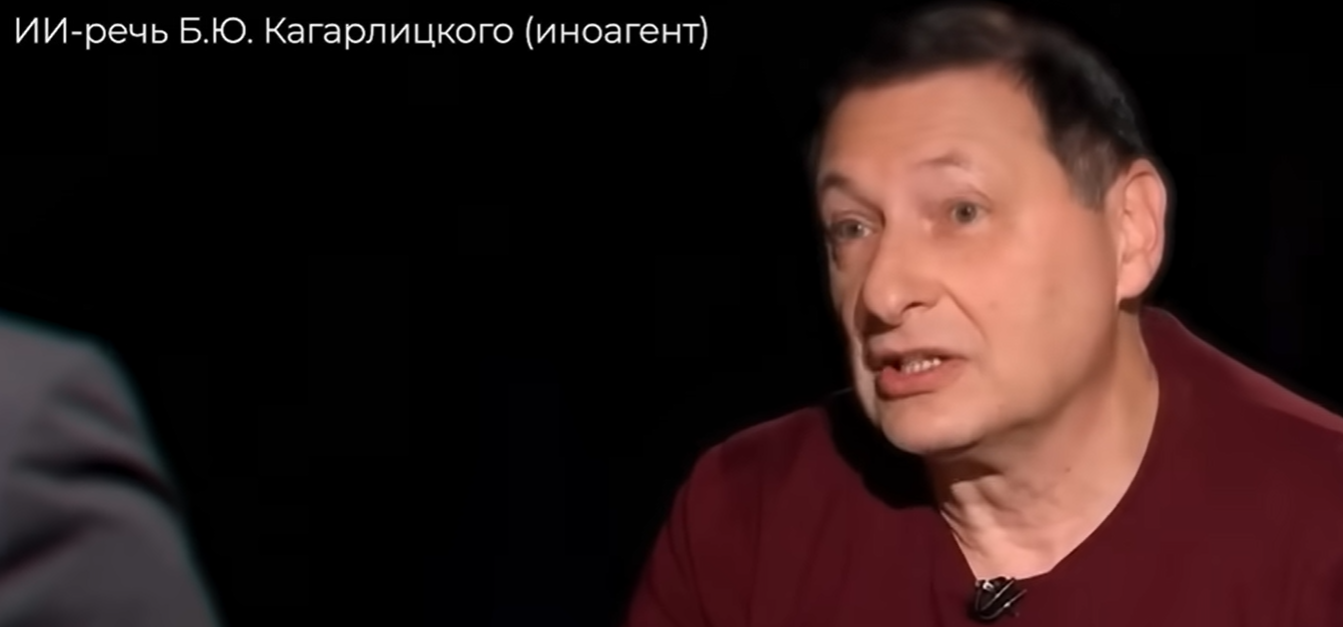
The third interview (also November 2025) is something of a landmark. An interview between Andrei Rudoi – a well-known leftwing Youtuber, and Boris Kagarlitsky. Only, Kagarlitsky – roughly speaking, a Marxist historian and public intellectual – is in a prison colony for mildly critical remarks about the conduct of the war. The interview was therefore reconstructed using an AI avatar of Kagarlitsky who spoke the words from the letters, phone call transcripts and such like, of the actual person siting in Penal Colony No. 4, Torzhok, Tver Region.  Even if one has no sympathy for the person of Kagarlitsky (and I certainly do), some of the interview feels poignant. Particularly since Kagarlitsky was also imprisoned by Soviet authorities in 1982 for ‘anti-Soviet’ activities.

Prison is not exactly the place where one improves one’s health, K notes at the beginning. Only it is a very healthy-looking, if a little uncanny avatar saying these words. You’re the first AI Foreign Agent (‘Inoagent’), remarks Rudoi.

What’s most interesting to the general audience is the first few minutes of the interview where K talks about the efforts to recruit soldiers from the penal colony. He’s too old and has a political sentence so is not a target of recruitment efforts. Prisoners are all forced out onto the football pitch to listen to the ‘recruiters’ tell them that even if they die, their relatives will get a good pay-out. Sometimes lectures about this are read and K has been present at them. K talks about the fluctuation in numbers recruited – there’s now few signing up. In 2023 there were hundreds, by May 2024 a few dozen a month. Now it’s less than a dozen a month at best. Recent recruitment was because of a false impression that one could sign up to get out of prison and that a ceasefire would be called. Even recruiters used this argument. K emphasises that ideological arguments are entirely absent – even antiwar people sign up, particularly if they have been jailed for desertion/avoiding mobilization (337th article of the Criminal Code). There are pro-war prisoners in the colony, but not a single one has signed up. Therefore we should really take stock of the real motivations for signing up from prison.

Often those who have been in Ukraine seek to dissuade others from signing up. But they themselves then sign up themselves as a way of getting the punitive 337 label removed. One should not think that because someone went to fight that they are for the war, and that if someone refused to fight they are against.

K is asked why he didn’t leave Russia when he had the chance. He says he does not regret his (in)actions. Where you are doesn’t matter to how to speak about things. And at the same time there’s no shame for those who choose to leave. It’s solidarity that’s important. (full disclosure: I was on a discussion panel with K before he was arrested – he was quite confident he was safe from arrest).

Then the interview discusses the causes of the war from a leftist perspective – putting events into the context of the dead-end choices made by the elites since 2010 – the acceleration towards a form of authoritarianism away from managed democracy, and that most importantly this was a ‘choice’ supported by most liberal elites.

There’s a discussion of how the left can use the demand for Soviet nostalgia and quasi-nationalist figures’ big social media presence to get their own voices heard. But about how the biggest problem for left public presence in Russia was always the visceral hatred for progressive politics among the liberal journalist caste. This, however, is changing because younger people are less politically tribal. There’s interesting discussion about how the war forces leftists to think anew about their attitudes towards the USSR – a split between people who can assess the progressive aims of the Revolution, and those seduced by ‘Red Imperialism’. The latter invariably support the regime since 2022. At the same time, those liberal ‘fellow travellers’ of Putinism are also forced to confront some home truths, such as their cynicism and deep mistrust of democratic transformation.

At the end of the interview the speakers look forward to possible outcomes at the end of the conflict. It’s hard to imagine how weird this is – quite open political discussion coming from within a prison colony. One of the final metaphors K uses is a ship adrift in the Arctic sea with the officers on the bridge unable to even reach the captain let alone get him to make decisions. There’s an iceberg out there in the fog, but no one has time for it. Kagarlitsky reminds us that the great title of Alexei Yurchak’s book on the end of the USSR is still very relevant for today: ‘everything was forever, until it was no more’.

Beyond the Talk: What Questions Reveal About How We Understand Russia Today

Guess what schooner rewarded me after my long talk?

On Monday this week I was fortunate enough to present my book at the King’s Russia Institute. I’ve now presented it a number of times for different audiences. This time I tried to do a really deep dive into the complex architecture, even though the talk was a public one and had a mixed audience. However, instead of recounting to you the content of the talk, I thought I’d share the questions I got from the audience at the end of around 55 minutes of me yapping. I think often the responses are the most fascinating part of a scholarly event – where you get a good idea of the core interests of the audience and how your talk has connected – or failed to connect.

There were a lot of questions and I didn’t manage to write them down in full, but here’s an approximation of them with a short version of my answer:

How does internet censorship affect knowledge of the war inside Russia? How can people move from a pro- to an anti-war position given the limitation of information about the war? How do people find information about the war to then be able to adopt an anti-war position.

This for me seemed to be based on the mistaken assumption that people are isolated from sources of information that could potentially present a different version of reality to that consumed in mainstream media. However, in my answer I emphasised that information was not the problem, nor was censorship, but that the real problem was that people with doubts or moral objections are made to feel isolated and in the minority, when that’s not the case at all. Making people think no one would share their opinion is the genuine strength of media control and self-censorship. This is also a way to deal with people, who misguidedly in my opinion, think that ‘preference falsification’ is merely a technical problem in surveys, but part of the ‘curse and blessing’ for Russian studies, as Alexander Libman calls it, of the ‘credibility revolution’ (that empirical work should be about showing causal relationships in data statistically).

Can one really say there’s been a growth in repression inside Russia since the war?

I don’t really understand where this question came from, but it allowed me to talk about the power of random and non-predictable repression using examples of people in my research who are openly anti-war, and then the documented cases where people got prosecuted for ‘likes’ and social media posts. I still remain of the opinion that many of the people prosecuted wanted to set a moral example, which in itself is interesting (if very sad). The oppositional people in my research (a very small sample) are extremely careful about some things, but seemingly take risks in other contexts where constructive ambiguity is possible. Of course there is also the possibility of the very Soviet tradition of opposition by analogy or metaphor which some of my Russian colleague like to draw attention to.

How do you understand the term ‘civil society’ as it applies to Russia?

This was I suppose a direct response to part of my talk where I say it’s important to draw on the very rich newer threads in political research that emphasise emotional and social motivation for activists, and the pre-organizational capacity of people to, well, get together and stand up against things they don’t like. One of the more interesting tensions in the books is me saying that things like Navalnyi’s regional ‘training’ of activists was genuinely capacity building while, at the same time, there will always ‘spontaneously’ emerge leader-like or charismatic figures to can anchor the expression of grievances and that often participation is ‘pre-cognitive’ or ‘beyond intentionality’. In that way, I’m merely echoing work being done in disciplinary contexts a little removed from mainstream political science – both in critical human geography and indeed, in Russian sociology itself.  

How have people been able to distance themselves from the war through pursuing a policy of detaching themselves as much as they can from the state (the ‘happy ones’)?

This was a very detailed descriptive question based on personal experience and it allowed to briefly reiterate what I’ve written on this blog quite recently about the very strongly class-inflected experience of the war in Russia (mirrored by the Ukrainian experience to a degree) and how yes, some people can both ‘buy’ themselves out of thinking about it. Though, I emphasise, the book argues that everyone has to deal with a particularly fickle and mean state at various junctures.

How do you gain the trust of people? How do they internalize fear which then affects their behaviour and what they say to people? How do you avoid just circling in the same group of persons in your research?

Some standard answers here about snowballing and long-term embedding in communities. I do think participant observation helped me overcome one failing I had early on after 2022, which Ilya Matveev helpfully pointed out to me: it’s easy to underestimate the power of fear in Russia.

How does resentment against the war manifest itself in relation to how people treat veterans?

I think I maybe misremembered this question, but it allowed me to repeat a point Ekaterina Shulman/Schulmann made recently about how people when surveyed are quite critical of the idea of the state providing more than just mercenary payment to soldiers and are not at all for the idea of giving them political influence or a ‘social’ preference in access to services, etc. In that (Russian language) YouTube talk by Shulman there’s also some interesting critical discussion of how to interpret survey data in Russia.

What do you mean by state capacity? How can Gen Z inspire the rest of the population in opposing the path taken by the state?

Two questions here. The first in response to perhaps the most convoluted part of my book/talk which is where I try to demystify the operations of the local Russian state by saying ordinary people have a lot more power to change how the state operates and that this is a political kind of power. In a sense, ‘capacity’ to get policy done depends a lot on consent, and even a kind of common modus operandi shared between citizens and street-level bureaucrats. The examples I give in the book are trash collection, heating infrastructure, and even 2022 military mobilization. There’s an accessible early version of how I think about this here and again, here.

The last question was in reference to the detention of the street singer in St Petersburg. The questioner was right, I think, to point to the moral example of young people as capable of forcing older people to reflect on their own hypocrisy and cowardice, and, hopefully, change this. On the other hand, I responded by saying that when regimes start policing the minutia of popular culture, they start to look a bit absurd, and from there it’s not a long journey to them looking weak and brittle.

Ethnography (about Russia) is not anecdotes

How positivists try to make me feel about my methods. I hide little, but what’s hiding under their jackets might not be so appealing

How holistic knowledge about societies can only be produced through observation and reflection.

Doing this new podcast on ‘Unfiltered Russia’ reminded me of one of the main problems of the monocrop ‘Russia expertise field’ – its frequent distance, disdain or condescension towards its subject matter. It was really nice that my co-discussants instinctively (and intellectually) grasped the main idea of my research: that externally-imposed theories and even domestically collected statistics don’t even begin to tell the whole story. Genuine social, political, and economic understanding needs observation and even participation.

The experience of talking about this on the podcast was particularly triggering for me. When I present my work, it often meets incredulity or hostility, even among fellow social scientists. I can’t tell you how many times my work has been downgraded to ‘that’s just an anecdote’ (see below), or in the more polite variant – ‘so how generalizable is this to the rest of Russia’. Some younger scholars who’ve never exited the comfort of their methodological prison cells can’t help telling on themselves by saying, ‘so, your ‘n’ [sample size] is like, not statistically significant?’

Now, I’ve grown a thick enough skin not to react when fellow researchers show their ignorance of the last 90 years of post-positivism, or when they show their indifference to the ongoing replication crisis in the so-called ‘harder’ side of the human sciences. However, the podcast reminded me of a couple of recent experiences on the ‘Explain the Russian War’ junket circuit. A ‘junket’ is a paid trip where the real reasons are for pleasure or to engage in ‘self-PR’. ‘The circuit’ refers to the now familiar sight of the same haggard faces who are booked for expert events ‘on decolonizing Russia’, or ‘how to really help Ukraine’.

Because of their spinelessness and simultaneous sense of moral superiority, governments in the European area have paid for events where Russian ‘experts’ come and blather about civil society in exile and the one-true-opposition-that-if-only-was-given-lots-of-cash-would-make-Russia-forgettable-again. I occasionally was an observer or even discussant at a few of these events (unpaid and even self-funded on occasion). The participants (as opposed to audience) are generally what is known as ‘grant-feeders’ – a subcategory of public sociopaths; exile journalists, pundits and publicists – some genuine, many fraudulent; real activists and honest NGO people (small minority, may the Lord protect them), EU-adjacent policy people and even parliamentarians (‘I’m just here for the lunch, is there going to be wine?’), and the occasional activist academic (gurns horribly)!

At one such event I was even on a panel discussing ‘what’s really going on in Russian society’ and had the misfortune to be paired with two excellent quantitative scholars whom I deeply respect. Now, these colleagues are good, nice people, who are at least polite about my work in public (well, actually, they just don’t acknowledge my work exists, but that’s par for the course). They do perhaps know that ethnography exists, vaguely. As is the rule, I got the usual question from the audience: ‘how generalizable are your findings?’ Which is fair enough and hard to answer without giving a minilecture.

However, what was funny (not actually funny), was that while various policy people were perfectly happy with my presentation and even came up and thanked me (including a defence bloke in an effing full dress military uniform), it was a humanities colleague who, in a public question, said: ‘it’s great that we can get these anecdotes from inside Russia from Jeremy, along with the survey data from Dr. Bokolov, and Professor Girskaia’. ANECDOTES!? That’s what you, an archival researcher, got from my talk? Clearly, I have failed. And I blame myself. Well, not entirely. It shows that in humanities too, we can be seduced by the dark arts of big numbers and a dodgy statistical regression. If you want anecdotes I can give them, but they’ll be about academic corruption and faked or manipulated survey data.

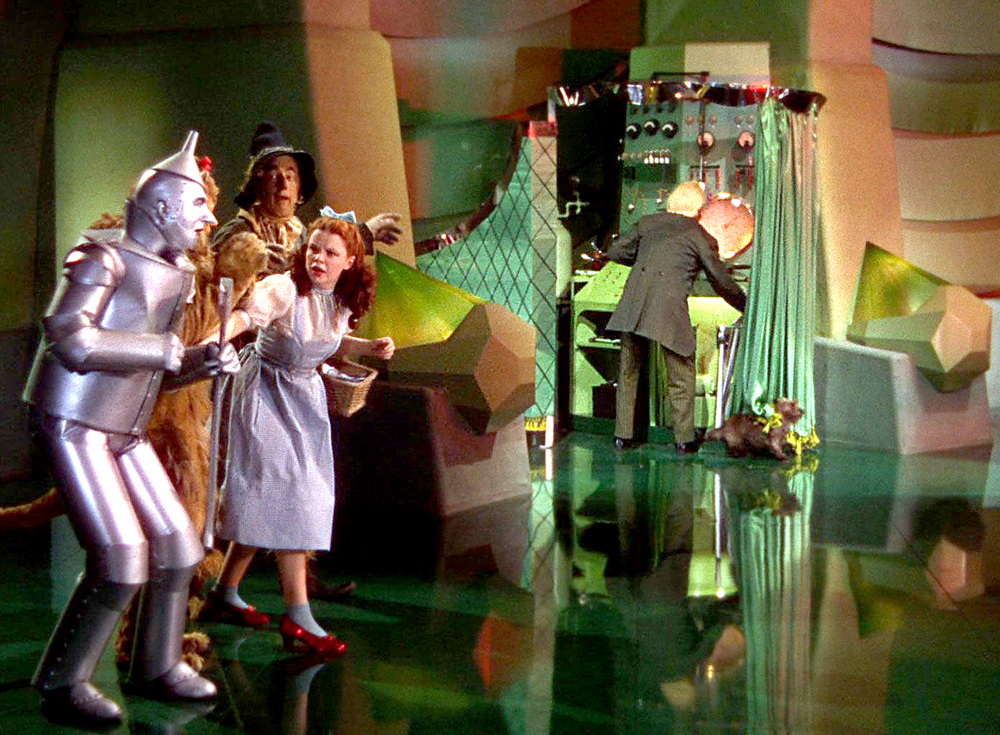
Obligatory Oz picture

All of which is a roundabout way of getting to the point of this post. How does ethnography justify itself as a method? Here, ‘ethnography’ is just a short-hand for a variety of holistic methods now routinely used by qualitative researcher – be they health sociologists, criminologists, urban planners, occupational therapists, researchers of religion, or even just plain vanilla anthropologists (not so many left, unfortunately).

The ethnographic method* developed as an anthropological tool in the 19th century It was used as a way of documenting and providing an insight into the culture, or everyday life, of previously ‘unknown’ peoples and societies. It also has sociological origins associated with the urbanization of the United States and with the ‘Chicago School’ of the 1920s-. Ethnographers distinguished themselves from social scientists who wanted to reproduce the rigours of the natural sciences through positivism. They did this by emphasising that the researcher must first experience what their research subjects experienced before being able to take a more ‘objective’ or ‘detached’ view.

Throughout the twentieth century, ethnographic researchers were able to use experience to challenge hegemonic ideas about societies. In the English-speaking world, Scheper-Hughes, Abu-Lughod, S. Ortner, L. Wacquant, A. Tsing, H. Pilkington  are just a few recent examples of major ‘disruptors’ who used fieldwork and observation to go against the flow of common sense about some ‘social problem’. (These are just a few who came to mind that I’ve either taught or studied. Hilary Pilkington, who worked a lot on the Russia beyond Moscow, directly inspired me and part of this post rearticulates her teaching).

Ethnography has emerged as a kind of ‘minority report’ – a kind of dissenting way of doing social science (many of us actually reject the application of scientism to our work). We usually share the view that the ‘common sense’ domination of numbers and metrics leads to dangerous groupthink or even complete misunderstanding of what’s going on. Ethnography is useful (maybe even indispensable) when the context of the ‘thing’ under study is important to our understanding of it. For example, it might be that we need a more holistic understanding of an- ‘other’, and this can include a society, like Russia, which is mainly presented through a ‘numbers lens’, or as explainable using quantitative methods (‘60% of Russians support the war, therefore they ergo must be fascists’).

Some of the other advantages of ethnography in general are relevant to the Russian case too: if a group under study is hard to reach e.g. ‘ordinary Russians’ who don’t take part in politics or polling, or whose livelihoods rely in part on the informal economy. If building trust relations with respondents is a prerequisite for the research e.g. people living in a society with a particularly repressive state. Where you are studying complex relationships or the dynamics of social processes e.g. the impact of war and economic pressures on attitudes towards the government.

But how do we get to these insights? What’s special about the approach. Sometimes overlooked is that it’s not just interviewing but also observing and even ‘participating’. William Foote Whyte, in 1984 wrote: ‘Observation guides us to some of the important questions we want to ask the respondent, and interviewing helps us to interpret the significance of what we are observing.’ It’s a reinforcing loop of interpretation.

Paul Willis, another important voice, said that to do an ethnography is to engage in everyday life for the purposes of reflection upon it. This is the essence of ‘the sociological imagination’. What’s that? Most simply, after C. Wright Mills, it’s the idea that ‘abstracted empiricism’ (data produce statistical assertions that then get collapsed into ‘scales’ of public opinion, for example) tend to lead us further away from a deep ‘awareness of the relationship between personal experience and the wider society’, unless we are careful. So, Mills points out, writing in the 1950s, ‘voting behaviour’ might appear to be easily amenable to statistical investigation, but really, it tends to produce an analytically ‘thin’ version of reality: it ignores things like the party machinery for getting out the vote. It might ignore the role of the traditional or extended family in shaping political views.

C. Wright Mills – a powerfully thinking life cut short

Of course, it’s no coincidence I mention Mills’ example of polls and voting behaviour. For this is still the main way that social reality in Russia is translated and presented for Western audiences. Ethnographers would assume that data are never just ‘gathered’ like fruits in the wild but actively produced in the interaction between the researcher and the human interlocutor. This is what Anthony Giddens refers to as the ‘double hermeneutic’. It means that stating we are ‘objective’ in recording our observations is insufficient grounds for claiming we have generated reliable ‘facts’ and knowledge. The main challenge to positivistic versions of social science (incl.  polling) is ‘interpretivism’: we can only know the social world we study via the meanings attached to it by human subjects. Because meanings are different and changing, and contested, we can’t keep a firm hold on to the idea of a stable external social ‘reality’.

Now, there are many critiques of surveys, but you may be surprised to find that when you mention them to people who rely on survey methods, they respond with technical justifications (that the sample size was representative, that the questions were formulated to cope with preference falsification, and so on). The main critiques come from phenomenology, emancipatory analysis, and feminism. I won’t go into detail here, but on the first point, phenomenologists might point out that the survey is a highly artificial interaction and often the person responding is reacting to expectations – both of the researcher, of what’s the ‘right’ answer, of what’s ‘politically correct’, or the rumble in their stomach because it’s lunch time. In other words, the answers are in no way empirical ‘facts’.

Further, quantification is not ‘valid’: people don’t think of their ‘support for the Russian Armed Forces in the Special Military Operation’ in terms of ‘completely agree’, ‘largely agree’, ‘disagree’, ‘strongly disagree’. Indeed, this language may be so hackneyed or alienating, or, indeed, frightening, that some of the answers might be worthless. Now, it might be that some people actually think that Russian soldiers are almost all paragons of virtue and that stories of war crimes are made up Western propaganda. The point though is that a survey certainly won’t help you understand that. [obligatory note that there are people – and they’re mainly Russian researchers based in Russia – critically interpreting survey data to find out important stuff].

Once again, it’s kinda sad, that in the 1950s there was already growing scepticism among sociologists about official statistics and survey methods and this was one reason that secondary (more qualitative) analysis exploded, especially in the UK. That’s not to say that quantitative methods don’t have an important role to play elsewhere. There are lots of social relations that are quantifiable in some way or other – age; voting proportions; wages; time spent working; wealth and gender inequalities.

But this post is long enough already. I like the 2017 article on polling by Greg Yudin and often read it with my students. In it, Yudin has some zingers: polls are an institution of political presentation (not representation). They are pernicious because they wholly occupy the public’s imagination due to the absence of other democratic measures of voice. ‘It hypnotizes its audience with its numbers’, but ‘because it is inappropriate to talk about politics… [it is only a radical minority of people [who] answers questions… That’s why the claim that polls represent the population has no foundation in reality’. The article is well worth a read again, especially as it’s not just in Russia that people are hypnotized by the Wizard of Oz.  

Is ‘Putinism’ a coherent ideology? Do Russians identify with it?

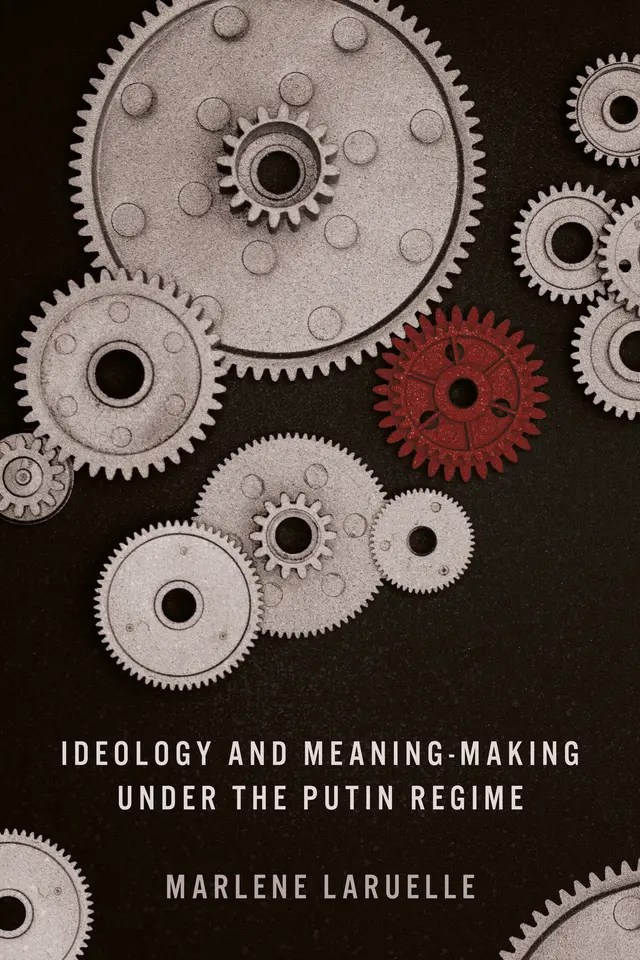
A new book by Marlene Laruelle seeks to answer the first question, if not the second. Ideology and Meaning-making Under the Putin Regime is just under 400 pages and is somewhat of a departure from the fashion in US-published books for slim volumes. A few people asked me to write a review of it after I mentioned it previously, but this post is not a real review, but just some reflections based on my interest in criticizing approaches to understanding ‘late Putinism’ that rely too heavily on coherent ideological explanations. Having said that, Laruelle is one of the scholars most careful and scrupulous in her research.

At the outset, Laruelle asks: ‘How did the Russo-Ukrainian war become possible, and what role did ideology play in enabling it?’ The Introduction goes on to argue that the ‘Russian regime does offer an ideological construction that has internal plausibility and coherence’. For Laruelle, and perhaps most political scientists, the regime uses three mechanisms to ensure hegemony: material, ideational , and repressive. The first two are ‘cocreational’ – meaning that people link prosperity with the general will of the regime and identify with it. At the same time, Laruelle admits, the vast majority of Russians sense a lack of a state ideology. Her jobs then is to try to reconstruct something resembling a coherent set of beliefs or a world view and show how it is shaped by the elite in a feedback system with intellectuals, the outside world, imagined history, and ‘the people’.

But before doing that, her intro is really effective at criticizing existing approaches – showing that they severely neglect the ‘ideational’. She confidently dispatches what we can call the ‘kleptocracy’, ’empty propaganda’, ‘totalitarian’ approaches. At the same time, Laruelle sets herself some limits – ideology is about meaning-making and not propaganda, and it’s not about doctrine but worldview. Most importantly, ideology is aggregated from multiple repertoires and may not always/even inform policy.

The rest of the book is smartly structured in four parts. Reordering Ideology; Learning and Unlearning the West; Russia’s Counterrevolution; Russia’s Geoimaginaries.

Part 1 tries to get away from the idea of ideology as imposed by coherent actors from above while emphasizing the general tendency of state ideologues to present the current social order as ‘valid’ and irreplaceable. Three elements of regime doxa were formed in the 1990s: anti-collapse; normative great power recognition; state over (and encompassing) nation. This develops into five strategic metanarratives which then dictate the content of much public speech: Russia as a civilization-state, Russia as katechon (holding back the antichrist), as anticolonial force, as antifascist power, as defender of traditional values. Laruelle argues that despite the ‘chaos’ of ideologemes one encounters, there is a coherence to public speech that adheres to a mental apparatus with ‘roots’ in these narratives (p.19).

All the ‘topoi’ that ever enter lay talk, like ‘Gayropa’, or ‘collective West’, can be traced back to the core metanarratives and then core beliefs. ‘Indeed, as in jazz, there is an established common theme or point, but each authorized player is allowed to improvise at will… There is both ideological opportunism… and stability in the core set of beliefs.’ (23) Perhaps feeling that this is altogether too neat, after some analysis of individual worldviews at the top of the elite, Laruelle acknowledges that various issues still can’t be explained by this framing alone. There are, after all, lots of intervening institutions and actors. ‘It is challenging to to decipher what is genuine cocreation from what is cueing’ (28), Laruelle remarks, before reminding us that very few security elites favoured an aggressive Ukraine policy before the war. Part of the answer is the tendency of authoritarian neoliberalism to produce ideological entrepreneurship, of which Z-patriotism is just the latest example. However, the regime itself is not the addressee here: ‘a vision of Russia that emerged in lived experience by Putin’s inner circles and more broadly the establishment… looked for intellectual soil and a better-articulated doctrine to justify and nurture itself.’ (37).

Part 2 traces the rejection of liberal internationalism since 2000. Analysing the use of the word ‘liberal’ in Putin’s speeches, Laruelle argues that ‘his self-presentation is purely situational, if not opportunistic or cynical… and [while he] has never totally abandoned references to universal values, the shift from supporting liberalism… to denouncing it wholesale has been a major change.’ From here its a short walk (to 2022) to an idea of recovering a ‘first modernity’ – an idea that ‘there exists a true Western heritage rooted in a rejection of some forms of modernity’ (92) and in this sense, Russia borrows from the US culture wars significantly. Partly because of this weak and reactive form of antiliberalism, ‘there is no consensus among the Russian establishment regarding Russia’s relationship to Europe identity-wise’ (96).

This Part also covers Byzantium and the ‘Pontic power’ shift after 2008 but which had weakened by 2022. There follows a chapter on patriotism as state-centrism – the idea that the only soveriengn actor can be the state. Over and above the usual argument about how empire, statism and statehood support each other, Laruelle discusses the discourse of ‘historical continuity’ (preemstvennost).

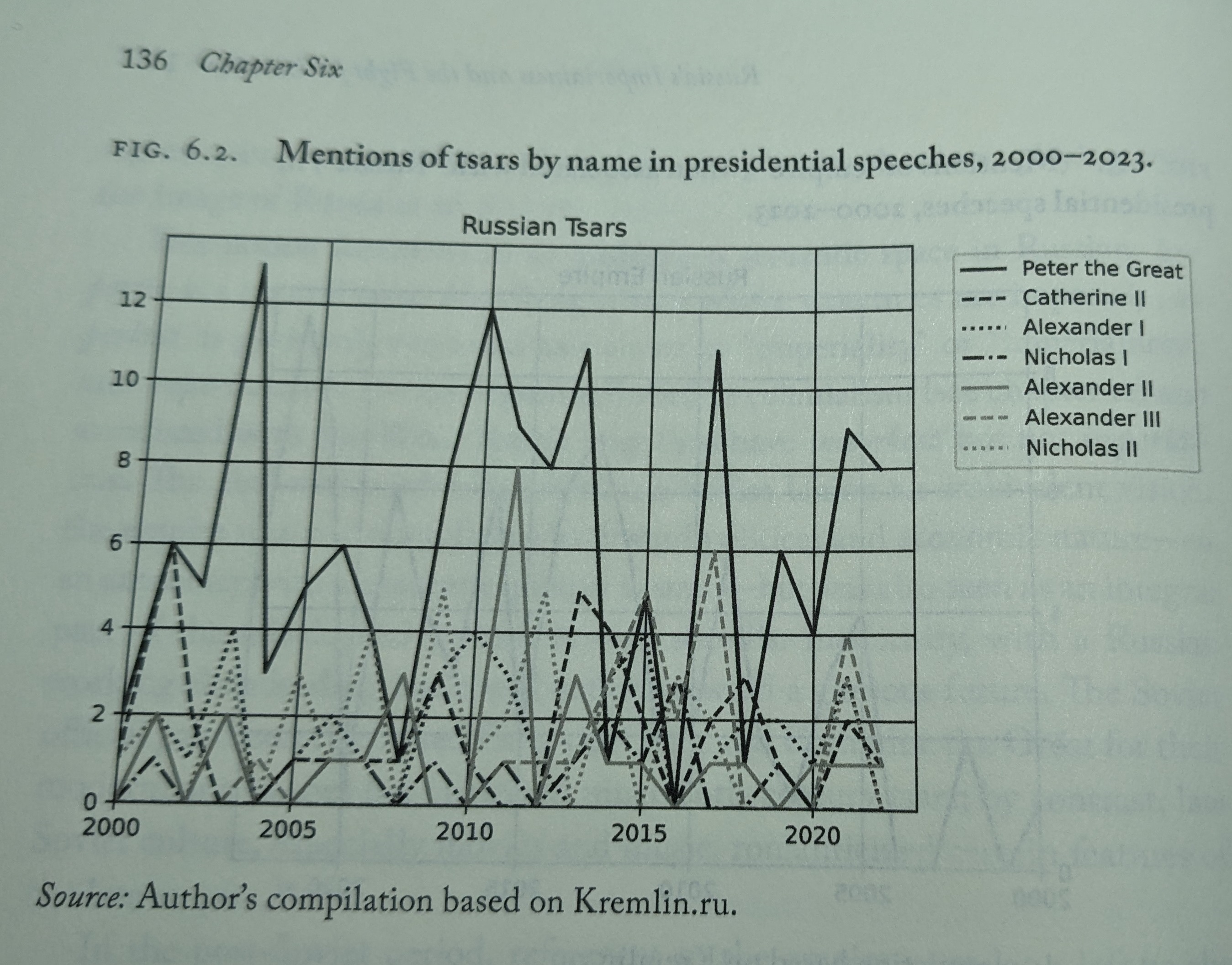
Throughout the book, there are author-calculated graphs of the rise or variation in the mentions of particular words. For example, on p. 113 we witness a striking rise since 2000 of the use of the term ‘patriotism’ in presidential speeches. Sometimes these figures speak for themselves and help support the main argument, but in other cases the ‘data’ looks noisy and too Putin-centric. On patriotism, it’s striking that Laruelle meticulously documents the spectacular and discursive promotion of pro-patriotic symbols and spaces, but, like the regime itself, emphasizes the closure of narratives, the narrowing of what can count as patriotism and how little ‘content’ the ‘spatial imaginaries’ and ‘uses of the past’ have room for. A genuinely productive and mobilizing deployment of Stalin, WWII, Lenin, Brezhnev is impossible because of the timidity and incoherence of the regime, while the celebration of Russia’s environmental diversity, modernization and ‘valorization of territory’, are notable for what they omit or would appear absurd in proposing.

Similarly, the reconstruction of Russia’s ‘Imperialness’ in the next chapter shows the regime is not without ambiguities and is even half-hearted. For example, rehabilitation of White ideology (the anti-Bolsheviks in the Civil War) is limited to the cultural sphere. Fully embracing it would mean devaluing useful elements of the Soviet heritage. Putin here emerges as a bit at odds with the rest of the elite – much more anti-Bolshevik and more pro-Tsardom. Laruelle gives us a neat overview of how Putin and Medvedev have referred to tsars, but this is a good example of the messy data – the graph is just a series of ups and downs, even allowing for the clear devotion of Putin to Peter the Great (136). This chapter also deals with the very real revival of antisemitism by regime insiders and the extreme anti-Ukrainianism of Timofey Sergeytsev, though none of the radical voices are quoted in the new ideological school textbook sponsored by the regime (144).

Part 3 opens with a chapter on Russian civilization as rejecting Western Universalism. Cue a journey through Spengler, Toynbee, Huntington, Eisenstadt, von Herder and a brief reiteration of the nineteenth-century Slavophilism and then the Soviet rehabilitation of Spengler through to the late Soviet and post-Soviet influence of Gumilev, Panarin and the replacement of Marxism-Leninism by ‘kulturologiia’ – an essentialist new superstructure explaining world history to Russian students. For example, A. Panarin links ‘Russia’s messianism to being a global safeguard of polycentrism: by its very existence, Russia demonstrates that the West is not the sole driving force of development’ (156). Here we get also a reiteration of Laruelle’s argument that ‘Russianness’ has been detached from ethnonationalism by Putin successfully, and a short discussion of three versions of Islamic civilizationalism that compete within Russia today (Slavic-Turkic fusion; Volga-Ural centrism; eclectic Kadyrovist loyalist conservatism).

Chapter 8 is perhaps the key chapter in some ways to the book – on Conservatism. Three sources inform today’s version: tsarist era, Soviet ‘social conservatism’, and the interest in ‘morality’ from the 1990s. Here I feel there are some stretches, or at least some grounds for more debate – as any of the three ‘sources’ here remain obviously open to interpretation. Nonetheless, Laruelle is willing to back up her argument with plenty of evidence, noting, for example, that the moral aspect of liberalism in the 1990s often goes unnoticed (173). Once again, in this chapter, a reader might get the impression that the resort to quantification of terms like ‘traditional values’ in speeches has little to add to the rich scholarship of the author.

Mentions of ‘tradition’ are pretty stable since 2005 (or rather the standard deviation increases for a while and then reverts to a norm when it comes to words like ‘spirituality’ – which is a notoriously empty signifier for Putin). We get intimations of the slippery, unconvincing embracing of conservatism when the author reveals nuggets like the fact that there is hardly any investment by the state in intellectual research on conservatism (186). This leads Laruelle to note that those conservative intellectual entrepreneurs who tried to work with the Presidential Administration were to be disappointed.

This explains why so many ‘entrepreneurs’ like Kholmogorov became more reactionary – not because of an alignment with the regime, but because of their frustration with it. Thus, it is surprising when Laruelle ends by arguing that conservatism really is the ideological backbone of the regime, and indeed, that it is a national conservative one, albeit that it is a national state form of conservatism. Coming away from this chapter I understood that a vague form of conservatism is an organic part of intellectual history in Russia and has a social content, but that has had almost no contribution to policy output directly (beyond contradictory tokenistic lawmaking by the ‘rabid printer’ that is the state Duma). On these terms one might argue that a country like Denmark or the UK is more consistently conservative – especially in terms of what the book proposes as a ‘cocreated’ hegemonic ideology.

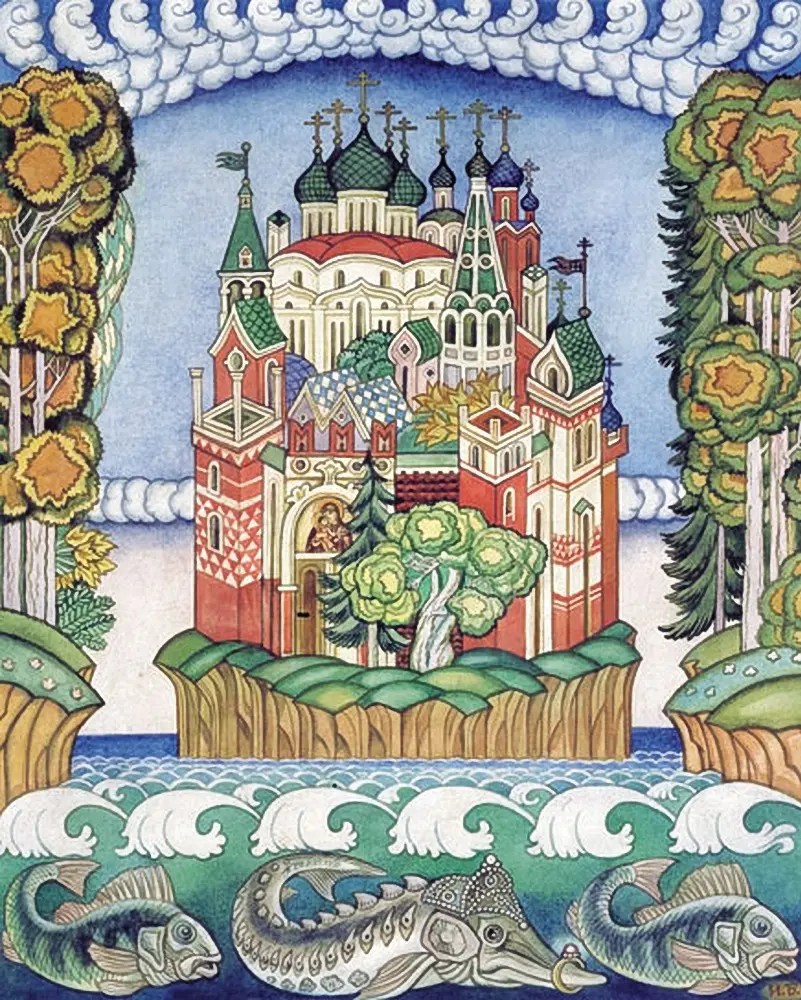
In Chapter 9, Laruelle tackles the subject of Katechon as part of a reactionary tradition in Russia of millenarianism and eschatology. Russia, after Maria Engström, is the ‘gatekeeper of chaos’. In this logic, the Ukraine war could be seen as part of a Reconquista. Nuclear Orthodoxy, Soviet imperialism, mystical Stalinism, and my personal favourite – the legend of the City of Kitezh (which can autarkically submerge itself in the heartland to hide from the hostile neighbouring territories) all rub shoulders in a bewildering postmodern eclectic blend of religious inspiration. ‘Teach us to breathe under the water’, never sounded so apt.

In Chapter 10, the scholarly fashionable idea of identity as spatial imaginary gets a comprehensive treatment. Laruelle here reissues her own contribution: Russia as fertile ground for geographical metanarratives (212). Russia is (and can only be) Great because it is big and has expanded a lot. Eurasian destiny as teleology. Without empire, there’s no Great Power status. Cultural and political boundaries do not overlap with state borders – Franck Billé’s idea of ‘auratic bodies’.

But the notion of Eurasia remains horribly elastic and fuzzy, as Laruelle points out herself. A common destiny led by Russia? (remarkable to think about this given the admission by most Russians that they are completely dependent on the whim of China now). Eurasia as civilizational project which differs or competes from Euroatlantic ones (again, an empty signifier)? The book does show that at least performatively, Putin likes to play around with the the term ‘Euro-Asian’ from 2012 onwards. However, characteristic of his improvisation, this discourse drops off from 2020 sharply, perhaps because of the failure of the Eurasian Union. By the end of the chapter, the author admits to ‘numerous semantic gaps. No official text about the Eurasian Union mentions Eurasianism as an ideology’ (230). And the ‘founding fathers’ of Eurasianism enjoy cultural, but not political, prestige (with the exception of Gumilev, perhaps).

Because this is a v. long post already, I will skip the final Russian World and Anticolonialism chapters, though they are just as informative and well-researched.

In the conclusion Laruelle argues that Russia has moved towards a much more rigid ideological structure and has an official ideology (265), but at least to this reader, the book, with its repetition of the terms ‘repertoires’ and ‘plasticity’, seems to argue for something different – perhaps the word ‘ideology’ is inadequate here. Can an official ideology be entirely negative – based on resistance to the West, and promoting an all-powerful state? As Laruelle notes – Russian efforts to project soft-power have failed and ‘the state’s survival remains the main objective of the regime, and acquired territories are subordinated to this state-centric strategy more than having a value in themselves’ (266).

‘Typologizing … the Putin regime may be morally reassuring, but it does not automatically provide a heuristic approach for scholarship if the typology is taken at face value and not itself interrogated’ (269). Should we talk about Putinism? Only in so far as a collective Putinism expresses how all these historically determined discourses get more or less traction over time. ‘War Putinism was only one of the possible options of early Putinism…Ideology matters when it reinforces strategic goals, but not enough to force a decision solely on this basis’ (272). For Laruelle, the war forces the blending of formerly disunited repertoires – soveriengty, civilization, conservatism, traditional values, etc. ‘The war has provided internal coherence to this ideological puzzle’ (273). Manufacturing consent has its limits, but it is aided by depoliticization, dissociation, ‘consentful’ discontent, ideological passivity, and a shared ‘zeitgeist’ with the regime: that Russian society is superior (‘healthier’) to the West. Thus, in conclusion, Laruelle sides with quantitative surveyors in proposing a relatively coherent national-conservative majority, while leaving the future open to alternative reinventions such as cooperation with the West, or an ‘Asian’ model like Singapore, or even an illiberal grassroots democracy.

As regular readers might surmise there’s a lot here I both agree with and disagree with, but for anyone wanting a survey of all the genealogies and diversities of Russian national-conservatism, this book will not be found wanting.

The loneliness of the long-distance war supporter in Russia

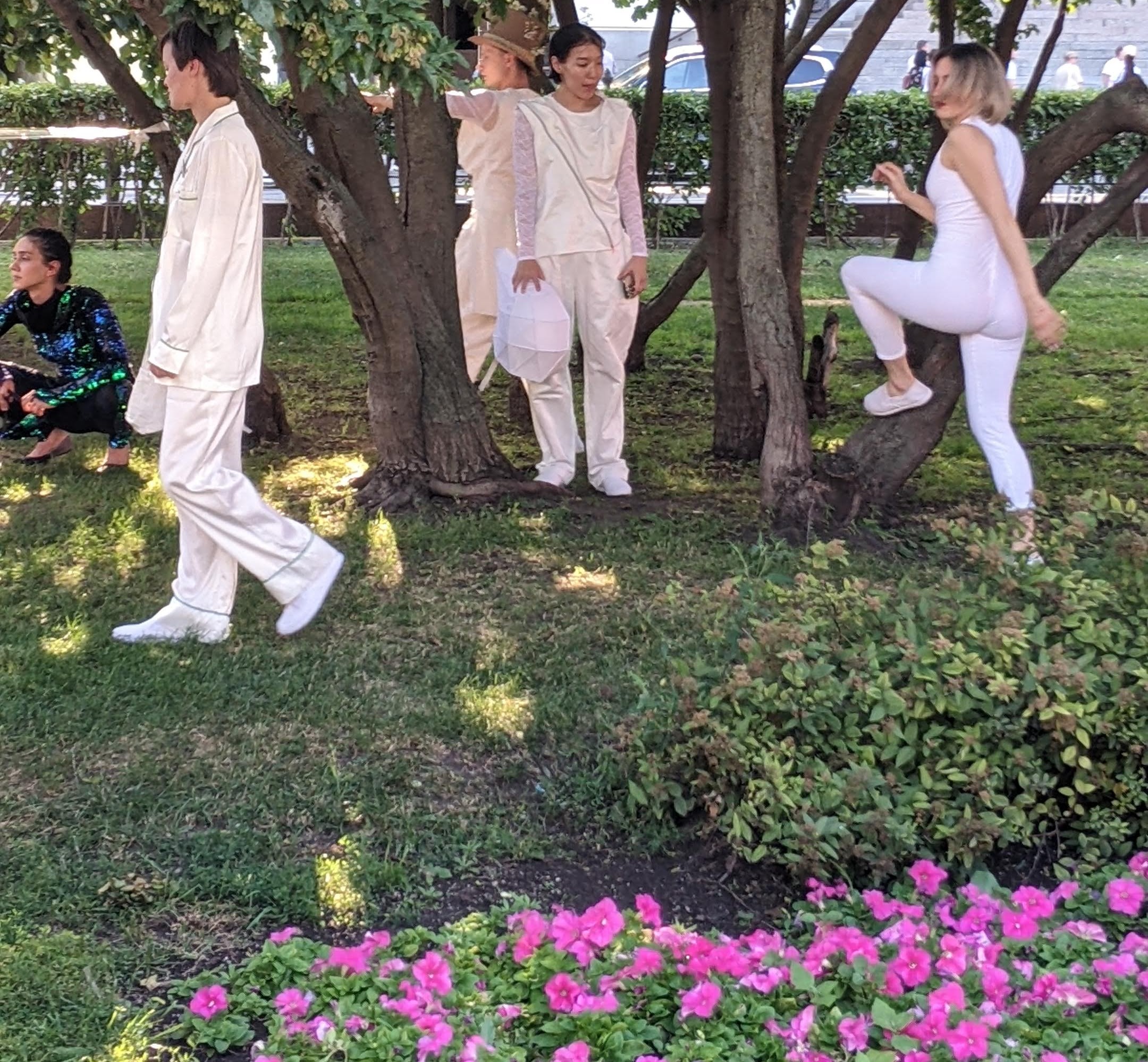
Russian street theatre performers rehearse in a public park in Moscow, August 2025

A piece for Ridl in May 2025 anticipated the disappointment Russians would experience at the lack of a ceasefire. I got to confirm the palpable malaise first hand when, this summer, I spent a long period in Russia. This piece then, draws on some first-hand observations of the ‘social mood’ in Russia right now. Irritation and isolation is the flipside of the ‘comfort’ culture. And perhaps what partly feeds demand for it. As one of the few social researchers with access to what we call ‘the field’, I am very careful to calibrate what I hear and see. I don’t want this piece to be read as ‘anecdote’ or the uninformed views of a mere visitor. I take seriously social science methods and reflect a lot on potential bias and the danger of interlocutors misleading me, or themselves.

Irritation as a second-order affect/effect of war-weariness

With that methodological note out of the way, I couldn’t help but echo the comment of a fellow researcher on social media who in July remarked: ‘why are Russians so grumpy?’ Specifically, he was referring to service workers in front-line work with the public in a large city. I also experienced a surprising amount of unpleasant service encounters (in Moscow, of course – a city that makes New York look a bit chilled out). People are genuinely irritable and snippy, and part of this can be put down to the general social situation, while a lot of ink has gone in to ‘proving’ that many Russians have materially benefitted from the war, it’s difficult to avoid the strains and stresses the war has brought to all the rungs on the social ladder.

Before I arrived, Russian people kept telling me that obviously Putin would get a peace on some of his terms and that even if he didn’t, it was clear that Trump would bring the Ukrainians to heel. How do they feel now? Not great, is the answer. It’s an empirical confirmation of a point made by more quantitively-inclined observers: that polls can tell us something, as long as we read them carefully. In a talk a while ago Ekaterina Shulman remarked that it was very revealing that while a big majority tell pollsters they agree with the statement that the ‘SVO’ (special military op) is going ‘very well’, almost the same number agree with the statement that a ceasefire should ‘happen right away’, even at the contact line (in marked contrast to the stated aims of the operation). Hardly compatible evaluations.

Cognitive dissonance is palpable then, talking to all kinds of different people in Moscow and elsewhere. And this is true not only about the misnomer ‘SVO’. ‘The economy is great. But my personal circumstances are tight. And my friend can’t find a decent job. But isn’t the rise in wages [reported on the radio] great? For other people’. You get the idea. This is a classic psychological distortion, a standard effect of suggestion. This isn’t the main point of my post here, but certainly, irritability should maybe get more attention as a social barometer in contexts like the one Russians are facing. Irritability pairs with cognitive dissonance, but in turn that dissonance expresses a form of knowledge and a rational reflection of (constrained) material circumstances. That things are not as they are presented.

On a side note, I should add that most of the people I interact with do not consume alternative media. Some are openly critical of state media, but most are not (which doesn’t mean they don’t know it’s a very distorted picture). Nonetheless, irritability that bubbles to the surface is palpable when vaguely politicizable topics come up. With irritability one could pair: loneliness.

The loneliness of the true believer (in war)

People who feel a lack of connection or recognition or even just the possibility of sharing pleasantries get irritated and frustrated. In the social sciences literature this is covered by the study of the ‘politics of relationality’ and of ‘affect’. A lot of effort has gone in linking alienation and loneliness to a general lack of recognition of particular groups of people as subjects. And some explain the rise of the far right and other political affiliations through this alienation. More generally, ‘relationality’ is about acknowledging our human need for some sense of stable relationships with our world as we experience it. Tradition, and religion and authority are not available for that purpose in many societies. Defensive consolidation at the start of the war might have been a gut instinctive reaction for many people – but the lack of a patriotic cause, or even coherent leadership position on what the war is for, means that any sense of rallying around a symbol of Russianness is hard to put into practice.

***

Sergei Akopov shared with me his 2021 piece on Sovereignty as ‘organized loneliness’ just after I had drafted this blog post. So I need to make a quick aside about it. Akopov focuses on “symbolic representations of sovereignty and their ability to evoke ideological discourse that appeals to notions of identity and loneliness. In the case of contemporary Russia these are also appeals to Russia’s ‘lonely’ civilizational sovereignty, projected both in historical and geopolitical ways.” Later on he argues: “states are able to successfully talk on behalf of their people when state discourse on sovereignty efficiently (directly or implicitly) appeals to a nationally or civilization
ally defined people’s ‘loneliness anxiety.’” Like Akopov, in my book I try to get inside questions of alienation and identity in Russia, though unlike him, I link them to the traumatic social experience of Soviet dissolution. Nonetheless, I would agree with Akopov that ‘organized loneliness’ is a function of the ‘powerful state sovereigntism’ trope in Russia which crowds out more productive forms of shared identity.

***

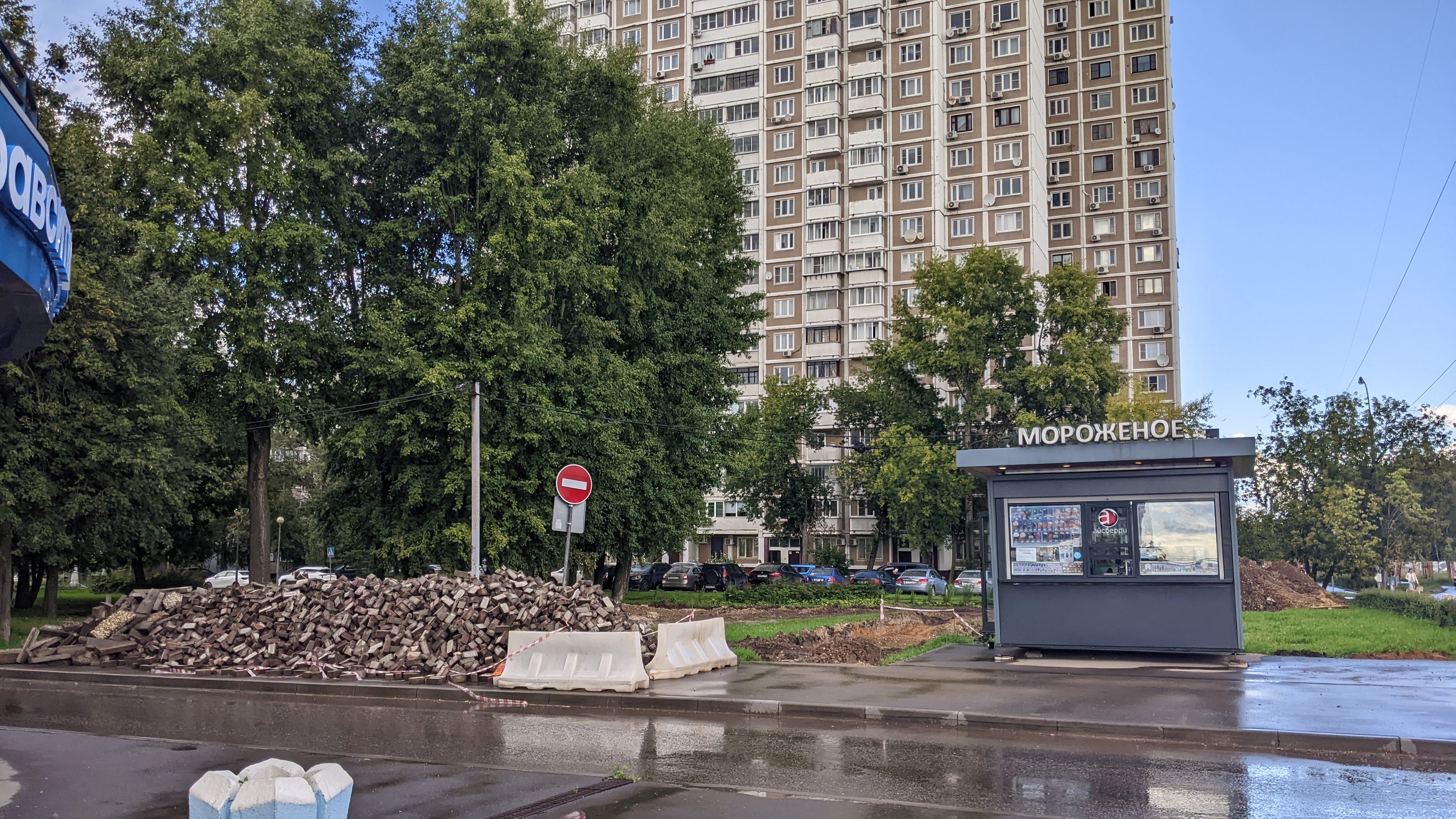
rubble and ice-cream – the quintessence of Moscow summer

The true believers I talk to are terribly lonely. It has been hard for scholars to address the experience of ‘social death’ that has been injected into Russian society. Just in my own circle, many families are not on speaking terms – and this is just among those who have not left the country. Often it is the anti-war people who have made the definitive break with their relatives and come across as more ‘extreme’ in their views. But the social death itself is then felt most keenly by the true believers. This is because, in reality, apart from the radio and TV, they have no firm sources of confirmation and validation. When I re-entered the field, I was most afraid of my own social death – a number of people had deleted me from Telegram, afraid of any unforeseen consequences of further acquaintance. However, back in ‘the field’, all was good again. Not so for my lonely true believers. And so they turned to me, again and again.  

When a destabilizing or traumatic event is experienced, it’s not just a psychological thing. It’s social as well. People get comfort or strength from a ‘reassurance’ check provided by others, much more than by the media (although parasocial relationships online are very important too nowadays). Social reality is what emerges from sharing experience and validating it. From interacting with others. ‘Fear and anxiety feed off isolation’, as Hannah Arendt showed in her analysis of loneliness. ‘Hope is reinforced by sharing fears with others’, as Anya Topolski remarks in a book on the politics of relationality. And my comments here are largely derived from her work on Arendt. Normalization – even in a war – has to be reproduced (and become validated) socially somehow. But think for a minute and this isn’t really possible for a lot of people in Russia. They know that what they hear is not quite right, or even quite wrong. But it’s not easy to talk about it – even to loved ones.

What was unexpected for me was how many people wanted desperately to talk to me about the war as a relative outsider. Even if they started off by saying ‘we’re not going to talk about the war’, within a few minutes they had invariably come back to it! All of these people were hardcore or normcore war supporters. I think this is partly precisely because I’m considered as coming from a ‘different reality’ to them, as they would occasionally remark. This revealed, again, inadvertently, that they know that their own country’s perspective might well be skewed. Detailed analyses of those conversations are for another post. What I would emphasise here is that irritation (not with me or my answers) and a sense of malaise emerged in those conversations too. A sense of senselessness.

I’ll just give one example. I couldn’t visit one of my oldest interlocutors as she’d been on holiday while I was in Moscow. Later she telephoned me and we had a long conversation supposedly about some house repairs she was planning but she kept repeating – a bit weirdly – how it ‘wasn’t right’ that to get to Crimea was only possible via the bridge and not like in the old days by train through Ukraine. And then she just couldn’t stop repeating that she didn’t understand why the Donbas was laid waste. ‘All that loss’. ‘All that destruction and for what?’ And she kept circling back, almost like someone with early-stage dementia. Not quite getting to the point. Not quite finding her thread. And not really even able to state what was obvious: that she felt depressed after her Crimean holiday.

More than a few observers argue that Russians are ‘bewitched’ by the war and that they require ‘disenchantment’ in some way to come to their senses (Ivan Gololobov has a forthcoming piece about ‘magical Putinism’). I would argue, on the contrary, not that the façade has cracked, but that all the latent disenchantments to do with aspects of Putinism unrelated to the war, are actually accelerating in their ability to resonate. Like a magic crystal.

There’s a word for this too in the literature: ‘crisis ordinariness’.  One could say that every society has its own version of this. Isn’t it the age of crises? To deal with this sense of crisis invading our social spaces, people have to cling to some kind of optimism – often a fantastic or magic one. That was possible, in the Russian case, earlier in the war. But hardly now. So crisis ordinariness is harder to ‘balance out’ with even a ‘cruel optimism’ (Lauren Berlant’s other phrase, specifically about the hollowness of the American dream today).

Is it strange to put so much emphasis on a vague feelings one encounters? For me, this was worth more than a pile of polling interviews or focus groups. But what about the bigger picture of indirect ways of dealing with reality? I don’t normally spend a lot of time in Moscow, preferring the company of people outside the dizzying pace of the capital. But this time I did spend some time there and made a point to make use of the possibility to travel to a number of ‘marginal’ places, touched directly by the war. But further reflections might need to be delayed for another time.

‘Spiritual values’ of the booze shops. Russia’s convenience economy as part of the soft administrative regime, Part II

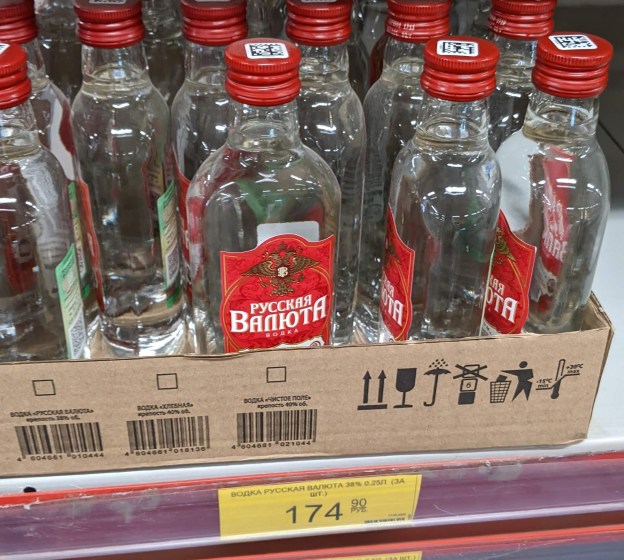
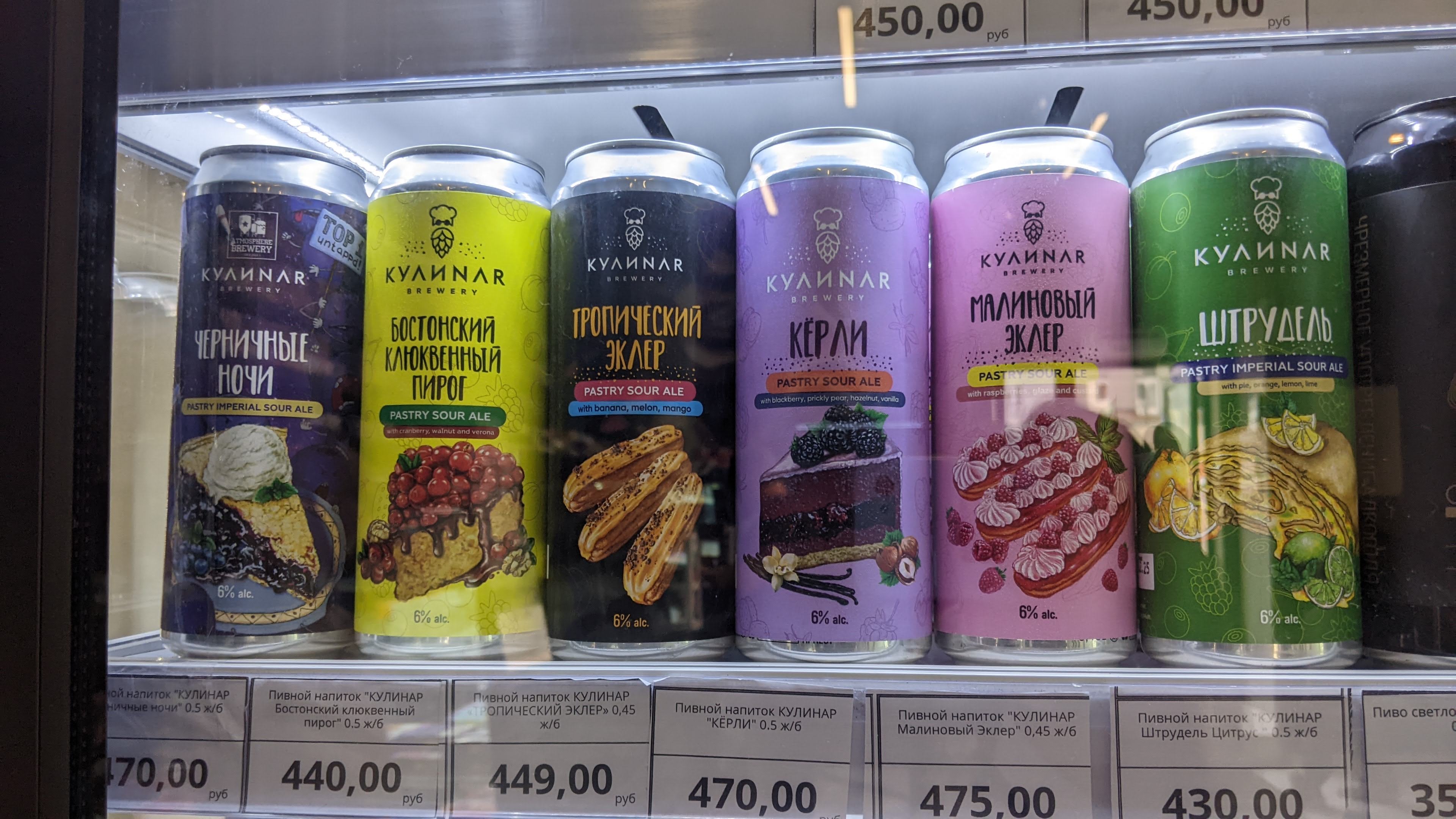
In contrast to discounters offering vodka for less than £2, the most dismal craft beer styles continue to do a roaring trade in central Moscow (note they’re more than double the price of vodka

This is the second post to look at the ‘convenience’ side of soft authoritarian administration: the comfort it increasingly appears to provide to the majority of Russians. Ideologists of all stripes in Russia have always had a problem with slotting in material well-being and the petite bourgeois life into a set of values that are supposed to be operative in the so-called ‘spiritual’ community of Eastern Slavic culture. But, as I asked in the previous post, what if material well-being itself, as a direct result of authoritarianism, could become a kind of ideology? To think about how authoritarian ‘comfort’ can become a source of public satisfaction (or ‘legitimacy’) we have to re-iterate some home truths about what kind of ‘realism’ most people confront daily. It certainly isn’t open repression or a sense of living in a personalist dictatorship.

A focus on political authoritarianism as all about coercion or about ideological differentiation deflects our attention from the discursive reality as experienced by most, if not all Russians: a kind of socio-economic Darwinism. This is a hegemonic ‘common sense’ that exhorts all to become self-governing atomized subjects – individually responsible for their success and failure in life. The first ‘common sense’ acts from above through dominant discourses and economic policies – the notorious labour code sets an example (making defending workers’ rights legally almost impossible), and the paltry social protections for vulnerable groups make sure they understand their position (‘the state owes you nothing’). Just as important is the response from below which internalizes and reacts – a ‘neoliberalism from below’. People adapt and even partly mould themselves to this unwritten compact. This is explored in part of my new book.

There’s nothing new in this situation since at least the early 1990s. Indeed the whole point is arguing for the timelessness of survival of the fittest as part of a dominant discourse of suspended modernity – ‘you can’t have nice things anymore: social democracy was a mirage’. The war makes things even more obvious and pressing at an individual level. Inflation means that a huge amount of labour market churn has been ignited in a system that was already suffering from labour shortages. Workers internalize the need to ‘hustle’ and be on the lookout for better opportunities. In turn, corporations and employers struggle to offer some kind of enhanced package – a ‘wartime’ deal, to bind workers in place. Ironically, this looks more and more like the Soviet deal: paternalist benefits like special medical insurance, kindergarten vouchers, enhanced holiday pay. That, in some respects, employers are on the back foot partly explains why some Russians consider there to be more opportunities today for them because of the war.

However, the ability to leverage an interest group’s structural power is limited. Pay at all but executive level is still extremely low by middle-income country standards, and physical mobility in search of jobs is hard because of the housing crisis, exorbitant commuting costs and poor infrastructure beyond the centres of large cities. The question of railway modernization came up the other day because of the announcement that the Russian government will invest in a massive high-speed rail programme. While a classic example of political distraction and reannouncing old news with no fiscal capacity to follow up on the plans, it’s also laughable to anyone who knows anything about RzhD (Russian Railways).

RzhD can’t even deal with the oversupply of empty wagons clogging up the creaking existing network and its structural problems as a state monopoly. The latter include extremely low productivity, the inability to cut waste and invest appropriately, being subject to political interest groups (wagon builders), and just not being able to attract skilled workers. Russia is short of 2500 train drivers and 3000 loco crews, and yet RzhD – which cannot go bankrupt because of the state’s backing offered its staff, wait for it, … a 1.2% pay rise earlier in the year. Military Keynesianism this is not. This is a harbinger. If the general crisis of stagflation in Russia becomes entrenched, and it looks that way, the realization of the structural power of workers of all types will become an important barometer. Just because striking and organizing is illegal doesn’t mean it won’t happen. Scholarship on labour unrest shows that when it comes, it is contagious and happens because of rising expectations.  

So far, so good (well, bad, actually). But the dismal reality of labour’s subordinate positioning is not the end of the story. That we can call the evolving regime ‘soft administrative authoritarian’ is because the reverse side of neoliberal austerity + surveillance and monitoring is the democratization of digital convenience, which in the post-Soviet context is often evoked as part of a narrative of authoritarian comparative advantage. Cue one of the endless social media posts of US ‘exiles’ in Moscow marvelling at its profusion of bars and stores, its cleanliness, order and whiteness. Any mention of Moscow should immediately give pause for thought, but sooner or later, innovations to make life easier there do diffuse to the margins.  And this is because an infrastructure of ‘comfort’ is inseparable from the forms of digital control.

hot dumplings from the mall dispenser. The selling points is speed and convenience

Realtime monitoring of people and vehicles using cameras and apps has dual uses – I can see on my state-controlled mapping app where my bus is in real time even in the sticks (something hardly possible even in most European cities). In Moscow, I still can’t get over the unemployed children of upper-middle class people ordering things like a single tub of icecream which is delivered in minutes for a tiny delivery fee. The courier is fed the address from that same smartphone that monitors one’s every move. The app prompts the user to feed the gate code to the courier when they forget to buzz him in. When on the move, people pay for little comforts, like a spiced latte, using ‘Facepay’. After all, what’s the harm when all the self-checkouts use face-recognition to prevent shoplifting anyway? Administrative security is built into everyday life like in no other European country, let alone the US where they have a banking system more fit for the 19th, than the 21st  century.

And the point is not to remind people that the security services have access to everything (and that even now, data in the Interior Ministry car owner database can be bought and sold for trifling sums), though they might well ‘remember’ that too. The point is that administrative security – including having everything the state provides on a single app (and soon, communication on a single state-messenger service: Maks) is a meaningful source of national pride – “look at what our programmers can do? You can’t even book a school place or doctors appointment online in the backwards UK”. The idea of technological progress in place of genuine progressive modernity (where rights and entitlements are advanced) renders the voices of those who urge to resist and imagine an alternative political or social order absurd and unthinkable. After all, Moscow is the most liveable city in the world, right?

At the same time, even as the population gets poorer by middle-income country standards (from formerly a position similar to Malaysia, to a position more like that of Mexico), the baubles of the comfort and convenience economy are rolled out even to the smallest humdrum towns like the ones I study. Amazon-type staffed collection depots are everywhere (there are four in the town of 15,000 people I work in). The Yandex taxi app extends its reach into the provinces, and actually has detrimental effects as it makes informal taxi-driving unprofitable for many middle-aged working-class men. But it’s more convenient for the middle classes of course, who can afford the higher fares.

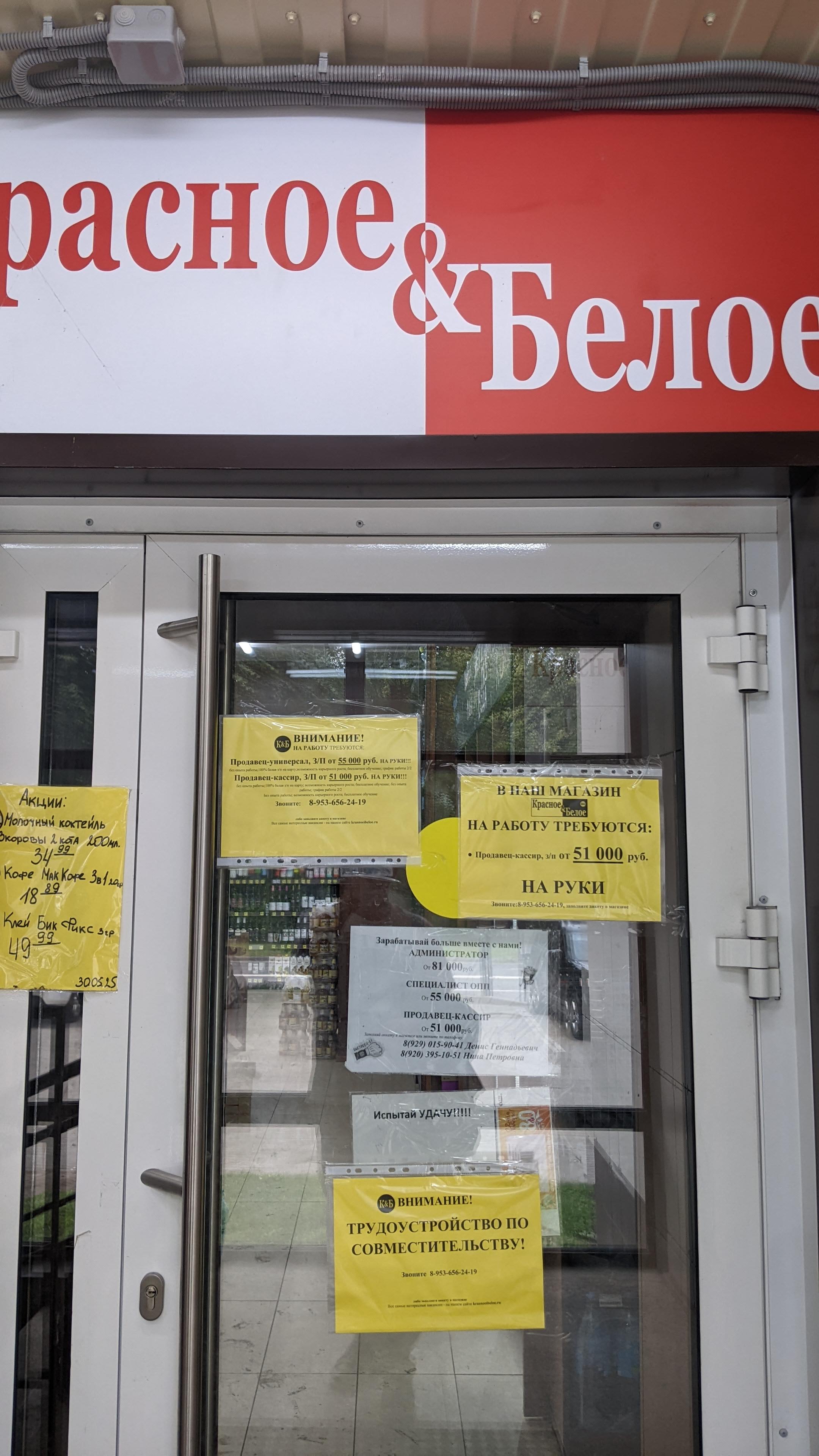
A Russian sociologist who wished to remain nameless reminded me recently that real ‘moral code’ [skrepy] of Putinism for most people is the democratization and stratification of the consumption of alcohol. For every degustation spot for fine wines, or craft beer popups in Moscow suburbs, there’s a ‘Red and White’ booze discounter. Red and White has over 21,000 little stores across the country. That’s twice as many outlets as there are McDonalds in the US, which has more than significantly more than double the population of Russia. There are usually three stores within a ten-minute walk of even the most unfashionable location in Moscow (ask me how I know). There are stores in the Arctic circle and one on the tip of Chukhotka, facing Alaska across the Bering Straits. There is even an outlet in the ancient city of Bukhara in Muslim Uzbekistan.

Red and White doorway with obligatory ad for workers

The number of B&W stores has nearly doubled since the start of the war as has the net worth of its billionaire owner. The slightly seedy, cheap and not-very-cheerful pokey stores are reminiscent of the worst of New York bodegas or UK cornershops. Their explosion shows not only the abiding nature of self-medication with alcohol but the explosion in demand for ‘low-cost’ offerings (the Group owner has also expanded his holding of discount supermarkets which do a roaring trade now – the photo at the top of this blogpost is from one of these stores).

Pity not only those purchasing adulterated beers and nasty red wines, but the hapless Central Asian immigrants forced to work for a pittance in these dives, along with the 24/7 kebab joints that usually spring up next to the wine shops. Comfort is maintained by a neocolonial service class. It’s also about the ‘doxa’: the naturalized and inevitable order: everyone has their labour price, and if yours is low, it’s the Red and White for you.

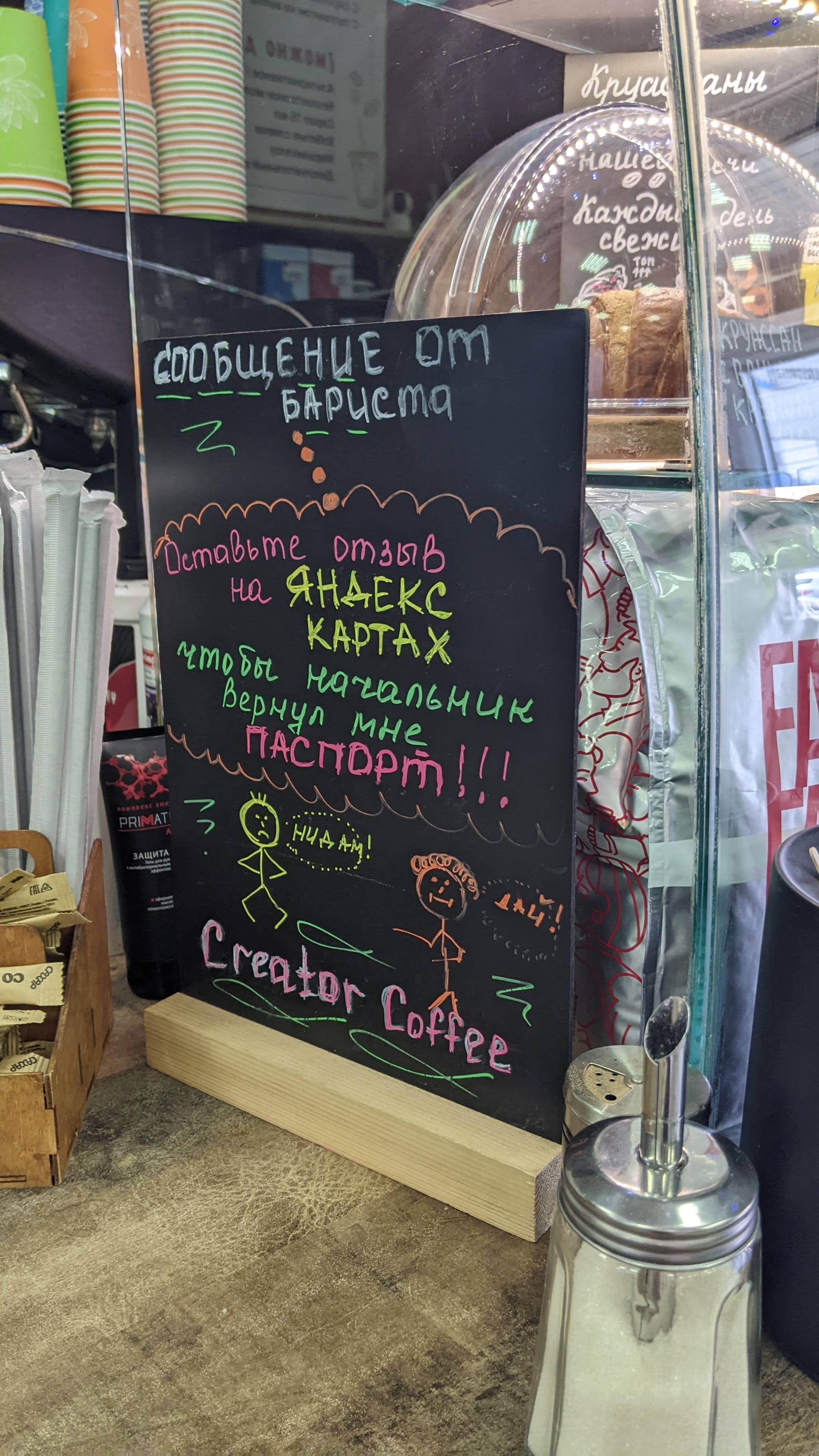
“From the Barista: add a review in Yandex Maps so that my boss gives me my passport back”

Consumption according to station is a moral virtue – achieving some kind of comfort and habitability becomes an ethical marker, rather than a purely socio-economic one, as researchers Rivkin-Fish and Crăciun and Lipan have argued. How this interacts with the war economy more directly – in the form of creating categories of biopolitical waste, and helping middle-class people distance themselves from responsibility for the conflict – we’ll come back to next time.

‘Can you be happy in a Mercedes?’ – on the ludicrous optimism of minimal expectations

The never-ending subgenres of ‘Russian girls pose with Mercedes’. Source: gtspirit.com

Long ago, anthropologist Jennifer Patico got the perfect quote from an interlocutor in St Petersburg during ethnographic fieldwork. Happiness was important, but it was better to be happy in a Mercedes! Another person cut in: ‘No, those who had Mercedes were not happy, because they “aspired” – they were never satisfied but were always aiming for more’. Patico then embarks on a wonderful analysis of the way the burgeoning consumer culture in 1990s Russia set up new forms of class-based distinction, and of course, deep unhappiness for those without the means to participate, and extreme stigmatization of the new ‘deserving’. Visible achievement of material comfort becomes a new marker of ‘culturedness’, to the exasperation of some. Thus, for Patico, consumption patterns and ‘happiness’ are more about how quickly value systems change during crisis. They then get deployed as ways of expressing social difference which is just as meaningful an expression of well-being than anything else. I’m satisfied because my neighbour’s car is Chinese while mine is Japanese. I’d be even happier if his house was hit by the falling debris of a Ukrainian drone.

The idea that well-being derives from legitimating social inequalities is probably as far as one could get from the well-publicized recent findings of researchers that Russians’ sense of stability and life satisfaction has reached its highest level since 2013. Meduza, along with The Bell, had a prominent write up in both English and Russian based on an interview with participating author William Pyle, an American economist. Unlike raw surveys, this study was based on long-term monitoring of household’s reported spending habits and self-reported subjective well-being. While the report itself is really interesting and I’ll get to in a minute, the Meduza write up suffers from some typical problems which happen when researchers and journalists talk.

To put it mildly, there are some big logical leaps in terms of cause and effect. At one point Pyle says it’s his ‘interpretation’ that recent ‘aggression’ gives (some) Russians a ‘positive jolt’. In isolation from the actual findings this feels like a bald statement.  Pyle follows this by summarising his main evidence: that by 2023 people have become more optimistic, more satisfied with economic conditions, and more secure about the future. Later in the write up, he notes that, surprisingly, perceived well-being was boosted more in regional cities than in the metropolitan centres – particularly in places like Penza, Perm, Tula and so on where some military factories are.

People often argue in this vein that war spending has had a measurable effect on all kinds of things. I always point out that most of this is wishful thinking or based on faulty reasoning. One reason is that people are indirectly influenced by the stereotype that Russia beyond Moscow is a bit like an oil refinery with a big tank factory attached. It doesn’t require much research to discover that in these so-called MIC regions, the actual numbers employed are smaller than expected. 15% of Tula’s economic output is in defence factories. In this ‘cradle of Russian arms’, less than 2% of the population work in defence industries. And mind, this is a well-placed, ‘affluent’ region with the highest concentration of weapon shops in Russia. (It’s true that in the Urals the picture is different and defence and chemicals industries do make up a significant proportion of employment).  A number of my interlocutors hail originally from Tula and it’s interesting that there is still out-migration from there to Kaluga because of the perception that MIC jobs just aren’t worth the candle: antiquated work practices, forced overtime, low pay and poor social infrastructure. That’s not to say that wages haven’t shot up in Tula, just that it’s just not the case that MIC factories demand has uniformly pulled away workers from other industries in such areas. It’s more that the demographic crisis in Russia is moving into its most severe phase just as significant numbers of young men are being taken out of the workforce and immigration is falling.  

Overall, comparing the Meduza interview to the actual report and other research we can easily detect the persistent bias of Russian media in exile and attendant punditry. It seems like so much coverage services to underline the already-existing “common sense” of the Russian liberal émigré mind: Russians prioritize material well-being over morality; they are callously indifferent even to their own countrymen’s suffering. They are, to quote Pyle, outliers on the ‘malignant patriot’ scale, and indeed, they have been that way since the 1990s (maladaptive thesis I’ve critiqued to death on this blog).

An aside on the ’malignancy’ thesis. This is largely based on comparing answers to two questions from the International Social Survey. In 2012, Russians were (rather?) more likely than other nations to answer ‘yes’ to the questions: ‘people should support their country even if it’s not in the right’, and ‘Russia should follow its own interests even if it leads to conflict with other countries’. In the same survey, it should be noted, Russian and US perceptions of the positive and negative aspects of one’s patriotism are statistically indistinguishable. It also turns out (natch) that Americans have pretty much the highest indicators of ‘benign patriotism’ of any country in the world.’ Who knew! Some scholars using this dataset compare more questions they think relate to bad forms of patriotism, and others focus more on particular questions they think express xenophobia. Conceptually, it’s a bit of a mess, with qualitative researchers perhaps not realizing they are not talking about the ‘same’ data points, even from the same survey.

Given the ideological sleight-of-hand in the Meduza and Bell coverage, it’s a surprise to turn to the actual research report. This paints a much more nuanced, and indeed, interesting and informative picture. It’s one where households’ resilience and adaptability emerges as possibly the ‘real’ social fact influencing forward expectations. Indeed, it might well be that a sense of: ‘fuck, things could have been so much worse after Feb 2022 and amazingly we’re still alive’, (a real quote from my research) is what’s really going on here. The happiness of relief.

What else is in this report? The authors acknowledge there that rises in GDP do not necessarily have anything to do with increasing in economic well-being. Real disposable income has stubbornly stagnated even if it is now on an upward trajectory. Spending on consumption is depressed while more people are putting away savings (for the inevitable rainy day?) and eating out (whatever that means). Centre stage in the report are two graphs – one showing a strong uptick in real disposable income since 2020, and another from Levada showing similar upticks in ‘social’ and ‘consumer’ sentiment since c. 2021.

Nonetheless, the devil is in the detail, as they say. The summary statistics in the report show only 51% of people are ‘satisfied with life’ and only 22% are ‘satisfied with economic conditions’. Kind of astonishing to contrast this with the spin by the media. Perhaps of interest too is the fact that (I think) most of the sample was collected in October and November in 2022 and 2023, meaning that seasonal factors may have distorted things (if anything downwards).

Putting into perspective the clickbaity (and perhaps unintentionally ironic) Meduza headline (‘a more joyous life’), the record high in reported subjective well-being is true, except that almost all the interesting contextual information is missing. This could be shorthanded as: Russians feel lightly less shit about life than twelve years ago.  We learn from the report that in 2016 there was a low of only 15% of people who reported they were satisfied with economic conditions. But even now there is only a 6% higher probability of a respondent answering ‘yes’ to being satisfied than before the war. As I’ve argued before, we should be wary of looking at increases from a very low bases. The spectre of inflation also haunts some of these statistics. Discretionary spending may increase now because of negative expectations about future affordability.

Then there’s the ‘ludicrous optimism’ of having low expectations (Bill Bailey on the British). A kind of pseudoscientific cultural trope applied to contexts as diverse as Nordic countries (well-being stems from the very fundamental and easily fulfillable needs) as well as certain anglosaxons’ and low-countries’ gallows humour (expect the worst so as not to be disappointed).  In the current Russian context though, there might well be some truth in this: the sky did not fall in. There is no wartime rationing. Most people did not get hit by Ukrainian drones. Sanctions did not break the economy, etc.  By most measures, Russia’s macro robustness and its translation into everyday life means that very low and pessimistic expectation in 2022 and even 2023 were not borne out.

Another aspect is one that’s central to my book (took a while to get to this plug, didn’t it?). The socially galvanizing effect of war short of rally-round-the-flag is what I call ‘defensive consolidation’. Fears and foreboding are real and remain massively underacknowledged in research, but the sense of ‘the world is against us, so we have to find sources of satisfaction in the now’ in consumption, in leisure, in socially meaningful work, in geopolitical resentment even, is also palpable. I’m also reminded of the ‘bloody-mindedness’ coefficient I often encounter in my work. An interlocutor of mine had to have a minor surgery last month and I was concerned about the dilapidated hospital he stayed in. After grumbling about the delay to treatment because of a lack of specialists, he said ‘actually the hospital is flourishing, in spite of the problems in the town. If it’s not perfect already. It WILL be good.’ The money he saw being spent on some beautification of public space meant he anticipated an improvement in patient care in the hospital (illogical and probably wrong). Certainly, such responses are complex and ethnography is useful here: the hospital has been starved of funds as political punishment doled out by the Region to the municipal head who opposes United Russia.

From happiness to adaptation

Subjective wellbeing is usually linked to three human qualities of experience: happiness, health and prosperity. But the kicker is that these three qualities or measurables may be inversely correlated or extremely ‘relative’. Many anthropologists critique a Western-centric idea of what pertains to well-being, instead focussing on culturally-specific notions of satisfaction, for example, deriving from immersion in a network of mutual social obligations; or from relations of recognition towards and from parents, to give just two non-Western examples. Social scientists also critically interrogate nations which attempt to claim the crown of happiest people, but which simultaneously have high levels of anti-depressants, interpersonal violence, discrimination, substance abuse, addiction, and other social diseases. They also note that people in rich countries might sometimes ‘lie’ to themselves about being happy because, why wouldn’t they, in such abundance, feel they ‘should’ act lucky?

People may want to ‘feel good’ as a universal, but to do justice to cross-cultural comparison it might be better to look at ways of interrogating how people respond to potential adversity. With the ‘adaptive potential’ measure, some researchers think that that the greater the score on adaptive potential to biophysical, interpersonal or symbolic adversity, the fewer the symptoms of physical and mental ill health and that this could have a comparative measure between societies.  Essentially, happiness does depend on a person’s intersubjective relations to her surroundings as much as objective measures such as material well-being. This goes for health (which may not be the absence of disease), happiness (which may well relate to overcoming or living with suffering), and prosperity (which may well be cross-culturally or historically unmeasurable). What the initial quote from Patico partly referred to was ‘lifestyle incongruity’ – where aspirations or expectations, and material resources available to a person do not coincide. Happiness lies at least in part in minimising such incongruities and this probably has a culturally-specific basis. Indeed, in some cultures it seems it’s possible to have a negative outlook, and even low self-esteem, and yet be highly ‘satisfied’.

Is Russian society ready for a ceasefire?

workers dismantle the motto of the Russian Borderguards Academy which reads ‘We do not desire even an inch of another’s land’

Tl/dr: yes, Russian society wants an end to war, but the core hawkish elite craves recognition, at least for Crimea and thinks maximalist extraction from Ukraine via Trump is possible.

Firstly, it’s important reiterate a point I’ve made many times: treat public opinion measurements in Russia by Levada, Vtsiom and others with a healthy dose of skepticism. They of course, do give us a picture of what most Russians perceive to be the politically correct answers to the questions they are being asked. Even Vtsiom admits that only a small minority of people polled believe that their participation in surveys allows them to express their opinion. This figure is 22%. And only 18% of people believe that the authorities are interested in their opinion. This has significant implications for how seriously we should treat surveys as a reliable barometer of public sentiment.

What’s more helpful is tracking over time the proportion of people who answer that they would support withdrawal from Ukraine without reaching Moscow’s military goals. Especially important are those findings, such as those of Chronicles, which recently show a higher percentage who say they would support a ceasefire without achieving these goals than the percentage who oppose such a decision – Chronicles recently measured this as 40% versus 33%. Significantly, the latter figure has fallen quite quickly from 47% previously. Chronicles overall thinks that the implacable pro-war cohort, or ‘maximalists’, is only 12% of the population. I would agree overall.

We can compare these kind of findings to research undertaken by American political scientists on the structure of Russian society in terms of types of popular conservatism. In a recent article, Dekalchuk and her coauthors argue that there are four clusters of non-conservatives in Russian society and five clusters of distinctly conservative groups. The latter are a majority of the population at 60%. The number of ‘die-hard’ conservatives who align with cultural and military patriotism is 15%, whereas the number of loyal and agreeable authoritarians is around 25% combined. Now, I should say I have some criticism of the overly complex methods of Dekalchuk’s study, but it serves as a complement to other approaches. Importantly, it shows that a similar number c.20% of ‘conservatives’ are not aligned with the authorities, or are even opposed to them, or have interests diametrically opposed to the elite.

At the same time  there is a big core of people who are essentially liberally-minded – perhaps 40% (and in reality if the winds changed, this number would easily be a majority). Thus, if we discount liberals from consideration the die-hard conservatives who are highly trusting in the authorities but not even particularly xenophobic, and then count them together with the group of agreeable authoritarians at 25% we can see that any decision about ending the war is not likely to have any problems justifying itself to these cohorts. Indeed, the paper in question argues that the core conservative groups have relatively weak value systems and can quickly adapt to new geopolitical circumstances.

I would add to this my own observation from polling done before the war on the salience of Ukraine to most Russians. It was very low to be almost statistically insignificant – meaning that if the elite want to drop Ukraine down the agenda this could be achieved almost without political costs among the Putin constituency. Finally, I would mention longitudinal monitoring carried out by Levashov and others at the Russian Academy of Sciences. This shows aggressive forms of patriotism to be extremely low in the general population: ‘patriotism’ as meaning the readiness to take up weapons is measured at only 25% by his team in 2023. A remarkably low number if we consider that this polling was conducted a year after the beginning of the full-scale invasion. In the same survey conducted in June 2023, only 4% of respondents named ‘patriotism’ as a source of national pride in Russia. 13% named the army. And 27% could not answer the question. The highest scoring answer was ‘The Russian People’ at 16%.

Economic imperatives

Deteriorating macro-economic situation is a major factor which will become more salient in the course of 2025 and 2026 regardless of any decision about a ceasefire. The increasing economic costs of the war for ordinary Russians was possible to offset or hide for much of 2022 and 2023, but the cumulative effect of inflation on basic foodstuffs has been relentless. Even where workers have received indexed pay increases, if we take a longer-term view, living standards for the majority have stagnated since at least 2013. It is important to remember that regime legitimacy has been primarily based on economic stability. Defence spending rose by 30% in 2022. For 2024 military spending was nearly 7% of GDP which accompanied the first serious deficit spending by the state of around 2-3%.

Wartime spending has boosted the apparent size of Russia’s GDP relative to other economies but what many observes fail to account for is that most of this spending has little multiplier effect in the economy outside military cities (which are small and isolated) and that given the grave infrastructural deficiencies in the economy and poor level of social protection spending, the decision to cut budgets that would actually improve life for Russians is an increasingly visible political choice by the elite that cannot be hidden even from notionally loyal citizens. The majority of people are less than enthusiastic about seeing a further reduction in living standards like that experienced after the integration of Crimea in 2014. People have economic ‘memories’. People often talk about their grievances about paying pensions to people in Crimea and now in the occupied territories of E. Ukraine to people who did not contribute to the Russian economy and so have not ‘paid their way’. This sense of undeservingness among new Russian citizens is a factor few have discussed.

To reiterate, one of the current major failings in analysis is the attention paid to the apparent growth and robustness of the Russian economy. With or without a ceasefire – the shift to military spending stored up major pain down the line for the main Putin constituency – state workers – in the forms of eroded purchasing power, deterioration in the quality of public services and reduced state capacity. (I will post later on the much commented-upon findings about a rise in life satisfaction among Russians)*.

Furthermore poor choices will only become more apparent as part of a conscious zero-sum policy choice as things like water infrastructure and public transport are characterized by breakdowns which are impossible to hide. Coupled with the plan to abolish the lowest level of municipal governance in favour of clusters of urban forms and the accompanying pressure this will bring on the performance of regional governors, it is highly likely that social strife will be an ever present political risk outside the 10 biggest cities – particularly in the rust belt and secondary cities, even in cities that have been the beneficiaries of military spending like Nizhnyi Tagil.

This is because the multiplier from higher military industrial salaries is much less than people in the West appreciate. If you go from earning 40,000 roubles to 100,000 roubles, that is still a drop in the ocean, especially when the real level of inflation is around 20% for wage-earners. For Russian military spending on soldiers salaries to have a significant impact it would have to change the share of national income accruing to labour. And Russia remains a country where despite very high human development, the share is around 10% less than in other highly developed countries. Consequently while there is an inflation shock, this is not primarily due to increased discretionary spending, which remains low even by East European standards. Similarly, soldiers salaries certainly have an impact on the family fortunes in the short term of the 500,000 -plus service personnel who have received them or who have received injury payouts or death benefits, but again, in the perspective of an economy of 140 million people, this impact does not scale, while it certainly does act as a drain on spending on other social priorities like child benefits, school budgets and hospital maintenance.

Elite opinion on ceasefire

What about elite attitudes? We can take a metalevel perspective on the information they receive about social mood. Likely, because of the ideological positioning of sociologists working for the regime, they get relatively good answers to questions they might ask. But we should be cautious about the quality of the questions they are willing to ask. We see the problem with this in wording of questions that sociologists ask in opinion polls: these are generally quite narrowly worded and focussed on identifying consent among people for decisions already taken or likely. Furthermore, we should recall that there is evidence of conspiracy theory belief and mindsets focussed on the possibility of betrayal by Western interlocutors.

As many have pointed out, the Russian leadership craves, almost pathologically recognition by the West more than anything else, and in the Trump leadership, it is clear they believe it may be possible to get some kind of recognition for Russia’s Great Power status and also carve out at least most of the territorial gains they have captured from Ukraine. It was interesting to observe the recent comments by Trump concerning American recognition of Russian sovereignty over Crimea. It’s quite possible to imagine that this is a kind of psychological priming or imprinting originating from the Russian side. Recognition of Crimea by the US would be a significant win worth having in exchange for even a relatively long ceasefire commitment. It would also be more realistic than trying to get acceptance of recognition of 2022-2025 territorial gains.

It seems very unlikely that any Ukraine government would agree to giving up more territory that would include the other parts of the regions partly occupied by Russia. The only other area under almost complete control is Luhansk region. Thinking back to how unworkable Minsk Agreements proved to be for both sides, it’s not likely that even after a prolonged ceasefire that the Ukrainian side would agree to any withdrawals. This means a frozen contact line and militarization of the existing contact line as a new border for Ukraine. This is far short of the maximalist aims of Russia, but Crimean recognition would easily compensate for this in terms of justifying a long-term ceasefire to the population. After all, there is significant war weariness, economic fatigue, a lack of belief that Russia can win in the long term, a lack of interest in the territories of Donbas, in comparison to broad and strong belief that Crimea is historically part of Russia.

This kind of ceasefire could easily be sold to the population along with the narrative that Russia can now rearm and regroup – take a breather, so to speak, that Russia has effectively held off the combined power of the collective West, and that it has saved those “Russians” who were in Donbas. Furthermore regime intellectuals can spin a tale of how this agreement effectively means recognition of Russia as one of the three great powers and having surpassed her European peers.

*I’ve been asked multiple times to write about rises in life satisfaction and will do when time permits. In short, the war has led to people focussing on small things of satisfaction and fragility of existence. Furthermore, people express satisfaction with less, as if they are ‘grateful’ the state has protected them from the dire prognoses of ‘blockade’. I would also say that the coverage of the report in question tends to gloss over the fact that the life satisfaction levels are still not that great! Where do they define happiness? What does it mean, cross-culturally, ‘to be happy’? There’s a massive anthropological lit on this, and I’ll unpack that in a future post, but one thing to consider is the extent that cross-cultural ‘contentedness’ derives from the ability to adapt to disappointment and frustration.

Everyday politics in Russia, Part III: Ressentiment and social striving

This is the third post about my book. The previous post is here.

That politics in Russia is mostly ordinary and local and insidious is an observation that partly builds on the insights of scholars like Samuel Greene and Alexandrina Vanke. One of my additions is that such a politics can contain traces of a social, and indeed, communitarian political drive. If we don’t like communitarianism then we can think of a more amorphous idea of social recovery, in particular the idea that a meaningful role in society should be available and that this in turn links to the idea of building and striving towards common aims for society made more or less explicit by state ideologies.

I avoid the term utopian, and I spend a lot of time arguing against the idea that this is a form of Soviet nostalgia, or that this impetus masks imperialist and great power instinctual needs among the majority of Russians. At the same time, I do take seriously that minority who express full-throated enthusiasm for maximalist war aims and for the Russian state-regime as it is presently constituted. But I only afford them the attention they deserve. What’s more striking are the common aims and desires of the majority. And this social-striving towards a common purpose (which contains different ideas of ‘the good’) is what connects both eco protestors and people like Felix. Felix is a composite of what are usually considered passive regime or war supporters. In a dramatic finale in the book, I represent the dialogue that is still possible today between those ‘patriots’ who collect aid for Russian soldiers and the people like Polina who are seemingly implacable opponents. In subtle and not-so subtle ways, their political articulations intersect in a defensive consolidation around recovery of the nation from social injury.

Defensive consolidation (author copy here) is a response I started writing about almost immediately after the start of the war. The potential stakes of the war bring into focus longer-term feelings of loss and hurt – glossed in the book as post-Soviet ressentiment. These include the loss of a master code, or Russian project, to replace the Soviet one that stood in for the absence of a meaningful Russian national identity. So, consolidation is this spectrum response, from pro-militarist *literal* defensive consolidation that is pro-mobilization, aggressive, to almost Tolstoian – the idea that the only viable social response is a return to rural forms of disengagement with the state which now have a quite a following in the form of eco-settlements, but which are no less a form of grassroots patriotism and striving for the social good than that of the jingo-patriots.

Much more typical is how the war pushes people to consider how to reignite the social imperative to care for Russia and Russians in the immediate now and here. And once again, modestly, I must say there’s nothing new in this argument – it is essentially derived from Samuel Greene’s insights about ‘aggressive immobility’. Nonetheless what I try to tease out is how the war pushes people together and then into forms of collective action – some of which become political demands – whether around receiving entitlements, to better infrastructure, to public safety, to environmental security, to socially-reproductive dignity. And of course, it’s not that the war suddenly means an uptick in visible politicking. Not at all. The point is that the war intensifies these socially-striving feelings that simmered away in hurt for a long time, particularly after the disappointment of the misnomered “Crimean Consensus” in 2014.   

‘Okay’, I hear a thousand Russia watchers object, ‘but how can you make these claims that seem so far from what we hear from other researchers?’ That brings me full-circle to the initial purpose of the book as I had been planning it since 2018 – to give voice to the inherently and intensely political talk and action of ordinary people in Russia. Time and again, the level of the ordinary and the political were mutually exclusive zones of scholarly consideration of Russia. People were seen as cynical, apathetic, atomized, traumatized into consent, willing accomplices, imperialists, civilizationally-incompetent, harbouring nostalgic false consciousness, or at best authoritarian personalities. But so often these theses about Russian political values were detached from the reality I observed in the 16 years of fieldwork relations and the ten years prior to that that I lived among people who would later become some of my informants. And that’s not to say that any of these theses are entirely wrong or not based on empirical evidence. Just that that evidence was mainly second-hand and very often informed by an out-dated common sense. Proactive, prefigurative, personally and locally networked negotiation around political issues of all stripes is present in Russia, even since 2022. Most of the book is about the period from 2014 onwards, but wherever I talk about events before the invasion of Ukraine, I try to update and fill-out the picture without romanticizing and without omission.

So, a book about politics in Russia is itself political in how it decides on what counts in the representation of public values, political action, and scientific knowledge about a society. Big politics is never divorced from small or quiet politics. The political content of ordinary people’s lives can have a huge influence on so-called big politics. Just look at failed military mobilization in 2022.

But with my political decision to give voice to small politics with big resonance, comes difficult ethical decisions. Even before the full-scale war I knew that I would have to obscure the identity of some interlocutors. This means that some of the evidence I present has to be schematic, superficial even. To try to address this problem I created composites – combinations of real people and real interview materials and observations. This means that individuals themselves cannot easily be identified. This is especially important because the majority of people I talk to remain active doing what they do in the book – antiwar activities, municipal political campaigns, eco and labour organising. Nonetheless, I do my best to give extended interview excerpts, and a lot of observations taken from the field, not only in Kaluga region where I focus on a few villages and towns, but also Moscow and my very diverse set of interlocutors from further afield.

To conclude, I argue for better and more serious attention to the ordinary and the micro-scale. Even in a high compliance regime like Hafiz Al-Assad’s 1990s Syria, Lisa Wadeen was careful to put ‘authoritarian’ in inverted commas – why? Because performative support never equated to belief or action on the part of Syrians. Just as authoritarianism needs ‘peopling’ if we are to understand today’s limits of consent to rule and tomorrows possible refusals, so too does a critical political economy, and that is also part of the book though beyond the scope of any short introduction. So, in concluding I argue that politics can’t be fully grasped without the inclusion of the people-scale, and the same is true of the economy. So important to understanding sources of support and opposition to the war, the economic needs an ‘everyday lens’, as various feminist and critical scholars have proposed. Following on then and acknowledging once again the work of others on these topics, there are chapters in the book about municipal infrastructure renewal and the right to the livable city, labour migration and garage economies. I  aim to bring to the fore the way economics and politics can’t be disaggregated when it comes to the kind of active, striving life observable, even if it is played out in a landscape dominated by a feeling what Alexander Vorbrugg has described as Russia’s ‘slow violence’.

Everyday Politics in Russia 2: How do we know the ‘average wage’? Plus: the bits of the book that engage with social movement theories

In the last post I mentioned….polsci. I don’t talk about much contemporary political or sociological theory in the book, but I am interested in a moment from early 2000s where Douglas McAdam and his co-authors Tarrow and Tilly appear to countenance a ‘poststructuralist’ way of looking at social movements

Following Tilly et al, I pick up on the call from more than 20 years ago by these authors to better integrate cognitive, relational and environmental factors pertaining to the submerged reality of political movements and networks. To reiterate – we’re looking at sums of effects of the flattened public sphere by criminalizing protest, the beheading of movements’ charismatic leaders. This, I argue, forced on activists a more democratic and grassroots focus; Putin’s 2020s Russia produces a new and in some respects dynamic activism, as much as activists’ ideological commitment or material resources do. This is the conundrum of social movement studies – the gap between foundations of action and action itself – how does a ‘process’ of activism occur or not occur in the presence of network and commitment? Again, this is something I started exploring in a direct response to Tilly’s work in my previous co-edited book. In this new book, I look more broadly at how much in common anti-war activism has with labour organizing, ecology work, and even grassroots patriotic activism in support of Russian soldiers. What I find are related processes of dispersed, nomadic activism. But there is a long gestation and formation of political positions that then informs action. Once again, that is the value of a ‘submerged organizational level of analysis’ (Tilly) – and one I aim to provide.

I follow a detailed process-tracing of anti-war stickering in 2022 in the case of ‘Polina’ in my book. To do something like this, most researchers need to start with the formative experience of 2011-12 around Bolotnaia, but also acknowledge the ambivalence of that experience. It has an affective hardening effect against Putinism, but also set up tensions around the question of electoral v. other politics, committees v. charismatic leaders, the centre v. periphery, talk v. action. It would be culturally reductive to say Bolotnaia radicalizes, or sets in motion a series of learning points in a predictable way that results in where we are now. Just to take the composite characters again from my book: ‘Polina’ becomes attuned to a genre of public protest opposition despite Bolotnaia’s failure, and despite the inflation in repression after 2018. Indeed, she goes against the advice of her allies among Navalny organizers when she stages a spectacular protest with others about Shiyes and gets her second arrest. At the same time, the stratum she ‘represents’ learns a lot from Navalny’s electoral strategy and how it involved regional capacity building: essentially, political education in organizing. But this for Polina occurs in parallel with her learning from socialist labour union work that’s mainly ‘indigenous’ to her locale.

But contrary to what you might expect, this is not taking place slowly, or gradually because it is occurring at the same time as an explosion of private (not public) social networking capacity. This means temporary alliances are possible between regional Navalnyites and ecologists and labour/socialist organizers. And these alliances are horizontal and nothing to do with the actual leaders of the Navalny movement. Indeed, it was funny when I interviewed a prominent person formerly connected to FBK and they had no idea of the capacity they had really built regionally because it was invisible to their own, centre-focussed and civic-electoral political aims.

In a sense, this process is frustratingly fuzzy to the social scientist; it remains very contingent, situational, refutes to a degree simplistic findings about the driving forces of identity politics or rights-based discourses for the emergence of social movements.  In that sense, my argument is not novel. Activism is opportunistic and, indeed, in a marginalized positioning. At the same time, the relative field of possible causes/actions/political orientations with which to align or ally expands in a noticeable ecumenical and pluralist manner – even to a degree which people are uncomfortable with in reality – like in joining members of the (regional) Communist Party in actions despite their prior mistrust and continuing unhappiness with the leadership of that party. As a result, there’s certainly merit in thinking about activism in Russia as an example of dispersed, pluralistic, and flexible political contestation.

But there’s also merit in thinking about how to put the ‘social’ back into the idea of social movements. Alain Touraine in the early 1990s remarked that post-social movements were heralded by consumerism and individualism and the abandonment of grand political aims based on class-consciousness. Movements base on identities threatened to pacify ‘social’ claims like a greater share of national wealth. But now we can think of the socialness of activism in a different way. What was interesting to me is how the actual differences and relations in communities of action are naturally visible and reflected upon by participants. And this carries over into relations between activists – so it was telling that while Polina didn’t like Navalny’s politics (too metroliberal and cryptonationalist) – she recognized the importance of her relation to the former Navalny organisers. At the same time, she didn’t like the anticapitalist socialist position of some unionists, but admired their actionist stance and picketing tactics. So, in a sense what I’m arguing for here is that the ‘social’ after the virtualization of opposition remains an important part of political engagement. The social as solidary and mutual learning still serves as glue and trumps political differences. Of course, the extreme turn of Putinism only helps this.

However, it’s also not that simple as having a common enemy. The war has forced people to confront the necessity of engaging with, or just listening to, those who support minimizing the damage to the Russian Federation while still broadly opposing Putinism. And in the last part of the book, I show this drama play out. Died-in-the-wool anti-war people are forced to acknowledge the legitimacy of activists who want to protect Russian soldiers even while those don’t support the actual war aims. Just a few days ago there was the case of a prominent anti-Putin socialist activist who was killed fighting in Ukraine. Oppositional activism is really only a small part of the book, but the tectonic social impulse that allows me to legitimately compare anti-war and patriotic activists is a recurring theme that provides the master theory underpinning all my ethnography. I turn to that in the following post.

Coda: What’s in the news? I read this article today about how only 10% of men in Russia admitted that they would feel awkward if a woman earned more than them. A linked article notes that the general gender pay gap in Russia is 43% (average salary for men 1000 USD and for women 720 USD). In turn this reminded me of a chart that Maria Snegovaya and Janis Kluge posted on social media showing a strong uptick in ‘real wages’ since the war began. Snegovaya sees this as support for the idea that the ‘population is loyal’. Kluge wrote that it shows why the war has been a ‘golden era’ for many. People assume that when I criticize these stats I am saying that they are ‘faked’. I’m not saying that, though I do think out of desperation at the poor quality of data they get that people in Rosstat have to process it a lot and that this alone is ‘dodgy’ – but something all statistical agencies do. What I’m really saying is: how reliable are the sources of this data in the first place when we know that what people actually get paid in Russia is one of the most notoriously opaque and painful data points in any statistics.

Anyway, to illustrate how silly it is to rely on one dataset like this (which in the original has no explanation of source), I just posted another graph from the same source. This is ‘real incomes’ (red line) and real disposable incomes (blue line). Details aside of the difference between incomes and wages, what’s perhaps most remarkable is the incredible stagnation of incomes between 2014 and 2023.

Axes of evil, or just normal chart crimes? The discussion in Russian to M. Snegovaya’s post is interesting. As is a follow-up post by Nikolai Kul’baka. He gives details on how wage data is collected from firms. As one can surmise, such data is not collected from small and most medium businesses. State enterprises we know do not reliably report salaries. A few v. high salaries distorts the average. The methods of calculation have changed a lot. Kul’baka: ‘there’s no major rise in salaries in Russia’. He also notes that protest frequency and changes in wages have no statistical correlation, something Sam Greene and Graeme Robertson explored many years ago in this excellent article.