Category Archives: Russia in the media

Three interview commentaries: Schulmann, Zubarevich, Kagarlitsky

the first in-prison interview of an AI-inoagent

Sometimes I like to blog about what’s going on in Russian social media spaces abroad though it doesn’t seem to bring many readers here. That’s a shame because it’s a space that only indirectly gets attention by anglophones (notwithstanding Meduza’s almost lone attempts to correct this). It’s also pretty informative because some of the best journalists and experts have a big platform there. There is however, just too much material to keep track of. Here’s a rundown of three things I watched via YouTube in the last weeks: political observer Ekaterina Schulmann on how to parse conflicting public opinion indicators; economic geographer Natalia Zubarevich on whether military Keynesianism is paying off; and an interview from behind bars with political prisoner Boris Kagarlitsky.

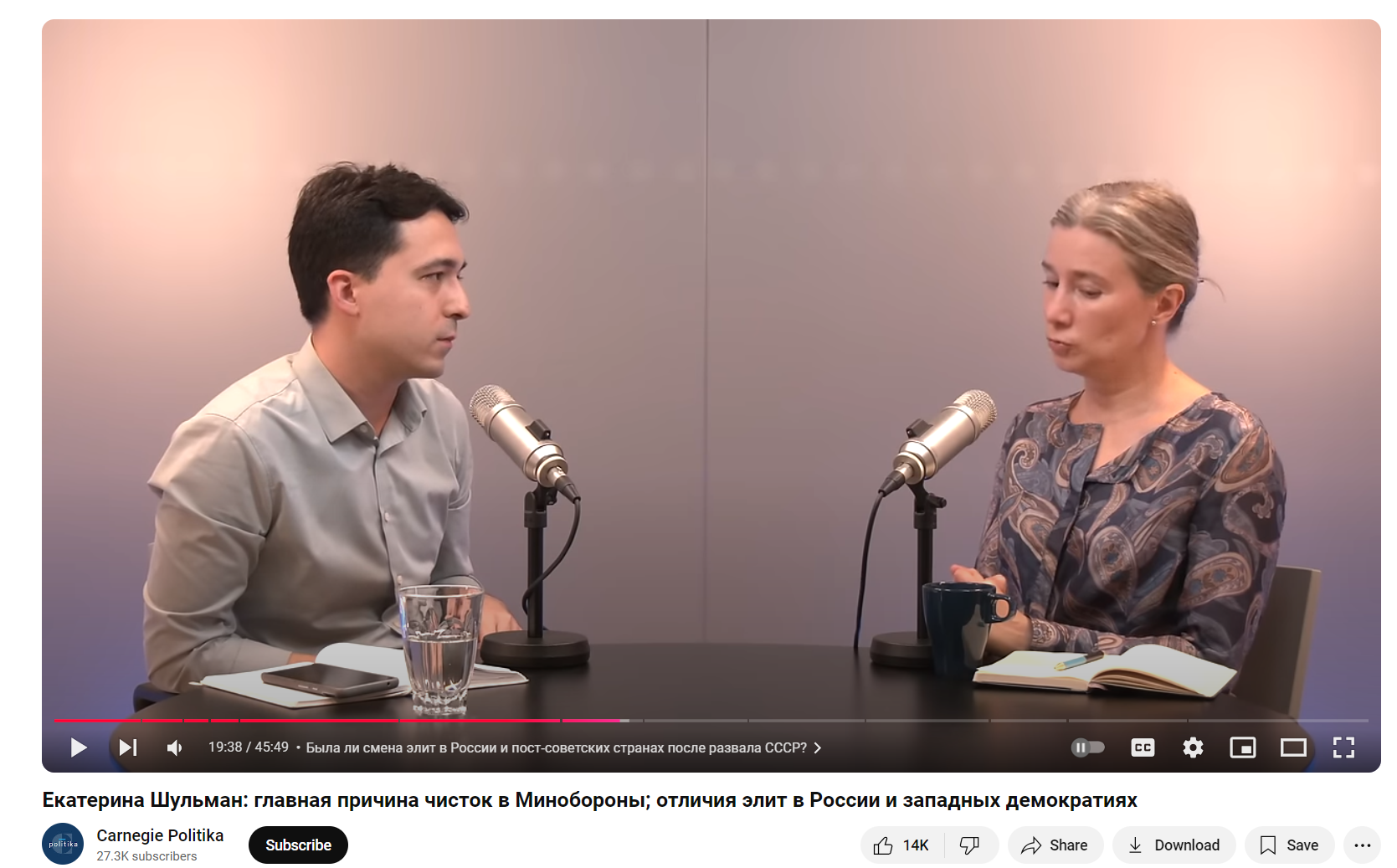
Schulmann has a brutal schedule – doing public talks seemingly almost every day. At the end of October 2025 she talked to Vot Tak channel (based in Poland with a pretty large online audience). As usual, she covers a lot of minutiae about what’s going on in Russia. What stood out in this episode was her reading of recent polling by Levada about ‘mass perceptions about the influence of the Special Military Operation on society’.  This part of the interview is a good example of how Schulmann has moved to a much more critical position about the meaning of polling in autocracies. She first talks about how Russian propaganda is not meant to be persuasive. It’s instead ‘the voice of force’. ‘Voice of the authorities’. This is why people pay attention to it in so far as it shows the strength and resources of the authorities.

Then she discusses the contradictions at the heart of polling questions: that support for the war appears high, yet, when polled, the majority agree with the statement that the war has mainly brought more ‘negatives’ than positives to Russia. Furthermore, attitudes towards veterans are quite informative: In answer to ‘what has the SMO done to participants in it?’, the main answer is (literally) ‘the war has crippled their souls’. Further, people see the mercenary choice a bit like they see the decision to take up a hazardous job in the Far North: sure, you can get money that way, and this is an ‘honest’ exchange (you know what you’re doing), but preferential treatment/certain social benefits should not accrue to this mercenary choice.

And moreover, society should not be forced into elevating veterans’ social status or respecting this choice. Schulmann adds that this could be symptomatic of a distancing mechanism on the part of society. We could interpret it as ‘infantile’. However, she wisely reserves her own interpretation. Later in the interview she talks more about the growing unhappiness at the government’s economic repression against ordinary people, and its unprecedented political repression against its own elite.

Natalia Zubarevich stayed in Russia after February 2022, teaching and researching in Moscow. She gave a lot of interviews from within Russia and was sometimes painfully careful in how she described the regional economic effects of the war. This interview with a journalist in Paris (November 2025) is therefore something a bit different. Not least because it’s nearly three hours long. I couldn’t sustain any notetaking for that period of time. It’s the usual thing she does, which is almost a self-parody now: barrage the viewer with statistics about employment, profitability, inflation and the like. Quite interesting here was a ‘meta’ moment where they discuss her teaching in Moscow and whether scientific exchange between Russia and the West is possible (c.30m) and what  economic geography in the UK has become: “spatial sociology” (in contrast to Russia where a more ‘traditional’ approach to geography remains). There are loads of moments of incredulity from the interviewer like this at juncture – which is always fun.  

A limitation of Zubarevich is that she confines herself to official statistics, occasionally colouring her assessments with anecdotes – which can also be a bit of a problem given she works at a super elite institution and lives in central Moscow. However, she always says some things that go for and against the ‘common sense’ of the pundit sphere. To summarise, she talks about a significant number of economic losers because of the war while ‘two thirds’ have seen sustained wage increases over inflation.  However, overall, this means competition between employers has been fierce (until recently). A wage spiral essentially is bad for a brittle and regionally-divided economy like Russia’s. She also talks about how the state trying to turn the tax screws on the population will backfire because people will resort to cash and hiding incomes. There’s some interesting stuff about financing and budgets in the occupied territories of E Ukraine. There’s an explainer on regional inequality in Russia and how it’s misleading because of the phenomenon of labour migration (who bring their high wages out of the North).

More interesting than the interview was the divided reaction of the audience. A lot of viewers interpreted the interview as providing cover for the economic choices of the authorities – as painting too rosy, or too detached a picture. Some said that it was unhelpful to use official Russian statistics to argue that there’d been a big uplift to most incomes. For example, some pointed out how the ‘basis’ wage had indeed risen sharply in many jobs but this did not mean a real rise in wages because for many, the main part of paid income is not the ‘basis’, but the discretionary bonuses – the latter being harder to capture in official statistics. It has been very convenient in many sectors to boost the tiny ‘basis’ wage by even 200-300% while cutting or making the achievement of targets for the bonus much harder. Would you feel better off if your basis wage rose from 200 Euro a month to 600 Euro, while the ‘bonus’, which was previously 800 Euro, was now at the mercy of the foreman? You might get a bonus of 1000 Euro when a monthly or bimonthly target is reached, but many are not – or are being forced to overwork for what was previously a given. Especially in service or while-collar work where the concrete output is not a hard quantity of product.

There are good points in the interview about how unsustainable the military ‘juicing’ of the economy already is in 2025. Zubarevich makes it pretty clear she thinks this sugar high will come with a massive crash. People were unhappy to about her repeating policy aims as if they were realizable – like a plan for rehabilitation facilities for veterans all over Russia: pie in the sky, was a criticism from the chat. People really didn’t like her repeating a point that many make – that within the Russian government there are smart, competent and effective pockets of policy making.

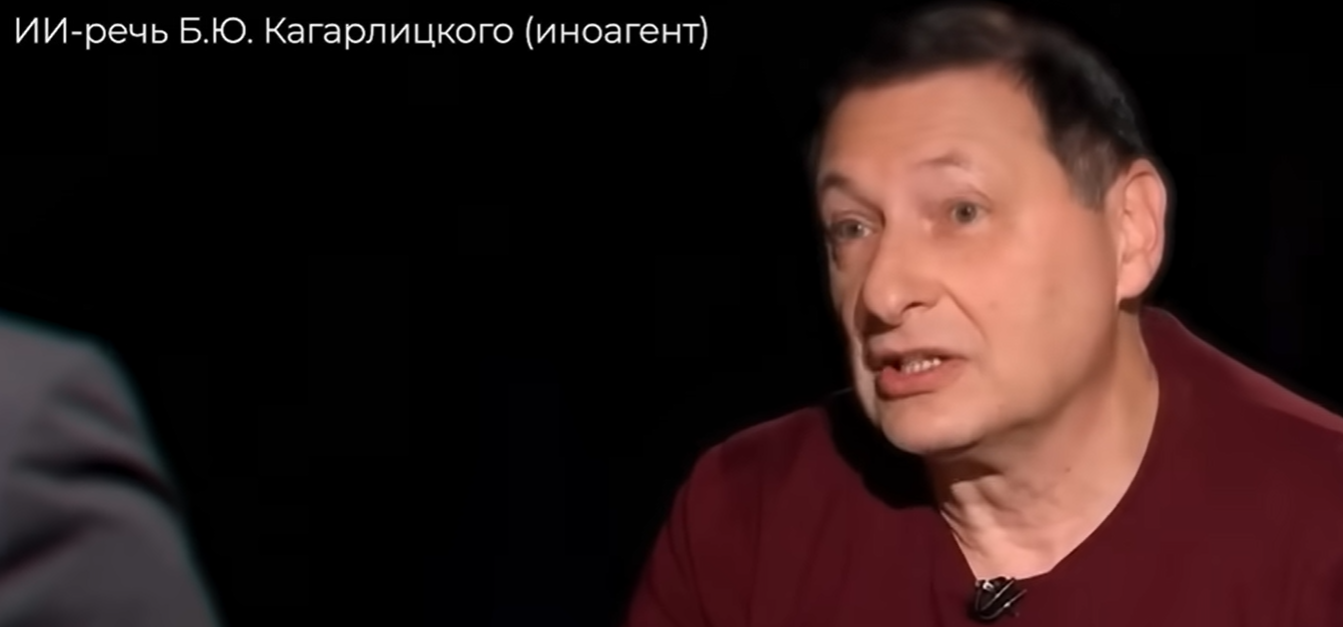
The third interview (also November 2025) is something of a landmark. An interview between Andrei Rudoi – a well-known leftwing Youtuber, and Boris Kagarlitsky. Only, Kagarlitsky – roughly speaking, a Marxist historian and public intellectual – is in a prison colony for mildly critical remarks about the conduct of the war. The interview was therefore reconstructed using an AI avatar of Kagarlitsky who spoke the words from the letters, phone call transcripts and such like, of the actual person siting in Penal Colony No. 4, Torzhok, Tver Region.  Even if one has no sympathy for the person of Kagarlitsky (and I certainly do), some of the interview feels poignant. Particularly since Kagarlitsky was also imprisoned by Soviet authorities in 1982 for ‘anti-Soviet’ activities.

Prison is not exactly the place where one improves one’s health, K notes at the beginning. Only it is a very healthy-looking, if a little uncanny avatar saying these words. You’re the first AI Foreign Agent (‘Inoagent’), remarks Rudoi.

What’s most interesting to the general audience is the first few minutes of the interview where K talks about the efforts to recruit soldiers from the penal colony. He’s too old and has a political sentence so is not a target of recruitment efforts. Prisoners are all forced out onto the football pitch to listen to the ‘recruiters’ tell them that even if they die, their relatives will get a good pay-out. Sometimes lectures about this are read and K has been present at them. K talks about the fluctuation in numbers recruited – there’s now few signing up. In 2023 there were hundreds, by May 2024 a few dozen a month. Now it’s less than a dozen a month at best. Recent recruitment was because of a false impression that one could sign up to get out of prison and that a ceasefire would be called. Even recruiters used this argument. K emphasises that ideological arguments are entirely absent – even antiwar people sign up, particularly if they have been jailed for desertion/avoiding mobilization (337th article of the Criminal Code). There are pro-war prisoners in the colony, but not a single one has signed up. Therefore we should really take stock of the real motivations for signing up from prison.

Often those who have been in Ukraine seek to dissuade others from signing up. But they themselves then sign up themselves as a way of getting the punitive 337 label removed. One should not think that because someone went to fight that they are for the war, and that if someone refused to fight they are against.

K is asked why he didn’t leave Russia when he had the chance. He says he does not regret his (in)actions. Where you are doesn’t matter to how to speak about things. And at the same time there’s no shame for those who choose to leave. It’s solidarity that’s important. (full disclosure: I was on a discussion panel with K before he was arrested – he was quite confident he was safe from arrest).

Then the interview discusses the causes of the war from a leftist perspective – putting events into the context of the dead-end choices made by the elites since 2010 – the acceleration towards a form of authoritarianism away from managed democracy, and that most importantly this was a ‘choice’ supported by most liberal elites.

There’s a discussion of how the left can use the demand for Soviet nostalgia and quasi-nationalist figures’ big social media presence to get their own voices heard. But about how the biggest problem for left public presence in Russia was always the visceral hatred for progressive politics among the liberal journalist caste. This, however, is changing because younger people are less politically tribal. There’s interesting discussion about how the war forces leftists to think anew about their attitudes towards the USSR – a split between people who can assess the progressive aims of the Revolution, and those seduced by ‘Red Imperialism’. The latter invariably support the regime since 2022. At the same time, those liberal ‘fellow travellers’ of Putinism are also forced to confront some home truths, such as their cynicism and deep mistrust of democratic transformation.

At the end of the interview the speakers look forward to possible outcomes at the end of the conflict. It’s hard to imagine how weird this is – quite open political discussion coming from within a prison colony. One of the final metaphors K uses is a ship adrift in the Arctic sea with the officers on the bridge unable to even reach the captain let alone get him to make decisions. There’s an iceberg out there in the fog, but no one has time for it. Kagarlitsky reminds us that the great title of Alexei Yurchak’s book on the end of the USSR is still very relevant for today: ‘everything was forever, until it was no more’.

Russian expert media monitoring – September 2024

This will be a short review (well, actually not short) of some Russian media commentary (A. Pliushev, E. Schulmann, N. Zubarevich) and my reactions. If you think this kind of post is useful, let me know. It is often the case that informed discussion in Russian language on YouTube never really cuts through to anglophone audiences for Russia content. I don’t ‘endorse’ the persons or positions of any of these public intellectuals and journalists, but this kind of content is important for non-Russian speakers to get access to.

Virtual Autocracy?

At the beginning of September there were simultaneous elections of various kinds throughout Russia. The results were not very interesting but the strong push to ‘virtualize’ voting as much as possible is. Why not continue to rely on the physical and very visible power expressed in falsifying actual ballot papers and busing in people to vote on pain of losing benefits? The resort to a virtual electoral autocracy shows the authorities have a good idea of their genuine unpopularity and the continuing risks, even now, of all kinds of upsets. Not only that, they also understand the advantages of digitized authoritarianism (I’m hoping to do a big write up of this soon). You can geolocate voters in the app they use and this exerts a coercive power of its own.

But, as Ekaterina Schulmann pointed out in her review of the elections, getting rid of the spectacular in-person falsification reduces two powerful indirect effects: the visible demonstration of loyalty by voters to the state (which goes back to Soviet times) and which speaks to the main reason for elections in autocracies – the idea that legitimization still needs a public audience. Secondly, in the Russian case, virtualization means that the army of state workers – mainly schoolteachers and local council employees– are ‘let off the hook’ they’d previously been sat on: being implicated as ‘hostages’ in the falsification process as counters and electoral polling workers. Cutting out the middleman is interesting and perhaps reveals a real buy-in among the elite to the idea of “full-fat digital autocracy” maintained by technocratic management of populations. But, thinking sociologically, normalization of involving the morally-important category of teachers in illegal compliance with the diktats was the strongest spectacular effect of Putinism. Here, I’m also reminded of the big conflicts even now between parents and teachers over the disliked patriotic education lessons, with the latter stuck in the middle and largely unhappy at carrying out this task (more on this in my forthcoming book).

The election also revealed other indirect information about the emerging post-2022 Putinism ‘flavour’. There’s no sign of the much-expected ‘veteran-politician’ wave. Special Mill Op vets are not getting elected positions – many supposed examples of this in the media are just low-level bureaucrats who had to go to the ‘contact zone’ (frontline) to exculpate some disgrace and then came back. A big thing to watch for in 2025 also related to the war is the fact that on paper, the proportion of the national budget devoted to defence is due to fall according to the Finance Ministry. Watch this space.

The non-appearance of the Great Russian Firewall

On media use, Alexander Pliushev looked into VPN usage, and estimated that around 50% of internet users in Russia are now forced to use these services to access content, but probably not because they’re looking for subversive information. But there are plans afoot to root out VPN usage, along with the slow-down on services like YouTube. However, it is estimated to take years to root out VPNs, and this doesn’t take into account measures to develop new forms of avoiding blocks. Pliushev feels confident in this because while number of views of his content fell a lot from Russia, the overall picture is unchanged – meaning people just switching to VPNs. He should know: the ex-Moscow Echo journo has an audience of 300k viewers on Bild, and 700k viewers on his own channel. Already we see the emergence of IT service providers of ‘partisan’ packages to customers which improve the speed of YouTube.

Television as domestic wallpaper

A good accompanying piece on TV and media use came out in July by Denis Volkov of Levada.  In this piece he claims TV as a source of information is still really important, and I have some questions about that. It’s true, as he says, that the TV news is always on in the background of people’s homes, but other sources have reported that TV ad revenue has ‘followed’ the decline in audiences since 2022 because people are generally turned off by the very visible war coverage on main channels. Indeed, at one channel I know intimately, worker’s contracts are not being renewed and people are not getting the pay increases they expect. What’s more interesting about the Volkov piece is how rapidly the coverage of social media has changed – the rise in Telegram: readers of ‘channels’ there (mainly news and current affairs) has gone from 1% to 25% of the population since 2019. This is a sobering reminder to be cautious about state’s capacity to control informational dispersal. The unparalleled rise in the onlineness of Russian means we should also avoid too many historical parallels (Vietnam war, Afghanistan, WWI, WWII). We really do live in a different age.

There’s a lot I don’t agree with in the Volkov piece, but it’s worth a read. As I’ve frequently written here, if you’re attentive then stuff like this from Levada people reveals deep-seated ideological assumptions about Russian society that can surely be questioned. I don’t agree with his insistence on uncritical media consumption and the simplistic ideas about how TV shapes views. Nonetheless we get more interesting points – like that 28% of people don’t watch TV at all, that the audience for Twitter and Facebook is tiny at 2%. Late in the article we get the statement that the share of television as a news source fell by 33% in the last 15 years, somewhat undercutting Volkov’s insistence on the relevance of TV as a regime-population conduit for propaganda.

“It’s the regional economy, stupid!”

Moving on to Natalya Zubarevich’s frequent and detailed online talks (with Maxim Kurnikov here in mid-Sept) about regional economy and demography in Russia, she lets slip some interesting observations beyond her usual scrupulous (and self-censoring) focus on the ‘facts and figures’ from official documents. She talks about how noticeable it is that in military recruitment in Moscow there are few young faces and a preponderance of ethnic minorities. She talks about the current ‘hostile migration environment’ led to harassment of gig workers in taxi-apps (Yandex). But not due to war-recruitment pressure, rather to increase bureaucratic monitoring of taxi drivers in the capital, reiterating the point above about the government staking more on digital control. She says we have good evidence for this squeeze because of the rising visibility of Kyrgyz drivers for whom there are fewer migration hurdles. (Gig workers from Kyrgyzstan represent a case study about the gig-economy in my forthcoming book).

Zubarevich makes the point that low paid blue-collar workers are being sucked dry by the war machine. If we accept the national soldier replacement rate target is 30,000 recruits a month then yearly Russia is losing around 1% of the available male workforce – but it hits harder in logistics, warehousing, manufacturing, and so on and hardly at all in, for example, local government. She also provides good examples of agency within the state: where the Agriministry was able to get the enlistment offices to back off men who work as mechanics for farms.

Some criticise Zubarevich for her insistence on talking only about published statistics. Here, without openly saying it, she pours cold water on the idea of sustained income rises keeping pace with inflation. She doesn’t believe the figures of high annual percentage rises in salaries as sustained or ‘real’ (net effects). She also points to clear slowing in wage inflation in 2024. This then allows her to demolish part of the military Keynesianism argument. Low incomes have seen big increases but from very low base starting points (an apple plus an apple is two apples for the blue-collars; but the people in white collar jobs were already earning 10 apples. If you given them one more apple do the blue-collars feel less unequal?). Periphery growth (in regions including war factory locales) is not significant because it does not begin to affect the overall level of inequality in society.

What conclusions do we draw from Zubarevich’s dry statistical analysis? It’s a paradox that in Russia’s ‘necrotopia’, where multiples of annual wages can be earned for surplus people by offering themselves as victims to the death machine, the overall value of blue-collar labour has increased to a degree that alters the bargaining power of workers who remain uninvolved directly in the business of dying for cash. Nonetheless, productivity, whether in military or other parts of the economy has not increased at all because of human and technological limits. You can introduce another shift, pay people 30% more, but that doesn’t mean that the output/hour of tanks, or washing machines or nuts and bolts (another case study in my book) goes up. Zubarevich comes around to a quite conservative position. It might seem like the war has the potential to break a pattern of decades of very high income inequality and massive underpayment of ‘productive’ people, but the inflationary effects of war are already bringing the pendulum back to ‘normality’. She also reminds us that inflation and the isolation of the Russian economy mean that ‘veteran’ incomes will never have significant levelling effects on inequality either.

On the Russian Defence Ministry shake out

Back to Schulmann in conversation here with Temur Umarov. The purges in the Defence Ministry are like the Malenkov-Khrushchev pact after Stalin’s death. A new deal: not only will you not be physically exterminated in the war-of-all-against-all where there are no institutions to regulate political life, we won’t punish your relatives either.

What’s happening in the Defence Ministry is a Putin-style purge: not based on ideology, one could even call them ‘nihilistic arrests’, supporting the idea of nihilism at the heart of Putinism. And as Schulman says, this only serves to destroy any idea of narrative structure to the war aims. Umarov: it is Stalinist in the one sense that it’s a structural process of social mobility: unblocking of avenues for advancement for sub-elites. This should also give us some ideas about ‘where we are’ in the maturing or even autumnal days of this regime. Are these arrests signs of sub-elite impatience for more radical regime transition (in terms of personnel, not necessarily politically)? Stalin-Khrushchev-Brezhnev? It is probably a mistake to interpret this in terms of anyone thinking that these new faces will be ‘better’ at the job of war. Schulmann asks: are these repressions for the war, or repression instead of war? What she means is that instead of the fantasy that the overturn of corrupt military elites will allow real competence and patriotic leaders from the ‘ranks’ to emerge, in reality we just get new clients and relatives of those still at the top.

Schulmann reveals perhaps more than usual in this ‘academic’ talk setting. Her view now is that the core hawkish elite really did want to go to war in 2020 and only Covid intervened. There was a test run of an alternative ‘institutionalization’ of elite wealth and status transference in the 2020 constitutional amendment. It was a groping towards cementing the ‘rules of the game’ to lock in elite self-reproduction. But in reality few could believe that this this compact would survive Putin.  For Schulmann the rejection of this compact as unworkable, and subsequent turn to war as a ‘solution’ for the problems of elite consolidation really, shows the genuine narrowness of political imagination in Russia – no one really believes institutionalization is possible, and that even in the West it must also somehow be a ‘show’ or ‘fake’.

Russians: We don’t know what the war is for

One final nugget is the latest Russian Academy of Sciences’ sociology centre monitoring report from April 2024.  There are many surprises, but one stat stands out. People are asked, towards the end of a questionnaire containing sometimes absurdly slanted questions, about the Special Military Operations’ “solution”. They don’t get to choose their own answer, only pre-selected ‘options’.

Comparing the mid 2022 version with mid-2024, the results are interesting:

What should be the aim of the SMO on demilitarization of Ukraine and liberation from nationalists?

Liberate all Ukraine: 2022: 26%, 2024: 16%

Liberate Donbas: 2022: 21%, 2024: 19%

Liberate ‘Malorossiia’: 2022: 18%, 2024: 20%

Liberate UA minus west: 2022: 14%, 2024: 20%

Other opinion: 2022: 3%, 2024: 1%

Difficult to answer: 2022: 18%, 2024: 25%

There we have it: the plurality are ‘don’t knows’. The ‘other opinion’ includes the possible selections, destroy fascism, destroy Nazism, end Ukraine as a state, destroy Banderism, preserve Russian territory, keeping only Crimea. (A bit ambiguously worded, that. Did they mean to write: ‘keep Ukraine as it was, but leave Crimea to Russia?) Who knows. As my interlocutor writes: likely this document was heavily ‘curated’ and then the sociologists tried to rewrite it to make sense while not annoying the powers-that-be. Imagine a guy in epaulettes standing behind the bozo writing the report.  

Coverage of the war is changing, but it too often misses the mark in communicating complexity

[this is an op-ed piece about op-ed pieces. It’s a long version of a newspaper piece for the Danish press]

Even as we move well into the third year of war in Ukraine, the media sphere, dependent as it is on the economy of attention seeking, is still pretty narrowly focused. I can read millions of works a week penned about military technology, grand strategy, geopolitics or even tactics, and much of it is good, informative and interesting. Yet, at least in English, I can read relatively little on the actual details of things like military mobilization in Ukraine and Russia. Or, for that matter, analytical summary of how the war affects the structure of employment, the relationship between war production and the rest of the economy, and logistics within the two countries. The fact that I know by name and even by sight the few people writing consistently well on these topics should itself be a cause for concern.

Now, that’s not to say that such analysis doesn’t exist or even that it’s truly in short supply. However, there are only a handful of organizations and individuals really putting resources into granular coverage of the political economy of the war and how it interacts with wider society. Usually we talking about lone researchers within organizations of a much larger staff, many of whom seem to be busy with little more than the diminishing returns of punditry on what Putin said or didn’t say in 2007, or what Zelensky ‘really means’ today. There is often great journalistic follow up on human-interest or human rights stories, but even these suffer from 1. Belatedness; 2. Distortion because of the way journalistic truth is produced in close contact with official sources, and 3. The Mutual-Distrust-distance between journalism and expert research.

One piece that got me thinking along these lines was an article with the click-bait title: ‘Ukraine is heading for defeat’. Of course, the author is not really arguing that. Now, I want to say right up that I think this is a decent enough article for Politico! (LOL to the folk who decided Axel-Springer Politico ‘leans left’). I think the journalist tries to cover lots of bases – breadth and depth that are often missing. Furthermore, it’s an opinion piece and pretty short. Let’s cut the guy some slack.

What exercised me though, and not only me, but more than one Ukrainian researcher, was the impression that only now can the media start ‘discovering’ stories for their readership like widespread draft avoidance in Ukraine and the gross human rights violations by the Ukrainian state in press-ganging. Once again, its unfair to pick on this one point in an article. The fact is, however, so much coverage is really not interested in the rights and opinions of Ukrainians, the social dynamic in the country. Which is a pity because attending to it might tell us more about the prospects for Ukraine withstanding Russian aggression than paying attention to prime ministers doing photoshoots with Zelensky sitting in the cockpit of a F-16 (this is Danish political snark).

The story of ‘draft-dodging’ is presented with a curious addition – that would-be recruits now spend their ‘afternoons’ in nightclubs instead of volunteering. Then there’s a few alarming quotes of key political figures in the war leadership. This, and other framings make it seem like the journalist is uncritically repeating the – frankly – political spin of the presidential coterie (Yes! Why not call it that!) in Ukraine. Spin: that there is a feckless youth that need to steeled by fire. Spin: that it’s not Zelensky who wants to mobilize more young people, but that his hand is forced. The fact is that those kids in nightclubs (in the afternoon!?) are there because they already paid off the commissariat or paid bribes for ‘medical’ exemptions. Conscript wars are class wars, after all. Even in a short article, a left-leaning journalist should be able to do better.

Whether we read something about Ukraine or Russia, the journalistic or think-tank product has been filtered through contact with various gatekeepers of knowledge. In this case it’s (too much) contact with people peddling the Ukraine president’s line. Once again, it would be better reader service to say that Ukraine is a complex political society and there are lots of competing centres of authority, interest and even ideology operating, regardless of war. I dunno, you could do a vox pop on what people think of press-ganging! (answer: it would cause cognitive dissonance among Americans, so we won’t do that). It would also be good to say that it’s normal in wartime for even most men to not want to die, even if their country is a victim. Someone commented on the forgotten history of draft avoidance during WWI. Journalism has to operate in tolerable frames of propriety – the idealised morality of the society it speaks to. Zelensky is the good tsar who cares about Ukrainians. The Russian General Staff are monsters shoving meat in a grinder. Both might be ‘true’, but does it aid understanding to rely so much on personalities and pretend we can have moral clarity by proxy?

The third point is my self-interested criticism as a person whose job it is to produce country-based knowledge (in Russian and Ukrainian). Journalists need an answer ‘now’, for sure, but don’t always make much of an effort to reach out to the genuine country experts for help. Here in Denmark, we have the luxury of a professionalized journalism. Most journalists actively seek out expert knowledge, accommodate the views, and even promote them, of scientists. Indeed here, the foremost Russian foreign policy expert won a public communication prize last year for his work with the press to bridge the divide between research and public.

However, we can always do better from both sides: open to the challenge of different kinds of knowledge. Journalists often have the multi-level connections that academic researchers can only dream of. After all, journalists can get up-close to powerholder much more easily. At the same time, academics often have the advantage of being able to devote time and energy in chipping away at issues in a holistic and systematic way – like social attitudes and responses to things like military mobilization in both countries. Furthermore, there’s a deficit of critical (in the sense of social scientific) Ukrainian voices in the press in the ‘West’. The fact that I’m writing this post stems from interacting with Ukrainians who just don’t feel comfortable with the future consequences of voicing these kinds of criticisms.

Finally, academics are more to blame than journalists. We still live in a world where academics are afraid of journalists (that they will distort things); are in a kind of dysfunctional envy-snobbery disposition towards them. We’d all love to see thousands read our work, to be able to make bigger knowledge claims with often less evidence, to get to travel to places more easily and report on them, to get to talk to powerful people and even just legitimately be present in ‘hot spots’.

A few final points about the vicious cycle of Ukraine coverage. This is itself a product of the interaction between simplistic media narratives and western elites who avoid confronting hard choices and instead flip-flopping on real commitment. Being Politico (Atlanticist, not left-leaning!), the piece can’t say out loud that US patronage is a zero-sum game. You want to sponsor Israel against Iran, sure: have some more Patriots. Ukraine comes to the window: ‘sorry, we’re out today, come back tomorrow.’ Now that the US military aid bill has passed, so many people are acting like we can breathe a sigh of relief and ‘move on’, yet, an attentive reading of even the Guardian reveals that only a fraction of the money ($8 out of $61bn) will go to Ukraine soon, and mainly to keep the state functioning. A lot of the rest will go primarily into the coffers of US corporations. And only much later materialize as materiel on the battlefield.

No, Ukraine did not turn your radiator off in Podolsk. Or, on the inability to think sociologically

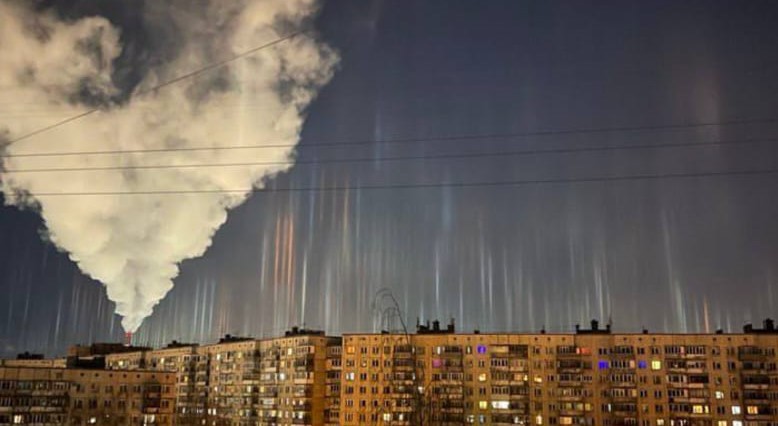
A plume of water vapor from a failed heating line in a Russian city, 13.1.2024

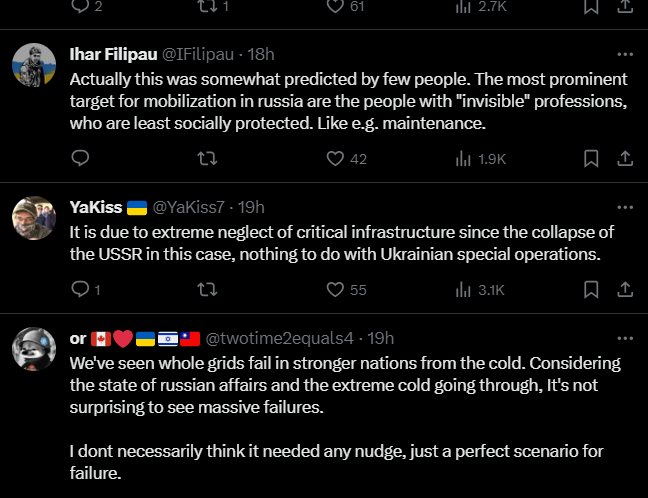
The framing of the catastrophic failure of heating/electrical systems in Russia as inevitably a Ukrainian plot perfectly underlines the ‘pundit problem’ coverage of Russia, which I recently tweeted about to the complete misunderstanding of most people.

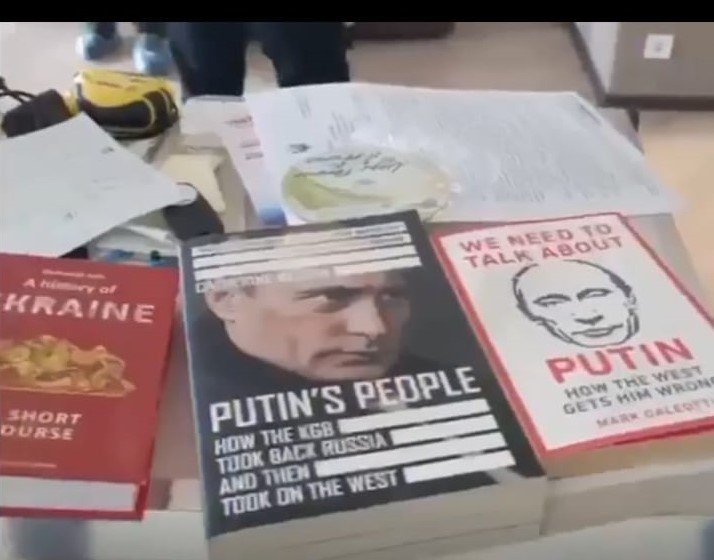
Gonzalo Lira’s book collection, from the Ukrainian raid on his flat in July 2023

I tweeted a picture of the reading ‘desk’ of the deceased YouTube grifter-cum-incel-coach Gonzalo Lira – there were three books – two of them very person-focussed (with ‘P’ in the title). The point is not that those authors were ‘bad’ or part of the grifter universe of Gonzalo, but that they set the frame of reference for 95% of the debate on what is going on in Russia/Ukraine. It’s all about personal history, personal ideology and animus, personal networks of the elite, dodgy social psychology and even dodgier personal psychology.

That the central heating grids of many towns and cities in Russia are not fit for purpose has been written about endlessly in sociology and anthropology. Someone attending to even this narrow ‘sociology of physical networks and infrastructure’ might learn a lot more about the war, about Russian politics, about Russian people’s preferences, than a zillion more books about a wimpy lad from Leningrad who’s resentment and greed propelled us to the brink of WWIII (parody).

You don’t need to read my previous work (but you could) to be aware of how the state of heating infrastructure is *the* political issue in many towns in Russia. In the tweet about the heating failure, I joked about my non-published new book again, and I devote a whole chapter there to state infrastructure. You can read a mini-version of that in this free-view Incoherent State write up from a few years ago. But the reference text for sure is Stephen J. Collier’s Post-Soviet Social – an amazing insight into the rickety privatized infrastructures of Russia (for a critical yet supportive summarizing review see this by Johanna Bockman). Then there is the wonderful book by Doug Rogers on corporate provision of social services, The Depths of Russia. A close third comes Susanne Wengle’s Post-Soviet Power which chronicles the rushed privatization of electricity infrastructure.

To summarise, the seemingly too-coincidental-to-be-accident-failures of the heating network should be viewed in the context of the multiple social factors at play – far more likely than sabotage (in this particular case). First there is the privatization of a critical and vulnerable network. Heating plants feed communal hot-water pipes just below the surface which then have a single ingress to housing blocks – in a severe frost which penetrates the ground up to two metres, these can fail and effectively shut down the whole grid. Privatization, as has been demonstrated again and again, while not the proximal cause, leads to the sweating of former public assets and inadequate investment in long-term upgrades and even basic repair (in the UK where against the advice of most, water was wholly privatized a similar cascade of failures is occurring right now). Where assets at municipal owned, the starving of local authority financing has the same effect.

Then there is human capital “depreciation”. One thing preventing the catastrophic failure of networks like town heating systems was the intangible knowledge and good-will of former Soviet-era managers. These are dying off now leaving a hole in the metaphorical fabric of post-socialist governance. This was in any case a patchwork of personalized relationships between these non-political ‘specialists’ and politicians. The former often continued to work for the common good (a complex relationship I go into in my new book) after being excluded from the corrupt compact between local and federal elites. In my 2016 book, I undertook participant observation (anthrospeak for following someone around and working with them) of a heating network technician in Kaluga region. Without this 50-something guy working almost for nothing and effectively ‘managing’ the town’s heating supply the residents would have experienced annual outages of hot water. Most importantly, this man was only informally in charge and at any moment could have left or retired (which he did eventually). Yet the municipality gave him access to a car, driver and assistant.

There is loss of such human capital, but also general labour shortages – long a problem before the war. It’s not so much that the war drew down ‘low-skilled’ men away from maintenance (as many people argue), but that, as in line with the generally punitive and neoliberal labour compact in Russia, there has been mass flight away from poorly-paid municipal jobs like those maintaining essential infrastructure. Even the ‘well-paid’ gas and oil industries struggle to fill roles (for details, again, see the article linked below and my new book). Pay is woefully inadequate and conditions terrible. It’s also true that the war accelerated austerity policies sucking money away from infrastructure, but again, that’s the proximal, not main cause. As scholars like Ilya Matveev have been pointing out for years, Russia is an austerity state on steroids.

There is something to this point, it’s true:

Add to all of this climate change. I remember harsh winters in Moscow in the 1990s, but Russians have got used to much milder winters in the last twenty years. This, like so many ‘freak weather’ events was just a return to what used to be normal winters with prolonged temps below minus 20 in European Russia. Except there’s been 20+ years of looting and neglect in the meantime.

Finally, overlaid, but not overdetermining, is the centralized, reactive nature of Federal governance – content to let the country rot, only effective in extracting and lifting rents upwards towards the cosseted world of Moscow – which is not Russia. I address this as part of this piece I wrote a few years ago on ‘capitalist realism’ (doffs cap to Mark Fisher) – an argument that also features in my new book.

Back to punditry. The problem is not authors like Galeotti or Belton (though there are legitimate gripes with them), but the obsessive media attention to a super narrow framing, reductive to absurdity. Galeotti is a great example of a capable, seasoned and expert researcher (on organized crime and security studies) structurally trammeled by the war (and before) into providing ever more commentary to serve demand by the whole media assemblage of Russia coverage. People misread my tweets as equating grifters like Lira to specialist pundits. There’s a gulf between them, but their output inevitably ends up serving the same media ‘interests’/: obfuscation of complexity in cause and effect, preventing sociological understanding, ‘orientalization’ of the subject matter (making it exotic instead of what it really is – mundane).

To go back to my January 2022 post about the problems of punditry before the war, the issues I sourced there from various colleagues about Russia coverage remain the same going into 2024 (scroll to the bottom of the linked post to see these topics unpacked):

Structural weaknesses in Russian journalism and Western coverage.

Putin-centric coverage the tells us nothing (led by publisher and editor demand)

Detachment from in-country knowledge (our man may be in Havana but he rarely leaves the bar)

Presentism (as we see now on the war – endless mind-numbing takes on weapons and lines on maps)

Gresham’s Law (bad punditry drives out good, bad think-tanks out-compete good ones, bad scholars outcompete good ones)

Absolute paucity of non-metropolitan coverage, whether of Ukraine, or Russia.

Is Russia Fascist?

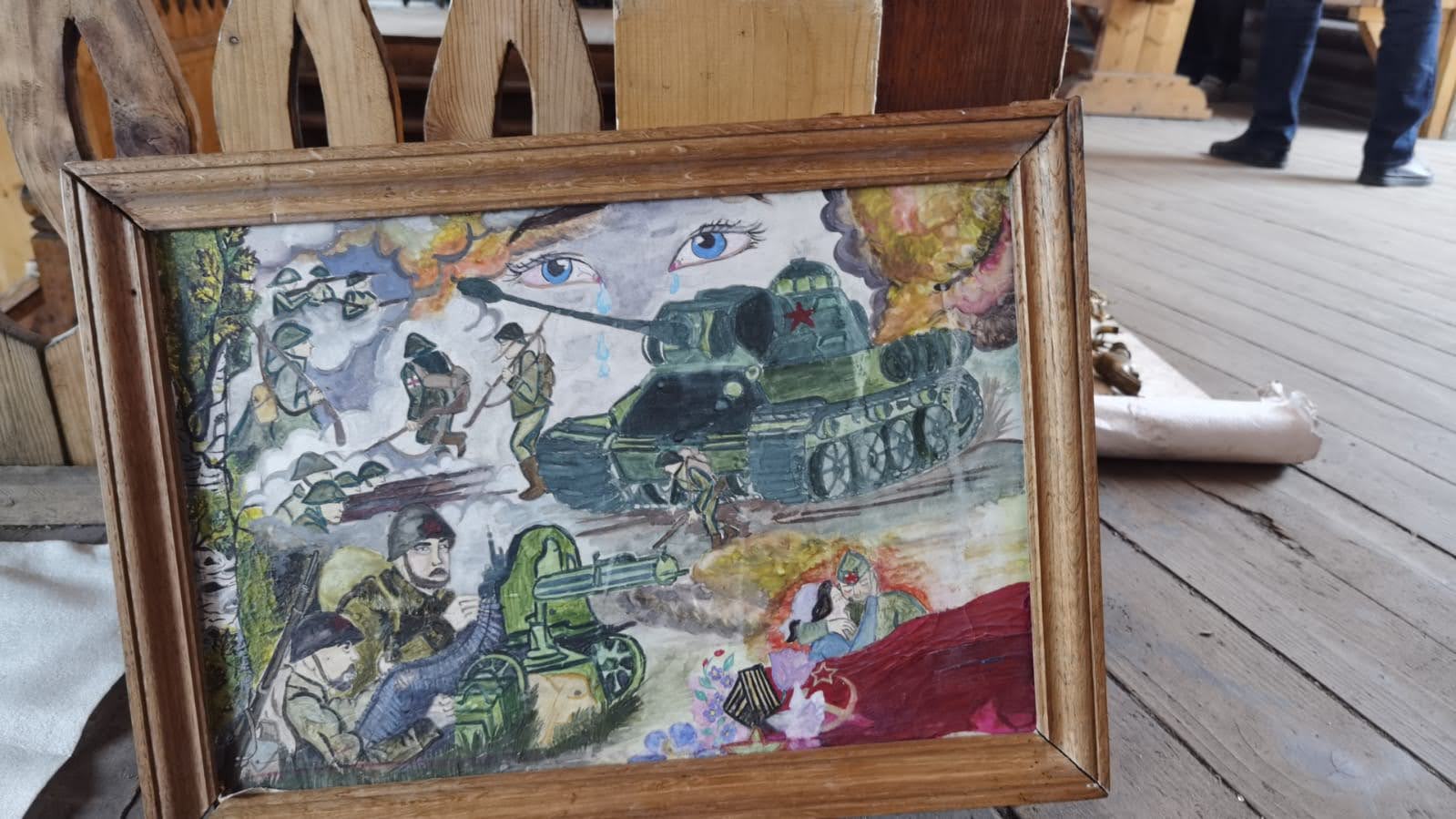
A painting depicting WWII through Russian ‘eyes’ at a Moscow market in 2022

The fact that I’m writing a blog post about this topic shows how detached from reality the commentary on Russia is. It’s understandable, I guess. But shoddy, media-ready ‘analysis’ from public intellectuals that does its best to ignore any sociological knowledge about the country is just really lame.

Tim Snyder’s NYT piece is a mishmash of historical analogism that focusses on Putin and sidesteps scholarship on Russian society. Snyder claims Russia (what, all Russians?) is fascist because it has a ‘leader cult’; celebrates a ‘cult of the dead’ via Victory Day; and is hostage to a myth of an imperial golden age. Very little of the essay, in fact almost nothing apart from a passing mention of Z people and rallies actually pertains to Russia beyond the Kremlin and some ideologists of questionable relevance (‘not Dugin again!’, said one of my undergraduate students).

All of these things are ‘true’, but they don’t really mean what Snyder says they mean.

At home, Putin has always been an ambivalent figure and never enjoyed unalloyed ‘enthusiasm’, even among his voting constituency. There’s loyalty and respect, even among the ‘morally opposed’. But that’s not a leader cult. The fact that so-called political technologists had to create so much PR for him, rather than let it naturally develop, proves the point. The guy never had an iota of charisma. He could never build a following like Trump.

A ‘cult of the dead’? There’s been a few pieces on this in the media. They tend towards a dangerous culturalism (the libel that Russians have a genetic ‘Asiatic’ predisposition to devalue human life and value violent domination). What Snyder ignores is the sociological research on the ‘Immortal Regiment’ marches, by scholars like Gabowitsch. Russians marching with placards of their ancestors who fought in the war is mainly not even a patriotic statement. It’s a rare permission to express personal loss, to experience connectedness, and to give voice to frustrated feelings of a need for communal activity.

The ‘Imperial Golden Age’? Well, this is true to an extent. I’ve written in this blog in the last 3 months that this does motivate some to support the war. But these people are a minority and in any case exist more visibly in societies like the US, France, and the UK. The irony here of Snyder’s comment is that it ignores the bigger golden age myth in Russia: the time people really pine for is the 1970s – the period of détente, peace, and the cementing of non-Russian elite power in the future independent republics of the USSR. Hardly imperial fare.

In reality, Snyder merely projects yet another US-centric take on what’s happening. This reflects liberal anxiety about Trumpism, real white supremacism in the US, and the militarization and securitization of US and Western societies.

Shall we actually look at some definitions of fascism?

I re-read Ian Kershaw recently and anyone who wants to understand pro-war sentiment in Russia should read his account of German society in WWII.

Kershaw’s is not the only definition, but it’s pretty simple. Fascism is based on hypernationalism that’s violently exclusionary and racial; It’s violent towards all political enemies; it’s macho, disciplined and militaristic.  Optional features: social ‘renewal’ based on romantic utopian thinking; irredentism/imperialism; anticapitalism; corporatism (people know their place in society)

On Kershaw’s definitions we do find some fascistic elements to the Russian regime. But this comes up against the contradictions in ethnicizing Ukrainians. The whole point of Putin’s irredentism is that in his view Ukrainians aren’t really Ukrainians, they’re frustrated and misguided Russians (actually he probably doesn’t even believe this). Yes, they are ‘incorrect’ and errant Eastern Slavs, but the whole racialized perspective on Russian attitudes towards Ukrainians is, once again, a US-centric projection. The dehumanization of the ‘other’ is present among Russians and Ukrainians since the start of the war (but of course the anti-Ukrainian rhetoric in Russia was strong for a time now). But this is nothing to do with race or racism. Against Kershaw’s set of features, Russia is an insipid and equivocal ‘fascistic’ regime. Some of these features do not fit at all.

What about recent scholarship on ideology in Russia? Here we must turn, as Snyder fails to do, to Marlene Laruelle’s painstaking research. Her book is called Is Russia Fascist? Snyder commits perhaps the worst possible academic snub in ignoring it in his piece.

I know Laruelle’s work and I read her articles with my students every year. But don’t trust me, we can turn to the excellent reviews of the book. For example, this one by Roger Chapman. This is a positive, but critical review that unpicks Laruelle’s argument that Russia is a kind of illiberal state: rejecting global institutions, promoting economic protectionism and revaluing multiculturalism. Chapman questions why we need the term illiberal when in his view Laruelle could have just written ‘authoritarian/totalitarian’. The reason Laruelle does not use these terms is that in her view ideological diversity is still permissible and that coercion has some hard limits within Russia (so far).  

Laruelle (in Chapman’s reading) makes use of a different historian’s definition of fascism – that of Roger Griffin. According to Griffin, fascism is a ‘revolutionary-utopian form of nationalism’. It requires an anti-modern myth of regeneration involving the violent destruction of enemies. Enemies are racialized through an ideological doctrine that catalyzes mass mobilization to ensure domination of those enemies both at home and abroad. So far, pretty similar to Kershaw. Laruelle notes that by these criteria, “not only is Putin neither Hitler nor Mussolini, he is not even Pinochet”.

In a late-2018 piece for PONARS, Laruelle picks apart similar arguments Snyder has made before. She says his approach is comparable to those of an observer who would extrapolate from Charlotteville riots to conclude that white supremacists had an iron grip on US society. “Simplistic reductionist techniques and invalid reasoning further confuse the analysis—and bias policy responses.”

….

In my view, the ‘Russia is fascist’ argument is so far from the reality of Russian society that it amounts to dangerous disinformation. What do actual political sociologists find?

Political and social demobilization at every turn – even incorporation through a ‘party of power’ does not serve ideological purposes or help mobilize. On the contrary, incorporation by the regime serves its stasis and the continuing enrichment and insulation of the elite. With some visible exceptions (who now get a lot of undeserved attention) the elite is uninterested in ideology and even governance (so an Eichmann could hardly be found). There isn’t a banality of evil. Just banality. In some senses the ‘mafia’ metaphor is better (though I criticise it here and reprise an analysis of corruption as a ‘thing’ that drives the regime here). ‘Ideology’ and ‘causes’ are dangerous to this regime.

In actual fact, most Russians’ lives are profoundly depoliticized to an unhealthy extent. Ironically, here is where Russia is open to a charge of fascism: the idea of fascism as a creeping erosion of citizenship and the achievement of the aims of totalitarianism by procedural means. The irony? The scholarship of this ‘post-fascist’ fascism is about our societies.  About the UK, European states and the United States.

So, what is Russia as a political regime? Well, my recent take is here: an authoritarian neoliberal regime of some complexity. I argue that elements of this are present in our own societies and that many states are hurtling into the precipice Russia already occupies.

In Russia there are many forces of prefigurative politics, resistance and renewal, stacked against the seemingly dominant authoritarian power (the topic of my current book project!). Russian society has its share of neo-Nazi far-right forces which are both feared and leveraged by the elite. Other formations are far more visible and make Russia look more like….. Ukraine. There’s a liberal mainstream that dominates the ‘discourse’ beyond the state-controlled media and a strong communitarian strand of political thinking. Takes like ‘Russia is fascist’ ultimately show, once again, the unhealthy focus on the current elite, an elite that’s more and more disconnected from the majority. The invasion of Ukraine itself illustrates the intellectual, political, and institutional exhaustion of ‘Putinism’. But it proves little beyond that.

Why Russia is not a mafia state

pri_47665814

This week in a research event at Aarhus University I was asked to discuss with Lucia Michelutti her work on the mafia-like nexus of business-organised crime-politics in Uttar Pradesh. Her work is really thought-provoking and I recommend you check out her book on Mafia Raj.

Michelutti argues for the use of the term ’bossing’ to describe the partly performative work of criminal dons and wannabee mafiosi in India. This is because of the awkward absence of a word in English to describe the enactment of power: we have ‘to empower’ and ‘overpower’, but not a verb that clearly describes  power as a process. For Michelutti, ‘bossing’ by criminals-cum-politicians involves the mobilisation of performative competencies and which is subject to contestation in an unstable constellation of authority (and which lacks legitimacy), charisma, and local contexts (particularly community problems). The highlights of her talk for me were an elective affinity between delegated governance and organised criminality; starting from the premise of the ‘emic’ grounded use of language – ‘boss’ is the currency of talking about criminal/political entrepreneurs; mafia as a systemic yet amorphous reality, not a discrete organisation in itself.

This set me thinking about the use and abuse of the now common-place ‘Russia as a mafia state’. I was sceptical of Luke Harding’s book when it came out in 2011. Subsequent events have proved him right on some things (and me wrong). However, I still want to object to the looseness of the term ‘mafia’, and how it obscures more than it reveals. Quite reasonably, even ‘ordinary’ readers criticised him for not defining why Russia is a ‘mafia state’ when so many other corrupt, kleptocratic regimes are not. Broadly, Harding uses it to indicate collaboration of security services with organised criminality, to indicate the ‘kick back’ ubiquity of corruption to higher officials, to indicate the willingness of the state to use extortion against foreign states, or to indicate a general prevalence of extortion/protection relationships.

First a caveat: there are strengths to Harding’s book – the perspective of a person who feels the full sun-like gaze of the security services when they are let off the leash to harass a foreigner – see Kelly Hignett’s review here https://www.ceeol.com/search/viewpdf?id=61177. However, let’s not forget that Harding gets off lightly in comparison to many Russian victims of the state’s displeasure. Journalists of course write books and are professional writers. But I can’t be the only person to be disturbed (and of course made envious) by the attention these anecdotal, ultimately piecemeal and largely ‘readers digest’ accounts generate. For a critical review of Harding’s evidence-light work see a review of his book on Trump-Russia collusion by Paul Robinson: https://irrussianality.wordpress.com/2017/12/02/collusion/ . Now, I’m not saying he wasn’t harassed by the FSB, just that in moving from journalistic fluff and anecdote to book-length serious analysis he, and most others, fall short (I haven’t read Galeotti’s latest). Harding at worst gives readers a version of Cold War 2.0 that seriously impedes better understanding of the everyday reality of Russia.

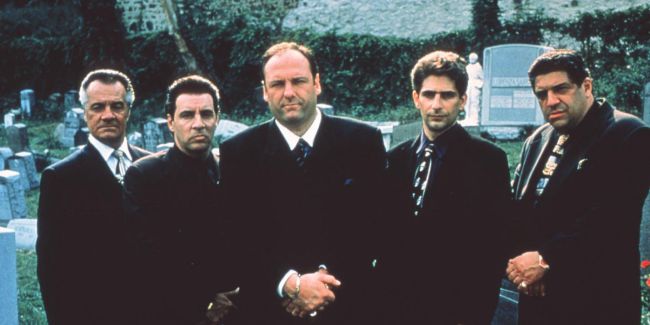
So, some basic problems with the term ‘Mafia’. Mafia implies an overall structuring of all activity towards the end of enriching the boss via captains, and clandestine activity linked to membership of an elect community with elements of charismatic leadership.  Okay, there’s a certain affinity here with descriptions of clientelistic and personalised relations, but why not just use that conceptual toolkit and ditch association with types of charismatic and in-group derived leadership as represented in popular culture by Vito Corleone, Paulie Cicero, or Tony Soprano?

The ‘true’ mafia ( of course they cannot be separated from their popular cultural depiction anymore because they in turn are influenced by that depiction) are only ever peripherally ‘political’, as Michelutti, points out (that of course, does not mean that they don’t buy politicians and political leverage). As a classic, yet parasitic ‘other’ to capitalism, mafias can only be defined in opposition to state structures. Most of all this is because they actively choose to occupy niches of criminality and employ physical violence, albeit in a limited way, that challenges the monopoly of violence that the state reserves for itself. Most notably coercion is of a limited nature (there is a ‘civilian’ category, ‘victims’ are mainly from the same ethno-cultural community). Indeed, that ‘anyone’ can fall victim to the rapacious raiding of business by the kleptocratic Russian elites, means that if anything, Mafia is too ‘soft’ a word!

For organised crime, ‘criminality’ is the keyword. But, in the diffuse, corrupt, dysfunctional and contradictory world of the rule and unrule of law in Russia, words like ‘extortion’, ‘bribery’, ‘racketeering’ lose their meaning, because if state actors take assets from you in a way you experience as illegitimate, it is by virtue of their superior command of legal-administrative resources, but most importantly, their ability to make what appears to us as ‘criminal’, merely accumulation according to a logic of nearness to other more powerful state actors plus the superior command of already existing financial resources. (Of course a bit of violence does help here – see the interesting work of Jacob Rigi on the ‘Corrupt State of Exception in Russia’).

Using the mafia label is unhelpful as it conjures for a Western audience an image of a Don, a clear hierarchy of made men, of grifting in secret and in fear of discovery, and of highly ritualised organisation of criminality. All of these things exist within the organised crime world of Russia, sure. But it is a massive stretch to make the leap from Goodfellas to The Kremlin. The ‘mafia-like’ practices of the state are both more organised (and less ‘illegal’) and more chaotic (influenced by political expedient rather than just graft), than that of any organised crime group. Indeed, in contrast even to the Sopranos’ ‘postmodern’ mafia, where charisma and tradition begin to fail to limit conflict or reproduce loyalty, the kleptocratic workings in the Russian state show an absence of a shared normative understandings of power and sovereignty. Despite Kordonsky’s work on ‘kick-back’ culture, there are no ‘made men’, nor is there a shared understanding of timeserving before becoming captain, and there is no honour, no chance of a ‘sit down’, and no percentage kickbacks with any permanence that would allow them to become informal rules governing ‘taxation’ or authority. What there is is an ever changing landscape of potentially equally powerful others, where the ‘rules of the game’ can change more abruptly than in any criminal conspiracy, and where there are also ever-present political, policy and governance goals distracting from – what I admit is the main task – making money.

Then we come to the ‘killing of enemies’ argument that people put forward because of Skripal, or Litvinenko. For the mafia metaphor to have explanatory meaning here it would require the state, security services and organised crime to have clearly demonstrable and densely redundant network characteristics over time. Even if it is shown that the Skripal was targeted because of his knowledge of organised crime in Spain linked to the Russian security services (I think that’s unlikely), a quick glance at the conflicting interests within the elite (and between security agencies), and the infighting of factions even at the highest level, the relative ‘weakness’ of the Presidential Administration to have its orders carried out, shows that such ‘networks’ would break down as soon as they arise, and could only be connections of expediency.

Take the Donbas – more a political project with hot and cold support from Moscow and a way of getting rid of nationalist and violence-orientated entrepreneurs. Most importantly, it is a huge drain on resources which has enriched only a few local players (hence the assassination of the them now). Not the actions of a ‘mafia state’ looking to get resources flowing upward from a ‘take’. The Skripals and Litvinenko before them are evidence of incompetence if nothing else. They remind me more of contexts like organisational rivalry, poor operational control, and opportunism, than methodical revenge. Certainly, the execution of these operations would embarrass any self-respecting professional hit man in the pay of a ‘mafia’.

Tony-in-the-pool-with-ducks-1

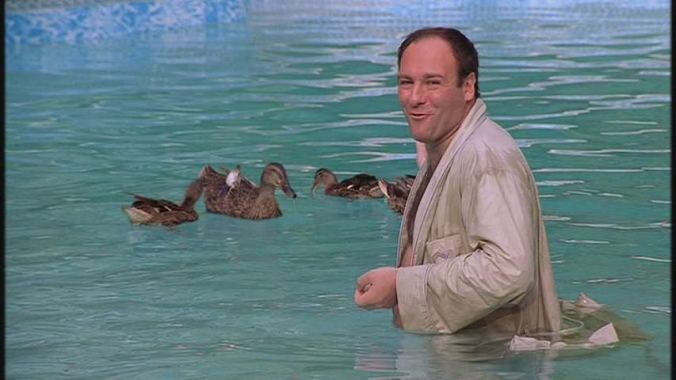
Tony says: ‘You call that a hit? My ducks could do better’

A British journalist discovered that if he writes critical articles in a semi-authoritarian state, the security services will target him. Sometimes there is a blurry line between activities the security services take against critics of the state and other corrupt activities. Sometimes the security services are not under control of the state, even though there are lots of powerful politicians who have a security services background. Particularly on the last point, it’s been shown by scholars like Bettina Renz that this background is largely irrelevant and to propose a ‘silovik takeover’ is a correlation-causation error.  To end, a similar reminder from Marelle Laruelle on the dangers of rhetorical techniques of facile association. I might come back to this as, in the first place, I started thinking about this topic because I am working towards the idea of the everyday ‘incoherent’ state in Russian, particularly in the workings of the lowest level of street-level bureaucrats.