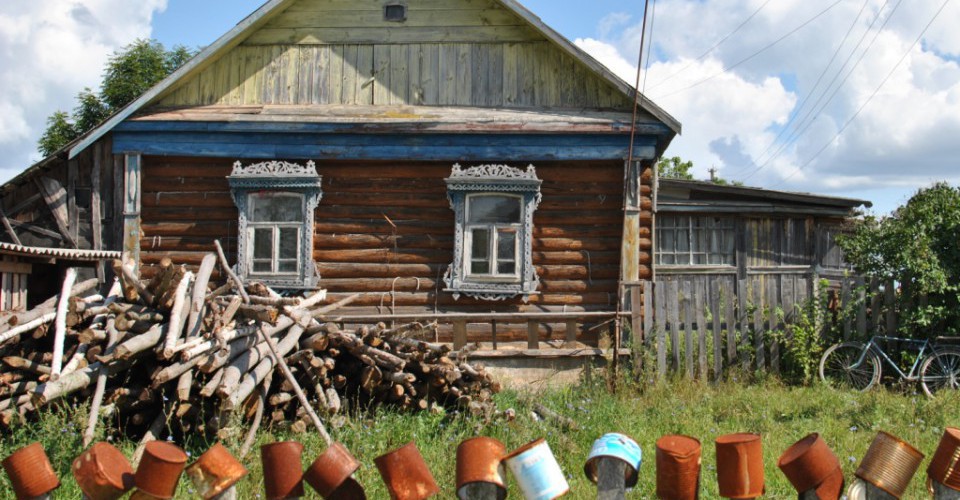
Two recent sets of interactions with people got me thinking about we’re still in the calm before the domestic economic storm in Russia –
‘it’s all stable here, things are ok. We got a pay rise, it’s not indexation, but we have everything we need’. From a metal turner in a provincial city. He’s a smart lad and there’s always an element of irony about even his more ‘sincere’ comments. This is a case in point of such double-talk. Reassuring oneself; expressing genuine dispositions about the world ‘right now’; reflecting on how ‘it’s much worse for you’ (because of the harder to hide energy inflation in Europe); super-heating irony to manage the hegemonic narrative of Russian TV at the same time. Especially noticeable given that, after the Moscow Crocus City Concert attack, it’s obvious that things are not ‘ok’ and ‘stable’.
In turn I talk to my tame middle-class apolitical professional. His firm has a new contract with a state enterprise. Things are also looking up. A nice new income stream to diversify after the loss of business with Westerners. But at the same time grumblings: ‘it seems like sanctions will start to do their work soon, nonetheless. The authorities can’t go on indefinitely defying economic gravity.’ Generalities, vague ones. It’s hard to know whether people are referring to actual economic issues like inflation, actual shortages through the failure of some aspects of autarky or import substitution, or something else.
As Nick Trickett wrote in December 2023, we’re looking at a third of state spending going on the war in 2024! Substitution can only replace Western imports in specific and limited ways in the middle term (i.e. to 2025). A weakening ruble means that from the state’s perspective they need fewer dollars as these ‘buy’ more state spending in rubles. However, the reality is that devaluation plus hard constraints on output in Russia will lead to galloping inflation by the second half of 2024, especially after the summer. At the moment, forcing exporters to convert $ into rubles, is delaying the inevitable (these are in effect capital controls). Will hoarding by individuals of hard currency come back? There is already a climate where no one can make capital investment without state guarantees. Stanimir Dobrev is great on this: last week he pondered the question of how logistics firms can renew their trucks when they are paying 24% interest on their leases for inferior (economically) Chinese fleet.
Back to ‘my guys’. They’re still partially in denial about real inflation on staples (aren’t we all?). The situation is somewhat similar to the UK and parts of the EU – double-digit official inflation on food in 2023, and more on some products. Once again, shortages are just inflation by other means – like the situation with eggs right now (the government was forced to suspend import duty on 1.2 billion eggs because of the 40% inflation on them – incidentally I wonder if people are studying closely the effect of long-term loss of access to Ukrainian food imports – eggs are a big asset for Ukraine). ‘Capital outflows’ because of feared inflation also take place in miniature. Often my interlocutors ask me for investment advice in crypto and bullion (another indication they don’t really believe the Russian press hype about ‘stability’). In my unpublished book on the war I write about drug dealers and crypto bros trying to hedge the war.
‘We want more State in the socially-significant spheres of life’ is the kind of citizen message after the ‘deal’ of the 2024 election that, having echoed around after the Global Financial Crisis from 2009 in Russia, is back in the room again. If ‘massaged’ inflation is likely to show rises of 8-10% in 2024 that’s a remarkable return to the bad old days of the 2010s when Russians first fell out of love with Putinism, whose best years could be summed up as ‘Botswana incomes rising slightly higher than inflation’ (turns out to more apt a comparison than one might think). As the Central Bank will need to keep hiking, the 16%+ rates on servicing debt will feed through hard on the costs of living.
What about the ‘regionalka’? Natalia Zubarevich reflects on the trends today beyond Moscow and Petersburg – money goes on beefing up Far East transport and real estate to pivot to China, to Rostov region, the logistical entry to Ukraine, and of course Moscow. But revealingly oil and gas can’t be squeezed any more and in some areas output is declining. Logistical constraints still affect the output of fertilizers. Most hit by sanctions? Timber processing (“forest-industry”). Will there be a boom in Russian domestic furniture? Russian IKEA? I remember a turn to domestic production around 2010. 10% of petrol output are likely affected by drone strikes on refinery. But remember that 10% of petrol was exported anyway and 50% of diesel. Main issue is logistics again with the railways jammed with ‘other priority traffic’. Taxes on petrol are pretty low by international standards and the price for consumers is effectively controlled for political reasons, but still a hit to the pocket-book.
Agriculture: 2023 was a good year for soy, but not for grains profits. In 2024 an indicator of vulnerability is that 30% of grain is produced by smaller farmers, not agroholdings. The former don’t have any financial buffers. Will cooking oil scarcity be the next egg panic?
Will they bring wage incomes of 1 million rubles ($10,810) into the new, higher income tax bracket – something of a shibboleth for Putin’s ultra-neoliberal approach from two decades ago? (now it’s 5 million rubles). More important are taxes on enterprise profits and VAT. Are people the new oil, again?
Zubarevich forecasts a gladiatorial fight in the population for benefits – especially those available to families for children. Fictive self-employment, fictive divorces – all for the sake of accessing social subsidies. Back to the past? In 2000, Moscow incomes were composed of only 20% taxable ‘white’ wages, the rest were murky. Will this repeat? Zubarevich says it’s unlikely because of good digitalization and tax capacity. Nonetheless in North Caucasus even Rosstat acknowledges that no one, apart from municipal workers, actually pays taxes. (Informal economy is 60% of activity).
Growth areas are construction of residential in medium sized cities with arms factories and also in oil and gas regions.
Will there be new impetus on military mobilization. How can there be when there are record shortages of labour? Inward migration is falling, a lot, possibly by 50%. A real indication of the value of the ruble. Not to mention the fact that immigrants are effectively treated worse than indentured servants – a bigger indicator of racism’s destructive effect on the moral fabric of society and one that makes it clear why so many people are indifferent to the treatment meted out on those suspected of involvement in the Crocus attack.
Overall, a ‘lot of trends are going to be broken’. Zubarevich ends her interview focusing on the effect of the war on income inequality – a decline that’s small but significant because of the 11 million children getting state support, and the 5 million workers in ‘proper’ industry, along with 2 million direct ‘beneficiaries’ of the war spending.
So are ordinary folk leading or lagging indicators? It would seem, like here in the EU and UK, that people’s economic sensitivities are very much summed up by the term, ‘The old is dying and the new cannot be born’. State capitalism on a war footing is a contradiction without someone taking the pain. And morbid symptoms appear in great variety, as Gramsci noted.
A comment to a previous post asked the question: “Could you please indicate 10 or so best anthropological and/or sociological books which explain the current state of affairs in Russia?”
The question implies a need for books with political insight, which is a matter of debate. In this post I’ll stick to books in English since 2005, and which had a considerable amount of fieldwork behind them (broadly understood). In my view there many other deserving recent books that could make this list. There are also many which are not in English and not characterized by significant fieldwork but which are equally important; they might appear in a further post. The aim here is just a quick and dirty list for readers unfamiliar with this terrain. All these books are, in my view, interesting and accessible to educated general readers and give a diverse flavour of engaged and embedded research carried out in (and sometimes before) the ‘Putin era’.
Derluguian, by force of intellectual personality, manages to combine micro-level insights with ambitious theorizing and historicizing. Today, his book seems prophetic because it warned of the effects of a dangerous vacuum after the curtain fell on the ‘most successful example of a state-directed effort to industrialize in order to catch up with the West’. After 1991, two reactive strategies were unleashed – corrupt patronage that defeated and demoralized groups who sought to develop civil society and democracy, and secondly, the mobilization of ethnic and religious solidarities as forms of ‘resistance’ from below.
The blurb for this book is unusual for an academic tract in that its promise of a ‘gripping account of the developmental dynamics of Soviet collapse’ is no exaggeration. While ostensibly telling the story of a prominent leader in the Chechen revolution, its portrait of the overlooked underclass of the Soviet project is memorable. Correctly emphasizing the role of employment-related benefits as socially-cohesive in Soviet times, Derluguian details the subproletarians ‘exit’ from society. Rather than take ethnic strife at face value, the author sees this third class as opportunistically mobilized to fight in the many conflicts of the post-Soviet space. At the end of the book he writes:
“How does one operationalize in research the residual category of “no-longer-peasants” that variously goes by the names of “Street,” “marginals,” “subaltern peoples,” “crowds,” “underclass,” “adolescent gangs,” “lumpens,” or, very broadly and negatively, “de-ruralized populations”? Bourdieu’s discussion of the Algerian sub-proletariat demonstrated ways of meaningfully incorporating in our analyses this most awkward of all classes – a class that is increasingly important, both numerically and politically, in the contemporary world.”
For Derluguian, the theory of so-called “ethnic conflicts” formulated in the book centres on class, state, and social networks rather than nationalism or identity: ‘the revived evocation of traditional moral communities tends to scapegoat competing ethnic groups, weak and corrupt local governments, and, increasingly, the common enemy that is American “global plutocracy.”’
This is a book my students read, and I would recommend to anyone who really wants to get a feel for the sense of insecurity experienced in the 1990s and how it was formative of so many currents in today’s society. Shevchenko’s work is universally praised for capturing a genuine ‘zeitgeist’ of insecurity and uncertainty. ‘Crisis’ is a governing and everyday feeling about life in late 1990s Moscow. Like in Walter Benjamin’s Thesis on the Philosophy of History, the ‘state of emergency’ in which we live is not the exception but the rule. One of the first metaphors used by residents is that of ‘living on a volcano’. Shevchenko focusses on continual efforts of people to cultivate practical autonomy and independence (from each other and from the state). Crisis becomes a symbolic resource for people who default to cynicism.
“one’s capacity to disengage oneself from all things public became a value in itself, a value manifested not only in practical actions of economic self-provisioning, but also in the position postsocialist subjects took on a variety of issues, from media to voting to history. It was through stating this detachment that one could provide evidence of one’s personal evolution by juxtaposing it to one’s substantially more engaged and idealistic reactions a few years earlier”
It’s easy to see how the ‘deterioration’ discourse had long-term effects that are still operative – inhibition towards forms of civic involvement and ‘defensive’ institutions anathema to the ideal of the public sphere; the strength of the message from the centre that only a ‘power vertical’ can ensure a hard won ‘stability’. The book should really be read alongside Shevchenko’s penetrating shorter pieces on post-Soviet subjecthood: “Resisting Resistance” (on internalized neoliberal ideology), and “The politics of nostalgia” (with M. Nadkarni) both from 2015.
Rogers is something of an undersung hero in Russian Studies because his work is so broad-ranging and interdisciplinary, while retaining an uncompromising anthropological sensibility. In his book on Ural oil companies and the local and regional state, Rogers admits that his story of the success of corporate social responsibility (CSR) as part of neoliberal governance will ‘horrify many proponents of civil society building’ because it will be read as ‘co-optation’ and ‘hijacking’ of NGOs into the service of the Putin-era centralization of state building (grant-giving as ‘infrastructure’, the state as a ‘social customer’). Far from accepting this normative framework and interpretation, Rogers provokes the reader to think anthropologically about social organization beyond ‘civil society’ as a loaded and sometimes meaningless symbol. Corporations and state are interpenetrated nowhere more effectively as in social responsibility work by big oil. CSR serves in Russia as a powerful multidimensional metacoordination of society and state, while retaining the informal elements of network clientelism that typify political relationships.
Rogers’ book is also of interest to those interested in the history of Sergey Kiriyenko’s emerging reputation as a so-called political technologist. His success in ‘remaking the policies and procedures of Russian governance for a new, more centralized time’ were laid down during his time as plenipotentiary of the Volga Federal District (which includes Bashkortostan, Tatarstan, Samara, Nizhny Novgorod, and Perm Krai) and are now on display in occupied Ukraine.
How does the state co-opt and incorporate youth in Russia? It must involve more than deception or simply better social advantage for youth participating gin state youth projects. The value of Hemment’s ethnographic engagement with students, educators and project leaders lies in the challenge it presents to binary oppositions like ‘oppression/resistance’, ‘truth/lies’, ‘authentic/inauthentic’ as it pertains to the social and political life of young people.
Projects mobilizing young people and sponsored by the state link to a genuine appeal around reviving the Soviet past, democratic initiatives in the 1990s, and global forms of youth projects today. The book is also a model of the collaborative method between western researchers and Russian colleagues, something that regrettably remains overshadowed by a publishing model that hides, as much as reveals, the dependence by Western-based researchers on Russian academic partners.
“Rather than docile subjects that follow the state line, young people emerge as active agents that adapt participation in these projects to their own ends, showing a range of various motivations to participate and engage with them.” – one review wrote.
Urinboyev, in this short book covering the period 2014-2018, achieves many things much longer and laborious works do not: he creates an enticingly vivid ethnographic portrait of Central Asian workers’ lives in Moscow in their interactions with each other and Russians; he undertakes an all-too-rare ‘translocal’ and transnational research project by following money remittances back to Uzbekistan and showing the social, as well as economic consequences of them there, as well as a boomerang effect back to Moscow.
Moreover, the book is also about the gradations of migrant legalization and ‘adaptation’ in Russia, with lively portraits of the difference between ‘fake’, ‘clean fake’, and ‘almost clean’ residence registrations and work permits, as well as the trade in passports. Migrants are co-producers of new forms of legal order and informal governance in Russia – they are not passive. Weak rule of law and corrupt police provide opportunities as much as obstacles. Urinboyev gets up-close and personal to his research subjects and his book is full of humour and humanity.
A plume of water vapor from a failed heating line in a Russian city, 13.1.2024
The framing of the catastrophic failure of heating/electrical systems in Russia as inevitably a Ukrainian plot perfectly underlines the ‘pundit problem’ coverage of Russia, which I recently tweeted about to the complete misunderstanding of most people.
Gonzalo Lira’s book collection, from the Ukrainian raid on his flat in July 2023
I tweeted a picture of the reading ‘desk’ of the deceased YouTube grifter-cum-incel-coach Gonzalo Lira – there were three books – two of them very person-focussed (with ‘P’ in the title). The point is not that those authors were ‘bad’ or part of the grifter universe of Gonzalo, but that they set the frame of reference for 95% of the debate on what is going on in Russia/Ukraine. It’s all about personal history, personal ideology and animus, personal networks of the elite, dodgy social psychology and even dodgier personal psychology.
That the central heating grids of many towns and cities in Russia are not fit for purpose has been written about endlessly in sociology and anthropology. Someone attending to even this narrow ‘sociology of physical networks and infrastructure’ might learn a lot more about the war, about Russian politics, about Russian people’s preferences, than a zillion more books about a wimpy lad from Leningrad who’s resentment and greed propelled us to the brink of WWIII (parody).
To summarise, the seemingly too-coincidental-to-be-accident-failures of the heating network should be viewed in the context of the multiple social factors at play – far more likely than sabotage (in this particular case). First there is the privatization of a critical and vulnerable network. Heating plants feed communal hot-water pipes just below the surface which then have a single ingress to housing blocks – in a severe frost which penetrates the ground up to two metres, these can fail and effectively shut down the whole grid. Privatization, as has been demonstrated again and again, while not the proximal cause, leads to the sweating of former public assets and inadequate investment in long-term upgrades and even basic repair (in the UK where against the advice of most, water was wholly privatized a similar cascade of failures is occurring right now). Where assets at municipal owned, the starving of local authority financing has the same effect.
Then there is human capital “depreciation”. One thing preventing the catastrophic failure of networks like town heating systems was the intangible knowledge and good-will of former Soviet-era managers. These are dying off now leaving a hole in the metaphorical fabric of post-socialist governance. This was in any case a patchwork of personalized relationships between these non-political ‘specialists’ and politicians. The former often continued to work for the common good (a complex relationship I go into in my new book) after being excluded from the corrupt compact between local and federal elites. In my 2016 book, I undertook participant observation (anthrospeak for following someone around and working with them) of a heating network technician in Kaluga region. Without this 50-something guy working almost for nothing and effectively ‘managing’ the town’s heating supply the residents would have experienced annual outages of hot water. Most importantly, this man was only informally in charge and at any moment could have left or retired (which he did eventually). Yet the municipality gave him access to a car, driver and assistant.
There is loss of such human capital, but also general labour shortages – long a problem before the war. It’s not so much that the war drew down ‘low-skilled’ men away from maintenance (as many people argue), but that, as in line with the generally punitive and neoliberal labour compact in Russia, there has been mass flight away from poorly-paid municipal jobs like those maintaining essential infrastructure. Even the ‘well-paid’ gas and oil industries struggle to fill roles (for details, again, see the article linked below and my new book). Pay is woefully inadequate and conditions terrible. It’s also true that the war accelerated austerity policies sucking money away from infrastructure, but again, that’s the proximal, not main cause. As scholars like Ilya Matveev have been pointing out for years, Russia is an austerity state on steroids.
There is something to this point, it’s true:
Add to all of this climate change. I remember harsh winters in Moscow in the 1990s, but Russians have got used to much milder winters in the last twenty years. This, like so many ‘freak weather’ events was just a return to what used to be normal winters with prolonged temps below minus 20 in European Russia. Except there’s been 20+ years of looting and neglect in the meantime.
Finally, overlaid, but not overdetermining, is the centralized, reactive nature of Federal governance – content to let the country rot, only effective in extracting and lifting rents upwards towards the cosseted world of Moscow – which is not Russia. I address this as part of this piece I wrote a few years ago on ‘capitalist realism’ (doffs cap to Mark Fisher) – an argument that also features in my new book.
Back to punditry. The problem is not authors like Galeotti or Belton (though there are legitimate gripes with them), but the obsessive media attention to a super narrow framing, reductive to absurdity. Galeotti is a great example of a capable, seasoned and expert researcher (on organized crime and security studies) structurally trammeled by the war (and before) into providing ever more commentary to serve demand by the whole media assemblage of Russia coverage. People misread my tweets as equating grifters like Lira to specialist pundits. There’s a gulf between them, but their output inevitably ends up serving the same media ‘interests’/: obfuscation of complexity in cause and effect, preventing sociological understanding, ‘orientalization’ of the subject matter (making it exotic instead of what it really is – mundane).
To go back to my January 2022 post about the problems of punditry before the war, the issues I sourced there from various colleagues about Russia coverage remain the same going into 2024 (scroll to the bottom of the linked post to see these topics unpacked):
Structural weaknesses in Russian journalism and Western coverage.
Putin-centric coverage the tells us nothing (led by publisher and editor demand)
Detachment from in-country knowledge (our man may be in Havana but he rarely leaves the bar)
Presentism (as we see now on the war – endless mind-numbing takes on weapons and lines on maps)
Gresham’s Law (bad punditry drives out good, bad think-tanks out-compete good ones, bad scholars outcompete good ones)
Absolute paucity of non-metropolitan coverage, whether of Ukraine, or Russia.
Summary: Larger-scale mobilization after the Presidential elections will not break a so-called social contract because informal forms of avoidance and negotiation of directives from the centre still trump state capacity.
Analysis of the war does not pay enough attention to the elective affinity between informal institutions and many people’s resistant agency towards the war. Draft avoidance is a long-standing informal institution (including openly corrupt practices, but not only those). There are openly advertised paid services for the middle-class to get their sons’ documented draft deference – rather like the story of Donald Trump’s ‘bone spurs’. What’s missing is that mobilization develops its own informal institutional arrangements. Given their scant resources, there is evidence of commissariats targeting only the socially most vulnerable, and not even bothering with those likely to be harder to find or catch. In my own research I have many examples of young, healthy and active men with vitally needed military experience who have not been mobilized and indeed, do not fear this risk. The promise of digitizing military records and creating a live database remains a pipedream.
Some talk about luck, but many make informed calculations and gather knowledge of who is being targeted, what informal quotas are being fulfilled, and even how reliable commissariats’ information about them is likely to be. Paper records are hard to keep up to date over decades, and smaller firms do not always observe the requirement to inform the commissariat about their employees. Similarly, given the massive labour shortages in precisely those demographic categories where the most ‘soldiers’ might be found (manual and skilled labour), there is evidence of informal agreements of regional politicians protecting local firms. Important Stories published a leaked spreadsheet in November 2023, drawing together data from different ministries and agencies, presumably as a way to try to enforce quotas for each region.
Targets and indictors are counterproductive and lead to fake numbers
But as the report indirectly indicates, the method – a top-down ‘command’ approach to recruiters – is a copy of all the other not-very successful performance indicator systems (‘palochnaia’ ) that the government has been developing in the last two decades. The centre is beholden to information collected via crude spreadsheets and methods open to fraud and fiddling. The recruitment method is a tortuous multichain form of governance. At many links in this chain the information may be manipulated or outright faked. While there are more or less competent managers capable of interrogating dodgy figures, the overall result is that people can connive to produce what sociologist Martha Lampland calls ‘false numbers as a formalizing practice’. Numbers that are ‘good enough’ to please superiors but which have scant relationship to reality. The practice of recording false numbers as ‘true’ is a universal in all complex societies, but in Russia, the obsession with manual control quickly bumps up against physical and organizational impossibilities and so results in an acute case of creative accounting at all levels. Lampland is an expert on Stalinist Hungary and emphasises the incentives in authoritarian systems to fudge the numbers.
Then there’s ordinary people’s agency to content with – also overlooked because of the influential voices insisting that Russian society largely supports the war and so there are allegedly social sanctions in avoiding mobilization. Nothing could be further from the truth in my considered view. While most attention was paid to the hundreds of thousands of men who left Russia, those of mobilizable age who remain are not just fatalistically waiting to be snatched off the street (indeed this practice has been much more widespread in Ukraine than Russia). Physically moving is not particularly difficult so that one cannot be summonsed by post or by commissariat visit. Among the target group there is a well-documented but not widely known phenomenon of mass seasonal migration. This means many ordinary people have good knowledge of potential domiciles far away from their home region. Then there is the long list of reserved occupations from which mobilization is not allowed. There is also evidence of collusion between low-level bureaucrats and locals – prior warnings of potential raids by commissariats and up-coming targets. In my quite broad group of informants and the wider circle they inhabit accessible to me, no one has been mobilized, despite most men having served in the past. Similarly, no one has volunteered or signed a contract. Quite possibly this is because they have some meaningful social capital, however meagre it might appear to the outside world. Without romanticizing as ‘grassroots resistance’, which would be wide of the mark, insurgent social capacity increasingly comes from below, not above. This includes many groups directly or indirectly helping Russian soldiers wage war on Ukraine. But equally this capacity is not under the control of the state’s aims (or should that be aimlessness) in the war. That is why it is increasingly useful to compare to the scholarship on insurgent citizenship from other parts of the world. This is a point my co-authors and I make more generally about Russian society in our recent work on Russian activism.
As a result, the Russian state shows how weak it is by relying on a lumpen mercenary solution, but these are no Landsknecht, despite coverage misreading brutality as effectiveness. As ‘Important Stories’ reported in November, the spreadsheet refers to more vulnerable categories: people with criminal records and similar, debtors and bankrupts, unemployed, those who recently acquired citizenship and migrants. All these groups could be pressured and blackmailed with some evidence of police raids on groups of migrants for this purpose. This tactic is a sign of desperation and unlikely to be effective. For a start the lumpen category is finite and unsuitable as soldiers. The geographical quota system imposed from on high is counterproductive because concrete localities are forced to compete with each other, or even fight for bodies who are highly mobile (living in one place, working in another, registered domicile in a third place). Important Stories emphasises the power of coercion among agencies to get people signed up on a military contract, but they are less attuned to the way dysfunction and overlapping jurisdiction can lead to powerful incentives among even loyal functionaries to mislead and trick their superiors. Faced with impossible targets, multiple layers of bureaucracy connive in ‘fixing’ things so that paper and reality strongly diverge.
We don’t know whether there will be a stalemate on the battlefield moving into 2024, or more dramatic changes in the frontline like we saw in May and November 2022. It remains to be seen whether a more ambitious mobilization campaign will be attempted after the presidential elections in March 2024. It would face the same problems as those I have described here. Utter lack of capacity and resources among the commissariat, informal institutionalized ways of avoiding or undoing the will of the centre to recruit. Massive labour shortages which make industry hostile. A counter-productive administrative system of coercive command. Active and passive agency of the vast majority to avoid the draft. There are various indirect signs that the authorities collectively fear the results of having to implement further mobilization.
The botched first mobilization created an atmosphere of bitterness, fear and hostility to the state’s conduct regarding the war. It would be a mistake to say that mobilization in 2022 broke the social contract between state and people, because there was none to begin with. If the war continues, Russian society will become ‘insurgent’. Not literally, but figuratively, people will become more actively resistant to recruitment to the meatgrinder. No monetary offers, nor spreadsheet autocracy will be effective.
Catching up on the impossible-to-keep-up-with output of Russian journalism and punditry in emigration, I was reminded by Ekaterina Shul’man [Schulmann], speaking in her inimitable soundbite machine-gun style that Putin’s elite does not have an ideology but merely a collection of memes. Shul’man made this comment as a kind of rebuke to the idea that the conservative ‘trad’ politics of the elite are more than skin-deep sentiments. This was on the eve of the events of this last week where Russia’s top court effectively banned any visible LGBT identity expression from public and discursive space. Since then, police have raided the numerous gay-friendly clubs in Moscow. The real and lasting damage to the lives of LGBT people should never be downplayed, but I found myself agreeing with Shul’man that the apparent obsession with deviant sexuality on the part of the Russian elite is more a reflection of their own homosocial and homoerotic projections and denialism, than a broad social conservative consensus or homophobic collective consciousness.
The idea that elites may think they are ‘leading’ when in fact they are quite distant from the (low) salience, or indeed relative unremarkableness [read: ‘social liberalism’] of the majorities’ sexual and gender politics, is at the heart of a number of research writings I’ve published in the last few years – see the end of this post for details.
It is nice to see a mainstream liberal commentator like Shul’man agree with what actual sociological research and opinion polls taken together indicate: that if it were not for the endless homophobic, anti-trans, and gender-conservative messaging from the centre, Russians would barely give a thought to these issues and would likely score lower on scales of traditionalism/social conservativism than the US, Poland and even Ukraine. It is also good for such a visible commentator as Shul’man to imagine a near future when both elites and ordinary people might quickly ‘forget’ the recent past of active homophobic state policy. After all, as I have argued, that is precisely what Western societies have been good at doing since the 1990s. In fact, despite ‘forgetting’, real episodes of hate-crimes against visible others continue to blight ‘liberal’ countries.
However, when it comes to parsing ‘values’-orientations for a general audience, Shul’man is less confident, and her own biases become visible. She can almost never complete an interview without revealing her stark disdain for Soviet culture and society which goes beyond any reasonable sociological critique. She correctly diagnoses homophobia as a symptom of the authoritarian repressed personalities of the elite (clearly some little Soviet boys growing up in the 50s never got past their anal-fixation stage). But she herself exhibits an unhealthy disgust with all things ‘Sovok’. We won’t go into the ‘why’ of this now – but I’ve written plenty about this as projection of status anxiety and overcompensation (guilty conscience) among the liberal intelligentsia.
Shul’man quickly gets on to her hobby-horse about the emptiness and down-right harmfulness of Soviet culture/society because she subscribes to the idea that Soviet and Post-Soviet people were damaged goods thanks to the values they internalized in the USSR. These usually include low social trust, an orientation towards survival over self-expression, a lack of a firm sense of the self in society, ingroup conformity, etc. And, as usual, the evidence for this is pretty unconvincing to anyone who wants to look at a range of indicators beyond the ubiquitous Inglehart–Welzel cultural map which divides every nation into a plot on an pair of axes measuring ‘survival-self-expression values’, and ‘traditional versus secular values’.
We are also on familiar ground when Shul’man bemoans the lack of genuinely cohesive or ‘healthy’ national identity values beyond the Russian language (a rather weak post-colonial glue), the myth of WWII (we saved the world), the anchor of the president as national authority (we know his name and face and he exists). This follows in the footsteps of authors like Vera Tolz who really brought this argument to prominence in the English-speaking academic world 25 years ago, with her question of whether these national characteristics were enough to sustain a civic sense of Russian identity (reader: the jury is still out). However, in Shul’man’s case I would argue we have projection once again: if only Russia could become a normal post-imperial country like the UK or France! I would really like to know how she thinks those those civic ideals are doing in France – famous for its nonracist policing, or the UK, famous for its healthy relationship to its myths of WWII and Empire (irony off).
The other problem with an obsession about Russians lacking so-called liberal or democratic civic values is that we get lost in the weeds of a normative ranking of populations (Russians are supposedly still beholden to authoritarian or populist demagoguery, but Americans are not!) instead of at least tempering a discussion of values with material interests and, frankly, experience of, and reflection on the real world. Now, to be fair to Shul’man, she again makes a positive contribution, saying that any maladaptive Soviet personality is on the wane – Russians are no different really from any other Europeans in their values because of the 30 year-experience of the market economy (and ‘neoliberalism’ – a word she would never willingly utter). She even says later in the interview that she really disagrees with Levada’s framing and agenda (that Russians are dysfunctional maladaptive post-Soviets).
From here we get some better analysis, albeit cloaked in Shul’man’s continued bias towards a narrow understanding of ‘value’ categories over material interests and experiences. Before the war, Shul’man was good on reminding people that even official polling shows that Russians were most concerned with social inequality. In the context of nearly two years of war she again insists that ‘national-patriotism’ is not really a strong, or motivating value, rather that (social-ist) ‘justice’, order, human rights, and peace, are most important. Here she even pauses on the word ‘socialist’ values for emphasis, knowing how discomforting/surprising this notion is to her audience. The interviewer here cannot contain himself, implying that ‘freedom’ must therefore be somewhere lower down in the order of preferences. To give her credit, Shul’man again shows the perspicacity to remind him that freedom is an element of human and particularly social rights. For example the right to be free of fear of poverty in a socially democratic state.
Overall then, we can see the uses, but also limitations of applying a ‘values’ prism to examining Russian society. I recommend the full interview to Russian speakers, whether they like Shul’man’s output or not (she can be a bit Marmite). For me, it’s useful to see how when intelligent observers really drill down they can’t help starting to examine material interests which in turn reveal the real woes of Russian society – not gays, but GINIs.
My only major objection is this continuing reluctance to take the socialization of the Soviet period seriously as productive of both ‘good’ and ‘bad’ instincts and feelings (can we stop saying ‘values’ now?). One could therefore say that the liberal discourse Shul’man so expertly deploys ignores the insistent legacy of ‘popular socialism’ produced by the USSR experience (whatever we think of the Soviet reality itself), as well as its grave contribution to today’s Russian-imperial chauvinist complexes. In some respects you cannot have one without the other. Nor is it necessarily the case that social change (read: people becoming more socially liberal) will shift people to make them more economically liberal or geopolitically post-imperial.
Some self-promotion (readers can always email me if they want pdfs):
ABSTRACT: An understanding of gendered homophobia in authoritarian states like Russia provides insights into intolerance as a function of propaganda. What is the effect on ordinary attitudes of “political homophobia” (Boellstorf, 2009) disseminated at fever pitch by state-controlled media intent on dividing the world geopolitically into debauched gay-friendly states, and those willing to defend “traditional Christian” values? Despite authoritarian societies appearing very different from pluralist ones, attitudes are plastic, diverse views possible, and survey polling unreliable. The ethnographic materials presented here show the need to meaningfully engage with vernacular prejudice and differentiate it from regime and media messaging. Everyday forms of homophobia and heterosexism have their origins in complex social phenomena and historical legacies beyond geopolitically-motivated hatred.
Morris, J. B. (2022). »Har vi nogensinde været europæiske?« Hverdagsrefleksioner fra Rusland om køns- og seksualitetskulturkrigen. [‘Have we ever been European?’ Everyday reflections from Russia on gender- and sexuality culture wars] Nordisk Østforum, 36, 103–120. https://doi.org/10.23865/noros.v36.3384
ABSTRACT: Whereas the influence of Russia’s state-led policy of conservatism is reflected in everyday talk – especially in relation to the idea that Euro-American values of permissiveness and ‘tolerance’ are misplaced – the findings reveal more nuanced ideas ‘from below’ about cultural differences between Russia and the putatively ‘other’ Europe. The article further notes the volatility and variance in survey methods that seek to measure ‘intolerance’ and cultural difference. They can exacerbate what, as Katherina Wiedlack and others have pointed out, is a colonial and orientalizing discourse that features an ‘enlightened’ West and a ‘passive, backward’ East. This article shows how ‘intolerance’ and acceptance of non-normative sexuality in Russia do not differ greatly from the situation in comparable societies of the global North.
Jeremy Morris & Masha Garibyan (2021) Russian Cultural Conservatism Critiqued: Translating the Tropes of ‘Gayropa’ and ‘Juvenile Justice’ in Everyday Life, Europe-Asia Studies, 73:8, 1487-1507, DOI: 10.1080/09668136.2021.1887088
ABSTRACT: the essay argues that vernacular social conservatism re-appropriates official discourses to express Russians’ feelings towards their own state. Intolerance is less fuelled by elite cues but rather reflects domestic resentment towards, and fear of, the punitive power of the state, along with nostalgia for an idealised version of moral socialisation under socialism.
Dagestan and other events since the war indicate the futility of attaching cause and effect and predicting unrest. It is equally futile to extrapolate future scenarios from them.
Proximal causes might well be connected to media coverage of events in Gaza, local anti-Semitic entrepreneurs, and the conspiracy peddling that Jews from Israel were to be accommodated in Dagestan. But then we would have to account for differences between forms of “vernacular” and elite discourses of antisemitism within Russia and Dagestan (one of the most ethnically diverse places on the planet). This is hard to do, because social media research offers only a pale reflection of this reality. Then there is another factor: consumption of global media (including that sponsored by Ukraine and emirate states) which research usually fails to account for.
What’s missing is the deeper current of sociological examination. After all, if “Dagestanis” (an analytically meaningless definition) suddenly became virulent progromists against Jews, how have numerous communities of European and Caucasus Jews not attracted their ire until now? Russia across the board has deep currents of anti-Semitic conspiracy theories, racial and political antisemitism going back to before the Soviet Union. But these are only weakly relevant here. (By the way, there are probably fewer than 500 Jews in the city of Makhachkala).
Yuri Levada, the ‘godfather’ of hegemonic social thinking on Russia noted in the late 1990s that organised and clearly addressed public protest was the exception not the rule. Whenever discontent (at social conditions) actually rose to the surface it was immediately revealed to lack any appropriate social or political language capable of expressing the meaning of such discontent. At the same time there was an absence of appropriate structures that might reroute such language into forms legible to the powers that be. This gave rise to the predominance of protest based on emotion and which then degenerates into primordialist and conspirological hijacking. – “We are poor and it’s the Jews at fault – after all they control the World Government”. (in fact World Government conspiracies is much more likely to be a hobby of the middle or upper classes)
Now the problem with Levada was that he was working with a functionalist set of ideas about social psychology. In the version applied to events like those in Dagestan this is often reducible to clichés about the danger of the crowd and maladaptive personality. Observers cannot imagine, indeed, they completely discount coherent protest action. There is only the mob. But this is not really how pogroms actually happen – historically they required coordination with authorities and were based on long-standing processes of othering and blame-shifting, which do not seem to be the case here. ‘Mindless’ or ‘duped’ crowd theory was passé generations ago in sociology. But for the inheritors of Levada’s tradition (social psychology neo-functionalists) – something beyond reactive or maladaptive ‘politics’ is hardly imagined. In my view the main problem with social science analysis of Russia in general is the legacy of Levadesque social psychology of the Soviet and post-Soviet individual (although he is but one of a number of influential authors who take a reductive perspective, but of them in another post).
The ’distal’ or indirect cause of protests like those in Dagestan is of course much more complex and we should be spending more time attending to the toxic cocktail of coercive military mobilization and failing social and economic life, and ‘colonial’ forms of governance. There are many excellent scholars and observers working on the N. Caucasus who show how Moscow’s attempt to exert control has led to governance failure after governance failure. Indeed, the defining book on the North Caucasus argued twenty years ago that you can’t understand larger flows of historical trends and social configurations without attending to micro-scale empirical situation. But while religion, unemployment, poverty, ethnic strife, climate change and territorial/land conflicts are a unique toxic burden on the life Caucasian, the rest of Russia is not so different in terms of the fundamental pressures of hopelessness and resulting impotent rage that require but a little prod (Ilya Ponomarev of course was just one of the Telegram tricksters inciting people) to provoke widespread unrest. Mark Fisher’s idea of the effects of a ‘slow cancellation of the future’ is featured extensively in my unpublishable book. (Running joke about my publishing problems).
***
Planning this blogpost I actually wanted to write about the ‘failure’ of military mobilization and its unpredictable social effects in Russia. I don’t have the space now to really pursue this, but I wanted to explore the falsity of the numbers that all ‘experts’ use when they try to understand mobilization/volunteers for the Russian army, etc. This recalls work like that of Martha Lampland on how ‘false’ numbers become embedded in formalized practices of expertise. A number can become ‘correct’ (useable, passable, acceptable), even if it’s fake. This is the ‘quantitative’ part of how we fool ourselves as ‘experts’ on the war, and it goes hand in hand with the ‘qualitative’ part of self-deception – as we saw with people rushing to judgement about Dagestan with zero-context takes.
Did you know that all the English-language sources which ‘count’ mobilized and other troops can be traced to a few uncheckable sources? Did you also know that many Russian sources refer back to the English sources as ‘authoritative’, but that these English sources merely cite (with caveats) Russian government ones? There is incredible circularity in ‘data’ which mainstream and even experts rely on when ‘reporting’ empirical reality. And then there is the problem of how fast this data ages. I reviewed various sources writing on mobilization one year ago in 2022 and pretty much all predictions (even those not based on extrapolation from official source) turned out to be wildly wrong (remember the 1 million army?).
Every day I read more sources about recruitment in Russia. As a result I do not become more confident, but less about our knowledge. I hate falling into the predictive/descriptive trap myself, but cannot resist it on this last point. Russia may be recruiting (not fielding) c. 15k troops a month (less than half of most estimates). This figure I get from drilling down various sources. Few have really paid attention to the actual composition of Russian forces – that the volunteer pool is small and shrinking, that the funnel from conscripts to contracted is extremely narrow (and yet is the main conduit), and that there is no adequate replacement of technical-specialist roles. Numbers are not enough by any measure. Enough for what? you ask. Well, instead of thinking about concrete military objectives like a ‘winter counter-counter offensive’, I prefer to think more globally about just sustaining basic functions of a modern armed force across a massive space. In a sense we are already seeing not an ‘army’ in any sense of the word, but a subnational set of fighting outfits – whatever you want to call them. These have competing aims and needs. I think Russian recruitment is key to various outcomes of the war and that it requires sociological examination (embedded knowledge and massive triangulation of sources which people are not willing to really countenance).
But even thinking in terms of numbers of people is not the most important thing. Maybe there are other numbers that are more important – numbers related to the material motivation – money numbers. I started to address this in a recent post where I argued that it is a classic liberal metropolitan mistake to think of money rewards on offer as offering the final word. I think this is a misunderstanding, and it is where ethnography has an important role. At the beginning of the war many of my interlocutors said: ‘this money is not worth killing and dying for’. Now the situation is much worse for many reasons. In the words of one, ‘I could understand greed as a motivator if it were real money, but it really isn’t. I’m sorry, 200k a month is not real money and for what? You can get snuffed out at any moment – in my mind it just doesn’t compute.’
The realm of recruitment and mobilization does not herald the coming of the Russian ‘necroworld’ that many distant observers have called it, but one of calculation and computation of real people and real possibilities.
Guest post translation of Oleg Komolov’s ‘Prime Numbers’ YouTube video channel. With thanks to him for permission to reproduce here.
What prompted the Russian state to launch a military operation in Ukraine? And, of course, what interests us is the true motives, not those contradictory and vague explanations which gullible people are fed by state propaganda: fascist drug addicts among the Ukrainian authorities, oppression of the Russian language, trampling on traditional values of historical truth. These political arguments can be juggled as much as one likes, revealing them from up one’s sleeve and then hiding them again, over and over for eight years. However, a scientific understanding of social phenomena and processes entails the search for material causes underlying them. It is economic prerequisites which set the vector of state’s conduct and that of classes and individuals. People then can act in one way or another to change or preserve the prevailing objective conditions they find themselves in.
I love watching Russian “guardians”: those who, whether sincerely or for a small fee, justify any action of the ruling class. Even the most cannibalistic economic reforms, draconian laws or political adventures will be explained to you as cunning plans of 5-dimensional chess, or as in the national interests, or as intricate pseudoscientific constructions. The purpose is not to simplify, so as to make social processes understood, but on the contrary, to confuse people. The ‘Special Military Operation’* is no exception. Watch what people do and not what they say.
Before the outbreak of hostilities, anyone who respected himself or herself as a propagandist-“patriot” had for years admired the successes of the Russian economy. This went along the lines of, “look at what’s made in Russia”, etc., and, “everything is thanks to Putin’s wise leadership and his team”. As a result, Russia rose from the ashes, got up from its knees, became energized and some kind of superpower. Construction, industry, agriculture: in all these areas Russia has already surpassed or is about to surpass the indicators of the USSR. And the country’s economy whether today or tomorrow was about to enter the top five of the world’s largest. And how else are corporations to develop not only the Russian interior, but initiate large projects abroad? The state helps friendly regimes by supplying them with the most modern military equipment.
A lot has changed since 2022, of course. But even today there are those who with foam in the mouth who will prove the greatness of the Russian economy and the invincible power of the second army of the world. However, such ideas are already no longer fashionable. Since the outbreak of hostilities in Ukraine, state propaganda has found it necessary to retouch the aggressive nature of foreign policy and re-present it as if selfish, predatory interests were nothing to do with it. There is incredulity if anyone uses the term “imperialism”. Russia is, after all, a backwards and peripheral economy. The only thing its companies and oligarchs are capably of is to send abroad natural resources while doffing their hats obsequiously to the western buyers in return for the right to be admitted to respectable London society.
For such a ruling class there can supposedly be no imperialist ambitions. What’s the point in coming into conflict with the countries of the centre of the world economy? In short, the reason for the start of the special operation* was exclusively a humanitarian mission, initiated personally by the President. He is sincerely concerned about the fate of the inhabitants of Donbas and is doing his best to protect Russia from disintegration, which certainly would have happened otherwise. The oligarchs do not understand these threats or do not want to understand the power of their comprador nature, and that’s why they negatively reacted to the beginning of the SMO*. And then they lost money due to the arrest of Russian assets abroad. It’s a familiar point of view, isn’t it? I won’t even name those who actively promote it in the media field. I think most would recognize who it is disseminating these ideas. However, this is already part of the ideological mainstream, which of course has little to do with reality.
Who are the sub-imperialists?
However, there are still some points of intersection with reality. It’s possible to find simultaneously peripheral comprador features in countries at the same time as signs of aggressive imperialist behaviour. These components are mixed in different proportions and the formulation of this mixture is determined by the country’s place in the international division of labour. Here, Russia belongs to that group of countries where these contradictions manifest themselves in the most vivid way. South African Marxist Patrick Bond uses World-Systems Analysis to describe the contradictory nature of such countries. He applies the term sub-imperialists, revealed for example in the BRICS association, which includes Brazil, Russia, India, China and South Africa. In the world capitalist hierarchy, they are below the imperialists, inferior to them in economic power and political influence.
However, they adopt practices very similar to those used by the imperialists. By exporting capital to backward regions, they get the ability to extract imperialist rent. That is, to appropriate free of charge a part of the surplus value created by the labour of workers in less developed countries.
At the heart of such a relationship of non-equivalent exchange lies the theory described by Karl Marx: value is created by labour but is distributed according to the power of capital. Meanwhile, the possibilities for the exploitation of poor countries by sub-imperialists is generally limited in comparison with classical imperialist predators. Therefore, they compensate for lost earnings abroad by harsher oppression of workers in their own countries. This phenomenon is called internal devaluation. It manifests itself in the consistent state-sponsored austerity policies which include high taxes on households and low taxes on business, reductions in spending on education and science, oppression of trade unions, artificial undervaluation of the national currency. All these purely peripheral practices coexist with extensive appetites beyond the national borders, and form the phenomenon of sub-imperialism. It probably sounds complicated, not every journalist will figure it out.
The main question is about what criteria there are for classifying a country as belonging to one or another group of imperialists. The easiest way is to assess with how much intensity capital is exported. That is, direct foreign investments with which multinational corporations penetrate peripheral markets. A reminder: direct investments are those related to the creation of new industries, as well as gaining control over existing ones. We can collate a ranked list of countries by calculating their cumulative net FDI as a percentage of their GDP. It is possible, to a certain degree, to call this an index of imperialism.
UK: 93%
Germany: 70%
France: 66%
Norway: 60%
USA: 47%
Japan: 41%
Italy: 35%
Brazil: 29%
Russia: 27%
Saudi Arabia 18%
China: 14%
Indonesia: 9%
Turkey: 6%
India: 6%
Ukraine: 1%
Bangladesh 0.2%
Congo: 0.1%
[figures from 2020 based on the World Bank and UNCTAD]
The top lines are, as expected, the biggest capitalist predators: European countries, the United States and Japan, followed by a group of sub-imperialists: Brazil, Russia, China, Saudi Arabia, Turkey. At the end of the ranking are Ukraine, Bangladesh and dozens of other less developed economies which show almost no investment activity abroad. Thus, the larger the volumes of investment sent by a party to the outside world, the more effort in political, diplomatic and military relations will be exerted by their nation-states to protect their interests.
Foreign assets of Russian companies
The key regions for Russian capital are the post-Soviet countries. Companies from Russia sent several tens of billions of dollars in direct investments to the economies of nearest neighbours in various industries from mining to financial sectors. In the economy of Ukraine, before the Maidan period, about $17bn was invested. However, most of these assets were lost as a result of raider seizures, nationalization and forced sale. Western capital acting indirectly via Ukrainian officials, security forces and informal paramilitary associations ejected Russian business. Without having other ways to save a big chunk of its food supply, the Russian ruling class resorted to the argument of last resort: the application of armed force.
However, it would be a mistake to assert that the interests of domestic oligarchs are limited only to territories of the republics of the former USSR. Russian TNCs carry out direct investments far beyond the CIS, including in a number of developed capitalist countries. After the crisis of the 1990s, the rise in the oil price led to the saturation of the Russian market with foreign currency. Commodity companies were the main recipients and have become exporters of the oil and gas sector metallurgy and chemical industry The state abolished the requirements for them to sell foreign exchange earnings into the domestic market and did not interfere with capital’s withdrawal abroad. As a result, the net outflow of capital from the country has reached colossal scale: tens, and in some years, hundreds of billions of dollars. Approximately two-thirds of these funds went to offshores, and then turned into yachts, luxury real estate, football clubs, and deposits in Western banks. In short, it went into luxury consumption by the elite.
However, another third went to the economies of other countries in the form of direct investment, ensuring the promotion of Russian business abroad. Commercial expansion relied on the forces of private military companies, the most famous of which, PMC Wagner, has for several years expanded its presence in Africa, participating there in local conflicts and clearing the road for the investments of Russian oligarchs.
The geography of the business of the largest Russian TNC, Lukoil, does not end only within the post-Soviet space, but extends to Western and Northern Europe, Africa North America, Asia. Lukoil Group’s exploration, production, wholesale retail sales of gas, oil and petroleum products amount to about two percent of the world market. In the last years, the company owned large oil refineries in Bulgaria, Romania, Netherlands. And in Italy, the third biggest refinery in Europe was under the control of Russian oligarchs. Another international corporation based in Russia is Rosneft.
At its peak, the geography of its business included 25 countries: in Europe, America, Africa and Asia. In terms of hydrocarbon reserves, Rosneft has outstripped many large Western companies. In Germany, through subsidiary Rosneft Deutschland the Russian corporation owned significant shares, from 24 to 54 percent of three refineries. It controlled more than 12 percent of the country’s oil refining capacity and ranked third in terms of oil refining volume in Germany: 12.5 million tons of oil per year. In India, Rosneft owned half of the second largest refinery Vadinar, with a processing capacity of 20 million tons of oil per year. In Egypt, the company received ownership of 30 percent of gas development deposits in the Zohr field. In Venezuela, since 2008 Rosneft together with, BP, Lukoil, Surgutneftegaz and Gazprom oil, began to develop oil deposits, In Brazil, Vietnam, Mozambique, everywhere, Rosneft acquired large chunks of local extraction projects of natural resources. Until recently, the other energy Russian giant Gazprom controlled 40 percent of the gas market in Europe. Not only in the CIS, but also in Africa, in the Middle East, in Central and South America, Gazprom was engaged in the exploration of hydrocarbons, gas and oil production, and their transportation, refining process and sale, as well as the production of electricity and thermal energy. Gazprom oil is not far behind. The company is represented in 110 countries, including in Africa and Asia. Its extractive and productive assets are located in six countries. Russian transnational capital does not live by oil and gas alone.
RUSAL spread its networks across 13 countries across five continents. It owns aluminium smelters in Sweden and Nigeria. Bauxite is mined in Guinea and Guyana. Rusal owns aluminium production in Australia, Italy, Ireland, Jamaica. NLMK Group bought rolling assets in the United States itself, as well as in France, Italy, Denmark, and India. Finally, Norilsk Nickel opened a subsidiary division engaged in the sale of products in the United States Switzerland, China and in a number of other regions.
These examples, of course reveal only a small share of foreign assets of Russian transnational corporations. They grew at a particularly rapid pace before the crisis of 2008. Then the volume of accumulated direct investment abroad reached a maximum of $363 billion, which equated to 28 percent of the country’s GDP.
Losses of business of the Russian Federation abroad
But since then, world capitalism has transited from triumphant globalism to a state of deglobalization generated by uncertainty about the consequences of the global crisis. International economic relations stated to gradually reverse. States began to resort to protectionism more and more often in economic policy to administratively create favourable conditions for national capital. Sanctions became the most popular tools for the struggle for the redistribution of markets and property. Against Russia they were introduced for the first time after Crimea, and then tightened many times. As a result, the volume of Russian accumulated direct investment abroad in real expression, that is, adjusted for dollar inflation, fell by 2021 by a quarter. Many companies from Russia lost their foreign business.
For example, in 2020, Rosneft which had cornered the entire Russian share of the local oil production, left Venezuela. Though it sold its assets to another Russian company. But the production process was disrupted. A Rosneft geological exploration project has been frozen for several years in Solimões, Brazil. In 2018, Rosneft had to withdraw from work in Iran. Due to U.S. sanctions cooperation with local companies was also suspended by Lukoil, Gazproneft, and Tatneft. Lukoil withdrew from the development project of gas fields in Romania. The company had to leave the Black Sea. The same thing occurred in the Ghana Shelf Development Project and developments in Côte d’Ivoire, where the corporation had worked on deep-sea projects since 2006. Lukoil exited a project with Saudi Arabia. In addition, Lukoil completely lost its retail business in Eastern Europe, having sold 2,500 petrol stations in Lithuania, Latvia and Poland.
Gazprom under pressure from the authorities left the joint venture with Bulgaria’s largest company Overgas and lost its stake in the gas transmission network in Poland. And in 2018, Naftogaz of Ukraine in the course of a commercial dispute, achieved the freezing of Gazprom’s assets in England and Wales. And many such examples can be cited. The capital of the big imperialist countries in the struggle for the redivision of the world pushed out from the market weaker players: those whose economic development and political influence does not allow them to keep the prey between their teeth. The pressure from the outside has increased. Russian business lost spheres influences and as a result, profit. A successfully conducted SMO* in Ukraine was designed to show the world that no one messes with us. Russian oligarchs can take decisive action to protect their capital, not only toothless expressions of diplomatic concerns after the introduction of another portion of sanctions.
Under the pressure of military force, Ukraine was supposed to fall. As for the Western world, it was supposed to make any concessions just to calm down a raging bear. But these plans were not meant to be. The gestures of ‘goodwill’ by the Russian army in Ukraine showed that Western capital had nothing really to worry about. The degradation of all and sundry after the fall of the USSR and the destruction of socialism affected not only industry. The armed forces, intelligence agencies, public administration, diplomacy, the military-industrial complex: all degenerated together with the embedding of the Russian economy into the world economy as a raw material-supplying appendage.
Having been gifted with trillions of oil dollars in the 2000s, the oligarchiate decided that it no longer wanted to be a bunch of entitled nobles anymore. The nobles wanted to be the masters of the sea. Parasitizing on the Soviet legacy, they dared to bite the hand that had fed them, but clearly did not calculate their real strength. Imperialist ambitions turned out to be based on nothing, and now Western states have had a demonstration that in practice they may act more decisively. In this way, without hesitation, 300 billion dollars of government reserves were frozen in Western banks. Accounts and yachts of the Russian rich were seized. And their displacement from the world market significantly accelerated. Thus, in 2022, Germany nationalized the subsidiary of Gazprom, Gazprom Germany. And also three Rosneft refineries including a giant refinery in Sweden. In Italy, Lukoil was obliged to sell the ESAB refinery to an American energy company. Russian metallurgists also lost their European market and many assets abroad. The owner of Severstal Alexey Mordashov got poorer by a whole 11 billion dollars.
The conclusion is this. In conflict with the West, Russian business which lost out cannot be called in any way innocent victims of the imperialist aggression. Russian business itself was an active player in expanding the sphere of economic influence. However, ambitions do not always reflect capabilities. The raw material nature of the Russian economy, which previously allowed those close to the authorities to enrich themselves and become billionaires, led to the degradation of all state institutions. They turned out to be incapable of performing their key functions to protect and promote business interests. means Now, this task will be entrusted to you and me. So stock up on dry rations, army boots, bulletproof vest, helmet and preferably a Chinese drone. After all, the lost billions of Mordashov won’t return themselves.
*throughout, I reproduce the wording the author uses.
This post is a shortened translation of an interview A. Yurchak gave in April 2023 to Radio Svoboda.* Any mistakes of translation are my own.
The original is here. I mainly cut the interviewer’s text
Interviewer: I was sure that the Soviet Union would stand for another thousand years, but I was not at all surprised when it disappeared. I kept thinking that during the years of Brezhnev’s stagnation, disbelief was universal, and people pretended to be serving a number at meetings, rallies and demonstrations. In fact, the entire nation was a dissident. But you have a more complex theory. What was it, if not a pretence?
Yurchak: Let’s start with your term, “believe” or “do not believe.” As a social scientist, an anthropologist, it seems to me that, in principle, we should not start with this kind of description of the psychological attitude of a person: people do not believe in all this, everyone pretends. You yourself just described your family to me, which launched ships into space for the sake of all mankind. One doesn’t have to believe in the statements of the party, in communism, but some socialist ideas, values - they were certainly important to them. The point here is not faith, but the fact that the ethical, philosophical fabric of this society was arranged in this way, where people worked as doctors, teachers, engineers, mechanics or in the space field. They didn’t do it because they were forced to. They might not have been listening at the meetings to particular resolutions they then voted for, but that didn’t mean the vote was meaningless. The very process of voting allowed them to then participate in the life that made sense to them. And often this life was filled with meanings that were not completely controlled by the state.
That is, to say that everyone was pretending is wrong. In general, the concept of “pretence” […] Is it possible to describe the structure of some society in such terms – “everyone pretends”? Basically no. Because, of course, in our daily behaviour we manifest ourselves differently in different contexts, we have many different masks. This does not mean that we are more real in some of them, in some less. You will not say to your friend after a serious illness: “How terrible you look!” Maybe you will say in one context, but in another it will be completely inadequate. Not because you are hiding the truth, but because the meaning of your statement is not just how a person really looks, but that you need to support a person, preserve your friendship, your social fabric, in which you are woven together.
The same during voting, for example. The meaning of this act, the voting ritual itself, remained important in many respects, because it allowed people to reproduce their subjectivity. They understood that the statements “We will all live under communism” do not make sense, in principle, it was not even expected from the state that everyone would believe in it, but it was important to participate in the ritual, because it allowed the entire fabric of socialist society to be reproduced. Including quite important meanings, which afterwards lost. […] Secondly, it is trivial and wrong to talk about a democratic “normal” society as a society of some kind of truth, and the Soviet one as a society of general pretence.
Let’s start with the term “nostalgia” […] People have a certain emotional relation to the past, to the memory of what was, and this cannot be described in terms of their attitude to the entire Soviet civilization in a general sense, with all its slogans, with all its lies. Much of it was due to the fact that people had solidarity, they believed that they were doing some important things, a doctor in a hospital or your relatives at the cosmodrome. Accordingly, for many, and not only in the 1990s, as they say now, but in general throughout the post-Soviet period, this solidarity, the idea that something important must be done together, was destroyed. Maybe this was sometimes in spite of the party, completely without thinking about the slogans about communism, but it was part of the socialist existence. There were important moral values that people, when choosing their profession – maybe not all, but very many – really shared, without thinking too much about it. They reflected about it only in retrospect when they lost it.
What happened in the 1990s? It is often said that there was shock therapy, everything was privatized, everything collapsed – this is partially true, this is one feature, but at the same time there was the other side of the same coin – this is that there was a complete political deconstruction of what promised to be democracy. For the sake of not going back in time, let’s rig the 1996 elections. For the sake of not returning to the past, let’s shoot the Parliament. That is, your opinion is not important to us, it is important for us now to quickly pull some levers in order to simply create the impossibility of a rollback, and the mass shared agreement of people is not important. In fact, it was, of course, pure deconstruction, the dismantling of everything that was expected, of this entire democratic machine. Then Putin brought it to its climax with his centralization and verticality, but it started in the 1990s.
Accordingly, people can be nostalgic, perhaps without even realizing it for what exactly: for solidarity, for the community that existed after these Komsomol meetings were over. They then went back to work, had parties, they had normal institutes, laboratories, friends, and many of them did this, fully conscious of their existence as something important. Again, I can go back to your example of circles of shared interest and hobbies. The loss of this, the atomization of society, the loss of solidarity, the loss of an idea aimed at the future and that this was important for everyone, important for history. Someone was engaged in literature, space, physics, philology, someone, maybe, had other ideas. But then everyone was in a particular relation to moral and cultural values, which were not necessarily articulated by people on a daily basis. They could speak very cynically about “sovok” [typical Soviet person/way of living], but nevertheless, these values existed and there was solidarity. I call this in the book “communities of one’s own people.” There were a lot of such communities, I’m not saying that everyone, but a huge number of people. Accordingly, in the post-Soviet period, many of them were destroyed. And for people of the older generation, it is very difficult to recreate it.
We remember the 1990s very well. People lost friends, lost communication, lost economic and political opportunities, their world narrowed. For some, on the contrary, borders opened up, a cosmopolitan existence appeared, trips. And someone had such an emotion of some longing, directed to the past. This is not longing, as you put it, for “sovok”. By the way, I would also warn against this term, because it lets us know in advance that it was the wrong emotion, “sovok” is something bad, it’s not a positive term in principle, but something sneeringly bad. It’s best to approach this in a neutral way.
It seems to me there is not so much nostalgic for “sovok”, at least among the majority, but for those things that I described, which were lost by so many. And there was an idea that with the emergence of freedom and democracy, on the contrary, these things would flourish. But it turned out that the reforms in post-Soviet Russia were carried out in such a way that democracy was equated with a rather cynical version of the market. But they are not the same thing, often they are in conflict with each other. Accordingly, instead of blossoming, all these things were lost, crushed for many people. I think that’s where this longing came from, this emotion that we call nostalgia.
There are a lot of studies on nostalgia. Of course, I’m simplifying a little, because there are different types of nostalgia for the past, people have very different attitudes. In principle, I have described the general meaning of how to relate to this kind of memory. Nostalgia, in principle, does not mean a return to a specific past – it is a return to a past that you know and feel as impossible, you cannot return to it. This knowledge of the impossibility of returning in a certain way structures nostalgia. This is not a desire to return – this is a longing for what’s lost and for some elements of the lost that can no longer be recreated.
[…]
I have already spoken about social solidarity or about the idea that you are doing something that, in principle, has value in itself, because it has historical value. Not everyone will necessarily think in those terms, but it is a future-oriented value. For many, this has disappeared, business has appeared, for example, for people who are successful, but they are cynical about it. Some people like it, but for some it’s just a way to make money. They can be nostalgic for some philosophically global things, they can be nostalgic for communication until four in the morning in the kitchen with friends. That is, this emotion does not necessarily have to be manifested only in people who now live in the role of losers.
[…] one cannot reduce Soviet reality to pretence, and Soviet reality to ideological slogans. Soviet television, theater, all these performances – it was all part of the socialist project. Quite a paradoxical part. It often seemed that it did not coincide with what was happening at the political meetings, but in principle it was all part of the socialist project. Why didn’t I write about television? Because the task of my book was not and is not to create a portrait of late socialism. I wanted to find some changes within the system, some breaks, when you can participate in paradoxical things at the same time, change their meaning by such participation. Which ultimately led to the fact that, on the one hand, the collapse was unexpected, because it was impossible to describe such an expectation, there was no common language, there was no way to look at the system from the outside. On the other hand, it happened very quickly. In retrospect, it became clear why it happened.
I had to feel for the mutations within the system that were taking place before it began to collapse, which prepared this collapse in an invisible way. To do this, I had to collect a certain number of examples from different areas. I describe various circles there, I describe physicists, I describe Komsomol committees, I describe various official and unofficial artists, I describe various physical laboratories. Television is not important to me. You insist that it was an important part of everyday life, so I had to describe it. But I am not describing a portrait of socialism, I am groping for mutations inside it that prepared its collapse, but at the same time were invisible to those who participated. You can say the same about the theater, you can say: why don’t you describe mathematicians, and why don’t you describe the cosmos, why don’t you describe the kishlak in Kyrgyzstan? I do not describe, because I do not create an average portrait of a certain Soviet person. In general, I think that this is a completely absurd project – to draw some kind of portrait. It is not interesting for me, it is not my task. My task is to answer the question: why did no one expect a collapse, and yet everyone was ready for it, without realizing it?
You use the word “propaganda”. You understand it as some political statements: “we are building communism”, “they are rotting” and so on. Propaganda under socialism was a broader concept. It also included what you yourself are talking about – about the universal dimension. Let’s drop the term “believe” because it’s not about faith. This is also part of the socialist project. It’s not that other societies do not have this. But in socialism it was some very important part, it was talked about all the time. The comprehensively developed personality: one should have an interest in literature, one should have interest in science, one should have interest in space, and so on. Not everyone was interested, some were completely cynical about it, but a lot of people were doing it. Is this part of propaganda or not? Yes.
“Propaganda” is a bad word. If we discard the negative meaning of this word, then, of course, part of the propaganda worked well. It created a Soviet person […] who may have treated Leonid Brezhnev’s speeches on television cynically and with laughter, but this does not mean that they were not Soviet people. Therefore, if we talk about the language that I call “authoritative” in the book – the ideological language of editorials, slogans, speeches by various secretaries of the Komsomol, the party, and so on – indeed, it was transformed in the late period of the Soviet Union into a rather ritual language. It was necessary to reproduce it, and it was possible not to go into it too much, at least in most contexts, in the literal sense of these statements. So you could laugh at them. But at the same time, these ritual speeches, ritual elections, voting for some resolutions at meetings – these ritual actions allowed many other socialist things to continue to exist, which were also a part, a product of propaganda, but in a good sense.
All these little groups of yours that you went to, what you studied, the fact that your relatives launched ships into space, and so on – this is also part of the entire revolutionary project, which carries ethical values, this is not in spite of the party and Brezhnev. There was a huge distortion of everything through the party nomenclature, but to say that it was completely emasculated is also impossible. That is why these things were important to you.
The Putin system is fundamentally different from the Soviet one – in terms of the world order, the economic system, of course. It does not propose any ideology, it does not propose any project, it does not build any concrete future. Rather, it says that we must reconstruct something, return something, we must somehow feel offended. Even in this regard, if we start to understand, it turns out that it, this very large propaganda machine – television, telegram channels, a huge number of different other channels, various kinds of propagandists, various “troll factories” and so on – gives a lot of contradictory messages and meanings that are not built into one coherent ideologeme.
The task of Putin’s system is not to plant some coherent picture, but to create the impression that there is no truth at all, that any truth hides certain financial and power interests. In principle, it is impossible to believe in anything, it is impossible to fully understand anything. No wonder they keep throwing new versions of different events all the time. Remember the Malaysian “Boeing” in 2014. I was then amazed at how many versions there were of how he was shot down, and these versions contradicted each other. This is not a problem for such a propaganda machine, because here it is important not so much to describe what actually happened, but to give the impression that it is impossible to understand what actually happened. This is completely, radically different from the Soviet message, where there was a specific idea of a specific classless society. We can talk about how it was all completely distorted, completely cynical, and so on, the entire Brezhnev nomenklatura class no longer believed in it, but nevertheless the propaganda was built around this, it had a specific message, a specific orientation towards the future. And here, on the contrary, there is no specific message, there are a lot of contradictory things. The only thing that unites them is that they all together must reproduce a specific vertical of the Putin regime. Because the only way to bring all these different versions together is to have a centralized vertical.
Not without reason, by the way, one of the main mechanisms of this propaganda can be called a “troll factory”. This is a metaphor. It is not the only mechanism, of course, there are still all these propagandists like Vladimir Solovyov on television. “Troll Factory” is a good metaphor. What are these trolls doing? They sit in social networks, pretending that they are ordinary participants in the discussion, they share some memes, write some comments. If you look at the whole array of what they do, you will see that they write contradictory things. As we now know, Prigozhin’s “troll factory” in St. Petersburg tried to influence the American elections. They wrote from the far right of the Republicans, and from the position of Democratic Socialists, and BLM, and from the pov of those who are their opponents. Again, the idea was not to promote some true description, but rather to confuse, create the impression that there is no single picture, it is impossible.
How does television work today ? You look at Solovyov – it’s basically a talk show where there are a bunch of screaming people, they have different opinions, they don’t necessarily agree with each other. This is not like an analytical broadcast of the Soviet era: they describe to you specifically how you need to understand what is happening. But here, with Solovyov, outwardly everything looks like a struggle of opinions, but the main idea is that nothing can be trusted. A very important effect of this propaganda is not that it is believed. I think that people who are not fools do not believe, moreover: qualitative sociological, anthropological studies show that the majority is not sure, they do not believe anything, they are not fooled at all, they are just trying to protect themselves from all this. This is the main effect – the feeling that nothing can be trusted. Let’s see how this propaganda describes what is happening today regarding the war in Ukraine: either this is a special limited military operation, then this is the salvation of Donbass, then this is denazification, then this is a fight against the West, then it’s not about Ukraine at all, then Ukraine does not even exist. There are many different versions, they are constantly changing. It is clear to everyone that there is no single truth. This is very important, this cacophony is the main principle of Putin’s propaganda. that there is no single truth.
Now, moving on to the second part of your question: why are people fooled? They are not fooled by anything. I don’t know where we get this information from. If from some sources such as surveys, then I must tell you that these surveys are completely impossible to trust. Polls in which a person is asked a question that must be answered “yes” or “no” do not work well even in peacetime. It works well if you ask, “Who will you vote for tomorrow, this one or that one?” But when they ask: “How do you feel about the operation, do you support this war?”… Excuse me, first of all, today it is very dangerous. We know that recently the father of a girl who drew an anti-war picture was arrested, the girl was sent to an orphanage. Everyone knows about it, in all the news – “a traitor and agent.” That is, to answer the questions put by a person whom you do not know, who most likely represents a certain organization, and the results of the survey will then go to the media, to various bodies, and so on – how will you answer him? If you are not sure, you are more likely to say: yes, I support it. Interestingly, the vast majority of those approached say: sorry, I’m busy. They just don’t answer. And when they say “I am for”, it is very difficult to understand what it means. Most likely, this means: if I say that “I am for”, this is the same as voting “for” at the Komsomol meeting, then they will leave me alone, I will be able to exist inside the system and do things that are important to me, for my country the things that, thanks to this “I am for”, I am allowed to do. I can be quite independent of the state then. If I say that I am against it, I may become dependent on the state, I may be arrested, I may be exposed, who knows?
Second, people don’t really understand what’s going on. The vast majority of people are neither “for” nor “against”, they are somewhere “in between”. In principle, they do not really want to participate in thinking about how they should relate to this, because it is terrible for them. In principle, of course, they do not support the war, but it is difficult for them to say it out loud for various reasons. Firstly, fear, I have already said, and secondly, it does not lead to anything. People have been taught by long experience throughout the post-Soviet period, especially during Putin’s time, that any political activity does not lead to anything good. In addition, when you speak out against something, if you are alone, then this also does not give any result. If there was any opportunity to hear the opinion of others who are also against it, to come out with them, some kind of movement, then very many, who today say “I’m busy” or “I don’t know” would say “Yes, actually I’m against it.” But there is no opportunity to mobilize people for such an action, there are no mobilization channels, no people who would do it, no opportunity to be on the street – you will all be tied up and imprisoned. In such a situation, it is very difficult for a person standing in front of the one who asks him a question to answer “I am against it.”
In addition, everyone reads polls by the Levada Center and VTsIOM, which say: 80 percent of Russians, or 60 percent, support the war. Since they all support, if I now say that I am against it, then I am in the minority, no one will understand me. That is, polls carry a negative message in this sense – they support the system, they support Putin’s power, because people hear that everyone supports it, which is not true at all, but when they hear about it, they also don’t say “I am against”. By the way, the fact that Radio Liberty and all our independent media say that such a percentage of support the war is also bad. We need to be analytical, and not just repeat after them that everyone supports, because in this way we all pour water on the mill of the Putin regime, greatly simplifying the result. Social networks are not an independent platform where you can speak anonymously. You know very well that there is no anonymity there, you can be exposed in a jiffy. Therefore, it is also dumb to speak out there.
As for how to measure people’s feelings… Indeed, many, perhaps, in principle, support not a war with Ukraine, but the idea that NATO is trying to put pressure on us, that Russia has been surrounded, and so on. Thus, if you ask the question not “Do you support the war?”, but “Do you think that the West behaved incorrectly for a certain number of years?”, give examples, I think that the figure will be different. Many will say yes, I think so. If you ask the question: “Do you support the bombing of Ukrainian cities, the fact that Mariupol was razed to the ground, what happened in Bucha?”, the answers will be completely different, the vast majority will say no. In addition to these surveys, there are also so-called qualitative studies. They are also very difficult to carry out now, but there are people who do it, sociologists and anthropologists. I know two groups in Moscow and St. Petersburg. They have very interesting methods. They conduct hundreds of interviews. It is an interview where people simply begin to trust them, because they explain who they are and what they are. Not even an interview, but semi-structured conversations, not a “question and answer”, but a conversation with a person. And there are completely different numbers.
When a person can talk about what is happening, and not answer a question on the run in the street, the numbers turn out to be different, there is much less support for the war. There is a lot of confusion in these results, people are not sure what is happening, they just do not understand. Because no one can explain to them what is happening, I think that Putin himself does not know what is happening. He thought one thing, began to do another, today a third, and so on. The general idea of ressentiment, that we should punish everyone, they do not support. With a long, long tirade, I try to answer the question of why everyone is so fooled. No one is fooled, people understand a lot more than we think. You just need to understand the context.
It’s not my job to comfort you. In fact, this is a catastrophe, including a moral one, we are all participating in a moral catastrophe. The catastrophe is not that everyone in Russia is fooled and supporting the war, but that people are simply powerless, they cannot mobilize against it, at least not yet. I will tell you more: if there are changes at the top, if there is an opportunity, as it was in 1985-1986, of a mass movement for reforms in the country, for democratization, real democratization, for the decentralization of the country, then this will be a huge movement, there will really be the support of the majority of people. Now they can’t do it – that’s the catastrophe. The problem is that people are powerless now, or feel they are.
I write in my book that the term “internal emigration” is not entirely correct, because it means leaving for a completely different reality. It is impossible inside the country, you still remain in it. Describing the Soviet way of slipping away from state control, while remaining inside a completely Soviet person, I use the term “vnenakhodimost” – [outsidedness/exotopy]. You seem to be both inside and not inside at the same time – this is somewhat different than emigration. Internal emigration is a metaphor.
Of course, now the majority of people live in a state of outsidedness. The main message of today’s propaganda is: don’t interfere in anything, everything is incomprehensible anyway, they’ll figure it out up there. Accordingly, you need to take care of your life. The state has narrowed this field, before it was quite wide, you could go about your life, provided that you don’t delve into it, that you don’t go to any rallies, don’t participate in political movements. Not only is it possible – you are called upon to live like this today. This is a way to demobilize the population.
This way of living outside, inside and out at the same time, has political potential. Because it is precisely for this reason that if people do not fully understand the political agenda of the state then they don’t have to support it, and this is not required of them. They are required not to participate. They have the potential for political mobilization. When everything changes, it will turn out that this potential is very large, I think. It was the same during Perestroika: no one expected that the circulation of Ogonyok and other publications would grow a hundredfold in one year, that people would leave the Communist Party, that then there would be all these demonstrations, that people will participate in political discussion and so on. It seemed that it was such an amorphous mass, not interested in anything. But this was not the case at all. I think it will be the same now.
Alexey Yurchak. 11 April 2023
*At the time of the original’s publication I thought it was a really important contribution by an anthropologist to understanding Russia at war and thought it should be translated. In my commentary on Twitter I made a number of egregious mistakes and so this blogpost is in part my way of apologizing to Alexei.
What has Russia’s invasion of Ukraine revealed about the state of Russian social science? Could scholars have better predicted – if not the regime’s decisions, then society’s likely responses? My argument is that while the war has significant implications for all disciplines and methods, the positive outcome for scholarship would be to use it to reflect on making new connections between researchers and ways of thinking about “entering the field.” I will focus only on useful exchanges between anthropology and political science, which have not had much impact on Russian studies.
Political ethnography, or an interpretive political science of Russia, is not just “ground-level techniques of data-gathering,” but a sensibility that considers “insider meanings and complex contextuality” (Schatz 2009, 316). The methodological shock may be the greatest: to the blunt and epistemologically unsatisfactory nature of a key instrument – survey methods. To put it mildly, surveying as a preferred entry-point to data collection – along with secondary analysis of publicly available datasets – has crowded out other approaches, even as more interpretive methods have become more widespread in political studies more generally. Polls – far from being a describing reality – are a “performative activity that uses representations strategically for the restructuring of the social field” (Yudin 2020, 5). The attention to polls indicating high levels of support leads to Western coverage of “bad and compliant Russians,” which in turn leads to a self-fulfilling prophesy of what I’ve called “defensive consolidation” – in contrast to “rally-round-the-flag” effects. As reliable and unfiltered access becomes a fraught issue, whether to survey responders, focus groups, or elite actors, the war presents scholars with an opportunity to reflect on questions of what data collection means, and on better communication between quantitative and qualitative scholars. Similarly, it forces us to confront the extractive and colonial nature of knowledge production; the war reveals how social science has always relied on, but not really acknowledged, the labor of native scholars, but can no longer ignore indigenously produced work, particularly qualitative research.
Rosenfeld (2023), comments that response rates to Levada have not changed since the war began. She cites Shen and Truex (2021), who examine non-response rates to sensitive questions transnationally and observe that authoritarian systems do not necessarily differ in response rate from democratic states. However, using the Levada data Rosenfeld refers to – the only publicly available data we have in Russia – response rates are only around 20–30%. Indeed, a recent report by Levada on survey methods during the war is itself a reactive publication, produced precisely because of widespread dissatisfaction with transparency in Russian polling, and the close relationship of most pollsters, even Levada, to the authorities. The point is that the war allows us to spotlight what have always been issues of representativeness and validity – the stubbornly low response rate: between 20% and 30% (a falling trend since the war began); that a significant majority refuse to participate (60%) in polls; that younger women are much more likely to refuse participation; and that nearly half of contacts would not even answer a poll about trust in the president prior to the war (Agapeeva and Volkov 2022). One could go on and examine the closed ecosystem of polling and academic survey administration and how it perpetuates a lack of transparency. Pollsters in Russia admit to tailoring results to client expectations (including, in academic contexts “data cleaning,” inconsistencies in panel composition). These issues are compounded by the dangers of organizational incest: all the big survey outfits contract out their work to a small set of field researchers whose field practices are open to criticism. Sub-subcontracting in data gathering for academic research whereby a commissioning academic takes on trust the collection and processing of raw data via an intermediary who in turn contracts out the work is a situation open to abuse and fakery for material gain.
…
The point of immersive “life-worlds” or “culturalist” approaches and methods is not to downplay or avoid theorization or generalization between cases, but instead anchor them to social reality. Can phenomena such as decisions to start aggressive wars and broad societal acquiescence to such decisions be explained by theories that are universally applicable? Are the mechanisms of consent and accommodation of a society to a ruling group possible to uncover using universal models of human behavior such as rational choice? These are the epistemological and ontological dimensions of studying Russia now that divide many political scientists from anthropologists. A version of this divide was described by Aronoff, Myron and Kubik (2013) in their call for a “convergent approach” between the two disciplines. Using the example of Homo Sovieticus, they demonstrated the value of ethnography to verify, or in their case reject, assumptions that sometimes guide entire research projects in political studies.
In justifying political ethnography, they drew attention to the need to balance materialist institutional perspectives with symbolic-cultural approaches – something that looks highly relevant to the current conjuncture. If politics is partly locally produced, requiring attention to concrete details of interaction, then political scientists, particularly positivist-oriented ones, should become “hungry” for more ethnography (Aronoff, Myron and Kubik 2013, 25) to triangulate their data. Process tracing – itself a positivist methodology – via long-term observation and immersion need not exclude the search for correlation; interpretation need not deny social modeling that accepts the existence of objective social facts. Ethnography is well suited as a bedfellow to game theory approaches, and the study of power and questions of structure and agency, but this requires political scientists to recalibrate some of their assumptions about the interplay between formal social structures and informal social organization (Aronoff, Myron and Kubik 2013, 33).
A sociological and anthropological imagination worth its name draws on the founding principles of embeddedness of observer and observation, but is not just “ground-level techniques of data-gathering,” but a sensibility that considers “insider meanings and complex contextuality” (Schatz 2009, 316). War and autocracy, along with the disturbing calls to “cancel” Russia, only intensify the need for the ethnographic study of her politics to avoid the simplistic condensation of polling artefacts we see translated into dangerous public discourse in the West about what Russians think about the war, Putin, and Russia’s place in the world.
Moscow, October 2022. Graffiti on fence reads: ‘There is always a choice’.
A curious fact: the most demotivated and depressed of all those opposed to Putin’s regime are among the formerly most politically-engaged activists. These are the people who devoted their lives to causes like labour rights, environmentalism, and socialist alternatives. The people I talk to for my latest book project.
I talk to them, in person, or now more likely on Telegram and they say things like: ‘Russia is now a fascist, or proto-fascist state. The only option is emigration. We lost the country.’ Most of all they fear not mobilization, although there is evidence forced mobilization is happening of oppositionists and that it has a high chance of resulting in death. They most of all fear the long prison sentences for anti-war speech and see no point in sacrificing their lives futilely.
Why are they so pessimistic? They believe public space is completely closed off. They feel risks now are too high ‘we are being hunted’, one said, and deleted me from their contact list. Perhaps most significantly, they believe they lost their networks – built up over decades of nomadic opposition. So much has been written about the potential of internet and smart-phone technology to facilitate social movements and change, but with the fast learning of the Russian techno-security apparatus (partly thanks to Covid – Galina Orlova and I wrote about it here), activists are often so paranoid they break all electronic contact with each other.
Delicate webs? Easily broken? But until the invasion of Ukraine they had survived the depredations of Putin’s securitizing efforts to break them. The open war against activists can be traced back to the authorities’ abuse of Article 228 of Russia’s Criminal Code to imprison journalists and activists. This anti-narcotics law was an undisguised weapon to imprison opponents. It is even known as ‘the people’s article’ because so many young people are imprisoned under it. Some examples here. But before the war, threats like arrest on planted drugs charges did not break activists. In my experience is was only after repeated arrests for protests that some activists stepped back, but even then they carried on in other ways.
So people are scared and demotivated. But broken networks are actually a sign of the relative success previously of decentralized and horizontal connections between people opposed to Putin; people who maybe met in person once a year could successful collaborate in opposition despite being thousands of kilometres from each other in Nizhnii and Piter, for example. I write about one case like this in a forthcoming book on activism, co-edited with my colleagues Andrei Semenov and Regina Smyth. Also, ‘weak’ netness, but strong ‘catness’ (strongly shared opposition) can mean that, like in the brain after damage, connections can spontaneously repair and reform. Everyone strongly anti-regime knows the half-dozen activists who were active in the places I did my research. They can find each other again – if they didn’t leave Russia. If they can come back. If they won’t be sent to prison. It’s easier to imagine the end of the world right now, than the end of Putinism. But we have to try. These are some of the questions my book project on micropolitics engages with – what happens when everything except the most micro of politics is impossible? How does netness sustain itself? How and why are Russian activists ‘nomadic’? Yes the nod to Deleuze is intentional.