In a post back in May, I outlined the usefulness of Ilya Matveev’s work on state capitalism. To recap: Matveev sees 2004-8 as the pendulum in Russia swinging back to incomplete state domination of the Russian economy. Despite this, Russia maintains strong orthodox neoliberal policies. In the previous post my departure from Matveev was to start thinking about how neoliberalism as a form of governmentalizing ideology, is imposed on ordinary Russians, even in ‘state’ companies. I ended that post by pointing out that neoliberal subjectiviation is not lessened as a result of the Covid pandemic….
Neoliberalism refers to a way of thinking about organising social relations. It emphasizes ‘market competition [as] the basis of economic coordination, social distribution, and personal motivation’ (Sparke 2013: 454-5). Economic neoliberalism is a form of market rationality. Colin Hay (2004) provides a seven-point definition:
the desirability of free capital mobility
the ‘market’ as an efficient mechanism for allocation
limited role for the state
supply-side economics
labour-market flexibility
conditionality of welfare based on incentivizing market participation
private finance seen as more allocatively efficient in provision of public goods
Governmentality is key to the maintenance of these relations as it links social life to the logic of what Foucault called the ‘enterprise society’. Governmentality is a process whereby subjectivity becomes increasingly dominated by discourses of self-regulation – inducing people to ‘work upon themselves’ to become ever more flexible to the demands of post-Fordism. This is not a simple top-down process of domination, however. Social control is produced though the active participation of individuals and groups in the regimentation of their own discipline. We have already seen how Matveev argues that the neoliberalism in Russia entails state involvement in supporting highly exploitative relations between individuals, firms and sectors. Stephen Collier (2011) adds to the perspective by returning to Foucault’s lectures on biopolitics to argue that rather than a focus on freeing markets per se, neoliberalism is about rethinking government according to an over-determined form of economistic reasoning.
The social state remains, but its governance ‘styles’ are influenced by ‘khoziaistvo’ – the legacy of Soviet integration of politics and economy based on a narrow, managerial conception of need fulfilment. For Collier, the present moment sees governmentality as a ‘formal rationality’ that privileges market thinking. He adopts the term ‘assemblage’ to trace the genealogy of Russian reform in the 1990s back to core neoliberal thinkers from the US. Moreover, the idea of biopolitics from which governmentality emerges has deep roots in Soviet planning – in ‘incentivisation’ at different scales of labour and production (Bockman and Eyal 2002).[1]Collier elsewhere (2012: 190) proposes synergy between activist states and marketized relations, underlining how neoliberalism as distinct from classical liberalism imagines a key role for governments ‘in creating the conditions for diffusion of markets and market-like mechanisms’ and may contain highly illiberal measures.
Peck and Theodore (2007) trace the debates on ‘global neoliberalism’ via diffusion through institutions, financial markets and foreign competition in the early twenty-first century. This approach anticipated a profound erosion of the nation state as adequate coordinator of the economic sphere. It focussed on the strategic interaction of mechanisms of routinized regulation at trans- and sub-national levels of analysis: ‘corporate governance, education and training, labor-market regulation’ (Peck and Theodore 2007: 744). Firm level and sector scales replace an overly broad-brush macroeconomic institutional framing but are themselves prone to functionalism. In the final analysis, the ‘varieties of capitalism’ approach, in seeking to acknowledge real geographical differences, supposes an unrealistic coherence that closer analysis does not justify. For example it is problematic to clump together as ‘coordinated’, models those market economies often synonymous with northern-European ordo-liberal types. Indeed, since the turn of the century, this criticism has been justified, as ‘coordinated’ models moved sharply towards their Anglo-Saxon ‘liberal’ brethren – especially in the spheres of labour market liberalization, and its corollary – welfare state residualization and retrenchment, two areas of interest in the Russian case (Oorschot and Gugushvili 2019). Variegated neoliberal convergence has in part replaced the ‘varieties’ approach.
Peck and Theodore (2007: 755) anticipate a tide rising over all developed economies as relative institutional weaknesses fail to moderate or mitigate waves of neoliberal reforms when coordinated states face the entry of multilateral institutions who brought with them modes of rationalization and audit, self-monitoring and surveillance. These techniques are as important as any legislative or coherent ideological diktat. They then diffuse into new territories (such as state bureaucracies) via true ideologies such as New Public Management (NPM) (see Romanov 2008 for a summary of its implementation in Russia [pdf opens automatically]).
Today, international institutions themselves, ironically, cannot find a reverse gear when they need to because of their immanent neoliberal logic. For example the IMF stresses the need for slower adjustment and more progressive taxation in Russia because of Covid-19, but immediately reverts to ‘neoliberal type’ to suggest VAT rises and reduced payroll taxes as well as the need to ‘reduce the footprint of the state’ (IMF 2021). Peck and Theodore (2007) are a scholarly bellwether of the need for more thorough acknowledgement of the multi-scalar and multi-register insinuation of neoliberal governmentality and rationality into the political-economic fabric of societies.
I move on in the next post to Special Economic Zones in Russia as showing us evidence of just how pervasive neoliberal governmentality is in Russia, despite the relatively small penetration of transnational companies there.
[1] While Rupprecht (2020) agrees that Russian neoliberal thought has indigenous roots, he disagrees that the 1990s saw its implementation in any meaningful degree there.
Vaccine poster in a Moscow citizen service centre – ‘The Risk of Infection Remains: make an informed decision and get vaccinated’
Russia will likely maintain its statistically dubious plateau of around 800 deaths a day for some time. This will mean that Russia will become the world ‘leader’ in deaths per million people (around six). The other leaders are Mexico and South Africa with similar figures. The USA is rapidly increasing from over three deaths per million at the moment. Most large European countries have fewer than two deaths per million at the moment. Germany and Denmark have 0.2 deaths/million. It might even be much worse – Demographer Raksha – said at the beginning of August that perhaps 2400 people a day were dying of Covid in Russia.
I’ve been meaning to come back to the topic of Covid for some time. I wrote two posts on it early on in 2020. One asking whether social solidarity and state mobilization would help ameliorate the pandemic in Russia. And another in May 2020 about the need to avoid over-simplifying public attitudes and ‘lay normativity’. I didn’t mention vaccine hesitancy there, but it’s clearly the major issue now in terms of public health in Russia. [See also this great BBC article for an anthropological take on distrust]
Here’s my quick take based on two months of being around people – both vaccinated and unvaccinated – in Moscow and Kaluga region.
Russians are no different from anyone else: hesitancy ‘decays’ once people encounter others (usually family, friends and colleagues) who don’t turn zombie/alien/corpses/infertile after getting a jab. However, because of lower generalized social trust in Russia, this decay might be slower than elsewhere.
Unlike elsewhere, there is an occupational and employment vaccine ‘divide’ in Russia – many people in jobs that don’t force them to get a jab continue to resist – a lot of the time as much due to ‘principle’ than fear (more on that below). These are homemakers (women score higher on hesitancy), pensioners, people working in the informal economy, but also workers in smaller companies – many of which are afraid of using duress on employees.
Getting a high threshold of vaccinated people will be hard because of both 1 and 2. That, and the dominance of Delta variant in Russia and the coming ‘fourth wave’, means the demographic hit will continue: more than half a million people will have died of Covid by the end of 2021 in Russia. Many others will have died because of a lack of access to medical care for other conditions (I personally know of two people in this category in 2021 already). As Nick Trickett points out, demographic effects have economic and social implications.
While I telegraphed in earlier posts that the main thing in Russia was the (in)coherence of the state’s response to Covid, what I failed to account for was the very thing I’m working on in a side project: the complex nature of trust and distrust among Russians towards the state. Now, as I said, hesitancy is decaying strongly everywhere, and Russia is like in France in that respect – high initial hesitancy now falling. However, when people tell me they won’t get jabbed, they all say different things, but digging down and pressing them, they all express a desire to make their own choices, avoid being forced into doing something that might be risky/unnecessary/a hassle.
I quote (nenormativnaia leksika!):
‘The Russian state gives me nothing. If it suddenly wants me to do something: fuck them on principle!’
‘The state cannot organise an adequate response to basic things like potholes and recycling. Suddenly in a short time they made a safe vaccine? There must be something dodgy about the jab.’
‘I don’t want any shit in my arm that comes from god-knows-where – some shithole [mukhosransk] beyond the Urals and tested in a hurry on monkeys.’
‘You know, when I try to get something simple done like a passport renew it’s such a pain in the arse. Just the thought of interacting with a vaccine centre reminds me of all the crap one has to go through with our state. I don’t want to do it. Why should I have to! I don’t want to have anything to do with them if I can help it’
‘The boss wants us all to get it, but he’s afraid of us quiting. I’m not going to do it. We all got sick last winter and have anti-bodies. Why the hell should I do something that’s unnecessary like that?’
I know I am like a stuck record on this, but vaccine hesitancy at least partly reflects one of my core themes – the paradox of Russians’ view of the state: on the one hand, many want a socially interventionist state that protects them from harm (and protects them from the more coercive parts of the state itself!). On the other, they know its limitations, and moreover, they know too well the potential dangers of interacting with what is a fickle and rather callous bureaucratic machine (perhaps no more so than many Western states, if we’re honest).
To wrap up, here’s an interesting study that among other things compares hesitancy between the USA and Russia. Some things of note: hesitancy was higher in Russia (to January 2021) than the USA, and higher than in some other middle-income countries. Russian women especially were hesitant in comparison with US women (so were Russian men, but the baseline hesitancy for women was worse). Educated Russians were just as hesitant as others, whereas in the US there’s a pronounced difference depending on education.
Perhaps even more interestingly, when we get to survey data explaining the hesitancy, it’s noticeable that there is a lack of data in the data about ‘why’ people are hesitant. In contrast to the USA, where side effects are feared, Russians fail to give an unequivocal ‘why’ response. As readers will know, I would argue this is an artefact of the methodological shortcomings of surveys themselves. But it’s also about how rejection (not hesitancy) of the vaccine reflects complex feelings and rationalisations that are hard to articulate and which have multiple causes. Even for the US, rejection in 50% of cases is due to ‘other issues’. On the other hand, for Russians, “family and friends” are key positive motivators for moving from rejection to acceptance.
What’s not captured in this survey data is the problem of hesitancy among health workers being transmitted to lay persons – a clear problem in Russia. High uptake requires the continual maintenance of ‘social proof’ of vaccine safety and efficacy. At the moment, some health workers as well as the ordinary ‘rejecters’ make the achievement of a high threshold of take-up a far from foregone conclusion.
Il faut cultiver notre jardin: a group of high-schoolers take part in a municipal gardening project sponsored by a local firm. Kaluga Region, August 2021.
This is the fourth and final post on the legacy of Homo Soveticus. The first one started here. Thanks to Viacheslav Morozov, we enjoyed a really good round table at ICCEES. I am working on getting a copy of the recorded discussion. Ronald Grigor Suny gave a wonderful account of his first visit to the USSR in the 60s and his surprise on discovering a very conservative nation. Gulnaz Sharafutdinova reminded us that Levada’s work emerged from a strongly functionalist approach to the identity of individuals – as a product of a social system and today, the remnants of the Soviet social system. Gulnaz asked the panel how we could develop alternative approaches to studying contemporary identity that are less reductive. She also reminded us that, unfortunately, the Levada portrait is still dominant in social science in Russia, one need only look at the way Lev Gudkov writes.
Greg Yudin gave an impressive historical contextualization of homo soveticus and nicely complemented Gulnaz’s presentation. He gave an account of the simplistic and binary thinking behind the idea of deficient Soviet subjects. This is due to the way Levada took the USA to be an idealized ‘normal’ country. Russian sociology for Greg is still Parsonian (and Weberian – something I touch on below). In Russia opinion polling is sociology – there are no other tools deemed acceptable. Liberal Russians whether in power or opposition share a suspicion of ‘masses’ and their political subjectivity. How to put H-S to rest? We need to supplant the dominant perspective that situates Russia within a particular pathological place in the hierarchy of globality (here my notes are a little vague, so apologies to Greg). How do ideas travel to Russia? Only by tracing intellectual inheritances like Levada’s Parsonian personality sociology can we deconstruct them. In a follow up comment, Greg mentioned the hidden cleavage in Levada’s thinking which masks how the homo soveticus concept initially proposes loyalty to Party, which is quite different to its contemporary ‘authoritarian’ iteration that proposes loyalty to a charismatic leader.
Viacheslav Morozov in a response to ‘what to do’, underlined that we should pay attention to the ‘remainder’ within the Russian experience of modernity and postmodernity that cannot be explained under the global enlightenment narrative. This is ‘History 2’, where as the dominant narrative is ‘History 1’ – the history of capitalism. Questions from the audience came from Peter Rutland, who drew our attention to the importance of Ingelhart’s ‘survival mode’ and argued that we should not discount out of hand the idea of deference to authority as a shared trait or learned response. (This approach is based on the World Values Survey and finds that while Russia is relatively secular rather than conservative, it is also relatively strongly orientated towards ‘survival’ rather than ‘self-expression’). Markku Kivinen reiterated the need to uncover the causes of the H-S trope in the first place and account for its dominance. Paul Robinson argued that social systems do have a measurable psychological impact and that this can then have an effect on shared attitudes. Given the immense changes, what then are these impacts if not those described by homo soveticus. If there is path dependency, what is it? He wrote up his thoughts for this piece for RT.
A final vignette from Kaluga region in the summer of 2021
“The mowers are lazy, they won’t come. They are waiting for the rain to ease off after the weekend. I offered them an extra 5000, over and above the 12,000 I pay for the cutting of the whole plot. How lazy can you get? These people don’t want to help themselves and that’s why Russians will always live badly”, says Yuri, the owner of a large (half-hectare) village plot and the second largest house in the place, a ‘cottage’ of 180m2. Yuri is an unregistered entrepreneur and runs a successful restaurant consultancy business in Moscow. He’s taken Covid to heart and has worked from the village remotely since mid 2020. His work is difficult – he needs to herd a group of CAD designers whom he pays ‘piece rates’. He is a manager now and does no design-work himself. Instead he spends his time learning astrology and planning his next trip to Italy where he has a stake in a vineyard. He likes his grass cut regularly as the plot is close to the forest and gets a lot of horseflies. However, he has to reckon with a shortage of mowers, given that there are few ‘indentured’ Central Asian workers in the village now because of Covid and the sorry state of the Russian economy.
Andrei and Evgeny Bitov are a retired father and son ‘gardening’ team. Evgeny works shifts at the cable turning factory for a pittance, but the shift pattern gives him enough time to cut grass with his father and double their yearly household income. The work can be intense – from late May to late August the country-cottage owners phone them and book slots at short notice. Many do not appreciate that a large plot needs three cuts at least a year, otherwise thick weeks like burdock will appear. They estimate jobs by the area (by ‘sotka’ – a hundredth of a hectare – the average plot here is 20-30 hundredths). But they charge by the ‘actual’ petrol consumption. If the grass is higher than 20cm and wet you can’t use a petrol strimmer effectively (‘trimmer’ in Russian) as the consumption is high, the strain on the motor damaging, and the work miserable. They are frustrated by the shiftiness of the ‘wealthy’ plot owners who want to pay upfront at a ‘fixed’ cost, and don’t understand the contingencies involved. “If you want a Tadzhik to do it, hire one, don’t ask us. That’s the problem with these bloody Muscovites. They’ll ask you to price a job and then pay a n_____ to do it for half the price. You can’t trust them they are ‘khitrye’ – sly. They would rather give a job to an immigrant who’ll do it badly, than pay a Russian to do it properly.”
Later, Yuri the consultant tells me how he doesn’t pay tax and also structures his financing to avoid any risk of legal recourse from his customers if they are dissatisfied (shell company). He has a friend in the tax inspectorate who has advised him on how to structure transactions to avoid scrutiny. Yuri is ‘on holiday’ until October. He had a nice contract from a chain of restaurants in early 2021 and has “enough money to take a break”. It’s important to him not to have too much turnover running through his personal bank account. “You have to pace yourself in this game, otherwise you burn out”, and in any case it’s best not to look too eagerly for clients – they should come to you by word of mouth.
The Bitovs take cash only. Why register (as an ‘IP’ – individual tradesperson) when the state gives us nothing in return? Though Evgeny is thinking of setting up a bespoke furniture workshop and use card-based micro-payments to build up some capital, he’s going to ‘lie low’ until things are more ‘stable’. He will earn enough this mowing season (perhaps 150k after costs) to tide him over until next year. He’s thinking of quitting at the factory to upgrade his turning skills in anticipation of the furniture business. the problem is that he has another business that requires his attention – early in the morning his whole extended family collect chanterelles which they sell for around 750rb a kilo to a middle-man. Over the last year on this other income, Evgeny has purchased a new Renault Duster car.
Who is ‘paternalistic’ minded here (bearing in mind that everyone needs a little protection?) Who is incapable of entrepreneurialism? Who is ‘cunning’ and who is ‘lazy’?
[these portraits are composites of various people and activities I encounter – the usual ethical precautions apply]
Footnote on class: I’m forever encountering criticism that classes in Russia cannot exist without class consciousness, or that the material basis of class differentiation are not pronounced enough, or numerous other arguments. My response is pretty simple. Even if we put aside Marxian approaches, it seems evident to me that we do see an inheritance of a class division in Russia from the Soviet period in a Weberian sense – which has an implicit element of ‘consciousness’ in it: people have a sense of shared specific causal components that dictate life chances; these components correlate strongly with economic interests; these components operate in a society dominated by labour and commodity markets.
In that Weberian sense, Russia’s classes today look a lot like the German society he studied at the end of the C19/beginning C20. Indeed, the skewed weighting in the unevenly yet rapidly modernizing German society between what Weber saw as four classes: the petite bourgeoisie, technical lower-middle class, small working-class, and privileged class is somewhat echoed in Russia today: with its relatively smaller (declining) working-class and p-b (declining?). That Weber’s approach combines class and estate, or ‘Stand/Stände’ is also fortuitous. Essentially one can view Simon Kordonsky’s current work on a state-centric hierarchy of estates in Russia as a reworking of Weber. While Kordonsky makes a few notes on the shared sense of entitlement of the Russia ruling class and their attempts to seal themselves off (signified by regalia, blue sirens, reserved ‘fast-track’ routes though public spaces), in my view we can go further and, unpack from the term ‘bydlo’, shared disgust, bewilderment, and even a little fear among a variety of Russian people that would then mark them out as some kind of ‘middle-class’ even if they themselves do not use this term, and even if they themselves belong to different ‘estates’.
Indeed, the term ‘bydlo’ too is merely a holding term. I don’t actually hear people use this word much. What I do hear is metropolitans talk about Russians who live in small towns and villages in a way that marks them as different and lacking the ‘social esteem’ they denote for themselves. The point is that ‘class’ has a perfectly valid sociological application in today’s Russian society. It’s to do with demonization, incredulity, disgust, projection of blame on the one hand, and in contrast, symbolic co-recognition of worth and worthlessness. There is an incomplete transition to Bourdiesian middle-class ‘dispositions’ which make their incompleteness visible because they try too hard in places: (pour the wine into the carafe, don’t leave it on the table… no we don’t buy Russian wine….we don’t drink out of stakany), and of course the lived experience of material privilege.
As Crompton has argued, if either structure or agency, ‘economic’ or ‘cultural’ explanations of class difference become dominant in analysis this is not necessarily a failure of analysis, just that a society’s circumstances may make one of these approaches more appropriate at a given time. In Russia we could argue, the ‘cultural’ trope of deviant and dangerous lumpen men is still very strong (see Charlie Walker’s work, or in Central Europe that of Alison Stenning), but the economic stratification will, in due course be a better seam to explore.
Marx uses the term “praxis” to refer to the free, universal, creative and self-creative activity through which man creates and changes his historical world and himself. As I said earlier. class hatred and authoritarian thinking is arguably more characteristic of the winners of postsocialism. Why might that be? Could it be that so many of the winners cannot cognitively admit that their position is due to luck, networks of ‘blat’, and the impoverishment of the majority? In their largely while-collar world of managing people they also express a will to self-creative activity, but again, I would ask – who out of these two groups expresses more libidinal frustration at the difficulty of remaking the world? Perhaps regardless of privilege this is why Russians are such crazily obsessive gardeners.
local organising against a landfill in Kaluga Region. August 2021
I wrote about class projection of civilisational incompetence and Levada’s sociological framing of homo (post) soveticus in the previous posts. I then discussed how useful Aronoff and Kubik’s interventions were on these points – particularly their idea of ‘vernacular knowledge’. As I said before, I owe Sam Greene a big debt here, because it was his article that really started my interest in this topic.
As I indicated in the previous posts (one and two), the ideas of homo post-soveticus remain strong as a projection onto others, particularly in a classed sense. But by uncovering the lifeworld practices that contribute to the accusation of being a kind of present-day sovok we can better understand that those accusers often resemble quite strongly those accused. Like Aronoff and Kubik, we can unpack the ‘real’ complexity of these purported behaviours as I encounter them in the field.
Accusation 1: Laziness/expectation of paternalism.
Laziness is a frequent accusation directed towards others from among the more well-to-do in my research. It is often linked to the idea that the poor want ‘something for nothing’, and harbour unrealistic expectations of paternalistic policies from the state. Close observation easily dispenses with the former slander. Low-income Russians are not lazy. What is true is that long/inhuman shift patterns in low-paid work make it often impossible to do much else other than ‘recharge’ (this need for dead time is a very old finding in sociology – we could call it part of the ‘texture of hardship’).
Unemployment (and underemployment) is rarely a ‘choice’, but where it is, it is one based on ‘vernacular’ knowledge that a full-time minimum wage job is worse than informal work in terms of ensuring social reproduction. A common complaint is the Norman Tebbit type: ‘I have to commute to Kaluga/Moscow (insert sacrifice of breadwinner), why can’t they get on their bikes and look for work??’ I wrote about this in my book and the conclusion I came to still stands: there is a perfectly valid set of rational calculations of risk and reward going on. These reasonings are more important than a ‘backward’ maladaptation to localized poverty. (“они как-то отстали от времени”)
The whole concept of what we mean by paternalism is problematic. However, it is true to say that the ‘winners’ in today’s Russia tend towards expressions of what Olga Shevchenko calls: “aggressive emphasis on personal autonomy and self-sufficiency, the “cult of the winner” at all costs, a moral legitimation of inequality, and an aggressive pursuit of self-interest” (59: 2015). Consequently they react very negatively to complaints by ‘losers’ (pensioners, low-paid) about the lack of ‘social guarantees’. These tend to be about (lack of) free higher education, availability of kindergarten places, wages, conditions, lack of adequate local labour markets (decent, dignified jobs), high property prices, corruption, and injustice and inequality more generally – particularly growing inequality since 2014. I often here things along the line of “Crimea is ours, but it belongs more to ‘I’m-alright-Jack’ than to me”. Is this unhealthy paternalistic thinking?
As we saw in previous posts, a secondary, but important accusation is moral disfunction: ‘You have to watch them. Russians don’t know how to work. They will cheat you. They complain about being poor but then come drunk and late for work. They want money for nothing. They’ll cheat their employer for a tank of diesel fuel but complain about not being trusted/paid enough.” Many of these alleged pathologies are observations about repeated or patterned real behaviours encountered by employers/those using services. However, of course they are the minority. Indeed, a small minority. Some of these we can interpret in terms of Scott’s “metis”– a ‘weapon of the weak’ (Sharafutdinova also makes this point): cunning or practical skills and acquired intelligence in responding to a constantly changing natural and human environment. Or, compare the similar De Certeau’s “ripping-off” [la perruque]: steal what you can opportunistically from any situated involvement with a system. Certainly, the latter does have something in common with the personal use of ‘company time’ and resources in the later Soviet period, but as a ‘tactic’ it’s hardly amenable to extension to an overarching disposition.
If we are going to resort to thinking in terms of work-relations/practices from the Soviet period as inflecting today’s, then equally we should acknowledge avral (intense, time-limited efforts of work), unpaid overtime (with a ‘contractual’ emphasis on completing work regardless of time involved), and, indeed, ‘doing things for free’, because of a quite developed sense of social and network altruism (cf. Sharafutdinova’s critique of H-S which also makes this point by reference to the work of N. Kozlova – for an explanation see here).
And despite the problematic assertation that Russia is a low-trust (to strangers) society, one can frequently observe social imperatives of ‘duty’ having some effect in the real world (towards the old, toward neighbours). As for avarice, I tend to interpret this accusation in the context of an increasingly unequal society where the visibility of that inequality is ever growing. Thus, it does happen that a person engaged for some service or physical task may later interpret that they have ‘undercharged’ for a service. But equally, given how many services – physical or otherwise – exist in the grey economy, quibbling over money is just as likely a product of the highly informalised way transactions and economic activity pan out.
Accusation 3: Political passivity/tendency to value authoritarianism
This is a tougher nut to crack. Certainly there’s some evidence that the better educated ‘liberal’ metropolitans were more in evidence at the watershed protests in 2011-12, and then again in 2019, and 2021. However, at best this is really just an artefact of how we frame protest and opposition in Russia as social scientists. Regina Smyth, Andrei Semenov and I are editing a book on Russian activism that, in the spirit of Sam Greene’s interventions, traces the seeds, roots and shoots of political citizenship that frequently escape notice in Russia. To draw on my own immediate field materials, political conformism in its various guises is, ironically, not strongly correlated with class/material privilege. I wrote in this blog some years ago about how the ‘provincial’ precariat were practicing tactical ‘smart’ voting long before Naval’ny mainstreamed it.
If we turn to the idea of transmission of authoritarian values via elite messaging/indoctrination and so on, then I have uncomfortable news for you. Values that one might describe as vernacularly fascistic, whether directly supportive of the status quo or some future ‘strong man’, are, if anything more articulated, if not more widespread among my educated and ‘civilized’ (as they like to remind me) research participants. I don’t think I need to say much more about this. British readers will be reminded of the response of many ‘left-liberal’ people to the extremely mild social-democratic agenda presented to the electorate in 2019 in the UK…
Perhaps it’s to do with the fact that the Russian middle-classes (and of course metropolitan pensioners, some of whom have some material insulation from the worst privations) watch so much state television, regardless of what they may tell you about their subscription to Dozhd…
The ‘Krym nash’ [Crimea is ours!] half-life effect I find a good indicator. There are plenty of materially comfortable people for whom the annexation of Crimea is personally meaningful – one telling me recently that without the annexation he did not feel complete as a Russian person. For them, Crimea has a long half-life and even now is not decaying. By contrast, while lower income people indeed rejoiced at the foreign policy victory and took pride in the annexation, nowadays they are very ambivalent, if not hostile to the Crimea project because they, rightly or wrongly, link it to falling incomes. These people will spoil their ballot in September if compelled to vote. That too is a politically meaningful action, no less important (and no less risky) than coming out in a cold January in support of Naval’ny is for a Muscovite. I align here with Karine Clement’s argument that instead of taking at face value arguments about Russians’ ‘authoritarian personality’, a closer inspection of critical talk reflects nuanced sociological interpretations of disempowerment of the majority, and a relatively accurate assessment of actually-existing social stratification, as well as the pluralistic sources of power in Russia (security services, presidential administration, personal friends of Putin, Putin himself, technocratic figures such as Moscow Mayor and PM). A key point Clement and I agree on is the underlying demand: ‘we want a more socially interventionist state’. Again, I would strongly resist interpreting this as authoritarian.
My own initiation into the meaning of Homo Soveticus was via literary sources – from A. Zinoviev’s Yawning Heights and other works. Zinoviev, for example, talks about how living in an ideological society does not allow one to become a ‘genuine man’, but instead “learn to cleverly grab all that one can, to be evasive and shrewd in order not to get hurt” (1983) – a kind of social maladaption is described.
But the canonical Homo Soveticus surely emerges from Yuri Levada’s longitudinal studies – mainly survey data on attitudes and social behaviours. With my students each year we read the English translation of a 2000 article Homo Post-Soveticus, Working out of a functionalist tradition of studying human socialization, Levada is obsessed with (mal)adaptation to Soviet rule. For example: like Zinoviev, he believes that inevitably, in a society characterized by informal and incomplete ‘deals’ with Soviet state, individuals are subject to ‘moral corruption’, ‘acceptance of sham’… ‘bribery and doublethink’. Loyalty only emerges through fear of punishment. At the same time, these forms of adaptation mean that Soviet man is ill prepared for the collapse of the Soviet system.
The ‘comfort’ for those who lived under the protective social paternalist ‘roof’ of the Soviet system is removed in 1991. Some – particularly the educated, adapt to the new reality, but most resent ‘being forced to hustle’ [приходится вертеться]. This peculiar phrase is given a lot of attention. One might note that it’s the sociologist’s imposed criteria – not an ‘emic’ term’ (as far as I can tell). It seems to express the new reality. Now everyone has to take individual responsibility for one’s social and economic position in society. However, Levada extends this finding into a quite partial portrait where implied laziness, timidity, anti-entreneurialism, generalized dissatisfaction tending to nihilism reign supreme. I recall one student remarking – “if one looks at the raw survey data, it looks quite different from the general story Levada tells”. And to be fair he does mention “upward adaptation” for those finding new opportunities, but one would struggle to find an adequate reflection in his commentary of the fact that 89% of his respondents “find new opportunities” because of the enterprise society that emerged after perestroika.
Levada segues from generalized dissatisfaction to the easy manipulation by elites of homo post-soveticus via populism and the selection of external enemies. Enter Putin, and the stage is set for a mature phase of ‘polycentric relativism’ where one can justify ignoring any social or juridical prohibitions based on contingencies. But by falling into the little deceptions that ‘everyone commits’ – whether lying or ignoring traffic laws, one is deceiving oneself. Deceptive double-think, moral and social degradation are the current result as the Russian cycle (in its market-capital iteration) repeats itself. Overall though, it’s striking that Levada’s project as a whole sees ‘adaptability-as-expediency’ приспособленчество – as a vice, but ‘adaptability’, that of becoming “приспособляемых”, as a rational, cognitive choice and step, to make the best of opportunity as a virtue [thanks to Denys Gorbach on clarifying this]. At no point does he reflect on this irony.
Revisiting Levada – two critiques from Greene and Sharafutdinova, and the need to study vernacular knowledge
In my classes, after Levada, we turn to two contemporary critics of his homo post-soveticus: Gulnaz Sharafutdinova (2019) and Samuel Greene (2019). Greene contextualises Levada in a broad intervention about the need to pay closer attention to “common-sense, locally grounded, defensive, and slowly changing guideposts for navigating uncertainty” among Russian citizens. His text connects to Aronoff and Kubik’s critique of the term homo soveticus, and Greene reanalyses Levada’s material to note the development (or maintainance?) of strong prohibitions against breaches of interpersonal trust in contrast to breaches of impersonal, generalized trust. In conclusion – strategic, non-atomised/anomie social action is possible in Russia, but is local. Citizenship exists, but we need to be sensitive social scientists in uncovering it.
Sharafutdinova, in a blog post based on a substantive article underlines the outdated functionalism of Levada’s portrait, with its roots in what is now personality psychology (for an important inside critique of personality psychologies methodological and theoretical approaches see here).
“Instead of promoting human agency and revealing political potential at the individual level, the Levada Center’s analysis blames (if indirectly) the Russian people for the reemergence of authoritarianism. It thereby provides a blueprint for domestic “othering”: Russian intellectuals who disagree with the current political system “other” the Russian masses in the way they apply the construct Homo sovieticus. Instead of building political bridges and coalitions, intellectuals frequently end up blaming the masses, without whom long-term political change is impossible.”
I think Sharafutdinova’s summary of Levada’s project is probably the most comprehensive and critically informed in English. It’s worth reproducing part of her article:
Levada’s “research project [was] entitled “the Soviet simple person” to study the ideal-typical features of the personality type developed during the Soviet Union that he thought might become a hindrance in the post-Soviet democratization process. Levada’s aim was to develop a list of mutually interdependent characteristics that linked the social system and the symbolic sphere: the commonly-shared thinking patterns, dispositions, attitudes, and values of Soviet people. The project was based on a massive representative survey of Soviet citizens across the USSR, with the sample of 2700 respondents, and its findings were summarized in Sovetskii prostoi chelovek (A Simple Soviet Man, Moscow 1993), which elaborated the key personality traits that could be viewed as specific to the Soviet system. The survey questions were very wide-ranging and explored, among other things, people’s salient identities (who do you feel yourself to proudly be?), attitudes towards the state, a sense of obligation to and expectations from the state, moral predispositions (should a person be responsible for. . .?), images of the nation, views of important historical events and prominent historical personalities, the balance of preferences on risk and stability, levels of tolerance, views of social stratification, professional and educational aspirations, a sense of social and political efficacy, and views about the Soviet collapse. The findings were both provocative and in line with the criticisms originating among educated groups in the society. Based on these surveys, sociologists from the Levada group suggested that the Soviet man was (a) simple and simplified (in a sense of being obedient to authorities, modest and satisfied with what he/she has, living as “everyone does,” not trying to stick out, not trying to be different from others), (b) isolated, (c) lacking choice, (d) mobilized, (e) hostage to the group, and (f) hierarchical. Furthermore, the fundamental features of homo sovieticus included a sense of exceptionalism, state paternalist orientations, and imperial character.”…” The analytical lens used to explore the massive empirical data collected through surveys—sometimes involving 200–300 questions—was itself colored by a critical and even moralizing stance that resulted in accentuating the attitudes and predispositions of the survey designer. This lens was maintained throughout the continuation of the Soviet man project in the 1990s and the 2000s, thereby constantly shaping data interpretation and highlighting Soviet legacy issues at the expense of situational factors.”
Back to Aronoff and Kubik. Towards the end of their book the authors make a lengthy critique of the charge of ‘civilizational incompetence’ against homo post-soveticus, as outlined in Polish sociologist Piotr Stompka’s work (1993). This is worth summarizing. Incompetence in Stompka’s view comes down to a number characteristics or tendencies: overly personalized trust leading to allergy to social engagement; past-orientation/nostalgia; fatalism due to learned helplessness in the face of punitive state; negative freedom (freedom from) leading to atomization, permissiveness, impotence; instrumentality of double-standards; susceptibility to mythical thinking.
Aronoff and Kubik comment: “Sztompka’s black and white logic is criticized for neatly allocating civilizational incompetence to one group or category of people, while there are others who are blessed with the required competence that allows them to become, rather effortlessly, the citizens of a democratic state equipped with a market economy. Buchowski offers an intriguing correction when he suggests that the “socialist” habitus diagnosed by Sztompka is not a dysfunctional relic reproduced by inertia, but rather a useful adaptive strategy to the shock caused by yet another “modernizing” project that shares with state socialism certain “logical and structural similarities,” at least in the experience of some actors.”
While this might sound like a partial justification of the adaptive spirit of homo sovieticus, later on Aronoff and Kubik provide a host of contradictory data, showing how in each of Stompka’s examples – for example, ‘past orientation’, it is easy to provide counter evidence, or, more likely, contradictory co-existence of tendencies, behaviours, beliefs. They conclude thus:
“People who experience an externally engineered social change are neither necessarily defensive nor incompetent; they often plot offensive actions. Such plotting usually occurs from within culturally constructed social worlds that are often local or regional. In order to explain and understand people’s actions, their conception of the world, and their life strategy, including economic choices and political sympathies, researchers need to study vernacular knowledge. They need to reconstruct locally developed cultural scenarios.”
In the next post I’ll try to triangulate all of the above in relation to my own research findings.
Representatives of Moscow intelligentsia get uncomfortably up-close with bydlo in their natural environment.
Later this week I’m taking part in a discussion with Gulnaz Sharafutdinova, King’s College London, Ronald Grigor Suny, University of Michigan, Greg Yudin, Moscow School of Social and Economic Sciences / National Research University Higher School of Economics
And Viacheslav Morozov, University of Tartu (he’s also the organiser) with the title: Laying Homo Sovieticus to rest. What follows are the terms of that roundtable, and my modest contribution.
Abstract
In the spring of 2019, Russian Internet exploded with a debate on the perceived prevalence of totalitarian attitudes among the Russian masses. The controversy was sparked by the Levada Centre data on the approval of Stalin, but involved other issues including the concept of Homo Sovieticus. The theoretical paradigm that explains the failure of the “transition to democracy” by referring to the alleged resilience of the Soviet totalitarian personality underlies a large number of academic studies and popular accounts of Russian politics, many of which (e.g. Masha Gessen’s recent book ‘The Future Is History’) have a tangible impact on the public attitudes and policy-making in the West. Participants of this roundtable will explore the reasons for the revived appeal of this concept, its theoretical assumptions, empirical foundations and political consequences, and argue that it is time to lay the notion of Homo Sovieticus to rest. The arguments include: (1) that the concept of Homo Sovieticus builds on the idealized, abstract image of a “liberal self” and market democracy; (2) that, empirically, the concept promotes the study of the Soviet Union, contemporary Russia and other East European societies as deviant and pathological, instead of looking at the actually existing mechanisms of social and cultural reproduction; (3) that, politically, by presenting the common person as an inner barbarian, the concept works to legitimize the exclusion of the masses from politics and ultimately leads to the endorsement of “the strong hand,” whose mission is to discipline and civilize the unruly native population.
Preamble
Those that follow this blog or my other writing will recognize that I frequently make reference to emerging class relations in Russia. Unlike researchers like Simon Kordonsky, I don’t make a distinction between a service class and others, but instead I focus more on the gap between a small and emerging middle class – in terms of income and assets – and the majority – broadly a dispossessed group living precariously. While I’m not always successful, it’s this material basis of differentiation that I find most useful in understanding differences in attitudes, differences in the way people go about building and maintaining their lifeworlds, intentionally or unintentionally. And in this sense, though I am occasionally accused on romanticizing the lives of the people among whom I do research, my main aim is not to say that these dispossessed Russians are somehow different, but more to draw attention to how their situation is simply a more extreme condition that many in the global north and the global inbetween (those countries caught in the middle-income trap) find themselves.
Bydlo as the Sovok of our times
How does this relate to Homo (post) Soveticus? My first point is a long-standing observation. This is how the idea of a deficient person specific to Russia is transformed from sovok (the often derogatory term for person with a Soviet outlook) to ‘Cattle’: lit. bydlo. Like sovok this term bydlo gains wide currency (indeed its use goes back to serfdom. Ushakov’s definition is, “used to denote stupid, weak-willed people, submissive to violence.”).
By its nature (denoting the crowd, mindless, content with chewing on the cud, requiring little to no stimulus) this term is laden with class distinction. There is us – we might be politically liberal, we might be politically conservative, but we are the thinking reeds (to use the metaphor from Pascal beloved of Russian intellectuals) and then there are the cattle. My mention of the Pascal metaphor is to underline that while few people nowadays would call themselves ‘intelligentsia’ the mental division of ‘us’ and ‘them’ is, ironically more tangible within Russia itself than the current elite-projected division of Russians=god-bearing people v. decadent westerners, about which I wrote here. It’s interesting to me that people don’t make more of this irony. My views on this grew out of similar observations, in the West, popularized by Owen Jones’ book Chavs: the demonization of the working-class, and the work of Don Kalb and Brian Fabo on Central Europe. Fabo shows how in Slovakia a similar discursive exclusion to that of Russia is visible:
“The underprivileged […] are usually portrayed as myopic actors, incapable of recognizing their true interests, keen on pursuing narrow personal gain at the expense of the whole society. This approach offers no ground on which it is acceptable for the poor even to voice their grievances”
Winiecki on Poland:
“they haven’t learned how to work and after the dissolution of these deficient creations they have no place now from where they can steal…. The problem of Poland is the Poles themselves who wait for a manna
from heaven and think that they deserve everything without work and commitment. It is the passive part of society that is at fault”
The last quote, from a prominent liberal economist, comes from a book by Aronoff and Kubik (2013: 242-3). Based on such pathologisations, they define Homo sovieticus: people who were socialized under state socialism who cannot “properly” function in a new system built around the precepts of capitalism. They dismiss this characterisation of sections of postcommunist societies as ‘civilisationally incompetent’ (P. Sztompka’s term) and I agree with them. However, it’s interesting that we can identify more specific characteristics from these critical accounts. Namely: immaturity/infantility. In turn, this manifests itself in economic and social incompetence. In particular there is a strong and highly unsociological attribution of ethical or moral shortcomings which are immutable (because of socialisation, what?). Avarice, selfishness, petty stupidity, social and political atomisation, or, as is frequently heard in Russian context: ‘social nihilism’.
If we come back to ‘bydlo’ for a moment, we can note that despite ideas in the West about Russian media as carefully state-curated to serve the narrow aims of the elite, there is a recurring trope of the stupid mass that is raised again and again by so-called liberal-oppositional figures. Indeed the term itself is associated with a particular use of it by the prominent writer/publicist Yu. Latynina. She is a frequent contributor to Echo of Moscow radio station (owned by Gazprom, don’t forget). Common tropes she and others recycle are the dangers of the populus/demos (толпа, народ). For example in a long monologue from the station she provides a reading of the contemporary relevance of the Shakespeare play Coriolanus. We can detect the inheritance of H-S in her use of ‘bydlo’ – the Russian voters expect paternalism, they are ‘khalyavshiki’ who do not pay taxes, I.e. they are socially and politically infantile. Similarly, Latynina’s use of the word (which is often accompanied by the term ‘lumpen’) emphasises moral shortcomings I’ve already mentioned: sloth and avarice – habitual disinclination to work leading to a miserly desire for gain without effort: e.g. among those willing to attend pro-Putin rallies for 500 roubles. At the same time, these people are contrasted to the ‘working Muscovite’ who even if unsuccessful, is hard-working and earns their crust. Then she makes a transition to those that participated in anti-Putin rallies in 2011: “они что-то из себя представляли” – lit. ‘made something of themselves’. They are self-made, like those millionaire acquaintances Latynina takes the time to tell us about, who would not be seen dead in the company of pro-regime bydlo. Ironically for someone condemning avarice, material wealth is something of an obsession of hers.
It’s unfair to focus on a freak like Latynina, I know.1 To you and me her views might seem unhinged, projection, but I assure you I meet carbon-copies of her rantings all too frequently in my research when I talk to people who ‘fit the profile’, so-to-speak. However, for balance, allow me a short note about celeb poet/writer D. Bykov. Bykov is a more acceptable2 face of anti-regime intellectualism – Bykov’s most famous pronouncement about the 2011-12 protests were that those participating wanted to show each other that they were not bydlo and that to consider one’s fellow citizens bydlo is dangerous. In a follow up ‘Treatise’ entitled “Народническое” (Populism) Bykov goes into detail about the term ‘bydlo’. The bydlo is not the ‘people’, i.e. the narod.3 The narod is active, creative, productive. However he warns, increasingly the cattle call themselves ‘the simple folk’, but are passive, prone to rumour, basely cunning and immune to notions of what is noble in life. Behind Bykov’s characteristically shock and awe use of the Russian language is a similar rather hackneyed notion of social hierarchy, containing both politically conservative fantasies of the peasant/craftman populus-plēbēs and Soviet tropes of moral worth through labour. Bykov represents a kind of Arendtian liberalism: where the focus is on liberty through the active vita. As many have pointed out this account of the person-in-society remains stunted sociologically because its logic derives from Greek models of the individual inscribed within the private household and is structurally naive. Indeed, some argue that this Arendtian approach is actually closer to forms of conservatism than liberalism.4
Why rake over the ravings of a peculiar journalist and writer – surely this is setting up a straw man or other logical fallacy? Two reasons: Latyninism exists on the airwaves for a reason – it reflects a broad logic of classist disgust I encounter all the time in my research (I’ll come back to this later). Secondly, as I have started to argue, there is overlap/affinity with H-S. I’m not saying that one is the direct inheritor of the other, because of course the circumstances that generated the idea of H-S were different. Nonetheless, liberal-intellectual disappointment with the ‘common man’ and the perception of his moral failings, political shortsightedness, and immersion in his own petty cares and worries to the detriment of the greater good are obvious carry-overs. But as usual I’ve got ahead of myself. Let’s roll back to H-S in its true sociological element – Yuri Levada and co. More to follow in the next post.
(Posting on state capitalism will resume later this summer/early autumn).
I don’t really think it’s unfair – she has an outsized influence on metropolitan liberal opinion, takes the Kremlin’s shilling, yet does not live in Russia (yes, I know that’s complicated). See the various wiki-parody sites devoting pages to Ms L. E.g. on Lurkmore.
That Dmitry Lvovich is the ‘acceptable’ face of morally upright intellectual opposition is itself a grimly funny indictment of liberal double standards.
Interestingly, ‘narod’, is such a problematic term as in any iteration it too appears as an example of lazy, essentialising thinking. I was rightly called out for it the other day on Twitter, although in my defence I was quoting a conversation.
This paper emerged out of my frustration. Reading the literature on ‘culture wars’ in Russia, especially after Crimea and the big upswing in popularity for president Putin himself, one could be forgiven for thinking that ordinary Russians are an amorphous reactionary mass, willingly following political entrepreneurs’ cues of intolerance. Indeed in places this literature reflects the febrile atmosphere of Crimean annexation and I think, an unhealthy reliance on the narrow and problematic public opinion carried out within Russia (see my post on Greg Yudin’s critique of opinion polling). While there’s certainly measurable effects of state propaganda on Russians’ views of Europe and the United States, and on their views about cultural permissiveness that the media seeks to link up with enemies of Russian values and identity, my research argues that vernacular social conservatism in Russia re-appropriates official discourses to better express frustrations and disappointments with Russians’ own state and political-economic compact. Thus, my research is ‘activist’ in that it stems from what I perceive to be shortcomings in scholarship, but it is inductive in that it starts with experience/observable events, and pools a set of observations and existing data about the social world.
So, this paper fits into a bigger project – one I call ‘peopling political economy’ and which draws on the insights of feminist social reproduction theory, and the turn towards ethnographic investigations on how ordinary people respond to the monumental social and economic changes in Russia over the last thirty years or more. But before I go on, I should quickly say a word or two about the source material. I’ve been visiting a deindustrialising district of Kaluga region for over twenty years, and serendipitously I was able to undertake intensive and serious ethnographic fieldwork from 2009 to 2010, with repeat visits ever since. This is in some respects both a typical and not so typical place. It bears all the hallmarks of the current legacies of Soviet industrial and urban planning – small, vulnerable monotowns attached to branches of the military industrial complex, now experiencing more than a generation of out migration and disintegration. Having said that, Kaluga region is, while very average on most measures, something of a goldilocks zone – close to Moscow and since 2007 many transnational corporations have started manufacturing there – From South Korea’s Lotte Choco Pies and Samsung consumer electronics, to Volkswagen and Skoda’s autoassembly. A part of my work in my book from 2016 was tracing the movement of blue-collar workers from ‘traditional’ low-tech and low-intensity productionscapes in the local towns, to the greenfield sites populated by strange and forbidding Korean, German and Slovak managers.
But let’s return to the main topic – what I try to do in the paper is say, well yes, inevitably there is an effect of a values agenda in stressing Russian difference, and Euro-American decadence. The rationale of the identitarian turn is well described by Samuel Greene, and the Elliot School’s own Marlene Laruelle. The work of political entrepreneurs like Elena Mizulina – the author of the so called ‘anti-gay propaganda law’ – has real effects, not least on the victim groups identified. However, homophobia we could say is a very low hanging fruit for conservatives. While measures of social attitudes are more or less liberal when it comes to abortion, divorce and so on – in fact more liberal than in the United States, homosexuality has long been a taboo, provoking dismay, if not disgust in the majority of Russian men. Dan Healy’s recent work excavates the history of homophobia in Soviet and Russian society.
But as studies of Brexit, Trump and populist ethnonationalism elsewhere have shown, ‘politics’ does not just stop with a certain elective affinity between existing attitudes and conservative entrepreneurs like Mizulina. So for example, when it comes to how the anti-Juvenille Justice debate is reflected in everyday talk, the objections are made as much to the arbitrary power of the Russian state and the absence of real training, nurturing and educational opportunities, as reference to the imposition of western permissive values.
So this paper is partly about returning agency to ordinary Russians, whom are too often (implicitly) seen as passive recipients of the state’s official discourses. Everyday talk about homosexuality, family and gender norms are infused by Russians’ interpretation of the political context of their own society, particularly the capacities of the punitive state, and the incapacities of the withdrawn social state. The result is what I term the ‘incoherent state’, one whose conservative messages are drowned out by its limited capacities in the social and economic sphere. Similarly, the social legacy of communism and the shared trauma of postcommunist transition are important and formative. Objections to ‘permissiveness’ anchor to a search for putatively lost moral values and normative socialisation – symbolised by the concept of moral vospitanie (upbringing).
On to the materials and specifically gayropa and same sex relationships. Certainly we have, as I’ve said, fear of contagion, disgust, disbelief, and, indeed, strands of ‘gayropa’ – the idea that one can propagandise homosexual ‘lifestyles’ and corrupt youth. My representative interlocutor, Ilya – a blue-collar worker in his 30s, reveals a variety of positions in his talk. Some of them are consonant with gayropa
“Oh, immediately, ‘tratratra’ [imitates sound of machine gun firing]. But in the West it’s all normal, right? They go on parades, smile? […] They are everywhere. So many have appeared; there didn’t used to be them.”
“In Russia it’s a man and a woman, they live together. But if it’s man and man then it’s complete trash [polnyi shvakh]”
“I do believe that this fucking mess came from the West, from English-language countries. […] Before that there were pidory only in prison, or they put them in the loony-bin. […] Well actually there was this [attempt to have public gay parades] before, in the 80s or something in Russia, and in those days, you know, they didn’t say anything, but now they understand that this fucking mess is growing. They tried it in Moscow but the police broke it up immediately and Volodya Putin said, ‘It’s a Russian country, we have boys marrying girls, giving birth to kiddies and we can’t have all this shit.’”
However, probing further, even in this forthright, if not unusual, homophobic positioning, Ilya makes some distinctions that are interesting, and tensions arise – the term ‘vospitanie’, or upbringing is linked to the failure of parents and the state to protect young people from predatory adults, who are not necessarily identified with ‘gays’ (golubye) but with the experience of powerlessness associated with the penal system and the army with their systemised hazing and rape. Further, even for Ilya, same sex relationships, are grudgingly, acknowledged as real, universal in time and space – somewhat undermining his earlier comments. While Ilya is typical, there were a number of similar interlocutors (lacking higher education) who were open to the idea of sexuality as varying by nature, as much as nurture. Perhaps most tellingly is that any talk of permissiveness and gayropa quickly veers off to much more pressing concerns about poverty, jobs, social mobility and the catastrophic state of social support.
In the written paper I have a relatively involved discussion of ‘vospitanie’ – or moral upbringing. I written about this elsewhere too – in a piece on youth citizenship in Russia with colleagues from Higher school of economics. Certainly there is a residue of nostalgia for the lost state as provider for vospitanie, both materially and ideologically. However, here I follow the work of Daria Ukhova who links the conservative turn in Russia to generalised social distress. This is an important point of distinction between Russia and the West, where largely the indigenous distress argument has been strongly criticised – that is to say, the strongest supporters of populist-conservative politics in the UK and USA were not the most distressed. So to be clear, I am not making a ‘hillybilly elegy’ play, but perhaps my argument does have something in common with Arlie Russell Hochschild’s ‘deep story’ of Tea Party supporters. Except that, while Putin regains the respect and loyalty of some of my interlocutors, we can hardly say they have hope or even trust in him, and the Russian state as I have said, is increasingly something to be both despaired and afraid of.
Following Ukhova, it is worth breaking down ‘social distress’ into subcategories. These are:
1. The socio-economic dislocation and sense of injustice, increasingly for more than just working-class men.
2. A Janus-faced political expression that has on one side a desire for punitively enforced order where there is perceived moral and social ‘disorder’. On the other, a fear of arbitrary ‘justice’ dealt by the state and practical knowledge of its great capacity for indiscriminate collective punishment.
3. an elective affinity between state-led conservative narratives of ‘protection’ from the West, and lay values around a loss of guiding moral vospitanie in social order more generally.
This results in confused expressions of both loyalty and dissent. Daria Ukhova found that ‘traditional family values’ serve as a resource for ordinary Russians to help to come to terms with economic inequalities, and that this displaces the language of class politics. I find that increasingly this resource is reserved only for a small minority, as the ability of social reproduction in the traditional family narrows further and pleas for social support fall on deaf ears.
A second part of the written paper is devoted to ordinary reflections on the anti-Juvenile Justice movement, a topic that the Swedish scholar Tova Höjdestrand has written on extensively. While some people I talked with had – again – internalised aspects of the argument that child rights were an alien western imposition on Russia, over time, the majority of the talk boiled down to the how the corrupt and punitive nature of the Russian state meant that juvenile justice would result in injustices due to bureaucratic overreach. At most there is an associating of European childrearing with permissiveness, but this is then immediately redirected back into concern with incoherent social policy in practice – the fear of state agents as bad actors, and ironically, the risk to human rights of state agencies’ failure to follow due process and a presumption of innocence.
“You know everyone’s disappointed with decisions [appointing a new Children’s Ombudsman] like that by Putin, like with the pension fund thing. Children’s rights begin at home! It was all so much easier when the system was that the grandmother could live with you and look after the children while you worked.”
“Yes, while on the one hand they say that this J-J comes from the West…On the other hand Navalnyi is right that maybe Putin is just representing somebody’s interest–I mean Navalnyi has shown and now everyone can see how he’s protecting particular interests – oligarchs.”
“J-J is not subordinate to anyone. It’s not a conspiracy, it’s that there are petty provocateurs. People in hospitals or education who will use the opportunity of JJ to improve their own situation.”
What’s perhaps most interesting about these quotes is the vernacular awareness of how Russia really works, the cronyism, and the abuse of authority for one’s own interest. Again, there is much talk of vospitanie in the conversations, where the state is understood as incoherent, or at best inadequate in producing a opportunities and models for model upbringing.
In the written paper I use the work of Raymond Williams, British anthropologist Michael Herzfeld, and the Balkan historian Alexander Kiossev to try to do justice to the idea that cultural hegemony is just as complex a process, and has just as much vernacular reprocessing, as in any other complex society. Without going into detail, the idea is that there is a very unstable frontier between What Chantel Mouffe calls the effects of hegemonic institutions and ‘sedimented practices’. In terms of my wider research project, I’m interested in how at the micro-level of interaction between street-level bureaucrats and Russian citizens, politics and policies are negotiated – this is one of the potential meanings of incoherence that I’m pursuing. To give a couple of quick examples, I’ve looked at the implementation of the extractive turn in detail – the way all kinds of agencies have been enlisted in the last few years to squeeze as many fines, penalties and punitive fees as possible. This is sometimes called ‘people as the new oil’. What I’m interested in is how difficult it has been to really raise state capacity in these areas because of the connivance between the final link in the bureaucratic chain and ordinary people – it could even be called a form of social solidarity. Similarly, I have continued my work on the informal economy to explore how the more the state pushes and tries to widen the net of taxation, the more society ‘pulls’ its activities into the grey and black economies. When we look at it we really do have to conclude that Russian state authority is ‘strong’ but brittle, but I’d like to leave you with a different metaphor – at the end point state capacity is “plasticine” – when it comes up against resistance it, not only people, bend. And fundamentally this is to do with a wide-ranging vernacular of the loss of social contract and consequently a lack of political legitimacy when it comes to governing socio-economic life at least.
So, as I said in my last post, I’m writing a long piece for Sotsvlasti – a social science journal in Russia on state capitalism and neoliberalism. In this second post I’ll mainly focus on Ilya Matveev’s work on Russia as a state-capital-neoliberal hybrid, because Matveev’s position is my main departure point. Matveev uses the term ‘state capitalism’ to propose a kind of elective affinity between neoliberal economics and elements of dirigiste industrial policy that maintain the position of economic elites and provide political stability, but which are uncoordinated with the private sector. Notably while the primitive accumulation associated with the 1990s privatisation processes and subsequent political conflict gets a lot of attention in scholarship, the relative security of property rights for ‘winning’ elites, and the longer term development of ‘normal’ forms of market accumulation, are overlooked according to Matveev. Matveev here cites Daniel Triesman’s work on the misperception about the ‘legitimacy’, durability, and sources of wealth for many current financial elites. Triesman elsewhere has useful paper on the 1990s privatisation ‘loans for shares’ affair and how this reflected a delayed transformation of Soviet elites into one flavour of postcommunist asset oligarchs. I obviously don’t share Triesman’s implicit Pollyanna approach to Russian economic transformation (creating new owners at any cost is justifiable).
Matveev focusses on the period 2004-8 as a turn to ‘dirigisme’. Yukos is merely the most visible example of the expansion of de facto state ownership in the economy, with swathes of banking, oil and gas, and some industrial monopolies directly or indirectly state owned. Despite, experiments in pronatal social benefits and elements of autarkic developmentalist policy since 2014 that run against market philosophy, Matveev argues that Russia maintains orthodox neoliberal policies such as a strong monetarist bias, fiscal consolidation, and marketized mechanisms of discipline and competition in the public sector. Matveev provides clues to my main argument: the need to make a distinction between clientelist and patrimonial negotiations of relative power and access to capital resources within the elite, and a broad and deep set of policies that affect the lives of the majority of Russians in the private and public sectors. Objections to Matveev’s argument are striking for their misrecognition of fundamental changes that align with core deregulatory and ‘responsibilizing’ principles in biopolitics.
Translating the substance of this transformation into the language of popular politics, localized versions of terms like ‘austerity’, ‘the 1%’, ‘one rule for the rich’, ‘work no longer has dignity’, ‘the callous state’, ‘we are a country of paupers’, resonate for Russians, W. Europeans, and N. Americans alike. Indeed, for workers in state-influenced or owned firms in strategic industries, exploitative and intensified labour conditions are similar to experiences of corporate change elsewhere,. My long-term underemployed research participant, Igor, reflects on his experience as a seasonal [na vakhtu] construction contractor with Yamal LNG in the far North, where 80% of Russia’s gas reserves are found. Yamal LNG is joint owned by Novatek, a private inheritor-firm of a Soviet pipe constructor, in which the Russian state has a 9% interest, China’s main energy SOE and others.
Like everywhere now a cleverly [khitro] designed small base ‘white’ [taxed] salary with bonuses that are impossible to earn. Again, like everywhere, there is a ‘black’ [unregistered, illegal] component of pay that is also withheld at will, as a kind of weapon over you. Terrible conditions, worse than a prison camp. I quit ahead of my term because I got neither the days off, nor the travelling expenses in the contract. As a result, they wrote a terrible recommendation letter – without which I will not get another contract. We are just another item of brittle or pliable ‘inventar’ [equipment] to be used until it breaks (instead of a 12-hour shift we regularly worked 16). To me it’s like Russia is a slave colony, we just don’t use that term anymore. We ‘manage’ our slavery ourselves, with some help from machines and technology. [interview in Kaluga Region, summer 2019]
For me what’s important here is the presence of lay political-economic analysis that experience generates. In terms of everyday political economy, does it really matter whether one works for an SOE or not? This ‘everyday political economy’ is a framing device that hopefully will work in a book-length treatment.
Matveev’s analysis, while underlining that a serious study of state capitalism has its place in any analysis of Russia, should remind us that salient features are present in large measure in ‘core’ democratic states. By the same token, strategic ownership by the state and elite corruption does not alter the fundamental division between capital concentration, cartels, financialization and the rise of a rentier-class on the one hand, and the erosion of labour’s position, the retreat of the social state, and economic neoliberalism for the majority on the other.
‘State capitalism’ may exacerbate distortions in capital allocation towards favoured producers in weapons, metals or energy, and lead to spill-over into high levels of elite corruption. However, in the ‘core’ states, capital interests also make ‘good’ use of the state to entrench and ‘enmoat’ themselves into cartels in what look like ‘new’ industries, but whose final services are eternal necessities – consumer durables, transport, and information/entertainment (Amazon, Uber, Google). Where ‘disruptors’ arise, they rely, not only on financialization, but crucially, on tax subsidies and legislative capture or lag – Tesla being a prime example.
Covid-19 made these processes impossible to ignore, as one of the most deregulated of ‘free market’ states – the United Kingdom – engaged in some of the most corrupt practices of state-capital connivance – handing out production and service healthcare contracts without tender to crony insiders who gouged both citizens and state organisations. At the micro scale, in supposedly solid democratic states, severe impositions on freedom of movement and assembly are imposed that focus on the individual and her economic positioning. The reader will already see where I am going with this argument: that the varieties of capitalism approach is less useful than the evaluation of the objective and subjective economic relations as dictated by a logic of ‘neoliberal’ subjectivation. Explaining how that logic operates in Russia is a large part of the rest of my article and I’ll return to it in the future.
Novatek Polska in Germany – a good example of a hybrid state corporation with transnational reach
A shortish first post on ‘state capitalism’ in Russia [actually there’s a previous post on this in relation to Covid and the state]. Defining state capitalism for me is important – as a precursor to more authoritatively talking about what I mean by the ‘incoherent state’ – an idea I’ve been playing with for a while now. Another reason for my interest in the term ‘state capitalism’ is that it is linked – for better or worse – with the meaning of neoliberalism in Russia.
I’m prompted to blog about it now because yesterday I read this great article by Dorit Geva on Orbán’s Hungary. I tweeted a few excerpts which provoke comparison to Russia. Here they are slightly edited: Geva argues that ‘ordonationalism’ entails: (1) a nationalist state invested in flexibilizing domestic labour; (2) state capture as means to control access to domestic accumulation; (3) a novel regime of social reproduction, linking financialization, flexibilization of labour, and a marked decline in social support. It’s interesting to reflect on the comparability with Russia where these destabilizing currents lead to the authoritarian state being forced to step in and find a (sticking-plaster) solution – this chimes with the various ‘manual control’ moments in Russian politics where elites are forced to ‘correct’ overzealous policy that threatens to completely impoverish citizens and provoke a coalescence of protest – pension reform is one example of a “безальтернативно” policy that got watered down. Indeed the pension reform row-back was not some neat trick to show Putin masterfully ‘correct’ an unjust proposal, but an indication of the ‘living dead’ influence on economic policy in Russia. The so-called ‘Petersburg liberals’ still have political heft and they are still constructing policy from the same tired old flatpack Ikea version of the Washington Consensus, despite most of the rest of the developed world moving on more shabby-chic Keynesianism, post-Covid. Discussion here not specifically on pensions, but on the development of factionalism in the elite as reflected in such conflicts. Discussion here on the pension changes as neoliberal policy.
Bob Jessop’s strategic-relational approach gets a nod from Geva in her article, and this approach is quite important to me because I think it is underemphasised on work on Russia for various reasons. More on that another time.
[From a wiki: “the state has differential effects on various political and economic strategies in a way that some are more privileged than others, but at the same time, it is the interaction among these strategies that result in such exercise of state power. This approach is called the “strategic-relational approach” and can be considered as a creative extension and development of Marx’s concept of capital not as a thing but as a social relation and Antonio Gramsci’s and Nicos Poulantzas’s concept of the state as a social relation, something more than narrow political society.”]
Funnily enough, an undergrad student (!) yesterday made a similar point to Geva’s but about Putinism. Geva writes that ‘Orban [is] contemporary manifestation of Bonapartism‘ emerging from a crisis of hegemony and class deadlock. Geva again: ‘Bonapartism for the neoliberal age; a political solution to the crisis of hegemony produced by neoliberalism, and whose strategy for accumulation of power is to take control of the state as primary arbiter over accumulation of capital’. According to this analysis, states struggle with hegemonic consent, thus turn to increasingly authoritarian policies to advance neoliberal projects that exacerbate their disruptive tendencies. Orban shows it’s possible to fortify hegemonic rule through advanced neoliberalisation. Geva cites Ian Bruff’s work on this point – a key reference for those interested in how authoritarianism is the present vector for sustaining neoliberal politics. I include a section on Bruff’s relevance to the Russian context in my article – I’ll expand on this in a future post.
Toplišek called the Hungarian path ‘counter-neoliberalisation’, incl. re-nationalization of key sectors, protectionism. However, ‘re-nationalization’ needs to be understood as form of financial nationalism which extends the logic of neoliberalism – not wholly a counterneoliberal’ move. Examples: Fidesz’s bank levy; national oligarchic dependents carving out sectors for exclusive rent collection; pension fund nationalisation – the volume of state-owned assets increased by two-and-a-half times between 2010 and 2015. Nonetheless, while there is no ‘political neoliberalism’, à la Stephanie Mudge, instead we get the central social policy plank of workfare, and individualised contractual relations, low corporate taxes and many other examples that reveal intensified neoliberal tendencies via ordonationalist policy. Geva concludes with a balancing statement: “Where Orban’s post-neoliberal prebendalism cannot fill a market niche, such as with the auto-manufacturing industry, he leaves those sectors to investment by global capital.” This is very close to my own work on transnational corporations’ place in the Russian economy. The case study of Special Economic Zones features in my work.
Some of this post relates to ideas from an article I’m writing for Sotsvlasti – a social science journal in Russia. I will expand on that in my next post, where I’ll also return to Ilya Matveev’s work on Russia as a state-capital-neoliberal hybrid. My ‘job’ right now it to try to put ethnographic skin on the political economy bones of that argument. I have some good interviews with people that went to work on contracts in the Far North for Novatek (which might serve as an example of a hybrid state-private corporation), but I need more time in the field to develop this material. I also have a lot of unused material on the SEZ in Kaluga – a ‘state within a state’ that echoes the political economic organisation of the former Soviet-era closed town I made a study of in my last book.
My article on homophobia and juvenile justice finally came out in Europe-Asia Studies. You can get a pre-print copy here. I’ll do a quick summary and reflection in this post.
The article started as a series of dissatisfactions about the way ‘culture war’ and conservative turn were extended from application to the Russian elite and big politics to ordinary people. As if to say, that as the media propagate intolerance, people blindly and automatically follow. Now, sure, I’m not saying there isn’t a strong effect when the media consistently demonises a group – just look at the xenophobic British press. However, my argument is that there is never a neat translation into everyday life of a trope like gayropa. I started thinking about this in a post from 2019.
Another prompt for my article was Greg Yudin’s demolition of a notorious poll on attitudes to Stalin and the problematic preconceived ideas that shape much Russian polling. Greg was writing around the same time Levada’s latest poll on ‘attitudes to LGBT people’ came out. I commented then that more methodologically robust studies find that while Russia is ‘medium-high’ in terms of preference for ‘traditional’ values in comparison to other European countries, there are big long-term shifts towards ‘tolerance’ in general, and away from extreme attitudes towards LGBT people in particular.
This week we see something similar with disproportionate attention and interpretation afforded to a Levada poll showing a fall in people answering ‘yes’ to the question: “do you consider Russia a European country” (from 52% in 2008 to 29% today). I pointed out that at the very least this is a very slippery question that tells us nothing about the substantive meaning of people’s answers – whether they say yes or no.
In my article I bring out the many conversations I have had with my long-term research participants about homosexuality, childrearing, corporal punishment and so on. Certainly there is some reflection of ‘official’ values in talk, but these are overshadowed by longer-term ‘structures of feeling’ – some of which do emphasise ‘traditional’ values. I also engage with Chantel Mouffe, Michael Herzfeld’s work on ‘cultural intimacy’ and similar work by Alexander Kiossev. They critique an unsophisticated version of cultural hegemony. This allows a space for ‘everyday politics’ to emerge in talk, even in what might appear as unambiguously intolerant or conservative attitudes.
Some things I didn’t have space for in the article – how some perspectives on intolerance in places like Russia are a form of psychological projection; I highly recommend this piece by Katharina Wiedlack on the ‘Western gaze on Russian homophobia’. There’s a long discussion about cultural attitudes to childhood in the article; with the effect of Covid and various other things, I more and more tend to the conclusion that British people utterly despise children…
In Chechnya and elsewhere in Russia, men are murdered for being gay, and official homophobia causes untold suffering and the perpetuation of intolerance. But as Wiedlack argues, there are ways of criticising and condemning prejudice and violence without perpetuating notions of western hegemony and counterproductive ‘leveraged pedagogy’ (Kulpa 2014) around sexuality and gender.
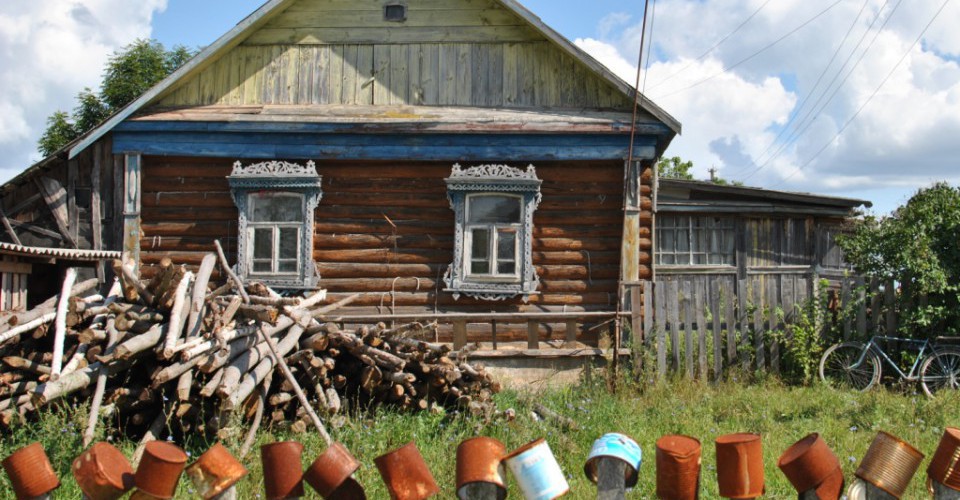
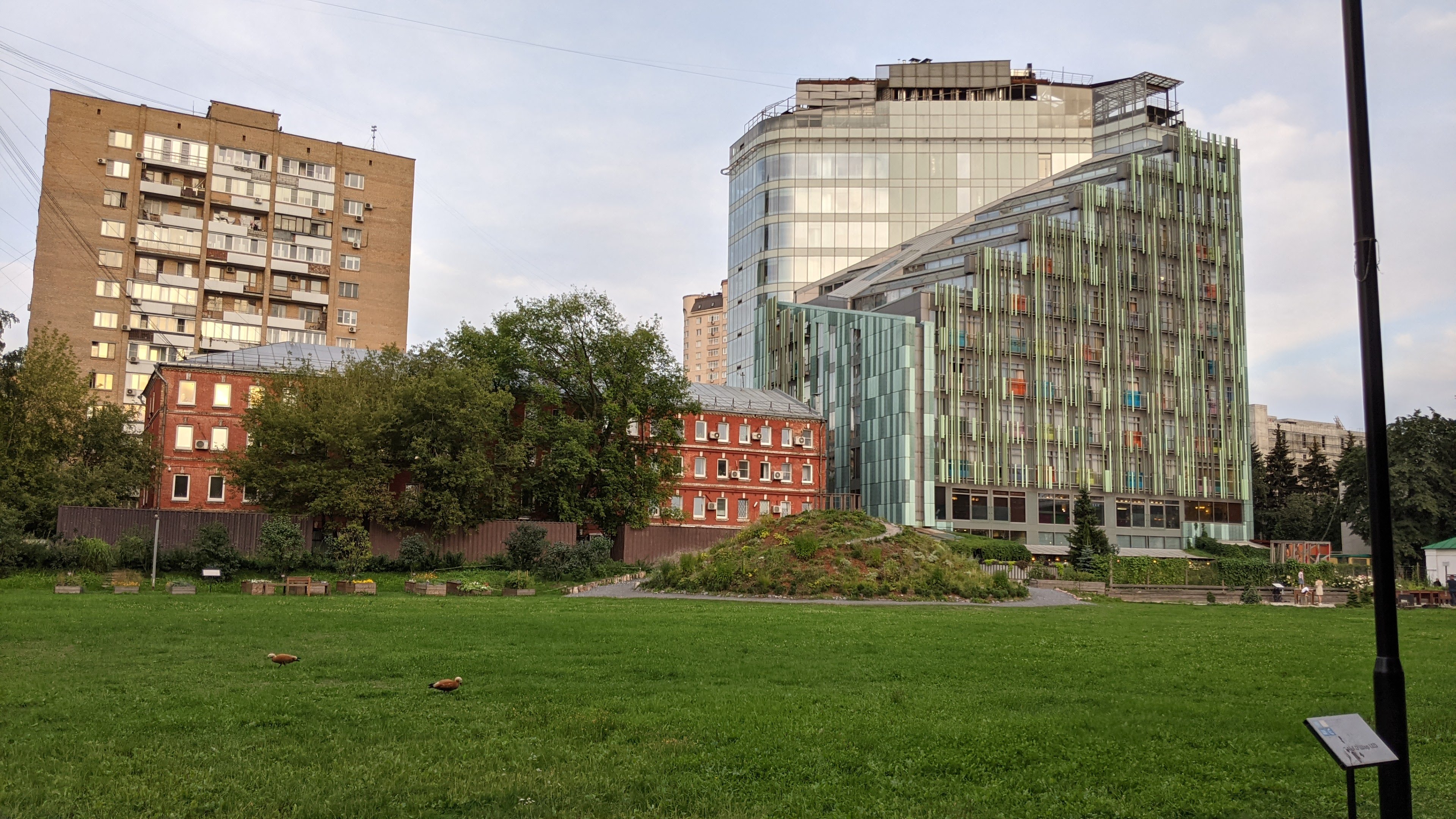
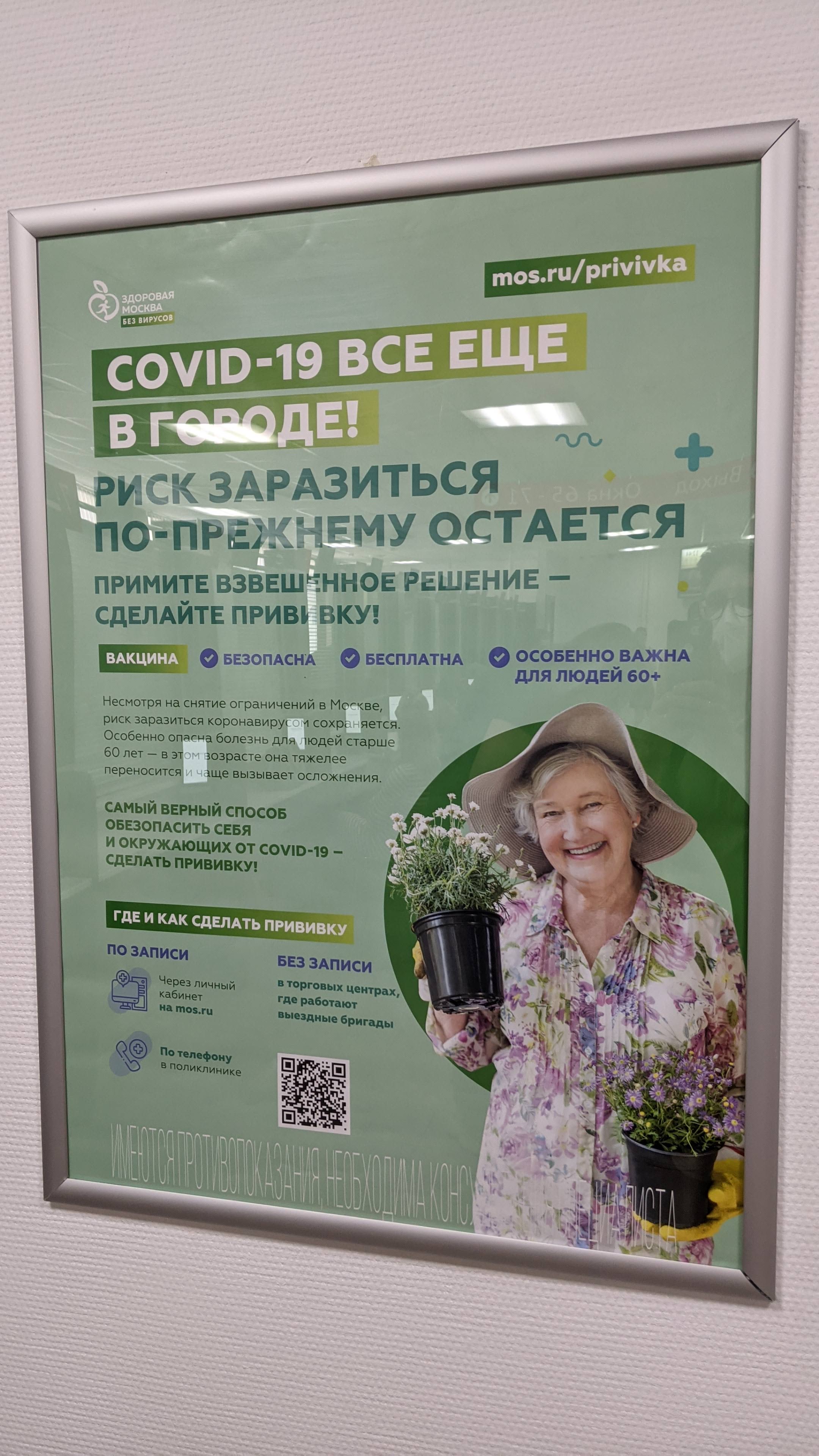
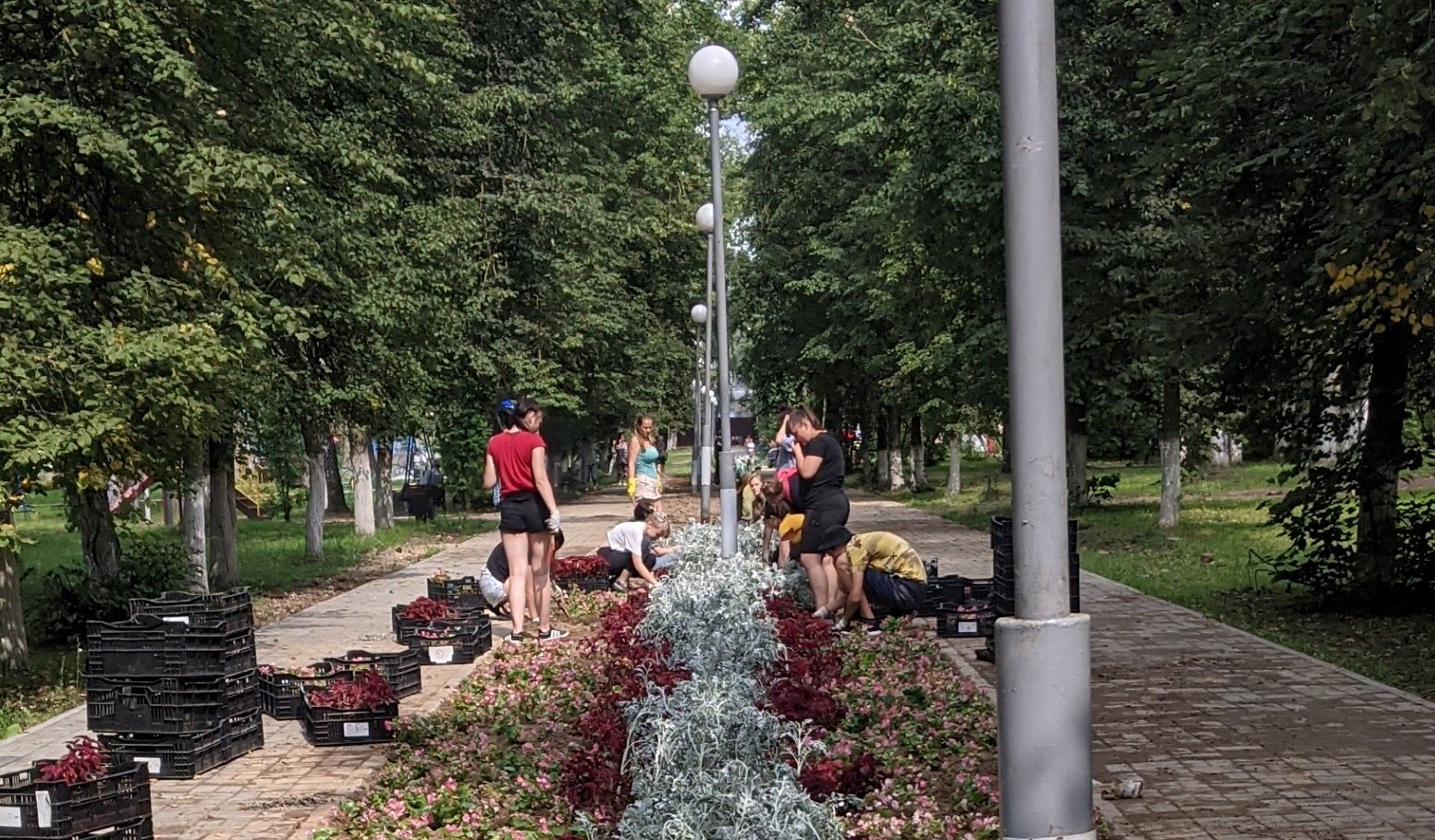
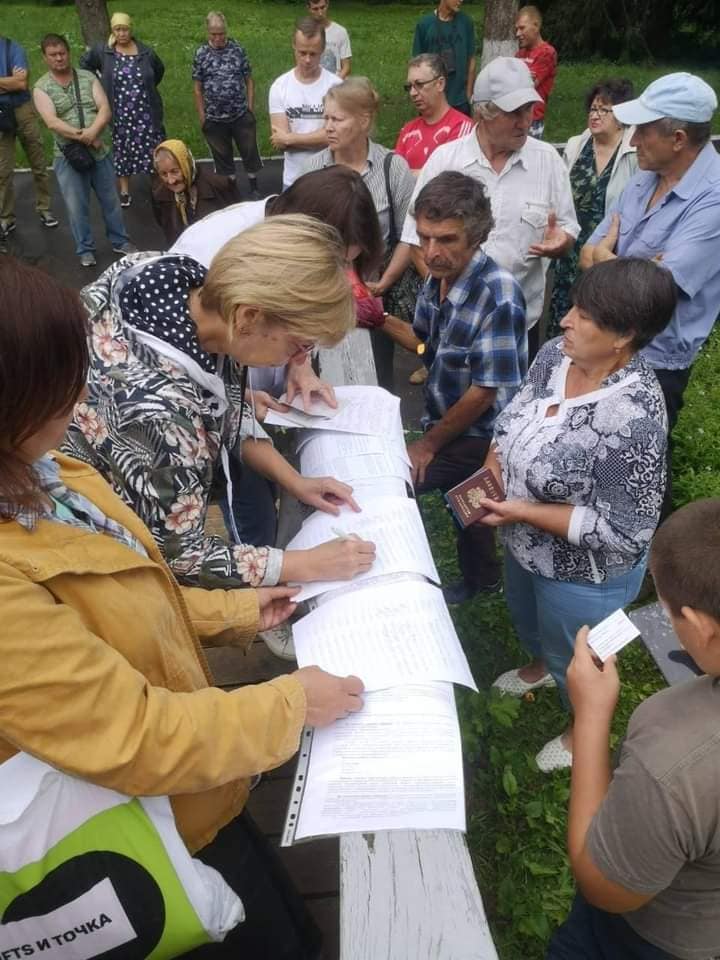
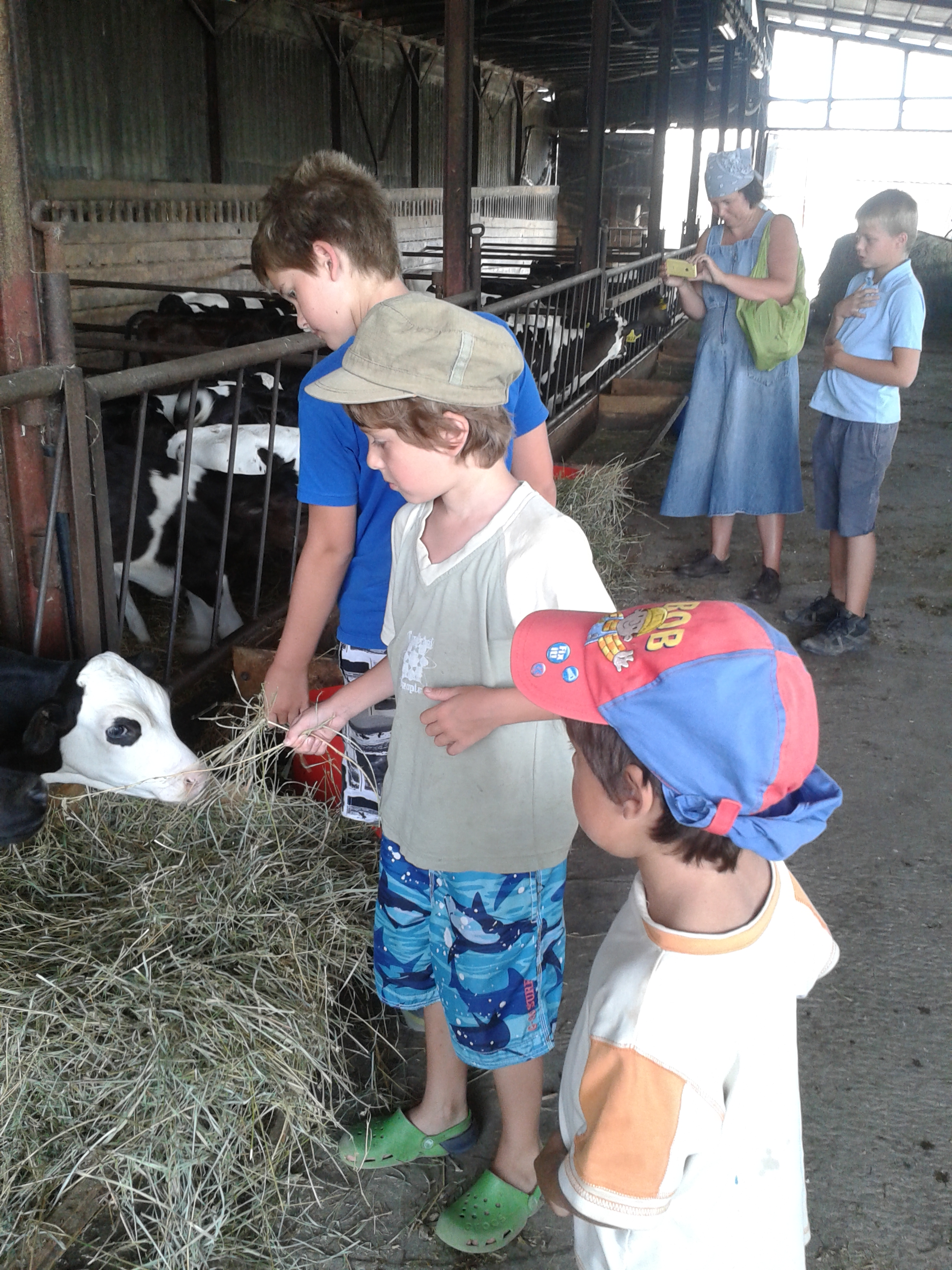


 Postsocialism