Category Archives: Trump

The Micropolitics of Desire: Small Acts of Civic Engagement in Dark Political Times

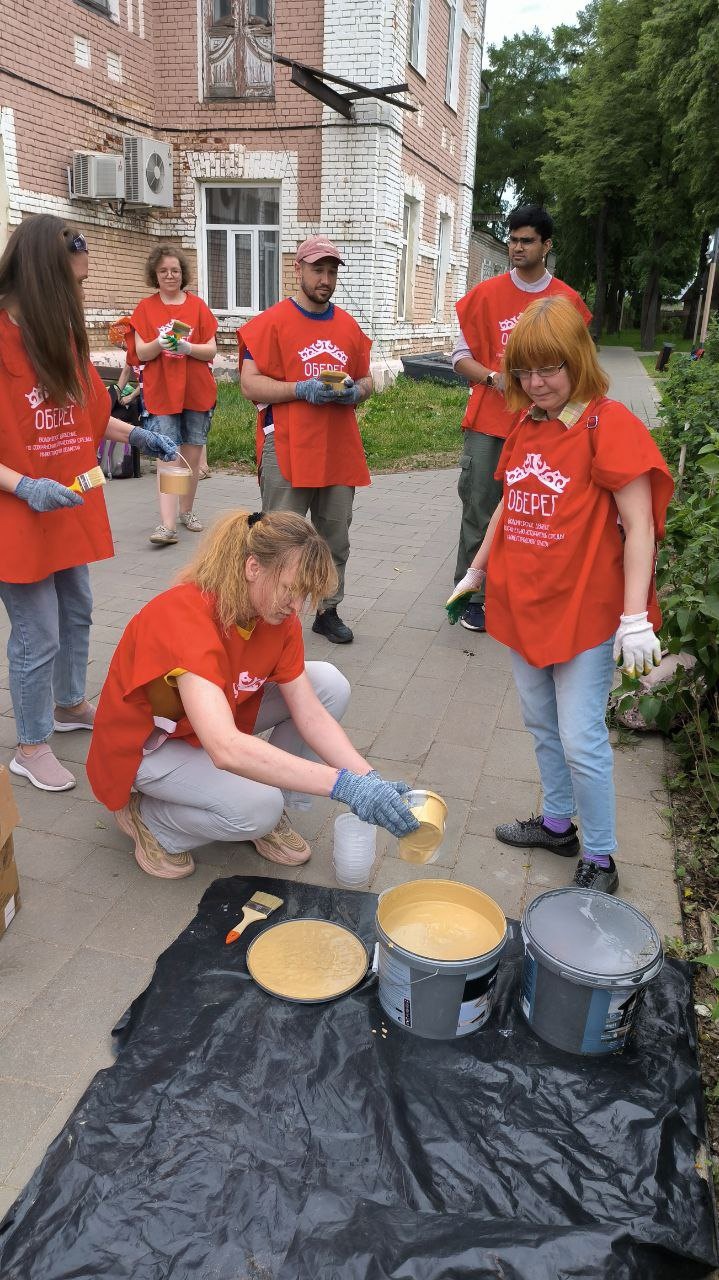
A voluntary civic heritage protection group in Nizhny Novgorod

This is a slightly different version of a piece written for OVD-Info and published here. Many thanks to this important human rights monitoring and advocacy group for publishing it.

The election of Trump might seem very distant from the realities of Russian society at war, but the reaction of many Americans to his immediate moves to take control of (or even dismantle) parts of the US state he doesn’t like speaks volumes. What should ordinary people do with their feelings of despair and helplessness in the face of naked power grabs supported by cynical figures? This is an emotional experience familiar to civic-minded Russians.

There are also dangers in these feelings. It’s easy for Americans to react further in two unhelpful ways: either the system will be robust enough to stop the descent into a kind of oligarchic dictatorship, or that the actions of individuals don’t matter, or can’t change things, so it makes no sense to put one’s head above the parapet. Often this leads to the worst kind of ‘internal emigration’ where people detach themselves from any and all forms of social solidarity or civic work, retreating into the husk of the individual.

As a Russian interlocutor put it to me about a month ago, ‘since 2022 I have benefitted from trimming my exposure to people. To stabilize myself personally, I’ve learned by heart something I say over and over to myself: that it’s purposeless to speak of politics and current events.’ And this from a formerly civically-active person in a large Russian city.

But not everyone has the luxury of turning to personal problems as a way of avoiding the social. Indeed, one of the ideas at the heart of my forthcoming book about politics in Russia is that the human drive or desire to connect to others and work on a common task is hard to fully suppress. Many researchers focus on questions of ‘legacy’ and how much the idea of what is possible or impossible for individuals in Russia is determined by their experience of the last 30+ years, by their interactions with the Russian state, and by their disillusionment with electoral politics. As a result, increasing numbers of Russians when polled express preference for a social and political system resembling the Soviet one.

In my book I talk to people from all walks of life about this problem (how the past should inform the future). But I do it indirectly. I talk to older people about what is missing from their lives now, about their ideals for the lives of their grandchildren. I talk to workers and thinkers about what kind of ‘good’ society can be imagined. Even in the darkest of times the stories mainly resemble each other: having a role which is meaningful in improving one’s social environment, enriching the lives of those around us, and having a political referent that sees the possible future as better than the present. These are all remarkably unremarkably things. Moreover, while I talk to self-avowed ‘activists’, and ‘politically-minded’ people, they are the exception to the rule of the ethnographer, who aims to capture as much as possible the socially typical, the everyman and woman depending on the time and place of the research.

However, much of the time in media and scholarly commentary on Russia, the inheritance of the period before 1991 and in the interregnum of the 1990s, is cast as providing antimodels: that it forced people into double-think, subjected them to meaningless ritual political talk turning them into cynical individualists, or on the economic level forced them to engage in corrupt or illegal forms of survival strategies, often at the expense of the weakest in society.

Perhaps some of the most dominant ideas about the social legacies operative in Russia propose a powerful framework about what 70 years of communist rule did to the Russians – they maladapted to survive, but in doing so remained civilizationally-incompetent when presented with the choice between autocracy and democracy, the liberal market economy and insider rentier capitalism. The danger here is obvious but rarely acknowledged. The maladaption frame allows all structural and complex failings in a society to be downplayed in favour of channeling guilt towards ‘the masses’; it tends towards simplistic technocratic solutions, and is profoundly anti-democratic in nature. To be fair, this anti-populist thinking is operative in most societies faced with extreme problems and rapid change. And that’s the point of rejecting the ‘maladaptive’ essentialization of national groups. Histories of countries may be more or less ‘lucky’ (Russia’s history is both!), and more or less affected by human and physical geography. But there’s little particularly unique to the political quandary of Russia, nor in the responses of mostly powerless people that would warrant the degree of exceptionalism ascribed.

If the possibility of imagining the ‘good’ as socially-connective is a powerful legacy even now, then what effects does this have beyond just an unrequited desire for change? By treating seemingly ‘apoliticals’ and ‘activists’ are equally capable, I try to give ‘noisy’ and ‘quiet’ or even insidious politics equal prominence. There are tireless yard-improvers, something quite a few researchers have written about from Riga to Vladivostok. Often conducted locally by older women, why shouldn’t beautification practices which include urban gardening, be viewed through the same political lens as the ambitions of opposition electoral work? Often the results are more successful for communities. While this is perhaps the most banal example of political virtue, it serves as a strong reminder that by taking constellations of micropolitical life seriously, we can anticipate changes at the macro level that otherwise defy explanation to those observers satisfied only with the actions of elites or the self-anointed.

My book reiterates an insight of political anthropology – that the separation of the political from the social is itself an ideological construct of mainstream social science. Nonetheless, as an ethnographer I also track down and follow many political activists who even today devote themselves to both anti-war activism and ecological projects. Indeed, the term ‘horizontalism’ is more important than ever before. Shared experiences of the repression and shrinking opportunities for openly public opposition in the last years only intensifies emotionally the ‘experiential entanglement’ of activism, as I call it.

While there are only a few who risk anti-war graffiti or even sabotage (and for ethical reasons researchers cannot engage with the latter), there are many who actively seek out niches to expand into – from therapeutic communities embracing holistic ecological and ethical ways of living in harmony with nature, to labour organizers who prefigure a future when associational protection of workers may again become possible. Through force of imagination for that future they agitate even now to protect dignity in work, and fight for better wages. Young people through collective practices of art, and even of leisure, continue prefiguring the better world they deserve: coming together to sew, paint, or just tinker with things. For some young people the most important ‘patriotism’ today is working together to care for one’s local environment, for example by taking collective hikes along river valleys to pick up litter. Even people who maintain constructive ambiguity around their loyalty to the state, are able to do meaningful civic work that is not recuperated by the regime. There are two major case studies in my book that relate to the latter: one on municipal government, the other about a group of motorcyclists. All the other examples here are taken from the book.

To return to the problem of powerlessness, Americans who feel despair at the prospect of Trump-Musk dismantling the Department of Education, or enabling the targeting of undocumented migrants (or indeed the repression of legal residents for ‘anti-american’ activities), or transgender youth can learn much from the civic and political flames that burns on despite darkness. Just look at the response to the environmental disaster in the Kerch Strait. Knowing the inadequacy and corruption of the state, ordinary people came out en-masse to clean up beaches and rescue wildlife. They did this without the prompting of charismatic leaders, without a ‘robust associational life’ of NGOs, and without a free media or ‘public sphere’: the open domain of social life where collective aims and action can be articulated.

It turns out that the common assumption to dismiss small acts, incremental thinking, and prefigurative desires is self-fulfilling. If we don’t believe in even a small politics and changes, then there will be no change. At the end of my book, I visit a housewife in a small town in Russia. At Eastertime in 2024 she gives out to neighbours some home-baked cakes decorated with icing. The icing spells out the abbreviation “XB”, which can be interpreted as representing ‘Christ is Risen’, or ‘Fuck the War’. Some of the cakes were more explicit than others. Why did she did this? Because she needed to acknowledge others and be acknowledged by them as a political actor.

Unmaking the Ukrainian working class Part II

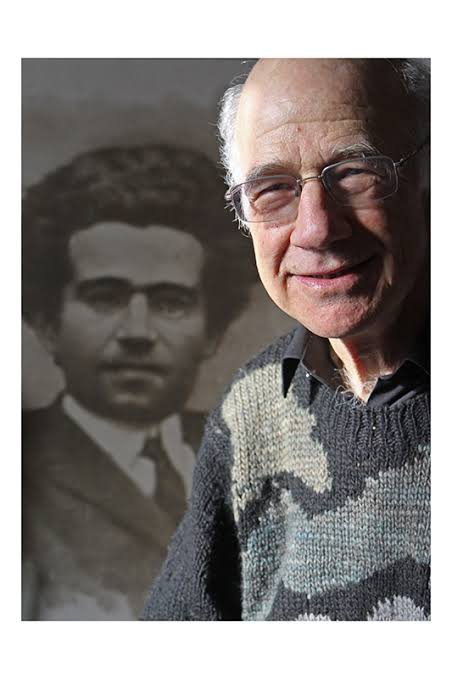
Rest In Power, Michael Burawoy

This is the second post about Denys Gorbach’s new book on Ukraine: The Making and Unmaking of the Ukrainian Working Class. The first post is here.

In the period between writing the first post and this one, Michael Burawoy has died. Burawoy was one of the formative influences on both Gorbach and me. Here’s a short excursus on how he influenced our approaches to writing a novel (in the Ukraine and Russia contexts) form of political-economy-ethnography. I hadn’t intended to focus on Burawoy (because there’s so much else of interest in the book), but here goes.

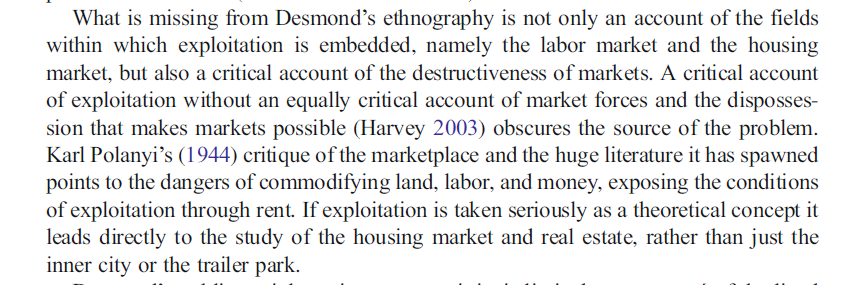
Both Gorbach and I try to synthesise our cases from what Gorbach calls ‘participant truth’ and ‘sociological truth’ – and here he cites Burawoy’s 2017 piece. Burawoy there argues that ethnography needs to be liberated from the naïve empiricism that still plagues anthropology and sociology and which is continuously re-invented by scholars unwilling (or afraid) to confront the political implications of their own work. Burawoy uses this opportunity to make the case again for bringing structure and comparison to any micro-level work. Only by linking specific ethnography cases to the broader structural constraints (oligarchic capitalism in Ukraine/authoritarian neoliberalism in Russia) can research do justice to the ‘common sense’ of interlocutors. This is what Gorbach and I attempt. The social ‘facts’ of cases do not  speak for themselves. And this, via Bourdieu, is a point Burawoy hammers home in his robust writing. At the risk of overshadowing the discussion, it’s worth citing Burawoy further (here reviewing contemporary ethnography of Wisconsin):

While there’s much more to say about Burawoy’s influence, I want to turn to Gorbach’s very extensive discussion of politics in his second chapter (and the empirics of Chapter Nine). As I wrote previously, Gorbach makes a pitch for those interested in Ukraine to take more seriously ‘everyday politics’ and ‘moral economies’. Having said that, he starts off with a welcome ‘intervention’ – one highly topical to the ascent of Trump 2.0: to paraphrase – to take populism seriously we need to move beyond discourse analysis (MAGA, get rid of woke, etc), and use empirical tools like ethnography to uncover the material basis for populists’… popularity. I’ve mentioned in this blog many times Arlie Russell Hochschild who wrote two books on the Tea Party and Trumpism, but it’s indicative of the timidity of indigenous US political sociology/anthro that this barely scratches the surface and does not qualify as ethnography in way that Gorbach’s or my work does. Gorbach has lived and worked with his interlocutors, as have I. One can barely imagine this possibility in the class-fractious society of the USA. Yes there are some exceptions, but they still amount to general handwringing, or poverty porn.  The truth is, an intersectional yet working-class ethnography is just not going to be interesting to the scions of Anthro in the US who get to do PhDs by virtue of precisely that privilege that would make it unthinkable for them to do the necessary work. (For a good general anthro account of Trumpism, see Gusterson who rightly says it ain’t all about class, yet…. ‘Trump’s victory confronts US anthropology with an incompleteness in the project of repatriated anthropology. While anthropologists of the United States have been busy studying scientists and financial traders at one end of the social scale and crack dealers and immigrant communities at the other, we have not had so much to say about the middle ground, the people who supported Trump—people we tend not to like.’ Shout out here to someone who HAS done this work, only in the UK context: Hilary Pilkington. Shout out to, to Christine Walley

Gorbach reminds readers that the best work on postsocialist populism emphasizes its shadow relationship to democracy, avoiding the normative stance that opposes democracy and populism and which is so frequently deployed to show how ‘defective’ Eastern Europe is by mainstream observers. Gorbach, following the work of Tarragoni and Canovan, argues that populism, while expressing a crisis of representative liberal democracy, is not a ‘thin ideology, but contains a radical democratic critique of representative government. But what’s missing is what Gorbach and others aim to provide – the material basis of populism’s rise which ‘aspires to distribute income and, nourishing illusions about the function of the state, is politically disorganized (Boito 2019: 135.)’. In an abrupt turnaround though, Gorbach’s innovation is to relegate populism as just a Gramscian ‘morbid symptom’ of the crisis of capitalism. Parapolitical processes that themselves are generative of populist ‘supply’ are more important to look at and these are perfectly adequately grasped using the long-standing terms ‘moral economy’ and ‘everyday politics’. The ‘crisis of representation’ that populism reflects is then doubled in scholarship: mainstream liberal political science has no tools with which to move towards a diagnosis of the disease (it ignores those that Gorbach offers here), instead offering ‘game theory’ or the pseudoscience that is ‘mass’ social psychology and which includes bizarre claims about whole ‘national groups’ on the basis of dubious experiments conducted on American undergraduates which cannot be replicated and remain ‘WEIRD’.

Gorbach returns to his problematizing of ‘populism’ in the empirical chapter on language politics in Ukraine. There’s an enlightening discussion of how pro-Ukrainian language narratives align with upwardly mobile citizens after Maidan, how the far right may find allies in LGBT organizations in opposing ‘vatniks’. A ‘thin patriotic identity’ (before 2022) emerges that papers over deep ideological differences among liberals and nationalists (p. 224). Uniquely in Ukraine, language affiliation plus civic involvement then serves as a way of denying (or exiting) a stigmatized working-class identity. But, as Gorbach continues:

At the end of the same chapter, Gorbach shows how ‘East Slavic’ Nationalism acts no less powerfully (and does not necessarily conflict with) the ‘ethnic’ Ukrainian model. Indeed, in a place like Kryvyi Rih (recall, Zelensky is from this city), Gorbach uncovers an inversion of the ‘vatnik’ theme – ‘stupid nationalists’ and ‘civilized Soviet-type people’.

After a long discussion of the mayorship of O. Vilkul who would later become a key figure that confounds stereotypes about the political views of Eastern Ukrainians, Gorbach concludes this section:

However, ‘One must take seriously the words of many adherents of both camps when they say they are not ethnic Ukrainian or Russian nationalists. The root of the political cleavage is the per­ceived moral difference between the self and the other rather than ethnic animosity.’ And in a subsequent final post about this book we will return to that topic of moral economy how it expresses everyday politics.

Cheesed off, but not because of sanctions. Immiseration, elite disconnect and neoliberal convergence.

01_1381839802

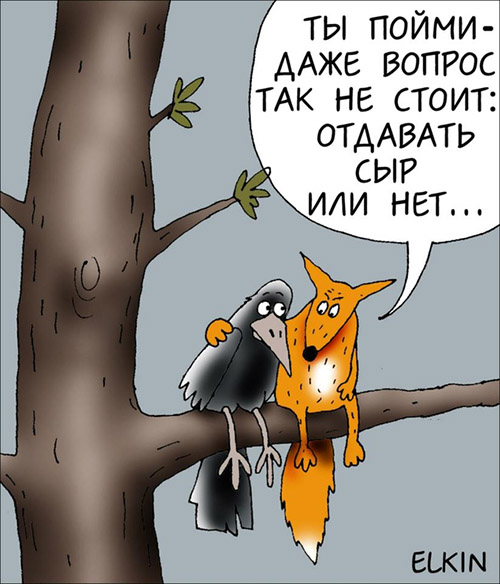
‘Get this straight, it isn’t even a question of whether you give the cheese up or not…’ (contemporary Russian version of Aesop’s fable 124)

With the constant, confusing and often misinformed media noise around Russia, you would be forgiven for believing a number of unhelpfully distorting half-truths:

That Russia has been a pariah state for a while (connected to sanctions after the occupation of Crimea and intervention in East Ukraine). That Russia is on a kind of lock-down with no outlet for protests and careful management of dissent by the state, or that Putin is so popular that protests are pointless or restricted to a small educated minority.

160815083223-trump-manafort-0720-tight-crop-large-169

‘tyrant-fellating’ gun for hire with former employer

Lastly, you might get the impression that oil money continues to keep the Russians reasonably quiescent – after all, the government spent heavily on social programmes before and after the initial shocks associated with the global financial crisis.

The aim of this piece is not to go into the all too frequent errors, overestimations of Russian efforts ‘against’ the West, the misunderstandings that conflate domestic-orientated actions with those directed outward. Overall, the obsession with a kind of ‘Cold War 2.0’ makes debate all about ‘us’ in the West and obscures or impedes analysis of the increasing similarity of social, economic and political crises in states like Russia and the ‘West’. In this blog post I will present a kind of thought experiment about what could be called provocatively ‘neoliberal globalizing convergence’ by focussing on the forms of elite enrichment and detachment from ordinary people; the impoverishment and precarisation of the majority of citizens; and thirdly, ‘cheese’ (specifically the lack of access to affordable cheese). This is one anthropologically meaningful symbol of the failure of governance for ‘the people’ – the latter a category important in Russians’ understanding of the social state (“why doesn’t the state do more to look after ‘the people’?”).

images

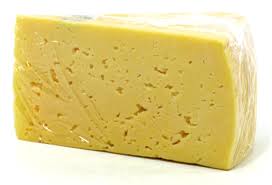
An innocent-looking piece of Russian cheese

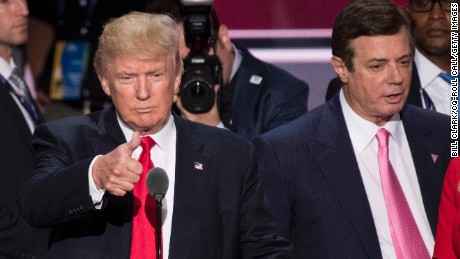
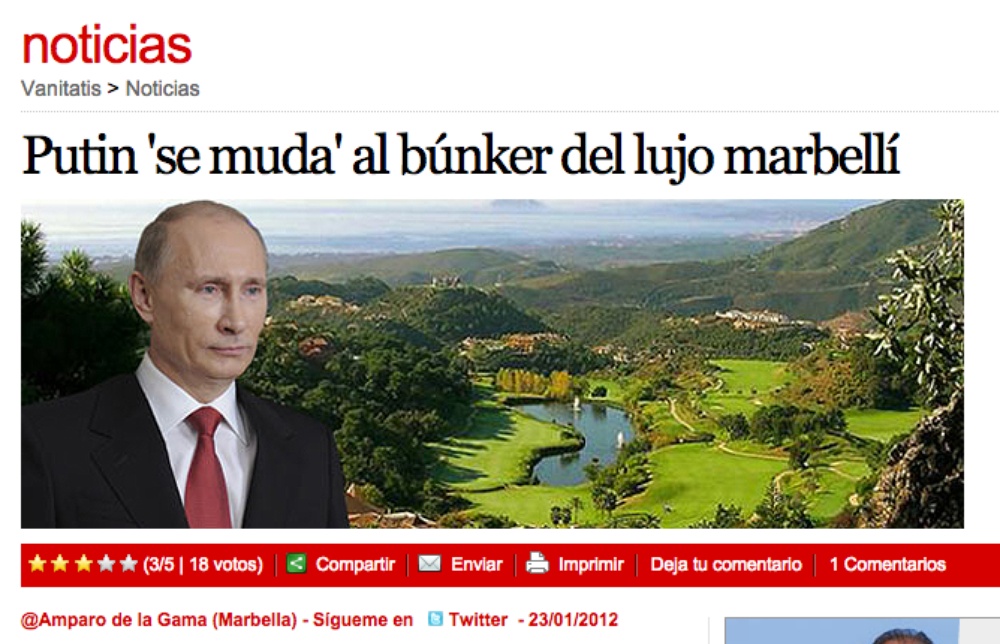
Elite enrichment is perhaps the one area where the Trump-Russia scandals may actually help us shed light rather than generate heat. As I write, it is emerging that Paul Manafort – who worked as Trump’s campaign advisor and who previously served Ukraine’s deposed president Yanukovych, is alleged to have laundered $75m dollars to avoid US taxes through a Cyprus bank tied to Russia.  The opposition blogger Alexei Navalnyi has long made Russian corruption through offshoring and laundering a mainstay of his political campaigns against the Russian elite. Now today in the US we have a kind of mirror image – albeit in miniscule form – tens of millions is chicken feed compared to the billions alleged to have been offshored by the Russian elite. What’s more, these are the proceeds of crooked state-budget tenders, and the ill-gotten proceeds of privatised, and then asset-stripped, Russian companies – a process stretching back to the 1990s, not the ‘legitimate’ earnings of a ‘tyrant-fellating’ lobbyist like Manafort. The point is, the Manafort revelations are just the latest, and most direct, US-Russia linked examples of elites operating to extract and then protect (otherwise taxable, or ill-gotten) wealth beyond nation-state jurisdictions.

3b

‘Pre-approval’ presumably refers to how rich you are

More importantly, inter-elite relations between the US and Russia aside, we should be more concerned with the plain fact that despite all the individually targeted sanctions by the US and EU against Russia, the ‘West’ is still the banker for the Russian elite. It is alleged that even the top level Russian political figures supposedly banned from the EU frequently travel to holiday residences incognito, perhaps even via those ‘non-governing nations’ – i.e. British and US sponsored tax havens, such as Gibraltar, or Russian favourites like Cyprus, where their wealth is stored alongside that of the West’s elite. If the global financialization-capitalist moment means anything, it is that public political punishment (sanctions), or national, or even international legal jurisprudence shouldn’t really affect the private flows of expropriated wealth from poorer countries to richer ones.

90d07539cc

No comment

As a formerly highly industrialised country that had the neutron-bomb treatment of ‘economic shock therapy’ as Russia did in the 1990s, the re-current ‘capital flight’ which  supports liquidity and financial speculation elsewhere especially after the financial crisis 2008-, has uncanny echoes of that earlier transition period from Communism.  As the global capital accumulation cycle entered a slowing phase, the opening up of the vast resource extraction economy that was the USSR acted as a kind of stimulus to Western economies, flooding the market with cheap industrial commodities while enriching a small group of Communist-party-connected elites. Analyses such as these serve as grist to the conspiracy theory mill within Russia, by presenting these processes as planned by the West, rather than the result of capital in search of assets suddenly arriving in a new market. Opportunism is domestically presented as a foreign directed criminal conspiracy to pauperise Russia.  Certainly, the wholesale asset stripping and under-the-radar export of resources formed the basis of economic and political power for the Russian elite and shifted abruptly a low inequality society to one of the most unequal in the world.  It’s easy to understand the attraction of conspiracies when proponent cite the well-researched work recently done by Thomas Piketty’s team. In reviewing the present position, they baldly state: “there is as much financial wealth held by rich Russians abroad—in the United Kingdom, Switzerland, Cyprus, and similar offshore centers—than held by the entire Russian population in Russia itself.” (Novokmet, Piketty, Zucman 2017: 5). In this latest stage of offshoring, the main motor is not privatisation (now around 70% of GDP is produced by state-owned enterprises) or resource sale, but siphoning off state tenders and procurement ‘padding’ to the value of $17bn a year – or twice the state education budget for a country of 144 million people.

BheJ-QhCAAErBSJ

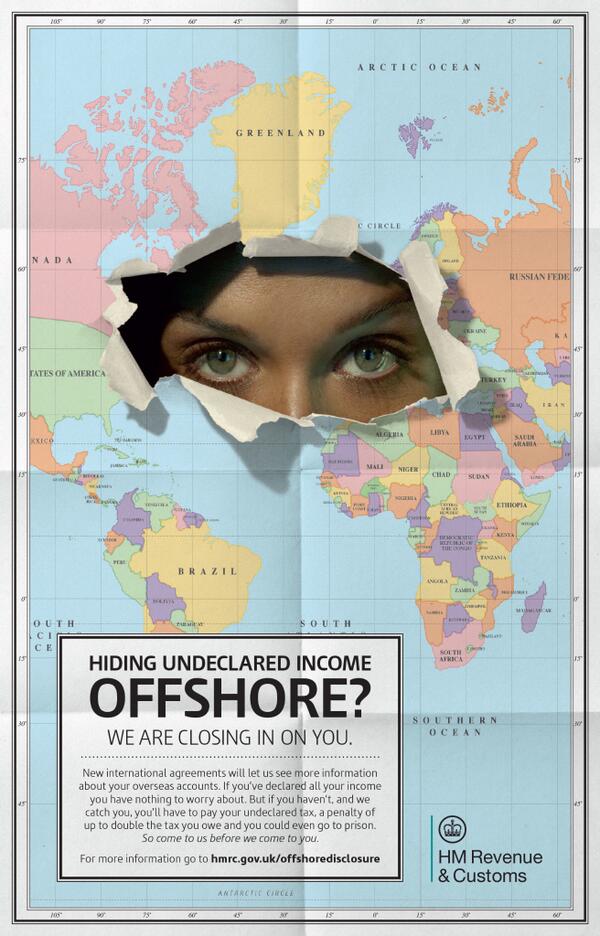
I just love the irony of this British tax-authorities’ poster.

The important thing is that despite lip service paid to the effect of sanctions on Russia and the punishment of reducing Russian access to international money markets, so-called ‘round tripping of capital’ from emerging economies to offshore financial centres (OFCs) and back as foreign direct investment (FDI) remains par for the course in Russia. A parallel process, described by the Guardian’s Luke Harding, protects the incomes and lifestyles of elite individuals named in sanctions. Any celebration of news of the delayed extension of US sanctions applied to military exporters in Russia misses the point. Weapons exporters can get Russian state loans and don’t export rifles or planes to the US. We must leave ‘sanctions busting’ aside as a minor issue, however interesting we find the relabelling of EU and Norway-caught fish to come from Belarus, or the diverting of Scandinavian produce via the Faroe Islands.

lasos-1709-1

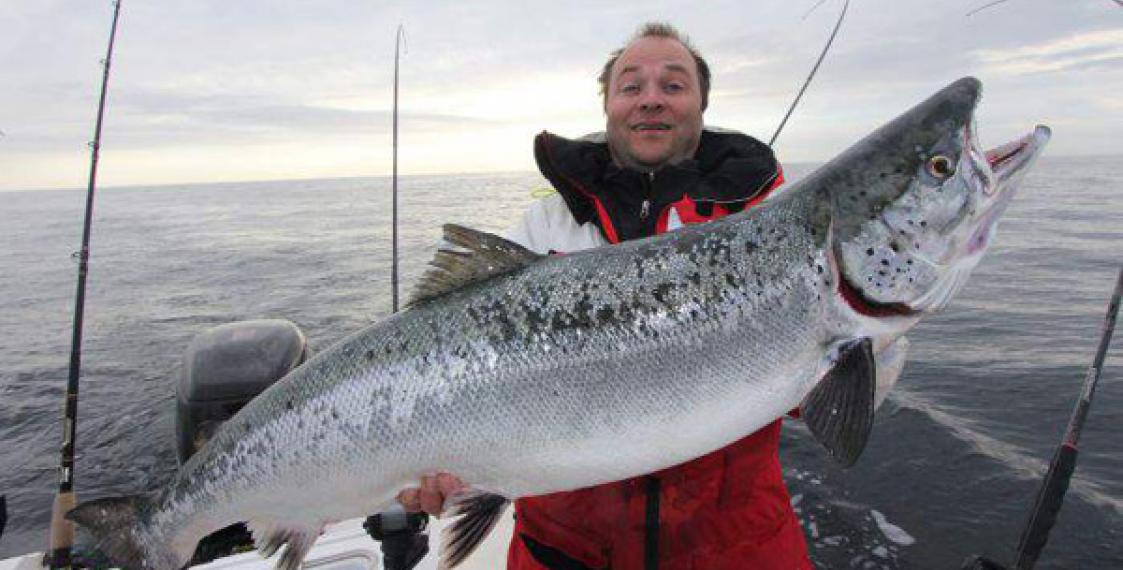
The well-known salmon fisheries located offshore from the Belarus fjords.

While ‘round-tripping’ FDI is not the same thing as ‘real’ FDI (Ledyaeva et al. 2015) which comes from transnational companies continuing investments in plant, production and personnel in the Russian Federation – Volkswagen cars being the example that features in my own research, in reality that ‘real’ FDI is also little effected by sanctions, except for an initial wobble in 2014-15. The ‘sanctions’ regime distracts from the ongoing and more fundamental incorporation of Russian economy and employment into the global capital systems – albeit with Russia forced into adopting a model of the low-cost manufacturing and relatively low-added value production activities – ice cream from Unilever, consumer automobiles from Hyundai, building insulation from Danish Rockwool. Gurkov and Saidov (2017) note two other more important points here – the MNCs produce in Russia for the domestic market, but now also for export, and increasingly move towards localisation of production – meaning that various parts of the supply chain – milk for ice cream, for example – are sourced from Russian suppliers.

images (1)

‘Gold Standard’ ice-creams. A Russian brand belonging to Unilever. Advertised as the ‘tasty pride of Russia’.

The point is not that sanctions should be targeting the jobs and livelihoods of ordinary Russians. That would be even worse than the status quo, which gives a veneer of political punishment, but leaves the game the same. The point is that the incorporation of Russia into the global economy has actually intensified under sanctions – not to the benefit of ordinary people, who increasingly face the same progressive deterioration in their living standards as elsewhere. If anything it is the ‘sameness’ of social suffering in comparison to other states that we should be more attentive to when studying Russia – rather than the obvious differences (such as political regime and ‘human rights’).

So it is here I want to move on to the second and more ethnographically informed part of this post: A parallel process to the preservation of capital for the elite in Russia is the progressive immiseration of ordinary Russians. Initially the general disruption in Russian-West trade due to the Russian embargo on EU produce led to many food staples becoming much more expensive and of dubious providence (including cheese). In addition, the difficulty in planning any investment in such a political environment led to increases in unemployment, indebtedness, wage arrears and underemployment among Russians. Finally, the continuing economic crisis was an easy excuse for the Russian government to further restrict welfare provision and other social budget items while ratcheting up the xenophobic rhetoric – ‘your pension isn’t inflation indexed, the rouble has crashed, but Crimea is ours, and look at Gayropa!’.

12

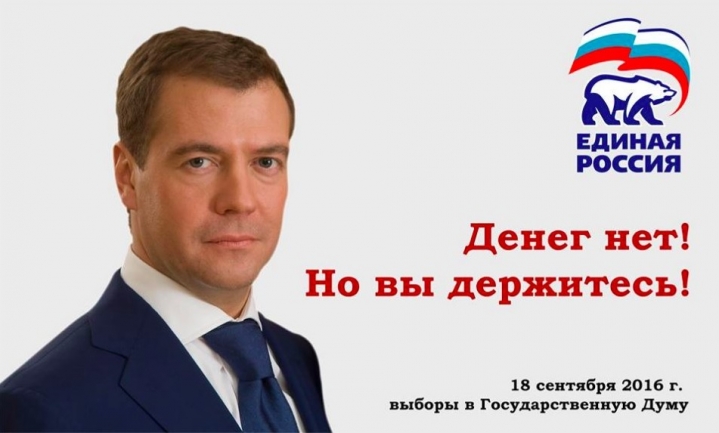
A parody election poster referring to Medvedev’s comments to Crimean pensioners

The realities of everyday insecurity, impoverishment and long-term woe for many Russians pre- and post-date the sanctions regime, as Novokmet’s and Piketty’s research neatly summarises.  In this section I to focus on the 2009-present moment. Why 2009? Because it was that year that marked the end of a decade of real improvements in all Russians’ living standards. It was also the year I started doing my research on the Russian working poor in small industrial communities. There was one consumer staple that for me came to symbolise ongoing ‘everyday precarity’ of Russians’ lives: dairy products – or rather their recategorisation from affordable staple to out-of-reach luxury. Why focus on dairy? Elsewhere I’ve written about the symbolic significance of meat, beer, and other foods for Russians (Morris 2014). But milk and in particular, cheese, cuts to the core of Russians sense of the present as ‘not normal’, and in turn to unwelcome realisations about elite cynicism and disdain for ordinary people, or ‘cattle’ as some Moscow intellectuals like to call them.

668BE1AA-4E22-49CE-A892-49345E880DEC_cx21_cy0_cw79_w1023_r1_s

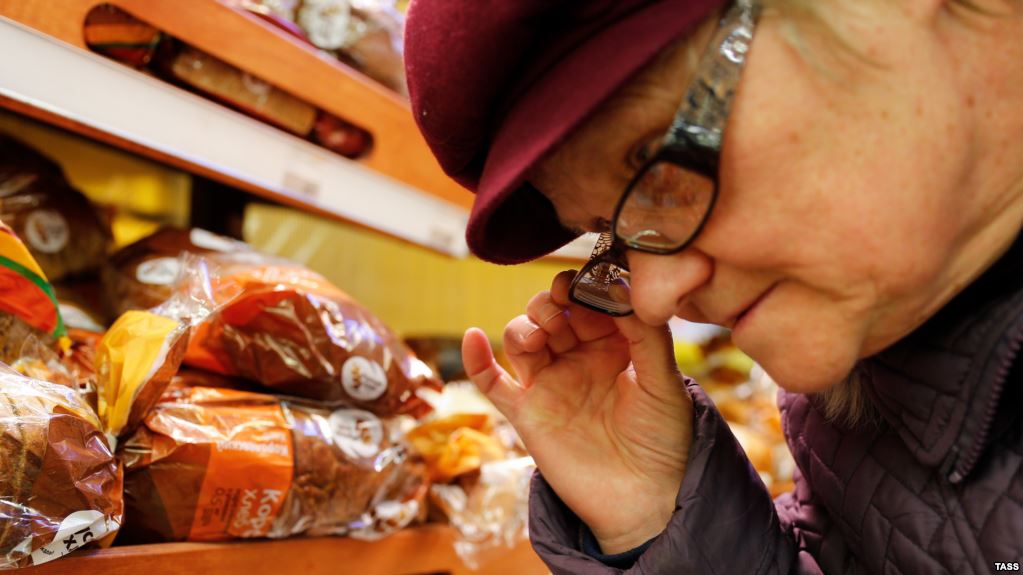
The common or garden Russian pensioner. Laser-focus on price tags

In the late Soviet period, cheese had become a familiar food staple – ‘Russian (rossiiskii) cheese’ was an affordable, if bland, standard dairy product. Despite the hyperinflation, destruction of savings, devaluations and other dislocations affecting Russians in the 1990s, ‘Russian cheese’ did not disappear from the shelves or diets of the urban consumers.   When I started ethnographic work in 2009, for most of my research participants, cheese, along with red meat had been consigned to the ‘occasional luxury’ category of their mental shopping lists. Indeed, I recall being quite annoyed that milk, cheese and salami were never bought at all by my first host family, until I was able to better appreciate the fact that despite having two salaries coming in from the public sector, they lived significantly below the poverty line (even giving up their domestic telephone). Our staples were macaroni and tinned fish, with chicken also a ‘luxury’. I recall well the disgust of my host when I bought some fruit juice – ‘what a waste of money – for chemical water and flavouring!’

producti70_vs

Cheese for me, but not for thee.

My experience is borne out by fine-grained survey research in Russia. Combining numerous data sources and taking a national overview, Strzelecki (2017, 10) notes that ‘the number of individuals who declare that they have too little money to buy enough food and those who cannot afford to buy clothes […] amounted to around 40% of the population. The low paid workers in some regions are now spending up to 80% of their pay on basic food staples [pdf link!](TsEPR: 2016, 5).

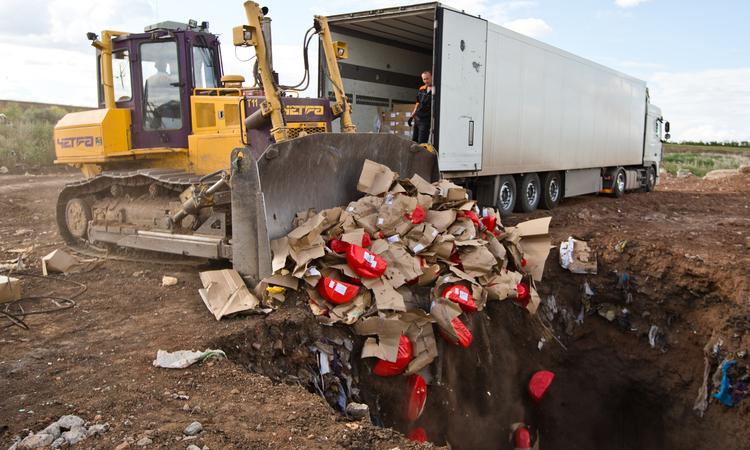
If poor Russian had long given up on being able to live a ‘normal’ consumer existence, with cheese and salami excluded from their diet, the sanctions regime suddenly gave the ‘middle class’ a taste of this experience. Because so many products, from dairy to fruit and vegetables, were imported, even the better off urban Russians in office jobs were suddenly faced with much higher prices as the Russian economy shrank by 5% percent in just half a year in 2015 and the rouble crashed. At the same time the state set about publicly destroying (bulldozing and then burning) tonnes of confiscated cheese and apple imports, refusing even to redistribute them to the needy. The shortages in imported staples coincided with the shrinking of the economy which meant that many ’better off’ Russians’ incomes were affected for the first time since the late 1990s. Only a small fraction of the metropolitan (Moscow and St Petersburg) middle-class have incomes ’indexed’ to Euros.

1251665

If we bury this now, in a hundred years we will have a beautiful Parmesan orchard

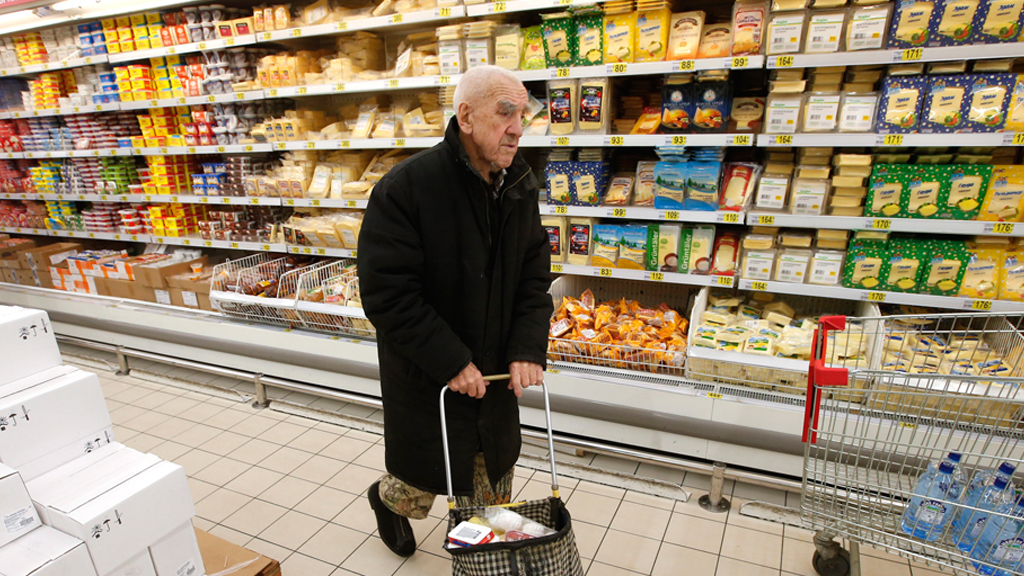
Four years after the beginning of the sanctions, cheeses are back on the shelves, but the market now even more clearly reflects the gulf between the haves and the have-nots, with many more now in the ‘have-nots’ pile. In supermarkets forlorn packets of unbranded ‘Russian cheese’ sweat in cling-film alongside neatly packaged ‘President’ Brie (domestically produced by French subsidiaries – to avoid counter-sanctions).  A relatively protected group like Moscow pensioners (with numerous social benefits and a higher, inflation-indexed pension) would struggle to buy either product. Even a ‘lucky’ pensioner might live on only 250 Euros a month – from which they will have to pay for utilities, as well as food. The suspicious-looking and almost tasteless ‘Russian cheese’ now costs six Euros a kilo, the ‘branded’ President, over 12 Euros. Why ‘suspicious’? Because stories real and imagined abound of how cheese has becomes a ‘dark story’ of Russian autarky after sanctions, with all kinds of fly-by-night producers rushing to fill the gap with ‘surrogate’ products containing palm oil, or in some cases bulkers not fit for human consumption. By some measures up to 25% of cheese is not what it seems, by others, up to 80% of cheese is counterfeit. You might not have considered this before but cheese is a ‘secondary’ product of milk production, and requires over 15 litres of milk per kilo of cheese. Milk producers’ costs have doubled since 2012. It’s telling that milk production and consumption today in Russia is still 40% below the late Soviet-period figures; a lot of milk production is small-scale and doesn’t enter commercial distribution networks. Long distances preclude distribution, production is inefficient and imports play a significant role in the market.

89027602-2109809

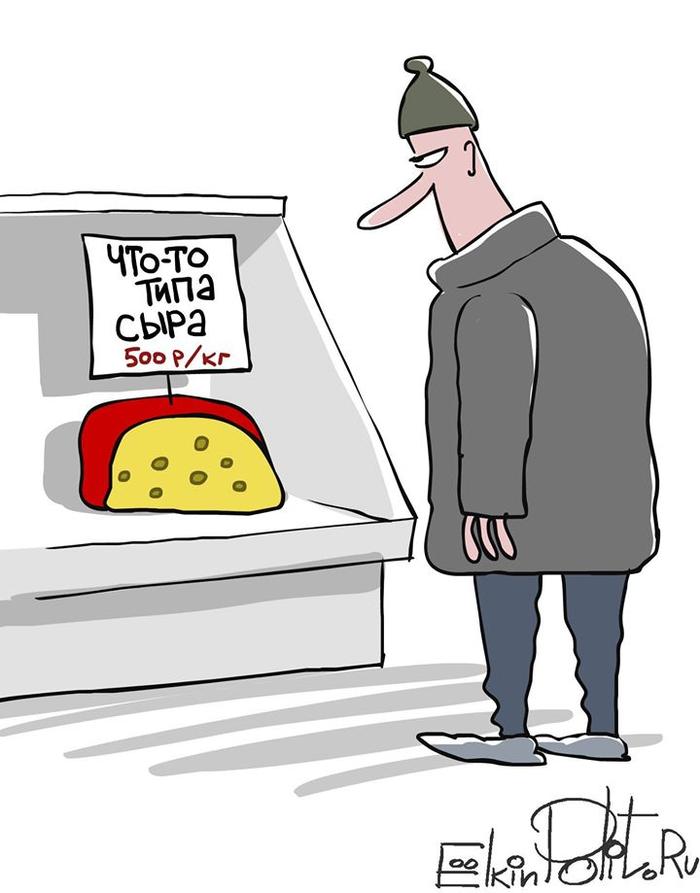
‘Something approximating cheese’

Of course there are other measures of the continuing downward spiral of Russians’ economic well-being – the 20-fold increase in consumer credit at punitive rates, the resultant delinquent loans and epidemic of aggressive debt collecting being one. But as an everyday ‘simple’ pleasure of the table, cheese can perhaps more starkly show how badly ordinary Russians live, how little an obscenely wealthy elite cares about them, and how large and increasing is the gap between them. More than that it shows how Russia is dominated by both very visible real disparities as well as the open secret of the counterfeit.  Adulteration substitutes for the real; and the longed-for ‘normal’ remains out of reach (what could be more a sign of normality than a bland holed triangular chunk of cheese). There are many parallels in the counterfeit political sphere of course – not least its rubber consistency and lack of aroma.

However, in a different sense, Russia is just a ‘normal’ country, just not in the mildly optimistic sense the political scientists Daniel Treisman and Andrei Shleifer (2005) predicted: a middle-income country facing typical developmental challenges. Instead, I would contend that Russia is ‘normal’ in a different way: the dominant politics of ‘austerity’ (I prefer the concept of a continuously residualizing social state); real income falls over protracted time periods; the end of upwards social mobility and the privatising of educational opportunity; the expansion of indebtedness and precarity ever more widely in the population; the strengthening of multinational corporations’ clout and the intensification of their role in the economy (a process actually accelerated by sanctions – see Gurkov et al. 2017). All these represent Russia as converging with the ‘West’, regardless of the media focus on authoritarianism and the ‘new cold war’.

download (1)

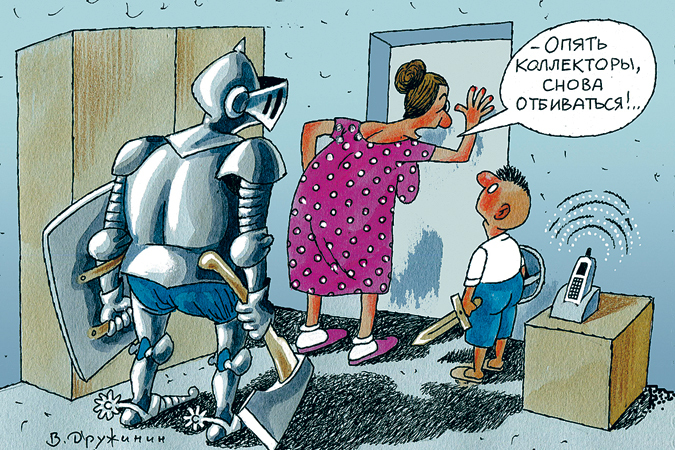
‘Time to fend off the debt collectors again’

[This post was written for the Focaal blog, associated with Focaal: Journal of Global and Historical Anthropology http://journals.berghahnbooks.com/focaal/. A slightly different version was published there 16 November 2017: http://www.focaalblog.com/. Thanks to Don Kalb and others at Berghahn Press]


References
Igor Gurkov & Zokirzhon Saidov (2017) Current Strategic Actions of Russian Manufacturing Subsidiaries of Western Multinational Corporations, Journal of East-West Business, 23:2, 171-193.
Igor Gurkov, Alexandra Kokorina, Zokirzhon Saidov. (2017) The cul-de-sac of foreign industrial investments to RussiaPost-Communist Economies 29:4, pages 538-548.
Ledyaeva, S., Karhunen, P., Kosonen, R. and Whalley, J. (2015), Offshore Foreign Direct Investment, Capital Round-Tripping, and Corruption: Empirical Analysis of Russian Regions. Econ. Geog., 91: 305–341. doi:10.1111/ecge.12093
Morris, J. 2014. The Warm Home of Cacti and other Soviet Memories: Russian Workers on the Socialist Period.’ Central Europe 12(1): 16-31.
Novokmet, F, T. Piketty, G. Zucman. 2017. From Soviets to Oligarchs: Inequality and Property in Russia, 1905-2016. Working Paper 23712 August 2017 NATIONAL BUREAU OF ECONOMIC RESEARCH, Cambridge, MA http://www.nber.org/papers/w23712
Strzelecki, J. 2017, ‘Painful adaptation The social consequences of the crisis in Russia’, Ośrodek Studiów Wschodnich im. Marka Karpia, Centre for Eastern Studies, no. 60, Warsaw, Poland.
Treisman, Daniel, and Andrei Shleifer. 2005. “A Normal Country: Russia after Communism.” Journal of Economic Perspectives 19 (1): 151-174.
TsEPR [Tsentr Ekonomicheskikh i politicheskikh reform – trans. Centre for Economic and Political Reform], 2016, ‘Kak vyzhivaiut rossiskie sem’i’ [trans. ‘How Russian Families Survive’], Available online: http://cepr.su last accessed 31 March. Direct PDF link: http://cepr.su/2016/12/21/%D1%81%D1%82%D0%BE%D0%B8%D0%BC%D0%BE%D1%81%D1%82%D1%8C-%D0%BD%D0%BE%D0%B2%D0%BE%D0%B3%D0%BE%D0%B4%D0%BD%D0%B5%D0%B3%D0%BE-%D1%81%D1%82%D0%BE%D0%BB%D0%B0/ Summary in English here:  http://cepr.su/2017/05/17/low-standard-of-living-in-present-day-russia/

Working-class voters in the 2016 Russian parliamentary election: ‘Better LDPR than the party of power’

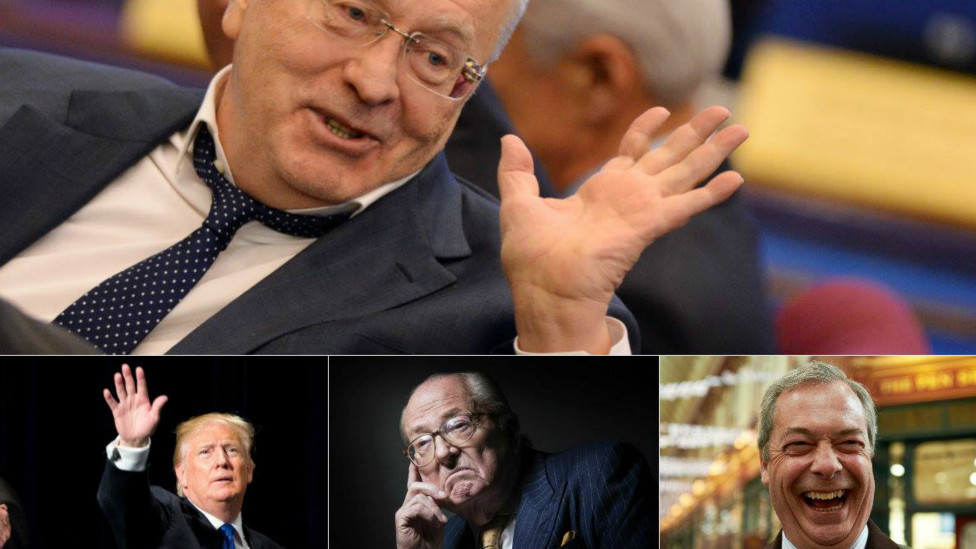
160425143959_4_guys_976x549_afpria_nocredit_u4x1gWhat have Trump, Brexit and Russia’s 2016 elections got in common? While it’s debatable whether the referendum and presidential elections represent a revolt against the elites – by whom and for whose benefit, we should immediately ask –  the Russian elections surely are completely unrelated – after all, the ruling party increased its share of the vote?
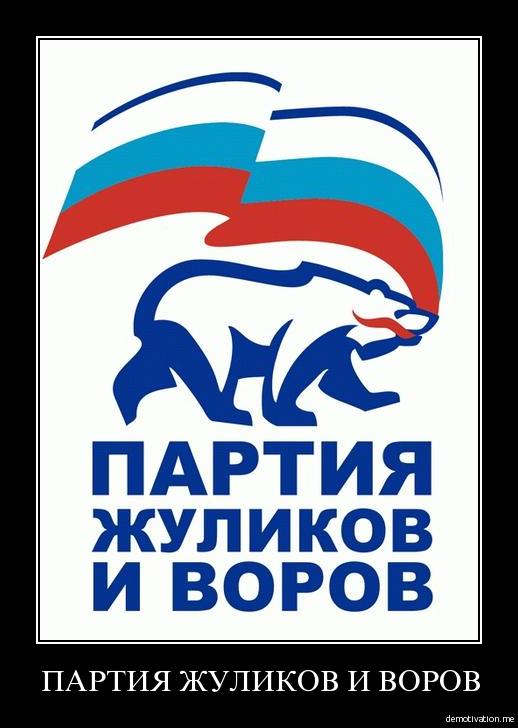
5cpwbcg8uyzuUsually Russian elections are something I largely ignore. My research has been about the ‘everyday’ experience of ordinary Russians, and formal politics is a topic my working-class informants usually actively avoid, beyond their misinterpreting Navalnyi’s most successful slogan. They insist that the slogan applies to more than just United Russia: that all politicians and bureaucrats are ‘crooks and thieves’. The most political statement I can recall from my informants was in 2010: that Medvedev and the government would never have the interests of the people at heart and would only act for the benefit of city-folk. With such cynicism and distrust of politics as a main narrative, you can probably tell where I’m going with the bundling of Trump, Brexit and Russia.

However, it so happens that when I arrived in my new job here in Denmark, one of the first things I was asked to do was to give a public talk on the ‘meaning of the Russian elections’. Beyond a rather spiteful spat between Russian political scientists arguing about the absolute and percentage share of the vote for the ruling party, United Russia, and the disappointment about the opposition’s performance, surely the only possible take away would be the tightening of the ruling elite’s grip on the administrative delivery of votes for ER?
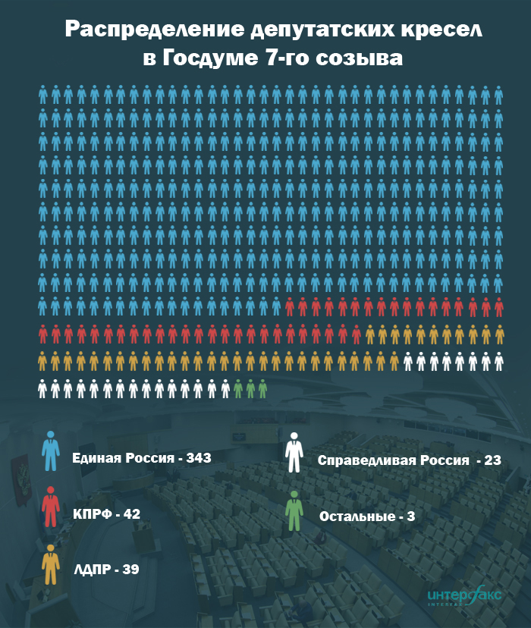
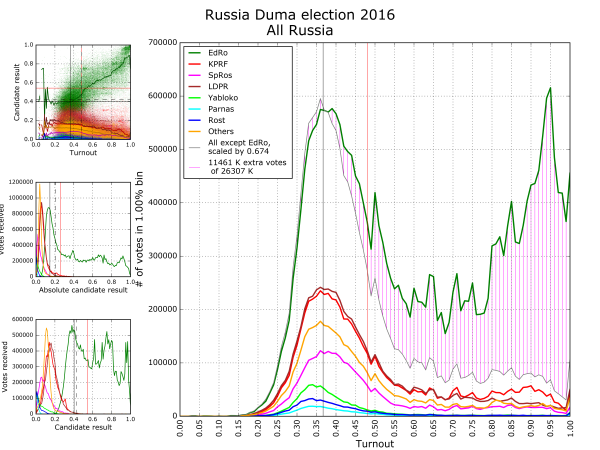
picture1I’m not qualified to really engage in analysis of voting patterns or the validity of the term electoral authoritarianism and so on, so for me the only result worth noting, apart from the fall in turnout, was that while all the parties’ vote share fell (apart from UR), LDPR’s rose – Zhirinovsky’s nationalist and populist party. While acknowledging LDPR’s links and usefulness to the Kremlin, let’s leave aside the issue of whether LDPR is a real political party and whether Zhirinovsky is a real – i.e. free – political actor. These issues are not relevant.

Leaving aside the rise in UR’s share – not a ‘real’ phenomenon but rather an artefact of ballot stuffing, administrative resources, and outright falsification, the only ‘real’ winner in improving showing was LDPR (their absolute number of votes of course, fell from 2012, but then so did everyone else’s). In fact, if we wanted to underline LDRP as a significant fixture of Russian electoral, not to mention political, life we could point to the consistency in percentage vote share in the elections since 2003: 11, 8, 11, 13, as well as the party’s back-from-the-dead resurrection after the 1990s. LDPR is the only party machine apart from the Communists to survive intact the whole of the post-Soviet period of electoral politics. Sergei Shpilkin’s assessment of fraud puts the real voting figures for LDPR at 17%, v. 18% for Communists and 40% for United Russia. Real turnout according to him was 37%.
76210_600

As Alexei Makarkin rightly pointed out in 2007 – to its voters, Zhirinovsky’s disingenuous opposition positioning and his clear links to the Kremlin are irrelevant. LDPR remains attractive to conservative patriots who are pro Putin foreign policy, nostalgic for the USSR in some way, distrusting of the state in general and harbour anti-elite sentiment simultaneously. And my small ethnographic sample bears out the paradox of ‘outsider-loyalty’ identity among voters. If the political histories weren’t so different, it might be worth comparing LDPR voter identity to the Jacksonian world-view of middle- and lower-class Americans that it is argued swung Trump’s election.
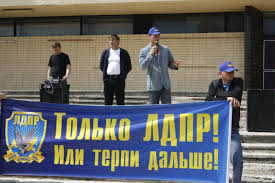
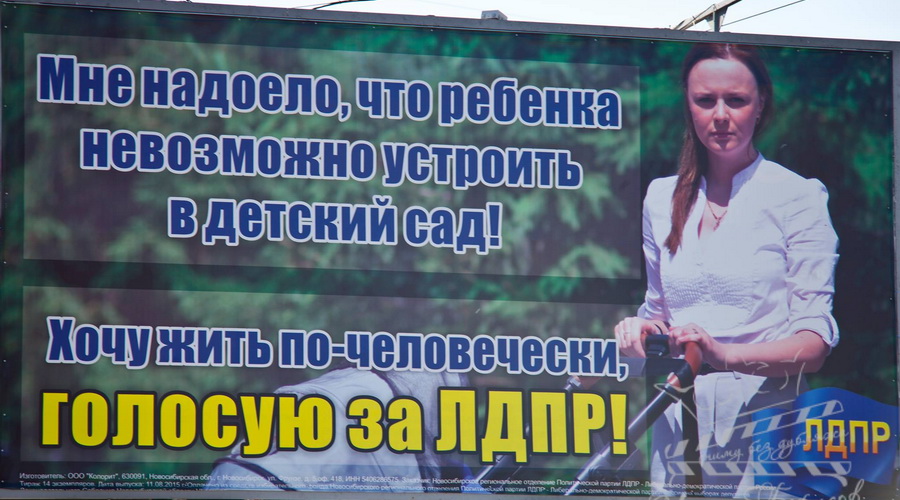
images-1LDPR had the most expensive campaign spending 50% more than ER ($10m). Arguably, it also ran the best targeted media campaign of any parties in the election, with clear and simple media messages – particular those of interest to vulnerable citizens and which are sensitive areas for UR – inflation on food products, access to medicine, access to housing finance. These important and highly resonant issues were overshadowed by the attention given by the media to LDPR’s typically provocative and chauvinist foreign policy pronouncements such as ‘Return the borders of the USSR’, and ‘an end the humiliation of Russians’. These were but two of a number of catchy slogans broadcast on a loop, in the waiting area of Moscow’s Sheremetyevo international airport in August, for example. This exclusive focus on LDPR’s nationalist rhetoric is also present in Western analyses of the election, [with Andrew Monaghan describing the party as merely ‘nationalist’.] Only four of the 28 well-produced TV ads were on the subject of foreign policy and differed little from the government’s formal policy. What resonated with my informants were specific measures like caps on pay ratios between CEOs and workers, and policies to restrict debt collectors’ activities – loose credit policies were likened to drug pushing.  LDPR as a self-styled protest party is also evident in Sevastopol billboards responding to ER campaign. ‘Vote LDPR or carry on putting up with it.’
politnar42

[This placard was actually from 2015]

Makarkin also finds what he calls a periphery of protest voters who might vote LDPR given lack of alternatives, given Zhirinovsky’s move to ‘mainstream’ great Russian chauvinism  which is anti-Soviet and anti-West, and not particularly ‘extreme’ against backdrop of Putin’s foreign policy. In his latest piece Makarkin seems to indicate LDRP’s continuing success as a kind of maturing and greater realism on part of lower-middle class and lower class electorate – ‘we’ll take our elite-led chauvinism with a pinch of oppositional salt – and after all, Zhirinovsky can be no worse than the corrupt URs. The Communists, Opposition and others who are always going to lose.’ People can choose unthinking or thinking loyalty to Putin; choose internal emigration; or choose LDPR – and strikingly Makarkin includes disaffected youth in this equation – something of the Bernie Sanders-Trump linking there. And what Makarkin describes was pretty much exactly what I encountered among my long-term informants: People switching from other parties, including UR to LDPR, but not only that of course – what I was able to examine was the more substantive reasoning behind their voting behaviour.
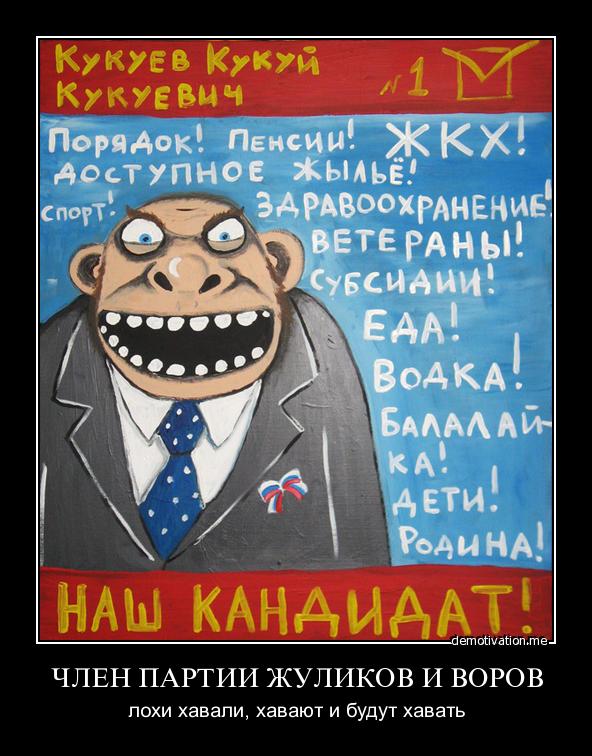
nggvrlk2e0fhThus, LDPR, Trump and to a lesser extent the Brexit campaign came together to prompt me to re-examine my long-term ethnographic research data in a more explicitly political way.  What emerges is the attraction, regardless of political system, of populist reactionary currents that cross left-right political classification and challenge traditional survey methods. Political ethnography – engaging with local contexts and individuals and communities – can help understand the ‘mature’ phase of electoral authoritarianism in Russia, by acknowledging the complexity of ordinary voters’ views, values and positions, regardless of who they vote for.

Fact is we don’t have much of a dataset of political ethnographies of populist voting, so I offer a proxy attempt at one here. The point of the piece is to illustrate the potential for political ethnography to enrich our comparative understanding of politics and society. So, even though Russian, British and US electoral politics are completely different, talking to voters ethnographically seems to uncover some commonalities. As Jan Kubik notes, a contribution of political ethnography may be to focus on processes of opinion formation – this takes place and changes over time. But talking to people about politics is harder than you might think. What follows is a small sample of my revisiting of informants before and after the election.

Non-voters. These are the biggest group – borne out by the district and national results – ‘We would vote LDPR, but we don’t vote. Why would we?’ Said by man in his 50s about whole family. This was the same person that in 2009 told me Medvedev would never care about ‘people like him’.  Zhirinovsky is not a serious politician, but at least he’s genuine ‘nastoyashii’. He has the right idea about recreating the borders of the USSR; Russians were the biggest victims of the end of the USSR.   The younger men in this family had similar views, but if anything were more xenophobic. Victimology, trauma, loss, anger. Dangerous emotions regardless of whether or not they are expressed at the ballot box. I write about trauma and loss at length in my book. ‘I don’t know a single person who voted. I wouldn’t even know where to go to vote.’
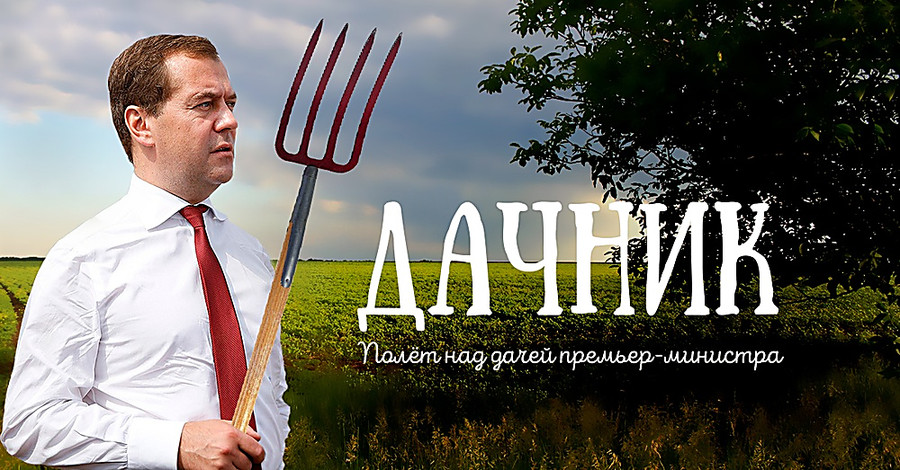
681b7301372fe9601b006be4b32012cb-i900x470x555Attitudes towards opposition – cynicism towards Navalnyi (I don’t vote for him, but….) – ‘how can he be walking around if he hasn’t done a deal?’ And can we answer that? ‘Opposition is divided and ordinary people can see that’ (cf. David White’s EEP piece 2015). ‘I don’t watch his stuff. It’s just for Muscovites’. This turned out to false. The informant, a 30-yr-old male with technical education working in Turbine factory and on above average wage later sent me a link to Navalnyi videos about Medvedev’s dacha – published on YouTube three days before the election. There’s an interesting argument that this intersects with about the broadening and flattening of internet audience in Russia that has political implications which I’ll come back to. ‘I never thought about voting for them’ – the dominant narrative about opposition. ‘Cultural’ distance in terms of class, metropolitan identity, etc, is a factor, surely.

My ‘thinking’ LDPR informants 1. ‘Protest vote with nowhere to go – desperation’: Q. Do you like Zhirinovsky? A. I don’t like ER. ‘Zhirik is a clown but I voted for him because we need to send a message and there is no way of doing that. UR has too much power. This is the last time UR will win big.

My ‘thinking’ LDPR informants 2. Tactical opposition vote’ ‘I think UR has too much power. I voted for the opposition. So that the UR has limits’ ‘uprava’ (?) – also connotations of justice and punishment. ‘I voted against UR, so that they get a normal competition.’ Did you vote for UR in the past? Doesn’t answer at first ‘A the moment, UR is like a monopolist. It passes its own laws, and puts them into practice itself and controls them’   So you think a counterbalance is needed? You said many people didn’t vote. Did people discuss this? ‘Yes. I did vote for UR before, but then I found out lots of interesting things. [referring to Navalnyi Medvedev dacha video] A lot of people said the same thing to me: why bother voting when UR will win just the same.

Regional and local concerns. Almost all the important posts are held by representatives of UR. Take the Regional Governors, and accordingly the regional administrations […] I discussed my choice with no one.’ So you’re unhappy with the regional regime [stroi]? How does that affect your thinking? ‘Almost all the higher-ups are corrupt and wallowing in bribes.’

Thinking KPRF (Communists) informant 1:   ‘Almost everyone was labouring under the illusion that Clinton would win. But during the last six months I have had the feeling that Trump would win…. What about our elections? Yes. I voted. I voted for the Communist Party. But not because I trust them. but rather to “squeeze” votes away from the UR. Unfortunately, after the elections this year, I am finally convinced that the opposition in our country DOES NOT EXIST. For whomever you vote the result will be UR… Everyone I talked about the elections to (more than a hundred people), did not vote for UR. Mostly – for the KPRF and the LDPR.’ Unlike LDPR informants, this informant struggled to find paying work putting her more in the camp of other informants who do not vote but used to vote LDPR. Also – women don’t vote so much for LDPR.

‘Thinking’ LDPR informants 3. Other opposition parties are too weak’ ‘Why not vote for other parties – Rodina, Yabloko, Spravedlivaia Rossiia?’ ‘I think the other parties are too weak. I might have voted for Communisits, but I don’t like Ziuganov so much’.
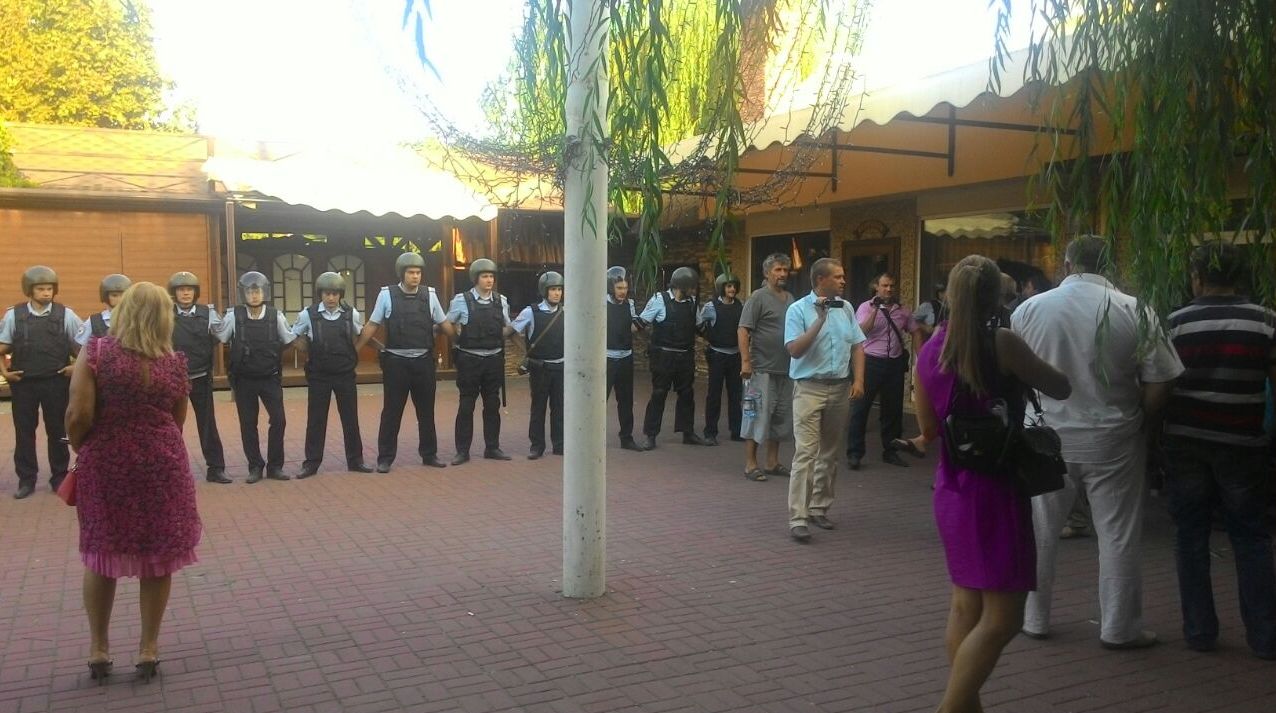
omon_1471979113434_1471979139 Socio-Economic context: Downward spiral of economy. Labour unrest – miners in Rostov (unpaid wages), farmers in Kuban, unemployment, underemployment. No safety valve is available. Massive income destruction: high inflation AND ruble devaluation means real incomes of ‘average’ industrial workers falls from $800 to $200. Best paid workers among my informants earn 40,000 roubles at VW. This is $600. They earned around 30,000 roubles in 2012 which was around $1000. Can import substitution soften this? – not really – inflation+quality and trust issues are key. Division in my informants between those voting at all = getting at least an average salary. And those not voting because completely disillusioned and ‘excluded’ = those suffering non-indexed wage cuts, stoppages and wage arrears.

Electoral Data for districts where informants live: they are typical – i.e. Communists do not do better than nationally, neither do LDPR (important because in some Regions they outperform). Focus on UR and LDPR. Three types of electoral district – metro, district urban – typically 10-30k inhabitants plus villages, rural UR got 40, 45, 50+ in these districts. In the oblast as a whole 45% LDPR got 15-20% across board; KPRF got 15%. Side note: Yabloko got 226 votes from the 44,000 electors in the district studied (turnout was less than 50%. PARNAS got 107. These parties did about twice as well in the metropolitan districts of Kaluga (2-3% of the vote)

‘I found out lots of interesting things.’ Internet penetration of opposition messages. Traditional view of TV and internet constituencies – separate ‘parties’ in Russia according to Muratov (Novaia gazeta editor). Cottiero et al. 2015 in Nationalities Papers confirm this is no longer the case – Internet a mirror of society. Is this ‘bad’? This comment from an informant was interesting : ‘I found out lots of interesting things.’ Which cemented his anti UR vote. What was he referring to? To Navalnyi, which he and others had previously denied was even on their radar. This was true in 2012 when I surveyed internet use by my informants. But striking, now, internet habits of my ‘conservative’ informants are more omnivorous. Here is an indication of the diversity of internet current affairs sources:
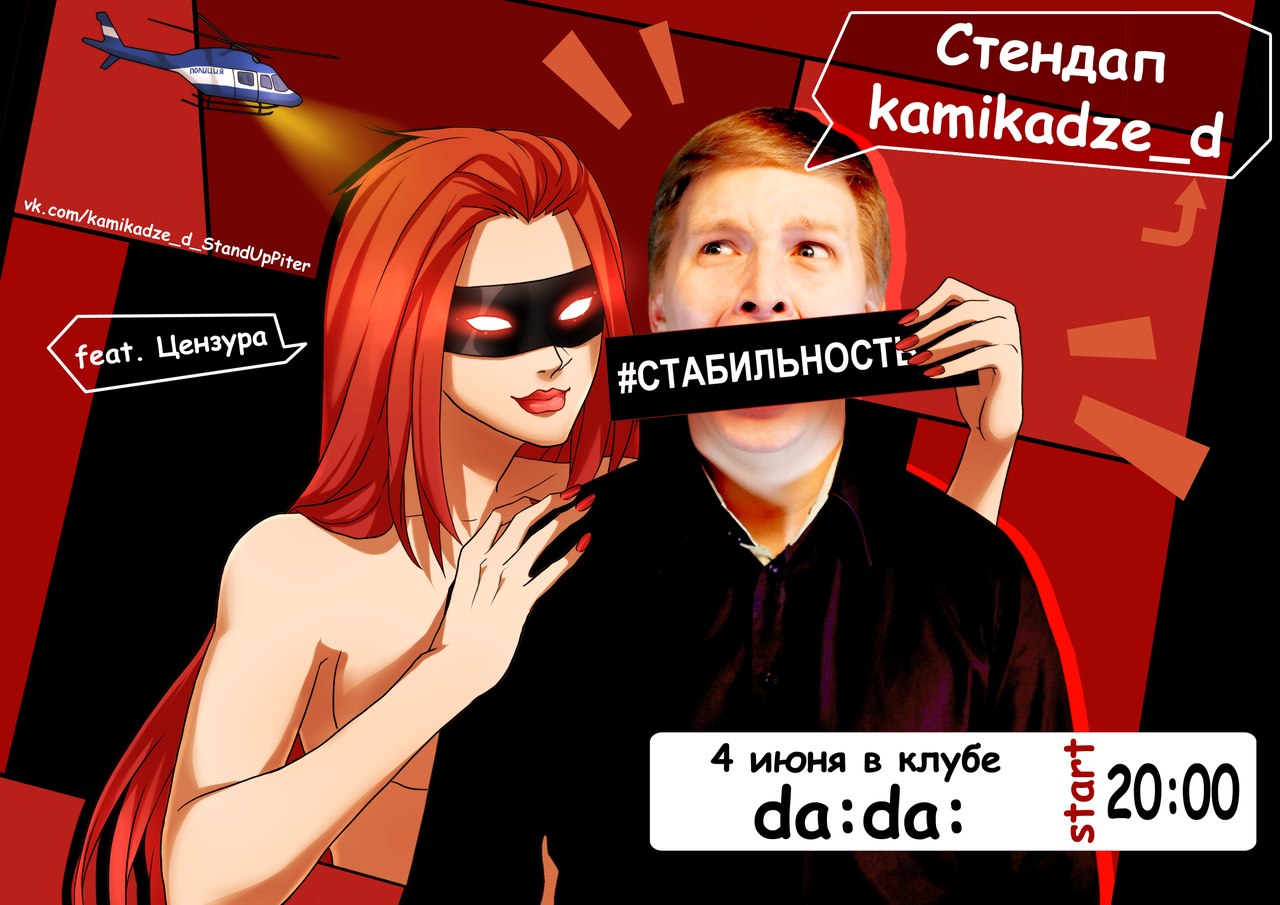
lxqpaw4ndy4https://www.youtube.com/user/kamikadzedead – latest post on corruption in leadership of Russian football association (Mutko) by Dmitri Ivanov. He is a ‘liberal’ middle-of the road vlogger. Some association with 2011-12 protests, white ribbon movement and ‘League of electors’ movement.
download-1

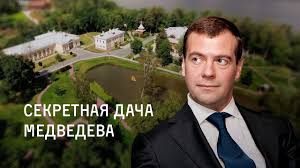
https://www.youtube.com/channel/UCsAw3WynQJMm7tMy093y37A Navalnyi on Medvedev dacha
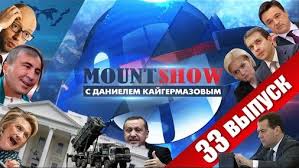
downloadhttps://www.youtube.com/channel/UCtO0TzSAoIOzTnTsQeywSSw Mount show with Daniel Kaigermazov– unlike others has an outlet on VK as well as YouTube – anti-American anti-Ukraine satire.

Some conclusions: Uses of micro/ethnographic qualitative portraits of voter choice that include exploration of political values and socio-economic context helps avoids issues that have dogged interpretations of poll mapping post-brexit/trump: ecological fallacies. As Economist James Kwak notes in criticising the rise of big data journalism: ‘Some of those [Trump] voters will be racists. Some will be poor people concerned about their economic future. Some will be poor racists concerned about their economic future’ clearly there is a real problem with group tendencies and sorting producing knowledge of questionable value. Trump voters had lower education – but that doesn’t map on to class or income neatly – plenty of insecure workers with degrees in the US as elsewhere, and in some parts of US there are high income areas with low education. Political anthropology can provide more than just snapshots of the landscapes of values that cut across so-called class-gender-ethnicity divisions, and that inform voting and political consciousness – a kind of political intersectionality.

So is this just a repackaged reading of ‘white working-class anger’ = racism & sexism? No, I really think this kind of recourse to a crude ‘identity politics’ is part of the problem, not the solution – witness the panning Paul Krugman got when he used this term recently. A better approach, one that still acknowledges identity but is more reveal the complexity of reality is that by Berkeley sociologist Arlie Russell  Hochschild’s Strangers In Their Own Land: Anger and Mourning on the American Right (2016) (she popularised the concept of emotional labour) – on a link between political voting and ‘deep story’ – internalised emotional value systems. Indeed this is how Hochschild explains the electoral success of the tea party with poorest US citizens. Unsurprisingly her book has been in demand recently.

The deep story for Hochschild is a story of resentment, exclusion and neglect. My voters ‘deep stories’ reveal long-term value systems (in the book, but less in the ‘electoral’ talk), some of which are inherited from Soviet mores, as well as the despair, anger and betrayal identified among protest and populist voters elsewhere. However, they also reveal mobile, shifting evaluations of electoral politics and politics in general – dare I say it, there is practical adaptation to electoral authoritarianism here that is sophisticated and nuanced; ‘sophisticated’ reasoning –I hesitate to use that word – surely all political reflection is sophisticated. But too often pollsters, journalists and even academics infer simplistic reasoning. Especially when it comes to less-educated or working-class persons.

Two social geographers Christian Parenti and Matthew Richmond wrote two of best pieces I’ve read on Trump victory and actually analysing voters’ concerns. First talks about voters taking Trump seriously but not literally, a point worth making in comparison to Zhirinovsky’s populism and about voters themselves.  Richmond rather hyperbolically calls Trump’s victory a ‘historic crisis in the epistemic basis on which we understand political change.‘ , but then goes on to make a more valid point about the dangers of social science in general inevitably reproducing the bias of the social group conducting it. ‘In simple terms, we must move closer to the social worlds that quantitative and theoretical political science purports, but largely fails, to represent.’ – he highlights as challenges to quantitative approaches, issues of unquantifiable uncertainty, demographic boundedness as a false premise, the persistence of two-dimensional left-right axis of political positioning. Richmond refers to Bourdieu’s example of the pollster’s non-response as the most interesting, most meaningful response (Distinction: 398).

Unsurprisingly, his piece calls for more involved qualitative work on how political opinions emerge and coalesce:  ‘How does their evolution into political subjects unfold, so that they move from the “don’t know” category into voting for Trump, or remain in the “don’t know” category despite being a target of his hate?’ Richmond ends up arguing for active listening, as opening up political space. It is not passive to listen. Richmond:  political subjectivity as a space of possibilities is important because it highlights the fact that the regularities we observe in the world, including in the political behaviour of different populations, have structural bases but are radically undetermined.’

All our ‘examples’ of populist success – even the meagre one of LDPR – indicate the dissatisfaction among voters with the status-quo. Of course, the electoral contexts are completely different. However, even in the authoritarian system of Russia where the ruling party is guaranteed a large majority – indeed constitutional majority, absolute support for the status quo fell significantly. Is this like the Jacksonian interpretation of Trump’s victory in US? In a way, yes. LDPR and to a degree the other ‘systemic opposition’ can access not people’s ideology, but a set of deeply held values that go back in time and are formative of aspects of the Russian state’s character itself: fear of enemies, the urge for social justice in a kind of ‘deserving estates’ form (many of my informants come from labour aristocracies fallen on hard times). There is also fear and awe of the state as a punitive mechanism in equal measure, and support from the individualist estates of Russian society – small business, skilled and technical workers. But again, like Jacksonian values there are contradictions indicative of the cultural-historical roots of such populism, with LDPR voters also responding to ideas about just claims of ‘equality of dignity and right’ based on self-reliance and in-group membership of a folk community  (Russel Mead 1999: 12-14).