a wall displays a directions towards a padlocked bomb shelter thousands of kilometres from Ukraine, February 2026.
In a wide-ranging interview for Die Zeit a few weeks ago I said: ‘for most, a national catastrophe seems more conceivable than that Russia could succeed in subjugating Ukraine. The prevailing mood is pessimism.’ In terms of parsimonious analysis, this is probably the most anyone studying Russia can offer.
Outside of Russia however, it’s noticeable how this analysis is not enough for students, colleagues, and media and public alike. After four years of war we are all supposed to have a definitive take. Things must be moving, according to some established rules of causality, in a particular direction. But a marker in time is arbitrary. There’s nothing about the passing of four years that gives much more insight than six months ago, or six months hence. There’s very little value in giving an assessment of where we are, or where we are going. Furthermore, the temptation to stock take, while useful, often leads off in the direction of causal inference and prediction.
But the invasion of Ukraine, like the collapse of the USSR, should remind us that social sciences are not predictive. And this has been just as true of the part of the social science spectrum that claims the most “scientific” of approaches – economics. While there was a good lot of literature that said sanctions and embargoes could have effects on belligerents, that same literature also pointed out that this was only likely to work in contexts of massive and overwhelming differences in power.
Nonetheless, after four years, I still think it’s ‘the economy stupid’ that will make a difference. This was discussed in our recent Russia Unfiltered podcast where I made the point that Russia has far fewer resources overall than even Europe alone. The ‘economic’ argument, also offers – I think – a middle way between the rock of the realists, and the hard place of hawks that Seva Gunitsky outlined in January 2022. Incrementally increasing economic pain might make the supposition – that the Russian government cares much more about the outcome of the conflict, and is therefore able to pay much more for it and raise the stakes – irrelevant if the coming real stagnation of the Russian economy becomes visible and felt by everyone (and indeed, it will expose political fractures precisely because it will also reveal who has profited handsomely, and who is cynically protected from pain).
French historian Marc Bloch argued that the most meaningful comparisons are those which are maximally similar and consequentially different in only a few respects. Comparative study might very well be more meaningful within regions like the former Soviet one than across them. This is why most of the best work on the war to date has avoided historical and political parallels that are too distant from the immediate context. Nonetheless, one that I risked making myself – a comparison between the Iran-Iraq war in the 1980s and the Russo-Ukraine war, perhaps is still helpful for one good reason: its lesson about unpredictability due to the intractable process of long regional wars.
Iran-Iraq showed that outcomes were not at all predictable based on available evidence; outside interventions had effects but not immediately or in direct causative ways. The relative weight of the intervention of individuals and elites changed multiple times (and like in many wars, elites’ non-decisions were sometimes more important). And, to go against one of the points I made earlier about the danger of historical parallels, Iran-Iraq’s outcome was the strengthening through war of both countries’ militaristically-minded core elites. With terrible consequences shorter and longer term for their societies and their prior limited pluralisms.
It might be professionally satisfying for me to say ‘I told you so’ in response to Meduza’s new investigation that shows that Russian battlefield losses are severe but not half as bad as Western intelligence agencies are reporting. Well, I did tell you so, repeatedly – pointing out that because of a lack of professional analysis, Western agencies were mainly just repeating Ukrainian figures which were understandably propaganda. However, even if it were true that losses were much higher it would not change the calculus that it’s the relationship between money, interest rates, exchange rates and oil prices that run the war, not bodies. Bottom line: for Russia war mortgages the state. But sometimes it does so in a way that is unsustainable for non-core powers, of which Russia is a classic peripheral player vulnerable to numerous economic forces beyond its control.
So, beyond this perhaps limited historical comparison, what can I say I got right? Looking back at some of the posts on this site since 2022, a few stand out. There’s my reading of Snyder and Laruelle from May 2022, where the former argues that Russia is fascist and the latter retorts that Putin is not even Pinochet. In the same piece I emphasise the axiomatical political instincts of the regime remain focussed depoliticization and demobilization, but that of course this also creates major weaknesses in governance during wartime.
In October 2022 I wrote about the Donbasification of Russia itself, using the metaphor ‘North Korea-lite’ to show how historically, the erosion of norms and laws in occupied territories and conflicts has a boomerang effect on the imperial core. Little has changed in my assessment and in any case this is hardly an original idea. The problem really comes if the conflict ends, because the erosion of the rule of law, the high corruption within the MIC, and the need to scapegoat insiders, particularly in the security and economic elite only intensifies after a peace is signed.
In April 2022 I returned to my pre-war predictions as to what would happen in Russia and found them overall to be sound. One thing I didn’t anticipate because of my own blinders was how effective the politics of fear would become:
In that same post I also refined a little my ideas about defensive consolidation which later appeared in a further revised form in my 2025 book:
Defensive consolidation involves magical thinking and denial… It involves a cleaving to authority (not necessarily the government, but your boss, your factory, your town leader), not out of loyalty or enthusiasm…The more Russians cleave to authority the more they are effectively ‘admitting’ to themselves how bad things really are.
DC is something of a ‘sweaty concept’ – I keep reframing it because it only exists as a very affective and interactive structure of feeling about the war and the state that Russian people have. Maybe the best exploration of it is only possible by reading across various chapters of the book. And reading out from Lisa Wadeen’s work on how, to paraphrase here, the simulacrum of charismatic authority tends towards shabbiness, decay and deformation in such regimes. It produces anxiety as much as compliance.
Finally, I wrote way too many posts about the problems of relying on survey data showing high war approval among the Russian public (a public which of course does not exist and knows as individuals that it cannot have an opinion). One of my most viewed posts in the last four years is this one about the shabby and unprofessional reality behind the smooth veneer that is the curation and presentation of much survey data about Russian political opinion. But don’t believe me, check out this pretty devastating indictment of interview practices which shows how the majority of answers to questions involve information loss, misunderstanding and distortion.
The title of that article is ‘communication breaches’ and for me this continues to be the lesson of the war when it comes to its impact on scholarly discussion and public understanding. Will this change before the war ends? I doubt it, meaning that publics and politicians are also not ready for the new European reality the end will bring – in terms of the new kind of Ukrainian and Russian regimes and states which will emerge and the necessity to have some kind of plan to engage with both. Will they be ‘the same, yet worse’ as I predicted in January 2022?
A comfort class ‘uber’ type taxi in central Moscow, with a backdrop of boulevard bars and eateries.
What are the sources of social coherence and stability in Russia, three-years and six months into the invasion of Ukraine? This is the first of three posts (I hope) where I outline a theory of ‘soft authoritarian administration’: the ubiquitous intrusion into everyday life of securitized administration but which is not experienced (mainly) as coercive because the main vibe is the comfort and convenience it increasingly appears to provide to the majority of Russians. But this first post is preambular. I just finished reading the new book on elite ideology in Russia and I recommend it. However, at the same time, it for me, illustrates a lot that’s wrong with expert and academic commentary on what makes today’s Russian state ‘legitimate’ to many.
Despite many dissenting voices, too much attention is still afforded to the putative strength of a wartime ideological consolidation. And this is partly the fault of non-Russia specialists fighting Ukraine’s corner, for good reason. They need to paint a picture of brainwashing and and national accord in Russia to mobilize support for their cause. Less charitably, this position steers close to simple outrage framing for clout.
By contrast, there are professional observers steeped in political philosophy such as Marlene Laruelle in her new book: an extensive history of, and conceptual guide to the ideas she sees as formative in Putin’s Russia. Ideas about a counter-hegemonic civilization that translate into a broad societal compact between elite and people. In my view, Laruelle, because she’s too good a scholar to give in to simplistic narratives, ends up somewhat undercutting her own thesis: civilizational tenets are a ‘repertoire’ of semantic elasticity and gaps, more ‘scripts’ than programmes or world views. If readers want, I can do a full post reviewing the book, because it’s well worth a read.
Serious works like Laruelle’s aside, it’s hard not to be incredulous when I read how much headspace ideology takes up among Western scholars. In a sense this is ironic because ‘we’ in the West treat it in many ways much more seriously than Russian regime intellectuals themselves. This approach has some serious limitations when it comes to doing adequate political sociology. Often a ‘values’ approach is not so far from the extreme positions of those like Timothy Snyder who propose – usually to the surprise of social scientists – that Russia is a more or less fascist state.
The research agendas based on tracing how ideas influence populations are always attractive to scholars and activists alike because they’re simple to grasp. But they’re a poor substitute for sociology, and they too often reflect an outmoded view of how ideas circulate. Not only that, they are invariably a reflection of deep conservative pessimism among their practitioners. Essentially, they propose that most people are more receptive to negativity than a positive agenda.
‘We are for normalcy, the Europeans are not’, is the kind of negative conservative agenda I am talking about. This is hardly attractive when Russia remains a country of whopping corruption, precipitous demographic decline, terrible infrastructure like run-down schools and hospitals, not to mention extraordinary low salaries by global ‘middle-income’ standards and horrible labour relations. Europe has indeed become a useful distraction in discourse; an external, threatening other of moral relativism, sexual deviance, racial disorder and political deadlock in media and state discourse. ‘Things might be bad, but at least we’re not in France’, is a sincere, if unintentionally humorous phrase one might hear as a reflection in everyday talk of elite narratives. So, some of these ideological conjuring tricks gain traction then, especially as they are finessed into a biopolitical defence against moral decay. But if the regime is so bent on defence of tradition and the Russian people, why are social blights still rampant, and prenatal and profamily policies so mean and tokenistic? While there is support for neo-conservative ideas because of general fears and the legacy of the 1990s, there remain many concerns that far outweigh the propagandized issues on TV: inflation, impoverishment, fear of unemployment, economic crisis, and indeed, fear of armed conflict. Just in the latest Academy of Sciences Sociology Centre polling, these fears, over remain very high on the agenda.
Dashed expectations that the war might be changing the social compact in favour of better pay and conditions for the majority explains the most interesting May 2025 findings from the Russian Academy of Sciences Sociological Centre: a big rise, and then fall in the numbers of people saying that economic transformations have been carried out (when? The poll doesn’t specify) in the interests of the majority. This measure was notoriously low until the war began. Consistently, less than a quarter of respondents would ever answer in the affirmative. On the eve of the war, the number of people correspondingly agreeing that Russia’s political economic transformations served only the elite was the highest since 2011, at 60%.
Do economic transformations respond to the interests of the majority or not? Red: no; Blue, yes.
However, since 2022, this indicator in particular has been extremely volatile. In 2023, for the first time ever, the indicators crossed over into a scissor formation – more people – 44% – agreed for the first time that the economy was being run for the benefit of the majority. However, things have ‘scissored’ again back to a position where the majority disagree that the economic regime serves their interests in 2025. This volatility is unprecedented and indicates deep-seated political frustrations that few other quantitative indicators can uncover. The economic consequence of war were – perversely – expected to provide not only relief from the neoliberal compact, but more than trickle-down prosperity – as production was to be reshored and incomes raised.
The burgeoning disappointment that there is no ‘war dividend’ let alone the prospects of a peace one, help us uncover the peculiarities of the actual politics of Putinism – the flip side of soft repression is one of providing ‘comfort’ and respite from harsh economic reality. And I’ll cover the ‘comfort-class’ soft authoritarian administration of Russia in the next post. For the time being, I have a little challenge to readers interested in Russian media: try counting the instances of ‘comfort’ in the coverage you encounter. Ekaterina Shulman interestingly refers to the discomfort (in multiple meanings) of losing access to YouTube for Russians in her latest interview. She examines the loss of YouTube in the context of what she sees as the ‘destruction of the fabric of everyday life’ [bytovaia zhizn] which in Russia provided a high level of comfort to the metro middle-classes unparalleled in Europe (in her view from Berlin). And it’s very present too in this tone-deaf piece on emigration by Kholod media, in which comfort and convenience, more than intercultural adaptation or integration are emphasized. [sidenote: there are plenty of French supermarkets in Buenos Aires and better choice of quality low-cost clothing stores than H&M]
Bytovaia zhizn – everyday life – as Russian Studies students should know – is a hard phrase to translate into English because of the connotations it carries, not least of which is the idea that the creature comforts of retreating into a private domestic life can ward off the scary reality beyond one’s front door. As Catriona Kelly wrote, in 2004, in a chapter on byt, ideologists of all stripes in Russia have always had a problem with byt. But what if material well-being itself as a direct result of authoritarianism could become a kinds of ideology? That question will be covered in a future post.
This is a longer summary of my new book written for Russia.Post. A version of it appeared there in May.
Twenty-seven years ago, I began visiting a small industrial town in Kaluga region and its rust-belt hinterland. At first, I was just like any other visitor from Moscow; the town was merely a stop-off on the way to a more picturesque summer house.
Later in England I trained as an ethnographer. Ethnography is about long-term tracking of real people in their social context. It’s philosophy is also based on objective observation while still inside a community. Russian social researchers and journalists are often surprised or even incredulous that foreigners are able to conduct nuanced and insightful work from within Russia, but there’s a long pedigree to such research.
This doesn’t always get the attention it deserves from Russians themselves, but we can highlight the work of Americans some thirty years ago such as Dale Pesman and Nancy Ries, that of British researchers like Charlie Walker and Caroline Humphrey. Researchers with good language skills, contextual knowledge, and the commitment to prolonged periods of fieldwork in places many more privileged Russians are loathe to spend time in, have produced important historical documents about how society has changed. In 1991 the late sociologist Michael Burawoy even got a job in a Komi furniture factory to do ‘production ethnography’ – probably a first for a Western researcher in Russia.
Burawoy consistently showed in his career (he also worked in 1980s’ Hungary) that the disarming nature of an affable yet curious foreigner could be just as effective in getting to the nub of what was going on among the (post)-socialist working classes, as the penetrating and informed researches of a native observer, such as those of sociologist Alexei Levinson, for example, who also spent time visiting Russian factories in the 2000s.
I consciously followed Burawoy’s lead in 2009 and spent many months embedded in the industrial settlement I gave the pseudonym ‘Izluchino’. Like other sociologists and ethnographers I tried to live the life of those I was studying while remaining objective and as ethically transparent as possible. The result was a book published in 2016 about the long durée experience of decline and precarity among Russian workers.
The second long period of my fieldwork coincided with Crimean annexation and the Donbas war. It was then when was forced to confront the way fieldwork relations between a foreign researcher and Russian interlocutors inevitably would be overlaid by geopolitics. But at the same time many local people interpreted me as some kind of diplomatic sounding board for their own strong political feelings of both resentment and rejoicing. I became part of a conversation in anthropology about bridging insider-outsider identity and ‘intimate’ geopolitics.
Instead of seeing this as a danger zone and switching to ‘safer’ topics, I embraced the chance to develop an immersive political anthropology of my field sites, and, indeed, extend the scope of my research from the ‘district’ to the broader context of European Russia – after all, many of my interlocutors were engaged in vakhtovaia work – seasonal and periodic work mobility to Moscow, to Yamal, and even to Germany. In 2018 I decided I would be able to collect enough material to write an ‘alternative’ book-length study on Russian politics. And in 2025 the result is the work published as Everyday Russian Politics: From Resentment to Resistance.
For this book I went back to my workers, but also to middle-class Muscovites, Kalugan entrepreneurs, to my ex-peasants in the ‘back of beyond’ of Izluchino, and to ‘biudzhetniki’ workers in small towns who do the heavy and oftentimes thankless lifting of the Russia state’s rickety capacity.
At the beginning of the book, I spend time considering Russian responses to war as defensive consolidation. Prompted by the immediate disaster of war, defensive consolidation, while expressing fears of punishment and collapse, also attunes people to the long-term decline and aporia the political compact represents – that there has been neither socio-economic renewal, nor genuine promotion of a cohesive sense of what it means to be Russian in the twenty-first century. As Karine Clément has argued, consolidating feelings arise thanks to the perceived shortcomings of the social compact – and these are the ‘fault’ of both elites and ‘the collective West’ in the popular imagination.
The book opens in typical ethnographic fashion with extended vignettes. Vignettes are detailed personal stories observed at first hand. I use these to showcase how politics manifests in everyday life. They illustrate the diversity of perspectives on national identity, war, economic hardship, and state power: In a village in 2014 after the Crimean consensus has somewhat attenuated, I participate in a casual conversation with Lyova, a soon-to-retire plumber, his son Sasha, and his daughter-in-law Lena.
Their conversation is filled with mixed emotions about Crimea’s annexation. Lena expresses national pride, believing the event strengthens Russia’s global standing and offers young people something to be proud of. Sasha and Lyova are more sceptical, questioning whether ordinary Russians will benefit from the annexation or whether it will only serve the interests of political elites. Lyova, despite his scepticism, adheres to a resigned loyalty—a belief that criticizing the government is pointless, as it won’t change anything.
This ethnographic conversation offers an example of how engaged qualitative approaches, based on building trust in sensitive contexts can tease out the more complex and candid views of interlocutors over and above the often black and white findings from survey data. They also, to some degree flatten the hierarchies that always exist between sociologists and respondents, affording more confidence to real people to express genuinely contradictory yet sincere positions.
While official discourse celebrated Crimea as a national victory, many Russians privately worried about economic burdens and worsening living conditions. They actively used irony as a form of political expression: Sasha’s sarcastic remark—“At least Crimea is ours, eh, Dad?”—captures a common way Russians cope with state propaganda: acknowledging it while subtly mocking its implications and focussing on the material repercussions that ‘working poor’ Russians have to face after the big elites have made their geopolitical plays. This is important in itself because political scientists tend to uncritically accept the idea that the Crimean ‘consensus’ was enduring and strong. In contrast to the ‘common sense’ of some observers, it turns out that the mask of loyalty is one that Russians are readily able to take off when their material interests are damaged by politics.
Years later, in 2021, I talk to Tanya, a chambermaid working at a rural hotel, who has an ‘additional role’ (actually her 9-5 job) teaching patriotic education to schoolchildren. Tanya reveals her growing anxiety about a looming war, reflecting a widespread belief that major conflict is inevitable. Her son Dima, a teenager interested in military history and online war games, is drawn to nationalist discourse but primarily for pragmatic reasons—he believes serving in the security sector is the safest way to secure a stable career and avoid conscription into dangerous combat roles.
Tanya’s teaching of patriotic education is not necessarily a deep ideological commitment but a way to earn a salary increment and get recognition in her community. She also has a genuine commitment to inculcating in her wards respect for the sacrifice of local people in Kaluga during occupations of their district in WWII and actual historical knowledge. Similarly, Dima’s interest in military service is driven by economic incentives rather than an abiding or coherent nationalism.
Ethnography like this, in dialogue with more statistically generalizable methods, shows how the state embeds nationalism in everyday life: Through education and employment incentives, the government fosters militarized patriotism. In the febrile intersection of economic insecurity and nationalistic rhetoric, people do not necessarily believe state propaganda but use it pragmatically to secure a better future and pursue their own interests and values.
In late 2022, at the height of Russia’s first war mobilization, I visit Alla, an IT specialist in Moscow. Alla and her son Gosha live in fear of conscription: Gosha, 27, refuses to leave his apartment during daylight to avoid being forcibly recruited into the war. The war disrupts families and social networks: Alla receives phone calls from relatives in Ukraine who are under Russian bombardment while also staying in touch with her daughter in Rostov, who complains about pro-government propaganda in her school. Young people push back against nationalist rhetoric: Alla’s daughter openly challenges a teacher’s homophobic and anti-Western rhetoric, highlighting a generational divide in political attitudes somewhat at odds with the picture painted of an apolitical and pliant youth.
Scenarios like this were plentiful in my fieldwork. The role of fear and uncertainty in shaping political behaviour is real. Even in Moscow, where direct enforcement is weaker, paranoia spreads through rumour and word of mouth. But there is also dissent in small but meaningful ways: Younger Russians, particularly in urban centres, are more willing to challenge state narratives. These three vignettes set the stage for one of my central arguments: political engagement in Russia is neither monolithic nor dictated by state propaganda. Instead, it is deeply personal, negotiated through economic pressures, social anxieties, and strategic adaptation to state power.
Building on interactions and observations like this, in the rest of the book I draw on the inheritance of cultural theorists like Raymond Williams and political thinkers like Jacques Rancière. These diverse sources help me explore the idea that people’s political orientations are shaped by underlying emotional and social currents just as much as they are by explicit regime-fed ideology. In particular, ethnography forces me to confront the actual meaning of political ‘resentment’ and I link it as much to social disconnection as to geopolitical confrontation: Many Russians feel abandoned by both the state and economic system, but this doesn’t always translate into active resistance.
People long for a sense of social belonging, but not necessarily for the Soviet Union itself—rather, for the stability and solidarity they associate with the past. I agree with researchers like Marlene Laruelle that there is popular support for a new ‘state’ ideology that is in some specific ways ‘conservative’. However, I bring to the fore the socialist legacy of incorporation into what Antonio Gramsci called a ‘national-popular’ project of collective will that overcomes class divisions. Soviet experience provided a template for imagining a different kind way of overcoming Russia’s challenges and backwardness – sometimes the effect this had on people has been called ‘deprivatization’ and ‘dealientation’ in more than just an economic sense, or ‘encompassment’ of values in an anthropological meaning. And this template of utopian ideas endures as a ‘feeling’ for past, in the present, and as a possible future, however monstrous or abortive one might view aspects of the Soviet experiment in reality.
I am not the first to question way that people imputing a sense of Soviet nostalgia to ordinary people invariably forecloses any critical potential in the term. Long ago, scholars like Olga Shevchenko detected a ‘longing for longing’ that people believe the Soviet utopian project sustained. Like them, I emphasize the persistence of a common feeling for potentiality – ‘something was possible and then it was no longer possible’. I build on the theories of respected Russian anthropologists like Alexei Yurchak and Sergei Oushakine who write about the experience of disjuncture and loss at the end of the Soviet project to get at the social trace of how that loss might be recuperated. People say and do all kinds of things that pull them apart, that set them on tracks of debilitating subordination to the state, to the ‘market’.
However, the book is not just about micro-scale interactions but links these to bigger social and political questions – like how effective the Russian state is. The fuzzy incoherence of state institutions is more than just about ‘institutional failure’, ‘endemic corruption’ or ‘state withdrawal’. Without ignoring the ineffectiveness and poor quality of state services in Russia, their overall incoherence means that bureaucrats must exit their designated roles. They more often ‘lean across the desk’ in a gesture that coproduces the state with the citizen because of the contradictions of the law and its enforcement.
At the same time, they reproduce a moral relationship with the citizen in what are absurd and impossible situations. In a number of case studies, I dramatize up close how different layers of the state and society come together almost surreptitiously and conspiratorially to fix things like broken heating networks or to circumvent the rent seeking of bureaucrats looking to impose fines on the most innocuous activities.
In place of models of Russian state-mindedness as overwhelmingly paternalist I find practices of accommodation, co-production of governance, and a shared feeling for stateness. This traces back to the socialist era’s attempts as citizen incorporation in the big projects of the state. It is a mistake to see society as a passive receptor of the actions of state institutions and bureaucratic organizations. Especially in the Russian case, these pitfalls lead to overestimating the state’s coercive power and underestimating both bureaucracy and community capacity. In an uneasy concert, they contest or reshape regime goals.
Once again, I claim little outright originality here. Essentially this is the project of scholars such as Olga Moliarenko who shows the possibility of examining durable forms of ‘shadow governance’. Like her, I try to build a bridge away from politically-determinist accounts. Building on the exceptionally detailed scholarship on the workings of Russian courts and on property rights by Kathryn Hendley and Timothy Frye, I propose a reflexive, moral set of reasonings and historical impetus for state workers-citizen interactions in making the incoherent state at least sometimes respond to citizens’ needs.
There are a number of other themes in the book, from nomadic car culture and garage communities to the cultivation of craft and domestic production as both leisure and a form of political subject making. Towards the end of the book I remark on the similarly of the networks, motivations and commitment of both pro- and anti-war activists in Russia. On that topic alone I think that the book represents an important intervention and a unique one.
A tough task in this book was to draw on the new historical writings – many of them by Russian scholars who remain in Russia even after 2022 – about the ‘socialist’ period and connect them to lived experience in today’s Russia. This is why I think my book is timely in a sense not just that it’s an ethnography made partly during war: many scholars are currently focussed on efforts to get at the complexity, and even normality of life in the late USSR. How was it possible to maintain belief and desire in an atomizing space? What links people in this book is a sense of striving: purposive desire and imagination that remains and which can be intergenerationally communicated. As in recent work by Alexandrina Vanke, I have tried to work in the tradition of Raymond Williams’ writing about how even ordinary people shape the shared sense of the meaning of an epoch. I use the term ‘feeling for an absent presence’ to emphasize how suffering and loss can be generative of possibility and the imagination of a better society. The content of this haunting feeling is an urge to (re)connect in some vital yet communitarian way that goes beyond the individual.
This is thrown into sharp relief against the relentless precarity of existence in contemporary Russia and the course of destructive transformations of the last thirty years. Some Russian thinkers themselves have talked about their country as a metaphorical ‘weapons proving ground’ or a space of techno-neofeudalism that anticipates a global dystopian future.
I end the book by considering Russia as a crisis heterotopia – a time-space containing what look like the most dysfunctional elements of contemporary capitalism and the authoritarian tendencies of the modern state. But Russia as heterotopia is merely one world within our world. Current crises there are played out in no greater relative dramaturgical intensity than in other societies.
Russia’s crisis is both banal, taken for granted, but also delimited – we can trace its edges. Similarly, heterotopias contain dual meanings; they are mirrored. They reflect crisis but also give glimpses of resolution. The quite often specific examples of ordinary existence in Russia can be instructive. Provisioning, informal governance, everyday politics, activism and solidarity show us how the small (and often quiet) theories of everyday political economy link up into the form of small lifeboats for the people. DIY Lifeboats are more than just a striking image. As metaphor they encapsulate both flight and permanence; inconspicuously they wait on deck. But they require people to work together at the oars; an individual can hardly manage alone.
workers dismantle the motto of the Russian Borderguards Academy which reads ‘We do not desire even an inch of another’s land’
Tl/dr: yes, Russian society wants an end to war, but the core hawkish elite craves recognition, at least for Crimea and thinks maximalist extraction from Ukraine via Trump is possible.
Firstly, it’s important reiterate a point I’ve made many times: treat public opinion measurements in Russia by Levada, Vtsiom and others with a healthy dose of skepticism. They of course, do give us a picture of what most Russians perceive to be the politically correct answers to the questions they are being asked. Even Vtsiom admits that only a small minority of people polled believe that their participation in surveys allows them to express their opinion. This figure is 22%. And only 18% of people believe that the authorities are interested in their opinion. This has significant implications for how seriously we should treat surveys as a reliable barometer of public sentiment.
What’s more helpful is tracking over time the proportion of people who answer that they would support withdrawal from Ukraine without reaching Moscow’s military goals. Especially important are those findings, such as those of Chronicles, which recently show a higher percentage who say they would support a ceasefire without achieving these goals than the percentage who oppose such a decision – Chronicles recently measured this as 40% versus 33%. Significantly, the latter figure has fallen quite quickly from 47% previously. Chronicles overall thinks that the implacable pro-war cohort, or ‘maximalists’, is only 12% of the population. I would agree overall.
We can compare these kind of findings to research undertaken by American political scientists on the structure of Russian society in terms of types of popular conservatism. In a recent article, Dekalchuk and her coauthors argue that there are four clusters of non-conservatives in Russian society and five clusters of distinctly conservative groups. The latter are a majority of the population at 60%. The number of ‘die-hard’ conservatives who align with cultural and military patriotism is 15%, whereas the number of loyal and agreeable authoritarians is around 25% combined. Now, I should say I have some criticism of the overly complex methods of Dekalchuk’s study, but it serves as a complement to other approaches. Importantly, it shows that a similar number c.20% of ‘conservatives’ are not aligned with the authorities, or are even opposed to them, or have interests diametrically opposed to the elite.
At the same time there is a big core of people who are essentially liberally-minded – perhaps 40% (and in reality if the winds changed, this number would easily be a majority). Thus, if we discount liberals from consideration the die-hard conservatives who are highly trusting in the authorities but not even particularly xenophobic, and then count them together with the group of agreeable authoritarians at 25% we can see that any decision about ending the war is not likely to have any problems justifying itself to these cohorts. Indeed, the paper in question argues that the core conservative groups have relatively weak value systems and can quickly adapt to new geopolitical circumstances.
I would add to this my own observation from polling done before the war on the salience of Ukraine to most Russians. It was very low to be almost statistically insignificant – meaning that if the elite want to drop Ukraine down the agenda this could be achieved almost without political costs among the Putin constituency. Finally, I would mention longitudinal monitoring carried out by Levashov and others at the Russian Academy of Sciences. This shows aggressive forms of patriotism to be extremely low in the general population: ‘patriotism’ as meaning the readiness to take up weapons is measured at only 25% by his team in 2023. A remarkably low number if we consider that this polling was conducted a year after the beginning of the full-scale invasion. In the same survey conducted in June 2023, only 4% of respondents named ‘patriotism’ as a source of national pride in Russia. 13% named the army. And 27% could not answer the question. The highest scoring answer was ‘The Russian People’ at 16%.
Economic imperatives
Deteriorating macro-economic situation is a major factor which will become more salient in the course of 2025 and 2026 regardless of any decision about a ceasefire. The increasing economic costs of the war for ordinary Russians was possible to offset or hide for much of 2022 and 2023, but the cumulative effect of inflation on basic foodstuffs has been relentless. Even where workers have received indexed pay increases, if we take a longer-term view, living standards for the majority have stagnated since at least 2013. It is important to remember that regime legitimacy has been primarily based on economic stability. Defence spending rose by 30% in 2022. For 2024 military spending was nearly 7% of GDP which accompanied the first serious deficit spending by the state of around 2-3%.
Wartime spending has boosted the apparent size of Russia’s GDP relative to other economies but what many observes fail to account for is that most of this spending has little multiplier effect in the economy outside military cities (which are small and isolated) and that given the grave infrastructural deficiencies in the economy and poor level of social protection spending, the decision to cut budgets that would actually improve life for Russians is an increasingly visible political choice by the elite that cannot be hidden even from notionally loyal citizens. The majority of people are less than enthusiastic about seeing a further reduction in living standards like that experienced after the integration of Crimea in 2014. People have economic ‘memories’. People often talk about their grievances about paying pensions to people in Crimea and now in the occupied territories of E. Ukraine to people who did not contribute to the Russian economy and so have not ‘paid their way’. This sense of undeservingness among new Russian citizens is a factor few have discussed.
To reiterate, one of the current major failings in analysis is the attention paid to the apparent growth and robustness of the Russian economy. With or without a ceasefire – the shift to military spending stored up major pain down the line for the main Putin constituency – state workers – in the forms of eroded purchasing power, deterioration in the quality of public services and reduced state capacity. (I will post later on the much commented-upon findings about a rise in life satisfaction among Russians)*.
Furthermore poor choices will only become more apparent as part of a conscious zero-sum policy choice as things like water infrastructure and public transport are characterized by breakdowns which are impossible to hide. Coupled with the plan to abolish the lowest level of municipal governance in favour of clusters of urban forms and the accompanying pressure this will bring on the performance of regional governors, it is highly likely that social strife will be an ever present political risk outside the 10 biggest cities – particularly in the rust belt and secondary cities, even in cities that have been the beneficiaries of military spending like Nizhnyi Tagil.
This is because the multiplier from higher military industrial salaries is much less than people in the West appreciate. If you go from earning 40,000 roubles to 100,000 roubles, that is still a drop in the ocean, especially when the real level of inflation is around 20% for wage-earners. For Russian military spending on soldiers salaries to have a significant impact it would have to change the share of national income accruing to labour. And Russia remains a country where despite very high human development, the share is around 10% less than in other highly developed countries. Consequently while there is an inflation shock, this is not primarily due to increased discretionary spending, which remains low even by East European standards. Similarly, soldiers salaries certainly have an impact on the family fortunes in the short term of the 500,000 -plus service personnel who have received them or who have received injury payouts or death benefits, but again, in the perspective of an economy of 140 million people, this impact does not scale, while it certainly does act as a drain on spending on other social priorities like child benefits, school budgets and hospital maintenance.
Elite opinion on ceasefire
What about elite attitudes? We can take a metalevel perspective on the information they receive about social mood. Likely, because of the ideological positioning of sociologists working for the regime, they get relatively good answers to questions they might ask. But we should be cautious about the quality of the questions they are willing to ask. We see the problem with this in wording of questions that sociologists ask in opinion polls: these are generally quite narrowly worded and focussed on identifying consent among people for decisions already taken or likely. Furthermore, we should recall that there is evidence of conspiracy theory belief and mindsets focussed on the possibility of betrayal by Western interlocutors.
As many have pointed out, the Russian leadership craves, almost pathologically recognition by the West more than anything else, and in the Trump leadership, it is clear they believe it may be possible to get some kind of recognition for Russia’s Great Power status and also carve out at least most of the territorial gains they have captured from Ukraine. It was interesting to observe the recent comments by Trump concerning American recognition of Russian sovereignty over Crimea. It’s quite possible to imagine that this is a kind of psychological priming or imprinting originating from the Russian side. Recognition of Crimea by the US would be a significant win worth having in exchange for even a relatively long ceasefire commitment. It would also be more realistic than trying to get acceptance of recognition of 2022-2025 territorial gains.
It seems very unlikely that any Ukraine government would agree to giving up more territory that would include the other parts of the regions partly occupied by Russia. The only other area under almost complete control is Luhansk region. Thinking back to how unworkable Minsk Agreements proved to be for both sides, it’s not likely that even after a prolonged ceasefire that the Ukrainian side would agree to any withdrawals. This means a frozen contact line and militarization of the existing contact line as a new border for Ukraine. This is far short of the maximalist aims of Russia, but Crimean recognition would easily compensate for this in terms of justifying a long-term ceasefire to the population. After all, there is significant war weariness, economic fatigue, a lack of belief that Russia can win in the long term, a lack of interest in the territories of Donbas, in comparison to broad and strong belief that Crimea is historically part of Russia.
This kind of ceasefire could easily be sold to the population along with the narrative that Russia can now rearm and regroup – take a breather, so to speak, that Russia has effectively held off the combined power of the collective West, and that it has saved those “Russians” who were in Donbas. Furthermore regime intellectuals can spin a tale of how this agreement effectively means recognition of Russia as one of the three great powers and having surpassed her European peers.
*I’ve been asked multiple times to write about rises in life satisfaction and will do when time permits. In short, the war has led to people focussing on small things of satisfaction and fragility of existence. Furthermore, people express satisfaction with less, as if they are ‘grateful’ the state has protected them from the dire prognoses of ‘blockade’. I would also say that the coverage of the report in question tends to gloss over the fact that the life satisfaction levels are still not that great! Where do they define happiness? What does it mean, cross-culturally, ‘to be happy’? There’s a massive anthropological lit on this, and I’ll unpack that in a future post, but one thing to consider is the extent that cross-cultural ‘contentedness’ derives from the ability to adapt to disappointment and frustration.
“when leaving, turn extinguish everyone” – a play on ‘turn the light out when you leave’
Can we trust surveys? We once again were shoved as unwilling passengers onto this merry-go-round with the publication of a report by Maria Snegovaya entitled The Reluctant Consensus. In it, Snegovaya tries to put to bed many of the criticism I and (much better qualified) others have made of the usefullness of survey polling in Russia. She paints a depressing picture, arguing that young people increasingly align with conformist and conservative views due to exposure to propaganda and the normal process of ageing. Further, she emphasizes the view that alignment with regime narratives due to cognitive dissonance is the norm. She also argues for a strong ‘rally-round-the-flag’ effect in Russia.
A lot of the report reads like a defence of Western-based academics reliance on Levada – a ‘foreign agent’ sociological centre that nonetheless is able to carry out research in Russia. I am not going to rehearse the objections I have made in detail and based on good evidence: that methodologically and philosophically, political surveys need to be taken with a large pinch of salt. Snegovaya in the report emphasizes that all kinds of polls beyond Levada (though revealingly, she relies almost entirely on their data-visualization) show comparable results, are representative, have acceptable response rates, etc.
Once again, as I have argued before though, this defence is itself reveals more about the ecosystem of knowledge among favoured Western expertise on Russia than it does anything about Russian societal mood. That such a report was commissioned by Atlantic Council shows the cracks in the edifice of the construction of knowledge about Russia: that the artefact of public opinion is based on a narrow and opaque machine to produce sentiment as raw and binary numbers (and one that’s largely acceptable to the Kremlin). That at no point should we step back and show reflexivity that numbers are only as good as the honesty of those collecting and collating them. That ‘opinion-as-choice’ (between war and peace) is an absurd starting point to talk about complex societies subject to the kind of coercion, monitoring and conformism (‘social desirability bias’) that Russia is.
Alexei Titkov of Manchester University put together a summary of the subsequent discussion Snegovaya’s report provoked. While Titkov raises philosophical objections to polling, he also defends their overall objectivity. “The difficulty is that the meaning of these useful and objective data is not as obvious as we would like […] Of course, you understand the wording of the questions. But what the answers mean, what their distributions mean – is better seen as a black box in which the owls are not what they seem.”
Titkov (in seven posts to date, in fact) goes on to faithfully reproduce the essence of the arguments of both sides (Snegovaya subsequently joined in online debate with Aleksei Miniailo – associated with Khroniki). In his fifth post on the topic, Titkov contrasts the nitty-gritty of the technical-methodological debate (which I’ve edited here):
“the coincidence of values (across difference surveys showing high war support) gives confidence in Snegovaya’s argument that ‘something’ was measured, and not just a random artifact. Checking the results of different surveys for ‘convergence/non-convergence’ is a useful procedure. But there is a flip side, which is revealed by the episode with the Khroniki data. If the results can be distorted due to the wording of questions and answers, this is a systematic error and it does not depend on the number of times a poll is carried out.” I.e. if a department of cops use speed detectors that are all badly calibrated, should we be reassured they are all showing similar readings? Miniailo essentially comes along and says he’s got a better calibrated detector and the drivers were not speeding after all.
Titkov in his sixth post: ‘Snegovaya suggests dividing into segments: “Hawks” (20%-30%), “Loyalists + Uncertain” (40%-50%), “War Opponents” (20%-30%). The dispute, she says, is about how to interpret the intermediate group, whether to add it to the “hawks” (“Support = Loyalists/Uncertain + Hawks”). Snegovaya explains why she adds it: the middle group “tends to support everything Putin proposes.”
But “Loyalists” do not coincide with Putin in their opinions and desires, – argues Miniailo. According to him, those who answer “I trust Putin” simultaneously want, for the most part, peace with Ukraine, normal relations with the West, and a redistribution of spending from the military to social spending. In this sense, “support” is not obvious.
However, Snegovaya does not argue that the mood of the “loyalists” is the same; she herself writes in the report that, according to polls, citizens are more concerned with the economy and social issues. She explains that by “support” she means not opinions, but practice. The idea is that Putin’s policy “does not meet resistance.” Instead of protesting, citizens remain silent and adapt, thereby “giving Putin the green light.”
Miniailo’s answer to this is that the “green light” argument does not take into account that today’s Russia is a consolidated autocracy, in which citizens have no leverage to influence policy. Accusations should be made to the political establishment, not ordinary Russians.
The conversation reaches a point where the details of the polling technique fade into the background. Political and ethical arguments begin. All the demons of hell are ready to flock to the favourite delicacy of “collective guilt and responsibility.”’
It seems like Snegovaya has the upper hand here: even if in private people have diversity of opinions, in public there is either approval or silence, and no public contestation. Miniailo’s short answer is simple: that in an autocracy, citizens know they have no leverage to influence politics, thus, Snegovaya’s implication of passivity or connivance is has no political or sociological value.
But here we depart from Titkov’s useful summary and try to zoom out – which is what Rossen Djagalov does: “I understand that positions like theirs (the latest iteration of Levada Center’s Homo Sovieticus thesis, i.e. Russia’s underlying problem is not Putin or his regime, but the Russian people, of which Putin and that regime are just an accurate reflection) can be psychologically helpful in washing one’s hands “from that,” appearing pitilessly honest, harshly prophetic. They find eager audiences among Western media and academic publics these days, facilitating publications, earning positions, etc. But in as much as politics is about constructing majorities, working with and winning over people outside of your narrow elite, offering the population visions beyond “you are not only dumb and poor; you are also morally deficient,” they also signify a principled refusal to fight Putinism, a refusal that has long predated the full-scale invasion and that in fact paved the way to Putin’s rise to power.”
Djagalov in turn cites Kirill Medvedev’s Despair and Civism Telegram channel. To summarise, Medvedev sees observers like Snegovaya as ‘radical pessimists’, wedded to an ideological position where, for various reasons, they find it necessary to prove that Russians fully accept Putin’s actions. Medvedev indicates an upward trend in polarization, where Russian liberals in emigration radicalize themselves into a position where they adopt absurd sociological contortions to fit all political events in the last 30 years to a simple narrative that hardly differs in essence to that of the Russian elite: ‘the wrong, bone-headed sheeple’.
However, as Medvedev points out, while we would be foolish to subscribe to unfounded optimism or pride, actual Russian politics over the Putin 2.5 decades are equally a progressive history: of antiwar and prodemocratic actions in the 90s, 2000s, 2010s and 2020s. Of protests against the rolling back of the social state, against ecological degradation, and in support of the fundamental dignity of the people living in the Russian Federation. This is essentially the witness I bear in my new book, focusing on how much this everyday politics in search of dignity has been intentionally obscured because so many observers choose to use faulty instruments, or subscribe to the group-think of what Medvedev calls here the ‘demotivitors’: an infantile liberal tradition that devalues a genuine civics-from-below tradition among fellow Russian citizens.
Война подрывает академические рутины. И это неплохо. Она дает нам возможность переосмыслить экстрактивные практики, отменить (преодолеть) методологическую и дисциплинарную замкнутость, деколонизировать эпистемологические основания наших знаний. Война заставляет нас столкнуться с проблематичностью того, как знание становятся публичным.
Вот мой список этих проблем, дополненный рядом примеров.
Экстрактивные практики производства знания увековечивают несправедливость. Среди прочего я имею в виду невидимость труда местных экспертов, исследователей и партнеров. Как обеспечить равное внимание знаниям, производимым на местах?
Ученые сплошь и рядом возделывают собственные делянки в науке. Внимание публик и медиа к войне заставило некоторых коллег освободиться от дисциплинарной узости, преследующей академию. Как закрепить и усилить этот тренд? Расширяя эпистемологическую палитру профильных журналов и демократизируя доступ к ним авторов из негегемонных сред? Развивая научный активизм и осваивая соседние журнальные площадки? Включаясь во все новые научные ассоциации и поддерживая гетерогенные связи?
Деколонизация» начинается тогда, когда парадигмы, спроектированные в соответствии с западными дисциплинарными традициями и структурами, ставятся под вопрос изнутри ключевых институтов производства знания на местах. Как поддерживать критические разговоры, стимулирующие развитие и расширение интерпретативных перспектив акторов?
Что делать с доминированием публичных интеллектуалов во взаимодействии экспертных сообществ с медиа? Могут ли они приносить общественную пользу или для начала должны повысить свою квалификацию , чтобы не повторять банальности и дискредитированные истины? На что опираться для улучшения взаимодействия исследователей, еще не утрAтивших связи с полем, с медиа?
Используя эти положения в качестве отправного пункта для дискуссии, я бы хотел сделать ряд пояснений по каждому из них.
Инклюзивное производство знания взамен экстрактивного:
Этические вызовы, с которыми сталкивается исследователь и эксперт по Восточной Европе, нарастают по мере нарастания трудностей со сбором эмпирических данных в России (и Украине). В статье для PostSoviet Affairs опубликованной в 2022 году, я говорил об усилении невидимости местных проводников, фиксеров и сборщиков данных. В качестве примера я приводил случай исследовательницы из Центральной Азии, изучающей ‘contentious politics’. Ее знания локального эксперта были извлечены Западными коллегами, но ее саму так и не упомянули в качестве равноправной участницы процесса производства знания. Я сам вынужден признавать, сколь соблазнительно было бы представить полевые находки как свои собственные достижения, тогда как на деле они исходят от моих собеседников, которых не принято рассматривать в качестве коллег. И хотя лабораторные естественные науки печально известны своей иерархичностью и автократичностью, почему бы нам – поинтересуюсь я провокативно – не перенять у физиков и химиков практику расширения числа соавторов за счет включения в их число широкого круга участников? Почему бы не позаботиться о систематическом выявлении оснований и обеспечении видимости органического интеллектуализма?
Освобождение заложников собственных делянок:
Недавно я мониторил последние выпуски профильных журналов, относящихся к трем смежным предметным областям, чтобы отследить, как осмысляется и контекстуализируется интересующее меня понятие. Тут я получил лишнее подтверждение тому, что все осознают, но никто не любит говорить: допустимо не знать о параллельном рассмотрении темы или концепции в соседних дисциплинарных полях, а стимулы к выходу в эти области отсутствуют. Относительная восприимчивость профильных журналов по Area Studies, как мне представляется, недостаточна для того, чтобы решить эту задачу. Может, стоит объединять усилия для распространения информации способами, превосходящими и преодолевающими модель дисциплинарного журнала ХХ века? Или же проблемой становятся институциональные барьеры встающие на пути сотрудничества, выходящего за границы кафедр и факультетов?
Деколонизация как эпистемологически открытая исследовательская практика:
Деколонизация знания отчасти связана с отрывом от собственных делянок. Только через налаживание диалога между разными интеллектуальными традициями и эпистемологическими позициями мы можем избежать старых ловушек, когда исследование завершается эссенциализацией. Есть хорошие примеры междисциплинарных дискуссий, которые дают старт этому обсуждению. Но как их оживить и распространить? Я думаю о двух свежих примерах.
Майрон Аронофф и Ян Кубик описали ловушку, в которую раз за разом попадают социальные исследователи, когда приписывают местному населению цивилизационную некомпетентность в силу своей либеральной разочарованности результатами 1990-х На постсоветском пространстве. Есть и другие примеры. Гульназ Шарафутдинова и Сэмюэл Грин, развивающие сходную критику, используют междисциплинарные находки в области социальной психологии для оживления политической социологии. К чему нам стоит отнестись серьезно, так это к вернакулярному знанию, позволяющему заполнить пробелы в социальной науке, которая все еще остается слишком натуралистичной (исходит из того, что мы все в игре), слишком позитивистской (утверждает, что большие данные генерируются на основе сведений от дезагрегированных единиц) и слишком однонаправленной (верит, что теоретизирование ведется сверху вниз – из перспективы глобального, национального, регионального контекстов (Aronoff and Kubik 2013: 281).
Более последовательную фокусировку на вернакулярном знании можно найти в работе Дэвида Оста (2018) о полупериферийных инновациях. Ост утверждает, что деколонизация означает дрейф исследователей от открытия Востока для себя к переосмыслению его происхождения как источника идей. Его примерами восточно-европейских инноваций стали бренды автономии (рабочее самоуправление «Солидарности») и переизобретения гражданского общества В. Гавелом, вернувшим «активное гражданское сопротивление» Западу. Потом Запад теоретически осмыслил это сопротивление, исходя из того, что Восток еще может порождать инновации, но никак не систематизировать и теоретически осмыслять их. По мнению Оста, этот ре-импорт оживил антигосударственный здравый смысл на Западе. Здесь должны быть упомянуты два инновационных движка, доставшихся нам от Востока и доминирующих сегодня в социальной реальности. Это консервативный поворот рассерженных правых радикалов и полигоны для испытания неолиберальных технологий. Ост размышляет о том, что если радикальные правые в конце концов одержат большую победу на Западе, то это произойдет отчасти благодаря работе, идущей на полупериферии.
Перспективные компаративные исследования (в отличие от исследований сопоставительных) избегают нормативного позиционирования «эта (политическая система) похожа или не похожа на ту (превосходящую политическую систему)» (Schaffer 2021). Сравнение – это инструмент натурализовать наши собственные категории, не признавая этого. Категории, которые могут ввести нас в заблуждение относительно уместности объекта в другом контексте. Классический пример – то, как антропология в 1970-е годы поставила под сомнение всю концепцию «родства», на которую прежде опиралась в сравнении политических порядков. Оригинальным перспективным компаративистом был Макс Вебер, соположивший капитализм и религию.
Работа по выявлению стратегических сходств может помочь нам в дальнейшем продвижении. Ее отражение можно найти в использовании мною Делеза для объяснения детерриториализованного политического активизма в современной России. Кажется, что подход, ориентированный на работу с гетерогенностями, едва ли прояснит что-то в политической жизни авторитарной России. Однако, делая ставку на перспективизм, я доказываю обратное.
Содействие коммуникативному обмену
Ученые часто слишком заняты для того, чтобы общаться с журналистами, или избегают контактов с медиа из страха, что те опозорят их, переврав слова и выдернув отдельные цитаты. Исходя из моего опыта, журналисты по большей части открыты для обучения и подстройки под эксперта из академии. На деле они куда менее экстрактивны, чем сами ученые. Куда более проблематичной представляется мне возросшая самоуверенность публичных интеллектуалов, высказывающихся по вопросам, где не признают своей зависимости от источников, на основе которых они делают свою заключения. Здесь у меня есть не конкретные предложения, но наблюдение: освещение войны, по крайней мере то, что ведется по-русски, приобретает все более узко конфессиональные рамки.
Возьмем, к примеру, международную конференцию «Страна и мир» в Берлине в ноябре 2024 года. В ней участвует несколько передовых ученых, но основную массу составляют эксперты, промышляющие аналитикой в медиа. Некоторые из них делают большое дело, выступая в качестве популяризаторов. Однако докладчики, имеющие научно обоснованные подходы к изучению современной России, остаются в меньшинстве и едва ли будут услышаны. Можно ли лучше вообразить актуальное состояние взаимодействия между учеными и журналистами? Как полагаете? Популярное знание сегодня необходимо, как никогда. Но должна ли политическая наука о России быть популярной и востребованной в силу того, что рассказывает нам то, что мы хотим услышать (и уже много раз слышали)? Или она все же должна содействовать становлению у аудитории альтернативного социологического воображения, не гарантируя эпистемологического (идеологического, аффективного) комфорта?
In 2016 I asked: what have Trump and Russia got in common? At that time there was a debate – still visible – about a revolt against ‘the elites’. But electorally, there has never been a consistent way for Russians to express similar sentiments – although in 2016 I tried to show how the many Russians still meaningfully cast ‘social’ protest votes. One observation at the time was the ‘insiderness’ of figures like Nigel Farage, Trump, and indeed Zhirinovsky, was irrelevant to voters. Such figures channelling of impotent and inchoate anger was much more animating. While Russians still have no meaningful way of expressing discontent electorally, surely, in 2024, emotional resentment as a global political vernacular fully come of age.
More than a few people note the misunderstanding about Trump’s undeniable ‘charisma’ among a swathe of people who’d like to stick it to the ‘man’. Or among those who misguidedly think he can improve their material lot by deporting illegals and imposing tariffs. What’s surprising was the number of observers puzzled by the Biden-Harris punishment for an economy than on paper is supposedly booming. This for me is indicative of the tyranny of ‘presentism’ as revealed in the pundit’s favourite type of analysis. We’ve had growing consumer spending, growing wages, falling inflation – surely voters would thank Biden-Harris for that? What this ignores is that people have a feel for the longer-term rises in inequality and increases in economic insecurity, the very real hollowing out of the middle-class, not to mention lower-middle. There’s good evidence that the latter are core to Trump’s support. Russian (not quite) parallels too: the big war spending by the government hardly fools people. They know that they are net losers from the war. And this sentiment is growing ever larger.
Another point of connection (between vernacular politics in Russia and America) is the substitution of muscular foreign policy in the absence of meaningful policies addressing domestic crisis. In the liberal Twitter bubble we see endless expressions that Harris lost part of her ‘base’ because of her business-as-usual attitude towards Israel. But more open-ended group studies have found that, unprompted, some opted for Trump because of anxiety about the USA’s loss of prestige and ‘face’ in the world. Rings any bells in the Russian context? Is this another ‘resentment’, or an ‘anxiety’? Is it a sublimation of domestic fears? Or deep-seated imperial thinking? It’s getting to the point where we might have to unpack these words a bit better.
In my 2016 work I pondered the paradox of ‘outsider-loyalty’ identity among Russian voters. This was my ethnographic version of the ‘Crimea consensus’ view among my political science colleagues. That people might harbour deep resentment about elite corruption, social decay, and the hegemonic discourse of social Darwinism that reigns in domestic politics, but that geopolitical victory over adversity had the potential to consolidate diverse people around the symbol of the leader. But this consolidation, like the current Ukraine-war-based one is hollow and brittle because it offers no satisfaction beyond the immediate distraction from worldly cares.
Another topic back in 2016 was that of competing ‘structuring feelings’. If the political histories weren’t so different, it might be worth comparing Russia to the Jacksonian world-view of middle- and lower-class Americans that is argued swung Trump’s 2016 and 2024 elections. Jacksonian tradition is not an ideology, but a political ‘feeling’ of self-reliance, opposed to big federal government and in favour of the 2nd amendment. It’s a ‘folk belief’ opposed to the other Jeffersonian and Wilsonian traditions when it comes to foreign policy, channeling atomized and lonesome feelings about a hostile world (of ‘chaos and darkness’) in which the US needs to act tough merely to maintain its position. If you object to this rather gauche characterization of Americans, pause for a minute to think about the broad strokes painted about Russian historical (or maybe even ‘genetic’) ‘disposition to tyranny’ that a respectable scholar near you is pitching as we speak.
But we can turn this around another way. Stories about national values are also about who has the right to tell them. And we’re all affected by the fact that Americans tell the best stories about themselves. Jacksonians are ‘rugged individualists’ and all about ‘self-reliance’. Surely that’s a good thing? Once again, turn that around and it maps uncannily on to a set of values that scholars have imposed on post-1991 Russians but negatively: focussed on a ‘cult of the winner’, ‘aggressive pursuing of self-interest’, seeing ‘personal independence as the new ideology’. Or, from a different school of thought, Russians are like Trump voters in another deficient way: they are ‘unable to adapt to liberal values’, lack empathy for those unlike them, are cultural incompatible with contemporary modernity and all its complexities. Does every (post-) imperium have its intersectional politics that allow domestic hurt to be sublimated into resentment of the Other? Or are so many of these deficiencies actually symptoms of our own search for a too simple answer to the question: ‘why Trump?’ Like in Russia, America must just have the wrong kinds of people (ne tot narod).
[I could say more about the Jacksonian tradition and foreign policy: skip this if you like. As one observer pointed out back in the Bush era: it is not so much that the US public takes pride in the overwhelming superiority of firepower at the disposal of the United States, it needs to see it demonstrated from time to time. ‘Realist’ emotion is also a thing. (Proxies in Isreal don’t cut it – if anything they make it seem like the MIC is not acting in the interests of the United States). If it’s not clear what the point of a digression about US ‘values’ is, then perhaps you haven’t been paying attention to what this blog is about.]
The inadequacy of an interpretation of Trump as ‘white working-class’ identity politics writes off more intersectional and structurally feeling-based approaches relating to resentment. Again, Arlie RussellHochschild’s Strangers In Their Own Land: Anger and Mourning on the American Right (2016) should be getting renewed attention. Hochschild links anti-establishment voting and ‘deep story’ – internalised emotional value systems. Deep story for lower middle-class white Americans, for Hochschild, is a story of resentment of being overtaken by Others, of exclusion and neglect. Hochschild followed this up later with another book more squarely focussed on Trump voters.
To revisit a point made in 2016: whether we’re looking at Russia or the US, we must move closer to the social worlds that quantitative social science largely fails to adequately represent. How to plot the intersection of ‘unfairness’ and ‘prospectlessness’ as a representation of resentful values? These are, essentially, the Hochschildean ingredients for Trump’s (mercurial) popularity. Whatever else he is, he can channel dark desires of the moment.
Dominant narratives attempting to explain the war continue to focus binaries (pro- or anti-war) which continue the ‘pro or anti Putin’ tales we’ve been subject to for a long time. But thinking again about the adequacy of interpretation, unfairness and prospectlessness, the long-term structuring of feelings of hurt are intersectional ‘deep stories’ which animate the Russian people in my research. And war only exacerbates them. More on this soon.
Parents of quadrobers, ‘kvadrobery’, are to be fined according to proposed new laws
Another post this week reviewing some goings-on in the Russia-sphere.
Biopolitical entrepreneur Katya Mizulina and head of the ‘Safe Internet League’, who is the daughter of politician Elena Mizulina – herself a pioneer in socially conservative legislation – was asked at an event by a brave journalist why she rails against Western ‘child-free’ ideology while not having any children of her own. ‘Child-free ideology’ (sic) is just the latest addition to the not-very convincing attempt to consolidate Russian identity around the message that ‘we’re the protectors of the real Judeo-Christian tradition unlike the decadent Ukraine-nazi-supporting West’.
My new book (announcement forthcoming) opens with a look at the imposition of a new kind of civics lessons on school children. The very first ethnographic scene features a middle-aged male Life Skills and Personal Safety teacher who implores a room of teenagers to read the bible and recant of their pro-Western attitudes. Let’s just say these unwelcome distractions from the curriculum by unqualified and under-prepared instructors don’t go down very well with children and parents alike. Unlike the new social conservatism, there is an audience for patriotic education classes, where they are accompanied by genuine social and economic resources like preferential places at university. Young people are just as entrepreneurial as politicians in using political agendas in education to get ahead.
I’m not much of a fan of podcasts, but the Meduza Russian-language ones are often hidden gems. Like this talk with Maksim Samorukov about the informational isolation and blinkered world-views which ‘informed’ Saddam Hussein’s decisions to invade Iran and Kuwait. In making links to Putinism, Maksim stressed how subsequent endless uprisings were easily put down, even after military defeat… And that society’s dissatisfaction just isn’t part of regime calculus once elites get used to the idea of supposedly limited wars as a substitute for domestic programmes and legitimacy.
Maksim also emphasized the irrelevance of ‘new’ or contradicting information for these leader-types. Revelations that to you and me could challenge our priors (like the effect on US foreign policy of an election year – very topical) is merely incorporated into the existing world-view of the isolated person (Mr Putin, or Saddam). This podcast prompted me to finally start reading this book about the Iran-Iraq war. Some day I’ll do a post on the parallels between that war and the current Russo-Ukraine conflict. An interesting note about Saddam’s decision-making: some argue we have a really good idea of this because he recorded himself so much on audiotapes which were subsequently captured by the Americans.
There’s so much being written right now about the looming problems in 2025-26 for the Russian economy and I can’t fit it all into this short post. In 2019 I discussed neo-feudalization of Russia’s political economy (“people as the new oil”). Many others have takes on this, from the idea of a new caste-like society with state bureaucrats as an aristocracy, to a more nakedly transactional ‘necropolitics’ where blood is exchanged for money (death payments for volunteer troops). Nick Trickett’s piece in Ridl argues against the ‘hydraulic Keynesianism’: that military spending boosts economic growth. Demographic decline and war are like a Wile E. Coyote cliff-edge for growth, a precipice towards which the Russian war stimulus merely accelerates the economy. Monetary policy like a 20% bank rate, ‘cannot tame what’s driving inflation’.
One of my informants on a very good blue-collar supervisor wage played ‘jingle-mail’ recently and moved back in with his parents. He’s 39 with no children and working in a booming manufacturing sector. He’s also working double-shifts to keep up with demand, but there’s a human limit to over-working in place of capital investment. Nick’s piece points to the stagnation in productivity in Russia.
Another sign of the endless war to make citizens fiscally-legible to the state is this story about ratcheting up penalties for Russian drivers who obscure or hide their number plates. Traffic cameras are, to an absurd and unpopular degree, relied upon to raise tax revenue in Russia. I’ve written about this many times on this blog. The details this time are not so important, but the story illustrates a number of things – penalties are still pretty low for all kinds of avoidance and ‘resistance’; Russians are ingenious in making their fiscal radar-signature as small as possible; the technocratic approach (blocking an AliExpress webpage selling revolving number plates) of the government is wholly ineffective because the state is losing capacity due to the drain of the war.
Does this shorter and more frequent posting by me signal a trend (a move towards the style of Sam Greene’s excellent, short-form weekly posting)? We’ll have to see. Though the news from my Dean of Faculty that she proposes closing all language-based Area Studies degrees may indicate I will have more time on my hands in the future. At Aarhus University we’ve developed unique programmes where students attain a high competency in one language out of Russian, Chinese, Japanese, Hindi, Brazilian Portuguese, and then can go on to a Masters degree where they are team taught by experts beyond their region. So a Russian student gets exposed to expertise in Chinese politics, Brazilian environmental studies, and so on, regardless of their continuing focus on a single language. We also just began to expand Ukrainian studies and have two Ukrainian scholars working with us now. ‘Dimensioning’ [Danish Orwell-speak for cuts to staff and student numbers] of Area Studies will likely mean no language teaching in these areas in the future. We live in a time of narrowing horizons for students, unfortunately.
I leave you with this advertisement for war-time intimacy from Rostov: ‘If you’re at war I can provide a service to support you. We’ll communicate as if we love each other and support each other. Photos and video for an additional fee. Agreement about price subject to personal negotiation.’
While it was an unalloyed good to see so many people released from wrongful custody in Russia, the congratulatory and celebratory rhetoric surrounding the events was a distraction; the vast majority of prisoners without any media profile remain in custody and some may die in prison, as the musician Pavel Kushnir did on 27 July. The response: ‘getting anyone out is a victory’ obscures the fact that especially among the Russian nationals released this happened because they had vocal or powerful supporters, or because it was in the interest of the Russian state.
The hard truth is that thousands of victims remain in prison, if we include Belarus in the equation. Secondly, the moral victor/victory tone – as well put by vlogger Vlad Vexler – obscures the hollow political meaning of events. Partly it could be explained by an emotional shock of the speakers who just a few hours previously were in prison. But it shows the fruitless search for a viable political language through which people – whether in exile or still in Russia – can engage with compatriots and provide counterarguments to the broad consensus around ‘encirclement’ and ‘my country, right or wrong’ that’s increasingly apparent in Russia.
To be fair, this was actually the main opening message of the group. Yashin spoke very movingly of how much he wishes he could go home – surely because he knows that his political career ends in exile. The point of saying ‘Putin does not equate to Russia’ – made by more than one speaker – was not, as widely interpreted, about denying collective responsibility or deflection, but correctly identified the main political problem – how to drive a wedge, how to begin to create an alternative imagined future for Russia among Russians.
However, an unfortunate side-effect of that correct deduction was the focus, right at the beginning of the presser, on dubious things like educational visas for Russian youth as a form of educational soft diplomacy. The presser provoked predictable howls of outrage from the usual suspects, unhappy that some speakers had gone even further and made a point of arguing against sanctions – on the grounds that Russians and the regime were not the same thing. This was indeed ill-advised, particularly by Kara-Murza. Surely this can’t have been the priority? In 2022 this argument might have had legs but not in 2024. Now, I’m on record as arguing that blanket visa bans and the like are counterproductive. I’d still argue that allowing ALL Russians to easily leave Russia (and the EU is the closest set of countries to find work or to experience the reality that the west is not a Russophobia machine) would be a pretty effective anti-regime policy.
However, in reality, those who yesterday spoke against travel bans and sanctions were consciously or not arguing for the restoration of their rights *as a class* of extremely privileged Russians – and not on behalf of the majority of Russians who have never had an opportunity to travel or study abroad (69% according to Levada-Center 2022 poll) This is why, although they might sincerely think they are speaking in defence of their national collective, in reality they are arguing for class interest and inadvertently revealing how the main discourse among the small but vocal group of Russian ‘opposition think-leaders’ in Europe and the US is really about an ‘antipolitical’ technocratic approach. In addition, this quite narrow interpretation of Russian rights (travel to the West) gives more fuel for regime propagandists to deflect growing dissatisfaction of ordinary Russians by the war: ‘look, these westernized traitors are self-serving’…
It’s hard to say how strong the influence of Mariia Pevchikh is. She’s Navalny’s FBK successor in all but name and she was at the heart of the photo-ops, claiming to have helped put together the list. We detect even in these hurriedly put together speeches further competition for brokerage vis-à-vis Western elites under FBK’s (Pevchikh’s) tutelage. The ‘drop sanctions’ = restore visa/bank account facilitation is a dead giveaway. Nothing could be further from 1. How to help Ukraine ensure its sovereignty and security (even short of ‘victory’) and 2. How to address as political subjects the vast majority of Russians who have never even travelled outside their own geographical region within Russia. Whether the released prisoners are conscious of it or not, the talk reveals more deployment of rhetoric (here it was understandably moral and emotional) to perform deservingness and be ordained as one of the ‘good Russians’. To serve as a filter for other good Russians – in the cause of retaining ‘civilized’ rights as global citizens.
Back to the circumstances of those released. Mariia Pevchikh in claiming ownership of the list was, to reiterate, staking claim to brokerage – and to political influence over Western decision-making on behalf of the organization FBK, now a completely transformed political animal. This was as distant as one could get from the ideals of Yashin – who said he’d been traded against his will and only wished he could go back to Russia, where, unlike many savvy exile brokers, he has been already elected once as municipal deputy. While Pevchikh’s first words sounded unguardedly celebratory – as if she welcomed the continuation of exchanges in order to benefit from the PR, she more carefully checked herself, saying ‘not at the expense of Putin catching more foreign journalists’.
Kara-Murza got a lot of flak for his comments in opposition to sanctions ‘against ordinary Russians’. Who is Vladimir Vladimirovich K-M? A third-generation very well-placed journalist who came to prominence in opposition politics thanks to the sponsorship of oligarch Khodorkovsky. He strikes us as a sincere person, survived several assassination attempts, but the fact is that 99% of Russian people have never heard of him (and if they know his name it’s more likely they are thinking of his father). Indeed, he is what Russians call a classic ‘mazhor’ (a ‘major’ – which could be translated as ‘gilded youth’, ‘silver-spoon’, or ‘nepo-baby’: people whose family provided them with every study and career opportunities closely connected with the privileges of the ruling elite but unavailable for ordinary people). In the Russian world of undeserving clientelism it has a decidedly bitter and unpleasant connotation since the Soviet times.
Alongside Ilya Yashin, K-M even looks rather incongruous. Once again, one need not doubt his motives or sincerity to see the contrast. Yashin, in our view was expelled for good reason by the regime. He remained one of the few well-known charismatic leaders of anti-war protest. He might even have been more dangerous in the long run than Navalny. He is not a rich kid (unlike Kara-Murza), he has a biography that is understandable to Russians (his mum and dad are engineers, he earned money through ability alone and served as a municipal deputy). He is a master of protest actions. Now he’s abroad, he is no longer ‘with the Russians’. Both the government and Yashin understand this perfectly well. Yashin said wisely yesterday that he will watch and listen to the emigres, but the main politics should be in Russia (It is amazing how fresh his head is for someone who has served time). Yashin has been consistent on the need for consolidation among opposition, for olive-branches, and for building street protest to show ordinary Russians how not to be afraid. David White wrote about these strategies and tactics in 2015.
We are not the only people to note how the discourse about ‘deserving’ and undeserving among the émigré oppositionists reflects ideas about hierarchy and privilege no less ingrained than among the regime players themselves. The moral purity arguments about ‘good Russians’ so visible among these emigres, and all the talk of lustration carried out by brokers has probably been internalized thanks to easy translation of cultural capital by people like K-M – graduate of Trinity Hall, Cambridge University (where of course he researched dissident movements in the USSR) into political capital in his reception by the US State Department – ‘I can explain who the goodies and baddies are and how to change Russia’.
But Yashin worked like everyone else (and was not ‘placed’ there from birth, like others), sat like everyone else (but not K-M) in a common prison cell. As soon as he was taken out (allegedly at the instigation of Pevchikh), he becomes different from everyone else. This is the goal of the authorities – to show people that he is one of those ‘globalists’ and not really Russian. That’s why they kicked him out without a passport, but formally retained his citizenship – it might be to give him a reason to promote the idea of a “good Russian passport”, which the Russian Antiwar Committee had already been discussing and which post-Navalny’s FBK had rightly called ‘all that crap’.
What’s the upshot? The deep class division that existed in pre-war Russia has only worsened and everyone became completely atomized. The rich, who had enough money to emigrate or left early, and who now are asked where their money came from, are behind the idea of special passports, special accounts and lustrations (Schulmann, Pevchikh, Volkov, Kara-Murza, Katz, Margolis, Gudkov). They are the loudest. The poor emigrants survive in ‘second-rate’ Tbilisi or refugee status. They are ‘the mass’ used by our wonderful brokers to show their popularity and representativeness of the emigrants. Russians within the country are not taken into account.
Having realized that she won’t get any dispensation from Ukrainians, Pevchikh seeks to use 1. Kara-Murza to exemplify her ability to select good Russians from the clutches of the regime, State Department approved; 2. Yashin represents the selection of good Russians minted by anti-war movement of Russians themselves inside Russia (whether he was on the original list or not is irrelevant); 3. Skochilenko represents a kind of legible westernised sexual minority and art communities) and, 4; we mustn’t forget the coordinators of Navalny’s headquarters who did not earn enough money to emigrate early enough (‘we don’t abandon our own’). That’s why there are even more urgent cases who didn’t make the cut about whom Yashin spoke yesterday (Gorinov and others, and also people like Pavel Kushnir) – they are no-names, there are no ‘target groups’ for their release. But their release would be more dangerous for the regime: it would be a signal to the intimidated Russians: ‘look, the rich kids and Europe are taking care of ordinary Russians.’ Russians might start wondering if Europe is really that bad, and the regime really wouldn’t like that. It’s convenient for them when there’s their image as a ‘bloody regime’ on one side and a rotten West on the other.
Pevchikh and others played right into Putin’s hands. They worked precisely on the target audiences needed by the regime in order to emphasize how alien the liberated Russians are. And at the same time, she worked according to the Western agenda, providing a serving of ‘legible’ victims according to the West’s target audiences. If Yashin gets the hang of this new vista and shapes his own agenda: great. If he starts promoting an anti-sanctions agenda for those who have already left then it means he has fooled himself. As for K-M, his fantasy-dream CV (elite job in Russia since age 16, Cambridge education, US residence permit, reception in US govt bodies, and political sanctification by the age of 30) is why he was kept in solitary in prison – the authorities were worried he’d be killed by other prisoners. What a perfect way to continue discrediting the opposition by releasing him back out to the wild.
There were many responses to the news that James Scott has died. Most of them related to the debates around his later work – in particular the 1998 book ‘Seeing Like a State’. A landmark in showing the folly of state-led utopian engineering, Seeing Like also received critique from many different quarters. Ayça Çubukçu memorably asked – if Scott is against ‘imperial knowledge’, then what kind of knowledge would be anti-imperial? For Çubukçu, Scott’s position is indebted to Kropotkin and Bakunin and the anarchistic autonomy tradition. But at the same time, Scott remains bound up in a contradiction whereby his position is ‘itself a product of high modernism […] not unlike the utopian state projects he critiques’.
Perhaps most importantly for me, Scott’s work on the state clarified the importance of ‘legibility’ as a concept describing the relationship between state power and (often voiceless) subjects. Particularly in my forthcoming book (Everyday Politics in Russia: From Resentment to Resistance), the ongoing struggles around legibility provide the main drama of state power in Russia. In one chapter I use undocumented garage spaces as a good example of the incomplete penetration of the state into autonomy-seeking lives of Russians. I also use the idea of making-legible to briefly relate my discussion of humdrum provincial Russia to the much more overtly violent processes of ‘Russification’ in the occupied territories of eastern Ukraine.
Making legible subjects has always been a ‘comprador’ arrangement – it doesn’t matter whether the human resource is in Yakutia, Kaluga or Mariupol – human material needs to be fixed in document form in order to aid extraction of rents. I choose the most mundane examples – cadastral fees, fines for residents who don’t cut their grass, or who fail to pay their metered water bills. And this brings me to the second point of discussion around Scott. ‘Weapons of the weak’ was a term he popularized and which describes the ability of seemingly powerless people to set hard limits of state legibility-making. One of the main arguments of my forthcoming book is that there are many political ways for ‘the subaltern to speak’ in Russia today.
Accordingly, my work overall – including the current book – engages more with Scott’s earlier work – in particular his 1985 book Weapons of the Weak and Domination and the Arts of Resistance (1990). When Regina Smyth, Andrei Semenov and I were putting together our 2023 edited book Varieties of Russian Activism, we were a bit surprised that scholars of contemporary Russian politics hadn’t made more of Scott’s insights. For example, V. Morozov’s Russia’s Postcolonial Identity makes liberal use of the term ‘subaltern’, but resistance is nowhere to be found. The scholars who have tried to think with Scott about contemporary Russia can be counted on one hand: Christian Fröhlich and Kerstin Jacobsson, Karine Clément and Anna Zhelnina and, more recently, Svetlana Erpyleva and Eeva Luhtakallio.
Inspired by these scholars, my co-editors and I wrote in our introduction that ‘social conflict grows the shoots of activism, or at least counterhegemonic practices, revealed when Scott’s “imaginary overturnings of the social order” become commonplace, enabling more legible actions. It is clear in our case studies that, even when faced with threats from powerful actors, Russians organize public campaigns, file petitions, contact officials, air grievances in the media and on the internet, form coalitions with other groups, and participate in elections.’ Written before the invasion of Ukraine, it might have seemed that the infrapolitical frame of our edited book was quickly proven inadequate to describe Russian reality. However, with the exception of the work of Navalny campaigners, most of the activism described in the volume endures even in wartime conditions.
Turning to my new book, hopefully going into production in late 2024, along with ‘legibility’ of citizens to the state, the greater part is inspired by Scott’s imperative to uncover less visible forms of resistance to tyranny: the ‘fugitive political conduct of subordinate groups’. Even in circumstances of harsh oppression, ‘creative and subversive…forms of resistance’ mean that claims to active citizenship are possible (Frölich and Jacobsson 2019: 1146). Everyday and microscale anti-war activism remains vibrant, from the mundane to the spectacular: stickering, graffiti, ironic speech in public, underground organized groups promoting escape for soldiers, and even covert sabotage. However, in paying attention to forms of resistance from below, I also heed criticisms of this frame which call for a better contextualization of practices and talk that appears oppositional. In other words, we should always consider and interrogate, and not romanticize what look like infrapolitical acts of resistance. Do they have substance, and can we move beyond the world of ‘talk’ to examine micropolitical resistance in sets of practices that may not even be exceptional, but embedded in dispositions and ordinary ways of the lifeworld? That’s one of the big questions I ask in the book.
Overall, my answer is that approaches like Scott’s remain anthropologically naïve (not for nothing his reception in anthropology was much more lukewarm than in other social sciences). I follow Susan Gal’s detailed critique which shows how Scott relies on ‘simplified images’ of communication as a metaphor of how ideology works. Like the criticism of his perspectives on the state, an anthropological problematization of his concepts of resistance finds him wedded to a liberal-individualist Western notion of politics. Much more so than his admirers would be willing to admit. I can’t go into detail here, but Gal shows how Scott is reliant on a naturalized version of the self, and equally a neutral idea of the ‘public’, along with some simplistic notions of the referential qualities of language, in contrast to embodied and contextual linguistic phenomena – something I’m at pains to explore in my work – in regard to ‘supporters’ of the Ukraine war, as much as with ‘opposers’.
While ‘back talk’ and disguised ideological resistance is undoubtedly a real (and elatedly empowering) phenomenon among the oppressed and makes for an attractive antidote to approaches that assume cultural consensus and alignment (very much in evidence in coverage of Russians’ response to the war), Susan Gal argues that Scott essentially misses the insight that performance does NOT equate to authentic self. Gal cites Lila Abu-Lughod, among others, in support of the idea that artful, generic use of emotional states and language have long revealed the cultural constructed and varied nature of the ‘person’. Scott’s chief metaphor of ‘transcript’ is revealing of the limitations of his approach – a transcript is not a neutral reflection of reality, but an artefact shaped usually by the powerful. Gal concludes this section with the following:
‘the use of the dramaturgical metaphor in this book is shallow, contradicting the tradition of Goffman and the ethnography of speaking. The analysis of power-laden interaction relies on assumptions about the nature of human subjects and their emotions that diverge from recent comparative and constructionist work in anthropology’
I recommend Gal’s 30-year-old piece for readers of Scott. Not least as an example of how much more challenging academic writing tended to be in the 1990s! There’s a whole three other aspects to Gal’s critique. To summarise too briefly, they come down to: 1. Resistance to domination can take place at ‘community’ level through media; ambiguous speech characteristic of state socialism (Yurchak and Humphrey are cases in point) put paid to a simple dichotomy of dominant and subordinate speech 2. ‘Public’ is not an innocent term but a deeply ideological construct of Western thought. 3. While Scott is perhaps strongest in his critique of ‘thick’ notions of hegemony, his linguistic model tends to simplify and underplay the degree to which hegemony may be tacit (think of the way silence about the war may allow observers to characterize Russians as ‘supporters’), and that resistance is often partial and self-defeating (indeed, self-deprecating – as in, for example anti-war Russians’ essential agreement with Putin that ‘ordinary’ Russians are collectively brainwashed).
Gal’s intervention on Scott is worth a blogpost because it summarises in part the jumping-off point for my new book. Scott was inspirational in prompting me to work on subaltern resistance more seriously. Anthropological approaches (correctives) are needed though. We can emphasise the experience of micropolitical resistance without losing sight of the embedding of people ‘doing’ and ‘speaking’ dissensus in a particular social and cultural context. When my book goes into production in late 2024 (if I’m lucky), I’ll post more about my micropolitical approach.
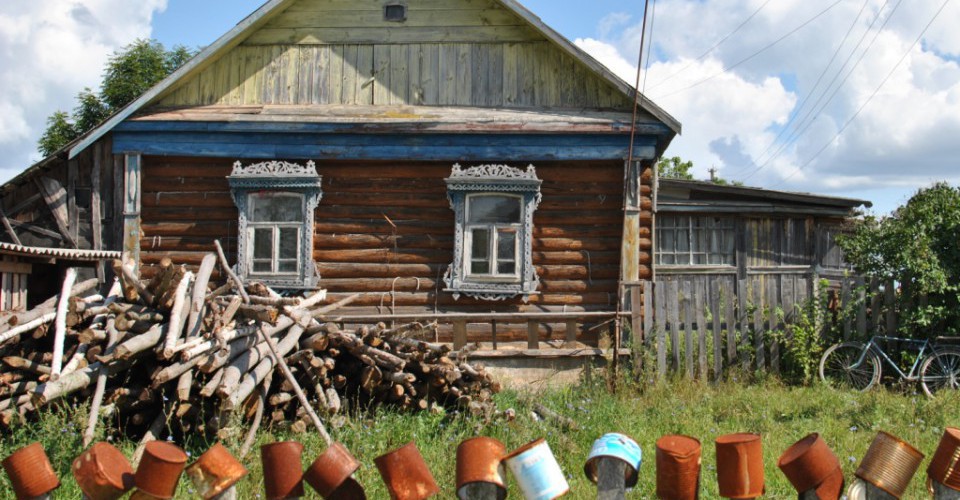
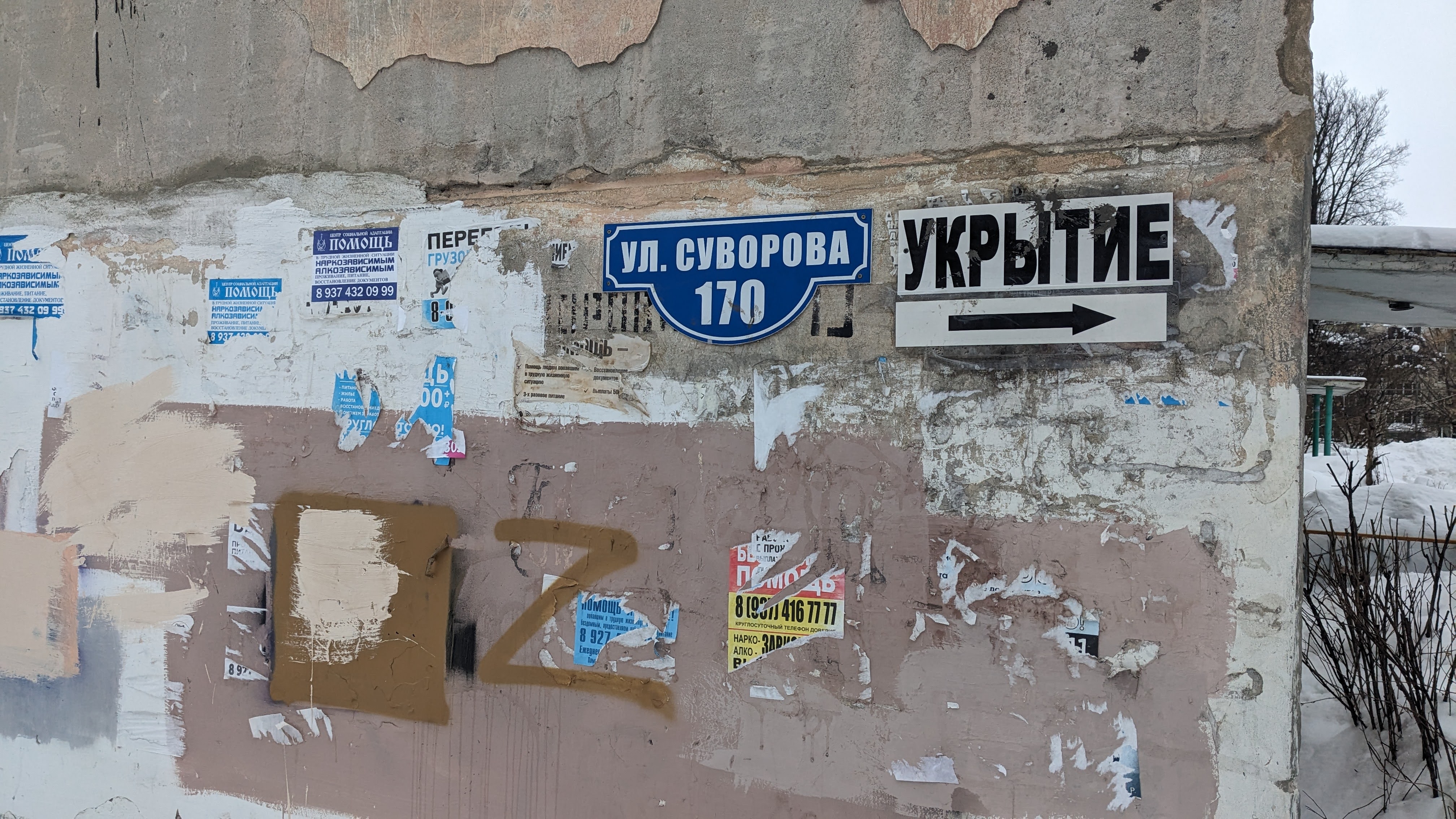
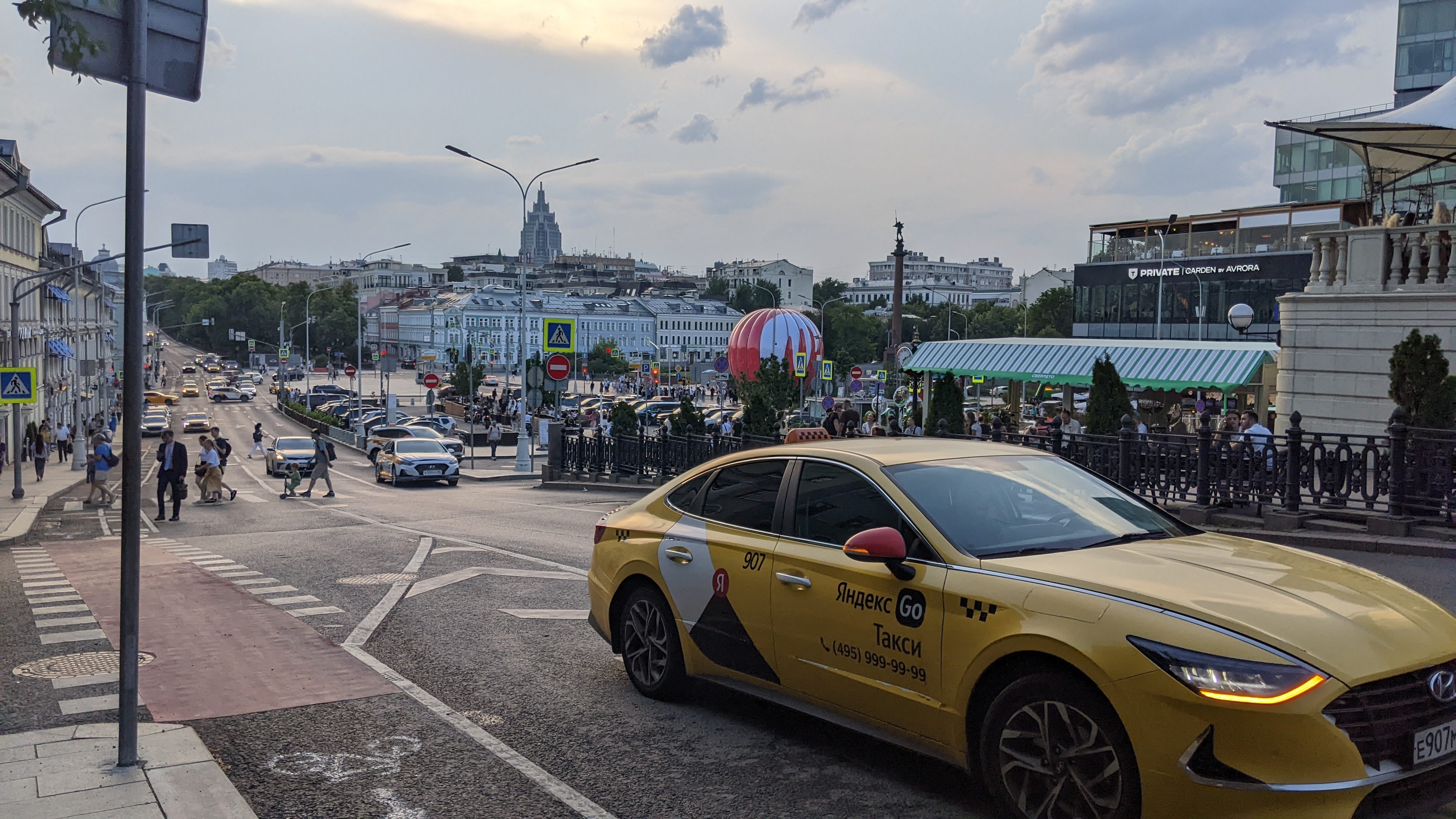
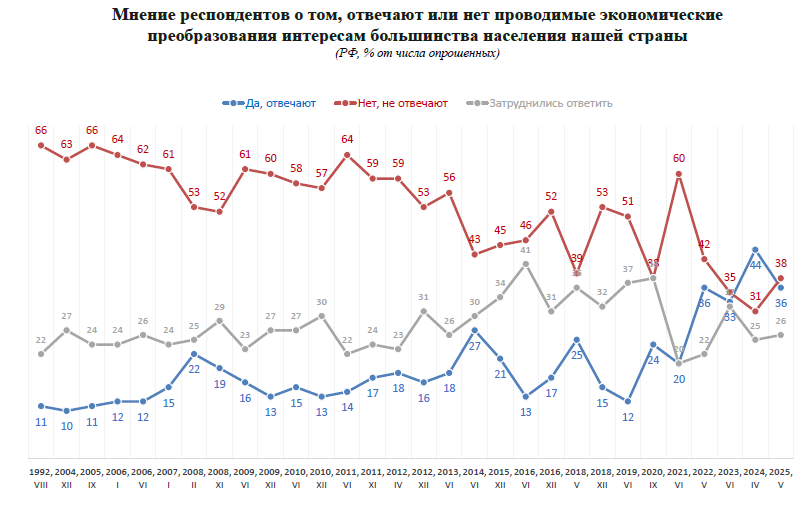
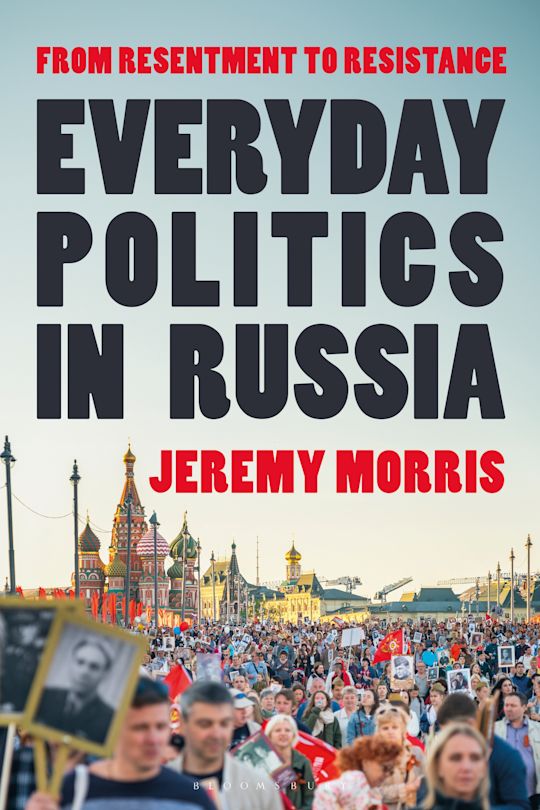
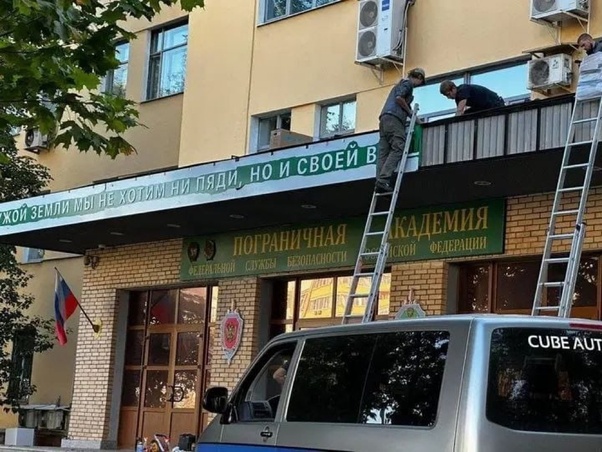
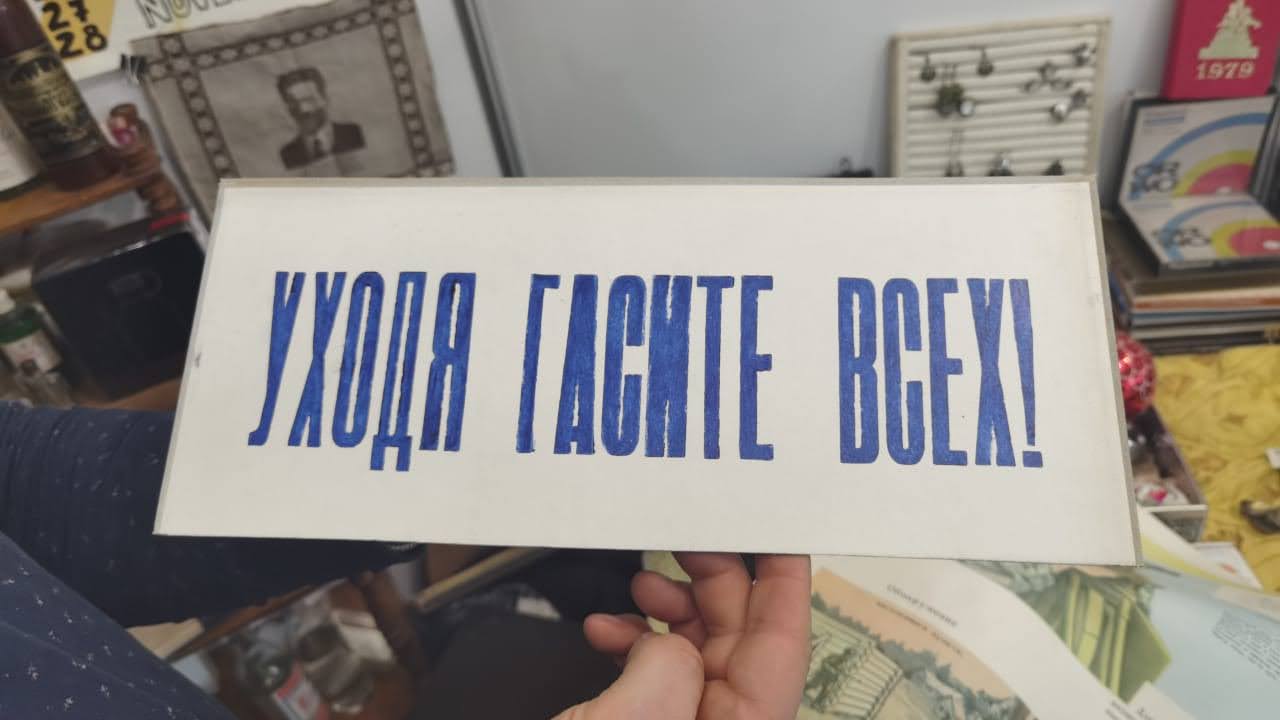
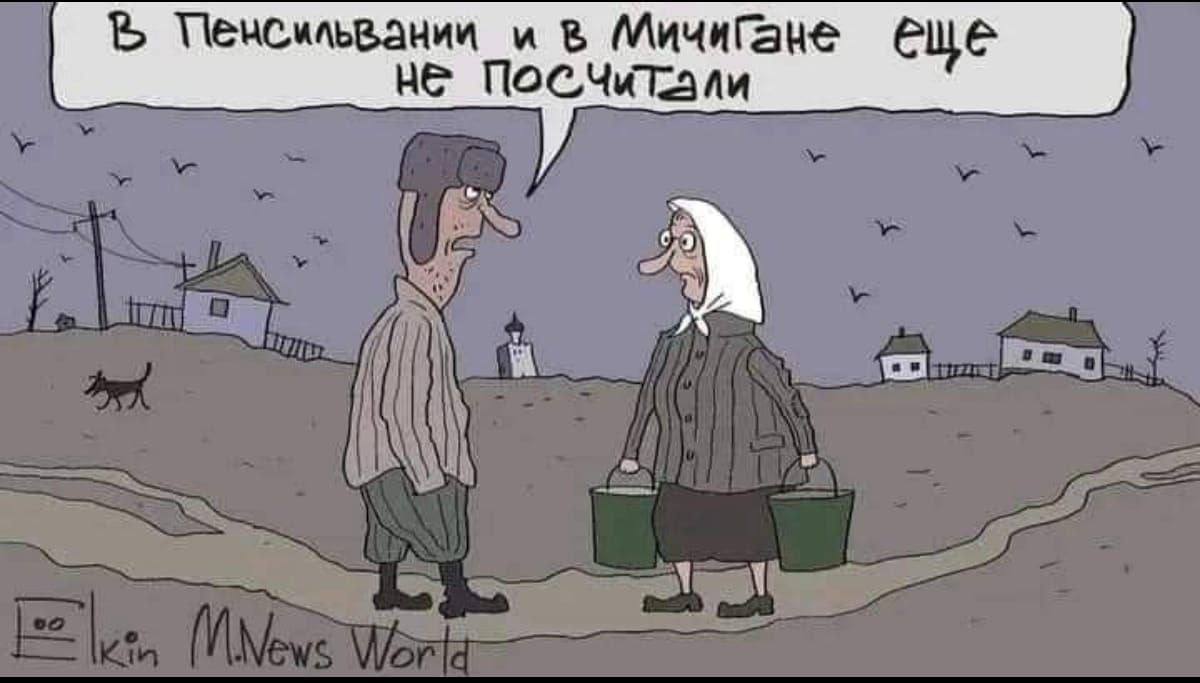
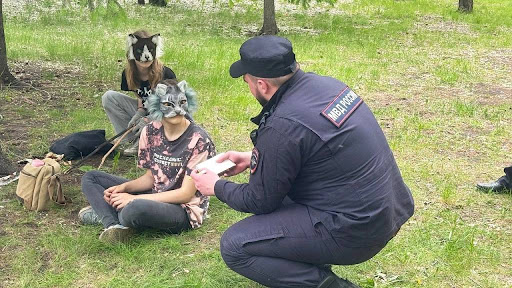
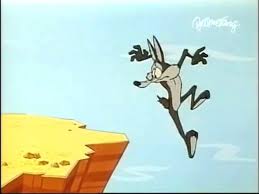
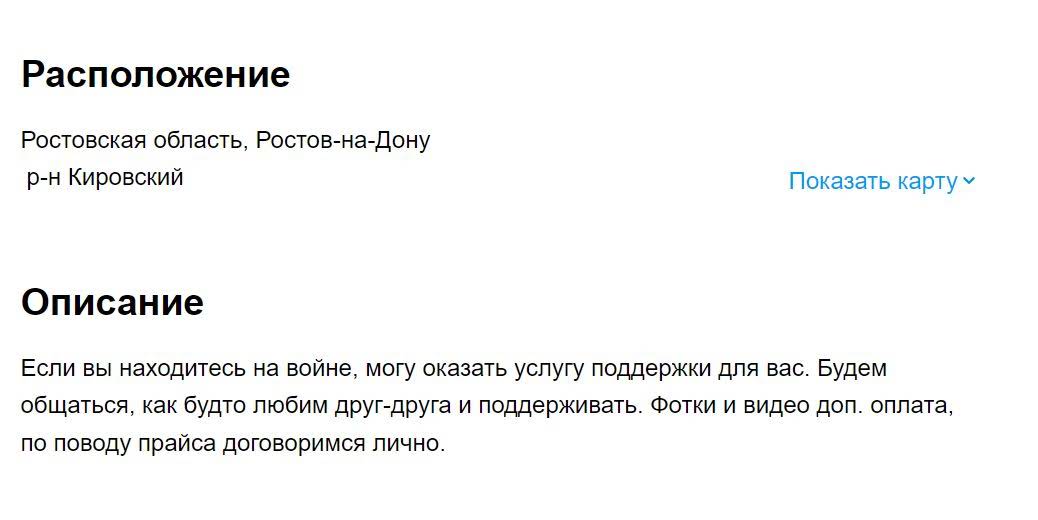
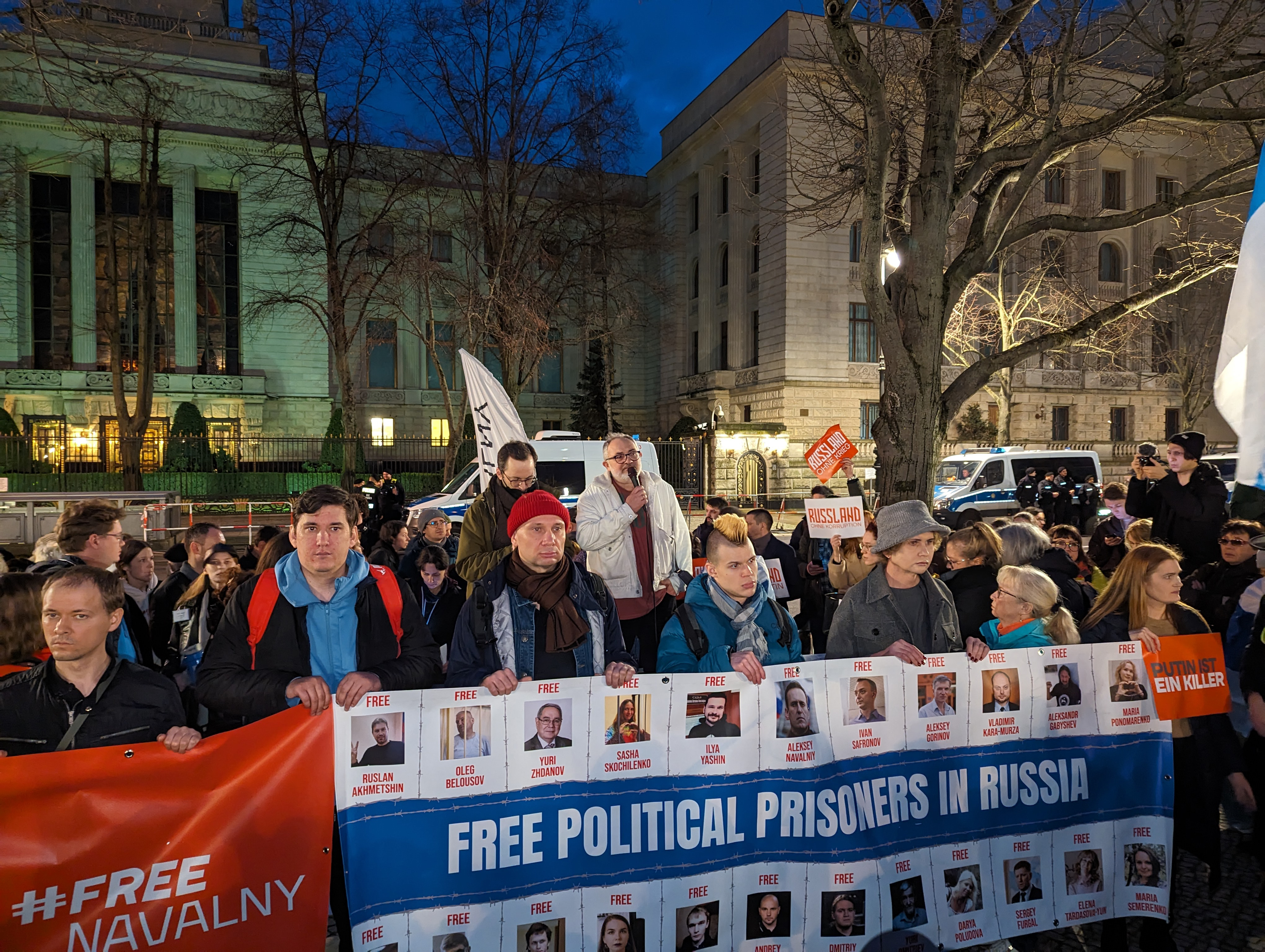
 Postsocialism