Parents of quadrobers, ‘kvadrobery’, are to be fined according to proposed new laws
Another post this week reviewing some goings-on in the Russia-sphere.
Biopolitical entrepreneur Katya Mizulina and head of the ‘Safe Internet League’, who is the daughter of politician Elena Mizulina – herself a pioneer in socially conservative legislation – was asked at an event by a brave journalist why she rails against Western ‘child-free’ ideology while not having any children of her own. ‘Child-free ideology’ (sic) is just the latest addition to the not-very convincing attempt to consolidate Russian identity around the message that ‘we’re the protectors of the real Judeo-Christian tradition unlike the decadent Ukraine-nazi-supporting West’.
My new book (announcement forthcoming) opens with a look at the imposition of a new kind of civics lessons on school children. The very first ethnographic scene features a middle-aged male Life Skills and Personal Safety teacher who implores a room of teenagers to read the bible and recant of their pro-Western attitudes. Let’s just say these unwelcome distractions from the curriculum by unqualified and under-prepared instructors don’t go down very well with children and parents alike. Unlike the new social conservatism, there is an audience for patriotic education classes, where they are accompanied by genuine social and economic resources like preferential places at university. Young people are just as entrepreneurial as politicians in using political agendas in education to get ahead.
I’m not much of a fan of podcasts, but the Meduza Russian-language ones are often hidden gems. Like this talk with Maksim Samorukov about the informational isolation and blinkered world-views which ‘informed’ Saddam Hussein’s decisions to invade Iran and Kuwait. In making links to Putinism, Maksim stressed how subsequent endless uprisings were easily put down, even after military defeat… And that society’s dissatisfaction just isn’t part of regime calculus once elites get used to the idea of supposedly limited wars as a substitute for domestic programmes and legitimacy.
Maksim also emphasized the irrelevance of ‘new’ or contradicting information for these leader-types. Revelations that to you and me could challenge our priors (like the effect on US foreign policy of an election year – very topical) is merely incorporated into the existing world-view of the isolated person (Mr Putin, or Saddam). This podcast prompted me to finally start reading this book about the Iran-Iraq war. Some day I’ll do a post on the parallels between that war and the current Russo-Ukraine conflict. An interesting note about Saddam’s decision-making: some argue we have a really good idea of this because he recorded himself so much on audiotapes which were subsequently captured by the Americans.
There’s so much being written right now about the looming problems in 2025-26 for the Russian economy and I can’t fit it all into this short post. In 2019 I discussed neo-feudalization of Russia’s political economy (“people as the new oil”). Many others have takes on this, from the idea of a new caste-like society with state bureaucrats as an aristocracy, to a more nakedly transactional ‘necropolitics’ where blood is exchanged for money (death payments for volunteer troops). Nick Trickett’s piece in Ridl argues against the ‘hydraulic Keynesianism’: that military spending boosts economic growth. Demographic decline and war are like a Wile E. Coyote cliff-edge for growth, a precipice towards which the Russian war stimulus merely accelerates the economy. Monetary policy like a 20% bank rate, ‘cannot tame what’s driving inflation’.
One of my informants on a very good blue-collar supervisor wage played ‘jingle-mail’ recently and moved back in with his parents. He’s 39 with no children and working in a booming manufacturing sector. He’s also working double-shifts to keep up with demand, but there’s a human limit to over-working in place of capital investment. Nick’s piece points to the stagnation in productivity in Russia.
Another sign of the endless war to make citizens fiscally-legible to the state is this story about ratcheting up penalties for Russian drivers who obscure or hide their number plates. Traffic cameras are, to an absurd and unpopular degree, relied upon to raise tax revenue in Russia. I’ve written about this many times on this blog. The details this time are not so important, but the story illustrates a number of things – penalties are still pretty low for all kinds of avoidance and ‘resistance’; Russians are ingenious in making their fiscal radar-signature as small as possible; the technocratic approach (blocking an AliExpress webpage selling revolving number plates) of the government is wholly ineffective because the state is losing capacity due to the drain of the war.
Does this shorter and more frequent posting by me signal a trend (a move towards the style of Sam Greene’s excellent, short-form weekly posting)? We’ll have to see. Though the news from my Dean of Faculty that she proposes closing all language-based Area Studies degrees may indicate I will have more time on my hands in the future. At Aarhus University we’ve developed unique programmes where students attain a high competency in one language out of Russian, Chinese, Japanese, Hindi, Brazilian Portuguese, and then can go on to a Masters degree where they are team taught by experts beyond their region. So a Russian student gets exposed to expertise in Chinese politics, Brazilian environmental studies, and so on, regardless of their continuing focus on a single language. We also just began to expand Ukrainian studies and have two Ukrainian scholars working with us now. ‘Dimensioning’ [Danish Orwell-speak for cuts to staff and student numbers] of Area Studies will likely mean no language teaching in these areas in the future. We live in a time of narrowing horizons for students, unfortunately.
I leave you with this advertisement for war-time intimacy from Rostov: ‘If you’re at war I can provide a service to support you. We’ll communicate as if we love each other and support each other. Photos and video for an additional fee. Agreement about price subject to personal negotiation.’
This will be a short review (well, actually not short) of some Russian media commentary (A. Pliushev, E. Schulmann, N. Zubarevich) and my reactions. If you think this kind of post is useful, let me know. It is often the case that informed discussion in Russian language on YouTube never really cuts through to anglophone audiences for Russia content. I don’t ‘endorse’ the persons or positions of any of these public intellectuals and journalists, but this kind of content is important for non-Russian speakers to get access to.
Virtual Autocracy?
At the beginning of September there were simultaneous elections of various kinds throughout Russia. The results were not very interesting but the strong push to ‘virtualize’ voting as much as possible is. Why not continue to rely on the physical and very visible power expressed in falsifying actual ballot papers and busing in people to vote on pain of losing benefits? The resort to a virtual electoral autocracy shows the authorities have a good idea of their genuine unpopularity and the continuing risks, even now, of all kinds of upsets. Not only that, they also understand the advantages of digitized authoritarianism (I’m hoping to do a big write up of this soon). You can geolocate voters in the app they use and this exerts a coercive power of its own.
But, as Ekaterina Schulmann pointed out in her review of the elections, getting rid of the spectacular in-person falsification reduces two powerful indirect effects: the visible demonstration of loyalty by voters to the state (which goes back to Soviet times) and which speaks to the main reason for elections in autocracies – the idea that legitimization still needs a public audience. Secondly, in the Russian case, virtualization means that the army of state workers – mainly schoolteachers and local council employees– are ‘let off the hook’ they’d previously been sat on: being implicated as ‘hostages’ in the falsification process as counters and electoral polling workers. Cutting out the middleman is interesting and perhaps reveals a real buy-in among the elite to the idea of “full-fat digital autocracy” maintained by technocratic management of populations. But, thinking sociologically, normalization of involving the morally-important category of teachers in illegal compliance with the diktats was the strongest spectacular effect of Putinism. Here, I’m also reminded of the big conflicts even now between parents and teachers over the disliked patriotic education lessons, with the latter stuck in the middle and largely unhappy at carrying out this task (more on this in my forthcoming book).
The election also revealed other indirect information about the emerging post-2022 Putinism ‘flavour’. There’s no sign of the much-expected ‘veteran-politician’ wave. Special Mill Op vets are not getting elected positions – many supposed examples of this in the media are just low-level bureaucrats who had to go to the ‘contact zone’ (frontline) to exculpate some disgrace and then came back. A big thing to watch for in 2025 also related to the war is the fact that on paper, the proportion of the national budget devoted to defence is due to fall according to the Finance Ministry. Watch this space.
The non-appearance of the Great Russian Firewall
On media use, Alexander Pliushev looked into VPN usage, and estimated that around 50% of internet users in Russia are now forced to use these services to access content, but probably not because they’re looking for subversive information. But there are plans afoot to root out VPN usage, along with the slow-down on services like YouTube. However, it is estimated to take years to root out VPNs, and this doesn’t take into account measures to develop new forms of avoiding blocks. Pliushev feels confident in this because while number of views of his content fell a lot from Russia, the overall picture is unchanged – meaning people just switching to VPNs. He should know: the ex-Moscow Echo journo has an audience of 300k viewers on Bild, and 700k viewers on his own channel. Already we see the emergence of IT service providers of ‘partisan’ packages to customers which improve the speed of YouTube.
Television as domestic wallpaper
A good accompanying piece on TV and media use came out in July by Denis Volkov of Levada. In this piece he claims TV as a source of information is still really important, and I have some questions about that. It’s true, as he says, that the TV news is always on in the background of people’s homes, but other sources have reported that TV ad revenue has ‘followed’ the decline in audiences since 2022 because people are generally turned off by the very visible war coverage on main channels. Indeed, at one channel I know intimately, worker’s contracts are not being renewed and people are not getting the pay increases they expect. What’s more interesting about the Volkov piece is how rapidly the coverage of social media has changed – the rise in Telegram: readers of ‘channels’ there (mainly news and current affairs) has gone from 1% to 25% of the population since 2019. This is a sobering reminder to be cautious about state’s capacity to control informational dispersal. The unparalleled rise in the onlineness of Russian means we should also avoid too many historical parallels (Vietnam war, Afghanistan, WWI, WWII). We really do live in a different age.
There’s a lot I don’t agree with in the Volkov piece, but it’s worth a read. As I’ve frequently written here, if you’re attentive then stuff like this from Levada people reveals deep-seated ideological assumptions about Russian society that can surely be questioned. I don’t agree with his insistence on uncritical media consumption and the simplistic ideas about how TV shapes views. Nonetheless we get more interesting points – like that 28% of people don’t watch TV at all, that the audience for Twitter and Facebook is tiny at 2%. Late in the article we get the statement that the share of television as a news source fell by 33% in the last 15 years, somewhat undercutting Volkov’s insistence on the relevance of TV as a regime-population conduit for propaganda.
“It’s the regional economy, stupid!”
Moving on to Natalya Zubarevich’s frequent and detailed online talks (with Maxim Kurnikov here in mid-Sept) about regional economy and demography in Russia, she lets slip some interesting observations beyond her usual scrupulous (and self-censoring) focus on the ‘facts and figures’ from official documents. She talks about how noticeable it is that in military recruitment in Moscow there are few young faces and a preponderance of ethnic minorities. She talks about the current ‘hostile migration environment’ led to harassment of gig workers in taxi-apps (Yandex). But not due to war-recruitment pressure, rather to increase bureaucratic monitoring of taxi drivers in the capital, reiterating the point above about the government staking more on digital control. She says we have good evidence for this squeeze because of the rising visibility of Kyrgyz drivers for whom there are fewer migration hurdles. (Gig workers from Kyrgyzstan represent a case study about the gig-economy in my forthcoming book).
Zubarevich makes the point that low paid blue-collar workers are being sucked dry by the war machine. If we accept the national soldier replacement rate target is 30,000 recruits a month then yearly Russia is losing around 1% of the available male workforce – but it hits harder in logistics, warehousing, manufacturing, and so on and hardly at all in, for example, local government. She also provides good examples of agency within the state: where the Agriministry was able to get the enlistment offices to back off men who work as mechanics for farms.
Some criticise Zubarevich for her insistence on talking only about published statistics. Here, without openly saying it, she pours cold water on the idea of sustained income rises keeping pace with inflation. She doesn’t believe the figures of high annual percentage rises in salaries as sustained or ‘real’ (net effects). She also points to clear slowing in wage inflation in 2024. This then allows her to demolish part of the military Keynesianism argument. Low incomes have seen big increases but from very low base starting points (an apple plus an apple is two apples for the blue-collars; but the people in white collar jobs were already earning 10 apples. If you given them one more apple do the blue-collars feel less unequal?). Periphery growth (in regions including war factory locales) is not significant because it does not begin to affect the overall level of inequality in society.
What conclusions do we draw from Zubarevich’s dry statistical analysis? It’s a paradox that in Russia’s ‘necrotopia’, where multiples of annual wages can be earned for surplus people by offering themselves as victims to the death machine, the overall value of blue-collar labour has increased to a degree that alters the bargaining power of workers who remain uninvolved directly in the business of dying for cash. Nonetheless, productivity, whether in military or other parts of the economy has not increased at all because of human and technological limits. You can introduce another shift, pay people 30% more, but that doesn’t mean that the output/hour of tanks, or washing machines or nuts and bolts (another case study in my book) goes up. Zubarevich comes around to a quite conservative position. It might seem like the war has the potential to break a pattern of decades of very high income inequality and massive underpayment of ‘productive’ people, but the inflationary effects of war are already bringing the pendulum back to ‘normality’. She also reminds us that inflation and the isolation of the Russian economy mean that ‘veteran’ incomes will never have significant levelling effects on inequality either.
On the Russian Defence Ministry shake out
Back to Schulmann in conversation here with Temur Umarov. The purges in the Defence Ministry are like the Malenkov-Khrushchev pact after Stalin’s death. A new deal: not only will you not be physically exterminated in the war-of-all-against-all where there are no institutions to regulate political life, we won’t punish your relatives either.
What’s happening in the Defence Ministry is a Putin-style purge: not based on ideology, one could even call them ‘nihilistic arrests’, supporting the idea of nihilism at the heart of Putinism. And as Schulman says, this only serves to destroy any idea of narrative structure to the war aims. Umarov: it is Stalinist in the one sense that it’s a structural process of social mobility: unblocking of avenues for advancement for sub-elites. This should also give us some ideas about ‘where we are’ in the maturing or even autumnal days of this regime. Are these arrests signs of sub-elite impatience for more radical regime transition (in terms of personnel, not necessarily politically)? Stalin-Khrushchev-Brezhnev? It is probably a mistake to interpret this in terms of anyone thinking that these new faces will be ‘better’ at the job of war. Schulmann asks: are these repressions for the war, or repression instead of war? What she means is that instead of the fantasy that the overturn of corrupt military elites will allow real competence and patriotic leaders from the ‘ranks’ to emerge, in reality we just get new clients and relatives of those still at the top.
Schulmann reveals perhaps more than usual in this ‘academic’ talk setting. Her view now is that the core hawkish elite really did want to go to war in 2020 and only Covid intervened. There was a test run of an alternative ‘institutionalization’ of elite wealth and status transference in the 2020 constitutional amendment. It was a groping towards cementing the ‘rules of the game’ to lock in elite self-reproduction. But in reality few could believe that this this compact would survive Putin. For Schulmann the rejection of this compact as unworkable, and subsequent turn to war as a ‘solution’ for the problems of elite consolidation really, shows the genuine narrowness of political imagination in Russia – no one really believes institutionalization is possible, and that even in the West it must also somehow be a ‘show’ or ‘fake’.
Russians: We don’t know what the war is for
One final nugget is the latest Russian Academy of Sciences’ sociology centre monitoring report from April 2024. There are many surprises, but one stat stands out. People are asked, towards the end of a questionnaire containing sometimes absurdly slanted questions, about the Special Military Operations’ “solution”. They don’t get to choose their own answer, only pre-selected ‘options’.
Comparing the mid 2022 version with mid-2024, the results are interesting:
What should be the aim of the SMO on demilitarization of Ukraine and liberation from nationalists?
Liberate all Ukraine: 2022: 26%, 2024: 16%
Liberate Donbas: 2022: 21%, 2024: 19%
Liberate ‘Malorossiia’: 2022: 18%, 2024: 20%
Liberate UA minus west: 2022: 14%, 2024: 20%
Other opinion: 2022: 3%, 2024: 1%
Difficult to answer: 2022: 18%, 2024: 25%
There we have it: the plurality are ‘don’t knows’. The ‘other opinion’ includes the possible selections, destroy fascism, destroy Nazism, end Ukraine as a state, destroy Banderism, preserve Russian territory, keeping only Crimea. (A bit ambiguously worded, that. Did they mean to write: ‘keep Ukraine as it was, but leave Crimea to Russia?) Who knows. As my interlocutor writes: likely this document was heavily ‘curated’ and then the sociologists tried to rewrite it to make sense while not annoying the powers-that-be. Imagine a guy in epaulettes standing behind the bozo writing the report.
I had been meaning to write a ‘roundup’ summer post, but didn’t get around to it. The Ukrainian push into a part of Russia’s Kursk region was obviously the most relevant event to write about, but even now there’s questionable value in trying to interpret. Here, though, I try to offer a number of quick summaries of events. And then some more speculative stuff. If you think this more topical genre worth reading, let me know.
Kursk is a kind of nowhere region in the Russian imagination (1943 tank battle not withstanding). It is not quite steppe country, not Cossack country, but neither is it core European territory either. Nikita Khrushchev was born here, but his formative years were in Donbas. Today, Kursk is a landscape of relatively successful black soil farming broken up by river ravines. I went on a road trip there in the late 2010s and one of my key interlocutors is going there next month for a family visit. When we visited together, despite the agricultural pride of the region, our hosts asked us to bring processed meats and cheeses (too expensive locally for poor people to afford), and essential medicines. The final leg from Kursk city took nearly as long as the one from Kaluga-Kursk along the highway.
In some ways Kursk’s dismal demographics and patchy economic geography are quite comparable to other regions – population depletion everywhere but the capital; agroholding expansion into spaces vacated by surplus populations; some economic specialization (iron and agri) despite not really having a competitive advantage; neglect from the centre and the pitiless poverty of rural life reminiscent of 19thC novels. Kursk is kind of representative in size too of many ‘central’ Russian regions. Kursk, Jutland (where I work), Maryland, and Belgium cover similar areas but compare populations. Jutland – 2.5m, Maryland – 6m, Belgium – 12m. Kursk, by comparison, is almost empty (well below 1 million inhabitants – and probably less given that population stats are inflated for budgetary reasons by the local authorities). Nearly 45% of the region lives in the single large city.
“What to say about Kursk?”
No, that’s actually the response my Russian interlocutors would likely say, if I was guileless enough to bulldoze them into talking about it. I did an experiment. I purposefully didn’t mention it to them for the whole of August (recall incursion began 6th August). By now, most people have had time to digest, but it still doesn’t have a political shape in Russian society. This is not because of propaganda, nor ‘indifference’. To some degree it illustrates the normalization of sequentialness of ‘externalities’ of the Russo-Ukrainian war. Invasion, routing of ‘our’ forces, war crimes, missile strikes on the mother of ‘Russian’ cities (Kyiv), counterattacks, drone strikes by Ukraine. Most ‘real’ is the indirect effect of inflation, loan terms and percentages, labour shortages, ‘opportunities’ for those able to relocate jobs. A handful of people reference Kursk. They’re not callous. They mention, wryly, the conspicuous absence of it on TV. They talk about helping displaced persons. They collect money and send it on. They bring collections of food, clothing and money to the temporary accommodation points (summer camps, ‘sanitorii’, disused student halls). Part of the story is one of the belatedness of meaning. It’s too early to say what the meaning of Kursk is on any level. We’ll incorporate it into the ‘meaning’ of 2024 probably long after New Year’s eve of this year.
“There aren’t enough men”; alarm versus calm
“There aren’t enough men”, was heard from that most loyal source. A ‘security-adjacent true believer’. Don’t ask me what that means, for now. Certainly ‘throughput’ or ‘flow’ of meat (because that’s what it is, and on the Ukraine side too) is inadequate. Something, somewhere will break. Or is right now breaking. Concerning a new mobilization wave I have many contradictory thoughts. On the mobility and ‘small tricksterness’ of post-socialist populations. On the tiredness of ordinary Ukrainians and Russians alike. Could mobilization just mean continuity? Yes, but continuity of what? Would it accelerate tectonic changes. Yes, that too. But that’s the point. We stand, as sociologists, reading a seismograph that’s too far from the epicentre to make predictions.
Ekaterina Schulmann in one of her August podcasts: ‘deprivatization and transfer of property in Russia is far more alarming to the elites than any loss of bits of Russian land, whether that land is canonical or non-canonical’. Schulmann in the same broadcast warned that direct measuring of public opinion is futile, but even the official pollsters can’t hide a real fall in the confidence of people in the centre.
‘It is better to look at proxies’ for public opinion, is pretty much what everyone says now. There’s media consumption, internet search terms, politically ‘safer’ polls like the one about Russians’ biggest ‘fears’. But even here, Kursk does not register as much as one would expect. Schulmann gives a nice history of the relationship between ‘things are alarming/things are calm’ polling. In Feb. 2022 the split between alarming/calm was 55/39; Mobilization in late 2022: 70:26; Moscow drone strikes: 53/42. Now, post-Kursk: 46/46.
calm is green, fearful is orange
You can’t imitate Schulmann’s ironic style. She points out that when you ask Russians about the ‘Special Military Op’ they invariably speak like “schizos”: ‘Everything is going great… Let’s make peace right now!’ For Schulmann, we can compare Russian society to a person being smothered with a cushion while around them the world burns. In some sense they want to be smothered.
Viacheslav Inozemtsev, the Russian economic observer, covered the Kursk incursion in an interesting way. He notes that Kursk and Belgorod are centres of pork, poultry and milk production – 25% of pork production, in fact. Inozemtsev is more forthright than usual in the piece, arguing that new mobilization might be forced on the Kremlin by events like those in Kursk and that this would entail the defacto dismantling of Putinism. What he means by this is the ability of people to detach themselves from political life in the country, content that they will be largely left alone. If mobilization is needed, he seems to say, the system would have to fundamentally change, in order to survive.
Alexei Levinson, of Levada argues that Russians are indifferent to what’s happening in Kursk, citing, as usual, his brand of Wizard of Oz sociology: ‘focus group data showed that there was no significant concern’. He cites emotional anesthesia and numbness in the population, who seek denial and escape. This is a long interview and some readers will know I criticize Levada-type sociology on methodological grounds and more. Objection here, here, and here. But you don’t have to listen to me. Here are the words of Professor Gulnaz Sharafutdinova of KCL in her latest book on Rethinking Homo Sovieticus. Writing about the obsession of Levada with the totalitarian paradigm and the accusation of moral failure of the Russian people, ‘such a mixing of the political, the ethical and the analytical created “a blind spot” that many scholars did not see’ and that ‘labelling an entire society with the use of ideas from the 1950s is lamentable’. Why do observers like Levinson remain so wedded to the idea of inertia and atomization? (Rhetorical question. The answer is here)
That Levinson comes out with such a strong claim reveals more about the universe of ideas he lives in, than any empirical reality. I can’t help but mention a different ‘data point’ – vox pops that BBC’s Steve Rosenberg did in Aleksin after the Kursk incursion. Even though people knew they were talking to a foreign journalist with a camera, a very different, and charged atmosphere was evident (the subtitles are a bit misleading, by the way). And that chimes well with what I hear from people who are able to speak without restrictions to their friends, colleagues and relatives.
Holy war falls flat
One interlocutor noted that people struggle to connect with WWII tropes (resisting invasion as holy war) as a useable emotional catalyze, and that this has destabilizing effects, even as they are forced into using some of those same limiting tropes: heroism, sacrifice, faithfulness to the fatherland. Does this mean that through war, via ‘dialogic’ interaction of old tropes which are inadequate with the ‘new’ reality, a novel orientation towards the future might emerge? I can’t help think of a different kind of belatedness, this time relating to hegemonic cultural orders. In a society like Russia we must be doubly sensitive to the notion that organic crises (which we can argue Russia has been in for at least 15 years, or longer) eventually culminate with such unpredicted rapidity, that they overtake even the key actors involved. Indeed, this isn’t about the end of the Russian state or Putin – they may both ‘continue’ seemingly in their present form, even while overall the system transitions to a new steady-state and new forms of ‘common sense’ take over. Essentially the crisis might even resolve itself before we know it has, and be recognizable as such only much later. ‘Everything must change, so that everything remains the same’. Is this so different from Andrei Pertsev’s musings here on the cross-over in trends for relative popularity of Head of State and government
But back to those vox pops and my own interactions: when people use familiar tropes of heroism, these is a strange hybrid of sacredness and meaninglessness and also criticism of the army and civilian authorities.
If emotions performed publicly are political performances, then Kursk shows that the mechanism of performance itself is broken. This is even visible in the comments about it from people like Kara-Murza. Because rationality and emotion collide in his answer, his usually eloquent expression is literally blocked. He has to go off on a long tangent to get to the point of saying, rather tiredly, that he doesn’t like seeing Russians being killed just as he doesn’t like seeing Ukrainians murdered. ‘Strashno… strashno…. Strashno… bol’… strashno.’ [horror, horror, horror, pain, horror] overtake his whole commentary for a while. Until he comes out with the trite: ‘all they that take the sword shall perish with the sword.’
In the end there can be neither rationality nor affectivity: things that the surveys like Levinson’s are aimed at measuring, as if they can be extracted as distilled fractions. Instead, there is a large (or small), depending on the person, black hole, about which there is nothing to say. Because the blockage of different orders of expression and feeling is right inside you. You can only shout into a void. But this too is not normalization of war, but like an explosion in the deep and dusty places where different available hegemonic discourses are stored.
For a while now the sociological person has ‘died’; it’s not that they are traumatized, which might be more true of Ukrainian victims. It means they are living in what Irina Sandomirskaya calls a ‘blockade economy’ a ‘powerful proving ground for the testing of technologies of power’. One in which money and power, and death and destruction overwhelm the capacity to gather together one’s own circulating and contradictory thoughts as meaningful currency.
While it was an unalloyed good to see so many people released from wrongful custody in Russia, the congratulatory and celebratory rhetoric surrounding the events was a distraction; the vast majority of prisoners without any media profile remain in custody and some may die in prison, as the musician Pavel Kushnir did on 27 July. The response: ‘getting anyone out is a victory’ obscures the fact that especially among the Russian nationals released this happened because they had vocal or powerful supporters, or because it was in the interest of the Russian state.
The hard truth is that thousands of victims remain in prison, if we include Belarus in the equation. Secondly, the moral victor/victory tone – as well put by vlogger Vlad Vexler – obscures the hollow political meaning of events. Partly it could be explained by an emotional shock of the speakers who just a few hours previously were in prison. But it shows the fruitless search for a viable political language through which people – whether in exile or still in Russia – can engage with compatriots and provide counterarguments to the broad consensus around ‘encirclement’ and ‘my country, right or wrong’ that’s increasingly apparent in Russia.
To be fair, this was actually the main opening message of the group. Yashin spoke very movingly of how much he wishes he could go home – surely because he knows that his political career ends in exile. The point of saying ‘Putin does not equate to Russia’ – made by more than one speaker – was not, as widely interpreted, about denying collective responsibility or deflection, but correctly identified the main political problem – how to drive a wedge, how to begin to create an alternative imagined future for Russia among Russians.
However, an unfortunate side-effect of that correct deduction was the focus, right at the beginning of the presser, on dubious things like educational visas for Russian youth as a form of educational soft diplomacy. The presser provoked predictable howls of outrage from the usual suspects, unhappy that some speakers had gone even further and made a point of arguing against sanctions – on the grounds that Russians and the regime were not the same thing. This was indeed ill-advised, particularly by Kara-Murza. Surely this can’t have been the priority? In 2022 this argument might have had legs but not in 2024. Now, I’m on record as arguing that blanket visa bans and the like are counterproductive. I’d still argue that allowing ALL Russians to easily leave Russia (and the EU is the closest set of countries to find work or to experience the reality that the west is not a Russophobia machine) would be a pretty effective anti-regime policy.
However, in reality, those who yesterday spoke against travel bans and sanctions were consciously or not arguing for the restoration of their rights *as a class* of extremely privileged Russians – and not on behalf of the majority of Russians who have never had an opportunity to travel or study abroad (69% according to Levada-Center 2022 poll) This is why, although they might sincerely think they are speaking in defence of their national collective, in reality they are arguing for class interest and inadvertently revealing how the main discourse among the small but vocal group of Russian ‘opposition think-leaders’ in Europe and the US is really about an ‘antipolitical’ technocratic approach. In addition, this quite narrow interpretation of Russian rights (travel to the West) gives more fuel for regime propagandists to deflect growing dissatisfaction of ordinary Russians by the war: ‘look, these westernized traitors are self-serving’…
It’s hard to say how strong the influence of Mariia Pevchikh is. She’s Navalny’s FBK successor in all but name and she was at the heart of the photo-ops, claiming to have helped put together the list. We detect even in these hurriedly put together speeches further competition for brokerage vis-à-vis Western elites under FBK’s (Pevchikh’s) tutelage. The ‘drop sanctions’ = restore visa/bank account facilitation is a dead giveaway. Nothing could be further from 1. How to help Ukraine ensure its sovereignty and security (even short of ‘victory’) and 2. How to address as political subjects the vast majority of Russians who have never even travelled outside their own geographical region within Russia. Whether the released prisoners are conscious of it or not, the talk reveals more deployment of rhetoric (here it was understandably moral and emotional) to perform deservingness and be ordained as one of the ‘good Russians’. To serve as a filter for other good Russians – in the cause of retaining ‘civilized’ rights as global citizens.
Back to the circumstances of those released. Mariia Pevchikh in claiming ownership of the list was, to reiterate, staking claim to brokerage – and to political influence over Western decision-making on behalf of the organization FBK, now a completely transformed political animal. This was as distant as one could get from the ideals of Yashin – who said he’d been traded against his will and only wished he could go back to Russia, where, unlike many savvy exile brokers, he has been already elected once as municipal deputy. While Pevchikh’s first words sounded unguardedly celebratory – as if she welcomed the continuation of exchanges in order to benefit from the PR, she more carefully checked herself, saying ‘not at the expense of Putin catching more foreign journalists’.
Kara-Murza got a lot of flak for his comments in opposition to sanctions ‘against ordinary Russians’. Who is Vladimir Vladimirovich K-M? A third-generation very well-placed journalist who came to prominence in opposition politics thanks to the sponsorship of oligarch Khodorkovsky. He strikes us as a sincere person, survived several assassination attempts, but the fact is that 99% of Russian people have never heard of him (and if they know his name it’s more likely they are thinking of his father). Indeed, he is what Russians call a classic ‘mazhor’ (a ‘major’ – which could be translated as ‘gilded youth’, ‘silver-spoon’, or ‘nepo-baby’: people whose family provided them with every study and career opportunities closely connected with the privileges of the ruling elite but unavailable for ordinary people). In the Russian world of undeserving clientelism it has a decidedly bitter and unpleasant connotation since the Soviet times.
Alongside Ilya Yashin, K-M even looks rather incongruous. Once again, one need not doubt his motives or sincerity to see the contrast. Yashin, in our view was expelled for good reason by the regime. He remained one of the few well-known charismatic leaders of anti-war protest. He might even have been more dangerous in the long run than Navalny. He is not a rich kid (unlike Kara-Murza), he has a biography that is understandable to Russians (his mum and dad are engineers, he earned money through ability alone and served as a municipal deputy). He is a master of protest actions. Now he’s abroad, he is no longer ‘with the Russians’. Both the government and Yashin understand this perfectly well. Yashin said wisely yesterday that he will watch and listen to the emigres, but the main politics should be in Russia (It is amazing how fresh his head is for someone who has served time). Yashin has been consistent on the need for consolidation among opposition, for olive-branches, and for building street protest to show ordinary Russians how not to be afraid. David White wrote about these strategies and tactics in 2015.
We are not the only people to note how the discourse about ‘deserving’ and undeserving among the émigré oppositionists reflects ideas about hierarchy and privilege no less ingrained than among the regime players themselves. The moral purity arguments about ‘good Russians’ so visible among these emigres, and all the talk of lustration carried out by brokers has probably been internalized thanks to easy translation of cultural capital by people like K-M – graduate of Trinity Hall, Cambridge University (where of course he researched dissident movements in the USSR) into political capital in his reception by the US State Department – ‘I can explain who the goodies and baddies are and how to change Russia’.
But Yashin worked like everyone else (and was not ‘placed’ there from birth, like others), sat like everyone else (but not K-M) in a common prison cell. As soon as he was taken out (allegedly at the instigation of Pevchikh), he becomes different from everyone else. This is the goal of the authorities – to show people that he is one of those ‘globalists’ and not really Russian. That’s why they kicked him out without a passport, but formally retained his citizenship – it might be to give him a reason to promote the idea of a “good Russian passport”, which the Russian Antiwar Committee had already been discussing and which post-Navalny’s FBK had rightly called ‘all that crap’.
What’s the upshot? The deep class division that existed in pre-war Russia has only worsened and everyone became completely atomized. The rich, who had enough money to emigrate or left early, and who now are asked where their money came from, are behind the idea of special passports, special accounts and lustrations (Schulmann, Pevchikh, Volkov, Kara-Murza, Katz, Margolis, Gudkov). They are the loudest. The poor emigrants survive in ‘second-rate’ Tbilisi or refugee status. They are ‘the mass’ used by our wonderful brokers to show their popularity and representativeness of the emigrants. Russians within the country are not taken into account.
Having realized that she won’t get any dispensation from Ukrainians, Pevchikh seeks to use 1. Kara-Murza to exemplify her ability to select good Russians from the clutches of the regime, State Department approved; 2. Yashin represents the selection of good Russians minted by anti-war movement of Russians themselves inside Russia (whether he was on the original list or not is irrelevant); 3. Skochilenko represents a kind of legible westernised sexual minority and art communities) and, 4; we mustn’t forget the coordinators of Navalny’s headquarters who did not earn enough money to emigrate early enough (‘we don’t abandon our own’). That’s why there are even more urgent cases who didn’t make the cut about whom Yashin spoke yesterday (Gorinov and others, and also people like Pavel Kushnir) – they are no-names, there are no ‘target groups’ for their release. But their release would be more dangerous for the regime: it would be a signal to the intimidated Russians: ‘look, the rich kids and Europe are taking care of ordinary Russians.’ Russians might start wondering if Europe is really that bad, and the regime really wouldn’t like that. It’s convenient for them when there’s their image as a ‘bloody regime’ on one side and a rotten West on the other.
Pevchikh and others played right into Putin’s hands. They worked precisely on the target audiences needed by the regime in order to emphasize how alien the liberated Russians are. And at the same time, she worked according to the Western agenda, providing a serving of ‘legible’ victims according to the West’s target audiences. If Yashin gets the hang of this new vista and shapes his own agenda: great. If he starts promoting an anti-sanctions agenda for those who have already left then it means he has fooled himself. As for K-M, his fantasy-dream CV (elite job in Russia since age 16, Cambridge education, US residence permit, reception in US govt bodies, and political sanctification by the age of 30) is why he was kept in solitary in prison – the authorities were worried he’d be killed by other prisoners. What a perfect way to continue discrediting the opposition by releasing him back out to the wild.
There were many responses to the news that James Scott has died. Most of them related to the debates around his later work – in particular the 1998 book ‘Seeing Like a State’. A landmark in showing the folly of state-led utopian engineering, Seeing Like also received critique from many different quarters. Ayça Çubukçu memorably asked – if Scott is against ‘imperial knowledge’, then what kind of knowledge would be anti-imperial? For Çubukçu, Scott’s position is indebted to Kropotkin and Bakunin and the anarchistic autonomy tradition. But at the same time, Scott remains bound up in a contradiction whereby his position is ‘itself a product of high modernism […] not unlike the utopian state projects he critiques’.
Perhaps most importantly for me, Scott’s work on the state clarified the importance of ‘legibility’ as a concept describing the relationship between state power and (often voiceless) subjects. Particularly in my forthcoming book (Everyday Politics in Russia: From Resentment to Resistance), the ongoing struggles around legibility provide the main drama of state power in Russia. In one chapter I use undocumented garage spaces as a good example of the incomplete penetration of the state into autonomy-seeking lives of Russians. I also use the idea of making-legible to briefly relate my discussion of humdrum provincial Russia to the much more overtly violent processes of ‘Russification’ in the occupied territories of eastern Ukraine.
Making legible subjects has always been a ‘comprador’ arrangement – it doesn’t matter whether the human resource is in Yakutia, Kaluga or Mariupol – human material needs to be fixed in document form in order to aid extraction of rents. I choose the most mundane examples – cadastral fees, fines for residents who don’t cut their grass, or who fail to pay their metered water bills. And this brings me to the second point of discussion around Scott. ‘Weapons of the weak’ was a term he popularized and which describes the ability of seemingly powerless people to set hard limits of state legibility-making. One of the main arguments of my forthcoming book is that there are many political ways for ‘the subaltern to speak’ in Russia today.
Accordingly, my work overall – including the current book – engages more with Scott’s earlier work – in particular his 1985 book Weapons of the Weak and Domination and the Arts of Resistance (1990). When Regina Smyth, Andrei Semenov and I were putting together our 2023 edited book Varieties of Russian Activism, we were a bit surprised that scholars of contemporary Russian politics hadn’t made more of Scott’s insights. For example, V. Morozov’s Russia’s Postcolonial Identity makes liberal use of the term ‘subaltern’, but resistance is nowhere to be found. The scholars who have tried to think with Scott about contemporary Russia can be counted on one hand: Christian Fröhlich and Kerstin Jacobsson, Karine Clément and Anna Zhelnina and, more recently, Svetlana Erpyleva and Eeva Luhtakallio.
Inspired by these scholars, my co-editors and I wrote in our introduction that ‘social conflict grows the shoots of activism, or at least counterhegemonic practices, revealed when Scott’s “imaginary overturnings of the social order” become commonplace, enabling more legible actions. It is clear in our case studies that, even when faced with threats from powerful actors, Russians organize public campaigns, file petitions, contact officials, air grievances in the media and on the internet, form coalitions with other groups, and participate in elections.’ Written before the invasion of Ukraine, it might have seemed that the infrapolitical frame of our edited book was quickly proven inadequate to describe Russian reality. However, with the exception of the work of Navalny campaigners, most of the activism described in the volume endures even in wartime conditions.
Turning to my new book, hopefully going into production in late 2024, along with ‘legibility’ of citizens to the state, the greater part is inspired by Scott’s imperative to uncover less visible forms of resistance to tyranny: the ‘fugitive political conduct of subordinate groups’. Even in circumstances of harsh oppression, ‘creative and subversive…forms of resistance’ mean that claims to active citizenship are possible (Frölich and Jacobsson 2019: 1146). Everyday and microscale anti-war activism remains vibrant, from the mundane to the spectacular: stickering, graffiti, ironic speech in public, underground organized groups promoting escape for soldiers, and even covert sabotage. However, in paying attention to forms of resistance from below, I also heed criticisms of this frame which call for a better contextualization of practices and talk that appears oppositional. In other words, we should always consider and interrogate, and not romanticize what look like infrapolitical acts of resistance. Do they have substance, and can we move beyond the world of ‘talk’ to examine micropolitical resistance in sets of practices that may not even be exceptional, but embedded in dispositions and ordinary ways of the lifeworld? That’s one of the big questions I ask in the book.
Overall, my answer is that approaches like Scott’s remain anthropologically naïve (not for nothing his reception in anthropology was much more lukewarm than in other social sciences). I follow Susan Gal’s detailed critique which shows how Scott relies on ‘simplified images’ of communication as a metaphor of how ideology works. Like the criticism of his perspectives on the state, an anthropological problematization of his concepts of resistance finds him wedded to a liberal-individualist Western notion of politics. Much more so than his admirers would be willing to admit. I can’t go into detail here, but Gal shows how Scott is reliant on a naturalized version of the self, and equally a neutral idea of the ‘public’, along with some simplistic notions of the referential qualities of language, in contrast to embodied and contextual linguistic phenomena – something I’m at pains to explore in my work – in regard to ‘supporters’ of the Ukraine war, as much as with ‘opposers’.
While ‘back talk’ and disguised ideological resistance is undoubtedly a real (and elatedly empowering) phenomenon among the oppressed and makes for an attractive antidote to approaches that assume cultural consensus and alignment (very much in evidence in coverage of Russians’ response to the war), Susan Gal argues that Scott essentially misses the insight that performance does NOT equate to authentic self. Gal cites Lila Abu-Lughod, among others, in support of the idea that artful, generic use of emotional states and language have long revealed the cultural constructed and varied nature of the ‘person’. Scott’s chief metaphor of ‘transcript’ is revealing of the limitations of his approach – a transcript is not a neutral reflection of reality, but an artefact shaped usually by the powerful. Gal concludes this section with the following:
‘the use of the dramaturgical metaphor in this book is shallow, contradicting the tradition of Goffman and the ethnography of speaking. The analysis of power-laden interaction relies on assumptions about the nature of human subjects and their emotions that diverge from recent comparative and constructionist work in anthropology’
I recommend Gal’s 30-year-old piece for readers of Scott. Not least as an example of how much more challenging academic writing tended to be in the 1990s! There’s a whole three other aspects to Gal’s critique. To summarise too briefly, they come down to: 1. Resistance to domination can take place at ‘community’ level through media; ambiguous speech characteristic of state socialism (Yurchak and Humphrey are cases in point) put paid to a simple dichotomy of dominant and subordinate speech 2. ‘Public’ is not an innocent term but a deeply ideological construct of Western thought. 3. While Scott is perhaps strongest in his critique of ‘thick’ notions of hegemony, his linguistic model tends to simplify and underplay the degree to which hegemony may be tacit (think of the way silence about the war may allow observers to characterize Russians as ‘supporters’), and that resistance is often partial and self-defeating (indeed, self-deprecating – as in, for example anti-war Russians’ essential agreement with Putin that ‘ordinary’ Russians are collectively brainwashed).
Gal’s intervention on Scott is worth a blogpost because it summarises in part the jumping-off point for my new book. Scott was inspirational in prompting me to work on subaltern resistance more seriously. Anthropological approaches (correctives) are needed though. We can emphasise the experience of micropolitical resistance without losing sight of the embedding of people ‘doing’ and ‘speaking’ dissensus in a particular social and cultural context. When my book goes into production in late 2024 (if I’m lucky), I’ll post more about my micropolitical approach.
Here I document failure. Is thirteen* rejects an unlucky number?
Some readers might know that in 2023 I wrote a book I had been planning for many years. The idea of the book is simple: Despite all the efforts to make the political ‘off limits’ in Russia, we can use ethnographic tools and anthropological senses to uncover political actions, dialogue and ‘subjectivity’ – in all kinds of unlikely places. And the war on Ukraine does not change that, even as it alters the political’s expression and visible forms. This book is an ambitious sequel to my 2016 ethnographic study Everyday Postsocialism. I won a competitive foundation grant that allowed me time to write the manuscript in 2023.
I thought, mistakenly, that I would be able to pitch this book successfully to an appropriate US university press. Perhaps to one which is interested in books about Russia. I have a good working relationship with many presses for whom I write ‘reader reviews’. These external reviews are the main way such presses make decisions about whether to give an author a contract. Typically, a press editor (full-time employee) looks at a short pitch, and if they like it they send it to two or more external reviewers who are academics at different universities. They sometimes pay these reviewers a few hundred dollars. After 6-12 weeks the reviewers write a report. If the reports are favourable, the editor *can* offer a contract.
Here’s a (simplified) timeline of what I experienced with US university publishers.
#1 – Senior Editor (for whom I’ve written reviews, often at short notice) of C****** U Press sits on my proposal for a few weeks, then sends it to a colleague (political science) who “has assumed sponsorship of projects in areas that your book covers”. After six months this editor still does not respond, so I leave a message on her voicemail. She then writes to say my messages got lost in spam. After another month she praises my topic and approach but writes: “I’m afraid that the project is not something that quite fits what I’m currently looking to acquire, and I’m afraid I must decline the opportunity to pursue it further”.
#2 Immediately, I sent the pitch to P******** U Press because my book engages a lot with a work recently published by them and which is considered a landmark in the field. I got no reply.
#3 Then I sent the pitch to S******* U Press where a good book on a similar topic had been published recently. Again, the anthropology editor passed me to political science who answered: “I had the chance to read the proposal. With regret, I must tell you that I’ll need to pass on taking the book forward here”.
#4 I then wrote to D*** Press. They publish a lot of ethnographic work with a critical political edge I admire. The editor replied: “Unfortunately, it isn’t something we can take on but I wish you the best of luck finding a home for the project.”
#5 After these two instant rejects, I wrote to T****** U Press which has coverage of both anthropology and Russia. An editor kindly gave me a lot of feedback with his rejection. He found it a “daunting” read, “dense with concepts” – I agree with him. “The book as a whole is just too much for me: too many substantial ideas, to many [sic] literatures to engage with, too many elements to keep in mind all the way through to the conclusion.” He advised me to send it to one of the presses that had already rejected. He also asked his colleague in anthropology to consider it, but she did not reply to my emails.
After this, I asked for some feedback from senior colleagues in the US (as well as others). They were very kind in helping me rewrite my pitch to be more accessible, simpler (I also rewrote the introduction to the book to ‘dumb it down’). I changed the title to be less interesting (obligatory). I also pitched the book to be more about society at war.
#6 Then, I sent it to U of C****** Press who published one of my favourite books combining theory and ethnographic flavour. They desk-rejected it: “I wish I had better news, but your project is not an ideal fit for our list, given the fields and approaches we are emphasizing at present”.
#7 Then, I wrote to editors at F****** U Press who have a relevant series I admire. After a delay (a trifling matter of four months) they wrote: “It sounds like important work, but I’m afraid that, with all the projects we already have in the works, we had better say no.”
#8 Then, I wrote to N** Press who had been recommended to me. After I reminded them of my existence a few times they sent the pitch to an historian of the 19thC for advice and then wrote: “I’m sorry to let you know we have decided to decline. The reader agreed that you have some great ideas, but she had trouble following the argument.”
During this process I canvassed colleagues on Facebook who gave me advice, most of which while well-meaning was little use. They said things like ‘go with the editor you think is good/responsive not the press’; ‘presses are not well adapted to interdisciplinary topics’; ‘It’s soooo difficult to overcome clichés and stereotypes among editors when you pitch something non-conventional’; Numerous US colleagues also said they had had great experiences with the same editors who had desk-rejected my book.They, usually embedded in a strong US-based network, expressed surprise at my experience.
I tried some other American uni presses (#9, #10, #11, #12, #13) whose editors never got back to me/ghosted me, as well as some non-US presses. This post only covers the North American experience and I present it without any further commentary. I know the shortcomings (and strengths) of my own MS and the pitch. But the post is long enough already. My short (1 page) and long pitch (with chapter synopses) can be read (and judged!) as PDFs in the research page of this blog. The MS is ever-evolving.
So what’s the problem? In my case it’s a few things at once. Not a dumb enough pitch (yes, people say this). Sensitive topic. Interdisciplinarity (probably the biggest problem). relative ‘high concept’ – yes, this is now a problem even for academic presses. The sales/acquisition model of US university presses (has to be sellable to public, though I think this is actually a myth). Lack of the right patrons ‘to put their fingers on the scale’ (to essentially blackmail editors, is what I’m told).
I’m reminded of this article by Ann Cunliffe on academia’s increasing narrowness because of the gatekeeping systems of journals and institutions. Despite the rhetoric, a cursory glance at some publisher lists really does reveal the McDonaldsization of social science academic publishing. She writes that we are exhorted to be ‘original’, ‘insightful’, ‘theoretically radical’, ‘fresh’, but the hidden message is to be the opposite. Articles, but especially books, should be about monocausal cases in tight time-frames, US-centric (even if about other places in the world), methodologically highly conservative, ‘politically radical’ in way emptied of radical politics, abstractedly empirical (we don’t want to scare readers by showing how data and big concepts change the meaning of each other), and finally: designed to meet criteria which promote our institutional advancement and not promote knowledge. It also seems that US academic publishing is a very good example of so-called Russian-style ‘patron-clientelism’, otherwise known as ‘blat‘. One US colleague said, ‘well, you don’t have an “in”, what do you expect?’.
As of writing, I do have a good relationship with a non-US publisher, so I hope this book will see the light of day sometime soon. And at least the Europeans didn’t write that a book about Russian people as political subjects was ‘too complex’ to understand.
[this is an op-ed piece about op-ed pieces. It’s a long version of a newspaper piece for the Danish press]
Even as we move well into the third year of war in Ukraine, the media sphere, dependent as it is on the economy of attention seeking, is still pretty narrowly focused. I can read millions of works a week penned about military technology, grand strategy, geopolitics or even tactics, and much of it is good, informative and interesting. Yet, at least in English, I can read relatively little on the actual details of things like military mobilization in Ukraine and Russia. Or, for that matter, analytical summary of how the war affects the structure of employment, the relationship between war production and the rest of the economy, and logistics within the two countries. The fact that I know by name and even by sight the few people writing consistently well on these topics should itself be a cause for concern.
Now, that’s not to say that such analysis doesn’t exist or even that it’s truly in short supply. However, there are only a handful of organizations and individuals really putting resources into granular coverage of the political economy of the war and how it interacts with wider society. Usually we talking about lone researchers within organizations of a much larger staff, many of whom seem to be busy with little more than the diminishing returns of punditry on what Putin said or didn’t say in 2007, or what Zelensky ‘really means’ today. There is often great journalistic follow up on human-interest or human rights stories, but even these suffer from 1. Belatedness; 2. Distortion because of the way journalistic truth is produced in close contact with official sources, and 3. The Mutual-Distrust-distance between journalism and expert research.
One piece that got me thinking along these lines was an article with the click-bait title: ‘Ukraine is heading for defeat’. Of course, the author is not really arguing that. Now, I want to say right up that I think this is a decent enough article for Politico! (LOL to the folk who decided Axel-Springer Politico ‘leans left’). I think the journalist tries to cover lots of bases – breadth and depth that are often missing. Furthermore, it’s an opinion piece and pretty short. Let’s cut the guy some slack.
What exercised me though, and not only me, but more than one Ukrainian researcher, was the impression that only now can the media start ‘discovering’ stories for their readership like widespread draft avoidance in Ukraine and the gross human rights violations by the Ukrainian state in press-ganging. Once again, its unfair to pick on this one point in an article. The fact is, however, so much coverage is really not interested in the rights and opinions of Ukrainians, the social dynamic in the country. Which is a pity because attending to it might tell us more about the prospects for Ukraine withstanding Russian aggression than paying attention to prime ministers doing photoshoots with Zelensky sitting in the cockpit of a F-16 (this is Danish political snark).
The story of ‘draft-dodging’ is presented with a curious addition – that would-be recruits now spend their ‘afternoons’ in nightclubs instead of volunteering. Then there’s a few alarming quotes of key political figures in the war leadership. This, and other framings make it seem like the journalist is uncritically repeating the – frankly – political spin of the presidential coterie (Yes! Why not call it that!) in Ukraine. Spin: that there is a feckless youth that need to steeled by fire. Spin: that it’s not Zelensky who wants to mobilize more young people, but that his hand is forced. The fact is that those kids in nightclubs (in the afternoon!?) are there because they already paid off the commissariat or paid bribes for ‘medical’ exemptions. Conscript wars are class wars, after all. Even in a short article, a left-leaning journalist should be able to do better.
Whether we read something about Ukraine or Russia, the journalistic or think-tank product has been filtered through contact with various gatekeepers of knowledge. In this case it’s (too much) contact with people peddling the Ukraine president’s line. Once again, it would be better reader service to say that Ukraine is a complex political society and there are lots of competing centres of authority, interest and even ideology operating, regardless of war. I dunno, you could do a vox pop on what people think of press-ganging! (answer: it would cause cognitive dissonance among Americans, so we won’t do that). It would also be good to say that it’s normal in wartime for even most men to not want to die, even if their country is a victim. Someone commented on the forgotten history of draft avoidance during WWI. Journalism has to operate in tolerable frames of propriety – the idealised morality of the society it speaks to. Zelensky is the good tsar who cares about Ukrainians. The Russian General Staff are monsters shoving meat in a grinder. Both might be ‘true’, but does it aid understanding to rely so much on personalities and pretend we can have moral clarity by proxy?
The third point is my self-interested criticism as a person whose job it is to produce country-based knowledge (in Russian and Ukrainian). Journalists need an answer ‘now’, for sure, but don’t always make much of an effort to reach out to the genuine country experts for help. Here in Denmark, we have the luxury of a professionalized journalism. Most journalists actively seek out expert knowledge, accommodate the views, and even promote them, of scientists. Indeed here, the foremost Russian foreign policy expert won a public communication prize last year for his work with the press to bridge the divide between research and public.
However, we can always do better from both sides: open to the challenge of different kinds of knowledge. Journalists often have the multi-level connections that academic researchers can only dream of. After all, journalists can get up-close to powerholder much more easily. At the same time, academics often have the advantage of being able to devote time and energy in chipping away at issues in a holistic and systematic way – like social attitudes and responses to things like military mobilization in both countries. Furthermore, there’s a deficit of critical (in the sense of social scientific) Ukrainian voices in the press in the ‘West’. The fact that I’m writing this post stems from interacting with Ukrainians who just don’t feel comfortable with the future consequences of voicing these kinds of criticisms.
Finally, academics are more to blame than journalists. We still live in a world where academics are afraid of journalists (that they will distort things); are in a kind of dysfunctional envy-snobbery disposition towards them. We’d all love to see thousands read our work, to be able to make bigger knowledge claims with often less evidence, to get to travel to places more easily and report on them, to get to talk to powerful people and even just legitimately be present in ‘hot spots’.
A few final points about the vicious cycle of Ukraine coverage. This is itself a product of the interaction between simplistic media narratives and western elites who avoid confronting hard choices and instead flip-flopping on real commitment. Being Politico (Atlanticist, not left-leaning!), the piece can’t say out loud that US patronage is a zero-sum game. You want to sponsor Israel against Iran, sure: have some more Patriots. Ukraine comes to the window: ‘sorry, we’re out today, come back tomorrow.’ Now that the US military aid bill has passed, so many people are acting like we can breathe a sigh of relief and ‘move on’, yet, an attentive reading of even the Guardian reveals that only a fraction of the money ($8 out of $61bn) will go to Ukraine soon, and mainly to keep the state functioning. A lot of the rest will go primarily into the coffers of US corporations. And only much later materialize as materiel on the battlefield.
People can tolerate autocracy, but they can’t tolerate the absence of hope in the future
The Russian presidential election presents us with a paradox that itself is something of a sea change for the meaning of politics today in that country. There was a pronounced shift. The election was likely no more unfair than before, but this time it’s almost as if the riggers had clear instructions – don’t even bother to try to make it look like you’re not rigging it. Just write in unbelievable numbers – unbelievable even for loyalists. At the same time, people I know who had long given up voting, and who more or less openly had admitted the disaster that had befallen their country since February 2022, almost with a sense of comfort went to the polls to cast a ballot for Putin. And thus, you have three likely truths of the electoral process – 20 to 30 million of the 64 million votes for Putin were just written in; the true turnout was pretty low because with electronic voting you don’t actually need physically coercion of voters; perhaps many more apolitical people than before voted for Putin. Why the last one?
Precisely because of fatigue, anxiety about the war and the knowledge that the decision was his alone but that the whole country is hostage to it. So, in my sample it was notable that while there is a hard core of Left Nationalists and Right Nationalist voters (let’s face it, the names of the parties are unimportant now), many switched for the first time since 2004 to Putin. For me, it’s just a bit unfortunate that few observers ever really go beyond the “falsification yet genuine popularity” framing of elections in Russia. This means that in 2024 they are not really prepared to unpack the genuine consolidating effect of the war on voting. Once again, I have to choose my words carefully, but let me offer an illustration:
My good friend Boris* is 40 years old. He’s a metal worker in Obninsk, a town an hour and half from Moscow. He has a degree in marketing but can’t find a ‘white collar job’ that’s worth the hassle. He took this job in an aluminium factory as a hedge against being drafted to the war. He has two dependents and a wife who works for the state. He likes reading American self-improvement literature: ‘how to think yourself into getting rich’, and he mainly talks to me about how to trade crypto currency and neuro-linguistic programming.
He, like many, had a kind of mini-breakdown in February 2022, saying things like ‘now the Americans will destroy us – what the fuck was the old-geezer thinking?’ But now he generally communicates in a highly ambivalent way – in memes that are not pro-war, but which always indicate the double-standards of the West. He approvingly notes the jailing of regional businessmen who have resisted the nationalization of factories important for the war effort. Like many interlocutors, he’s rather keen on any news stories, even obvious hatchet jobs, which paint the Ukrainian leadership as cruel, evil, or mad. One could say he’s ‘indignant’, rather than ‘resentful’.
He’s not upset though, that drones are falling close to his house. ‘What did people expect? It’s a war, you know?’ Later, he comments at length on the parade of religious icons to protect Moscow and about the satanism of the Ukrainian leadership: ‘It’s hard to tell whether they [propagandists] are telling on themselves with this or not. Certainly they are smoking a lot of good quality marijuana in the church these days’.
Or, reflecting on a TV programme about Ivan Ilyin as the ‘most popular Russian philosopher today’, notes that ‘as they say, the past really is unpredictable in this country. An openly fascist thinker [the favourite of the President] gets rammed down our throats. Who has the good fascists? Us, or the Ukrainians [despite what you read on Twitter, almost no one uses derogatory terms for Ukrainians in real life]?’
One of the underappreciated aspects of so-called ‘public opinion’ is not the capacity for people to hold contradictory opinions about it and the Russian leadership. There is very limited open talk among people with different opinions about the war and it’s quite varied: despair at destruction, ridicule of propaganda, anger at the incompetence of the army, disgust at the ignorance and indifference of most, resentment of the West’s support for Ukraine, longing about the end. But seemingly regardless, for most, their talk about the war itself is sublimated into a form of consolidation using double-meaning, humour and irony.
Boris never voted for Putin before. Like many younger people, he did not vote in 2004 (the first time anyone had the chance to judge at the ballot box the performance of Putin’s policies). He voted Right Nationalist as a kind of protest in 2008, because he liked the (duplicitous? distracting?) populist social messaging of Zhirinovsky, and because of the general dissatisfaction with the government that had made little to no progress on improving the prospects of younger people. We should note that both his parents – well educated Soviet technical intelligentsia are hardcore Putin voters – loyally they articulate that ‘there is no alternative’. However many such ‘loyalists’ are also an overdue disaggregation by observers. Some will break quite soon, I think. Many of Boris’ friends would vote Communist – or we should say ‘Left Nationalist’.
Boris didn’t vote in 2012 and observed from afar the For Fair Elections protests in Moscow. He did pay attention to things like local trash protests, strikes in the car factories locally. He signed petitions, he went to public meetings. He put up flyers made by a local group called the People’s Front that protested corruption in his town.
In 2018 he didn’t vote again ‘why would I? I’m not a stupid person’ – once again this ironic comment works on three levels – liberals are stupid, loyalists are stupid. Even the question reveals a tiring sense of naivety. But in 2024 he did, and for Putin. Why? Putin is the war candidate, but also the only peace candidate. Boris sent me a meme shortly after the election [actually it’s an old meme]: A ballot paper is depicted. There are two choices: ‘Are you not against Putin becoming President?’ The two boxes say: ‘Yes, I’m not against’. And ‘No, I’m not against’. There are multiple negative reasons not to be against voting for Putin.
*** [academic parts incoming]
For me, the focus once again on electoral politics, and plebiscitary indicators more generally reveals a fundamental problem with the framing of the political in Russia, the misleadingness of the term ‘authoritarianism’, and other analytical terms to describe regime types. Karine Clément in 2018 wrote that the presence of authoritarianism in places like Russia, from the perspective of ordinary people is not so obvious and almost undetectable in everyday life. She pointed to the way that civil liberty restrictions and control over the media, undeniably harsher under such regimes than in other types of state, were way less important to most people than the legitimate grievances they had with social and economic policies. As Tom Pepinsky wrote about Malaysia – ordinary and everyday authoritarianism is ‘boring and tolerable’ to the vast majority. Does that mean these same people support authoritarian rule (in the sense of giving up voice)? Absolutely not.
The authoritarian personality type was strongly critiqued in sociology forty years ago. This is an idea from the 1950s that there’s a socially significant sadomasochistic disposition that emerged and thrived in authoritarian societies and which then maintained them. However, it’s still overlooked that the ‘original’ theory of authoritarian personality was developed to explain how people in capitalist societies in the West sustained a broad submission to authority, emotional identification with leadership, belief in the naturalness of hierarchy, esp. in organizations, the heredity of natural differences between persons, the fusing of legitimate authority and tradition, and so on.
Later in the 1970s, the ‘Western’ variant was refined to refer to ‘rigid conventionalism’, where different social anxieties can be overcome by conformity. However, even supporters of the ‘type’ complain that psychologization becomes meaningless without attending to the social conditions which would produce them. Indeed, the whole psychological basis of authoritarian values when tested experimentally, tends to fail when presented with groups who hold even mild political convictions. ‘Ideological’ belief itself serves to reduce anxiety – and these may be ‘right wing’ or ‘left wing’ values. Furthermore, the development of authoritarian personality to talk about more or less ‘pathological’ types prey to demagoguery completely inverts the original concept, which, after all, was developed to explain why all of us, generally, are ‘normal’ and ‘well adjusted’ when we defer to authority, as this is how our (capitalist) society is structured and functions. Even today, to have a problem with legitimate authority is a sign of ‘maladjustment’ (Oppositional Defiant Disorder can be diagnosed in children who ‘are easily annoyed by others… excessively argue with adults’).
Back to Russia, Clément notes, perhaps even too mildly, that ‘Russians are quite critical thinkers’. She rejects stereotypical ideas about the ‘Putin majority’ and says this is partly an artefact of misinterpreting opinion polls where people answer as they are expected to. Like my own work using long-term and in-depth interviews, she finds that the vast majority are highly critical towards the state, in a sophisticated and reasoned way, in a way that connected from local and personal issues to broad social problems which affect all. ‘People make great claims against the state, and the first of them is its dependence on the oligarchy and independence from the people’.
Does the war change this? Hardly. Clément’s other point was that, by and large, people are able to exercise a sociological imagination about their own society – that it is not all about ‘Putin the tsar’. Indeed, one of the sources of support for the status quo is the realistic and relatively sophisticated conclusion that Russia is a pluralistic state with lots of competing interests and that if anything, Putin’s ability and power is quite circumscribed. And the war would only underline such a view. And this is not the same as the old saying ‘the king is good, the boyars are bad’. It’s a much more sober assessment. Clément concludes by saying that the most pertinent authoritarianism-from-below is the call for ‘more social state’, ‘a less rapacious financial elite’, and, we can add, today, ‘defence from the effects of war, and of ‘peace not on Ukrainian terms’, whether we think that is callous or not.
If there is not much ‘authoritarian’ in the values of Russians to distinguish them from the inhabitants of states where people have little access to power or voice to change things, then what is the value of the term?
***
Is Russia authoritarian because of the lack of accountability of the elite? Because elections don’t matter (actually, they do). Because the press is controlled by the regime and dissent harshly punished? Professional political scientists usually refer to the lack of free elections, but that does not generally extend to the evaluation of the responsiveness or not of leaders to populaces. This is Marlies Glasius’ argument (2018), to which he adds that the three main problems with “authoritarianism” is that
1., It’s overly focussed on elections
2., the term lacks a definition of its own subject at the same time as
3., it is narrowly attributed as a structural phenomenon of nation states.
Lack of accountability of bureaucracies, the lack of choice in elections, and the impact of globalization as a disciplining mechanism means that the differentiation between authoritarian and democratic states is overstated.
(sidebar: a Danish colleague the other day said: ‘where else but in Denmark is social conformity enforced more fiercely than by citizens themselves, with an internalized snitch culture?’ Where the state tax authority can use your mobile phone location data to check you’re paying tax right. Every day British newspapers run stories of women jailed for not paying TV licenses, disabled people forced into homelessness for being paid 30 pence too much through a state error, or, indeed, the complete untouchables that are state-sponsored corrupt oligarchs).
If Russia is now a personalized dictatorship, as many would assert, why is Putin so hesitant, distant (and even scared of being seen as responsible for) even from decision-making? Why does he appear wracked by indecision and inconsistent in his war aims? Why is the state so poor at carrying out adequately even basic logistics in the war? Further, following Glasius, to really evaluate authoritarianism in Russia we would need to look at disaggregated practices of the state structures: social policy, the courts, regional authorities.
Is accountability in these milieux sabotaged in a way that sets them apart from democratic states?
Are authorities of any kind able to dominate without redress?
Is meaningful dialogue between actor and forum prevented by formal or informal rules?
To what degree are there patterns of action embedded in institutions which infringe on the autonomy of persons?
These are much clearer definitions of authoritarian and illiberal practices, consistent over time, and which are easily documented in the Russian case. However, as Glasius points out, free and fairly elected leaders, from Modi, to Trump, and also parliamentary governments in Europe, also engage systematically in such authoritarian practices and increasingly so over time as national authority is diluted by transnational forms of power.
To turn finally to a very recent critique of authoritarianism by Adam Przeworski, he complains that existing models ignore the provision under authoritarian regimes of material and symbolic goods that people value. Przeworski says that we should pay attention to ethnographic accounts such as that of Wedeen’s work on Syria where peoples strongly denied (in the 1990s) they lived in an authoritarian regime and deployed rationalizations that were not ‘duplicitous’. Further, Przeworski argues that:
autocrats can enjoy popular support
it is difficult to interpret elections
often internal repression enjoys broad support
actual performance of economies matters and provides a real base of support
manipulation of information is never sufficient to compensate for poor performance
propaganda is an instrument of rule in every regime (including democracies)
censorship does not fundamentally provide a test of whether preferences are genuine or not.
Further, the psychological processes of people in authoritarian regimes cannot be explained by game-theories about belief. Enforced public dissimulation presents a challenge to both the regime but also to scientists in discovering ‘real’ attitudes. Further, a lá Wedeen, performance of belief might become a comfortable and natural disposition to the degree that deviance from this norm is socially disruptive but without implications for the ‘real’ attitudes of persons engaging in ritualistic performance. We get a sign here of what’s missing, the social life of authoritarianism may be more relevant and powerful than the cognitive feedback by people to all the signals around them. Many critical assessments of society and processes in Russia, as Clément notes, are not visible at all in the public sphere, and yet are universals in interviews, especially when there is less or no prompting from the researcher. The social prerequisites for positive change are always there, and people are ‘keyed’ to respond to them by human (social) nature. By the same token the desire to cleave to authority is characteristic of the most ‘democratic’ and liberal groups throughout history. The resort to social psychology models of dispositions according to a legacy of regime types is as open to criticism as it ever was.
*Obviously Boris is not a real person, but an ethnographic composite of real interlocutors.
Two recent sets of interactions with people got me thinking about we’re still in the calm before the domestic economic storm in Russia –
‘it’s all stable here, things are ok. We got a pay rise, it’s not indexation, but we have everything we need’. From a metal turner in a provincial city. He’s a smart lad and there’s always an element of irony about even his more ‘sincere’ comments. This is a case in point of such double-talk. Reassuring oneself; expressing genuine dispositions about the world ‘right now’; reflecting on how ‘it’s much worse for you’ (because of the harder to hide energy inflation in Europe); super-heating irony to manage the hegemonic narrative of Russian TV at the same time. Especially noticeable given that, after the Moscow Crocus City Concert attack, it’s obvious that things are not ‘ok’ and ‘stable’.
In turn I talk to my tame middle-class apolitical professional. His firm has a new contract with a state enterprise. Things are also looking up. A nice new income stream to diversify after the loss of business with Westerners. But at the same time grumblings: ‘it seems like sanctions will start to do their work soon, nonetheless. The authorities can’t go on indefinitely defying economic gravity.’ Generalities, vague ones. It’s hard to know whether people are referring to actual economic issues like inflation, actual shortages through the failure of some aspects of autarky or import substitution, or something else.
As Nick Trickett wrote in December 2023, we’re looking at a third of state spending going on the war in 2024! Substitution can only replace Western imports in specific and limited ways in the middle term (i.e. to 2025). A weakening ruble means that from the state’s perspective they need fewer dollars as these ‘buy’ more state spending in rubles. However, the reality is that devaluation plus hard constraints on output in Russia will lead to galloping inflation by the second half of 2024, especially after the summer. At the moment, forcing exporters to convert $ into rubles, is delaying the inevitable (these are in effect capital controls). Will hoarding by individuals of hard currency come back? There is already a climate where no one can make capital investment without state guarantees. Stanimir Dobrev is great on this: last week he pondered the question of how logistics firms can renew their trucks when they are paying 24% interest on their leases for inferior (economically) Chinese fleet.
Back to ‘my guys’. They’re still partially in denial about real inflation on staples (aren’t we all?). The situation is somewhat similar to the UK and parts of the EU – double-digit official inflation on food in 2023, and more on some products. Once again, shortages are just inflation by other means – like the situation with eggs right now (the government was forced to suspend import duty on 1.2 billion eggs because of the 40% inflation on them – incidentally I wonder if people are studying closely the effect of long-term loss of access to Ukrainian food imports – eggs are a big asset for Ukraine). ‘Capital outflows’ because of feared inflation also take place in miniature. Often my interlocutors ask me for investment advice in crypto and bullion (another indication they don’t really believe the Russian press hype about ‘stability’). In my unpublished book on the war I write about drug dealers and crypto bros trying to hedge the war.
‘We want more State in the socially-significant spheres of life’ is the kind of citizen message after the ‘deal’ of the 2024 election that, having echoed around after the Global Financial Crisis from 2009 in Russia, is back in the room again. If ‘massaged’ inflation is likely to show rises of 8-10% in 2024 that’s a remarkable return to the bad old days of the 2010s when Russians first fell out of love with Putinism, whose best years could be summed up as ‘Botswana incomes rising slightly higher than inflation’ (turns out to more apt a comparison than one might think). As the Central Bank will need to keep hiking, the 16%+ rates on servicing debt will feed through hard on the costs of living.
What about the ‘regionalka’? Natalia Zubarevich reflects on the trends today beyond Moscow and Petersburg – money goes on beefing up Far East transport and real estate to pivot to China, to Rostov region, the logistical entry to Ukraine, and of course Moscow. But revealingly oil and gas can’t be squeezed any more and in some areas output is declining. Logistical constraints still affect the output of fertilizers. Most hit by sanctions? Timber processing (“forest-industry”). Will there be a boom in Russian domestic furniture? Russian IKEA? I remember a turn to domestic production around 2010. 10% of petrol output are likely affected by drone strikes on refinery. But remember that 10% of petrol was exported anyway and 50% of diesel. Main issue is logistics again with the railways jammed with ‘other priority traffic’. Taxes on petrol are pretty low by international standards and the price for consumers is effectively controlled for political reasons, but still a hit to the pocket-book.
Agriculture: 2023 was a good year for soy, but not for grains profits. In 2024 an indicator of vulnerability is that 30% of grain is produced by smaller farmers, not agroholdings. The former don’t have any financial buffers. Will cooking oil scarcity be the next egg panic?
Will they bring wage incomes of 1 million rubles ($10,810) into the new, higher income tax bracket – something of a shibboleth for Putin’s ultra-neoliberal approach from two decades ago? (now it’s 5 million rubles). More important are taxes on enterprise profits and VAT. Are people the new oil, again?
Zubarevich forecasts a gladiatorial fight in the population for benefits – especially those available to families for children. Fictive self-employment, fictive divorces – all for the sake of accessing social subsidies. Back to the past? In 2000, Moscow incomes were composed of only 20% taxable ‘white’ wages, the rest were murky. Will this repeat? Zubarevich says it’s unlikely because of good digitalization and tax capacity. Nonetheless in North Caucasus even Rosstat acknowledges that no one, apart from municipal workers, actually pays taxes. (Informal economy is 60% of activity).
Growth areas are construction of residential in medium sized cities with arms factories and also in oil and gas regions.
Will there be new impetus on military mobilization. How can there be when there are record shortages of labour? Inward migration is falling, a lot, possibly by 50%. A real indication of the value of the ruble. Not to mention the fact that immigrants are effectively treated worse than indentured servants – a bigger indicator of racism’s destructive effect on the moral fabric of society and one that makes it clear why so many people are indifferent to the treatment meted out on those suspected of involvement in the Crocus attack.
Overall, a ‘lot of trends are going to be broken’. Zubarevich ends her interview focusing on the effect of the war on income inequality – a decline that’s small but significant because of the 11 million children getting state support, and the 5 million workers in ‘proper’ industry, along with 2 million direct ‘beneficiaries’ of the war spending.
So are ordinary folk leading or lagging indicators? It would seem, like here in the EU and UK, that people’s economic sensitivities are very much summed up by the term, ‘The old is dying and the new cannot be born’. State capitalism on a war footing is a contradiction without someone taking the pain. And morbid symptoms appear in great variety, as Gramsci noted.
A comment to a previous post asked the question: “Could you please indicate 10 or so best anthropological and/or sociological books which explain the current state of affairs in Russia?”
The question implies a need for books with political insight, which is a matter of debate. In this post I’ll stick to books in English since 2005, and which had a considerable amount of fieldwork behind them (broadly understood). In my view there many other deserving recent books that could make this list. There are also many which are not in English and not characterized by significant fieldwork but which are equally important; they might appear in a further post. The aim here is just a quick and dirty list for readers unfamiliar with this terrain. All these books are, in my view, interesting and accessible to educated general readers and give a diverse flavour of engaged and embedded research carried out in (and sometimes before) the ‘Putin era’.
Derluguian, by force of intellectual personality, manages to combine micro-level insights with ambitious theorizing and historicizing. Today, his book seems prophetic because it warned of the effects of a dangerous vacuum after the curtain fell on the ‘most successful example of a state-directed effort to industrialize in order to catch up with the West’. After 1991, two reactive strategies were unleashed – corrupt patronage that defeated and demoralized groups who sought to develop civil society and democracy, and secondly, the mobilization of ethnic and religious solidarities as forms of ‘resistance’ from below.
The blurb for this book is unusual for an academic tract in that its promise of a ‘gripping account of the developmental dynamics of Soviet collapse’ is no exaggeration. While ostensibly telling the story of a prominent leader in the Chechen revolution, its portrait of the overlooked underclass of the Soviet project is memorable. Correctly emphasizing the role of employment-related benefits as socially-cohesive in Soviet times, Derluguian details the subproletarians ‘exit’ from society. Rather than take ethnic strife at face value, the author sees this third class as opportunistically mobilized to fight in the many conflicts of the post-Soviet space. At the end of the book he writes:
“How does one operationalize in research the residual category of “no-longer-peasants” that variously goes by the names of “Street,” “marginals,” “subaltern peoples,” “crowds,” “underclass,” “adolescent gangs,” “lumpens,” or, very broadly and negatively, “de-ruralized populations”? Bourdieu’s discussion of the Algerian sub-proletariat demonstrated ways of meaningfully incorporating in our analyses this most awkward of all classes – a class that is increasingly important, both numerically and politically, in the contemporary world.”
For Derluguian, the theory of so-called “ethnic conflicts” formulated in the book centres on class, state, and social networks rather than nationalism or identity: ‘the revived evocation of traditional moral communities tends to scapegoat competing ethnic groups, weak and corrupt local governments, and, increasingly, the common enemy that is American “global plutocracy.”’
This is a book my students read, and I would recommend to anyone who really wants to get a feel for the sense of insecurity experienced in the 1990s and how it was formative of so many currents in today’s society. Shevchenko’s work is universally praised for capturing a genuine ‘zeitgeist’ of insecurity and uncertainty. ‘Crisis’ is a governing and everyday feeling about life in late 1990s Moscow. Like in Walter Benjamin’s Thesis on the Philosophy of History, the ‘state of emergency’ in which we live is not the exception but the rule. One of the first metaphors used by residents is that of ‘living on a volcano’. Shevchenko focusses on continual efforts of people to cultivate practical autonomy and independence (from each other and from the state). Crisis becomes a symbolic resource for people who default to cynicism.
“one’s capacity to disengage oneself from all things public became a value in itself, a value manifested not only in practical actions of economic self-provisioning, but also in the position postsocialist subjects took on a variety of issues, from media to voting to history. It was through stating this detachment that one could provide evidence of one’s personal evolution by juxtaposing it to one’s substantially more engaged and idealistic reactions a few years earlier”
It’s easy to see how the ‘deterioration’ discourse had long-term effects that are still operative – inhibition towards forms of civic involvement and ‘defensive’ institutions anathema to the ideal of the public sphere; the strength of the message from the centre that only a ‘power vertical’ can ensure a hard won ‘stability’. The book should really be read alongside Shevchenko’s penetrating shorter pieces on post-Soviet subjecthood: “Resisting Resistance” (on internalized neoliberal ideology), and “The politics of nostalgia” (with M. Nadkarni) both from 2015.
Rogers is something of an undersung hero in Russian Studies because his work is so broad-ranging and interdisciplinary, while retaining an uncompromising anthropological sensibility. In his book on Ural oil companies and the local and regional state, Rogers admits that his story of the success of corporate social responsibility (CSR) as part of neoliberal governance will ‘horrify many proponents of civil society building’ because it will be read as ‘co-optation’ and ‘hijacking’ of NGOs into the service of the Putin-era centralization of state building (grant-giving as ‘infrastructure’, the state as a ‘social customer’). Far from accepting this normative framework and interpretation, Rogers provokes the reader to think anthropologically about social organization beyond ‘civil society’ as a loaded and sometimes meaningless symbol. Corporations and state are interpenetrated nowhere more effectively as in social responsibility work by big oil. CSR serves in Russia as a powerful multidimensional metacoordination of society and state, while retaining the informal elements of network clientelism that typify political relationships.
Rogers’ book is also of interest to those interested in the history of Sergey Kiriyenko’s emerging reputation as a so-called political technologist. His success in ‘remaking the policies and procedures of Russian governance for a new, more centralized time’ were laid down during his time as plenipotentiary of the Volga Federal District (which includes Bashkortostan, Tatarstan, Samara, Nizhny Novgorod, and Perm Krai) and are now on display in occupied Ukraine.
How does the state co-opt and incorporate youth in Russia? It must involve more than deception or simply better social advantage for youth participating gin state youth projects. The value of Hemment’s ethnographic engagement with students, educators and project leaders lies in the challenge it presents to binary oppositions like ‘oppression/resistance’, ‘truth/lies’, ‘authentic/inauthentic’ as it pertains to the social and political life of young people.
Projects mobilizing young people and sponsored by the state link to a genuine appeal around reviving the Soviet past, democratic initiatives in the 1990s, and global forms of youth projects today. The book is also a model of the collaborative method between western researchers and Russian colleagues, something that regrettably remains overshadowed by a publishing model that hides, as much as reveals, the dependence by Western-based researchers on Russian academic partners.
“Rather than docile subjects that follow the state line, young people emerge as active agents that adapt participation in these projects to their own ends, showing a range of various motivations to participate and engage with them.” – one review wrote.
Urinboyev, in this short book covering the period 2014-2018, achieves many things much longer and laborious works do not: he creates an enticingly vivid ethnographic portrait of Central Asian workers’ lives in Moscow in their interactions with each other and Russians; he undertakes an all too rare ‘translocal’ and transnational research project by following money remittances back to Uzbekistan and showing the social, as well as economic consequences of them there, as well as a boomerang effect back to Moscow.
Moreover, the book is also about the gradations of migrant legalization and ‘adaptation’ in Russia, with lively portraits of the difference between ‘fake’, ‘clean fake’, and ‘almost clean’ residence registrations and work permits, as well as the trade in passports. Migrants are co-producers of new forms of legal order and informal governance in Russia – they are not passive. Weak rule of law and corrupt police provide opportunities as much as obstacles. Urinboyev gets up-close and personal to his research subjects and his book is full of humour and humanity.
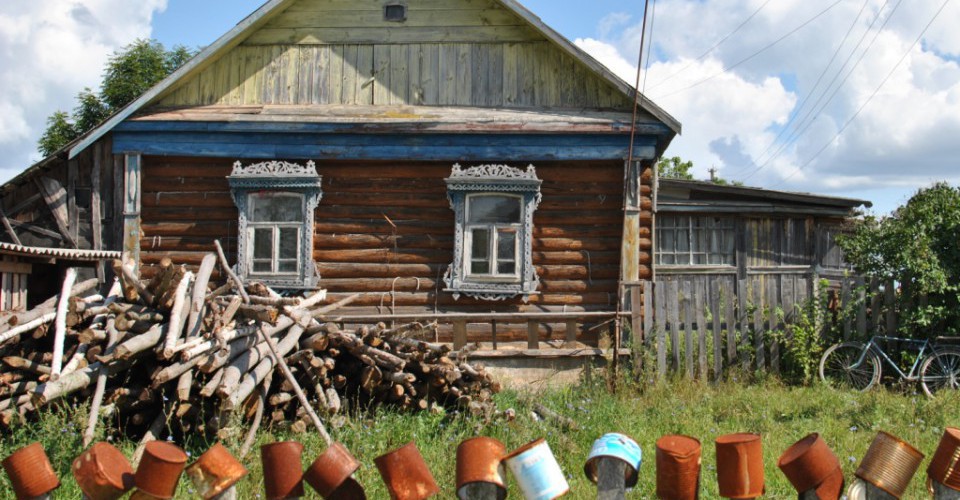
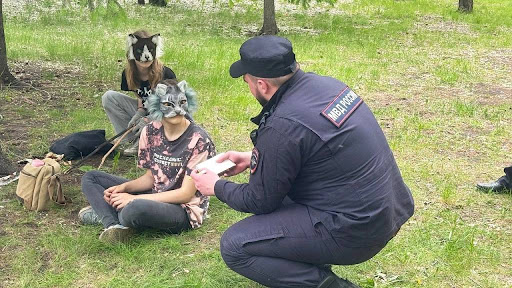
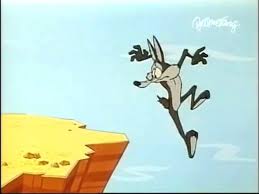
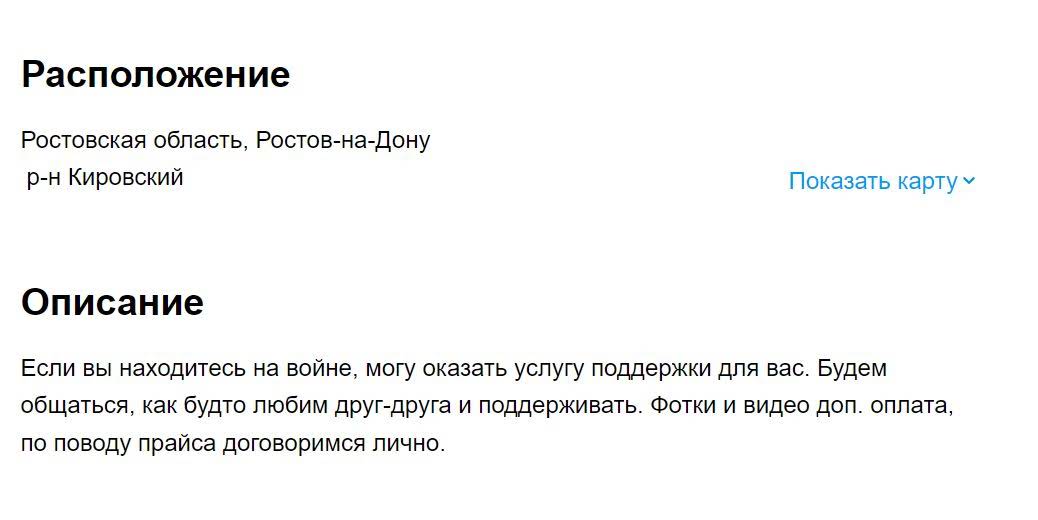
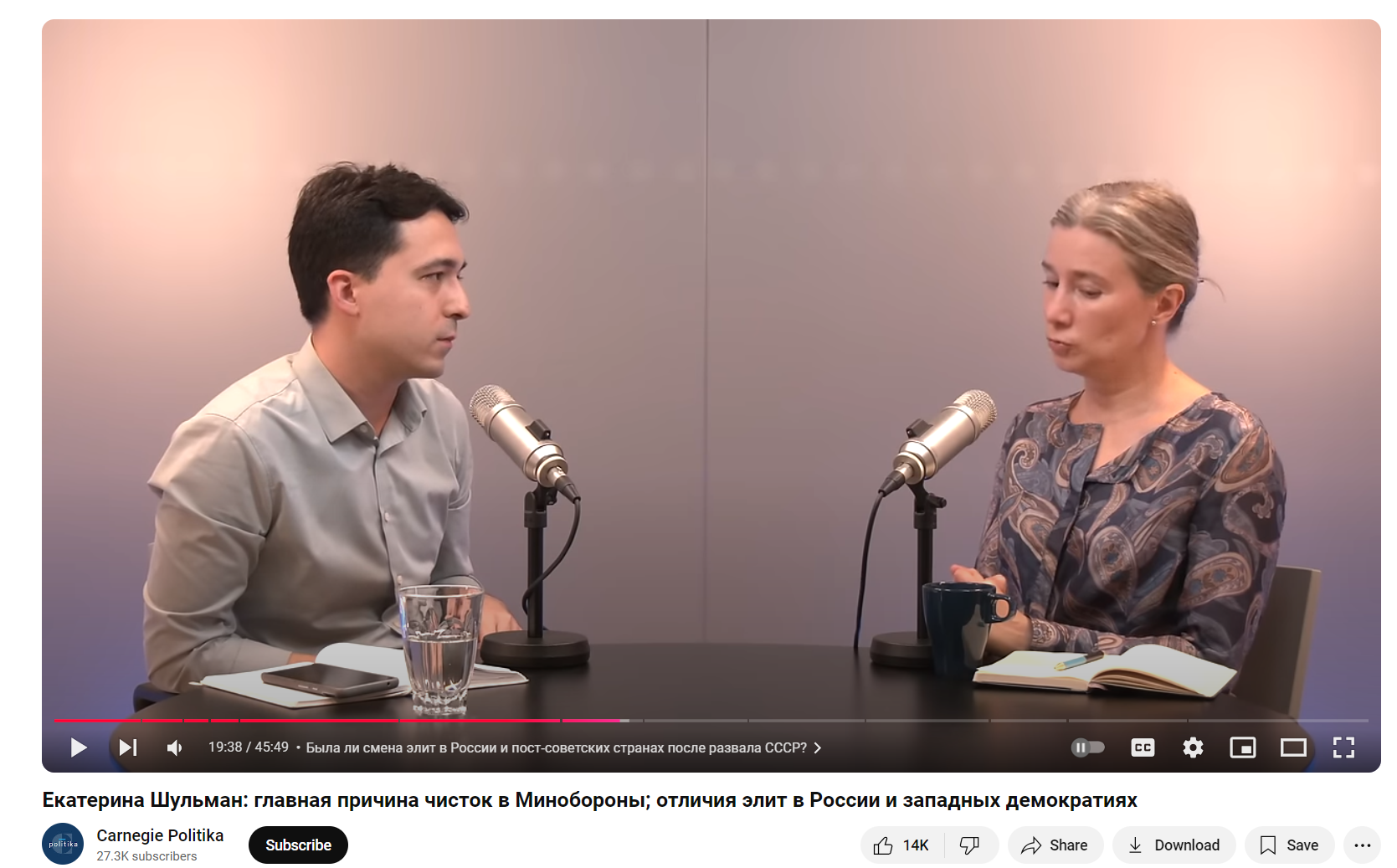
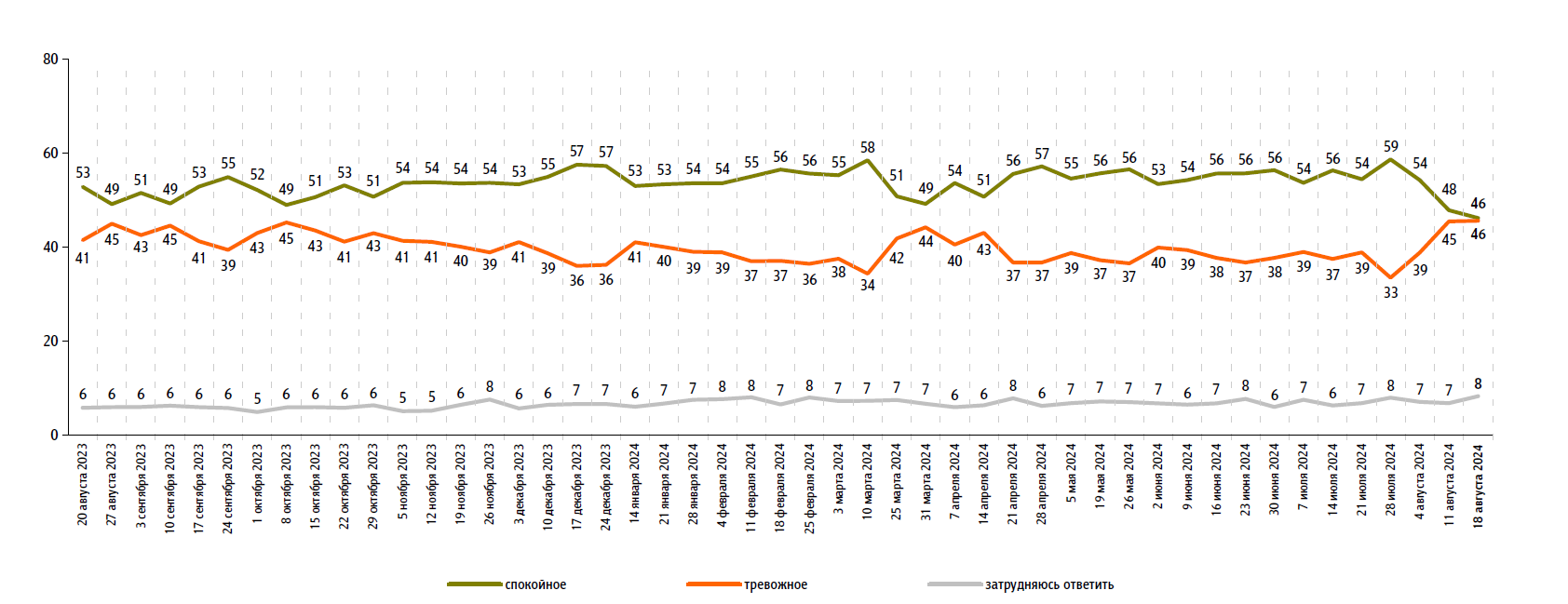
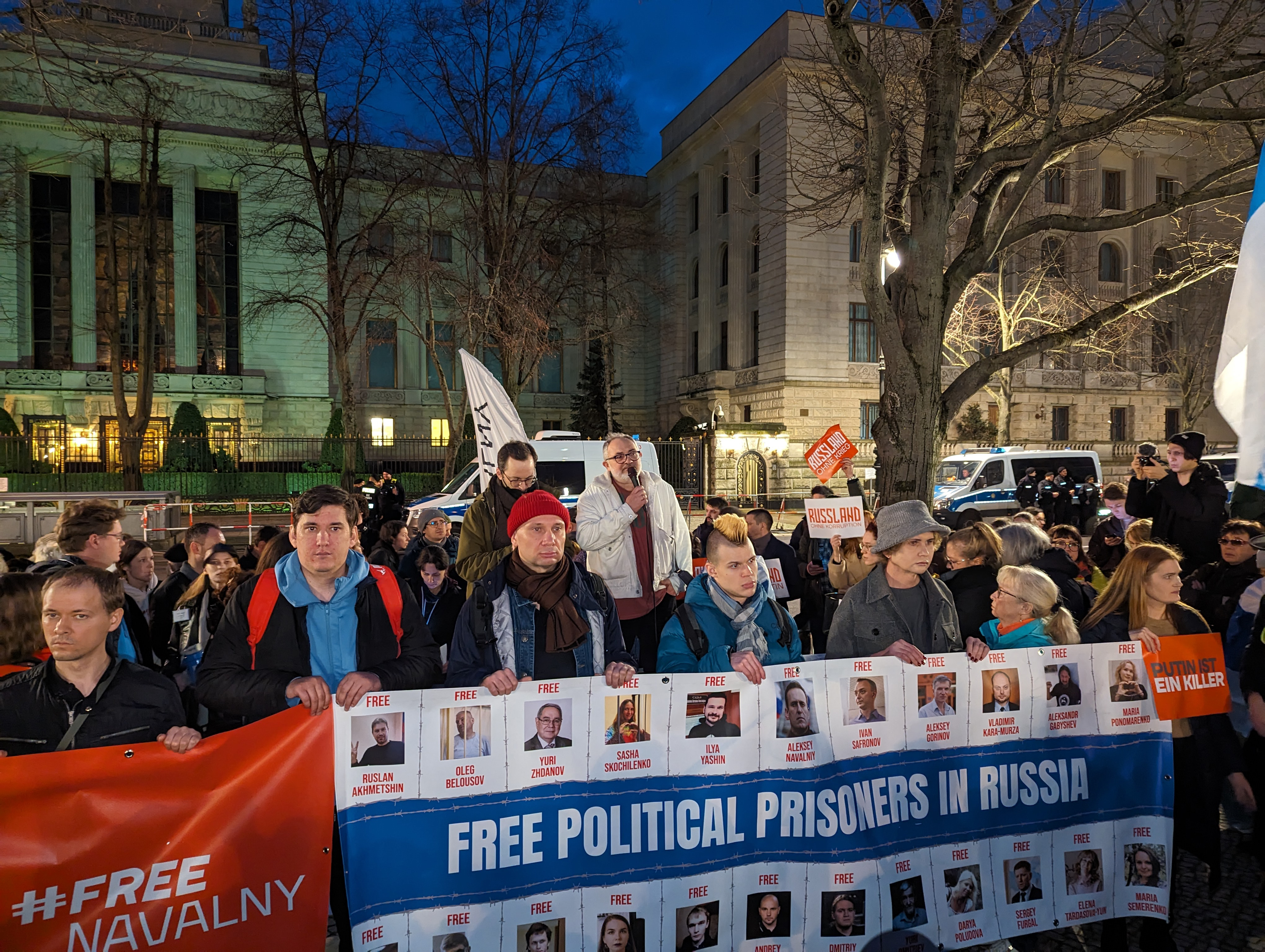


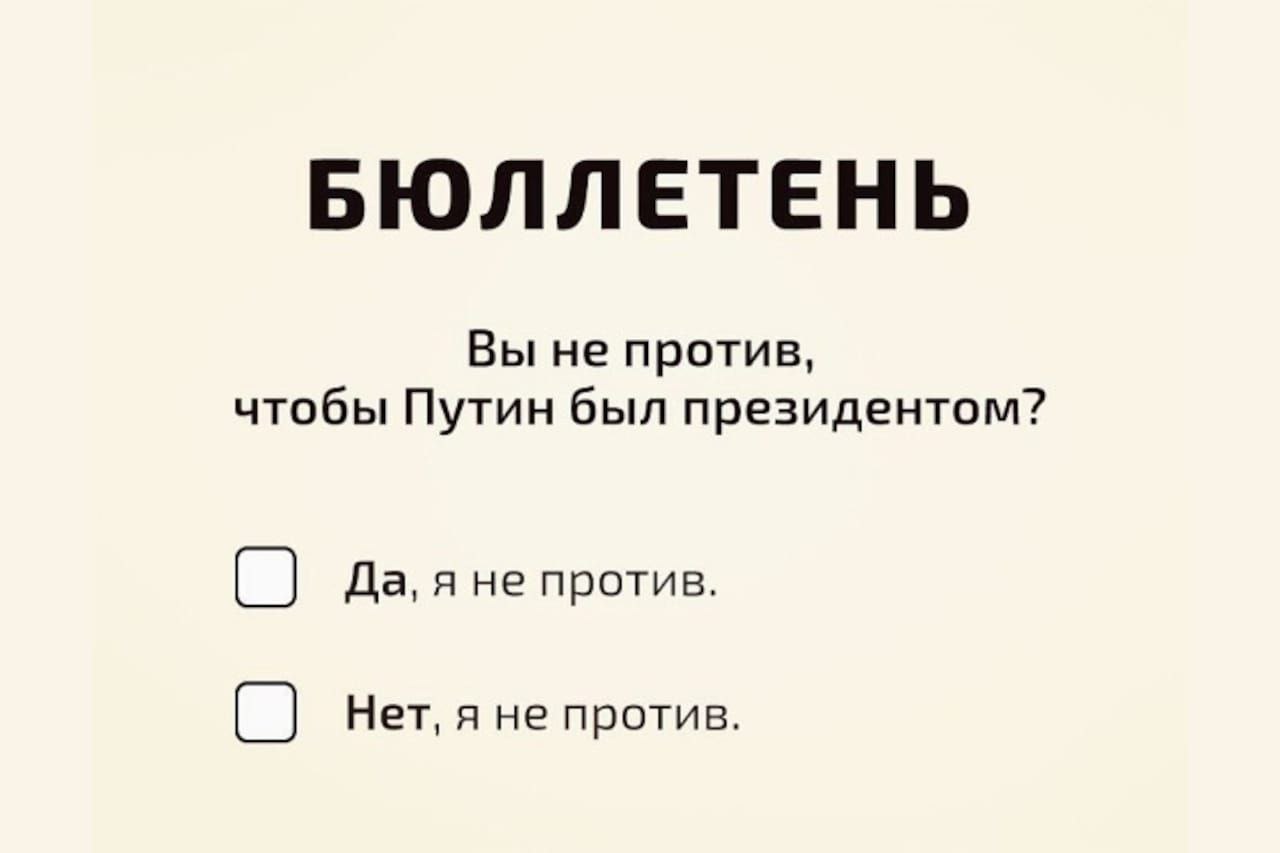

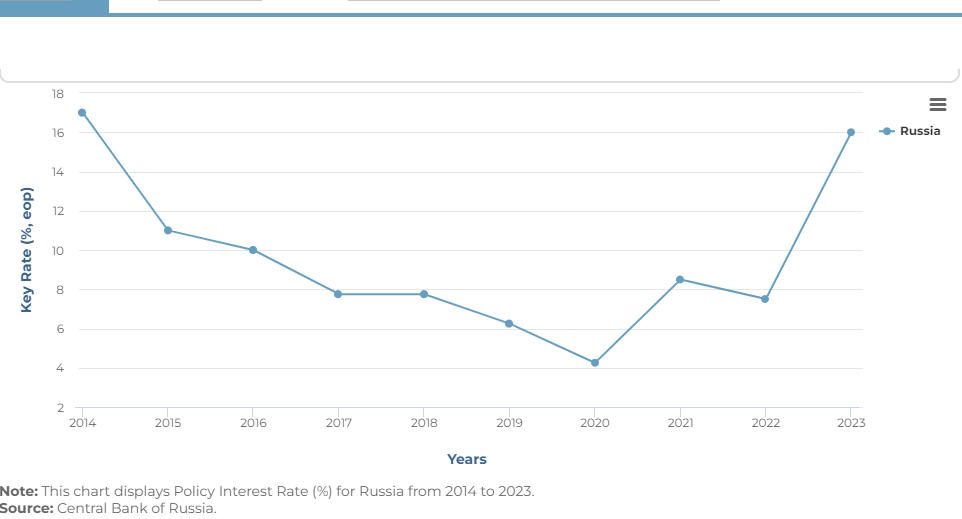
 Postsocialism
