An example of the academic transitional justice literature
Seems like it’s easy to get sidetracked by the goings on of the ‘good Russians’ in exile, and I promise to move on to more worthwhile causes soon, but because the discussion in Riga this week touched on lustration* I think it is interesting. Why? Because real ‘lustration’ is happening now in liberated territories of Ukraine (jail sentence in Lyman for v. low level bureaucrat). The questions of decommunization, collective guilt, and EU-accession (for Ukraine) and so on, are all connected to this topic.
It’s quite scathing in its own right. Here are some snippets that relate to what I have to say. (I edited them down a little, but they are in the order of the original article)
One of the panelists, culturologist Andrey Arkhangelsky, argues that “Putin’s man is a Soviet man without ideological superstructures.” He undertakes to characterize the “ideomania” of contemporary Russia. “Communal hatred for a neighbor. Piss in her soup, relatively speaking, ”says Arkhangelsky.
His thought is picked up by Yan Levchenko (also a culturologist). Waving his hand he proclaims: “War is the realized simplicity of a man who wants to pee in his neighbor’s soup.”
Moderator Morozov admits that he has about the same vision of the problem, and adds: “It is largely an understanding that this Z-ideology is not produced, but it really is in some sense of the word … is “folk””.
If a mosquito bites us, it does not mean that it has an ideology. In the first case, this is the instinct of self-preservation, in the other case, the mosquito just wants to eat,” sociologist Igor Yakovenko addresses other participants from the stage.
This is another form of processing the masses, the population. <…> But, as Yan [Levchenko] rightly said, it merges with the layers of the communal kitchen, the layers of hatred for the neighbor, irrational hatred,” sums up the sociologist. In his opinion, people who should appear before the tribunal after the end of the war are divided into two categories: “werewolves” and “zombies”.
The question that started the discussion – what can be done right now to stop the war – is left unanswered by almost all experts.
“I personally support lustration as wide, fast and harsh as possible,” says former political prisoner Daniil Konstantinov . He admits that he is “close to the style” of former Georgian President Mikheil Saakashvili. The activist believes that a revolution may take place in Russia in the future, after which the country is unlikely to have courts capable of punishing the current accomplices of the war, and suggests creating “special bodies” just in case.
— Daniel, learn the theory of human rights! – Elena Lukyanova, a lawyer and teacher at the Free University , reacts emotionally to this . When emotions subside, Konstantinov recounts his meeting with Vano Merabishvili, the former head of the Georgian Interior Ministry: He says that when we fired a huge number of police officers, we faced claims from our Western partners, who, like Elena, say: “How is it? There are human rights, labor legislation, social obligations. How can you hire and fire people like that?” And then Vano leans over to me and says: “How can they not understand? Well, what kind of people are these? These are the cops!”
It is no less necessary, Gudkov believes, to create a “big media”: “To reach the deep people, otherwise we are working for each other. We convince each other of the need for beauty, democracy and freedom. And the deep people don’t know about it!”
“Maybe we should really create some kind of coordination meeting to develop a plan for taking power in the most reasonable and safe way? Gennady Gudkov finally offers. And he repeats: “We must give the plan to the people.”
Ilya Azar, who missed this speech, remarks dryly: “This is not a plan.”
My initial harsh response is that this talk reveals people who not only know nothing of their own country (beyond their info-bubbles and massively simplistic models of human behaviour), but even worse, do not wish to know anything. The topic of lustration comes up with the ominous option: ‘special authorities’ «специальные органы». instead of courts.
Only Lukyanova and a v. few others come out of this with, not only any dignity, but with even faint stirrings of empathy, interest in understanding processes, or critical thinking. And these, recall, are the great and good liberal minds of the whole post-Soviet generation(s).
Gudkov snr. is at least more or less honest – he repeats what I said *a year ago*: media in exile needs to work out how to speak to actual Russians, and not to itself. But again, this idea is a unidirectional fantasy: Russians for him are a receptacle, not capably of becoming political subjects.
And as for the others, characterizing their countrymen and women as zombies, werewolves and ‘Soviet’ people who like to piss in the soup of their neighbours is really going to win them supporters at home. Arkhangelskii should be ashamed of himself.
Fundamentally, these people are just as bad as Putin [ok, maybe not as bad, lol] because they don’t recognize that essentially their own mindset hardly differs: change only from above, imposed by coercion, viewing people as incapable of political subjectivity, extreme generalization and sweeping measures, the people are mere clay at best…
Of course, my own (I’ll admit, intentionally provocative) response on Twitter provoked pushback from people thinking that I believed existing Russian courts were capable of dispensing justice post-bellum.
The foundation of democratic justice is to be judged by one’s peers. I’m merely pointing out that the main ideas of the ‘opposition’ amount to pretending that transitional justice can be achieved without courts in a make-believe space where they, the good Russians, have complete dictatorial power. This is symptomatic of their fundamental unseriousness and a trap for oppositionists because the implication is they support a Japan 1945 scenario. And this cuts to to the heart of competing ideas about lustration, which are always part and parcel of realistic and achievable ‘transitional justice’ (a big academic and practitioner topic of research). Ekaterina Schulmann is absolutely correct on this: lustration involves compromises. That’s right folks, a first for this blog: me and Schulmann agree on something.
And this is all the more ironic because of the liberal credentials of these ‘good Russians’…. who are nonetheless the first to jettison their principles, including a commitment to ‘due process’. As I also pointed out recently, even the Venice Commission in Ukraine continues to struggle to ensure due process and equality before the law in the decommunization and post-conflict lustration laws going through parliament there. (And part of the conditionalities of EU-accession).
One could do a network sociology of the people in that benighted room in Riga and you would get numerous people who earned good money FOR YEARS from the Presidential Administration and V. Surkov via PR man Gleb Pavlovsky or elsewhere. And they get to decide that *now* they’re the ‘good Russians’? Because the system at whose table they ate well at for years, eventually ate them?
*I’m using the term lustration in this post very loosely and I’m aware I am conflating it with decommunization laws, and prosecution of war-time collaborators. The Russian ‘liustratsiia’ is used by Russian observers generally as a process of identifying, punishing, and barring from public life in the future those guilty of particular crimes during the current period.
Can you spot the barriers to decolonising in the picture at my workplace?
In the previous post I responded to an article that accused ‘Russian cultural studies’ in the West of inculcating ‘imperial’ values in students. As a follow up, the Moscow Times asked me to comment for a piece. They asked: are you in favour of an art for art’s sake approach to studying Russian culture? Should Russian culture be ‘decolonised’ and have any efforts to do this backfired? In your opinion, what is in the immediate future for Russia studies? And how should Russia experts respond to criticism from scholars of Ukraine? Here’s my detailed response. You can read the interview here (when it appears). [still waiting MT! as of 2026]
Art for Art’s Sake
As discussed in my previous post, these questions largely show widespread misunderstanding of what humanities and social science education in universities is for. While students who enter universities might conceivably choose a subject like Russian Studies because of their romantic ideas about its exoticism, they are quickly disabused of this motivation in pretty much any state university programme on either side of the Atlantic. And actually, I think the idea that students nowadays choose subjects based on such notions as ‘art for art’s sake’ is rather condescending. Most students on my courses acknowledge that Russia is an important part of the world, and a constituent of Europe, or European culture, and think that they should know more about it, quite often because of the inadequate caricature of ‘The East’ they perceive in journalistic and public culture in general. To come back to the first question: 99% of university courses abandoned the naïve idea of ‘art for art’s sake’ long ago. The purpose of Area Studies, of which Russian Studies is an small component, is to inculcate (or rather promote and encourage) two things: expert and usable knowledge, wielded by critical thinkers.
It is true that the study of Russian literature was once (long before my time) similar to the study of other literatures: taught from the perspective of a ‘canon’ of universally great writers studied for their intrinsic insights into Western-centric concepts of moral complexity (the F R Leavis tradition), or, in the already anachronistic contrarianism of Harold Bloom writing in the 90s, for “aesthetic pleasure and self-insight”.
It is ironic that these kind of charges should be put to a curriculum of Russian literature in 2023. It says far, far more about those imagining this non-existent Bloomian classroom, than those who teach and study. Bloom was reacting in the early 1990s to the dominant approach of ‘social reading’ that had been operative since the early 1970s and before: that one value of studying literature was to better understand history, society, and the big structures shaping change. If Bloom fought a rear-guard action for essentialism and elitism, the vast majority of literature students had, for generations already, been made painfully aware that the ‘canon’ was itself an artificial construction after the fact. When I studied literature at university from 1992, my teachers were already ‘decolonising’ the curriculum, by reading and analysing ‘neglected’ works alongside, or more often, in favour of, ‘the classics’. I spent more time reading Mary Wollstonecraft than Byron or Shelley, Fanon than Conrad, and South Asian writers than Kipling. Indeed, it was already indispensable to do such parallel reading. When I started teaching Russian literature in 2000 I continued the work of my teachers, selecting works for study which told us something important about Soviet and Russian history, politics and society. And that included works written in the twentieth century which revealed the horrors of the Civil War, Stalinism, collectivisation (and Holodomor), WWII and the Holocaust, and the collapse of the USSR. In educational contexts where it was possible, students read these works in the original Russian language.
Should Russian culture be ‘decolonised’?
Decolonising, along with post-coloniality, and anti-imperialism are all tricky concepts that are quite difficult to use without further definitions. In particular the first term has been strongly associated with recognising the deep structures and currents of racism and their roots in Euro-American culture and society. I work in a global studies department and our courses on Eastern Europe are merely a part of many programmes. Some of our more advanced programmes ‘provincialise’ Europe by studying it and the ideas associated with it alongside, and from the perspective of, scholars from South Asia, East Asia, and South America.
Russia is a ‘special’ case because it is a Eurasian country and can be viewed as a ‘subaltern’ empire – as Viatcheslav Morozov has memorably written. What he means by this is that historically Russians strove to be treated ‘equally’ with other Europeans, but were invariably relegated in a process of ‘orientalisation’ – seen as exotic, backward, and a threat to the more advanced and enlightened Western civilization. Ukraine sat both within this paradigm – orientalized as part of East Slavic ‘non-really European Europe’, and within the Russian imperial hierarchy.
A curriculum proposing deep knowledge about the USSR period and after would have to address both Russian and Ukrainian (and others’) postcolonial identities. Specifically the process of ‘decolonising’ would recognize that the Russian and Soviet empires generated cultural knowledge about Ukraine privileging the ideas and narratives of the centre (Russian-centric, or perhaps in the USSR more complicatedly, Moscow-centric) over those of Ukrainians themselves. Decolonial study of Ukraine would also show how that Russo-centric cultural knowledge was applied to subjugate, mute, and disempower Ukrainian aims to attain statehood and develop a national identity. However, this would need to be done in parallel with recognizing those same decolonising processed as applied to ‘Russia’ (which has never been a ‘nation state’ and is a product of complex processes of internal colonization and imperial expansion), and ‘Russians’, whose own search for a national identity has been stymied by the imperial overlay for centuries.
However, we should not be coy: what most people mean when they say we must ‘decolonise’ Russian Studies is that a hygiene test should be carried out on all writers and thinkers and that those failing this test, from Dostoevsky to Brodsky, should be inscribed in a black book, accessibly only with a key from the head librarian. A keynote to a recent academic conference I attended in 2022 was by a Ukrainian sociologist. His proposal was clear: all study of Russian culture should be stopped immediately. Russian authors and books (all of them) should be removed from European seats of learning until the war ends, reparations are paid, and Ukrainian studies given an equal ‘footing’ with the study (whatever that looks like) of Russia. The academic audience was very receptive to this proposal giving him a prolonged ovation (with me and another Ukrainian being the only people not to clap).
The immediate future for Russia studies? And how should Russia experts respond to criticism from scholars of Ukraine?
Hopefully it is clear from what I’ve already written that literary, culture, and indeed Russian studies also, has been ‘critical’ (of colonialism, imperialism, racism, dictatorship, and totalitarianism) for generations, and in some ways at the forefront of decolonizing and anti-imperial thinking – particularly where is it part of a curriculum (as in my institution) aimed at provincializing Europe. But let me be more specific, the best response to misplaced criticism from scholars of Ukraine is to take action. I take decisions I make about course curriculum very seriously: in my previous position (2005-2016) we collectively taught a course on the ‘cultural politics’ of the former Soviet space. The course was initially conceived by scholars of Georgian, Armenian, and Polish-Ukrainian heritage. In its many iterations, ‘Russia’ as an object and subject of study in the course was positioned appropriately: as merely one perspective. A whole semester was given over to non-Russian and non-Ukrainian topics and another semester saw Russia, Ukraine and the Soviet experience share roughly equal billings. No one would say there was ever an ‘ideal’ balance, nor that such a balance was possible or even desirable (because in some years we were fortunate to have more ‘indigenous’ scholars contribute).
Today I teach a descendent of this course and because I know little about the Caucasus and I have much fewer contact hours, I have adapted this course and now it has roughly equal coverage of Russia and Ukraine since the perestroika period of the USSR. In my view the ‘global’ study of Russia, and any other state, is the way to go forward – contextualising it at every turn. The vast majority of sources on Ukraine in my course are from contemporary Ukrainian scholars. In conclusion, as long as ‘area studies’ exist (they tend to be reinvented every thirty years) there is unlikely to be any other sustainable model (outside tiny ivy-league colleges) for teaching Russia and Russian, and that is true also of Ukraine and Ukrainian.
Seems like you can write any old crap even for EU-funded media now and make defamatory accusations without any repercussions: This latest of many such articles contains baseless and frankly ridiculous statements about ‘Western’ scholars who work on Russian culture. We are all ‘useful idiots’ now.
“Western universities and research centres focusing on Russian cultural studies often end up in a way glorifying the Russian empire both in its Czarist, Bolshevik, and current forms instead of uncovering and condemning the track record of dictatorship, mass repressions, mass murders, deportations, and genocide.”
No evidence is presented to support this statement.
Secondly, in a section attacking Jan Rachinsky of Memorial, the authors write:
“Thus, a weaponised Russian/Soviet culture is being promoted in the West with the help of gullible education and research centres, eulogising Russian culture and raising whole new generations of scholars with an imperial paradigm and mindset.”
The only evidence offered to support this second statement is a link to a Swedish university film club (in Uppsala). This statement neglects to mention that the club makes clear it seeks to contextualize Soviet film in terms of the ‘tragedy’ and ‘pain’ of the Stalinist and post-Stalin epochs. https://ires.uu.se/…/master-programme…/ires-film-club-/…
The two opinion writers have no claim to expertise on the topic of Russian Studies. One has a Law degree from Cambridge and works for USAID, the other is also a lawyer working for a think tank that has no expertise in this area.
I wouldn’t usually pay much attention to this, but the article is published by a relatively ‘mainstream’ EU-affiliated outfit. Many people will see this article. Yes, I know it is an Op-Ed, but even the shonkiest outlet would exercise more editorial control than is in evidence here.
Of course, the chief irony is that Dostoevsky is increasingly taught as a quintessentially European (showing the influence of French and English literature), as much as a ‘Russian’ writer. In the neoliberal university you are MORE likely to encounter him in an English literature department, where he would be presented as a globally-significant author who anticipated some twentieth-century developments in literature. Much, if not most of the Russian context, along with the politics, would be absent completely. The course you study him on might use – *horror-of-horrors* – the politically-incorrect term “The Great European Novel”. (Long ago, I once taught Dostoevsky and Tolstoy along with Stendhal and Flaubert in a course bearing this name).
By contrast it is precisely in a Russian culture or lit course that his views would come in for dissection, contextualization, and implicit or explicit condemnation (as a thinker who became arch-conservative, betraying the progressive ideals of his youth). Should his political views of Pan-Slavism be highlighted? Yes they should. Any Russian Studies course that is not a pure ‘lit-crit’ one, would probably spend some time talking about his political views and how he, as a public figure, represents more than one current in 19-century Russian thought. And how influenced that thought is by European traditions, while not losing sight of its indigenous development.
In a lit-crit course ‘Dosti’, as he’s known by teachers (or it just me?), might be read alongside Tolstoy, who also comes in for a bashing now, despite writing from a (albeit limited) perspective of the colonized well ahead of his time. The New Yorker published a piece with a spectacularly bad-faith interpretation of Tolstoy’s anti-oppression, Christian pacifist and anarchist philosophy. If we transplanted what the New Yorker author wrote to English lit, it would come out equally anachronistically and bizarrely wrong as something like: ‘Shakespeare in Othello ignores the resonance of #MeToo in his depiction of Desdemona’s murder. Shakespeare’s preoccupation with the vegetable metaphors in Othello does disservice to the idea of guerilla gardening for progressive causes.’
I don’t bother keeping track of these ridiculous self-promoting pieces attacking authors dead for a hundred and fifty years or more, but sure as eggs is eggs there will be more of them.
On the one hand Cosmism is a welcome change from the usual, and very lazy analysis that sees Russia as some kind of Thanatos culture (obsessed with death). However, Zizek seems to confuse Cosmism with celebration of death and Thanatos. He completely misses the point. Cosmism is so indelibly linked to the Soviet project of overcoming death for all humankind. I mean, even Star Trek is a warmed over version of ‘dialectical monism’ (things become ‘one’ via change). Keti Chukhrov did a good write up of this in her book. She has a lovely passage on Ilyenkov’s Soviet ‘eternal return’:
if mind is ever the attribute of matter, and matter cannot do without thinking, any form of matter will develop into mind, and since the mind is only the human mind, humankind will always be able to be reborn in other galaxies.
Transhumanism and all those related esoteric Russian avenues of thought are about as far as one could get from relevance to the war. Which is presumably why Zizek the jackdaw thinker pounced on them like shiny baubles. Truly beyond parody.
Thing is, Zizek is just a lazy f*cker. He did a slightly more serviceable job in Meduza just a few days ago. In that piece he makes a good point that directly challenges my thesis about ‘defensive consolidation’ that is hard to counter: “Don’t be fooled by pragmatic arguments about the lack of power of ideology. Most people are cynics who don’t take it seriously. But it still works.” In one line we perhaps have Zizek’s main lasting contribution to marxian psychoanalysis. When we say we’re not ideological, we prove the point that there is ideology. When we say ‘There’s No Alternative’ to the cartel politics we have in the US or UK: that’s ideology. When Russians say ‘My country right or wrong. I’m not for war’, that’s an insidious reconstituted form of regime ideology.
The problem with this? There is no ideology behind Putinism, neither Cosmological, nor Thanatos. We’ll come back to this in a moment.
Zizek wouldn’t be Zizek without a defence of the ‘what if’ federal USSR survived. Ok, this is a short piece, but it still comes out like a very childlike crayon version of some actually quite reasonable alternative history. I guess here I am also disturbed by his typical lack of knowledge about the Bloc he grew up in. In garbled fashion he says that the Soviet multicultural federative union was salvageable/a template for a peaceful post-USSR. One *might* agree with ginormous caveats, but here Zizek has to couch it in terms of ‘pluralism’, precisely the opposite of any conceivable Soviet ontology. This is a red rag to me: read just any discussion of monism and communism in anthropology, I beg you! Dumont, Lambek, Descola, Graeber – all authors I read thanks to my colleague A. K. Clearly Zizek is not a wide reader, I mean, we even have evidence he never really read Ranciere (see the Counterpunch take-down).
Something you always suspected: your favourite lefty uncle is really just the worst liberal simp: “The ideal Russia in my view is the eastern version of the European Union. I think the EU is a pretty efficient system of institutions.” Wow! Screw that sidewise with a big Frontex boat. Phillip Cunliffe and Christopher Bickerton have just written two useful articles in the NLR on the EU as a dysfunctional set of institutions which block real politics: The EU’s power strengthens in proportion to the decay of democracy within member countries, and political legitimacy within it comes from elite supranationalism, rather than democratic representation. The EU is neither ‘federal’, nor ‘democratic’ in any meaningful way, its institutions serve a minority of the Bloc and have been unable to deal with expansion, neighbour-relations, internal imbalances, democratization and any of the challenges of C21 you might mention. And the barriers to changing this are formidable. The irony is that one could envisage a post-USSR democratic socialist federation as a better model than the EU. Bickerton in particular highlights how EU decision-making is usurped by national interests (European Council) in a way that makes the USSR look like a paragon of post-national governance. Zizek provides just one more example of Westerncentric (EU bloc as the only imaginable sovereignty pool).
Okay, on Lenin Zizek is ‘not even wrong’ – Lenin the thinker is of course anti-imperialist, but you can’t defend Lenin just by blaming Stalin as the original Leninist. Once more, this is sub-undergraduate Russian history. Next up, a good bit: who doesn’t like someone taking Chomsky’s bullshit down a peg or too, or ridiculing the disgustingly hypocritical reaction of parts of the German left? I mean, we all do that for breakfast every day.
The useful part of the article is on the coalesce of authoritarian countries and post-fascism. However, of course this ain’t original. Is an anti-liberal alliance possible between Taliban, China and Russia? What about global capitalism? Seems a bit… lacking in materialist analysis. Has he read Klein and Pettis on China? Why would China align with anyone when they can’t even raise internal consumption enough to dream of non-dependence on US demand. The hackneyed ‘BRICS’ is another giveaway. I’m sorry, you what? BRICS is so 2008, you know.
As someone who owns many Zizek books and who paid for hardback copies, I just can’t stand it when he memoryholes his own work: now he calls for war communism without communism – just cowardly! In ‘In Defence of Lost Causes‘ Zizek wrote: ‘between the Stalinist gulag and the Nazi annihilation camp was also, at that historical moment, the difference between civilization and barbarism’. Zizek literally wrote perhaps one of the best non-academic defences of Stalinism as a way of rehabilitating communism. He seems to have forgotten this.
Then there’s some very obvious if simplistic stuff about identity politics in the US being a distraction from the politics of solidarity and opposing fascism. Finally we get one decent point: “Russia is now a very traumatized, divided country. The official discourse is becoming more radical…most people are just scared. Russia cannot be rejected as a country. The Putin-supporting crowd is not even applauding itself.”
Basically Zizek presents a set of arguments indistinguishable from any of my blogs from the last year. He adds: “fascism is a way of avoiding internal contradictions by proclaiming a false sense of solidarity.” “Russia is the most divided society, and if you play the card of national unity correctly, this can be partially disguised. So the term can be applied to Russia, but it is very limited in time.” Like me, Zizek would disagree with the ‘harder’ Russian fascism diagnosers like Greg Yudin.
“The tragedy of Russia is that in the 1990s the West tried to forcefully impose a neoliberal model on it. The direct result is Putin and the war.” writes Zizek at the end. Once again, a bit of a caricature. I wouldn’t be annoyed, but it does disservice to the ‘trauma’ argument with which I agree and which is at the heart of most of what I’m writing at the moment. Again, Zizek clearly didn’t read ANY scholarship on domesticating neoliberalism, or even any serious work on neoliberalism published after 2000. There are reams on this that avoid this ‘victim’ narrative Zizek repeats. Neoliberalism was as much a Russian elite project as anything and even emerges earlier indigenously within Soviet planning.
Surely it’s possible to write a ‘Zizekian’ materialist analysis of the war, and one which takes account of psychoanalysis (ressentiment) and actual history (geopolitical tragedy, actually-existing socialism) without Zizek. It must be tried. And preferably without hiding behind the opaque shadow of a Lacan or Badiou.
Nikolai Fyodorovich rolling his eyes at Zizek’s latest. Borovsk, Kaluga Region.
An interview between Der Spiegel and Lev Gudkov of Levada made for a surprising read. It was framed as another piece on the amoralism and pro-war sentiment of Russians, but the actual survey results contained a bombshell: a third of Russians apparently feel moral responsibility for the death and destruction dealt Ukraine.
However, one wouldn’t realize that from the spin: One of the most circulated tweets read “‘It is disappointing’: Lev Gudkov, head of Levada Centre, on Russian society’s enduring pro-war consensus, the ritualisation of the war, & many Russians’ lack of compassion for Ukrainian victims. Stark results, bracing analysis, depressing read.’
For me, on the contrary the piece’s astounding findings were a very ‘encouraging’ read. Apparently, a third of respondents who sat down with Levada’s field researchers answered ‘yes’ to the question: ‘What do you think, do people like you bear moral responsibility for the death of civilians and destruction in Ukraine?’
Immediately, anyone with knowledge of doing fieldwork whether as a sociologist or pollster would have been gobsmacked. Not by the result (unbelievable as it is) but by the reported methodology. Yes, you read that right: Levada researchers conducted interviews in people’s homes to get this data. Where people sat down with them and not only admitted their country was morally culpable, but also committed serious criminal offences in stating something that could ‘bring the Russian Armed Forces into Disrepute’. It’s hard to believe.
Lev Gudkov – to those who know his history – is not to be trusted as a neutral and objective party especially concerning interpretations. The rest of the interview is a rehash of what he always does and says – make accusations about Russians as dupes and willing accomplices. More on that later. However, he’s got a point. The other ‘data’ still show strong support for the “actions of the Russian armed forces” (almost identical figures for months on end – another hint why survey data is a problem). Younger people are already disengaging from the war completely. TV viewers (as if this is meaningful sociological distinction to make) are much more likely to support the war.
I could write a long blogpost about methodology and so on but maybe I don’t have to? When even survey data does such a great job of showing how contradictory ‘opinion’ is, it does the job for me. We should pay less attention to survey data. Or at least we should be more honest that it’s what we call a ‘construction’ – telling us as much about the framing and political biases of the people administering it, than ‘reality’. I’ve written about this too many times on this blog before, here, and here (one of many posts on Levada) and here.
As I said on Twitter, I feel chagrin that I’m forced to defend findings like this when they kind of prove my long-held view that Levada and polling in Russia should never be taken seriously as a mirror of public opinion, when it shows public opinion doesn’t really exist (Bourdieu’s trademark here).
Of course, this being Twitter, I couldn’t leave it there. Twitter is dominated by nodding donkeys so one has to provoke. I continued my thread about the astonishing question and asked: where’s the Yougov polling on whether British people feel moral responsibility for the deaths of 70,000 civilians in Afghanistan? (sidenote – yeah I know that’s a questionable stat, especially regarding Nato-related, but hey. It would have been better to use the well-documented 7300 Iraqi civilians killed – mainly – by US forces between May 2003 and 2005 – that’s more than 10 a day).
This isn’t about Whataboutery. It’s about sociological thinking. The fact that a third of Russians admit moral responsibility in a state where such sentiments are both criminalized and socially undesirable, is pretty remarkable. Which probably means the poll is flawed, unfortunately. As one observer said: a classic quant question that says nothing. Because the answer ‘no’ itself can mean many things: ‘It’s right that we are bombing’, ‘I didn’t take the decision and cannot do anything’, ‘I feel a member of the in-group and would feel ashamed to answer differently’, ‘there is no destruction so I’ve nothing to feel ashamed about’.
Shall we return to Gudkov? Though the interview is published in English but likely was carried out in Russian, we can still dig into to things that give away Gudkov’s ongoing bias: e.g. he always emphasizes that Russians are not really internet literate and are TV focused, which is a ‘partial’ fact, to say the least. Little things, like Gudkov harping on about how little curiosity or ability to distinguish between sources Russians have, give away the projection – a highly ideological one. “Russians are a dumb bunch of cattle, willingly going into the grinder and lapping up the Soloviev.” Gudkov is just the respectable academic version of Yulia Latynina, in many ways.
Nothing could be further from the truth than Gudkov’s outdated, Soviet-era liberal-intelligentsia view. But even while admitting some opposition, Gudkov goes for the most polemical position possible. One that’s frankly fantastical and fantasist… “No [the war is not questioned], the attacks on Ukraine and the massacres play no role. The Russians have little compassion for the Ukrainians. Almost no one here talks about the fact that people are being killed in Ukraine”… which is kinda not supported by his own evidence. Once more a dead giveaway: “Russian society is amoral.” Absurd statement no sociologist would ever make. But if you know history of Soviet sociology you’ll realize Gudkov made his career on this frankly bizarre statement which was repeatedly disproven by scholars.
Gudkov goes on to make more bizarre polemical statements in the Spiegel interview. He will continue to say there’s massive support for war of conquest… right up to the point where he will flip 180 degrees… This ain’t sociology folks. Parsonian functionalism died for a reason…but lives on in Gudkov: “if I feed my dog later than usual, he doesn’t bark at me, he barks at the corner where the food usually is. It’s the same with these women. In principle, they are opposed to the war, but they can’t say so.” I’m not saying there’s nothing useful or analytically astute in the interview. There is. The point is really that Gudkov lacks any capacity to confront or interpret the massively controversial findings on moral responsibility his own data provides.
And a little aside on the ‘meta’. You find scholars/journalists alike taking Levada at face-value because our ideas of ‘public opinion’ are so impoverished. That this is privileged as knowledge over real sociology is of course a symptom of our times. Academics don’t want to look behind the curtain or criticism because they rely on the polling ecosystem for their research and ‘access’ to the field. Journalists don’t want to criticism because they are also embedded in relationships with Levada – as responses to the article and discussion around it show. Without labouring the point, it’s only people like me, with more rounded, and dare I say it, diverse, sources who are completely disconnected from the polling ecosystem who can afford to be critical. Nonetheless others questioning this production of knowledge are Sam Greene, K. Clement…to name a few writing in English.
Having said that, I can speak from a position of authority about the pitfalls of polling because, alongside doing actual sociology, I worked as a pollster, and for pollsters, and know many survey fieldworkers. See this recent post on the topic. Tldr: polling is a dark art. Back to the actual poll. Some other people commenting on it wondered: who on earth would let pollsters into their apartments for an hour interview about the war? Is this a pool of village idiots and town crazies the Levada Center curates? The mind boggles at the mechanisms to access this ‘pool’ of respondents (once again, if it is a pool and not really random – which I suspect – then that’s a big problem). Another astute observer noted: if this is ‘in person’ interviews at home, who gave access? Certainly not more middle-class people who all live in gated communities. Think about it for a moment: imagine your own milieu: who would open their door, in the middle of the day, to a pollster asking you about a war of conquest that it’s even illegal to name as such, in a society where talking about such a conflict is to put it mildly, controversial? It’s all very very fishy and none of the different explanations are good. Once more giving the word to others is instructive: ‘In a house-to-house survey you most likely have dodgy people (neither working at home, nor leaving the house for leisure) who are simultaneously willing to open the door to a stranger [a big no-no in Russia].’
Look what’s buried at the end of the interview: “The response rate hasn’t changed that much in recent months: It is between 24 and 26 percent. For comparison: In Germany, it is only slightly higher at 28 to 33 percent.” What an endorsement of method! Anyway, here’s a related write up by me for Post-Soviet Affairs of the challenges to gathering data about the war is here and has links to other scholars writing about polling.
Here’s the original data from Levada, which is of course missing many important details of how it was produced and curated: https://levada.ru/2022/12/23/konflikt-s-ukrainoj-otsenki-dekabrya-2022-goda/. The very long and convoluted Tweet thread is here: https://twitter.com/russophiliac/status/1612053135085666306. My initial tweet (‘it’s encouraging that some Russians feel the reality of war’) got 64k impressions. The tweet by another Russian observer but which reinforced the negative framing of the Der Spiegel piece got 277k. Another day, another Twitter. All ‘Russian expert’ accounts tweeting the article repeated the Spiegel headline uncritically: ‘Russians have little compassion’. Mikhail Khodorkovsky’s tweet of the article got… 20k views. Thank heavens for small mercies.
What has Russia’s invasion of Ukraine revealed about the state of Russian social science? Could scholars have better predicted – if not the regime’s decisions, then society’s likely responses? My argument is that while the war has significant implications for all disciplines and methods, the positive outcome for scholarship would be to use it to reflect on making new connections between researchers and ways of thinking about “entering the field.” I will focus only on useful exchanges between anthropology and political science, which have not had much impact on Russian studies.
Political ethnography, or an interpretive political science of Russia, is not just “ground-level techniques of data-gathering,” but a sensibility that considers “insider meanings and complex contextuality” (Schatz 2009, 316). The methodological shock may be the greatest: to the blunt and epistemologically unsatisfactory nature of a key instrument – survey methods. To put it mildly, surveying as a preferred entry-point to data collection – along with secondary analysis of publicly available datasets – has crowded out other approaches, even as more interpretive methods have become more widespread in political studies more generally. Polls – far from being a describing reality – are a “performative activity that uses representations strategically for the restructuring of the social field” (Yudin 2020, 5). The attention to polls indicating high levels of support leads to Western coverage of “bad and compliant Russians,” which in turn leads to a self-fulfilling prophesy of what I’ve called “defensive consolidation” – in contrast to “rally-round-the-flag” effects. As reliable and unfiltered access becomes a fraught issue, whether to survey responders, focus groups, or elite actors, the war presents scholars with an opportunity to reflect on questions of what data collection means, and on better communication between quantitative and qualitative scholars. Similarly, it forces us to confront the extractive and colonial nature of knowledge production; the war reveals how social science has always relied on, but not really acknowledged, the labor of native scholars, but can no longer ignore indigenously produced work, particularly qualitative research.
Rosenfeld (2023), comments that response rates to Levada have not changed since the war began. She cites Shen and Truex (2021), who examine non-response rates to sensitive questions transnationally and observe that authoritarian systems do not necessarily differ in response rate from democratic states. However, using the Levada data Rosenfeld refers to – the only publicly available data we have in Russia – response rates are only around 20–30%. Indeed, a recent report by Levada on survey methods during the war is itself a reactive publication, produced precisely because of widespread dissatisfaction with transparency in Russian polling, and the close relationship of most pollsters, even Levada, to the authorities. The point is that the war allows us to spotlight what have always been issues of representativeness and validity – the stubbornly low response rate: between 20% and 30% (a falling trend since the war began); that a significant majority refuse to participate (60%) in polls; that younger women are much more likely to refuse participation; and that nearly half of contacts would not even answer a poll about trust in the president prior to the war (Agapeeva and Volkov 2022). One could go on and examine the closed ecosystem of polling and academic survey administration and how it perpetuates a lack of transparency. Pollsters in Russia admit to tailoring results to client expectations (including, in academic contexts “data cleaning,” inconsistencies in panel composition). These issues are compounded by the dangers of organizational incest: all the big survey outfits contract out their work to a small set of field researchers whose field practices are open to criticism. Sub-subcontracting in data gathering for academic research whereby a commissioning academic takes on trust the collection and processing of raw data via an intermediary who in turn contracts out the work is a situation open to abuse and fakery for material gain.
…
The point of immersive “life-worlds” or “culturalist” approaches and methods is not to downplay or avoid theorization or generalization between cases, but instead anchor them to social reality. Can phenomena such as decisions to start aggressive wars and broad societal acquiescence to such decisions be explained by theories that are universally applicable? Are the mechanisms of consent and accommodation of a society to a ruling group possible to uncover using universal models of human behavior such as rational choice? These are the epistemological and ontological dimensions of studying Russia now that divide many political scientists from anthropologists. A version of this divide was described by Aronoff, Myron and Kubik (2013) in their call for a “convergent approach” between the two disciplines. Using the example of Homo Sovieticus, they demonstrated the value of ethnography to verify, or in their case reject, assumptions that sometimes guide entire research projects in political studies.
In justifying political ethnography, they drew attention to the need to balance materialist institutional perspectives with symbolic-cultural approaches – something that looks highly relevant to the current conjuncture. If politics is partly locally produced, requiring attention to concrete details of interaction, then political scientists, particularly positivist-oriented ones, should become “hungry” for more ethnography (Aronoff, Myron and Kubik 2013, 25) to triangulate their data. Process tracing – itself a positivist methodology – via long-term observation and immersion need not exclude the search for correlation; interpretation need not deny social modeling that accepts the existence of objective social facts. Ethnography is well suited as a bedfellow to game theory approaches, and the study of power and questions of structure and agency, but this requires political scientists to recalibrate some of their assumptions about the interplay between formal social structures and informal social organization (Aronoff, Myron and Kubik 2013, 33).
A sociological and anthropological imagination worth its name draws on the founding principles of embeddedness of observer and observation, but is not just “ground-level techniques of data-gathering,” but a sensibility that considers “insider meanings and complex contextuality” (Schatz 2009, 316). War and autocracy, along with the disturbing calls to “cancel” Russia, only intensify the need for the ethnographic study of her politics to avoid the simplistic condensation of polling artefacts we see translated into dangerous public discourse in the West about what Russians think about the war, Putin, and Russia’s place in the world.
I just got back from CBEES conference – a really positive experience for me because I was part of a panel that was mainly about Ukraine and which was able to ‘provincialize’ Russia, and Russo-centric approaches to the war. This is the kind of academic practice that I feel scholars should be engaging with. So for example, while my own work remains focused on Russian society, I learnt a lot about civil society at war, authoritarianism, and activism by listening to my colleagues talk about Belarus and Ukraine.
Provincializing Area Studies is an idea from Dipesh Chakrabarty who made famous the concept of ‘provincializing Europe’. It doesn’t have to be the same thing as ‘decolonizing’, but certainly CBEES was successful in the former. Our own panel was called “Exaggerated Structure, Exalted Agency: What Russian and Ukrainian Studies Failed to See before the Invasion” and was planned and led by young Ukrainian scholars. Ukrainian sociologist Anastasiya Ryabchuk of INALCO Paris and Kyiv-Mohyla started us off with a critical view of International Development work on the frontline in Donbas. Among other questions, she asked: “How to continue fieldwork ethically when as researchers we are mainly in safety?” Some groups will be very much over-researched and others invisibilized and this risks doing more violence. It will also be a challenge to rebuilding solidarity after war given divergent experiences of it.
Finnish researcher Emma Rimpiläinen, now based at Uppsala, has done fieldwork with Russian and Ukrainian speakers in Donbas and elsewhere. Her paper was about knowledge production of the war since 2014 and the divergent experiences among IDPs and others. She was able to tracing different types of explanation for war that people use, depending on their experience and their locality: the geopolitical frame; perspectives on Ukraine’s internal politics; The economic frame about the importance of industry in Donbas; Seeing the conflict through a local elite frame; and finally using tropes of ‘purging’ of particular types of identity. Emma adds a new meta-level perspective on ‘conspiracy thinking’: everyone thinks it is others who are ‘zombified’ by propaganda, it is others who have a ‘vatnik‘, or ‘soviet mentality’. In Emma’s research these claims of zombification have classist overtones.
Denys Gorbach of Sciences Po’s Centre for European Studies and Comparative Politics in Paris spoke about the multiple positionings and negotiations of identity that labour activists in E Ukraine use vis-à-vis the now hegemonic ‘national-populist’ position. They both resist and manipulate it to serve their collective struggle for labour rights, for example by leveraging their status as veterans of 2014-15 flighting against Russia. Denys was forthright on the collective narcissism of Ukrainian liberal public sphere in self-mythologizing and how this projects an imaginary unified Ukrainian public. He asks: “What about those who are silenced in the public sphere? How do they relate to the world of the political in a Mouffian sense? In Denys’ view scholars need to challenge the stereotype of ‘apolitical’, ‘slavish’, ‘passive’ – forms of self-orientalizing discourse in East Ukraine when this was place of an immense strike in 2017 and the “fortress of the mobilized workers”. Denys uses a telling turn of phrase that many in Russia would recognize: “the facebook people” to characterize how some Eastern Ukraine unionists view the liberal metropolitan Ukrainians.
Taras Fedirko of Glasgow by way of St Andrews recounted some of his findings about informal and formal organization of armed groups in Ukraine. Once more he challenges the view that conflict and violence can be monolithically grasped. Violence is organised in hybrid ways and the role of nationalist civil society changes under conditions of militarization where once more, there is a divergence in expectations and understandings between ‘civil’ and ‘state’ actors. The nationalist forms do not replace the state, but supplement it resulting in formal-informal coordination in a manner that has long frustrated scholars who labour under a western-centric view of ‘state capacity’ and institution-building.
My paper combined various versions of things I’m writing at the moment. Based on my long-term fieldwork among union organizers and more recent work with socialist and eco-activists I reflected on how the war puts into perspective the nomadism of political activism in Russia and how networks are sustained when they come under different pressures, not least of which is the dispersal of activists away from Russia. Based on Charles Tilly’s use of the ‘catnet’ concept (categoriness = shared ideological framing, and netness = the density of networks). I argue that the ‘experiential entanglement’ of activists is much more ‘elastic’, which should prompt reevaluation of activism as a sociological phenomenon and bring us back to Tilly’s original problematic: what really are common objectives and interests? How to deal with the slippage between ‘collective action’ and ‘collective behaviour’ with regard to political contention?
Finally Volodymyr Artiukh of Oxford took the stage with a high-level analysis and survey of techniques of authoritarian control in Belarus and the new quality of postsocialist authoritarianism. He spoke of the LNR as Belarus’ Guantanamo and the Ryanair hijacking as examples. “Violence works and it is more efficient than we think it is”. Artiukh argues that we need to examine the ‘sociological imagination of reaction’: not casting the war in terms of Russia’s defensive geopolitical considerations based on delusions of elites, but on internal elite reaction that led to aggression. Artiukh’s research makes reference to Steve Reyna – who offered a model on how ‘delusions’ of small elite circle are spread in broader society. First elites talk themselves into war, then inject their delusions into circulating ideologies. ‘Sociological imagination of reaction’ is part of this spreading. This general observation can be extended to the post-socialist context where elites are both rational and irrational, capable of learning, but also burdened with a particular construction of reality. Lukashenka’s Caeserism via passive revolution and preemptive authoritarianism (after Vitaly Silitski) made him the pioneer of authoritarian populism and Putin learned from this. The “Special Military Operation” in his imaginary is exactly that: the suppression of an uprising for countries under ‘Putin’s protection’, hence the attempt to continue the fiction of partial mobilization, and paramilitary action as witnessed in the role, regardless of the reality, imputed to the Vagner Group rather than the Russian Armed Forces, for example.
Our 6-speaker, two part panel was very well attended and audience asked good questions. It was humbling to speak alongside some of the best sociological and anthropological researchers from Ukraine at this time. And also a reminder of why these researchers – now at Oxford, Glasgow, Paris, alongside other Ukrainian researchers, need sustainable sources of support for their work and more than just temporary funding.
Moscow, October 2022. Graffiti on fence reads: ‘There is always a choice’.
A curious fact: the most demotivated and depressed of all those opposed to Putin’s regime are among the formerly most politically-engaged activists. These are the people who devoted their lives to causes like labour rights, environmentalism, and socialist alternatives. The people I talk to for my latest book project.
I talk to them, in person, or now more likely on Telegram and they say things like: ‘Russia is now a fascist, or proto-fascist state. The only option is emigration. We lost the country.’ Most of all they fear not mobilization, although there is evidence forced mobilization is happening of oppositionists and that it has a high chance of resulting in death. They most of all fear the long prison sentences for anti-war speech and see no point in sacrificing their lives futilely.
Why are they so pessimistic? They believe public space is completely closed off. They feel risks now are too high ‘we are being hunted’, one said, and deleted me from their contact list. Perhaps most significantly, they believe they lost their networks – built up over decades of nomadic opposition. So much has been written about the potential of internet and smart-phone technology to facilitate social movements and change, but with the fast learning of the Russian techno-security apparatus (partly thanks to Covid – Galina Orlova and I wrote about it here), activists are often so paranoid they break all electronic contact with each other.
Delicate webs? Easily broken? But until the invasion of Ukraine they had survived the depredations of Putin’s securitizing efforts to break them. The open war against activists can be traced back to the authorities’ abuse of Article 228 of Russia’s Criminal Code to imprison journalists and activists. This anti-narcotics law was an undisguised weapon to imprison opponents. It is even known as ‘the people’s article’ because so many young people are imprisoned under it. Some examples here. But before the war, threats like arrest on planted drugs charges did not break activists. In my experience is was only after repeated arrests for protests that some activists stepped back, but even then they carried on in other ways.
So people are scared and demotivated. But broken networks are actually a sign of the relative success previously of decentralized and horizontal connections between people opposed to Putin; people who maybe met in person once a year could successful collaborate in opposition despite being thousands of kilometres from each other in Nizhnii and Piter, for example. I write about one case like this in a forthcoming book on activism, co-edited with my colleagues Andrei Semenov and Regina Smyth. Also, ‘weak’ netness, but strong ‘catness’ (strongly shared opposition) can mean that, like in the brain after damage, connections can spontaneously repair and reform. Everyone strongly anti-regime knows the half-dozen activists who were active in the places I did my research. They can find each other again – if they didn’t leave Russia. If they can come back. If they won’t be sent to prison. It’s easier to imagine the end of the world right now, than the end of Putinism. But we have to try. These are some of the questions my book project on micropolitics engages with – what happens when everything except the most micro of politics is impossible? How does netness sustain itself? How and why are Russian activists ‘nomadic’? Yes the nod to Deleuze is intentional.
Summary. Montenegro. A random company of Russians and Ukrainians goes to make a ‘peresechka’, or visa-run – to cross the border after a month in the country, so as not to violate migration rules. They talk about everything in the world, argue about the war in Ukraine.
Biography of the author. Igor Maslennikov (Moscow). Texts appeared in the magazines “Volga”, “Youth”, “Dactyl”, on “Literary Radio”, etc.
In an eatery at the exit from the Montenegrin village, a group with two children sat at one table, and at another table – an old man in a branded jumpsuit of a gas station. He had worked the night shift and was returning home. The eatery had just opened. There was no one else inside but the old man in overalls and the owner.
The old man was completely gray and with a mustache. Crossing his legs, he smoked a cigarette. He was one of those people who looks good smoking. These people seem to have been born with a cigarette, smoked all their lives, and tobacco smoke never harmed them. While the four adults and two children were waiting for sandwiches and coffee, the old man took three or four puffs, no more. He shook the cigarette over the ashtray and looked at the kitchen, then at the others, then at the road.
Are you Russians? the old man asked the whole company at once. His voice was deep and strong, not old at all. The woman laughed and said that someone was Russian and someone Ukrainian. Dobro, as it should be, said the old man smiling. The war is one thing, and ordinary people another. My family was expelled from Bosnia when the war started there. Then we survived another war. My wife and I have been living here for a long time. The children went somewhere. It’s now a lot of tourists here, and there used to be wilderness. That’s how it should be, politicians do their own thing, ordinary people do their own. And the war is nothing fun, so the old man finished. He spoke half Serbian, half Russian, simple and understandable. He shared his experience. He was not an urban madman, did not bother the company, but simply extinguished the cigarette, wished them do viden’ia and left.
The company was going to make a crossing – each month to cross the border of the nearest country, so as not to violate migration rules, and immediately return. There were six people in the car.
There was a couple from Odessa in the group and their adopted daughter. The husband was driving the car. He had made a deal in Odessa that he couldn’t finish and owed money. The family fled first to Spain, then here. It was all before the war. Now they were renting a part of a house from Montenegrin pensioners, the man was taking people across the border. This time the whole family, except for the small child, had to make a crossing. And they left the child until the evening with the owners of the house.
In the back seat was a young divorced woman from Krasnodar, with her son. She had lived in tropical countries for many years, and she loved being called a digital nomad in conversations, but after her divorce, she didn’t really date anyone, and sometimes she thought that she would continue to wander around the wide world, through beautiful seaside towns, until old age.
A journalist from St. Petersburg was traveling on the front passenger seat. A few days before the war, he flew to Russia to take possession of an apartment that belonged to his deceased father. He died just before the Covid epidemic, and the journalist was only now able to take ownership of the apartment.
The company bought their sandwiches and paid. The car drove to the exit of the village, along a narrow street with empty shops. Dusty windows were covered with children’s fingermarks. The street was divided by a small concrete canal. The driver stopped at the last city traffic lights. On a pedestrian island, a girl with a backpack yawned and blew bubble gum. The bubble burst and covered her lips. The girl sucked it into her mouth, continued to chew lazily. She stood and waited for a traffic light, like the company in the car. She probably was going to school.
Everyone in the car thought about the words of the old man in the overalls. He spoke as if the war was something very ordinary and there was no need to be offended by each other because of it. The war will definitely take place, whether one wants it or not, the old man thought so. Nothing will ever change. If there is no massacre in Montenegro now, it is only because its time has not yet come. The old man is used to war, but they are not. War appeared in their lives for the first time.
A drunk walked along the right side of the highway. He swayed and took a step towards the road. The driver turned the steering wheel sharply to go around him. The drunkard, without turning around, managed to show with his palm: everything is in order. His neck was red. Locals go to cafes in the morning to drink coffee with brandy, the driver said. Cafes for locals had names like “Internationale” or “Elite”. These were located not at the embankments, like cafes for tourists, but at the corners of houses, next to the ordinary entrances. They were small and looked like pubs. Although in both the coffee tasted like a mixture of robusta with ashes and earth. Men and old people began to drink in the morning. They sat in smoky rooms, smoking, watching football and discussing the war. It fascinated them, and the words “Russia”, “Ukraine”, “NATO”, “atomic bomb” were constants. Then they dispersed through the streets or went to work. For the first weeks in cafes, hairdressers and in the market, everyone just talked about the war, but later the topic got stale.
I don’t know about you, but it seems to me that it all looks like Crimea, the driver said. And you? he asked the journalist. He did not hear. The driver’s wife asked him again. Yes, it seems, the journalist said, these dry mountains, and the color of the sea, are similar in many ways. In my opinion, the sea here is turquoise and more transparent than in the Crimea, the driver’s wife said, even than in Simeiz. We went hiking in these places, said the traveler from Krasnodar, caught four crabs and boiled them with bay leaves. They even had caviar. We also found a cuttlefish on the shore, and she was releasing ink. Either someone caught her and did not take her away, or she herself threw herself ashore, we did not understand, the traveler said. The girl in the back seat was silent all the time.
The car drove through coastal resort villages. They were located on narrow strips of land between the mountains and the sea. There was a thud from under the car. It was tapping at the front left wheel, somewhere at the feet of the driver. The driver stopped at the nearest layby; the passengers went out to warm up. In a busy place on the embankment, where people were already walking, a gypsy boy was singing and drumming on a plastic bucket, and in front of him was a cardboard box of roses for sale. The driver used to see the boy in this place every time he drove people. This is the village of millionaires, said the driver, looking under the wing of the car. Real estate here is very expensive, from a million and more. They probably overpay for exclusivity, said the traveler from Krasnodar. She filmed the gypsy boy on her phone. As for me, it’s nothing special, said the driver’s wife, the village is like a village.
The sun came out that day, and the sky was cloudless. Everyone was in high spirits – as if everything could be done, done in time and corrected.
Before that, it had rained for several days, and it was said that it would continue until the end of the week. The clouds that crawled from the mountains to the village covered the roofs of distant houses and even the top of a tower crane. On the outskirts of the village along the railroad stood dry thickets of last year’s bamboo. In the cloudy twilight, the gray stalks, two or three times tall, looked like ghosts. Because of the rain, the gypsies stopped standing at the doors of the supermarket. Gypsies have always been on their own. Their children played volleyball outside public buildings. Adults stood in a semicircle under a tree and showed each other some things stacked on an electrical cabinet, or two of them rode mopeds, or simply smoked for a long time on the sidelines and looked somewhere. Gypsy old women sat on the pavement and begged in a hoarse voice.
The Petersburg journalist had not been able to sleep last night. He walked along the embankment, and then sat for a long time on an overturned Coke box. To the right was the black silhouette of a large pine leaning over the sea. From the outlines it was clear that it was a pine tree. It was raining over the sea, the sky was covered with a slanting black curtain. The waves rolled and rolled. Since the war started, I can’t be happy about anything, thought the journalist. It’s like when I had covid and stopped smelling. Same thing, only now I don’t feel any joy. In addition, the journalist thought that the lawyers who dealt with the inheritance case wanted to deceive him. Because of this, he was also worried.
The traveler from Krasnodar woke up in the night from some noise, muffled repeated blows. She got up on the bed and saw that the curtained glass door to the balcony was filled with yellow light. She opened her mouth in fear. These are explosions, rocket strikes, the woman thought, and already something is burning. Or is it the warships that I saw on the pier, they shot down something, and it fell and caught fire. This country is part of NATO, which means it is a world war, she thought. Yellow light flickered through the curtain. A minute later she came to her senses. It was a noise from the broken cornice of the neighbors roof upstairs, and the light came from street lamps across the road. The traveler’s son was sleeping on the couch with his laptop on.
The family from Ukraine woke up to their adopted daughter crying in her sleep. She lay in the children’s room and could not explain to them why she was crying. They had taken her from the orphanage before the birth of their son. They resigned themselves to the fact that they would not have their own children, but the woman was able to get pregnant after another IVF attempt. The adopted daughter had a slight disability and did not speak well. After the orphanage, she remained withdrawn and irritable. She did not feel like the daughter of this couple. Rather, they were her older friends, not very affectionate and fair. She felt that they had cooled towards her after they had a child of their own – especially the foster mother. They planned to make money and try IVF again. The woman wanted another child.
The driver walked around the car and shook the wheel with his foot. He didn’t find anything strange. The car went further along the serpentine. The girl in the back seat folded her legs and braced her knees against the front passenger seat. Her knees pressed across the chair onto the journalist’s back. He looked at the girl in the side mirror.
From here, plus or minus, seven hundred kilometers to Venice, said the driver’s wife. We’ve already traveled over a hundred. Croatia, Slovenia – and then Italy. And what about the situation with leaving Ukraine for other countries, the traveler asked. The driver’s wife said that those not liable for military service can leave even with a photograph of any document. It will soon be a month since the war began, she added. Let the politicians figure it out and end this war, the traveler’s son said from the back seat. Politics is when people try to come to an agreement, the driver’s wife said, while we are bombing peaceful cities. We are not politicians or military strategists to decide, the traveler’s son said, it remains to be seen who is right and who is wrong. Everyone thought that the boy was retelling the words he heard from his mother. The traveler from Krasnodar realized this and blushed. If civilians are dying, it can’t be true, the driver’s wife said. This is because the Ukrainian president hides military installations among civilians, the boy continued. He stammered but continued to argue. Is the art school a military facility? the driver asked. He and his wife felt angry, although they did not show it. The perfect aiming weapon has not yet been invented, and the Ukrainian army is also bombing civilians, the boy said. All this will also have a terrible effect on the economy – the traveler from Krasnodar tried to change the topic of conversation.
Again there was a knock from under the bottom of the car. The driver pulled over to the side of the road and the passengers got out to get some air. The journalist stepped aside and leaned on the protective railing in front of the cliff. On an empty beach, a pile of dry branches and debris smoldered. Waves rolled on the pebbles, and the foam extinguished the embers. The pile smoked. The disabled girl stood next to the journalist and also leaned on the railing. The driver took out his phone and called the agency where he rented a car. He asked if the car might be out of order. It recently had an MOT, they told him everything should be fine.
Then the serpentine began again. There were snow caps on the tops of several mountains. Talk about the war did not spoil the cheerful mood. It seemed to everyone that they had been driving along this road for an eternity. The driver was glad that he would earn sixty euros for the trip – unless the customs officers asked for a bribe. The journalist thought: I want peace in Ukraine, but I also want to live in a warm country like this, and not be lonely, and have a girl nearby, and have a more interesting job than I have now. The traveler was thinking about how to exchange phone numbers with the journalist. She examined it while still in the diner. He was a little weird, but nothing really. She wanted to talk to him when he stood at the railing and looked at the sea, but the disabled girl had already approached him.
The boy in the back seat got motion sickness. The driver’s wife offered him an apple, but the boy shook his head. The window was opened for him, and a fresh breeze drove the air-conditioned air out of the cabin. Usually it makes me feel bad, said a traveler from Krasnodar, and then to her son. For the vestibular apparatus, lateral vibrations are the worst, the driver said.
On one hill there was a weather station with a high antenna, and below, in the valley, one could see an ideal farm, divided into plots by a fence. One plot is with olives, another is a sheep pasture, a third is with a barn, and so on. On another hill stood an unfinished three-story concrete box. Goats jumped on the stairs, as if up a cliff. Beyond the next hill the sea appeared again. When the view of the sea opened, everyone’s breath stopped again, although they had seen it a quarter of an hour ago. The driver swerved to the left at a sharp bend. All the nuts that held the front left wheel were sheared off at once. The wheel rolled to the side. The car jumped the barrier and flew off the cliff. It fell on its roof, rolled over on the ground and stopped.
Passengers were killed instantly when the car hit the rocks. The driver, hanging upside down on his harness, unfastened himself, climbed out through the broken windshield and crawled further along the sand, dragging his legs behind him. He turned around, looked indifferently at his wife and other passengers and collapsed.
The car didn’t catch fire or smoke. It was completely invisible from the road. The goats that were grazing between the rocks fled from the roar, but soon grew bolder, sniffing the overturned car, began to pluck the grass and the driver’s shirt. In the evening, the goats themselves, without a shepherd, returned to the pen.
The people from the car were missed only a few days later, and a week later they were found. The mechanic who worked on the car did not fully tighten the nuts on one wheel. As he tightened them with a pneumatic wrench, his phone rang in his pocket. After the conversation, he forgot about the half-tightened nuts and took up another matter.
Understandably, right now, with Russia’s annexation of the occupied territories of Eastern Ukraine, all the focus is on the implications for the war, for Western support, and for escalation from the Russian side. As an anthropologist working on Russian politics and society, my own interest is in how the administration and governance in places like the so-called Donetsk People’s Republic reflects a possible future for the whole of Russia. We could call it ‘North Korea-lite’. But like all diet drinks, the satisfaction of the original is just not there.
First, some quick caveats: Russia is not, nor it is likely to become, a full-fat dictatorship. Right now, there’s a lot of debate about how constrained Putin is in his actions – both relating to the conduct of the war, and to the ‘home front’. There’s also, understandably, anger among Ukrainian supporters who rightly ask: ‘why is there no uprising against mobilization?’
The fact is, people who are surprised by Russians’ inability or unwillingness to resist, do not have a realistic picture of the effectiveness of Putin’s punitive state. It is not ‘fair’ to compare Russia with Belarus, or Iran, or pre-2014 Ukraine. The apparatus to monitor, interdict, disrupt, intimidate, punish, incarcerate, dissuade, distract, and mislead has been built to perfection in Russia since 2011 and was effective even before then. I will concede critics of Russians one point: it is true that many people are ‘bought off’. Even now, middle-class Russians in metropolises enjoy a nice quality of life if they are strictly apolitical.
So, to come back to Putin himself, while there’s some value in armchair psychology about his (incompetent and escalatory) impact on the war, the ‘dictator-or-not’ debate misses the point. By now, the Russian securitized state is a machine that largely runs on automatic in Russia itself. Yes, the leader can issue commands, and some of them matter a lot, but most of them have so many layers of execution to work through that inevitably they get distorted – witness the immediate backtracking around drafting soldiers. Some regions undermined the military enlisters, rebuking them strongly. Other regions claimed they’d already drafted enough. Putin himself yesterday had to make all kinds of qualifications to the previous statements made including a ridiculous and embarrassing statement about how even highly qualified medics might well have to serve as front-line infantry soldiers.
As I’ve frequently written, researchers should be doing much more to tease out the hard-to-detect and reach sources of resistance and sabotage against the war. Broadly this is called ‘infrapolitics’ and is a topic in a forthcoming co-edited book with Indiana University Press.
Once again, an automatic machine can have many inputters of commands, and its functioning can be compromised by too much input, even if broadly the commands work to the same purpose and share the same code. That Russia will not look like North Korea, or even China, is a function of the high degree of competition and conflict between regime factions, the emergence of new security players (like Prigozhin – the head of the private security firm Wagner – though this is exaggerated in my opinion), and the lack of clear ‘territorial’ division agreements in the economy where there is high-level corruption. These destabilizing elements were always present in Russia; the war accelerates them and exacerbates them. We can add to the mix failing social guarantees – previously a key source of regime legitimacy and ‘fair bargain’ for Russians’ agreement to be apolitical.
So why and how might Russia nonetheless come to resemble a state like North Korea? The answer I think, is in the even more extreme model of coercion and personalized rule that the East Ukraine territories represent. Even if they are completely incorporated as ‘normal’ Russian territories today, they offer a template of a militarized ‘barracks’ governance that Putin surely feels comfortable with, even nostalgic for.
These territories differed from Russia in that the still-meaningful rule of law in Russia does not apply there. Even now, people in Russia can resist the state – even the draft – using legal means as well as social pressure. A well-executed social media campaign can get a drafted person undrafted. Many people who resist might not ultimately be successful, but resist they can. In these territories, and in the imminent Russian future, states of emergency and allowing military concerns to overrule due process and the trappings of a legal order would be a logical conclusion to Putin’s slippery slope towards a barracks state. Only, unlike in Karl Marx’s formulation, this won’t be ‘barracks communism’ – where all aspects of life are bureaucratically regimented – but barracks state capitalism (I don’t think my main theses of this article need much updating). Elites will continue to taste the fruits of corrupt rent-seeking and enjoy an opulent lifestyle; subjects (no longer citizens) will be divided into quasi-feudal estates: state security personnel will get more rations and nicer bunks than the rest. This is Simon Kordonsky’s thesis about social castes in Russia, updated for wartime.
Already in February Russia took giant steps towards emulating the situation in the occupied territories, implementing strict censorship punishable by long jail time. Since then even non war-related opponents are remanded in custody indefinitely without a trial date, and without proper access to lawyers. I have highlighted the plight of Kirill Ukraintsev the labour activist – his case is detailed in the forthcoming book. He’s been in a holding prison for five months, accused of organizing an unsanctioned protest, a charge punishable by up to 5 years imprisonment.
The invasion also saw the Russian state make a large part of government and budgetary business officially secret. Other important elements are public intimidation of ordinary people (the police state becomes normalized and highly visible, and includes torture); militarization of society; disagreements between elites are solved via extra-judicial, even violent means. As a result, a process of rent-seeking assets ‘trickling up’ to the most powerful and connected is accelerated. Ordinary people are more immiserated and impoverished relying on literal handouts from their feudal lords.
Not all these elements are fully in place nor are they likely to be given Russia’s vast territory and wealth, but given Putin’s isolation, and his background, it’s not hard to believe he looks at these territories and sees a ‘simpler life’ where he believes his inputs to the system are less likely to be frustrated. He has for twenty years been used to thinking of himself as the ultimate arbiter of personalized deals dividing resources and their allocation in Russia. However, the same period showed how often his commands resulted in inefficiency, more corruption and what I’ve called an ‘incoherent’ state. It’s a measure of his continuing hubris that Putin might believe that making the whole of Russia into a ‘People’s Republic’ like in Donbas would see him retain control as the ‘warlord’ king. More likely it would just accelerate the disintegration of the Russian state into the misery that is life for many residents of the occupied territories of Eastern Ukraine.
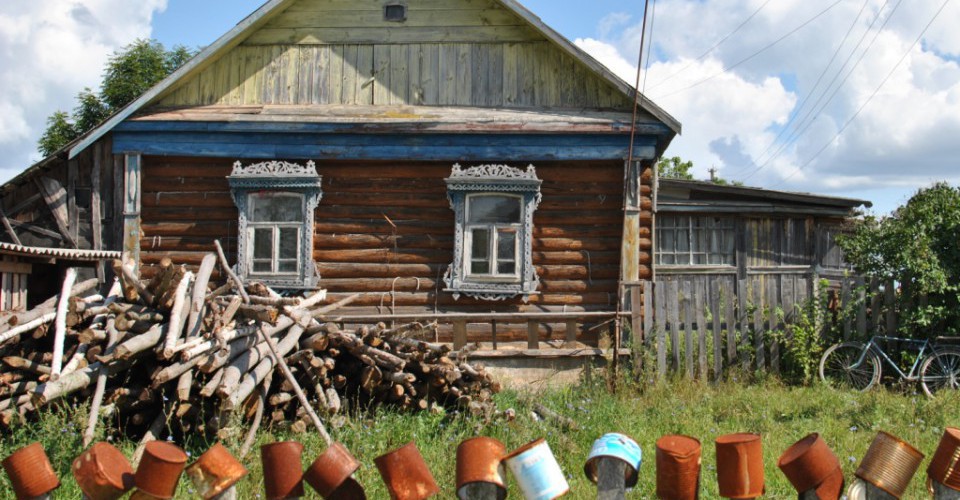
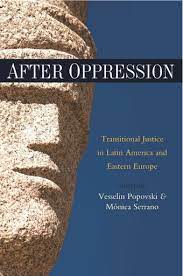

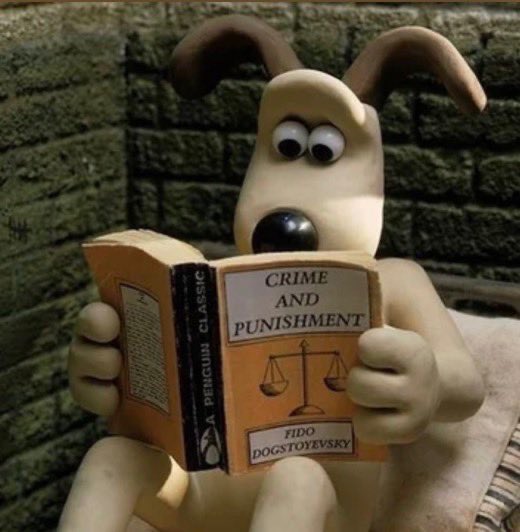
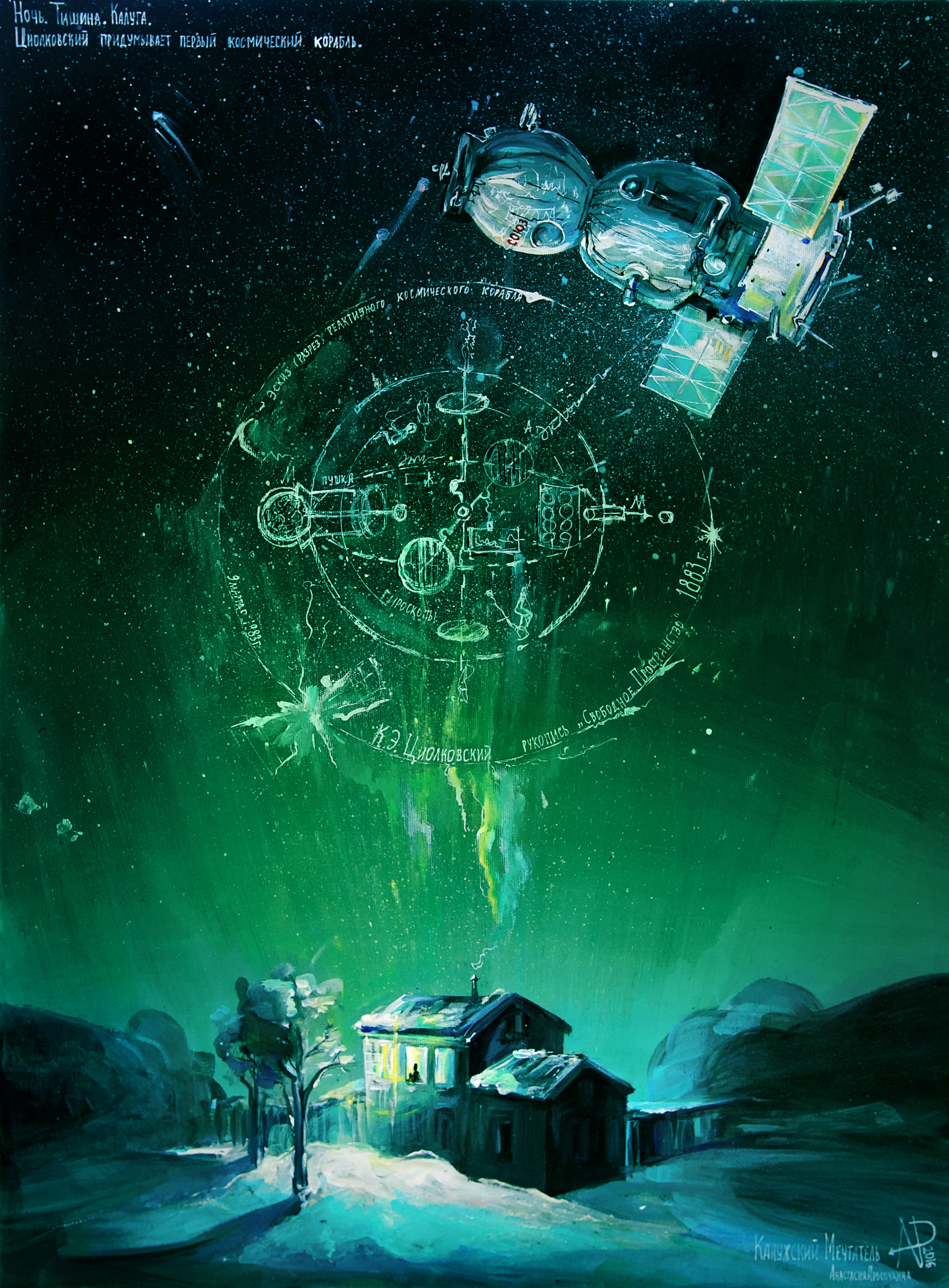
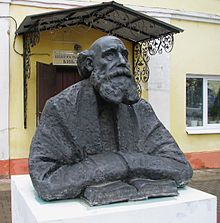
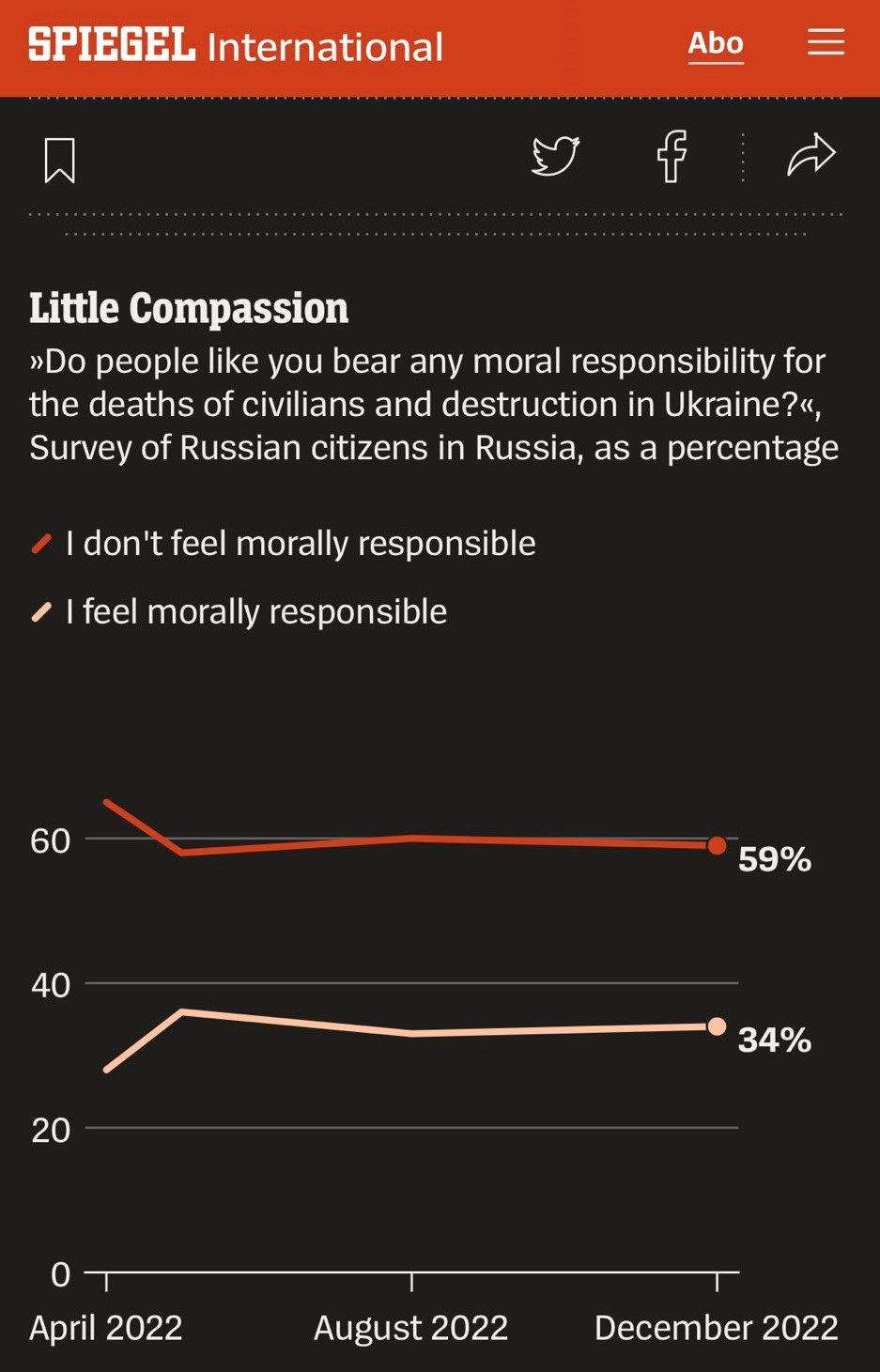
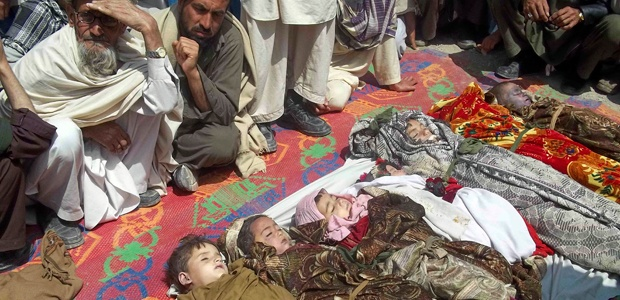

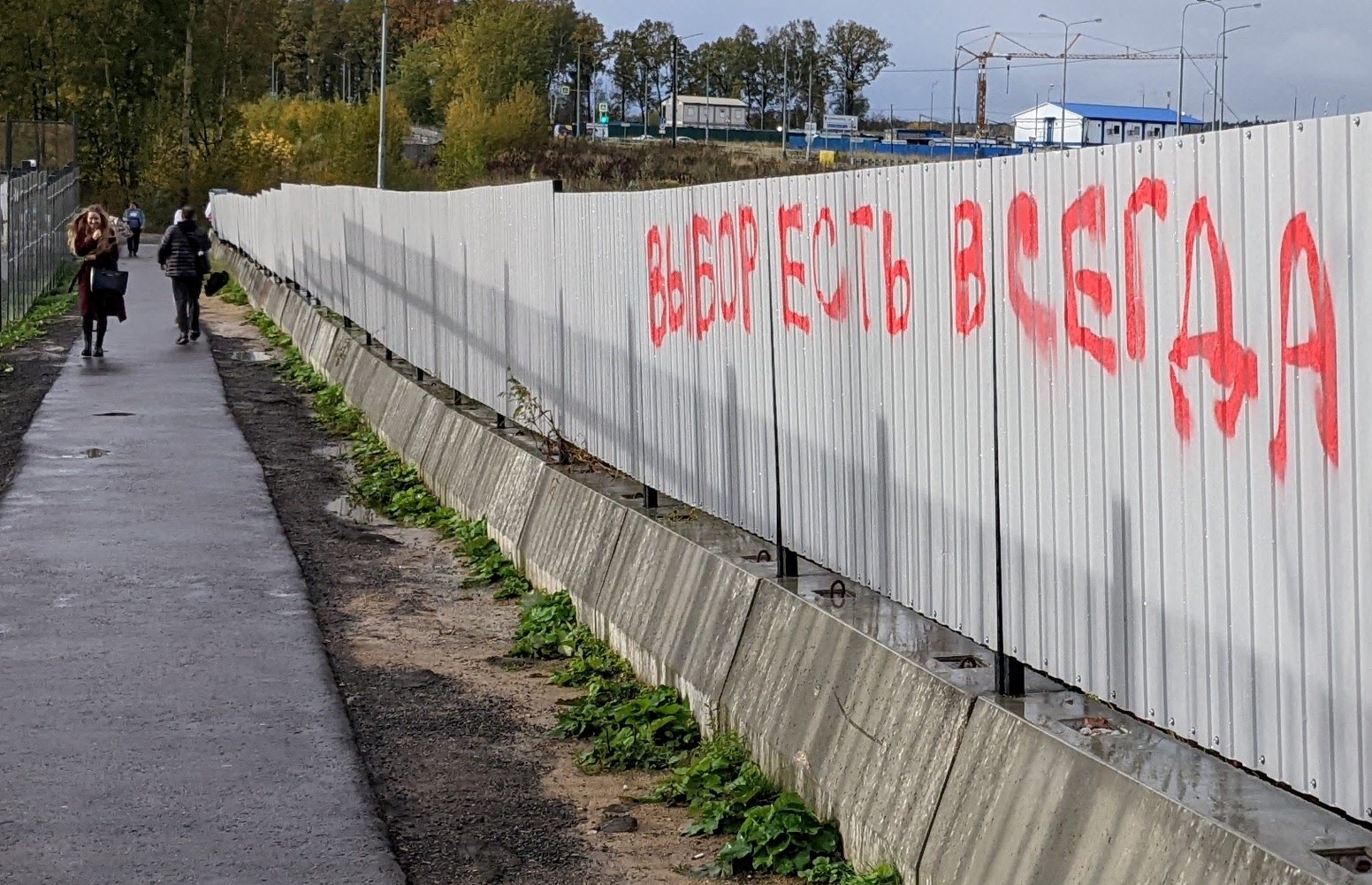
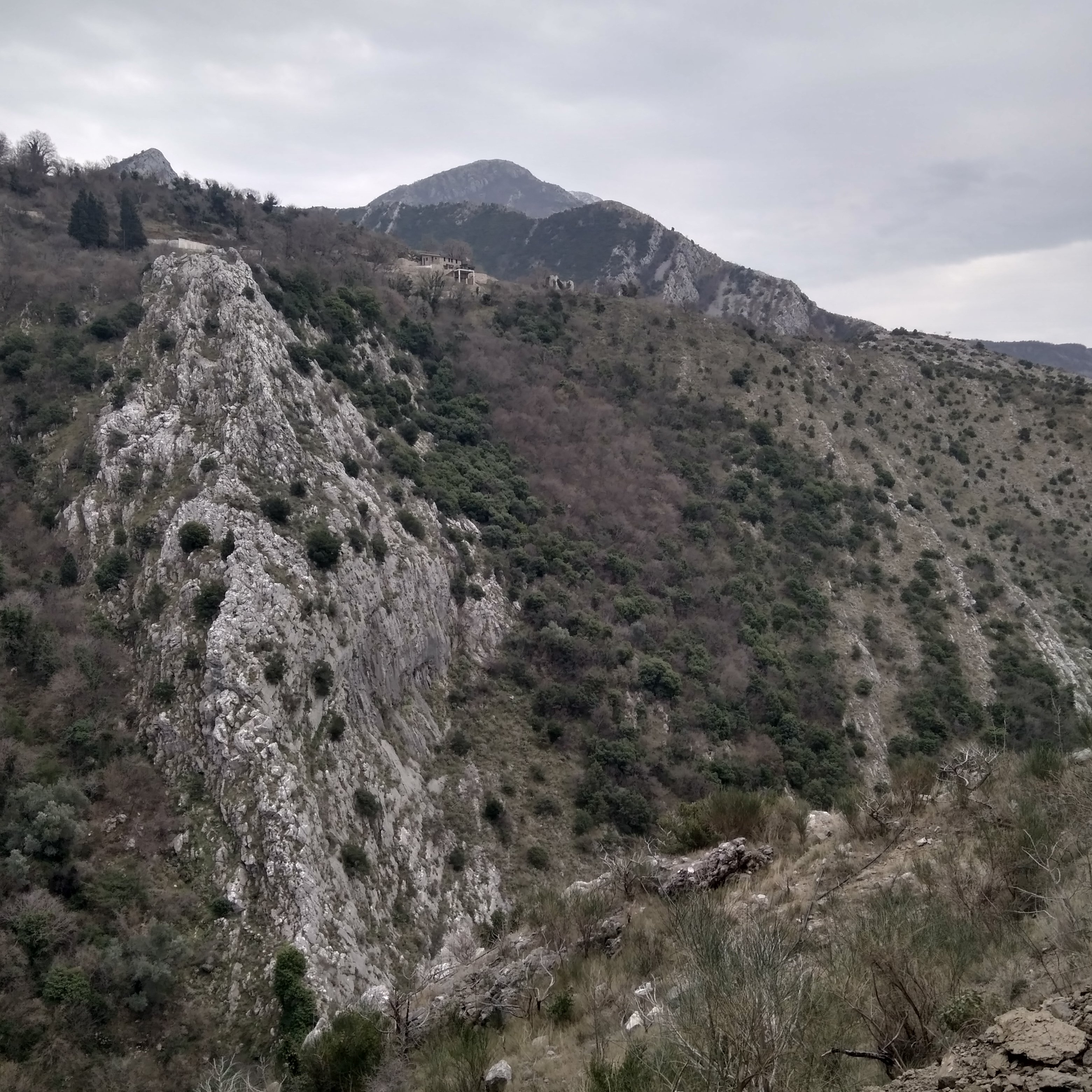


 Postsocialism