Tag Archives: area studies

Childfree for me, but not for thee; Putin as Saddam; overheating Russian economy; the end of Area Studies as we know it

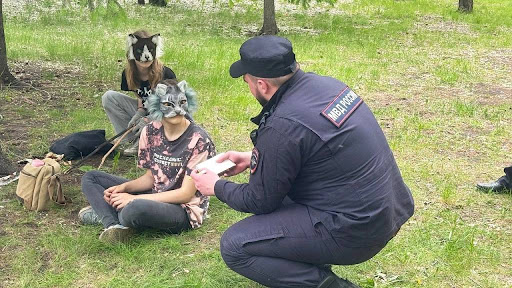
Parents of quadrobers, ‘kvadrobery’, are to be fined according to proposed new laws

Another post this week reviewing some goings-on in the Russia-sphere.

Biopolitical entrepreneur Katya Mizulina and head of the ‘Safe Internet League’, who is the daughter of politician Elena Mizulina – herself a pioneer in socially conservative legislation –  was asked at an event by a brave journalist why she rails against Western ‘child-free’ ideology while not having any children of her own. ‘Child-free ideology’ (sic) is just the latest addition to the not-very convincing attempt to consolidate Russian identity around the message that ‘we’re the protectors of the real Judeo-Christian tradition unlike the decadent Ukraine-nazi-supporting West’.

My new book (announcement forthcoming) opens with a look at the imposition of a new kind of civics lessons on school children. The very first ethnographic scene features a middle-aged male Life Skills and Personal Safety teacher who implores a room of teenagers to read the bible and recant of their pro-Western attitudes. Let’s just say these unwelcome distractions from the curriculum by unqualified and under-prepared instructors don’t go down very well with children and parents alike. Unlike the new social conservatism, there is an audience for patriotic education classes, where they are accompanied by genuine social and economic resources like preferential places at university. Young people are just as entrepreneurial as politicians in using political agendas in education to get ahead.

I’m not much of a fan of podcasts, but the Meduza Russian-language ones are often hidden gems. Like this talk with Maksim Samorukov about the informational isolation and blinkered world-views which ‘informed’ Saddam Hussein’s decisions to invade Iran and Kuwait. In making links to Putinism, Maksim stressed how subsequent endless uprisings were easily put down, even after military defeat… And that society’s dissatisfaction just isn’t part of regime calculus once elites get used to the idea of supposedly limited wars as a substitute for domestic programmes and legitimacy.

Maksim also emphasized the irrelevance of ‘new’ or contradicting information for these leader-types. Revelations that to you and me could challenge our priors (like the effect on US foreign policy of an election year – very topical) is merely incorporated into the existing world-view of the isolated person (Mr Putin, or Saddam). This podcast prompted me to finally start reading this book about the Iran-Iraq war. Some day I’ll do a post on the parallels between that war and the current Russo-Ukraine conflict. An interesting note about Saddam’s decision-making: some argue we have a really good idea of this because he recorded himself so much on audiotapes which were subsequently captured by the Americans.

There’s so much being written right now about the looming problems in 2025-26 for the Russian economy and I can’t fit it all into this short post. In 2019 I discussed neo-feudalization of Russia’s political economy (“people as the new oil”). Many others have takes on this, from the idea of a new caste-like society with state bureaucrats as an aristocracy, to a more nakedly transactional ‘necropolitics’ where blood is exchanged for money (death payments for volunteer troops). Nick Trickett’s piece in Ridl argues against the ‘hydraulic Keynesianism’: that military spending boosts economic growth. Demographic decline and war are like a Wile E. Coyote cliff-edge for growth, a precipice towards which the Russian war stimulus merely accelerates the economy. Monetary policy like a 20% bank rate, ‘cannot tame what’s driving inflation’.

One of my informants on a very good blue-collar supervisor wage played ‘jingle-mail’ recently and moved back in with his parents. He’s 39 with no children and working in a booming manufacturing sector. He’s also working double-shifts to keep up with demand, but there’s a human limit to over-working in place of capital investment. Nick’s piece points to the stagnation in productivity in Russia.

Another sign of the endless war to make citizens fiscally-legible to the state is this story about ratcheting up penalties for Russian drivers who obscure or hide their number plates. Traffic cameras are, to an absurd and unpopular degree, relied upon to raise tax revenue in Russia. I’ve written about this many times on this blog.  The details this time are not so important, but the story illustrates a number of things – penalties are still pretty low for all kinds of avoidance and ‘resistance’; Russians are ingenious in making their fiscal radar-signature as small as possible; the technocratic approach (blocking an AliExpress webpage selling revolving number plates) of the government is wholly ineffective because the state is losing capacity due to the drain of the war.

Does this shorter and more frequent posting by me signal a trend (a move towards the style of Sam Greene’s excellent, short-form weekly posting)? We’ll have to see. Though the news from my Dean of Faculty that she proposes closing all language-based Area Studies degrees may indicate I will have more time on my hands in the future. At Aarhus University we’ve developed unique programmes where students attain a high competency in one language out of Russian, Chinese, Japanese, Hindi, Brazilian Portuguese, and then can go on to a Masters degree where they are team taught by experts beyond their region. So a Russian student gets exposed to expertise in Chinese politics, Brazilian environmental studies, and so on, regardless of their continuing focus on a single language. We also just began to expand Ukrainian studies and have two Ukrainian scholars working with us now. ‘Dimensioning’ [Danish Orwell-speak for cuts to staff and student numbers] of Area Studies will likely mean no language teaching in these areas in the future. We live in a time of narrowing horizons for students, unfortunately.  

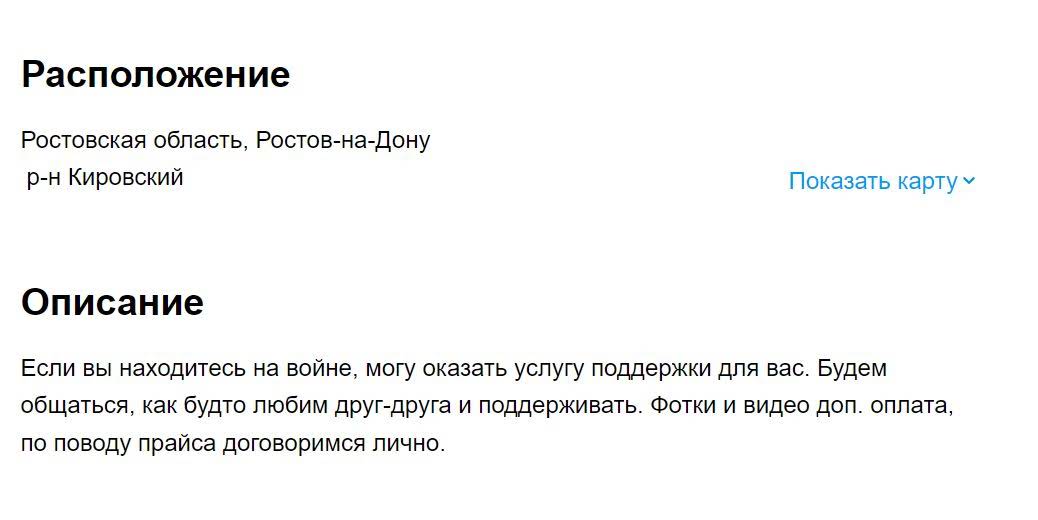
I leave you with this advertisement for war-time intimacy from Rostov: ‘If you’re at war I can provide a service to support you. We’ll communicate as if we love each other and support each other. Photos and video for an additional fee. Agreement about price subject to personal negotiation.’
Spooks and the haunting of Russian Area Studies

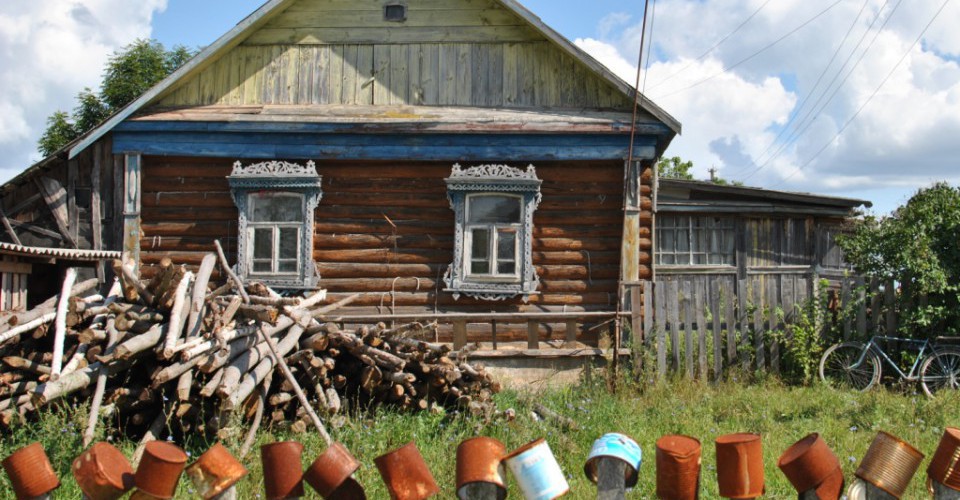
A spooky Russian house, which, like Area Studies, is both haunted and possibly in need of kapremont.

Just a quick follow up to my last post on Russian punditry, which got quite a lot of private responses of support. I hadn’t considered adding the ‘spooks’ (not-so-secret security agencies) angle; my piece was mainly about the domination of public and social media attention by a narrow and not always best informed commentariat sitting uncomfortably between academia, journalism and think tanks.  

However, after I wrote the post, a few people mentioned the security services angle. What does this mean? Well, in a sense it’s the second elephant in the room of Russia punditry. If the first elephant is the clear leveraging of latent public sympathy abroad for the Russian regime by our friends at the English-language offices of RT, then the other elephant is the continuing relevance of academic and think-tank contacts with the security services in the West.

If you underestimate the hidden motives of those that comment on Russia – from both elephants, then you are guilty of the ‘fallacy of insufficient cynicism’, as Bruce Cumings wrote in 1997 about Russian and Asian Area Studies’ partial capture by security service interests.  Cumings’ illuminating piece is still relevant today. I’ll come back to his proposal for Area Studies later.

What is clear from the reaction to my original post is that many people don’t really get how ‘ideological’ commentary is that comes from both ‘foreigners’ and ‘natives’ alike. Many also don’t want to talk about how the filtering mechanism of funders, results in funnelling out diversity. Perhaps that should be ‘Diversity’ with a capital ‘D’ (in terms of viewpoints, background, gender and race).

Cumings mentions Richard Pipes at one point. Pipes is an example of a type of Eastern European anticommunist intellectual recruited to enthusiastically tell the US government what it wanted to hear about Russia at a particular point in time. A leading critique of détente, his hawkish views came from his flawed reading of Russian history (a kind of historico-genetic autocracy thesis that even at the time was seen as simplistic). The result: advising politicians and the public that the USSR was bent on world domination and a real military and economic threat to US hegemony. Both these hyperbolic assertions were empirically falsifiable at the time by any curious undergraduate student with a good grounding in Russian Studies; the point is that effectively countering such an approach was not possible – not because of group think, but because of the structural conditions of academia-as-adjunct-of-security-state. Cumings:

“foundations (Carnegie, Rockefeller, Ford) worked with the state and the center to fund projects and, in some cases, to launder CIA funding; that the same scholars who undertook this activity often were themselves subjects of FBI investigations; that some of these scholars, in turn, were responsible for denouncing other scholars to the FBI; and, finally, that these academics were major figures in the postwar development of Russian area studies in the nation as a whole.”

People like Pipes acted to shape Area Studies as a Cold War industry dependent on the security services for social science research, an issue not just in Russian Studies (96% of all social science funding in the US came from the military in 1952).

Today, my previous post reflects concerns about the way Twitter acts as an amplifier of sometimes narrowly-informed and narrowly-thinking people in think tanks and policy who are less dependent now on the academic setting. Just as on one side some of the loudest voices come from journalists and grifters making money from laundering Russia’s geopolitical reputation, we should be aware of the continuing influence of security services’ patronage on Russian punditry at ‘home’.  The funniest line in Cumings’ piece is this:

“It has been estimated that while about 60 percent of the academics working for the CIA know that is what they are doing, the others do not.”

What he means by this is precisely the laundering of influence and policy-papers through academic and para-academic writing for the think tanks and foundations that have only increased in visibility in the era of social media.

What’s different today? In some respects nothing. If someone in a Western think tank is very hawkish or very dovish, ask yourself why? If they make grand knowledge claims, also be suspicious. Are they grifting for themselves or for a blob-faction?  One thing that has changed is that academia itself has become too neoliberal for most dedicated spooks to survive there. While there were a few in the Cold War institutes I taught in back in the day, even then they were leaving to go freelance because the requirements to publish or perish in the ivory tower are not so conducive to spook work. [allow me one little shout out to the prof I met a few years ago with so many passports and travel money, despite not publishing or getting grants! He’s not on Twitter! But he’s the exception and not the rule in terms of successful academic career and spookdom.] I digress, but the point is that a list of Russia experts that weighs heavily to the think tank side should give pause for thought.

Which brings me back to Cumings. While the Cold War birthed Area Studies (and hijacked anthropologists), Cumings in 1997 proposed rethinking the boundaries of area and discipline to reengage American minds with the task of understanding the world beyond the US. He was alarmed by the prospect of the rational choice paradigm taking over social science. Was he was right?

“it is a simpler matter of the researcher staring at the game-theoretic mathematical formulas that appear on the computer screen, thus to determine how the real world works. If the theory does not explain political, social, or economic phenomena, it is the real world’s fault.”

He had a two-pronged response to this challenge. The first was based on ‘boundary displacements’:

  • (1) move away from fixed regional identities (that is, the area committees), given that globalization has made the ‘areas’ more porous, less bounded
  • (2) utilize area expertise to understand pressing issues in the world that transcend particular countries, which is the real promise of area studies in the post-1989 era
  • (3) reintroduce area knowledge to social science disciplines that increasingly seem to believe that they can get along without it
  • (4) integrate the United States into “area studies” by recognizing it as an “area” that needs to be studied comparatively

Then, following Immanuel Wallerstein’s similar intervention, Cumings had more concrete suggestions; they are just as provocatively relevant today as 25 years ago:

  • All academics should reside in two departments
  • Thematic, yet heterodox, research themes that are not US-centric, but neither driven by supposed specificities of ‘Russia’ or ‘China’
  • Embrace post-positivism
  • Fold all the social sciences into ‘political economy’ (and preferably get rid of economics to the Business School)
  • Let funding flow from corporate identity of the university (serving society as the institution imagines it)

For that to be possible, especially in area studies, Cumings had one final prerequisite:  “Abolish the CIA, and get the intelligence and military agencies out of free academic inquiry”.