Tag Archives: biopolitics

‘Spiritual values’ of the booze shops. Russia’s convenience economy as part of the soft administrative regime, Part II

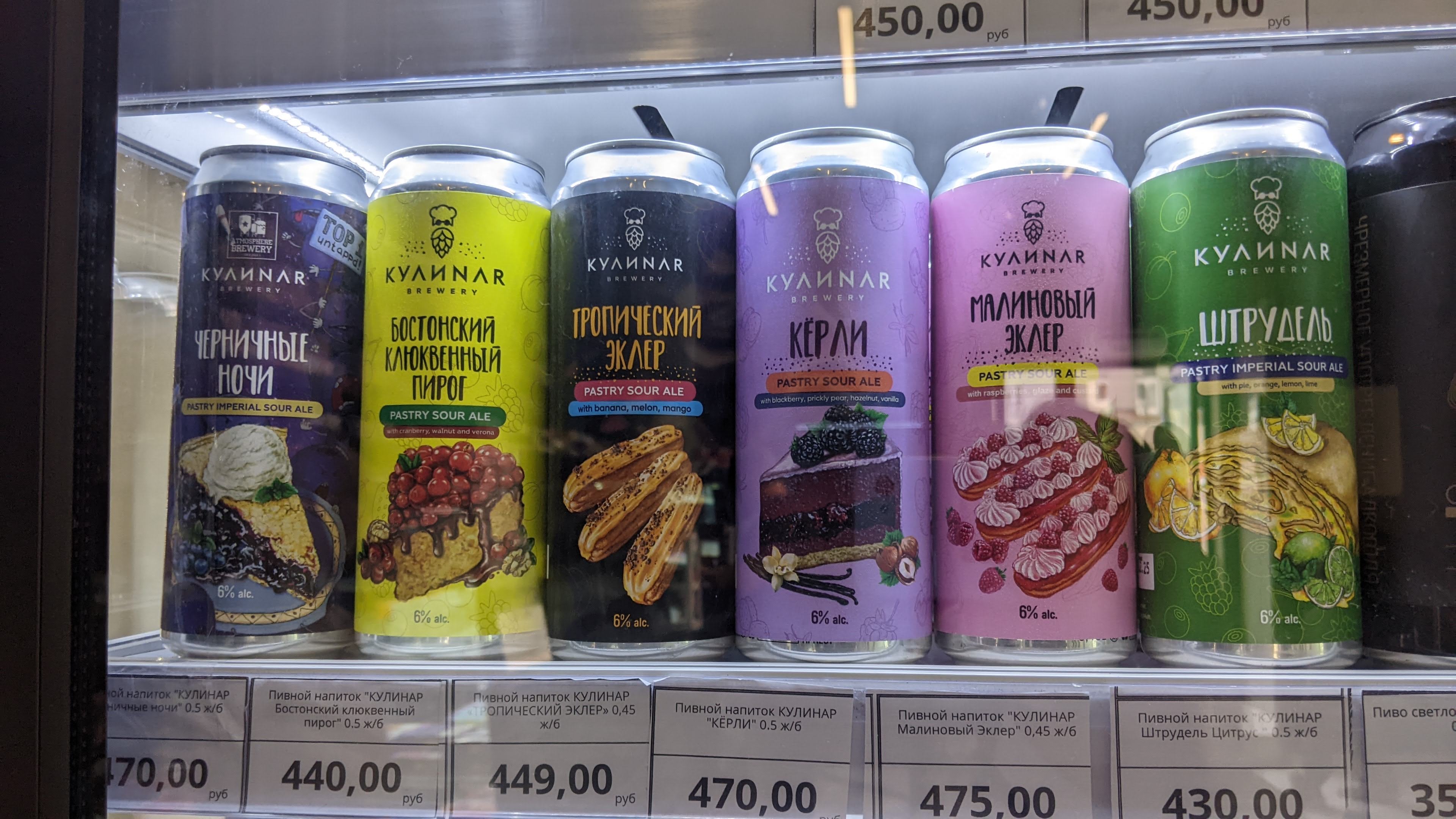
In contrast to discounters offering vodka for less than £2, the most dismal craft beer styles continue to do a roaring trade in central Moscow (note they’re more than double the price of vodka

This is the second post to look at the ‘convenience’ side of soft authoritarian administration: the comfort it increasingly appears to provide to the majority of Russians. Ideologists of all stripes in Russia have always had a problem with slotting in material well-being and the petite bourgeois life into a set of values that are supposed to be operative in the so-called ‘spiritual’ community of Eastern Slavic culture. But, as I asked in the previous post, what if material well-being itself, as a direct result of authoritarianism, could become a kind of ideology? To think about how authoritarian ‘comfort’ can become a source of public satisfaction (or ‘legitimacy’) we have to re-iterate some home truths about what kind of ‘realism’ most people confront daily. It certainly isn’t open repression or a sense of living in a personalist dictatorship.

A focus on political authoritarianism as all about coercion or about ideological differentiation deflects our attention from the discursive reality as experienced by most, if not all Russians: a kind of socio-economic Darwinism. This is a hegemonic ‘common sense’ that exhorts all to become self-governing atomized subjects – individually responsible for their success and failure in life. The first ‘common sense’ acts from above through dominant discourses and economic policies – the notorious labour code sets an example (making defending workers’ rights legally almost impossible), and the paltry social protections for vulnerable groups make sure they understand their position (‘the state owes you nothing’). Just as important is the response from below which internalizes and reacts – a ‘neoliberalism from below’. People adapt and even partly mould themselves to this unwritten compact. This is explored in part of my new book.

There’s nothing new in this situation since at least the early 1990s. Indeed the whole point is arguing for the timelessness of survival of the fittest as part of a dominant discourse of suspended modernity – ‘you can’t have nice things anymore: social democracy was a mirage’. The war makes things even more obvious and pressing at an individual level. Inflation means that a huge amount of labour market churn has been ignited in a system that was already suffering from labour shortages. Workers internalize the need to ‘hustle’ and be on the lookout for better opportunities. In turn, corporations and employers struggle to offer some kind of enhanced package – a ‘wartime’ deal, to bind workers in place. Ironically, this looks more and more like the Soviet deal: paternalist benefits like special medical insurance, kindergarten vouchers, enhanced holiday pay. That, in some respects, employers are on the back foot partly explains why some Russians consider there to be more opportunities today for them because of the war.

However, the ability to leverage an interest group’s structural power is limited. Pay at all but executive level is still extremely low by middle-income country standards, and physical mobility in search of jobs is hard because of the housing crisis, exorbitant commuting costs and poor infrastructure beyond the centres of large cities. The question of railway modernization came up the other day because of the announcement that the Russian government will invest in a massive high-speed rail programme. While a classic example of political distraction and reannouncing old news with no fiscal capacity to follow up on the plans, it’s also laughable to anyone who knows anything about RzhD (Russian Railways).

RzhD can’t even deal with the oversupply of empty wagons clogging up the creaking existing network and its structural problems as a state monopoly. The latter include extremely low productivity, the inability to cut waste and invest appropriately, being subject to political interest groups (wagon builders), and just not being able to attract skilled workers. Russia is short of 2500 train drivers and 3000 loco crews, and yet RzhD – which cannot go bankrupt because of the state’s backing offered its staff, wait for it, … a 1.2% pay rise earlier in the year. Military Keynesianism this is not. This is a harbinger. If the general crisis of stagflation in Russia becomes entrenched, and it looks that way, the realization of the structural power of workers of all types will become an important barometer. Just because striking and organizing is illegal doesn’t mean it won’t happen. Scholarship on labour unrest shows that when it comes, it is contagious and happens because of rising expectations.  

So far, so good (well, bad, actually). But the dismal reality of labour’s subordinate positioning is not the end of the story. That we can call the evolving regime ‘soft administrative authoritarian’ is because the reverse side of neoliberal austerity + surveillance and monitoring is the democratization of digital convenience, which in the post-Soviet context is often evoked as part of a narrative of authoritarian comparative advantage. Cue one of the endless social media posts of US ‘exiles’ in Moscow marvelling at its profusion of bars and stores, its cleanliness, order and whiteness. Any mention of Moscow should immediately give pause for thought, but sooner or later, innovations to make life easier there do diffuse to the margins.  And this is because an infrastructure of ‘comfort’ is inseparable from the forms of digital control.

hot dumplings from the mall dispenser. The selling points is speed and convenience

Realtime monitoring of people and vehicles using cameras and apps has dual uses – I can see on my state-controlled mapping app where my bus is in real time even in the sticks (something hardly possible even in most European cities). In Moscow, I still can’t get over the unemployed children of upper-middle class people ordering things like a single tub of icecream which is delivered in minutes for a tiny delivery fee. The courier is fed the address from that same smartphone that monitors one’s every move. The app prompts the user to feed the gate code to the courier when they forget to buzz him in. When on the move, people pay for little comforts, like a spiced latte, using ‘Facepay’. After all, what’s the harm when all the self-checkouts use face-recognition to prevent shoplifting anyway? Administrative security is built into everyday life like in no other European country, let alone the US where they have a banking system more fit for the 19th, than the 21st  century.

And the point is not to remind people that the security services have access to everything (and that even now, data in the Interior Ministry car owner database can be bought and sold for trifling sums), though they might well ‘remember’ that too. The point is that administrative security – including having everything the state provides on a single app (and soon, communication on a single state-messenger service: Maks) is a meaningful source of national pride – “look at what our programmers can do? You can’t even book a school place or doctors appointment online in the backwards UK”. The idea of technological progress in place of genuine progressive modernity (where rights and entitlements are advanced) renders the voices of those who urge to resist and imagine an alternative political or social order absurd and unthinkable. After all, Moscow is the most liveable city in the world, right?

At the same time, even as the population gets poorer by middle-income country standards (from formerly a position similar to Malaysia, to a position more like that of Mexico), the baubles of the comfort and convenience economy are rolled out even to the smallest humdrum towns like the ones I study. Amazon-type staffed collection depots are everywhere (there are four in the town of 15,000 people I work in). The Yandex taxi app extends its reach into the provinces, and actually has detrimental effects as it makes informal taxi-driving unprofitable for many middle-aged working-class men. But it’s more convenient for the middle classes of course, who can afford the higher fares.

A Russian sociologist who wished to remain nameless reminded me recently that real ‘moral code’ [skrepy] of Putinism for most people is the democratization and stratification of the consumption of alcohol. For every degustation spot for fine wines, or craft beer popups in Moscow suburbs, there’s a ‘Red and White’ booze discounter. Red and White has over 21,000 little stores across the country. That’s twice as many outlets as there are McDonalds in the US, which has more than significantly more than double the population of Russia. There are usually three stores within a ten-minute walk of even the most unfashionable location in Moscow (ask me how I know). There are stores in the Arctic circle and one on the tip of Chukhotka, facing Alaska across the Bering Straits. There is even an outlet in the ancient city of Bukhara in Muslim Uzbekistan.

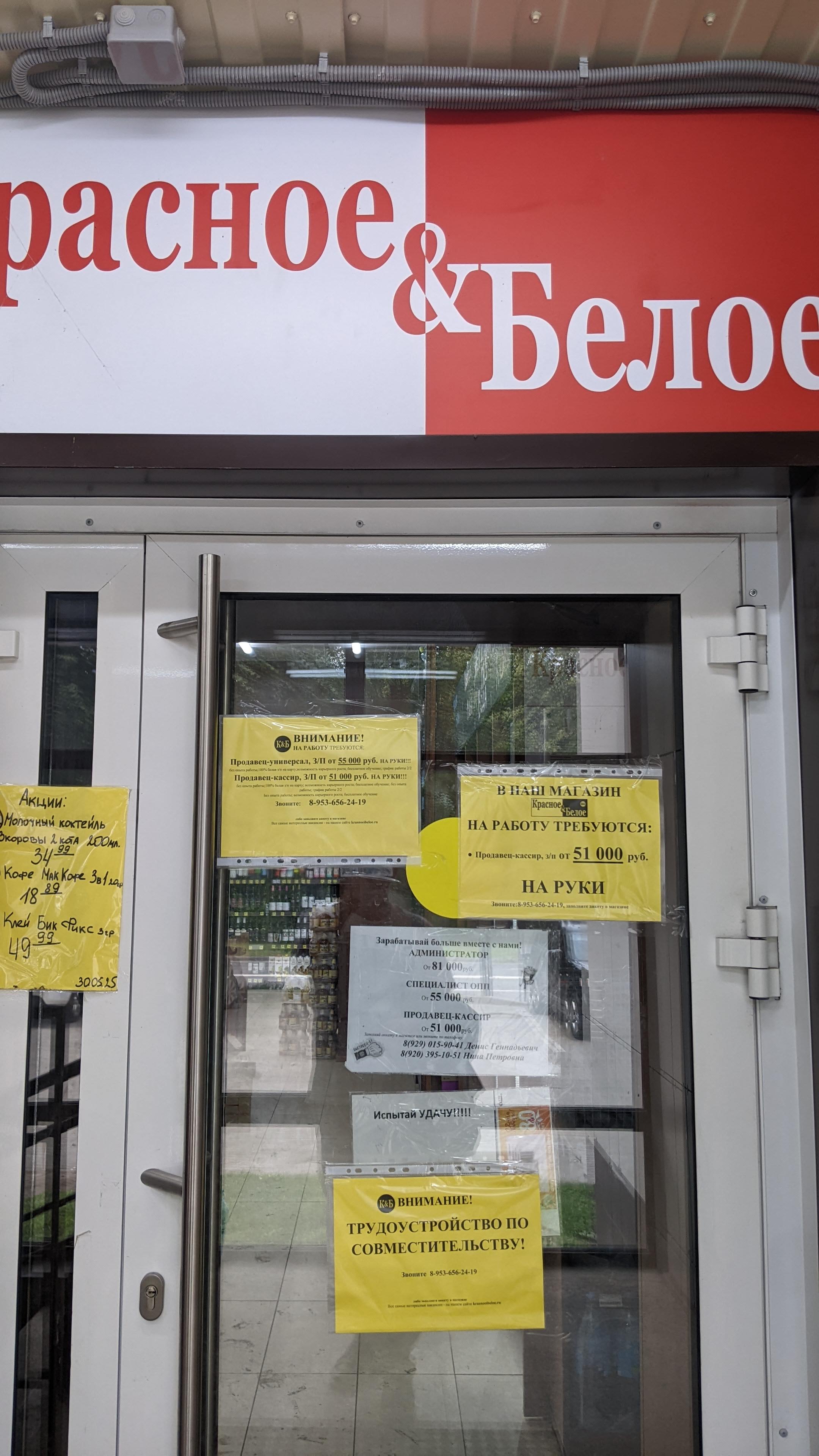
Red and White doorway with obligatory ad for workers

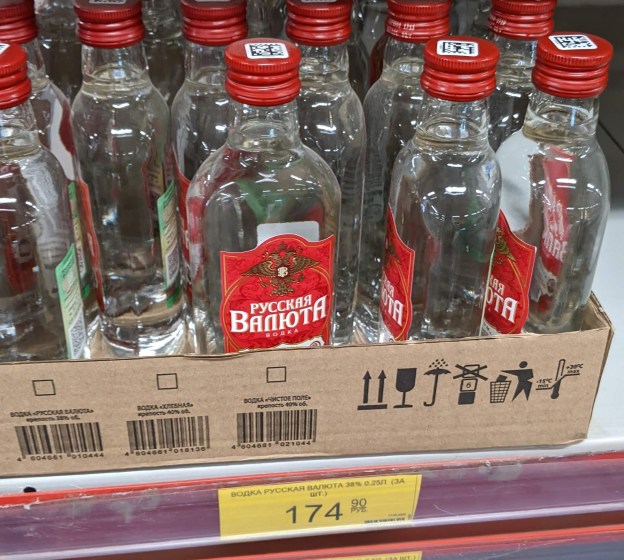
The number of B&W stores has nearly doubled since the start of the war as has the net worth of its billionaire owner. The slightly seedy, cheap and not-very-cheerful pokey stores are reminiscent of the worst of New York bodegas or UK cornershops. Their explosion shows not only the abiding nature of self-medication with alcohol but the explosion in demand for ‘low-cost’ offerings (the Group owner has also expanded his holding of discount supermarkets which do a roaring trade now – the photo at the top of this blogpost is from one of these stores).

Pity not only those purchasing adulterated beers and nasty red wines, but the hapless Central Asian immigrants forced to work for a pittance in these dives, along with the 24/7 kebab joints that usually spring up next to the wine shops. Comfort is maintained by a neocolonial service class. It’s also about the ‘doxa’: the naturalized and inevitable order: everyone has their labour price, and if yours is low, it’s the Red and White for you.

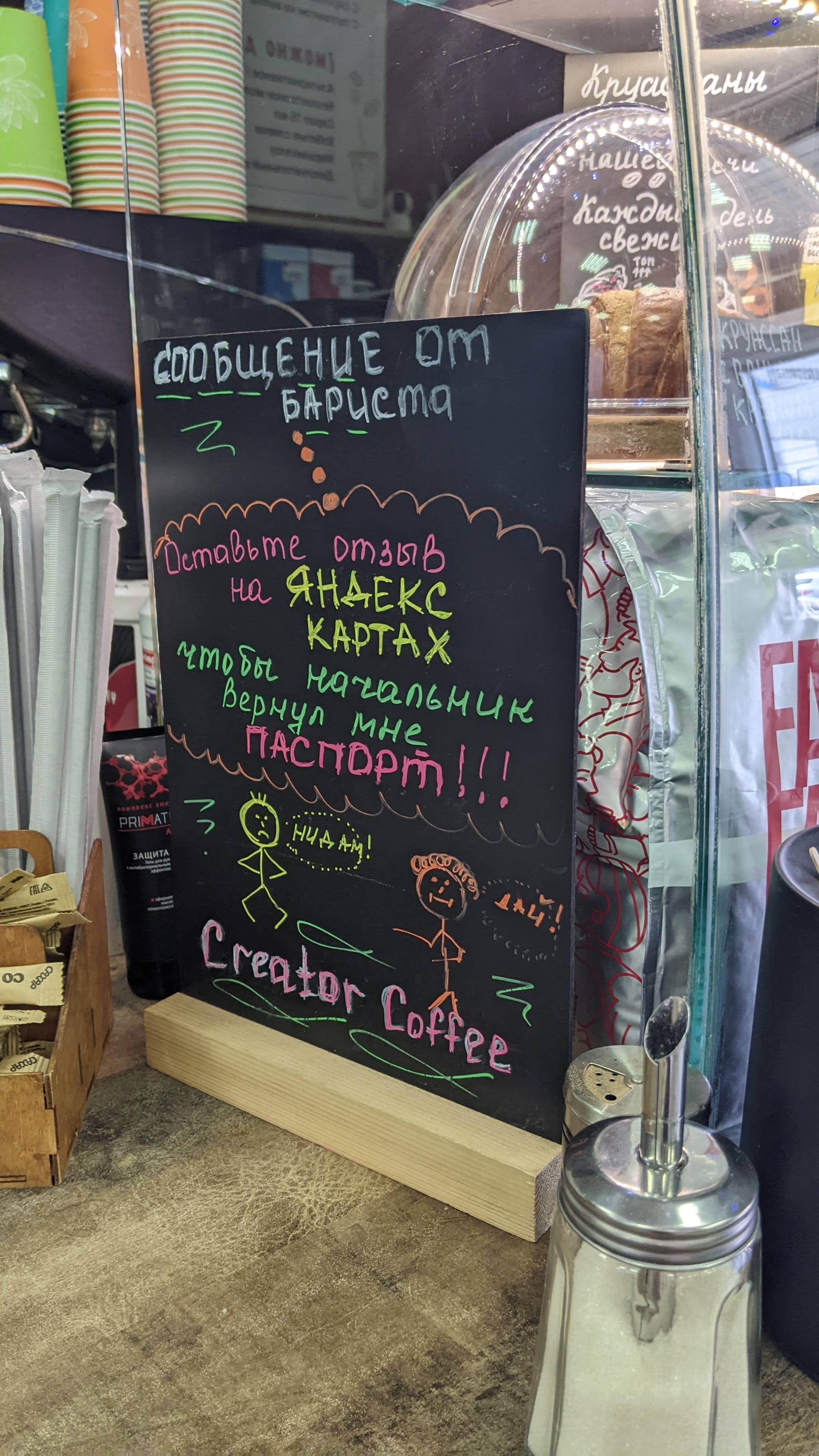
“From the Barista: add a review in Yandex Maps so that my boss gives me my passport back”

Consumption according to station is a moral virtue – achieving some kind of comfort and habitability becomes an ethical marker, rather than a purely socio-economic one, as researchers Rivkin-Fish and Crăciun and Lipan have argued. How this interacts with the war economy more directly – in the form of creating categories of biopolitical waste, and helping middle-class people distance themselves from responsibility for the conflict – we’ll come back to next time.

Childfree for me, but not for thee; Putin as Saddam; overheating Russian economy; the end of Area Studies as we know it

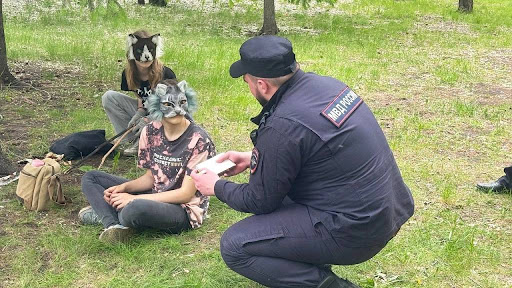
Parents of quadrobers, ‘kvadrobery’, are to be fined according to proposed new laws

Another post this week reviewing some goings-on in the Russia-sphere.

Biopolitical entrepreneur Katya Mizulina and head of the ‘Safe Internet League’, who is the daughter of politician Elena Mizulina – herself a pioneer in socially conservative legislation –  was asked at an event by a brave journalist why she rails against Western ‘child-free’ ideology while not having any children of her own. ‘Child-free ideology’ (sic) is just the latest addition to the not-very convincing attempt to consolidate Russian identity around the message that ‘we’re the protectors of the real Judeo-Christian tradition unlike the decadent Ukraine-nazi-supporting West’.

My new book (announcement forthcoming) opens with a look at the imposition of a new kind of civics lessons on school children. The very first ethnographic scene features a middle-aged male Life Skills and Personal Safety teacher who implores a room of teenagers to read the bible and recant of their pro-Western attitudes. Let’s just say these unwelcome distractions from the curriculum by unqualified and under-prepared instructors don’t go down very well with children and parents alike. Unlike the new social conservatism, there is an audience for patriotic education classes, where they are accompanied by genuine social and economic resources like preferential places at university. Young people are just as entrepreneurial as politicians in using political agendas in education to get ahead.

I’m not much of a fan of podcasts, but the Meduza Russian-language ones are often hidden gems. Like this talk with Maksim Samorukov about the informational isolation and blinkered world-views which ‘informed’ Saddam Hussein’s decisions to invade Iran and Kuwait. In making links to Putinism, Maksim stressed how subsequent endless uprisings were easily put down, even after military defeat… And that society’s dissatisfaction just isn’t part of regime calculus once elites get used to the idea of supposedly limited wars as a substitute for domestic programmes and legitimacy.

Maksim also emphasized the irrelevance of ‘new’ or contradicting information for these leader-types. Revelations that to you and me could challenge our priors (like the effect on US foreign policy of an election year – very topical) is merely incorporated into the existing world-view of the isolated person (Mr Putin, or Saddam). This podcast prompted me to finally start reading this book about the Iran-Iraq war. Some day I’ll do a post on the parallels between that war and the current Russo-Ukraine conflict. An interesting note about Saddam’s decision-making: some argue we have a really good idea of this because he recorded himself so much on audiotapes which were subsequently captured by the Americans.

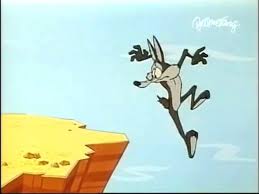
There’s so much being written right now about the looming problems in 2025-26 for the Russian economy and I can’t fit it all into this short post. In 2019 I discussed neo-feudalization of Russia’s political economy (“people as the new oil”). Many others have takes on this, from the idea of a new caste-like society with state bureaucrats as an aristocracy, to a more nakedly transactional ‘necropolitics’ where blood is exchanged for money (death payments for volunteer troops). Nick Trickett’s piece in Ridl argues against the ‘hydraulic Keynesianism’: that military spending boosts economic growth. Demographic decline and war are like a Wile E. Coyote cliff-edge for growth, a precipice towards which the Russian war stimulus merely accelerates the economy. Monetary policy like a 20% bank rate, ‘cannot tame what’s driving inflation’.

One of my informants on a very good blue-collar supervisor wage played ‘jingle-mail’ recently and moved back in with his parents. He’s 39 with no children and working in a booming manufacturing sector. He’s also working double-shifts to keep up with demand, but there’s a human limit to over-working in place of capital investment. Nick’s piece points to the stagnation in productivity in Russia.

Another sign of the endless war to make citizens fiscally-legible to the state is this story about ratcheting up penalties for Russian drivers who obscure or hide their number plates. Traffic cameras are, to an absurd and unpopular degree, relied upon to raise tax revenue in Russia. I’ve written about this many times on this blog.  The details this time are not so important, but the story illustrates a number of things – penalties are still pretty low for all kinds of avoidance and ‘resistance’; Russians are ingenious in making their fiscal radar-signature as small as possible; the technocratic approach (blocking an AliExpress webpage selling revolving number plates) of the government is wholly ineffective because the state is losing capacity due to the drain of the war.

Does this shorter and more frequent posting by me signal a trend (a move towards the style of Sam Greene’s excellent, short-form weekly posting)? We’ll have to see. Though the news from my Dean of Faculty that she proposes closing all language-based Area Studies degrees may indicate I will have more time on my hands in the future. At Aarhus University we’ve developed unique programmes where students attain a high competency in one language out of Russian, Chinese, Japanese, Hindi, Brazilian Portuguese, and then can go on to a Masters degree where they are team taught by experts beyond their region. So a Russian student gets exposed to expertise in Chinese politics, Brazilian environmental studies, and so on, regardless of their continuing focus on a single language. We also just began to expand Ukrainian studies and have two Ukrainian scholars working with us now. ‘Dimensioning’ [Danish Orwell-speak for cuts to staff and student numbers] of Area Studies will likely mean no language teaching in these areas in the future. We live in a time of narrowing horizons for students, unfortunately.  

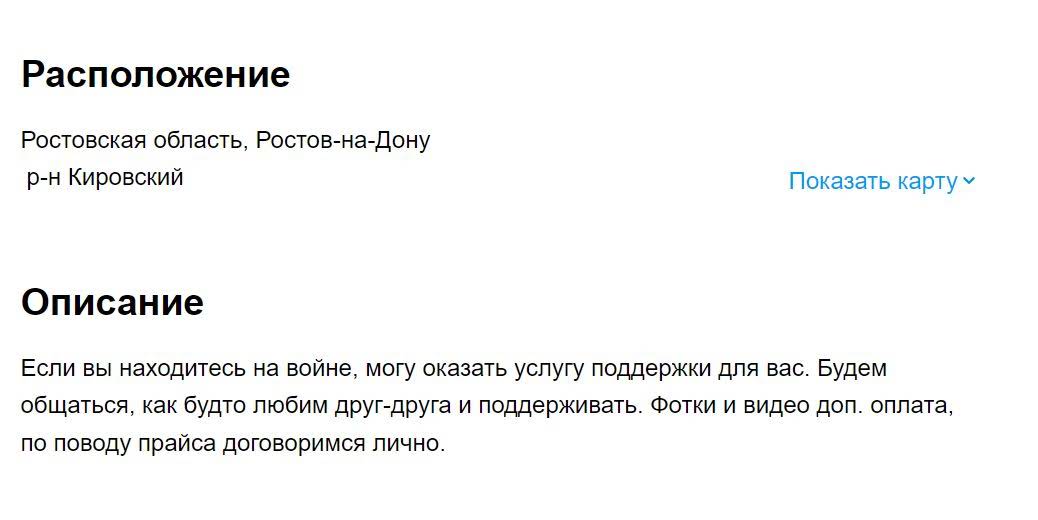
I leave you with this advertisement for war-time intimacy from Rostov: ‘If you’re at war I can provide a service to support you. We’ll communicate as if we love each other and support each other. Photos and video for an additional fee. Agreement about price subject to personal negotiation.’

Covid field tales – Part Three: Disinfection and the Smart City

Disinfection

This is the third of a series of Covid tales, made possible by collaboration with Galina Orlova of HSE Moscow. Each post is about different aspects of lockdown and postlockdown Moscow. These are based on one long text that appeared in the journal City and Society. That journal, thanks to my colleague Derek Pardue, who is editor, has published some amazing Covid despatches – they are open access –  so please check it out. Space in those dispatches is very limited, so here on the blog I will take a little bit more of a circuitous route.

The last post discussed the political economy of lockdown, how City Hall dealt with it and in particular what this reveals about ‘State Capitalism’.

Operation ‘Disinfection’

After the virus transformed the city into a host of hostile surfaces, the Sanitary Service enlightened Muscovites that the infection “can stay in the air for 3 hours, on copper – for 4 hours, up to 24 hours on pulp and paper surfaces (documents, envelopes, folders), for 3-4 days on plastic and metal.” The developing corona-market offers a “cold fog” method of disinfection from 8 roubles per m2. An invitation to the wake of a neighbour dead from Covid, now includes: “Everything is disinfected.”

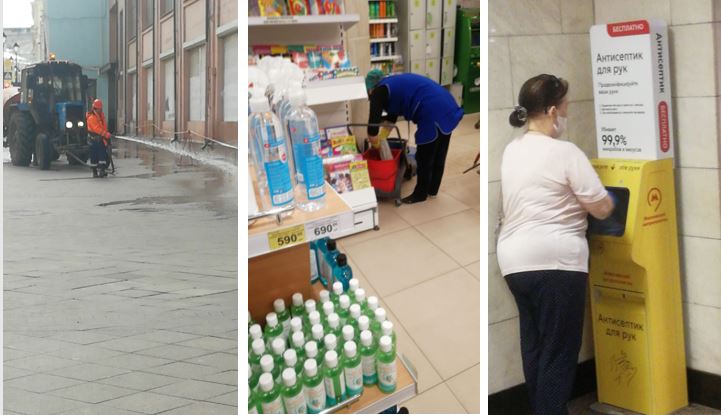
Public spaces – sidewalks, underpasses, entry-ways – are treated at city expense. The deputy mayor first earmarked 3,500 units of tractor-street sprayers, deploys 4,500. The air hangs with a bleach smell from the long-forgotten Soviet sanitary aromascape while the yellow sanitisers in the metro whiff of the society of consumption and bananas. Muscovites happily use them and discuss whether the big disinfection is comparable to urban beautification programs famous for exorbitant expenses and corruption. And if there isn’t much point in treating open surfaces, as epidemiologists say, should this be recognized as an urban antiviral ritual?

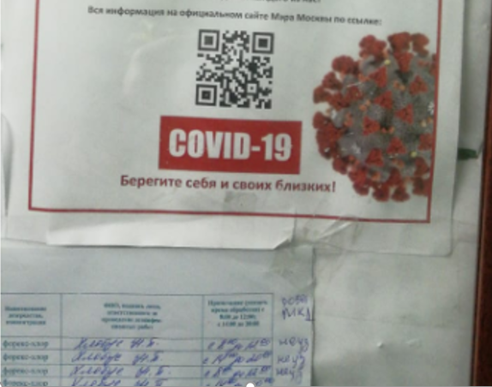
Our entrance-way, which according sanitary doctors remains the most “forgotten place in terms of anti-epidemic measures”, is disinfected twice daily. Bumping into disinfectors in chemical protection suits with spray guns and getting coated by a dose, you realise the danger, and no longer go out without a mask. Someone repeatedly adds in pencil: “unsatisfactory” to the assessment in the disinfection schedule posted by the elevator. The repairman – tired, in a cotton mask slipping down – is also unhappy: the chemicals have damaged electrical contacts, and now the elevator serves only four floors out of twelve. This metonymizes the city in quarantine as an assemblage of relative safety, partial functionality, attempts to reprogram and restore lost connectivity.

4

“Unsatisfactory”. Not in focus. Image by Galina Orlova

Not such a smart lockdown  

Maintaining Moscow’s reputation as a ‘smart city’, City Hall placed its bets on the rapid development of digital control over self-isolation. From April any non-hospitalized infected were obliged to stay at home and install a special mobile app – Social monitoring, developed by the city IT Department. From April 15, Muscovites needed sixteen-digit QR codes to make daily work trips, single emergency trips, and twice-weekly trips for personal and private needs. Police, taxi-drivers and transit workers mobilized to check codes using the Transit Department’s Moscow Assistant app. Regimented timetables of walks were dictated via infographics interfaces. Drones and quadcopters for tracking social distancing in re-opened restaurants were Moscow’s moment to jump the shark.

Jung Won Sonn and colleagues, analyzing the effective use of technology to reduce the risks of a pandemic in South Korea with smart city technologies, conclude that Covid-19 is the first epidemic in history for which humanity living in cities has come up with a ready-made response system.  Aggregating mobile operator data, geolocations of bank transactions and transport cards allows the precise contact tracing, avoiding major quarantine. The researchers regret that countries with developed digital infrastructure – with the exception of South Korea and Taiwan – have not made use of this advantage. (Sonn et al. 2020).

Russia, where during crisis the development of a new platform and apps was preferred, entailing large upfront costs, is a special case. While Yandex – Russia’s Google and the co-owner of popular taxi, delivery and mapping apps, – published a “self-isolation index” using its own digital infrastructure and aggregating big data, City Hall chose to develop apps from scratch. Work requiring months was implemented in weeks with many bugs and inefficient decisions. Lacking auto-verification, QR codes turned Moscow assistants into nurses for an infirm technology. Massive queues formed at metro entrances as policemen were forced to manually input codes to their devices. Technical faults were accompanied by social de(trans)formations, compensatory improvisations, and abuses. When Moscow Assistant could not cope with the flood of requests, QR encounters simulated governing. The cancelling of drivers’ codes without explanation led to the use of “service position” and informal connections to obtain permissions. Ordinary Muscovites with Covid-19 paid for geolocation failures, non-stop selfie requirements, multiple disconnections of the Social Monitoring, developed from fragments of code written in ten days for a pilot project to monitor the transport of domestic waste. Heavy fines, the denial of technical errors by City Hall forced the victims of smart lockdown to unite in the FB-community Fined for getting sick and to complain about the app in court and to Google Play.

Techno-political failures of Moscow lockdown are full of heterogeneities. Repressive Social monitoring is the first manifestation of a biosecurity regime replacing biopolitics. While biopolitics featured authorities’ concern with the life of population, biosecurity is built on the responsibility – including legal – of citizens for their health (Agamben 2020). For Muscovites, fined for getting sick, buggy mobile apps became the real punishment. The incoherence of urban mobility monitoring destroyed the technological continuity of the society of control (Deleuze 1992). To check a QR-code through Moscow Assistant, you need a policeman or a taxi driver in person with a mobile citizen. Taxi drivers tell of the discomfort that arose performing these police duties. The mayor’s office sees voluntary assistance and civic duty in them, but just in case, offers numerous sanctions for those who refuse to help. In a country where civil society is supposedly weak, the prosthetics of digital technologies during lockdown risk not so much strengthening the police state but accelerating the emergence of a “police society”.

In our next post we will move on to ‘Care and Disposal’ and the ‘afterlife’ of the consumption city.

Covid field tales – Part One: Moscow ends lockdown, and fragrant flashbacks

1

 (Post)lockdown cityscape. Image by Galina Orlova

This is the first of a series of Covid tales, made possible by collaboration with Galina Orlova of HSE Moscow. There will be 3-4 texts  on different aspects of lockdown and postlockdown Moscow. These will be based on one long text that will appear shortly in the journal City and Society. That journal, thanks to my colleague Derek Pardue, who is editor, has published some amazing Covid despatches – they are openaccess –  so please check it out. Space in those despatches is very limited, so here on the blog I will take a little bit more of a circuitous route.

***

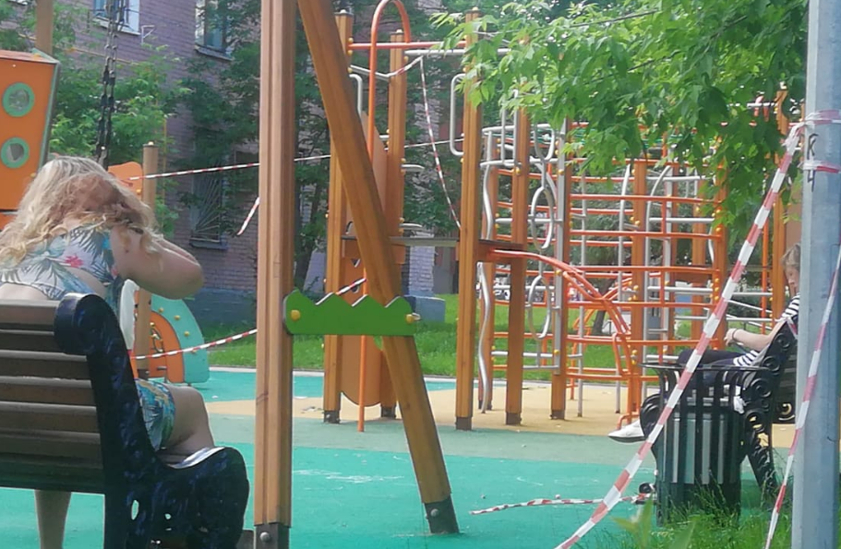
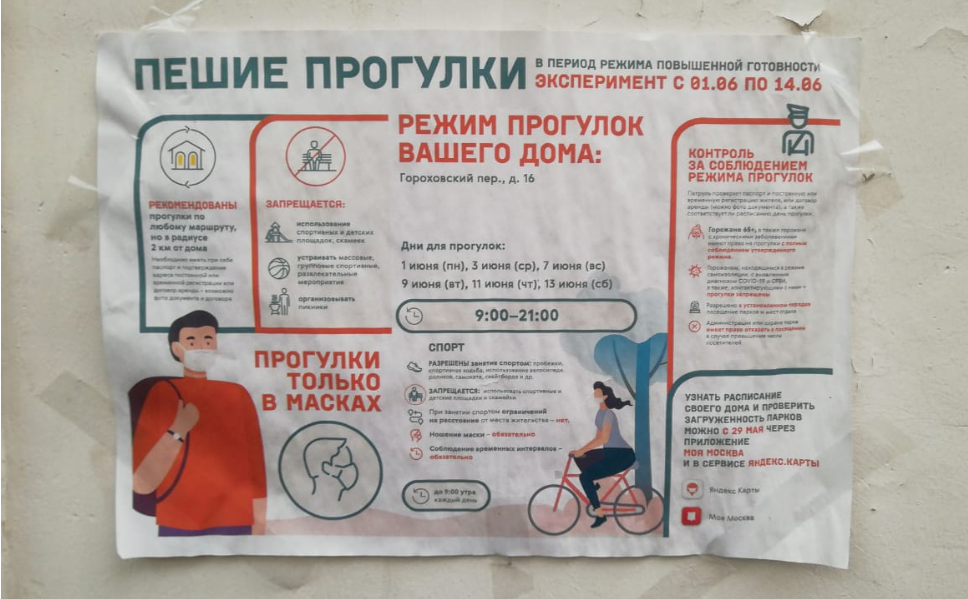
On June 8, Moscow’s Mayor announced the early cancellation of self-isolation. It had featured digital passes and “Moscow walks” by strict schedule according to address. Transport cards for the risk group 65+ were unblocked. Traffic jams, urban noise, and children’s voices returned. Taxi drivers no longer asked for QR codes from passengers. Hairdressers re-opened, benches and playgrounds were freed from striped tape, a visible materialization of the lockdown city-scape.

Online, people have responded to the “fall of self-isolation” sarcastically, with an untranslatable pun on the words ‘get well’ (after the coronavirus) and ‘amend’ (the Russian Constitution): (“Strana poshla na popravki”). Public health concerns have been replaced by a grim focus on the political regime’s diseased mutation. The fact is, Moscow’s hybrid practices of biopolitical care – the domestication of “the great imprisonment”, with biosecurity testing, buggy digital technologies augmented by direct police control, and interventions into urban rationalities in the spirit of Soviet nonconformist art – were abruptly and prematurely curtailed by the Leader’s whim for his plebecite.  Epidemiologists and political experts agree that the end of self-isolation in Moscow was due to Vladimir Putin’s desire to push ahead a national vote on July 1. Nonetheless, this ‘successful’ roadtesting of biosecurity control tells us a lot about the tendencies of late Putinism moving forward; after all, it was called an ‘experimental regime’.

2

 ‘ Walking regime for our building’. Instructions for an experiment in governing everyday routines from Moscow City Hall. Image by Galina Orlova

The capital of the epidemic

Many have paid attention to the urbanness of patterns of infection in different places.  In a metropolis where around 10% of the population lives, by the end of self-isolation, 40% of Russians who had been infected were in Moscow. Whereas people arriving in the capital from at-risk countries faced 14-day quarantine, in the Russian regions those who arrived from Moscow were put in isolation. An open secret of the spread of the disease has been the exodus of Muscovites to dachas in all directions from Moscow out to a distance of 200km. Right now this is still a hot topic. Every few days on my Facebook feed I see pictures of get-togethers of many people at their country cottages. Sure most are outside, but they are not social distancing. In addition, to get there, you have to travel for perhaps hours in enclosed transport. Amazingly I see desperate acquaintances hire taxis for 4-hours journeys. Also, many old people are shipped out for the summer to these places, so they are relatively full of higher-risk groups. I think it is worth talking about the false sense of security the ‘country cottage’ summer life presents to people. My main group of research participants are people living in a small, relatively isolated town 200km from Moscow. They complained a lot in June of the Muscovite invasion to the cottages. The influx to them is noticeable because the ‘tourists’ travel by car to the supermarkets in the small town. To underline the potential of tourism in Russia and the still underdeveloped infrastructure, I have received fantastical offers of money from enterprising individuals to rent to them my empty little shack there: in face for twice the rentable value of my house in England (that’s taking into account the devalued ruble). Many of the vacant plots that had gone unsold for years were snapped up – even though they lack planning permission. The local chalet owner has upped his prices by 300%. Some data here on the early peak in demand for summer houses. More here about the wider implications on the housing market but focussing on St Petersburg area.

The next post will be about the hybrid ‘Soviet Sanitary’ and ‘neoliberal’ responses by the city authorities. Does every country have a memory-triggering ‘sanitary aromascape’? Personally I get fragrant flashbacks more for cleaning products than for biscuits (or should that be cakes?). Later I will post about the ‘not-so smart’ city that Moscow is, and the politics of reopening.

A Day of Knowledge – Topic-based teaching of Russian Current Affairs

Day of Knowledge

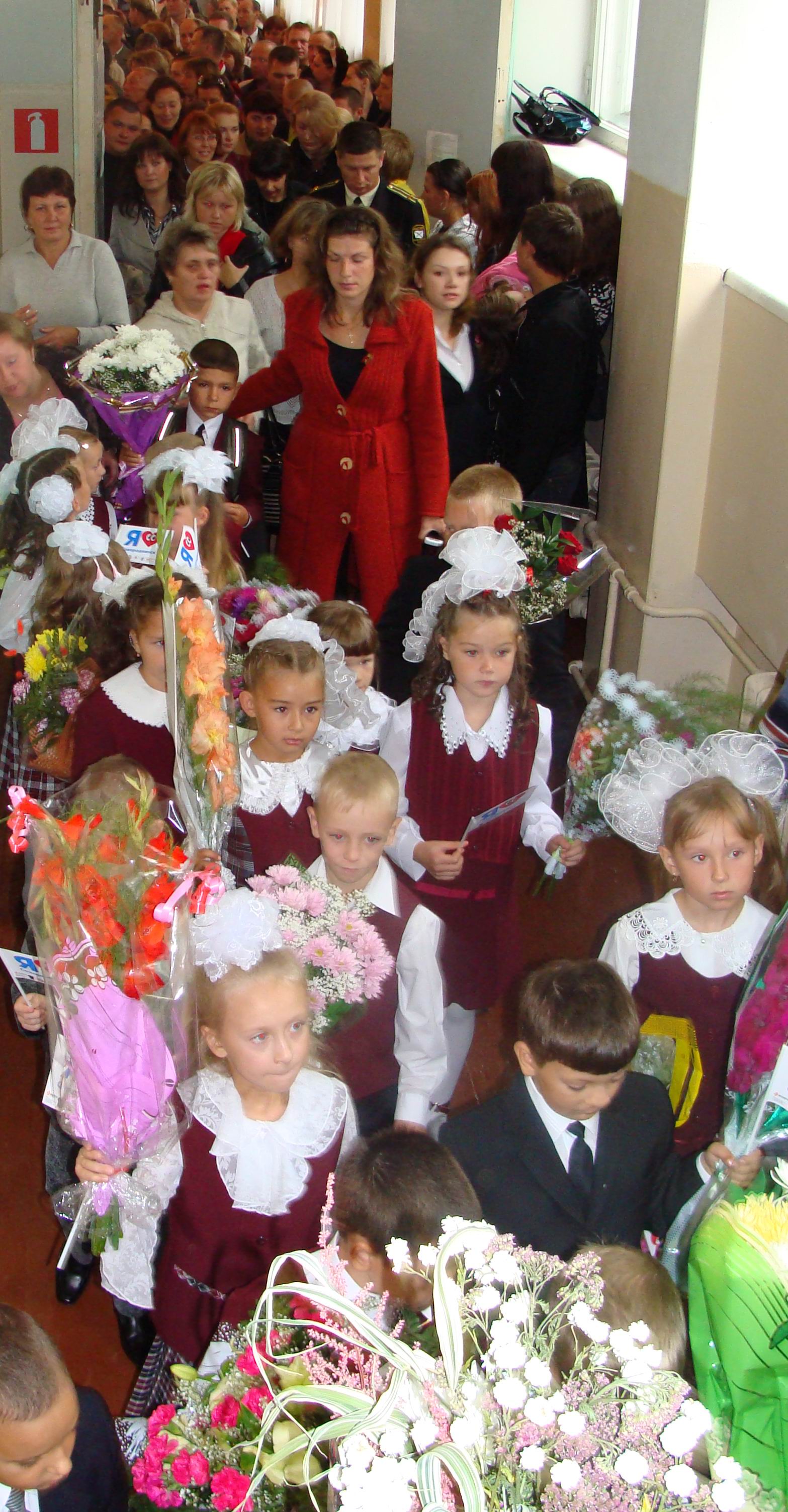
Day of Knowledge in a Russian School – 1 September.

I’m about to dive back into a semester of very intensive teaching. It’s Russia’s ‘Day of Knowledge’, so I thought I’d share a ‘mini’ course I’m going to be teaching.

In Danish it’s called Aktuelt Emne, which means ‘Current Topic’. This is a ‘mini’ course because its only worth 5 ECTS (which equates to 500 pages of compulsory reading and 26 hours of class time). It can run for a whole semester (13 weeks), but for various reasons I’m going to deliver it in 8 sessions, each of which covers a ‘sub-topic’.

The main questions that arise around this kind of teaching are: How specific the topic? How in-depth do we want to go, given the course is ‘only’ 5 credits and the students have a lot of other demands on them? What ‘level’ to pitch this at, given that the students have had little exposure to contemporary issues before and the fact that non-Russianists can take this course? How to balance the ‘Area studies’ approach with the need to expose students to concepts like ‘biopolitics’, ‘governmentality’ and ‘homo sacer’. These terms are likely to be meaningless to most students, even though the students have a general ‘humanities’ primer course beforehand.

Anyway, this year I’m trying to relate the course to the article I’m writing on ‘Gayropa’ and homophobia as an example of the ‘conservative turn’ in Russia. In the article I’m contrarian, arguing that homophobia has more significant  ‘roots’ in cultural history – for want of a better formulation – and aspects of Soviet-era enculturation and socialisation – a shorthand for which is the word ‘vospitanie‘. Visible deviants are ‘lacking’ in moral vospitanie. I conclude by saying these issues, along with an argument related to that of Daria Ukhova: mean that ‘conservatism’ is a defensive mechanism against the multiple failures of the state. These are more salient issues than state-directed propaganda against ‘Gayropa’. I’ll blog aspects of that article soon – the draft is here.

Anyway, many of the sources I use in the article serve as readings on the course. I kinda artificially break up the course into ‘topics’, but in reality these overlap quite a lot.

Some of this is ‘experimental’ – I’m not sure how well some of the readings will go down. Whether they are cohesive enough to serve the learning aims. Whether the ‘summary tasks’ help prepare the students enough for further study and writing.

Russian Cultural Politics Today.

  1. (4 September) 8-11am Russian cultural politics today : Introduction
  2.  (18 September) 8-11am Russia’s conservative turn and soft power
  3.  (25 September) 8-11am Russia’s biopolitics – gender retraditionalizations
  4.  (2 October) 8-11am Russia’s biopolitics – state, the family and the child
  5.  (23 October) 8-11am Russia’s biopolitics – LGBT and youth – unruly others
  6.  (6 November) 8-11am Race, ethnicity and religion as sites of cultural politics
  7.  (20 November) 8-11am The liberal alternative – Russia’s opposition as a cultural sphere
  8.  (4 December) 8am-12pm Grounding the study of Russian cultural politics, and alternative perspectives.

Introduction to the course aims

This 5 ECTS Credit course aims to investigate the so-called ‘conservative turn’ in Russian cultural politics since around 2010. Scholars Andrey Makarychev and Alexandra Yatsyk (we read them in Week 2) argue that the current regime has taken an increasingly conservative turn since the protests in Russia in 2011 and 2012 for two reasons. First to solidify and legitimize a political system with one dominating leader supported by the elites, arguing that this form of ‘sovereign’ or ‘managed’ democracy is part of Russian identity, secondly to paint a picture of the western world as degenerate, rejecting its Judeo-Christian heritage, in contrast to Russia, which becomes a defender of European civilisation.

Yatsyk and Makarychev highlight three main components of this “new” conservative discourse in Russia: Russia is one of the few real sovereign nations in the world, a goal of reconstructing a unified Russian nation, in part used as an explanation for annexing Crimea, and finally the idea of ‘normality’ regarding family life, sexuality etc, rejecting the more liberal West as depraved and trying, through international organisations  to infiltrate and dismantle traditional Russian, Orthodox, values. Two examples of how this conservative turn goes beyond Russian political discourse and is reflected in concrete legislation are article 6.13, known as the gay propaganda ban law, passed in June 2013, as well as the law changing domestic violence that does not result in severe bodily harm from a criminal offence to an administrative offence, passed in 2017.

These are the kind of issues we will be examining in this course. The guiding questions that will be reflected in the assignment are as follows: What is the conservative turn in Russia? What has caused it? How has it affected political discourse around the family, gender roles, the upbringing of children? What kind of groups are identified as threats to this normative order? How does the government use this discourse to justify its foreign policy? How are race and religion relevant to conservatism and national identity? How ‘liberal’, is the liberal opposition to the government? How has the conservative turn been expressed in relations with neighbours of Russia?


Weekly assignments and readings:

Week One. Introduction:

Compulsory Reading:

Robinson, N. (2014) The Political Origins of Russia’s ‘Culture Wars’, Department of Politics and Public Administration University of Limerick, Limerick, Ireland https://ulir.ul.ie/handle/10344/3796

Trudolyubov, M. (2014) ‘Russia’s Culture Wars’, The New York Times, 7 Feb 2014, pp. 14–16.

https://www.nytimes.com/2014/02/08/opinion/trudolyubov-russias-culture-wars.html

Summary task:

Andrey Makarychev & Sergei Medvedev (2015) Biopolitics and Power in Putin’s Russia, Problems of Post-Communism, 62:1, 45-54, DOI: 10.1080/10758216.2015.1002340

Task: the above text has a lot of newspaper and media sources, including in Russian. Select one and summarise it in 200-300 words. Explore at least one Russian media source and make some notes on it. Find out whether the issue has developed since 2015.

[48 pages]

Further Reading:

Andrei Melville (2017) A Neoconservative Consensus in Russia?, Russian Politics & Law, 55:4-5, 315-335, DOI: 10.1080/10611940.2017.1533271

Paul Rabinow and Nikolas Rose (2003) ‘FOUCAULT TODAY’, IN PAUL RABINOW AND NIKOLAS ROSE (EDS) THE ESSENTIAL FOUCAULT: SELECTIONS FROM THE ESSENTIAL WORKS OF FOUCAULT, 1954-1984 NEW YORK: NEW PRESS (pp. vii – xxxv)

Thomas Lemke (2001) ‘The birth of bio-politics’: Michel Foucault’s lecture at the Collège de France on neo-liberal governmentality, Economy and Society, 30:2, 190-207 (particularly see pp.202- for a summary of key terms)

Giorgio Agamben, Homo Sacer: Sovereign Power and Bare Life (Stanford: Stanford University Press, 1998).


Week Two: Russia’s conservative turn and soft power

Compulsory Reading:

Makarychev, Andrey, Yatsyk, Alexandra: “A New Russian Conservatism: Domestic Roots and Repercussions for Europe” in Notes International CIDOB, No. 93, 2014. https://www.cidob.org/en/publications/publication_series/notes_internacionals/n1_93/a_new_russian_conservatism_domestic_roots_and_repercussions_for_europe

Riabov, O. and Riabova, T. (2014) ‘The decline of Gayropa? How Russia intends to save the world’, 5 February 2014 Eurozine https://www.eurozine.com/the-decline-of-gayropa

Summary task:

Sergunin, Alexander, and Leonid Karabeshkin. “Understanding Russia’s Soft Power Strategy.” Politics 35, no. 3-4 (2015): 347-363.

Task: Make a one-page summary of the text’s main points in your own words. Bring to class. This is an essential skill to develop to support essay writing and working towards a successful bachelor project. Then write a paragraph from the perspective of a critical reader who wants to argue that the claims of Russian soft power strength in general are exaggerated (you might need to skim Keating and Splidsboel to get some ideas for this, but most of all use your common sense!).

[34 pages]

Further Reading:

Bassin, M., and G. Pozo, eds. 2017. The politics of Eurasianism: Identity, popular culture and

Russia’s foreign policy. London: Rowman & Littlefield.

Keating, V. C., & Kaczmarska, K. (2017). Conservative Soft Power: Liberal soft power bias and the ‘hidden’ attraction of Russia. Journal of International Relations and Development. DOI: 10.1057/s41268-017-0100-6 https://www.researchgate.net/publication/314286278_Conservative_Soft_Power_Liberal_soft_power_bias_and_the_’hidden’_attraction_of_Russia

https://soundcloud.com/user-688693296/warpod-1-vincent-keating-russian-soft-power

Kosachev, Konstantin, (2012) The Specifics of Russian Soft Power. Russia in Global Affairs, 3, 2012. https://eng.globalaffairs.ru/number/The-Specifics-of-Russian-Soft-Power-15683

Viatcheslav Morozov (2013) Subaltern Empire?: Toward a Postcolonial Approach to Russian Foreign Policy, Problems of Post-Communism, 60:6, 16-28: https://doi.org/10.2753/PPC1075-8216600602

Morozova, N. 2009. Geopolitics, eurasianism and Russian foreign policy under Putin. Geopolitics 14 (4):667–86.

Neumann, I. B. 1995. Russia and the idea of Europe: A study of identity and international relations. London: Routledge.

Polyakova, A. 2014. Putin and Europe’s Far Right World Affairs, Vol. 177, No. 3 (SEPTEMBER / OCTOBER 2014), pp. 36-40

Prozorov, Sergei (2004) : Russian conservatism in the Putin presidency: The dispersion of a hegemonic discourse, DIIS Working Paper, No. 2004:20, Danish Institute for International Studies (DIIS), Copenhagen This Version is available at:http://hdl.handle.net/10419/84604

Prozorov, S. 2007. The narratives of exclusion and self-exclusion in the Russian conflict discourse on EU-Russian relations. Political Geography 26 (3):309–29.

Snegovaya, M. 2017. Conservative Turn in Eastern Europe: Political Conservatism in Russia. Desenvolvimento em Debate v.5, n.1, p.95-113, 2017. https://www.academia.edu/35571272/Conservative_Turn_in_Eastern_Europe_Political_Conservatism_in_Russia

Flemming Splidsboel Hansen Russian influence operations Trying to get what you want DIIS POLICY BRIEF 30. OKTOBER 2018 https://www.diis.dk/publikationer/russian-influence-operations

Tsygankov, A. (2007). ‘Finding a civilisational idea: ‘West’, ‘Eurasia’, ‘Euro-East’ in Russia’s foreign policy’, Geopolitics, 12 (3):375–99.

Tsygankov, A. (2016) Russia’s foreign policy: Continuity and change in national identity 4th ed. (Lanham: Rowman and Littlefield).


Week Three: Russian biopolitics – gender retraditionalization

Compulsory Reading:

Muravyeva, M. (2014) ‘Traditional Values and Modern Families: Legal Understanding of Tradition and Modernity in Contemporary Russia’, Journal of Social Policy Research, 12(4), pp. 625-638. https://www.researchgate.net/publication/282856363_Traditional_Values_and_Modern_Families_Legal_Understanding_of_Tradition_and_Modernity_in_Contemporary_Russia

Muravyeva, M. (2018) Austerity, Gender inequality and Feminism after the crisis: “Should women have more rights?” Traditional Values and Austerity in Russia. ROSA-LUXEMBURG-STIFTUNG [read sections 1 and 3.]

https://www.rosalux.eu/publications/should-women-have-more-rights-traditional-values-and-austerity-in-russia/

Temkina, A., Zdravomyslova, E. (2014) ‘Gender’s crooked path: Feminism confronts Russian patriarchy’, Current Sociology, 62(2), pp. 253-270.

Summary Task:

Muravyeva, M. (2018) Austerity, Gender inequality and Feminism after the crisis: “Should women have more rights?” Traditional Values and Austerity in Russia. ROSA-LUXEMBURG-STIFTUNG [read section 4]. Put yourself in the place of a Women’s Rights NGO in Russia. How would you implement the proposals? Summarise in 200-300 words.

[54 pages]

Further Reading:

Åberg, P. 2015. Civil society and biopolitics in contemporary Russia: The case of Russian “Daddy-Schools”, Foucault Studies, 20, 76-95

Johnson, J. E. (2007) ‘Domestic violence politics in post-Soviet states’, Social Politics, 14(3), pp. 380-405.

Johnson, J. E., Saarinen, A. (2013) ‘Twenty-first-century feminisms under repression: Gender regime change and the women’s crisis center movement in Russia’, Signs: Journal of women in Culture and Society, 38(3), pp. 543-567.

Oleg Riabov & Tatiana Riabova (2014) The Remasculinization of Russia?, Problems of Post-Communism, 61:2, 23-35, DOI: 10.2753/PPC1075-8216610202

Salmenniemi, S., Adamson, M. (2015) ‘New heroines of labour: domesticating post-feminism and neoliberal capitalism in Russia’, Sociology, 49(1), pp. 88-105.

Zdravomyslova, E. (2010). Working mothers and nannies: Commercialization of childcare and modifications in the gender contract (a sociological essay).Anthropology of East Europe Review, 28 , 200–225


Week Four: Family, welfare and child policies

Compulsory Reading:

Sherstneva, N. (2014) ‘Why are children’s rights so dangerous? Interpreting Juvenile Justice in the light of conservative mobilization in contemporary Russia’ in N. Novikova, and M. Muravyeva (eds). Women’s History in Russia: (Re)Establishing the Field Cambridge Scholars Publisher, pp.193-215. https://ebookcentral.proquest.com/lib/asb/detail.action?docID=1859167

Höjdestrand, T. (2016). Social Welfare or Moral Warfare? Popular Resistance against Children’s Rights and Juvenile Justice in Contemporary Russia. International Journal of Children’s Rights, 24(4), 826-850. https://doi.org/10.1163/15718182-02404007

https://brill.com/view/journals/chil/24/4/article-p826_7.xml

Sirotin, V. (2009) Children and adolescents in the USSR and post-Soviet Russia Research and Analytical Supplement to Johnson’s Russia List.  Special Issue No. 45. November 2009. Available at: http://stephenshenfield.net/archives/research-jrl/97-jrl-special-issue-no-45-november-2009#2

Summary task:

Elena Mizulina et al., comp., Kontseptsiia gosudarstvennoi semeinoi politiki Rossiiskoi Federatsii na period do 2025 goda (The Concept of state family policy in the Russian Federation for the period until 2025) (Moscow, 2013),

https://zharov.info/guestbook/koncepciya-semejnoj-politiki-imeni-mizulinoj

Alternative version: https://rg.ru/2014/08/29/semya-site-dok.html

Summarise the state’s main aims in the concept of state family policy in more than one, but less than two pages.

[80 pages]

Further Reading:

Borozdina, E. et al. (2014) Using maternity capital: Citizen distrust of Russian family policy. European Journal of Women’s Studies, 23(1), pp.60-75.

Kingsbury, M., (2019) Let’s have more Russian babies. How anti-immigrant sentiment shapes family leave policy in Russia, Communist and Post-Communist Studies, https://doi.org/10.1016/j.postcomstud.2019.07.004.

Fabian, K., Bekiesza-Korolczuk, E. (Eds.) (2017) Rebellious Parents: Parental Movements in Central-Eastern Europe and Russia, Indiana University Press.

 Johnson, J. E. , et al. (2016), Street-level Practice of Russia’s Social Policymaking in Saint Petersburg: Federalism, Informal Politics, and Domestic Violence Jnl Soc. Pol. 45, 2, 287–304. doi:10.1017/S0047279415000689

Kainu, M., Kulmala, M., Nikula, J. and Kivinen, M. (2016), ‘The Russian Welfare State System: With Special Reference to Regional Inequality’, in C. Aspalter, ed.,, Welfare State Systems. Burlington: Ashgate.

Rivkin-Fish, M. (2010) Pronatalism, Gender Politics, and the Renewal of Family Support in Russia: Toward a Feminist Anthropology of “Maternity Capital” Slavic Review, Vol. 69, No. 3 (FALL 2010), pp. 701-724.

Slonimczyk, F., Yurko, A. (2014) ‘Assessing the impact of the maternity capital policy in Russia’, Labour Economics, 30, pp. 265-281.

Stella, F. and Nartova, N. (2015) Sexual citizenship, nationalism and biopolitics in Putin’s Russia. In: Stella, F., Taylor, Y., Reynolds, T. and Rogers, A. (eds.) Sexuality, Citizenship and Belonging: Trans-National and Intersectional Perspectives. Series: Advances in critical diversities (1). Routledge: London, pp. 24-42. ISBN 9781138805040

Websources:

  1. Shmidt, “Kak zashchishchat’ detei,” Polit.Ru, October 26, 2012,

http://www.polit.ru/article/2012/10/26/children

http://www.patriarchia.ru/db/text/2774805.html

https://ru.wikipedia.org/wiki/%D0%AE%D0%B2%D0%B5%D0%BD%D0%B0%D0%BB%D1%8C%D0%BD%D0%B0%D1%8F_%D1%8E%D1%81%D1%82%D0%B8%D1%86%D0%B8%D1%8F_%D0%B2_%D0%A0%D0%BE%D1%81%D1%81%D0%B8%D0%B8


Week 5: Russia’s biopolitics – LGBT and youth: unruly others

Compulsory Reading:

Erpyleva, S. (2018). Freedom’s children in protest movements: Private and public in the socialization of young Russian and Ukrainian activists. Current Sociology, 66(1), 20-37.  https://doi.org/10.1177/0011392116668223

Wilkinson, C. (2014) Putting “Traditional Values” Into Practice: The Rise and

Contestation of Anti-Homopropaganda Laws in Russia, Journal of Human Rights, 13:3, 363-379, DOI: 10.1080/14754835.2014.919218

Summary task:

Levada (2019) ‘Otnoshenie k LGBT-liudiam’, Levada Centre 23.05.2019 https://www.levada.ru/2019/05/23/otnoshenie-k-lgbt-lyudyam

Levada (2013) ‘Novyi opros ob LGBT’, Levada Centre 3.07.2013 https://www.levada.ru/2013/07/03/novyj-opros-ob-lgbt

Wiedlack, K. (2018) ‘Quantum Leap 2.0 or the Western gaze on Russian homophobia’, Adeptus, 2018(11). https://www.researchgate.net/publication/326304340_Quantum_Leap_20_or_the_Western_gaze_on_Russian_homophobia

Write an outline for an LGBT student organisation (300 words) arguing that fighting homophobia in Russia needs to take account of the issues Wiedlack raises. Use some statistics from the Levada surveys. Is homophobia getting better or worse? What aspects of homosexuality do Russians find most problematic? How do they compare to Danes?

[55 pages]

Further Reading:

Kondakov, A. (2015) ‘Heteronormativity of the Russian Legal Discourse: The Silencing, Lack, and Absence of Homosexual Subjects in Law and Policies’, Sortuz: Oñati Journal of Emergent Socio-Legal Studies, 4(2), pp. 4-23. http://opo.iisj.net/index.php/sortuz/article/viewFile/603/581

Kondakov, A. (2017) Prestupleniia na pochve nenavisti protiv LGBT v Rossii: otchet (St Petersburg: Centre of Independent Sociological Research: Renome).

Kon, I. S. (2003) ‘O normalizatsii gomoseksuaľnosti’, Seksologiia i Seksopatologiia, 2003(2), 2–12. http://www.pseudology.org/kon/Articles/NormaGomosexuality.htm accessed 8 June 2019.

Kulpa, R. (2014) Western “leveraged pedagogy” of Central and Eastern Europe: Discourses of homophobia, tolerance, and nationhood. Gender, Place & Culture, 21(4), 431–448.

Kulpa, R. & Mizielińska, J. (2012) ‘“Guest editors” introduction: Central and Eastern European sexualities “in transition”’, Lambda Nordica: Journal of LGBTQ Studies, 2012(4), 19–29.

Krupets Y., Morris J., Nartova NadyaOmelchenko Elena, Sabirova G. Imagining young adults’ citizenship in Russia: from fatalism to affective ideas of belonging, Journal of Youth Studies. 2017. Vol. 20. No. 2. P. 252-267.

Mole, R. (2011) ‘Nationality and sexuality: homophobic discourse and the “national threat” in contemporary Latvia’, Nations and Nationalism, 17(3): 540–560.

Omelchenko, Elena, and Guzel Sabirova. “Youth cultures in contemporary Russia: memory, politics, solidarities.” Eastern European Youth Cultures in a global context. Palgrave Macmillan, London, 2016. 253-270.

Patin, K. (2016) ‘The Origin of Russian Gay Myths: Four Myths that Fuel Hatred for Gays in Russia’, 29 March 2016 https://codastory.com/lgbt-crisis/russian-myths/ accessed 8 June 2019.

Pomeranzev, P. (2016) ‘Europe, Putin and “Gayropa” Bait:  The Kremlin’s messaging on gay rights issues has little to do with beliefs’, 18 January 2016. https://codastory.com/lgbt-crisis/putin-wants-to-confuse-you/ accessed 8 June 2019.

Sirotin, V. (2009) Children and adolescents in the USSR and post-Soviet Russia Research and Analytical Supplement to Johnson’s Russia List.  Special Issue No. 45. November 2009. Available at: http://stephenshenfield.net/archives/research-jrl/97-jrl-special-issue-no-45-november-2009#2.


Week 6:  Race, ethnicity and religion as sites of cultural politics

Anderson, J. (2013) ‘Rock, art, and Sex: The “Culture Wars” Come to Russia”’, Journal of Church and State, 55(2) 307-334. https://academic.oup.com/jcs/article/55/2/307/807019

Laruelle, M. (2010) ‘The Ideological Shift on the Russian Radical Right: From Demonizing the West to Fear of Migrants’, Problems of Post-Communism 57(6): 19–31.

Summary task:

Zhuravlev, D. (2017) Orthodox Identity as Traditionalism: Construction of Political Meaning in the Current Public Discourse of the Russian Orthodox Church, Russian Politics & Law, 55:4-5, 354-375, DOI: 10.1080/10611940.2017.1533274

As previously, make a summary in one or two pages of this article based on the assumption that you will later write an essay referring to it. The purpose of the notes is to record now the main content you will need in an essay: You need to summarise the main argument, but also find useful quotes to use in your essay.

[60 pages]

Further Reading:

Agadjanian, Alexander: “Revising Pandora’s Gifts: Religious and National Identity in the Post-Soviet Societal Fabric” in Europe-Asia Studies, vol. 53, no. 3, 2001

Aitamurto, K. 2016 Paganism, Traditionalism, Nationalism: Narratives of Russian Rodnoverie. Routledge. DOI https://doi.org/10.4324/9781315599304

Arnold, R. & Lawrence P. Markowitz (2018) The evolution of violence within far-right mobilization: evidence from Russia, Ethnic and Racial Studies, 41:9, 1558-1573.

Bahry, D. (2016) Opposition to Immigration, Economic Insecurity and Individual Values: Evidence from Russia, Europe-Asia Studies, 68:5, 893-916, DOI: 10.1080/09668136.2016.1178710

Damm, Emily Belle, and Skye Cooley. “Resurrection of the Russian Orthodox Church: Narrative of Analysis of the Russian National Myth.” Social Science Quarterly 98, no. 3 (2017): 942-957.

Hutchings, Stephen, and Vera Tolz. 2015. Nation, Ethnicity and Race on Russian Television: Mediating Post-Soviet Difference. London: Routledge.

Kizenko, N. (2013) ‘Feminized patriarchy? Orthodoxy and gender in post-Soviet Russia’, Signs: Journal of Women in Culture and Society, 38(3), pp. 595-621.

Dzidziguri, Shalva. “The Power and limits of the Russian Orthodox Church”. Forbes Opinion. December 14, 2016. https://www.forbes.com/sites/realspin/2016/12/14/the-power-and-limits-of-the-russian-orthodox-church/2/#362fd0bc6c5d

Petro, Nicolai N. “Russia’s orthodox soft power.” Carnegie Council (2015).

Laruelle, M. In the Name of the Nation: Nationalism and Politics in Contemporary Russia (New York: Palgrave Macmillan, 2009).

Laruelle, M. (2014) ‘Beyond Anti-Westernism: The Kremlin’s Narrative about Russia’s European Identity and Mission’, PONARS Eurasia Policy Memo 326,

http://www.ponarseurasia.org/.

Lomagin, Nikita. “Interest groups in Russian foreign policy: The invisible hand of the Russian Orthodox Church.” International Politics 49, no. 4 (2012): 498-516.

Teper, Y. (2016) Official Russian identity discourse in light of the annexation of Crimea: national or imperial?, Post-Soviet Affairs, 32:4, 378-396, DOI: 10.1080/1060586X.2015.1076959

Tipaldou, S. and K.Uba (2014) The Russian Radical Right Movement and Immigration Policy: Do They Just Make Noise or Have an Impact as Well?, Europe-Asia Studies, 66:7, 1080-1101, DOI: 10.1080/09668136.2014.927647.

Tolz, Vera, and Sue-Ann Harding. 2015. “From ‘Compatriots’ to ‘Aliens’: The Changing Coverage of Migration on Russian Television.” Russian Review 74: 452–477.

Umland, A. (2017). Post-Soviet Neo-Eurasianism, the Putin System, and the Contemporary European Extreme Right. Perspectives on Politics,15(2), 465-476. doi:10.1017/S1537592717000135


Week 7: The liberal alternative? – Russia’s opposition as a cultural sphere

Laruelle, M. (2014) ‘Alexei Navalny and Challenges in Reconciling “Nationalism” and “Liberalism” ’, Post-Soviet Affairs 30(4): 276–97.

“Scratch a Russian liberal and you’ll find an educated conservative”: an interview with sociologist Greg Yudin http://www.criticatac.ro/lefteast/scratch-a-russian-liberal-and-youll-find-an-educated-conservative-an-interview-with-sociologist-greg-yudin/#.WNPNJyj31Jw.twitter

Ilya Matveev, 2014 The “Two Russias” Culture War: Constructions of the “People” during the 2011-2013 Protests, South Atlantic Quarterly 113(1):186-195 https://www.researchgate.net/publication/274055930_The_Two_Russias_Culture_War_Constructions_of_the_People_during_the_2011-2013_Protests

Summary Task:

https://srbpodcast.org/2019/03/08/transcript-russian-nationalism/

Listen to the podcast and make notes. Try to cross-reference your notes with material from Laruelle that you have read in her articles.

[43 pages + 1 hour listening]

Further Reading:

Morozov, V. (2017) ‘Mif o reaktsionnosti rossiiskogo massovogo soznaniia i problema intellektual’nogo liderstva’ [The myth about reactionary Russian mass consciousness and the problem of intellectual leadership], Blog Post/Policy Memo. PONARS Eurasia. New Approaches to Research and Security in Eurasia. 28 April 2017. http://www.ponarseurasia.org/ru/article_20170428_Morozov accessed 8 June 2019.

Hale, H. E. (2011) The Myth of Mass Russian Support for Autocracy: The Public Opinion Foundations of a Hybrid Regime, Europe-Asia Studies, 63:8, 1357-1375, DOI: 10.1080/09668136.2011.601106

Hopf, T. (2013) ‘Common-Sense Constructivism and Hegemony in World Politics’, International Organization 67(2): 317–54.

Morozov, V. (2015) Russian’s Postcolonial Identity: A Subaltern Empire in a Eurocentric World (Basingstoke, Palgrave). [chapter 5 on populism is useful]

Pavlova, E. (2014) ‘Fight Against Corruption in Russian and European Discourse: “Irreconcilable Differences”?’ EU-Russia Papers 14, http://ceurus.ut.ee/home/eu-russia-forum/.


Week Eight: Grounding the study of Russian political culture and alternative perspectives

4 hours booked for final session.

Compulsory Reading:

Morozov, V.  Chapter 5 The People Are Speechless: Russia, the West and the Voice of the Subaltern, in Russia’s Postcolonial Identity A Subaltern Empire in a Eurocentric World. Palgrave. pp.135-165. [pdf on Blackboard – Copydan]

Karine Clément & Anna Zhelnina, 2019 Beyond Loyalty and Dissent: Pragmatic Everyday Politics in Contemporary Russia International Journal of Politics, Culture, and Society, pp. 1-20. https://doi.org/10.1007/s10767-019-9319-0

Summary task:

Work on a one-page plan of a possible assignment topic based on one of the week topics. Try to go beyond just a topic to create an ‘argument’ within a title for the essay. E.g. “Russian soft power appears successful based on projecting an image of conservatism to those abroad, however, based on the evidence from its foreign policy actions in Georgia, the Baltics and Ukraine, in reality it has few supporters outside Russia”. Decide on 4-6 academic sources that you would need to re-read and use for the evidence in your essay. Write a few sentences summarising each article and indicating how they are relevant to your argument.

[52 pages]

Further Reading:

Karine Clément (2018): Social mobilizations and the question of social justice in contemporary Russia, Globalizations, DOI: 10.1080/14747731.2018.1479014

Samuel A. Greene, 2019, Homo Post-Sovieticus: Reconstructing Citizenship in Russia, social research Vol. 86 : No. 1 : Spring 2019 181-202.

Morozov, V. (2015) Russian’s Postcolonial Identity: A Subaltern Empire in a Eurocentric World (Basingstoke, Palgrave).

Joanna Szostek (2017) Defence and Promotion of Desired State Identity in Russia’s Strategic Narrative, Geopolitics, 22:3, 571-593, DOI: 10.1080/14650045.2016.1214910