
How holistic knowledge about societies can only be produced through observation and reflection.
Doing this new podcast on ‘Unfiltered Russia’ reminded me of one of the main problems of the monocrop ‘Russia expertise field’ – its frequent distance, disdain or condescension towards its subject matter. It was really nice that my co-discussants instinctively (and intellectually) grasped the main idea of my research: that externally-imposed theories and even domestically collected statistics don’t even begin to tell the whole story. Genuine social, political, and economic understanding needs observation and even participation.
The experience of talking about this on the podcast was particularly triggering for me. When I present my work, it often meets incredulity or hostility, even among fellow social scientists. I can’t tell you how many times my work has been downgraded to ‘that’s just an anecdote’ (see below), or in the more polite variant – ‘so how generalizable is this to the rest of Russia’. Some younger scholars who’ve never exited the comfort of their methodological prison cells can’t help telling on themselves by saying, ‘so, your ‘n’ [sample size] is like, not statistically significant?’
Now, I’ve grown a thick enough skin not to react when fellow researchers show their ignorance of the last 90 years of post-positivism, or when they show their indifference to the ongoing replication crisis in the so-called ‘harder’ side of the human sciences. However, the podcast reminded me of a couple of recent experiences on the ‘Explain the Russian War’ junket circuit. A ‘junket’ is a paid trip where the real reasons are for pleasure or to engage in ‘self-PR’. ‘The circuit’ refers to the now familiar sight of the same haggard faces who are booked for expert events ‘on decolonizing Russia’, or ‘how to really help Ukraine’.
Because of their spinelessness and simultaneous sense of moral superiority, governments in the European area have paid for events where Russian ‘experts’ come and blather about civil society in exile and the one-true-opposition-that-if-only-was-given-lots-of-cash-would-make-Russia-forgettable-again. I occasionally was an observer or even discussant at a few of these events (unpaid and even self-funded on occasion). The participants (as opposed to audience) are generally what is known as ‘grant-feeders’ – a subcategory of public sociopaths; exile journalists, pundits and publicists – some genuine, many fraudulent; real activists and honest NGO people (small minority, may the Lord protect them), EU-adjacent policy people and even parliamentarians (‘I’m just here for the lunch, is there going to be wine?’), and the occasional activist academic (gurns horribly)!
At one such event I was even on a panel discussing ‘what’s really going on in Russian society’ and had the misfortune to be paired with two excellent quantitative scholars whom I deeply respect. Now, these colleagues are good, nice people, who are at least polite about my work in public (well, actually, they just don’t acknowledge my work exists, but that’s par for the course). They do perhaps know that ethnography exists, vaguely. As is the rule, I got the usual question from the audience: ‘how generalizable are your findings?’ Which is fair enough and hard to answer without giving a minilecture.
However, what was funny (not actually funny), was that while various policy people were perfectly happy with my presentation and even came up and thanked me (including a defence bloke in an effing full dress military uniform), it was a humanities colleague who, in a public question, said: ‘it’s great that we can get these anecdotes from inside Russia from Jeremy, along with the survey data from Dr. Bokolov, and Professor Girskaia’. ANECDOTES!? That’s what you, an archival researcher, got from my talk? Clearly, I have failed. And I blame myself. Well, not entirely. It shows that in humanities too, we can be seduced by the dark arts of big numbers and a dodgy statistical regression. If you want anecdotes I can give them, but they’ll be about academic corruption and faked or manipulated survey data.

All of which is a roundabout way of getting to the point of this post. How does ethnography justify itself as a method? Here, ‘ethnography’ is just a short-hand for a variety of holistic methods now routinely used by qualitative researcher – be they health sociologists, criminologists, urban planners, occupational therapists, researchers of religion, or even just plain vanilla anthropologists (not so many left, unfortunately).
The ethnographic method* developed as an anthropological tool in the 19th century It was used as a way of documenting and providing an insight into the culture, or everyday life, of previously ‘unknown’ peoples and societies. It also has sociological origins associated with the urbanization of the United States and with the ‘Chicago School’ of the 1920s-. Ethnographers distinguished themselves from social scientists who wanted to reproduce the rigours of the natural sciences through positivism. They did this by emphasising that the researcher must first experience what their research subjects experienced before being able to take a more ‘objective’ or ‘detached’ view.
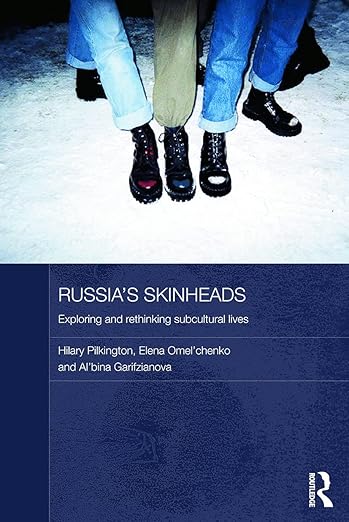
Throughout the twentieth century, ethnographic researchers were able to use experience to challenge hegemonic ideas about societies. In the English-speaking world, Scheper-Hughes, Abu-Lughod, S. Ortner, L. Wacquant, A. Tsing, H. Pilkington are just a few recent examples of major ‘disruptors’ who used fieldwork and observation to go against the flow of common sense about some ‘social problem’. (These are just a few who came to mind that I’ve either taught or studied. Hilary Pilkington, who worked a lot on the Russia beyond Moscow, directly inspired me and part of this post rearticulates her teaching).
Ethnography has emerged as a kind of ‘minority report’ – a kind of dissenting way of doing social science (many of us actually reject the application of scientism to our work). We usually share the view that the ‘common sense’ domination of numbers and metrics leads to dangerous groupthink or even complete misunderstanding of what’s going on. Ethnography is useful (maybe even indispensable) when the context of the ‘thing’ under study is important to our understanding of it. For example, it might be that we need a more holistic understanding of an- ‘other’, and this can include a society, like Russia, which is mainly presented through a ‘numbers lens’, or as explainable using quantitative methods (‘60% of Russians support the war, therefore they ergo must be fascists’).
Some of the other advantages of ethnography in general are relevant to the Russian case too: if a group under study is hard to reach e.g. ‘ordinary Russians’ who don’t take part in politics or polling, or whose livelihoods rely in part on the informal economy. If building trust relations with respondents is a prerequisite for the research e.g. people living in a society with a particularly repressive state. Where you are studying complex relationships or the dynamics of social processes e.g. the impact of war and economic pressures on attitudes towards the government.
But how do we get to these insights? What’s special about the approach? Sometimes overlooked is that it’s not just interviewing but also observing and even ‘participating’. William Foote Whyte, in 1984 wrote: ‘Observation guides us to some of the important questions we want to ask the respondent, and interviewing helps us to interpret the significance of what we are observing.’ It’s a reinforcing loop of interpretation.
Paul Willis, another important voice, said that to do an ethnography is to engage in everyday life for the purposes of reflection upon it. This is the essence of ‘the sociological imagination’. What’s that? Most simply, after C. Wright Mills, it’s the idea that ‘abstracted empiricism’ (data produce statistical assertions that then get collapsed into ‘scales’ of public opinion, for example) tends to lead us further away from a deep ‘awareness of the relationship between personal experience and the wider society’, unless we are careful. So, Mills points out, writing in the 1950s, ‘voting behaviour’ might appear to be easily amenable to statistical investigation, but really, it tends to produce an analytically ‘thin’ version of reality: it ignores things like the party machinery for getting out the vote. It might ignore the role of the traditional or extended family in shaping political views.
Of course, it’s no coincidence I mention Mills’ example of polls and voting behaviour. For this is still the main way that social reality in Russia is translated and presented for Western audiences. Ethnographers would assume that data are never just ‘gathered’ like fruits in the wild but actively produced in the interaction between the researcher and the human interlocutor. This is what Anthony Giddens refers to as the ‘double hermeneutic’. It means that stating we are ‘objective’ in recording our observations is insufficient grounds for claiming we have generated reliable ‘facts’ and knowledge. The main challenge to positivistic versions of social science (incl. polling) is ‘interpretivism’: we can only know the social world we study via the meanings attached to it by human subjects. Because meanings are different and changing, and contested, we can’t keep a firm hold on to the idea of a stable external social ‘reality’.
Now, there are many critiques of surveys, but you may not be surprised to find that when you mention them to people who rely on survey methods, they respond with technical justifications (that the sample size was representative, that the questions were formulated to cope with preference falsification, and so on). The main critiques come from phenomenology, emancipatory analysis, and feminism. I won’t go into detail here, but on the first point, phenomenologists might point out that the survey is a highly artificial interaction and often the person responding is reacting to expectations – both of the researcher, of what’s the ‘right’ answer, of what’s ‘politically correct’, or the rumble in their stomach because it’s lunch time. In other words, the answers are in no way empirical ‘facts’.
Further, quantification is not ‘valid’: people don’t think of their ‘support for the Russian Armed Forces in the Special Military Operation’ in terms of ‘completely agree’, ‘largely agree’, ‘disagree’, ‘strongly disagree’. Indeed, this language may be so hackneyed or alienating, or, indeed, frightening, that some of the answers might be worthless. Now, it might be that some people actually think that Russian soldiers are above all paragons of virtue and that stories of war crimes are made up Western propaganda. The point though is that a survey certainly won’t help you understand that. [obligatory note that there are people – and they’re mainly Russian researchers based in Russia – critically interpreting survey data to find out important stuff].
Once again, it’s kinda sad that in the 1950s there was already growing scepticism among sociologists about official statistics and survey methods and this was one reason that secondary (more qualitative) analysis exploded, especially in the UK. That’s not to say that quantitative methods don’t have an important role to play elsewhere. There are lots of social relations that are quantifiable in some way or other – age; voting proportions; wages; time spent working; wealth and gender inequalities.
But this post is long enough already. I like the 2017 article on polling by Greg Yudin and often read it with my students. In it, Yudin has some zingers: polls are an institution of political presentation (not representation). They are pernicious because they wholly occupy the public’s imagination due to the absence of other democratic measures of voice. ‘It hypnotizes its audience with its numbers’, but ‘because it is inappropriate to talk about politics… [it is only a radical minority of people [who] answers questions… That’s why the claim that polls represent the population has no foundation in reality’. The article is well worth a read again, especially as it’s not just in Russia that people are hypnotized by the Wizard of Oz.
 Postsocialism