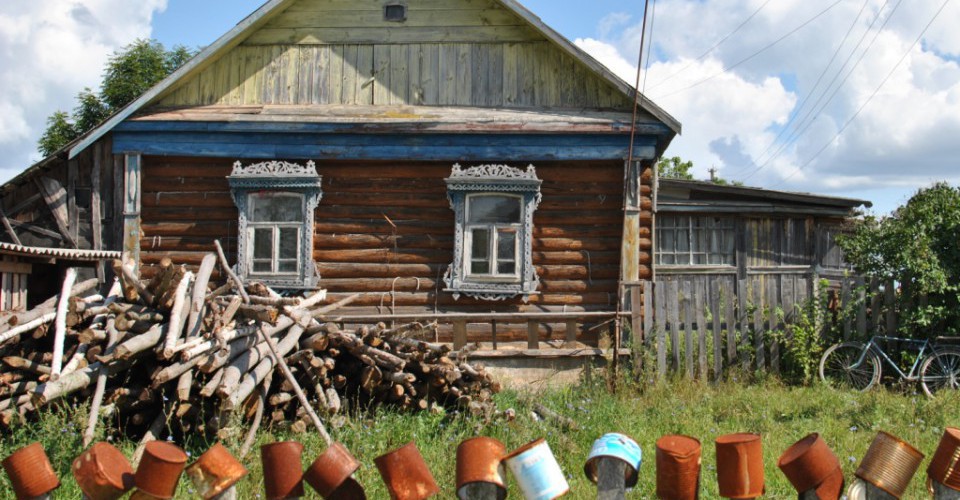
This is the second post to look at the ‘convenience’ side of soft authoritarian administration: the comfort it increasingly appears to provide to the majority of Russians. Ideologists of all stripes in Russia have always had a problem with slotting in material well-being and the petite bourgeois life into a set of values that are supposed to be operative in the so-called ‘spiritual’ community of Eastern Slavic culture. But, as I asked in the previous post, what if material well-being itself, as a direct result of authoritarianism, could become a kind of ideology? To think about how authoritarian ‘comfort’ can become a source of public satisfaction (or ‘legitimacy’) we have to re-iterate some home truths about what kind of ‘realism’ most people confront daily. It certainly isn’t open repression or a sense of living in a personalist dictatorship.
A focus on political authoritarianism as all about coercion or about ideological differentiation deflects our attention from the discursive reality as experienced by most, if not all Russians: a kind of socio-economic Darwinism. This is a hegemonic ‘common sense’ that exhorts all to become self-governing atomized subjects – individually responsible for their success and failure in life. The first ‘common sense’ acts from above through dominant discourses and economic policies – the notorious labour code sets an example (making defending workers’ rights legally almost impossible), and the paltry social protections for vulnerable groups make sure they understand their position (‘the state owes you nothing’). Just as important is the response from below which internalizes and reacts – a ‘neoliberalism from below’. People adapt and even partly mould themselves to this unwritten compact. This is explored in part of my new book.
There’s nothing new in this situation since at least the early 1990s. Indeed the whole point is arguing for the timelessness of survival of the fittest as part of a dominant discourse of suspended modernity – ‘you can’t have nice things anymore: social democracy was a mirage’. The war makes things even more obvious and pressing at an individual level. Inflation means that a huge amount of labour market churn has been ignited in a system that was already suffering from labour shortages. Workers internalize the need to ‘hustle’ and be on the lookout for better opportunities. In turn, corporations and employers struggle to offer some kind of enhanced package – a ‘wartime’ deal, to bind workers in place. Ironically, this looks more and more like the Soviet deal: paternalist benefits like special medical insurance, kindergarten vouchers, enhanced holiday pay. That, in some respects, employers are on the back foot partly explains why some Russians consider there to be more opportunities today for them because of the war.
However, the ability to leverage an interest group’s structural power is limited. Pay at all but executive level is still extremely low by middle-income country standards, and physical mobility in search of jobs is hard because of the housing crisis, exorbitant commuting costs and poor infrastructure beyond the centres of large cities. The question of railway modernization came up the other day because of the announcement that the Russian government will invest in a massive high-speed rail programme. While a classic example of political distraction and reannouncing old news with no fiscal capacity to follow up on the plans, it’s also laughable to anyone who knows anything about RzhD (Russian Railways).
RzhD can’t even deal with the oversupply of empty wagons clogging up the creaking existing network and its structural problems as a state monopoly. The latter include extremely low productivity, the inability to cut waste and invest appropriately, being subject to political interest groups (wagon builders), and just not being able to attract skilled workers. Russia is short of 2500 train drivers and 3000 loco crews, and yet RzhD – which cannot go bankrupt because of the state’s backing offered its staff, wait for it, … a 1.2% pay rise earlier in the year. Military Keynesianism this is not. This is a harbinger. If the general crisis of stagflation in Russia becomes entrenched, and it looks that way, the realization of the structural power of workers of all types will become an important barometer. Just because striking and organizing is illegal doesn’t mean it won’t happen. Scholarship on labour unrest shows that when it comes, it is contagious and happens because of rising expectations.
So far, so good (well, bad, actually). But the dismal reality of labour’s subordinate positioning is not the end of the story. That we can call the evolving regime ‘soft administrative authoritarian’ is because the reverse side of neoliberal austerity + surveillance and monitoring is the democratization of digital convenience, which in the post-Soviet context is often evoked as part of a narrative of authoritarian comparative advantage. Cue one of the endless social media posts of US ‘exiles’ in Moscow marvelling at its profusion of bars and stores, its cleanliness, order and whiteness. Any mention of Moscow should immediately give pause for thought, but sooner or later, innovations to make life easier there do diffuse to the margins. And this is because an infrastructure of ‘comfort’ is inseparable from the forms of digital control.

Realtime monitoring of people and vehicles using cameras and apps has dual uses – I can see on my state-controlled mapping app where my bus is in real time even in the sticks (something hardly possible even in most European cities). In Moscow, I still can’t get over the unemployed children of upper-middle class people ordering things like a single tub of ice-cream which is delivered in minutes for a tiny delivery fee. The courier is fed the address from that same smartphone that monitors one’s every move. The app prompts the user to feed the gate code to the courier when they forget to buzz him in. When on the move, people pay for little comforts, like a spiced latte, using ‘Facepay’. After all, what’s the harm when all the self-checkouts use face-recognition to prevent shoplifting anyway? Administrative security is built into everyday life like in no other European country, let alone the US where they have a banking system more fit for the 19th, than the 21st century.
And the point is not to remind people that the security services have access to everything (and that even now, data in the Interior Ministry car owner database can be bought and sold for trifling sums), though they might well ‘remember’ that too. The point is that administrative security – including having everything the state provides on a single app (and soon, communication on a single state-messenger service: Maks) is a meaningful source of national pride – “look at what our programmers can do? You can’t even book a school place or doctors appointment online in the backwards UK”. The idea of technological progress in place of genuine progressive modernity (where rights and entitlements are advanced) renders the voices of those who urge to resist and imagine an alternative political or social order absurd and unthinkable. After all, Moscow is the most liveable city in the world, right?
At the same time, even as the population gets poorer by middle-income country standards (from formerly a position similar to Malaysia, to a position more like that of Mexico), the baubles of the comfort and convenience economy are rolled out even to the smallest humdrum towns like the ones I study. Amazon-type staffed collection depots are everywhere (there are four in the town of 15,000 people I work in). The Yandex taxi app extends its reach into the provinces, and actually has detrimental effects as it makes informal taxi-driving unprofitable for many middle-aged working-class men. But it’s more convenient for the middle classes of course, who can afford the higher fares.
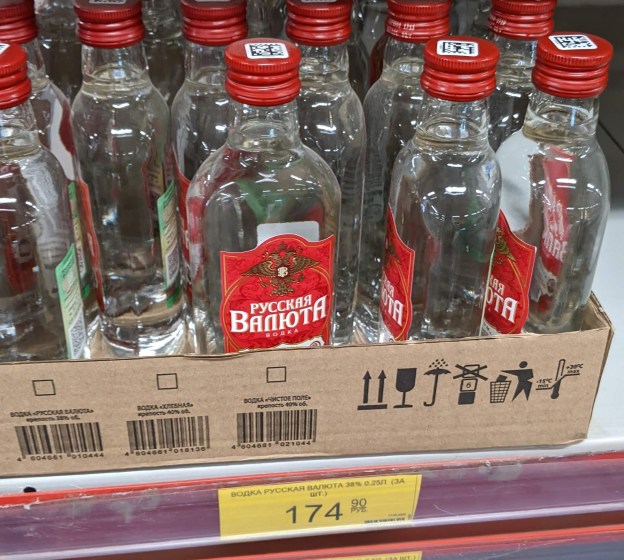
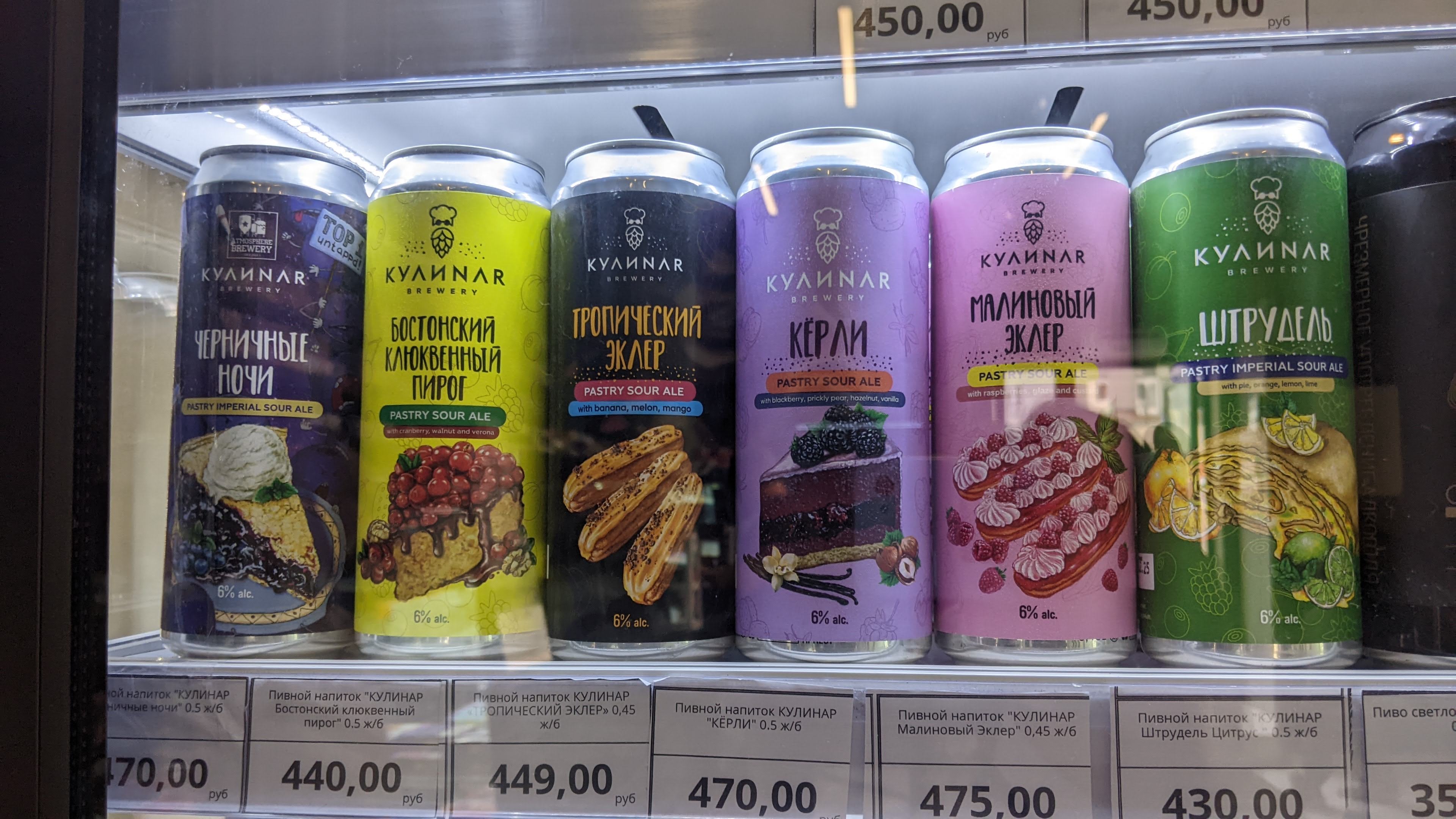
A Russian sociologist who wished to remain nameless reminded me recently that real ‘moral code’ [skrepy] of Putinism for most people is the democratization and stratification of the consumption of alcohol. For every degustation spot for fine wines, or craft beer popups in Moscow suburbs, there’s a ‘Red and White’ booze discounter. Red and White has over 21,000 little stores across the country. That’s twice as many outlets as there are McDonalds in the US, which has more than significantly more than double the population of Russia. There are usually three stores within a ten-minute walk of even the most unfashionable location in Moscow (ask me how I know). There are stores in the Arctic circle and one on the tip of Chukhotka, facing Alaska across the Bering Straits. There is even an outlet in the ancient city of Bukhara in Muslim Uzbekistan.
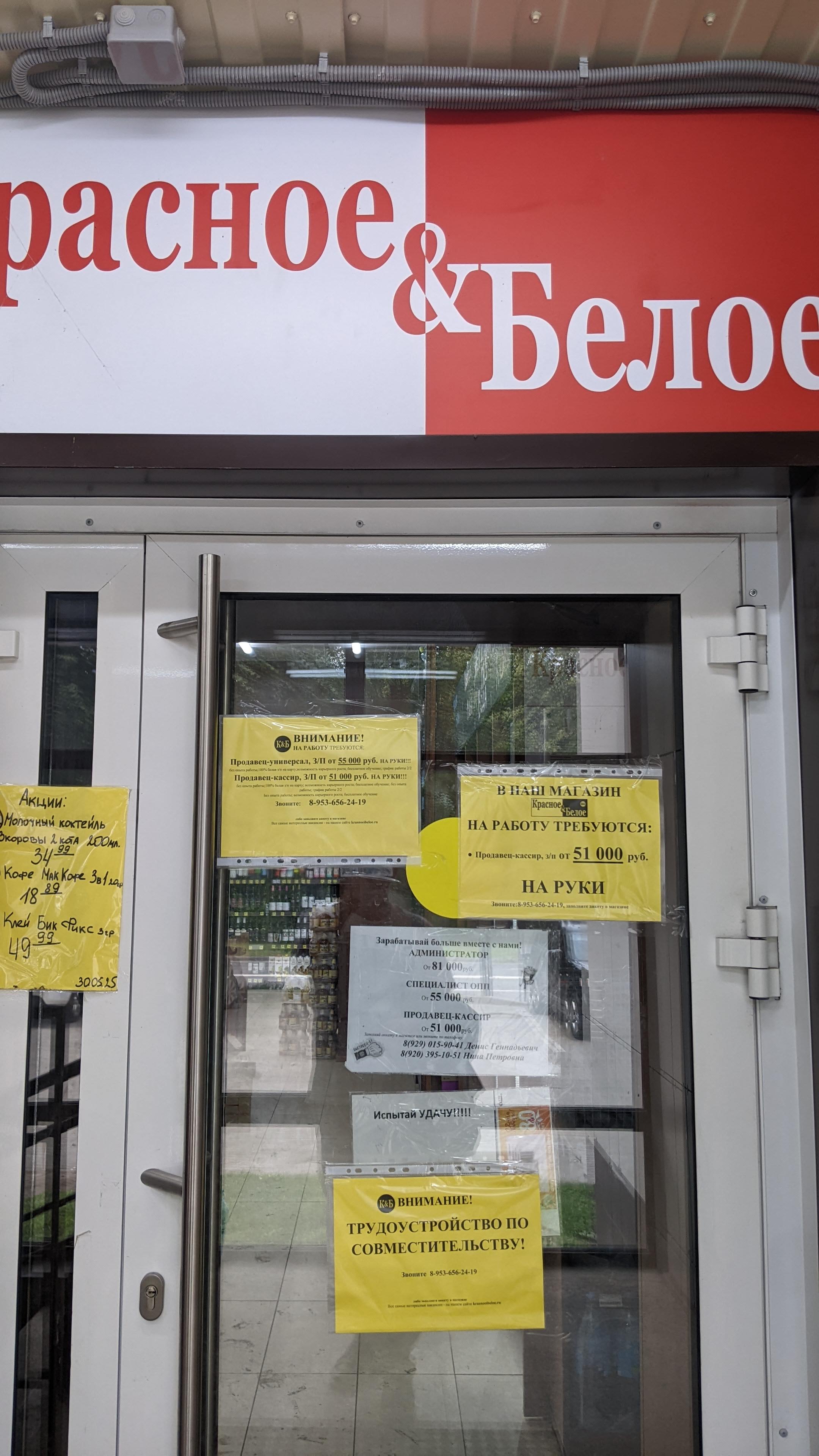
The number of B&W stores has nearly doubled since the start of the war as has the net worth of its billionaire owner. The slightly seedy, cheap and not-very-cheerful pokey stores are reminiscent of the worst of New York bodegas or UK cornershops. Their explosion shows not only the abiding nature of self-medication with alcohol but the explosion in demand for ‘low-cost’ offerings (the Group owner has also expanded his holding of discount supermarkets which do a roaring trade now – the photo at the top of this blogpost is from one of these stores).
Pity not only those purchasing adulterated beers and nasty red wines, but the hapless Central Asian immigrants forced to work for a pittance in these dives, along with the 24/7 kebab joints that usually spring up next to the wine shops. Comfort is maintained by a neocolonial service class. It’s also about the ‘doxa’: the naturalized and inevitable order: everyone has their labour price, and if yours is low, it’s the Red and White for you.

Consumption according to station is a moral virtue – achieving some kind of comfort and habitability becomes an ethical marker, rather than a purely socio-economic one, as researchers Rivkin-Fish and Crăciun and Lipan have argued. How this interacts with the war economy more directly – in the form of creating categories of biopolitical waste, and helping middle-class people distance themselves from responsibility for the conflict – we’ll come back to next time.
 Postsocialism