Tag Archives: everyday politics

Beyond the Talk: What Questions Reveal About How We Understand Russia Today

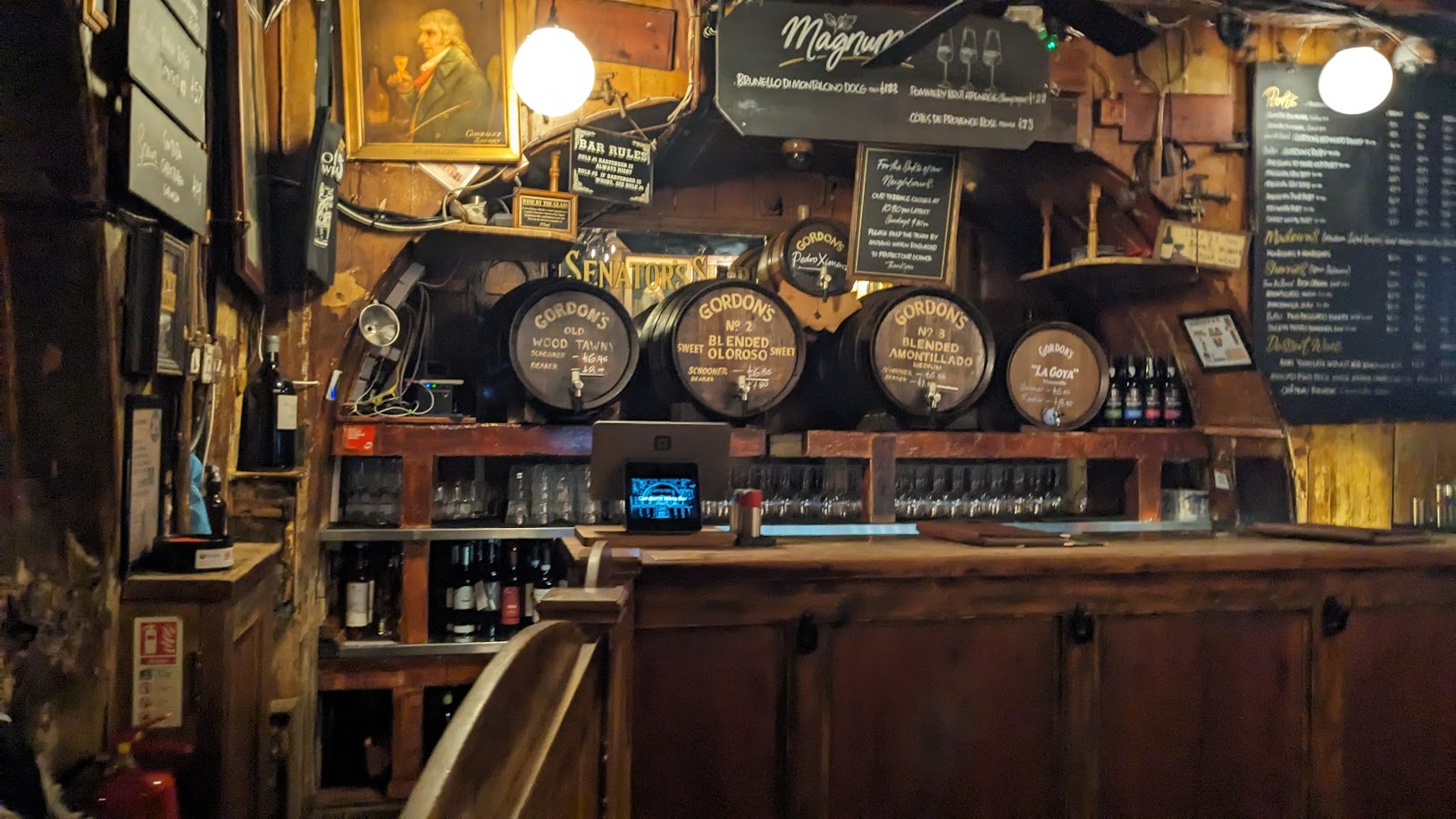
Guess what schooner rewarded me after my long talk?

On Monday this week I was fortunate enough to present my book at the King’s Russia Institute. I’ve now presented it a number of times for different audiences. This time I tried to do a really deep dive into the complex architecture, even though the talk was a public one and had a mixed audience. However, instead of recounting to you the content of the talk, I thought I’d share the questions I got from the audience at the end of around 55 minutes of me yapping. I think often the responses are the most fascinating part of a scholarly event – where you get a good idea of the core interests of the audience and how your talk has connected – or failed to connect.

There were a lot of questions and I didn’t manage to write them down in full, but here’s an approximation of them with a short version of my answer:

How does internet censorship affect knowledge of the war inside Russia? How can people move from a pro- to an anti-war position given the limitation of information about the war? How do people find information about the war to then be able to adopt an anti-war position.

This for me seemed to be based on the mistaken assumption that people are isolated from sources of information that could potentially present a different version of reality to that consumed in mainstream media. However, in my answer I emphasised that information was not the problem, nor was censorship, but that the real problem was that people with doubts or moral objections are made to feel isolated and in the minority, when that’s not the case at all. Making people think no one would share their opinion is the genuine strength of media control and self-censorship. This is also a way to deal with people, who misguidedly in my opinion, think that ‘preference falsification’ is merely a technical problem in surveys, but part of the ‘curse and blessing’ for Russian studies, as Alexander Libman calls it, of the ‘credibility revolution’ (that empirical work should be about showing causal relationships in data statistically).

Can one really say there’s been a growth in repression inside Russia since the war?

I don’t really understand where this question came from, but it allowed me to talk about the power of random and non-predictable repression using examples of people in my research who are openly anti-war, and then the documented cases where people got prosecuted for ‘likes’ and social media posts. I still remain of the opinion that many of the people prosecuted wanted to set a moral example, which in itself is interesting (if very sad). The oppositional people in my research (a very small sample) are extremely careful about some things, but seemingly take risks in other contexts where constructive ambiguity is possible. Of course there is also the possibility of the very Soviet tradition of opposition by analogy or metaphor which some of my Russian colleague like to draw attention to.

How do you understand the term ‘civil society’ as it applies to Russia?

This was I suppose a direct response to part of my talk where I say it’s important to draw on the very rich newer threads in political research that emphasise emotional and social motivation for activists, and the pre-organizational capacity of people to, well, get together and stand up against things they don’t like. One of the more interesting tensions in the books is me saying that things like Navalnyi’s regional ‘training’ of activists was genuinely capacity building while, at the same time, there will always ‘spontaneously’ emerge leader-like or charismatic figures to can anchor the expression of grievances and that often participation is ‘pre-cognitive’ or ‘beyond intentionality’. In that way, I’m merely echoing work being done in disciplinary contexts a little removed from mainstream political science – both in critical human geography and indeed, in Russian sociology itself.  

How have people been able to distance themselves from the war through pursuing a policy of detaching themselves as much as they can from the state (the ‘happy ones’)?

This was a very detailed descriptive question based on personal experience and it allowed to briefly reiterate what I’ve written on this blog quite recently about the very strongly class-inflected experience of the war in Russia (mirrored by the Ukrainian experience to a degree) and how yes, some people can both ‘buy’ themselves out of thinking about it. Though, I emphasise, the book argues that everyone has to deal with a particularly fickle and mean state at various junctures.

How do you gain the trust of people? How do they internalize fear which then affects their behaviour and what they say to people? How do you avoid just circling in the same group of persons in your research?

Some standard answers here about snowballing and long-term embedding in communities. I do think participant observation helped me overcome one failing I had early on after 2022, which Ilya Matveev helpfully pointed out to me: it’s easy to underestimate the power of fear in Russia.

How does resentment against the war manifest itself in relation to how people treat veterans?

I think I maybe misremembered this question, but it allowed me to repeat a point Ekaterina Shulman/Schulmann made recently about how people when surveyed are quite critical of the idea of the state providing more than just mercenary payment to soldiers and are not at all for the idea of giving them political influence or a ‘social’ preference in access to services, etc. In that (Russian language) YouTube talk by Shulman there’s also some interesting critical discussion of how to interpret survey data in Russia.

What do you mean by state capacity? How can Gen Z inspire the rest of the population in opposing the path taken by the state?

Two questions here. The first in response to perhaps the most convoluted part of my book/talk which is where I try to demystify the operations of the local Russian state by saying ordinary people have a lot more power to change how the state operates and that this is a political kind of power. In a sense, ‘capacity’ to get policy done depends a lot on consent, and even a kind of common modus operandi shared between citizens and street-level bureaucrats. The examples I give in the book are trash collection, heating infrastructure, and even 2022 military mobilization. There’s an accessible early version of how I think about this here and again, here.

The last question was in reference to the detention of the street singer in St Petersburg. The questioner was right, I think, to point to the moral example of young people as capable of forcing older people to reflect on their own hypocrisy and cowardice, and, hopefully, change this. On the other hand, I responded by saying that when regimes start policing the minutia of popular culture, they start to look a bit absurd, and from there it’s not a long journey to them looking weak and brittle.
The Micropolitics of Desire: Small Acts of Civic Engagement in Dark Political Times

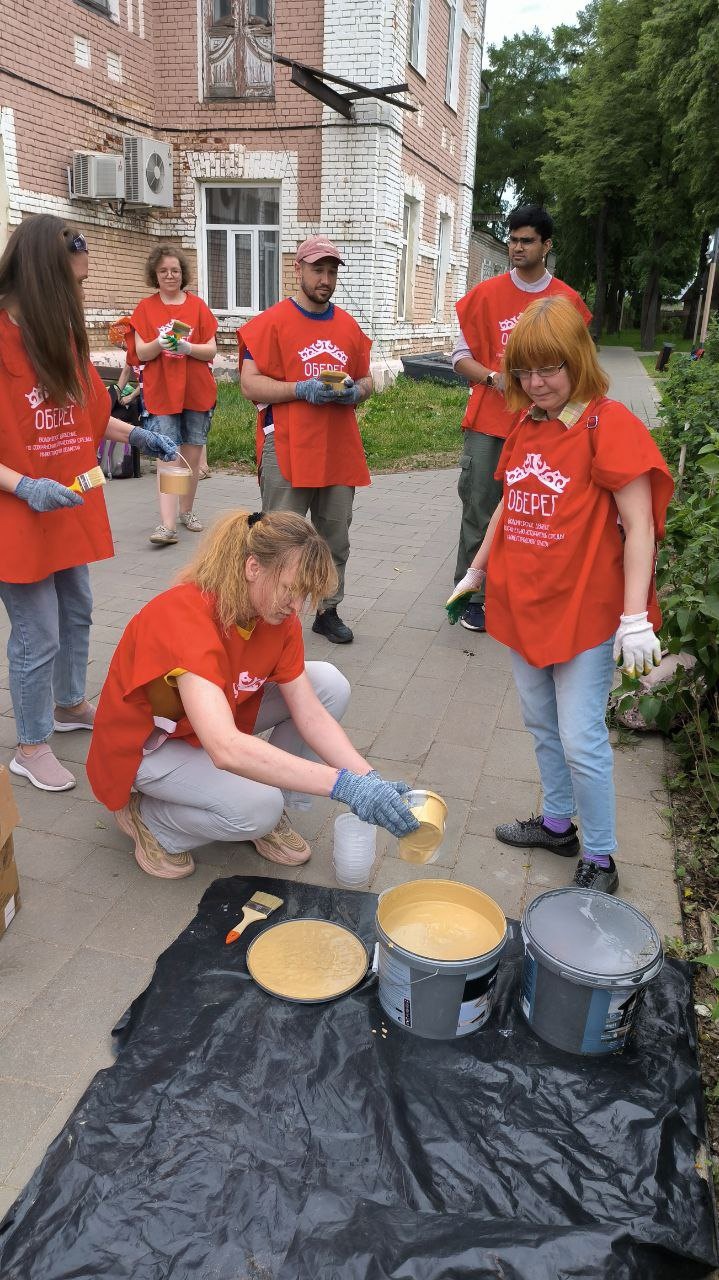
A voluntary civic heritage protection group in Nizhny Novgorod

This is a slightly different version of a piece written for OVD-Info and published here. Many thanks to this important human rights monitoring and advocacy group for publishing it.

The election of Trump might seem very distant from the realities of Russian society at war, but the reaction of many Americans to his immediate moves to take control of (or even dismantle) parts of the US state he doesn’t like speaks volumes. What should ordinary people do with their feelings of despair and helplessness in the face of naked power grabs supported by cynical figures? This is an emotional experience familiar to civic-minded Russians.

There are also dangers in these feelings. It’s easy for Americans to react further in two unhelpful ways: either the system will be robust enough to stop the descent into a kind of oligarchic dictatorship, or that the actions of individuals don’t matter, or can’t change things, so it makes no sense to put one’s head above the parapet. Often this leads to the worst kind of ‘internal emigration’ where people detach themselves from any and all forms of social solidarity or civic work, retreating into the husk of the individual.

As a Russian interlocutor put it to me about a month ago, ‘since 2022 I have benefitted from trimming my exposure to people. To stabilize myself personally, I’ve learned by heart something I say over and over to myself: that it’s purposeless to speak of politics and current events.’ And this from a formerly civically-active person in a large Russian city.

But not everyone has the luxury of turning to personal problems as a way of avoiding the social. Indeed, one of the ideas at the heart of my forthcoming book about politics in Russia is that the human drive or desire to connect to others and work on a common task is hard to fully suppress. Many researchers focus on questions of ‘legacy’ and how much the idea of what is possible or impossible for individuals in Russia is determined by their experience of the last 30+ years, by their interactions with the Russian state, and by their disillusionment with electoral politics. As a result, increasing numbers of Russians when polled express preference for a social and political system resembling the Soviet one.

In my book I talk to people from all walks of life about this problem (how the past should inform the future). But I do it indirectly. I talk to older people about what is missing from their lives now, about their ideals for the lives of their grandchildren. I talk to workers and thinkers about what kind of ‘good’ society can be imagined. Even in the darkest of times the stories mainly resemble each other: having a role which is meaningful in improving one’s social environment, enriching the lives of those around us, and having a political referent that sees the possible future as better than the present. These are all remarkably unremarkably things. Moreover, while I talk to self-avowed ‘activists’, and ‘politically-minded’ people, they are the exception to the rule of the ethnographer, who aims to capture as much as possible the socially typical, the everyman and woman depending on the time and place of the research.

However, much of the time in media and scholarly commentary on Russia, the inheritance of the period before 1991 and in the interregnum of the 1990s, is cast as providing antimodels: that it forced people into double-think, subjected them to meaningless ritual political talk turning them into cynical individualists, or on the economic level forced them to engage in corrupt or illegal forms of survival strategies, often at the expense of the weakest in society.

Perhaps some of the most dominant ideas about the social legacies operative in Russia propose a powerful framework about what 70 years of communist rule did to the Russians – they maladapted to survive, but in doing so remained civilizationally-incompetent when presented with the choice between autocracy and democracy, the liberal market economy and insider rentier capitalism. The danger here is obvious but rarely acknowledged. The maladaption frame allows all structural and complex failings in a society to be downplayed in favour of channeling guilt towards ‘the masses’; it tends towards simplistic technocratic solutions, and is profoundly anti-democratic in nature. To be fair, this anti-populist thinking is operative in most societies faced with extreme problems and rapid change. And that’s the point of rejecting the ‘maladaptive’ essentialization of national groups. Histories of countries may be more or less ‘lucky’ (Russia’s history is both!), and more or less affected by human and physical geography. But there’s little particularly unique to the political quandary of Russia, nor in the responses of mostly powerless people that would warrant the degree of exceptionalism ascribed.

If the possibility of imagining the ‘good’ as socially-connective is a powerful legacy even now, then what effects does this have beyond just an unrequited desire for change? By treating seemingly ‘apoliticals’ and ‘activists’ are equally capable, I try to give ‘noisy’ and ‘quiet’ or even insidious politics equal prominence. There are tireless yard-improvers, something quite a few researchers have written about from Riga to Vladivostok. Often conducted locally by older women, why shouldn’t beautification practices which include urban gardening, be viewed through the same political lens as the ambitions of opposition electoral work? Often the results are more successful for communities. While this is perhaps the most banal example of political virtue, it serves as a strong reminder that by taking constellations of micropolitical life seriously, we can anticipate changes at the macro level that otherwise defy explanation to those observers satisfied only with the actions of elites or the self-anointed.

My book reiterates an insight of political anthropology – that the separation of the political from the social is itself an ideological construct of mainstream social science. Nonetheless, as an ethnographer I also track down and follow many political activists who even today devote themselves to both anti-war activism and ecological projects. Indeed, the term ‘horizontalism’ is more important than ever before. Shared experiences of the repression and shrinking opportunities for openly public opposition in the last years only intensifies emotionally the ‘experiential entanglement’ of activism, as I call it.

While there are only a few who risk anti-war graffiti or even sabotage (and for ethical reasons researchers cannot engage with the latter), there are many who actively seek out niches to expand into – from therapeutic communities embracing holistic ecological and ethical ways of living in harmony with nature, to labour organizers who prefigure a future when associational protection of workers may again become possible. Through force of imagination for that future they agitate even now to protect dignity in work, and fight for better wages. Young people through collective practices of art, and even of leisure, continue prefiguring the better world they deserve: coming together to sew, paint, or just tinker with things. For some young people the most important ‘patriotism’ today is working together to care for one’s local environment, for example by taking collective hikes along river valleys to pick up litter. Even people who maintain constructive ambiguity around their loyalty to the state, are able to do meaningful civic work that is not recuperated by the regime. There are two major case studies in my book that relate to the latter: one on municipal government, the other about a group of motorcyclists. All the other examples here are taken from the book.

To return to the problem of powerlessness, Americans who feel despair at the prospect of Trump-Musk dismantling the Department of Education, or enabling the targeting of undocumented migrants (or indeed the repression of legal residents for ‘anti-american’ activities), or transgender youth can learn much from the civic and political flames that burns on despite darkness. Just look at the response to the environmental disaster in the Kerch Strait. Knowing the inadequacy and corruption of the state, ordinary people came out en-masse to clean up beaches and rescue wildlife. They did this without the prompting of charismatic leaders, without a ‘robust associational life’ of NGOs, and without a free media or ‘public sphere’: the open domain of social life where collective aims and action can be articulated.

It turns out that the common assumption to dismiss small acts, incremental thinking, and prefigurative desires is self-fulfilling. If we don’t believe in even a small politics and changes, then there will be no change. At the end of my book, I visit a housewife in a small town in Russia. At Eastertime in 2024 she gives out to neighbours some home-baked cakes decorated with icing. The icing spells out the abbreviation “XB”, which can be interpreted as representing ‘Christ is Risen’, or ‘Fuck the War’. Some of the cakes were more explicit than others. Why did she did this? Because she needed to acknowledge others and be acknowledged by them as a political actor.