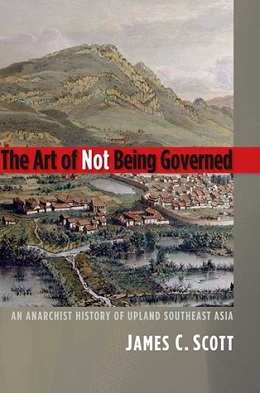
There were many responses to the news that James Scott has died. Most of them related to the debates around his later work – in particular the 1998 book ‘Seeing Like a State’. A landmark in showing the folly of state-led utopian engineering, Seeing Like also received critique from many different quarters. Ayça Çubukçu memorably asked – if Scott is against ‘imperial knowledge’, then what kind of knowledge would be anti-imperial? For Çubukçu, Scott’s position is indebted to Kropotkin and Bakunin and the anarchistic autonomy tradition. But at the same time, Scott remains bound up in a contradiction whereby his position is ‘itself a product of high modernism […] not unlike the utopian state projects he critiques’.
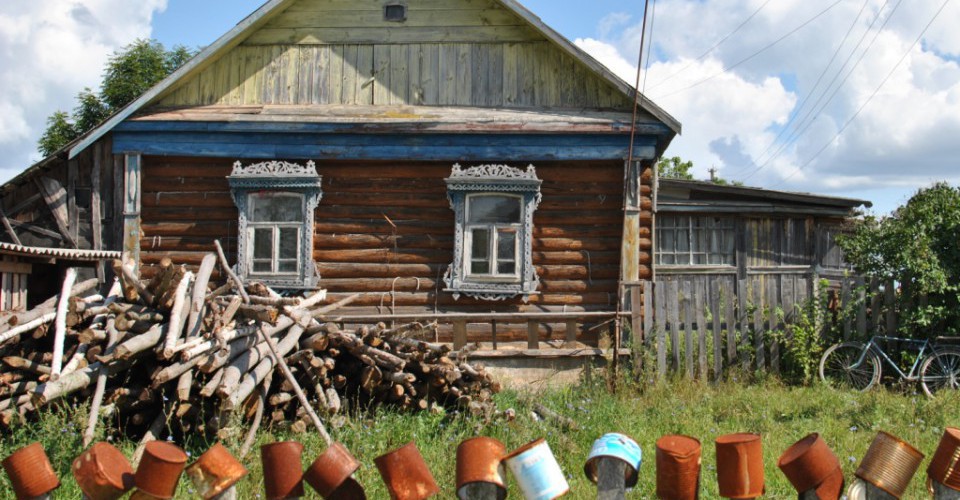
Perhaps most importantly for me, Scott’s work on the state clarified the importance of ‘legibility’ as a concept describing the relationship between state power and (often voiceless) subjects. Particularly in my forthcoming book (Everyday Politics in Russia: From Resentment to Resistance), the ongoing struggles around legibility provide the main drama of state power in Russia. In one chapter I use undocumented garage spaces as a good example of the incomplete penetration of the state into autonomy-seeking lives of Russians. I also use the idea of making-legible to briefly relate my discussion of humdrum provincial Russia to the much more overtly violent processes of ‘Russification’ in the occupied territories of eastern Ukraine.
Making legible subjects has always been a ‘comprador’ arrangement – it doesn’t matter whether the human resource is in Yakutia, Kaluga or Mariupol – human material needs to be fixed in document form in order to aid extraction of rents. I choose the most mundane examples – cadastral fees, fines for residents who don’t cut their grass, or who fail to pay their metered water bills. And this brings me to the second point of discussion around Scott. ‘Weapons of the weak’ was a term he popularized and which describes the ability of seemingly powerless people to set hard limits of state legibility-making. One of the main arguments of my forthcoming book is that there are many political ways for ‘the subaltern to speak’ in Russia today.
Accordingly, my work overall – including the current book – engages more with Scott’s earlier work – in particular his 1985 book Weapons of the Weak and Domination and the Arts of Resistance (1990). When Regina Smyth, Andrei Semenov and I were putting together our 2023 edited book Varieties of Russian Activism, we were a bit surprised that scholars of contemporary Russian politics hadn’t made more of Scott’s insights. For example, V. Morozov’s Russia’s Postcolonial Identity makes liberal use of the term ‘subaltern’, but resistance is nowhere to be found. The scholars who have tried to think with Scott about contemporary Russia can be counted on one hand: Christian Fröhlich and Kerstin Jacobsson, Karine Clément and Anna Zhelnina and, more recently, Svetlana Erpyleva and Eeva Luhtakallio.
Inspired by these scholars, my co-editors and I wrote in our introduction that ‘social conflict grows the shoots of activism, or at least counterhegemonic practices, revealed when Scott’s “imaginary overturnings of the social order” become commonplace, enabling more legible actions. It is clear in our case studies that, even when faced with threats from powerful actors, Russians organize public campaigns, file petitions, contact officials, air grievances in the media and on the internet, form coalitions with other groups, and participate in elections.’ Written before the invasion of Ukraine, it might have seemed that the infrapolitical frame of our edited book was quickly proven inadequate to describe Russian reality. However, with the exception of the work of Navalny campaigners, most of the activism described in the volume endures even in wartime conditions.
Turning to my new book, hopefully going into production in late 2024, along with ‘legibility’ of citizens to the state, the greater part is inspired by Scott’s imperative to uncover less visible forms of resistance to tyranny: the ‘fugitive political conduct of subordinate groups’. Even in circumstances of harsh oppression, ‘creative and subversive…forms of resistance’ mean that claims to active citizenship are possible (Frölich and Jacobsson 2019: 1146). Everyday and microscale anti-war activism remains vibrant, from the mundane to the spectacular: stickering, graffiti, ironic speech in public, underground organized groups promoting escape for soldiers, and even covert sabotage. However, in paying attention to forms of resistance from below, I also heed criticisms of this frame which call for a better contextualization of practices and talk that appears oppositional. In other words, we should always consider and interrogate, and not romanticize what look like infrapolitical acts of resistance. Do they have substance, and can we move beyond the world of ‘talk’ to examine micropolitical resistance in sets of practices that may not even be exceptional, but embedded in dispositions and ordinary ways of the lifeworld? That’s one of the big questions I ask in the book.
Overall, my answer is that approaches like Scott’s remain anthropologically naïve (not for nothing his reception in anthropology was much more lukewarm than in other social sciences). I follow Susan Gal’s detailed critique which shows how Scott relies on ‘simplified images’ of communication as a metaphor of how ideology works. Like the criticism of his perspectives on the state, an anthropological problematization of his concepts of resistance finds him wedded to a liberal-individualist Western notion of politics. Much more so than his admirers would be willing to admit. I can’t go into detail here, but Gal shows how Scott is reliant on a naturalized version of the self, and equally a neutral idea of the ‘public’, along with some simplistic notions of the referential qualities of language, in contrast to embodied and contextual linguistic phenomena – something I’m at pains to explore in my work – in regard to ‘supporters’ of the Ukraine war, as much as with ‘opposers’.
While ‘back talk’ and disguised ideological resistance is undoubtedly a real (and elatedly empowering) phenomenon among the oppressed and makes for an attractive antidote to approaches that assume cultural consensus and alignment (very much in evidence in coverage of Russians’ response to the war), Susan Gal argues that Scott essentially misses the insight that performance does NOT equate to authentic self. Gal cites Lila Abu-Lughod, among others, in support of the idea that artful, generic use of emotional states and language have long revealed the cultural constructed and varied nature of the ‘person’. Scott’s chief metaphor of ‘transcript’ is revealing of the limitations of his approach – a transcript is not a neutral reflection of reality, but an artefact shaped usually by the powerful. Gal concludes this section with the following:
‘the use of the dramaturgical metaphor in this book is shallow, contradicting the tradition of Goffman and the ethnography of speaking. The analysis of power-laden interaction relies on assumptions about the nature of human subjects and their emotions that diverge from recent comparative and constructionist work in anthropology’
I recommend Gal’s 30-year-old piece for readers of Scott. Not least as an example of how much more challenging academic writing tended to be in the 1990s! There’s a whole three other aspects to Gal’s critique. To summarise too briefly, they come down to: 1. Resistance to domination can take place at ‘community’ level through media; ambiguous speech characteristic of state socialism (Yurchak and Humphrey are cases in point) put paid to a simple dichotomy of dominant and subordinate speech 2. ‘Public’ is not an innocent term but a deeply ideological construct of Western thought. 3. While Scott is perhaps strongest in his critique of ‘thick’ notions of hegemony, his linguistic model tends to simplify and underplay the degree to which hegemony may be tacit (think of the way silence about the war may allow observers to characterize Russians as ‘supporters’), and that resistance is often partial and self-defeating (indeed, self-deprecating – as in, for example anti-war Russians’ essential agreement with Putin that ‘ordinary’ Russians are collectively brainwashed).
Gal’s intervention on Scott is worth a blogpost because it summarises in part the jumping-off point for my new book. Scott was inspirational in prompting me to work on subaltern resistance more seriously. Anthropological approaches (correctives) are needed though. We can emphasise the experience of micropolitical resistance without losing sight of the embedding of people ‘doing’ and ‘speaking’ dissensus in a particular social and cultural context. When my book goes into production in late 2024 (if I’m lucky), I’ll post more about my micropolitical approach.
 Postsocialism