Tag Archives: Mizulina

Childfree for me, but not for thee; Putin as Saddam; overheating Russian economy; the end of Area Studies as we know it

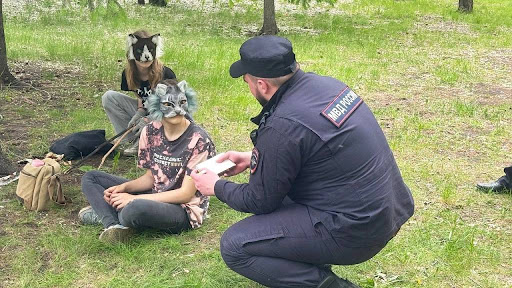
Parents of quadrobers, ‘kvadrobery’, are to be fined according to proposed new laws

Another post this week reviewing some goings-on in the Russia-sphere.

Biopolitical entrepreneur Katya Mizulina and head of the ‘Safe Internet League’, who is the daughter of politician Elena Mizulina – herself a pioneer in socially conservative legislation –  was asked at an event by a brave journalist why she rails against Western ‘child-free’ ideology while not having any children of her own. ‘Child-free ideology’ (sic) is just the latest addition to the not-very convincing attempt to consolidate Russian identity around the message that ‘we’re the protectors of the real Judeo-Christian tradition unlike the decadent Ukraine-nazi-supporting West’.

My new book (announcement forthcoming) opens with a look at the imposition of a new kind of civics lessons on school children. The very first ethnographic scene features a middle-aged male Life Skills and Personal Safety teacher who implores a room of teenagers to read the bible and recant of their pro-Western attitudes. Let’s just say these unwelcome distractions from the curriculum by unqualified and under-prepared instructors don’t go down very well with children and parents alike. Unlike the new social conservatism, there is an audience for patriotic education classes, where they are accompanied by genuine social and economic resources like preferential places at university. Young people are just as entrepreneurial as politicians in using political agendas in education to get ahead.

I’m not much of a fan of podcasts, but the Meduza Russian-language ones are often hidden gems. Like this talk with Maksim Samorukov about the informational isolation and blinkered world-views which ‘informed’ Saddam Hussein’s decisions to invade Iran and Kuwait. In making links to Putinism, Maksim stressed how subsequent endless uprisings were easily put down, even after military defeat… And that society’s dissatisfaction just isn’t part of regime calculus once elites get used to the idea of supposedly limited wars as a substitute for domestic programmes and legitimacy.

Maksim also emphasized the irrelevance of ‘new’ or contradicting information for these leader-types. Revelations that to you and me could challenge our priors (like the effect on US foreign policy of an election year – very topical) is merely incorporated into the existing world-view of the isolated person (Mr Putin, or Saddam). This podcast prompted me to finally start reading this book about the Iran-Iraq war. Some day I’ll do a post on the parallels between that war and the current Russo-Ukraine conflict. An interesting note about Saddam’s decision-making: some argue we have a really good idea of this because he recorded himself so much on audiotapes which were subsequently captured by the Americans.

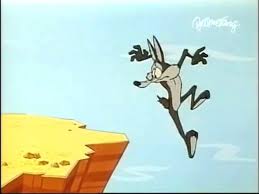
There’s so much being written right now about the looming problems in 2025-26 for the Russian economy and I can’t fit it all into this short post. In 2019 I discussed neo-feudalization of Russia’s political economy (“people as the new oil”). Many others have takes on this, from the idea of a new caste-like society with state bureaucrats as an aristocracy, to a more nakedly transactional ‘necropolitics’ where blood is exchanged for money (death payments for volunteer troops). Nick Trickett’s piece in Ridl argues against the ‘hydraulic Keynesianism’: that military spending boosts economic growth. Demographic decline and war are like a Wile E. Coyote cliff-edge for growth, a precipice towards which the Russian war stimulus merely accelerates the economy. Monetary policy like a 20% bank rate, ‘cannot tame what’s driving inflation’.
One of my informants on a very good blue-collar supervisor wage played ‘jingle-mail’ recently and moved back in with his parents. He’s 39 with no children and working in a booming manufacturing sector. He’s also working double-shifts to keep up with demand, but there’s a human limit to over-working in place of capital investment. Nick’s piece points to the stagnation in productivity in Russia.

Another sign of the endless war to make citizens fiscally-legible to the state is this story about ratcheting up penalties for Russian drivers who obscure or hide their number plates. Traffic cameras are, to an absurd and unpopular degree, relied upon to raise tax revenue in Russia. I’ve written about this many times on this blog.  The details this time are not so important, but the story illustrates a number of things – penalties are still pretty low for all kinds of avoidance and ‘resistance’; Russians are ingenious in making their fiscal radar-signature as small as possible; the technocratic approach (blocking an AliExpress webpage selling revolving number plates) of the government is wholly ineffective because the state is losing capacity due to the drain of the war.

Does this shorter and more frequent posting by me signal a trend (a move towards the style of Sam Greene’s excellent, short-form weekly posting)? We’ll have to see. Though the news from my Dean of Faculty that she proposes closing all language-based Area Studies degrees may indicate I will have more time on my hands in the future. At Aarhus University we’ve developed unique programmes where students attain a high competency in one language out of Russian, Chinese, Japanese, Hindi, Brazilian Portuguese, and then can go on to a Masters degree where they are team taught by experts beyond their region. So a Russian student gets exposed to expertise in Chinese politics, Brazilian environmental studies, and so on, regardless of their continuing focus on a single language. We also just began to expand Ukrainian studies and have two Ukrainian scholars working with us now. ‘Dimensioning’ [Danish Orwell-speak for cuts to staff and student numbers] of Area Studies will likely mean no language teaching in these areas in the future. We live in a time of narrowing horizons for students, unfortunately.  

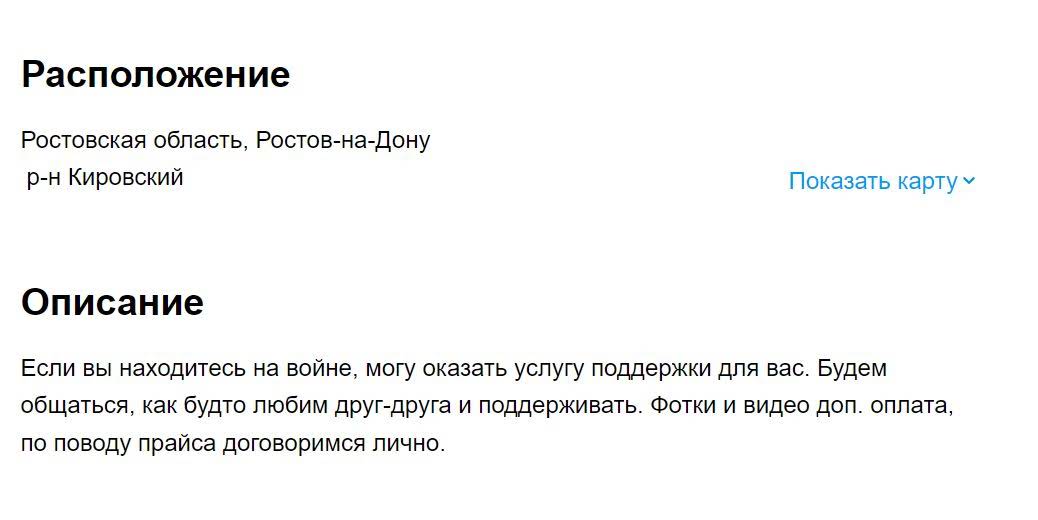
I leave you with this advertisement for war-time intimacy from Rostov: ‘If you’re at war I can provide a service to support you. We’ll communicate as if we love each other and support each other. Photos and video for an additional fee. Agreement about price subject to personal negotiation.’
Russian ‘notorious’ homophobia? The perils of measuring intolerance (and making cross-cultural comparisons)

LGBT right activists protest Russia

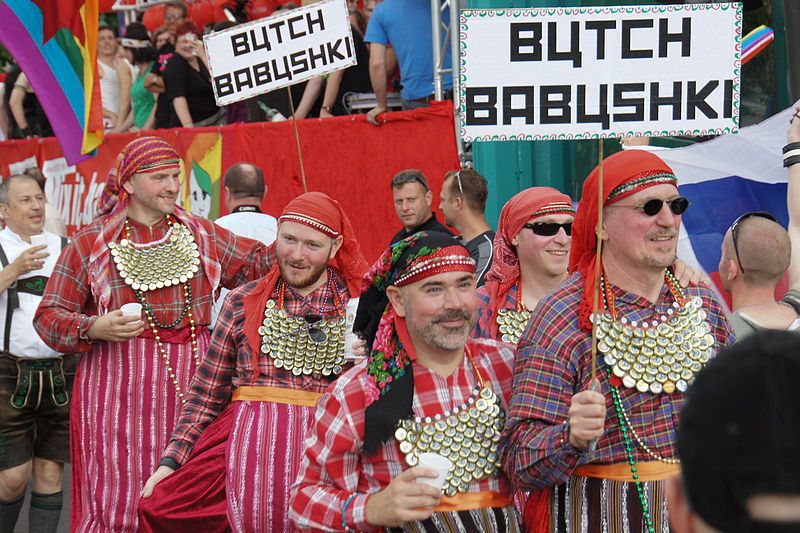
Activists in Berlin protest LGBT rights violations in Russia, including egregious abuse of Cyrillic and a large dose of Orientalism to boot.

I’m reading a lot at the moment about ‘culture war’, the conservative turn’ and things like historical homophobia in Russia. This is to prepare a paper and, hopefully, publication on this topic for a special issue in Europe-Asia Studies that a colleague proposed. So immediately I thought, well, what about looking at this from the ground up? Instead of taking it as read that where conservative entrepreneurs like Yelena Mizulina lead (‘prohibition is freedom’), ordinary people ‘follow’, my hunch was that actual penetration into society of ‘Gayropa’ tropes is weak. That’s not to say there is some fertile ground, and of course a long history of different types of intolerance, some of which are ingrained.

And so I was lucky enough to be able to do some focused interviews with some of the long-term contacts I have and surprisingly was able to get quite a (small) cross-section of people talking about this in my fieldwork last year. My rather banal conclusion is that while homophobia (like antisemitism) is sometimes talked about as if it were a national pastime (hey don’t troll me; more than one Russian friend has made this ‘joke’), Russia is not the ‘intolerant’, socially conservative place it is so often presented to be, when observers assume an active response to elite-led rhetoric about the malign influence of a degenerate western ideology of permissiveness. Take up and ordinary use of ‘Gayropa’ is the exception, not the rule around ‘everyday homophobia’. Although, having said that more than of my close friends in the field is a very big consumer of the Juvenile Justice narrative and there certainly is a susceptibility to the paedophilia-homosexuality linkage slur (Tova Höjdestrand has done good work on this and ‘grass-roots conservatism’ in general). This was brought home to me because when I moved from the UK to Denmark, it became a hot topic – Scandinavia being the blank canvas of permissiveness onto which some people project their fantasies (no I’m not going to talk about the story about the brothel for animals in Denmark – get your own browsing history tagged).

Danish Porn and Art Warning Sign

One of a collection in the series ‘You know you’re in ultra-laid back Denmark when…’ Porn (including some hardcore and violent films!) ‘might not’ be suitable for children?

Anyway, I will get back to those topics in a later post, perhaps when my article it better developed. In this post I want to focus in on the recent polling on homophobia (an ‘emblematic’ topic for measuring intolerance of others), in the light of the equally topical debate on the perils of opinion polling, and the homo soveticus debate. These three issues are now linked in my mind. What follows is my rather rough working draft of my deep suspicion of public opinion polling as evidenced by that done in Russia on homophobia (okay, I only looked at Levada).

Let’s take the recent Levada poll on ‘Attitudes towards LGBT people’. Radio Echo Moskvy presents these as: ‘More than half of Russians are negative towards sexual minorities’. This is accurate. However, without longitudinal context (conspicuously absent in coverage of the poll), things look different. While the headline ‘disapproval’ of homosexuality (56%) is presented with no time series to compare it to, other longitudinal data shows an ebb and flow from 51% approval in 2005, to a low of 39% in 2013, and back to 47% in 2019. Similarly, instead of ‘disapproval’, one could highlight the volatility of the ‘strong approval’ rating of equal rights: from 17% in 2005, down to 7% in 2013 and now 20%. In any case, psychology of survey data shows that people are more likely to respond with a ‘strong’ answer to items they interpret as politically topical and are presented with (compare the critique of ‘push polling’) – Brexit and migration is a good example of this.

Looking at the question of survey data and public opinion more generally, a major problem of interpretive comparability over time (among many others) is the tweaking of question wording that inevitably happens and the difficulty in formulating open questions. Levada recently came in for criticism on this very issue with their controversial survey on Stalin and Stalinism.  Here too, on homosexuality, the same problem is evident; it is very difficult to compare longitudinally a much more interesting question about ‘nature versus nurture’ in the creation of sexuality. In the 2019 poll, the question is, ‘Do you think sexual orientation can be changed under the influence of external circumstances or is it an innate characteristic?’ Leaving aside the clumsy and potentially confusing wording of this question that many respondents might struggle to understand, this question is quite different from the one in 2013: ‘Do you think sexual orientation can change under the influence of propaganda?’ Interestingly, Russians gave a resounding ‘no’ to this answer in 2013. In the 2019 version 46% agreed that sexual identity is malleable, while 27% thought sexuality was innate. I would argue that both question forms are methodologically ‘leading’ and that pollsters could have chosen a more neutral or open form of questioning.

There appears to be more interpretive value in more modest aggregate longitudinal comparisons. On ‘family values’ and the civilizational differences between Russians and ‘Europeans’ this has been attempted through integrating survey data going back to 1989. These show a relatively rapid movement from harsh intolerance of homosexuality towards a slightly less intolerant mindset by 2011. For example, Fabrykant and Magun (2011) present data showing a sharp fall in people wanting to exterminate homosexuals (from 31% to 5%) while ‘toleration’ nearly doubles to around 25% of respondents. The authors are optimistic about changes to normative values given that even the highly stigmatised meaning of homosexuality shows moderation over time. On the other hand, their comparative results show that in 2013, 70% of respondents still gave answers indicating they thought homosexuality was pathological in some way. (Big thanks to Marharyta Fabrykant for making me aware of these materials – you can check out her work here).

More recently, the same authors have pointed out that Russia is among on the ‘medium-high’ end of tradition-normative values in comparison to other European countries (Fabrykant and Magun 2018: 82) [opens as a PDF]. They base this evaluation on the work of Viktoriia Sakevich (2014) who analysed Pew Research Center data on ‘moral’ values.  When these findings are broken down by category, Russia differs little from Western European countries on issues such as extra-marital and premarital sex, divorce, abortion, contraception. In some cases Russia is more ‘liberal’ than both Anglo-Saxon and some Southern or Eastern European countries. Homosexuality is the outlier, with Russia more similar to Asian and African countries.

However, we should again exercise caution, because so much depends on how questions are phrased. If we return to the important question of nature-nurture and homosexuality, Russians do not look so much like outliers. A recent UK poll, for example, records 34% of respondents as believing that gays are not born, but made, with much internal variation in the sample (YouGov 2017 – Opens as a PDF). As recently as 1998 a majority (62%) of British people thought homosexuality was always, mostly, or sometimes ‘wrong’ (Clements and Field 2014). One could even take a contrarian view and argue that based on attitudes towards adoption of children by homosexuals, British and Russian people are pretty similar when it comes to the question of equal rights: British people are strongly against gay men adopting (actually, like Russians they are very inconsistent and answer differently depending on how the question is asked!). Edwin Bacon makes a similar argument, highlighting similar levels of nationalism in Russia and some Western countries today, and reminding us that attitudes towards homosexuality only changed (but did they?) in recent living memory in the West, and that on some measures, Russia is arguably more socially ‘liberal’ (immigration). Finally, as I write this, open hatred of gay people is in the news in the UK with two violent attacks in public given widespread coverage (in Southampton and in ‘tolerant’ London) this week and the ongoing standoff over the teaching’ of LGBT issues in Birmingham.