Tag Archives: putin

Russian expert media monitoring – September 2024

This will be a short review (well, actually not short) of some Russian media commentary (A. Pliushev, E. Schulmann, N. Zubarevich) and my reactions. If you think this kind of post is useful, let me know. It is often the case that informed discussion in Russian language on YouTube never really cuts through to anglophone audiences for Russia content. I don’t ‘endorse’ the persons or positions of any of these public intellectuals and journalists, but this kind of content is important for non-Russian speakers to get access to.

Virtual Autocracy?

At the beginning of September there were simultaneous elections of various kinds throughout Russia. The results were not very interesting but the strong push to ‘virtualize’ voting as much as possible is. Why not continue to rely on the physical and very visible power expressed in falsifying actual ballot papers and busing in people to vote on pain of losing benefits? The resort to a virtual electoral autocracy shows the authorities have a good idea of their genuine unpopularity and the continuing risks, even now, of all kinds of upsets. Not only that, they also understand the advantages of digitized authoritarianism (I’m hoping to do a big write up of this soon). You can geolocate voters in the app they use and this exerts a coercive power of its own.

But, as Ekaterina Schulmann pointed out in her review of the elections, getting rid of the spectacular in-person falsification reduces two powerful indirect effects: the visible demonstration of loyalty by voters to the state (which goes back to Soviet times) and which speaks to the main reason for elections in autocracies – the idea that legitimization still needs a public audience. Secondly, in the Russian case, virtualization means that the army of state workers – mainly schoolteachers and local council employees– are ‘let off the hook’ they’d previously been sat on: being implicated as ‘hostages’ in the falsification process as counters and electoral polling workers. Cutting out the middleman is interesting and perhaps reveals a real buy-in among the elite to the idea of “full-fat digital autocracy” maintained by technocratic management of populations. But, thinking sociologically, normalization of involving the morally-important category of teachers in illegal compliance with the diktats was the strongest spectacular effect of Putinism. Here, I’m also reminded of the big conflicts even now between parents and teachers over the disliked patriotic education lessons, with the latter stuck in the middle and largely unhappy at carrying out this task (more on this in my forthcoming book).

The election also revealed other indirect information about the emerging post-2022 Putinism ‘flavour’. There’s no sign of the much-expected ‘veteran-politician’ wave. Special Mill Op vets are not getting elected positions – many supposed examples of this in the media are just low-level bureaucrats who had to go to the ‘contact zone’ (frontline) to exculpate some disgrace and then came back. A big thing to watch for in 2025 also related to the war is the fact that on paper, the proportion of the national budget devoted to defence is due to fall according to the Finance Ministry. Watch this space.

The non-appearance of the Great Russian Firewall

On media use, Alexander Pliushev looked into VPN usage, and estimated that around 50% of internet users in Russia are now forced to use these services to access content, but probably not because they’re looking for subversive information. But there are plans afoot to root out VPN usage, along with the slow-down on services like YouTube. However, it is estimated to take years to root out VPNs, and this doesn’t take into account measures to develop new forms of avoiding blocks. Pliushev feels confident in this because while number of views of his content fell a lot from Russia, the overall picture is unchanged – meaning people just switching to VPNs. He should know: the ex-Moscow Echo journo has an audience of 300k viewers on Bild, and 700k viewers on his own channel. Already we see the emergence of IT service providers of ‘partisan’ packages to customers which improve the speed of YouTube.

Television as domestic wallpaper

A good accompanying piece on TV and media use came out in July by Denis Volkov of Levada.  In this piece he claims TV as a source of information is still really important, and I have some questions about that. It’s true, as he says, that the TV news is always on in the background of people’s homes, but other sources have reported that TV ad revenue has ‘followed’ the decline in audiences since 2022 because people are generally turned off by the very visible war coverage on main channels. Indeed, at one channel I know intimately, worker’s contracts are not being renewed and people are not getting the pay increases they expect. What’s more interesting about the Volkov piece is how rapidly the coverage of social media has changed – the rise in Telegram: readers of ‘channels’ there (mainly news and current affairs) has gone from 1% to 25% of the population since 2019. This is a sobering reminder to be cautious about state’s capacity to control informational dispersal. The unparalleled rise in the onlineness of Russian means we should also avoid too many historical parallels (Vietnam war, Afghanistan, WWI, WWII). We really do live in a different age.

There’s a lot I don’t agree with in the Volkov piece, but it’s worth a read. As I’ve frequently written here, if you’re attentive then stuff like this from Levada people reveals deep-seated ideological assumptions about Russian society that can surely be questioned. I don’t agree with his insistence on uncritical media consumption and the simplistic ideas about how TV shapes views. Nonetheless we get more interesting points – like that 28% of people don’t watch TV at all, that the audience for Twitter and Facebook is tiny at 2%. Late in the article we get the statement that the share of television as a news source fell by 33% in the last 15 years, somewhat undercutting Volkov’s insistence on the relevance of TV as a regime-population conduit for propaganda.

“It’s the regional economy, stupid!”

Moving on to Natalya Zubarevich’s frequent and detailed online talks (with Maxim Kurnikov here in mid-Sept) about regional economy and demography in Russia, she lets slip some interesting observations beyond her usual scrupulous (and self-censoring) focus on the ‘facts and figures’ from official documents. She talks about how noticeable it is that in military recruitment in Moscow there are few young faces and a preponderance of ethnic minorities. She talks about the current ‘hostile migration environment’ led to harassment of gig workers in taxi-apps (Yandex). But not due to war-recruitment pressure, rather to increase bureaucratic monitoring of taxi drivers in the capital, reiterating the point above about the government staking more on digital control. She says we have good evidence for this squeeze because of the rising visibility of Kyrgyz drivers for whom there are fewer migration hurdles. (Gig workers from Kyrgyzstan represent a case study about the gig-economy in my forthcoming book).

Zubarevich makes the point that low paid blue-collar workers are being sucked dry by the war machine. If we accept the national soldier replacement rate target is 30,000 recruits a month then yearly Russia is losing around 1% of the available male workforce – but it hits harder in logistics, warehousing, manufacturing, and so on and hardly at all in, for example, local government. She also provides good examples of agency within the state: where the Agriministry was able to get the enlistment offices to back off men who work as mechanics for farms.

Some criticise Zubarevich for her insistence on talking only about published statistics. Here, without openly saying it, she pours cold water on the idea of sustained income rises keeping pace with inflation. She doesn’t believe the figures of high annual percentage rises in salaries as sustained or ‘real’ (net effects). She also points to clear slowing in wage inflation in 2024. This then allows her to demolish part of the military Keynesianism argument. Low incomes have seen big increases but from very low base starting points (an apple plus an apple is two apples for the blue-collars; but the people in white collar jobs were already earning 10 apples. If you given them one more apple do the blue-collars feel less unequal?). Periphery growth (in regions including war factory locales) is not significant because it does not begin to affect the overall level of inequality in society.

What conclusions do we draw from Zubarevich’s dry statistical analysis? It’s a paradox that in Russia’s ‘necrotopia’, where multiples of annual wages can be earned for surplus people by offering themselves as victims to the death machine, the overall value of blue-collar labour has increased to a degree that alters the bargaining power of workers who remain uninvolved directly in the business of dying for cash. Nonetheless, productivity, whether in military or other parts of the economy has not increased at all because of human and technological limits. You can introduce another shift, pay people 30% more, but that doesn’t mean that the output/hour of tanks, or washing machines or nuts and bolts (another case study in my book) goes up. Zubarevich comes around to a quite conservative position. It might seem like the war has the potential to break a pattern of decades of very high income inequality and massive underpayment of ‘productive’ people, but the inflationary effects of war are already bringing the pendulum back to ‘normality’. She also reminds us that inflation and the isolation of the Russian economy mean that ‘veteran’ incomes will never have significant levelling effects on inequality either.

On the Russian Defence Ministry shake out

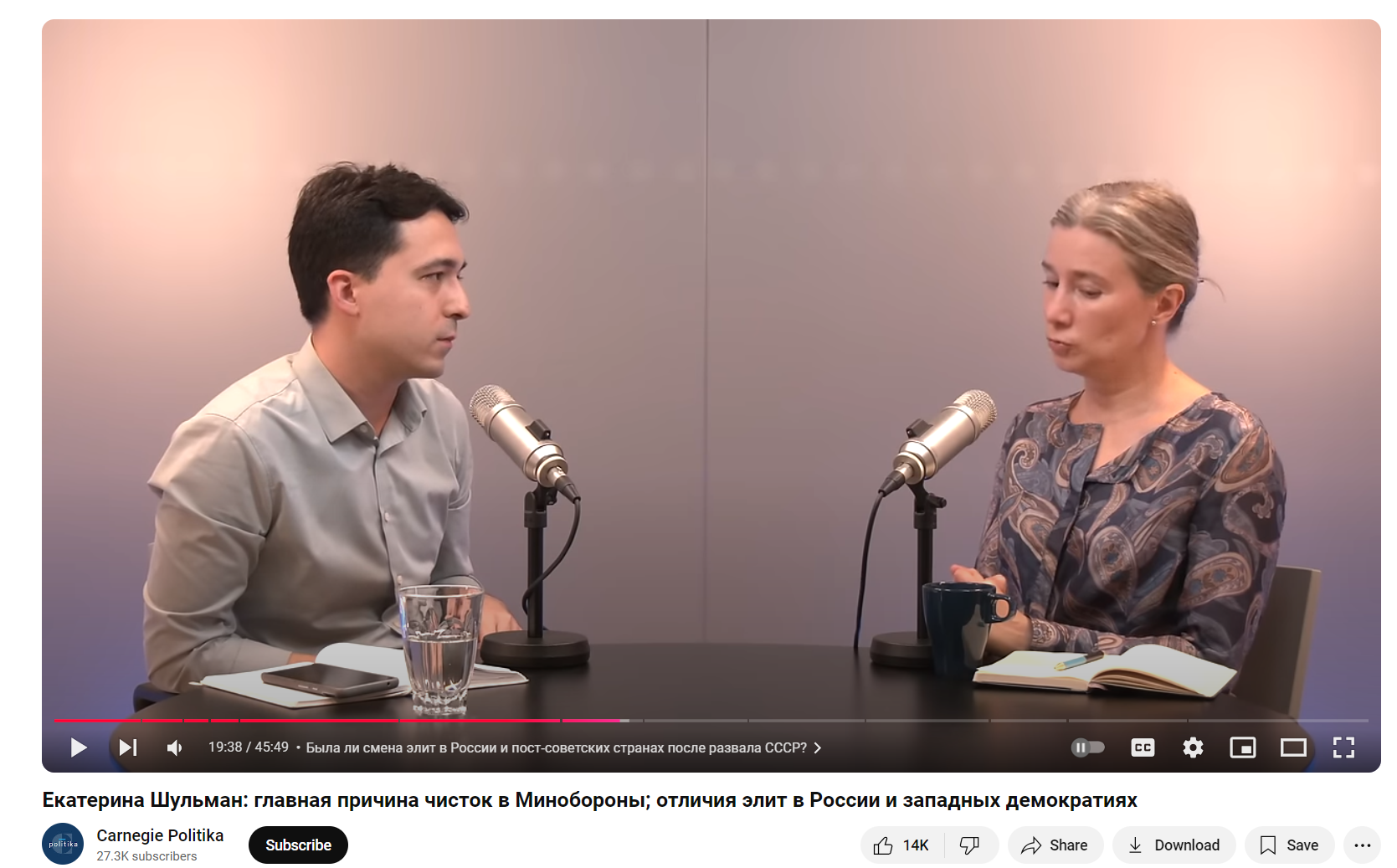
Back to Schulmann in conversation here with Temur Umarov. The purges in the Defence Ministry are like the Malenkov-Khrushchev pact after Stalin’s death. A new deal: not only will you not be physically exterminated in the war-of-all-against-all where there are no institutions to regulate political life, we won’t punish your relatives either.

What’s happening in the Defence Ministry is a Putin-style purge: not based on ideology, one could even call them ‘nihilistic arrests’, supporting the idea of nihilism at the heart of Putinism. And as Schulman says, this only serves to destroy any idea of narrative structure to the war aims. Umarov: it is Stalinist in the one sense that it’s a structural process of social mobility: unblocking of avenues for advancement for sub-elites. This should also give us some ideas about ‘where we are’ in the maturing or even autumnal days of this regime. Are these arrests signs of sub-elite impatience for more radical regime transition (in terms of personnel, not necessarily politically)? Stalin-Khrushchev-Brezhnev? It is probably a mistake to interpret this in terms of anyone thinking that these new faces will be ‘better’ at the job of war. Schulmann asks: are these repressions for the war, or repression instead of war? What she means is that instead of the fantasy that the overturn of corrupt military elites will allow real competence and patriotic leaders from the ‘ranks’ to emerge, in reality we just get new clients and relatives of those still at the top.

Schulmann reveals perhaps more than usual in this ‘academic’ talk setting. Her view now is that the core hawkish elite really did want to go to war in 2020 and only Covid intervened. There was a test run of an alternative ‘institutionalization’ of elite wealth and status transference in the 2020 constitutional amendment. It was a groping towards cementing the ‘rules of the game’ to lock in elite self-reproduction. But in reality few could believe that this this compact would survive Putin.  For Schulmann the rejection of this compact as unworkable, and subsequent turn to war as a ‘solution’ for the problems of elite consolidation really, shows the genuine narrowness of political imagination in Russia – no one really believes institutionalization is possible, and that even in the West it must also somehow be a ‘show’ or ‘fake’.

Russians: We don’t know what the war is for

One final nugget is the latest Russian Academy of Sciences’ sociology centre monitoring report from April 2024.  There are many surprises, but one stat stands out. People are asked, towards the end of a questionnaire containing sometimes absurdly slanted questions, about the Special Military Operations’ “solution”. They don’t get to choose their own answer, only pre-selected ‘options’.

Comparing the mid 2022 version with mid-2024, the results are interesting:

What should be the aim of the SMO on demilitarization of Ukraine and liberation from nationalists?

Liberate all Ukraine: 2022: 26%, 2024: 16%

Liberate Donbas: 2022: 21%, 2024: 19%

Liberate ‘Malorossiia’: 2022: 18%, 2024: 20%

Liberate UA minus west: 2022: 14%, 2024: 20%

Other opinion: 2022: 3%, 2024: 1%

Difficult to answer: 2022: 18%, 2024: 25%

There we have it: the plurality are ‘don’t knows’. The ‘other opinion’ includes the possible selections, destroy fascism, destroy Nazism, end Ukraine as a state, destroy Banderism, preserve Russian territory, keeping only Crimea. (A bit ambiguously worded, that. Did they mean to write: ‘keep Ukraine as it was, but leave Crimea to Russia?) Who knows. As my interlocutor writes: likely this document was heavily ‘curated’ and then the sociologists tried to rewrite it to make sense while not annoying the powers-that-be. Imagine a guy in epaulettes standing behind the bozo writing the report.  
The Russian Presidential Election of 2024 and the meaning of authoritarianism

People can tolerate autocracy, but they can’t tolerate the absence of hope in the future

The Russian presidential election presents us with a paradox that itself is something of a sea change for the meaning of politics today in that country. There was a pronounced shift. The election was likely no more unfair than before, but this time it’s almost as if the riggers had clear instructions – don’t even bother to try to make it look like you’re not rigging it. Just write in unbelievable numbers – unbelievable even for loyalists. At the same time, people I know who had long given up voting, and who more or less openly had admitted the disaster that had befallen their country since February 2022, almost with a sense of comfort went to the polls to cast a ballot for Putin. And thus, you have three likely truths of the electoral process – 20 to 30 million of the 64 million votes for Putin were just written in; the true turnout was pretty low because with electronic voting you don’t actually need physically coercion of voters; perhaps many more apolitical people than before voted for Putin. Why the last one?

Precisely because of fatigue, anxiety about the war and the knowledge that the decision was his alone but that the whole country is hostage to it. So, in my sample it was notable that while there is a hard core of Left Nationalists and Right Nationalist voters (let’s face it, the names of the parties are unimportant now), many switched for the first time since 2004 to Putin. For me, it’s just a bit unfortunate that few observers ever really go beyond the “falsification yet genuine popularity” framing of elections in Russia. This means that in 2024 they are not really prepared to unpack the genuine consolidating effect of the war on voting. Once again, I have to choose my words carefully, but let me offer an illustration:

My good friend Boris* is 40 years old. He’s a metal worker in Obninsk, a town an hour and half from Moscow. He has a degree in marketing but can’t find a ‘white collar job’ that’s worth the hassle. He took this job in an aluminium factory as a hedge against being drafted to the war. He has two dependents and a wife who works for the state. He likes reading American self-improvement literature: ‘how to think yourself into getting rich’, and he mainly talks to me about how to trade crypto currency and neuro-linguistic programming.

He, like many, had a kind of mini-breakdown in February 2022, saying things like ‘now the Americans will destroy us – what the fuck was the old-geezer thinking?’ But now he generally communicates in a highly ambivalent way – in memes that are not pro-war, but which always indicate the double-standards of the West. He approvingly notes the jailing of regional businessmen who have resisted the nationalization of factories important for the war effort. Like many interlocutors, he’s rather keen on any news stories, even obvious hatchet jobs, which paint the Ukrainian leadership as cruel, evil, or mad. One could say he’s ‘indignant’, rather than ‘resentful’.

He’s not upset though, that drones are falling close to his house. ‘What did people expect? It’s a war, you know?’ Later, he comments at length on the parade of religious icons to protect Moscow and about the satanism of the Ukrainian leadership: ‘It’s hard to tell whether they [propagandists] are telling on themselves with this or not. Certainly they are smoking a lot of good quality marijuana in the church these days’.

Or, reflecting on a TV programme about Ivan Ilyin as the ‘most popular Russian philosopher today’, notes that ‘as they say, the past really is unpredictable in this country. An openly fascist thinker [the favourite of the President] gets rammed down our throats. Who has the good fascists? Us, or the Ukrainians [despite what you read on Twitter, almost no one uses derogatory terms for Ukrainians in real life]?’

One of the underappreciated aspects of so-called ‘public opinion’ is not the capacity for people to hold contradictory opinions about it and the Russian leadership. There is very limited open talk among people with different opinions about the war and it’s quite varied: despair at destruction, ridicule of propaganda, anger at the incompetence of the army, disgust at the ignorance and indifference of most, resentment of the West’s support for Ukraine, longing about the end. But seemingly regardless, for most, their talk about the war itself is sublimated into a form of consolidation using double-meaning, humour and irony.

Boris never voted for Putin before. Like many younger people, he did not vote in 2004 (the first time anyone had the chance to judge at the ballot box the performance of Putin’s policies). He voted Right Nationalist as a kind of protest in 2008, because he liked the (duplicitous? distracting?) populist social messaging of Zhirinovsky, and because of the general dissatisfaction with the government that had made little to no progress on improving the prospects of younger people. We should note that both his parents – well educated Soviet technical intelligentsia are hardcore Putin voters – loyally they articulate that ‘there is no alternative’. However many such ‘loyalists’ are also an overdue disaggregation by observers. Some will break quite soon, I think. Many of Boris’ friends would vote Communist – or we should say ‘Left Nationalist’.

Boris didn’t vote in 2012 and observed from afar the For Fair Elections protests in Moscow. He did pay attention to things like local trash protests, strikes in the car factories locally. He signed petitions, he went to public meetings. He put up flyers made by a local group called the People’s Front that protested corruption in his town.

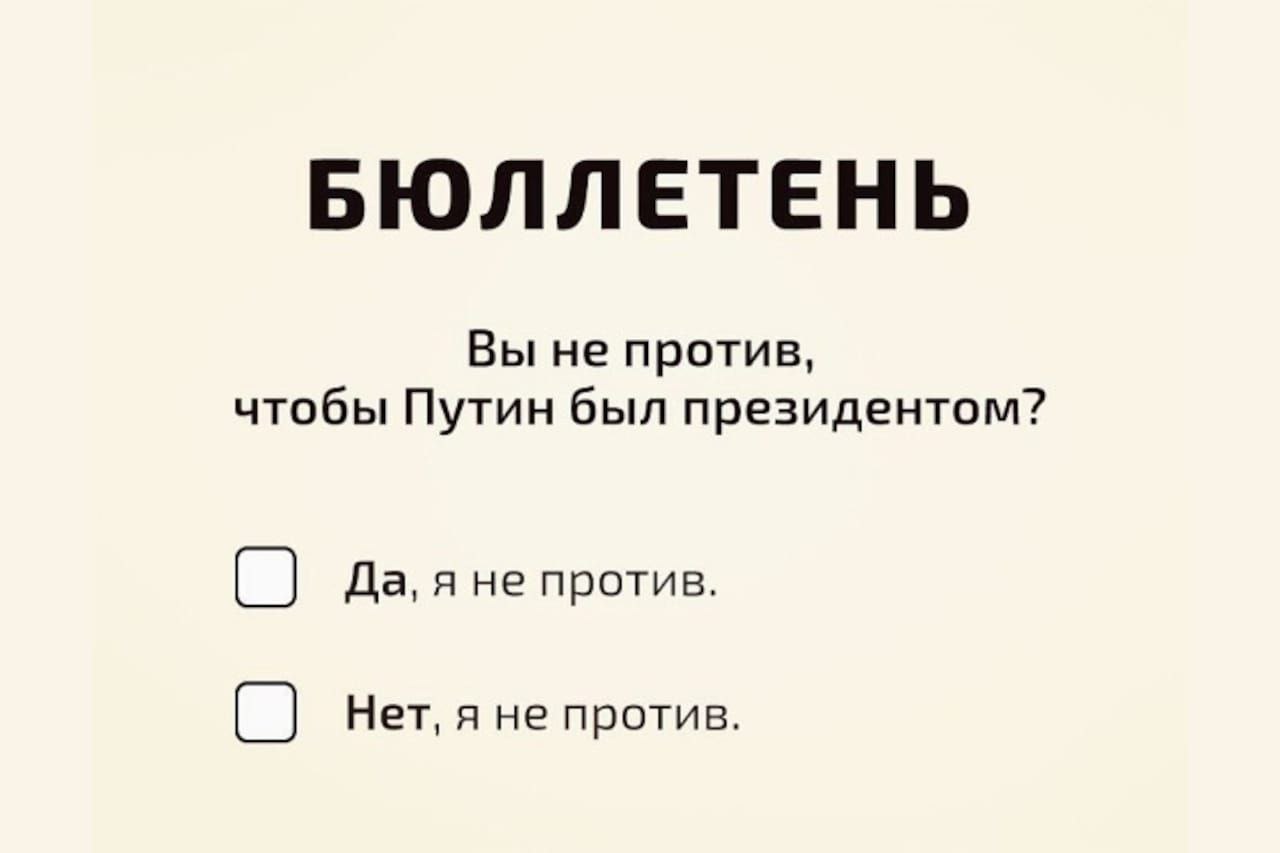
In 2018 he didn’t vote again ‘why would I? I’m not a stupid person’ – once again this ironic comment works on three levels – liberals are stupid, loyalists are stupid. Even the question reveals a tiring sense of naivety. But in 2024 he did, and for Putin. Why? Putin is the war candidate, but also the only peace candidate. Boris sent me a meme shortly after the election [actually it’s an old meme]: A ballot paper is depicted. There are two choices: ‘Are you not against Putin becoming President?’ The two boxes say: ‘Yes, I’m not against’. And ‘No, I’m not against’. There are multiple negative reasons not to be against voting for Putin.  

*** [academic parts incoming]

For me, the focus once again on electoral politics, and plebiscitary indicators more generally reveals a fundamental problem with the framing of the political in Russia, the misleadingness of the term ‘authoritarianism’, and other analytical terms to describe regime types. Karine Clément in 2018 wrote that the presence of authoritarianism in places like Russia, from the perspective of ordinary people is not so obvious and almost undetectable in everyday life. She pointed to the way that civil liberty restrictions and control over the media, undeniably harsher under such regimes than in other types of state, were way less important to most people than the legitimate grievances they had with social and economic policies. As Tom Pepinsky wrote about Malaysia – ordinary and everyday authoritarianism is ‘boring and tolerable’ to the vast majority. Does that mean these same people support authoritarian rule (in the sense of giving up voice)? Absolutely not.

The authoritarian personality type was strongly critiqued in sociology forty years ago. This is an idea from the 1950s that there’s a socially significant sadomasochistic disposition that emerged and thrived in authoritarian societies and which then maintained them. However, it’s still overlooked that the ‘original’ theory of authoritarian personality was developed to explain how people in capitalist societies in the West sustained a broad submission to authority, emotional identification with leadership, belief in the naturalness of hierarchy, esp. in organizations, the heredity of natural differences between persons, the fusing of legitimate authority and tradition, and so on.

Later in the 1970s, the ‘Western’ variant was refined to refer to ‘rigid conventionalism’, where different social anxieties can be overcome by conformity. However, even supporters of the ‘type’ complain that psychologization becomes meaningless without attending to the social conditions which would produce them. Indeed, the whole psychological basis of authoritarian values when tested experimentally, tends to fail when presented with groups who hold even mild political convictions. ‘Ideological’ belief itself serves to reduce anxiety – and these may be ‘right wing’ or ‘left wing’ values.  Furthermore, the development of authoritarian personality to talk about more or less ‘pathological’ types prey to demagoguery completely inverts the original concept, which, after all, was developed to explain why all of us, generally, are ‘normal’ and ‘well adjusted’ when we defer to authority, as this is how our (capitalist) society is structured and functions. Even today, to have a problem with legitimate authority is a sign of ‘maladjustment’ (Oppositional Defiant Disorder can be diagnosed in children who ‘are easily annoyed by others… excessively argue with adults’).

Back to Russia, Clément notes, perhaps even too mildly, that ‘Russians are quite critical thinkers’. She rejects stereotypical ideas about the ‘Putin majority’ and says this is partly an artefact of misinterpreting opinion polls where people answer as they are expected to. Like my own work using long-term and in-depth interviews, she finds that the vast majority are highly critical towards the state, in a sophisticated and reasoned way, in a way that connected from local and personal issues to broad social problems which affect all. ‘People make great claims against the state, and the first of them is its dependence on the oligarchy and independence from the people’.

Does the war change this? Hardly. Clément’s other point was that, by and large, people are able to exercise a sociological imagination about their own society – that it is not all about ‘Putin the tsar’. Indeed, one of the sources of support for the status quo is the realistic and relatively sophisticated conclusion that Russia is a pluralistic state with lots of competing interests and that if anything, Putin’s ability and power is quite circumscribed. And the war would only underline such a view. And this is not the same as the old saying ‘the king is good, the boyars are bad’. It’s a much more sober assessment. Clément concludes by saying that the most pertinent authoritarianism-from-below is the call for ‘more social state’, ‘a less rapacious financial elite’, and, we can add, today, ‘defence from the effects of war, and of ‘peace not on Ukrainian terms’, whether we think that is callous or not.

If there is not much ‘authoritarian’ in the values of Russians to distinguish them from the inhabitants of states where people have little access to power or voice to change things, then what is the value of the term?

***

Is Russia authoritarian because of the lack of accountability of the elite? Because elections don’t matter (actually, they do). Because the press is controlled by the regime and dissent harshly punished? Professional political scientists usually refer to the lack of free elections, but that does not generally extend to the evaluation of the responsiveness or not of leaders to populaces. This is Marlies Glasius’ argument (2018), to which he adds that the three main problems with “authoritarianism” is that

1., It’s overly focussed on elections

2., the term lacks a definition of its own subject at the same time as

3., it is narrowly attributed as a structural phenomenon of nation states.

Lack of accountability of bureaucracies, the lack of choice in elections, and the impact of globalization as a disciplining mechanism means that the differentiation between authoritarian and democratic states is overstated.

(sidebar: a Danish colleague the other day said: ‘where else but in Denmark is social conformity enforced more fiercely than by citizens themselves, with an internalized snitch culture?’ Where the state tax authority can use your mobile phone location data to check you’re paying tax right. Every day British newspapers run stories of women jailed for not paying TV licenses, disabled people forced into homelessness for being paid 30 pence too much through a state error, or, indeed, the complete untouchables that are state-sponsored corrupt oligarchs).

If Russia is now a personalized dictatorship, as many would assert, why is Putin so hesitant, distant (and even scared of being seen as responsible for) even from decision-making?  Why does he appear wracked by indecision and inconsistent in his war aims? Why is the state so poor at carrying out adequately even basic logistics in the war? Further, following Glasius, to really evaluate authoritarianism in Russia we would need to look at disaggregated practices of the state structures: social policy, the courts, regional authorities.

Is accountability in these milieux sabotaged in a way that sets them apart from democratic states?

Are authorities of any kind able to dominate without redress?

Is meaningful dialogue between actor and forum prevented by formal or informal rules?

To what degree are there patterns of action embedded in institutions which infringe on the autonomy of persons?

These are much clearer definitions of authoritarian and illiberal practices, consistent over time, and which are easily documented in the Russian case. However, as Glasius points out, free and fairly elected leaders, from Modi, to Trump, and also parliamentary governments in Europe, also engage systematically in such authoritarian practices and increasingly so over time as national authority is diluted by transnational forms of power.

To turn finally to a very recent critique of authoritarianism by Adam Przeworski, he complains that existing models ignore the provision under authoritarian regimes of material and symbolic goods that people value. Przeworski says that we should pay attention to ethnographic accounts such as that of Wedeen’s work on Syria where peoples strongly denied (in the 1990s) they lived in an authoritarian regime and deployed rationalizations that were not ‘duplicitous’. Further, Przeworski argues that:

autocrats can enjoy popular support

it is difficult to interpret elections

often internal repression enjoys broad support

actual performance of economies matters and provides a real base of support

manipulation of information is never sufficient to compensate for poor performance

propaganda is an instrument of rule in every regime (including democracies)

censorship does not fundamentally provide a test of whether preferences are genuine or not.

Further, the psychological processes of people in authoritarian regimes cannot be explained by game-theories about belief.  Enforced public dissimulation presents a challenge to both the regime but also to scientists in discovering ‘real’ attitudes. Further, a lá Wedeen, performance of belief might become a comfortable and natural disposition to the degree that deviance from this norm is socially disruptive but without implications for the ‘real’ attitudes of persons engaging in ritualistic performance. We get a sign here of what’s missing, the social life of authoritarianism may be more relevant and powerful than the cognitive feedback by people to all the signals around them. Many critical assessments of society and processes in Russia, as Clément notes, are not visible at all in the public sphere, and yet are universals in interviews, especially when there is less or no prompting from the researcher. The social prerequisites for positive change are always there, and people are ‘keyed’ to respond to them by human (social) nature. By the same token the desire to cleave to authority is characteristic of the most ‘democratic’ and liberal groups throughout history. The resort to social psychology models of dispositions according to a legacy of regime types is as open to criticism as it ever was.

*Obviously Boris is not a real person, but an ethnographic composite of real interlocutors.

No, Ukraine did not turn your radiator off in Podolsk. Or, on the inability to think sociologically

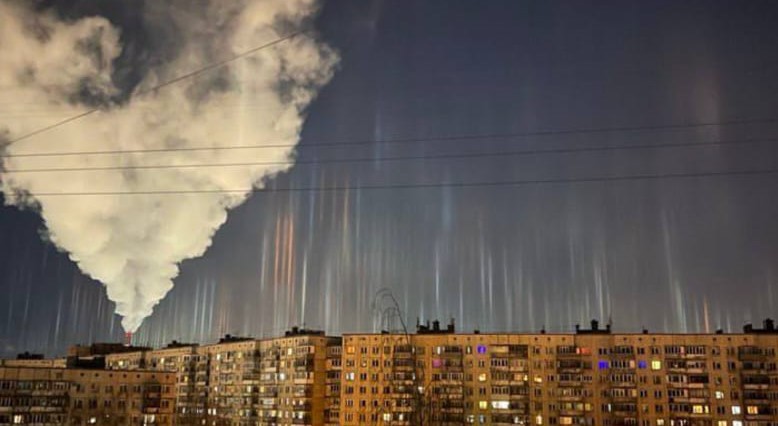
A plume of water vapor from a failed heating line in a Russian city, 13.1.2024

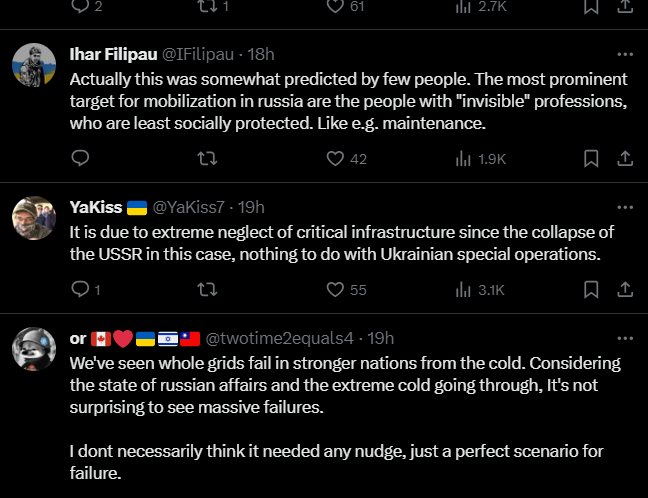
The framing of the catastrophic failure of heating/electrical systems in Russia as inevitably a Ukrainian plot perfectly underlines the ‘pundit problem’ coverage of Russia, which I recently tweeted about to the complete misunderstanding of most people.

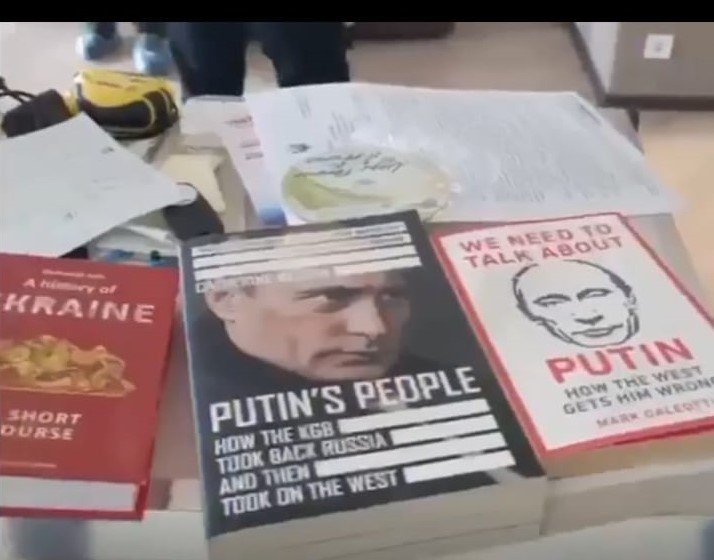
Gonzalo Lira’s book collection, from the Ukrainian raid on his flat in July 2023

I tweeted a picture of the reading ‘desk’ of the deceased YouTube grifter-cum-incel-coach Gonzalo Lira – there were three books – two of them very person-focussed (with ‘P’ in the title). The point is not that those authors were ‘bad’ or part of the grifter universe of Gonzalo, but that they set the frame of reference for 95% of the debate on what is going on in Russia/Ukraine. It’s all about personal history, personal ideology and animus, personal networks of the elite, dodgy social psychology and even dodgier personal psychology.

That the central heating grids of many towns and cities in Russia are not fit for purpose has been written about endlessly in sociology and anthropology. Someone attending to even this narrow ‘sociology of physical networks and infrastructure’ might learn a lot more about the war, about Russian politics, about Russian people’s preferences, than a zillion more books about a wimpy lad from Leningrad who’s resentment and greed propelled us to the brink of WWIII (parody).

You don’t need to read my previous work (but you could) to be aware of how the state of heating infrastructure is *the* political issue in many towns in Russia. In the tweet about the heating failure, I joked about my non-published new book again, and I devote a whole chapter there to state infrastructure. You can read a mini-version of that in this free-view Incoherent State write up from a few years ago. But the reference text for sure is Stephen J. Collier’s Post-Soviet Social – an amazing insight into the rickety privatized infrastructures of Russia (for a critical yet supportive summarizing review see this by Johanna Bockman). Then there is the wonderful book by Doug Rogers on corporate provision of social services, The Depths of Russia. A close third comes Susanne Wengle’s Post-Soviet Power which chronicles the rushed privatization of electricity infrastructure.

To summarise, the seemingly too-coincidental-to-be-accident-failures of the heating network should be viewed in the context of the multiple social factors at play – far more likely than sabotage (in this particular case). First there is the privatization of a critical and vulnerable network. Heating plants feed communal hot-water pipes just below the surface which then have a single ingress to housing blocks – in a severe frost which penetrates the ground up to two metres, these can fail and effectively shut down the whole grid. Privatization, as has been demonstrated again and again, while not the proximal cause, leads to the sweating of former public assets and inadequate investment in long-term upgrades and even basic repair (in the UK where against the advice of most, water was wholly privatized a similar cascade of failures is occurring right now). Where assets at municipal owned, the starving of local authority financing has the same effect.

Then there is human capital “depreciation”. One thing preventing the catastrophic failure of networks like town heating systems was the intangible knowledge and good-will of former Soviet-era managers. These are dying off now leaving a hole in the metaphorical fabric of post-socialist governance. This was in any case a patchwork of personalized relationships between these non-political ‘specialists’ and politicians. The former often continued to work for the common good (a complex relationship I go into in my new book) after being excluded from the corrupt compact between local and federal elites. In my 2016 book, I undertook participant observation (anthrospeak for following someone around and working with them) of a heating network technician in Kaluga region. Without this 50-something guy working almost for nothing and effectively ‘managing’ the town’s heating supply the residents would have experienced annual outages of hot water. Most importantly, this man was only informally in charge and at any moment could have left or retired (which he did eventually). Yet the municipality gave him access to a car, driver and assistant.

There is loss of such human capital, but also general labour shortages – long a problem before the war. It’s not so much that the war drew down ‘low-skilled’ men away from maintenance (as many people argue), but that, as in line with the generally punitive and neoliberal labour compact in Russia, there has been mass flight away from poorly-paid municipal jobs like those maintaining essential infrastructure. Even the ‘well-paid’ gas and oil industries struggle to fill roles (for details, again, see the article linked below and my new book). Pay is woefully inadequate and conditions terrible. It’s also true that the war accelerated austerity policies sucking money away from infrastructure, but again, that’s the proximal, not main cause. As scholars like Ilya Matveev have been pointing out for years, Russia is an austerity state on steroids.

There is something to this point, it’s true:

Add to all of this climate change. I remember harsh winters in Moscow in the 1990s, but Russians have got used to much milder winters in the last twenty years. This, like so many ‘freak weather’ events was just a return to what used to be normal winters with prolonged temps below minus 20 in European Russia. Except there’s been 20+ years of looting and neglect in the meantime.

Finally, overlaid, but not overdetermining, is the centralized, reactive nature of Federal governance – content to let the country rot, only effective in extracting and lifting rents upwards towards the cosseted world of Moscow – which is not Russia. I address this as part of this piece I wrote a few years ago on ‘capitalist realism’ (doffs cap to Mark Fisher) – an argument that also features in my new book.

Back to punditry. The problem is not authors like Galeotti or Belton (though there are legitimate gripes with them), but the obsessive media attention to a super narrow framing, reductive to absurdity. Galeotti is a great example of a capable, seasoned and expert researcher (on organized crime and security studies) structurally trammeled by the war (and before) into providing ever more commentary to serve demand by the whole media assemblage of Russia coverage. People misread my tweets as equating grifters like Lira to specialist pundits. There’s a gulf between them, but their output inevitably ends up serving the same media ‘interests’/: obfuscation of complexity in cause and effect, preventing sociological understanding, ‘orientalization’ of the subject matter (making it exotic instead of what it really is – mundane).

To go back to my January 2022 post about the problems of punditry before the war, the issues I sourced there from various colleagues about Russia coverage remain the same going into 2024 (scroll to the bottom of the linked post to see these topics unpacked):

Structural weaknesses in Russian journalism and Western coverage.

Putin-centric coverage the tells us nothing (led by publisher and editor demand)

Detachment from in-country knowledge (our man may be in Havana but he rarely leaves the bar)

Presentism (as we see now on the war – endless mind-numbing takes on weapons and lines on maps)

Gresham’s Law (bad punditry drives out good, bad think-tanks out-compete good ones, bad scholars outcompete good ones)

Absolute paucity of non-metropolitan coverage, whether of Ukraine, or Russia.

Putin and property – a ‘boss’ but not an owner

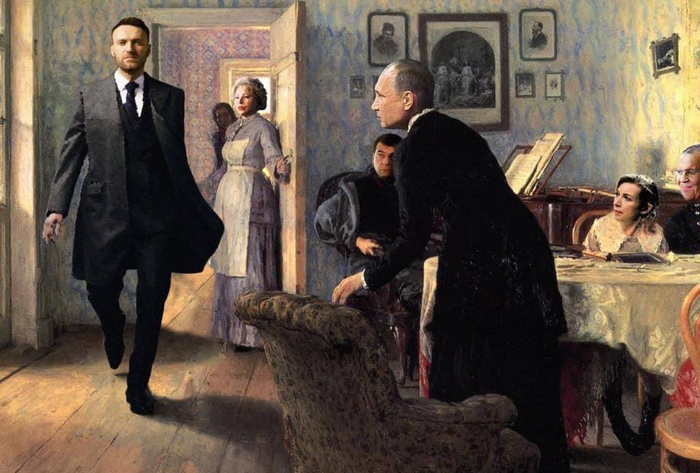
After Repin. ‘They weren’t expecting him’.

I was reluctant to write about Navalny’s return to Russia. Partly because so much attention devoted to this figure in the ‘West’ does neither him, nor the breadth of political opposition in Russia any real favours – witness some of the naval-gazing attempts to tie Russian protests to BLM and other issues in the US that really have little to do with the Russian context and even less to do with Navalny’s case. Anyway, what did catch my attention was Putin’s unprecedented response (in that normally he pretends that N. does not exist) after the YouTube expose of what is alleged is Putin’s Black Sea palace. Second, I thought it worth underlining a point I’ve made before in this blog – that Navalny still fails to cut through as a national political figure, even though his videos and campaigning have fundamentally changed the political atmosphere. Also, unlike even at the time of the Moscow mayoral election in 2013 (which he should have rightfully won), pretty much all my research participants (in deindustrializing Kaluga Region) are now aware of him.

So the post is in two parts –today, on the fickle meaning of ‘private property’ in Russia and later I will talk about some ‘on-the-ground’ responses to Navalny’s arrest and the 23rd January protests.

So, Oliver Carroll tweeted the strange phrase from the short interview Putin gave rebutting the allegations: ‘“Nothing described as my property belongs to or ever belonged to me or my close relatives. Ever” [ничего из того, что там указано в качестве моей собственности, ни мне, ни моим близким родственникам не принадлежит и никогда не принадлежало.]

Carroll commented: ‘A strange turn of phrase that doesn’t deny existence of palace resort or the fact that it was being guarded by the presidential security service.’ Then Timothy Frye responded that ‘Property rights are often seen as three separate rights: rights to use, to obtain income from, and to transfer an asset. Better to ask did you use the property or allow others use it than did you own it on paper.’ Frye has a book on property rights in Russia that I’m looking forward to reading. From a quick browse Frye asks the chicken and egg question about property rights – do people in developed economies abide by contracts because of social trust, social networks or effective courts? Interestingly he’s implying that our understanding of ‘good institutions’ in ‘the West’ is too simplistic and that social norms play more of a role than we would be comfortable admitting. Frye goes on to talk about the importance of informal institutions in Russia that provide their own ‘rules of the game’ in terms of widely understood sanctions for actions like reneging on informal agreements. In some business contexts, the rule of law can sometimes be a worthwhile recourse – legal dualism results. Later in the book I can see Frye has collected interesting survey data on the prevalent feelings of illegitimacy surrounding privatisation even 25 years on – particularly linked to perceptions about benefits to private individuals and the loss of public goods. “In a word, everyone hates privatization”, but not private property, write Frye.

My own research has not really looked much at property rights – only obliquely do I talk about corporate raiding (reiderstvo) and how its violence in Russia affects ordinary people. What was clear is that uncertainty and disputes of ownership of plant and land continues to create high levels of palpable risk even for ordinary people as it can result in catastrophic ‘externalities’ like pollution, violent crime, and the disruption of utility supply (p. 236 in the Conclusion linked above). It also results in a particular Russian anomaly – property that doesn’t belong to anyone. Famously the lack of ownership of graveyards has been widely discussed, but less well studied is the problem of roads and utility networks that jurisdictions fight over in order NOT to take responsibility for them. This was a running theme in my research on Izluchino in my book and many informal solutions of ‘devolved’ governance were found that would confound any traditional perspective on property relations.

In response to Carroll’s comment on Putin’s language – his disavowal of ownership of the palace – I was reminded of the literature on ‘private property’ in the USSR and in particular a discussion in a forthcoming book by Xenia Cherkaev that contains long discussion of ongoing significance of Soviet ‘property’. Usufruct looms large – ‘use’ stressed over ‘possession’ (vladenie) in the Soviet system where ‘private’ property was taboo, but still a reality, and thus had to be fudged in various ways. Putin is probably telling the truth that there isn’t a deed of property with his name on it. But that’s of course disingenuous because Navalny makes the point about endless intermediaries himself (and points out that they are quite revealing of the relative narrowness of Putin’s trust circle).  By relying on old acquaintances from St Petersburg, if anything Putin is shown in quite a sorry light – he doesn’t have very extensive social capital – revealing his rather parvenu origins and unimpressive career prior to the later 1990s!). But I guess the point here is, how much ‘capital’ does Navalny really have – in Russia? Maybe by his public act of self-sacrifice this will be his moment to become at least a powerful political symbol – if not political leader. Or will this gamble mean that he’ll eternally be known domestically as an ‘avantiurist’ or traitorous dupe. That’s for a later post.

Now, Cherkaev’s book is not in print yet and I don’t want to steal its thunder. However, some of the book’s arguments are visible in two articles – unpaywalled here  and here.

Cherkaev writes: “Coming from the study of Soviet civil law (see Cherkaev 2018 [Russian text]), I am especially interested in nonprivate ownership, in what happens to the idealized triad of full and complete ownership rights—usus (to manage), fructus (to benefit from), abusus (to dispose of)—when property is collectively held.” In the 2018 Russian article, Cherkaev discusses ‘dignity’ as personal property in the USSR. In the book, Cherkaev builds on the distinctions between personal and private to show how the former served as a substitute for the impossibility of the latter in the realm of ownership. The Soviet solution of “Personal property” posed no threat to the Soviet monopoly on property “because it was essentially usufruct: the right to use and benefit from a share of socialist property, without alienating it from the commons”. This led me to reflect further on another discussion – linked to ownership, that Cherkaev makes – that of ‘хозяйство’ – (khoziaistvo)  – which can translate economy, household, property, house, establishment.  Traditionally, ‘the economy’ in Russian is essentially ‘narodnoe khoziaistvo’ and more recently ‘natsionalnaia ekonomika’.

Cherkaev draws on Stephen Collier who notes that khoziaistvo actually refers to any nexus of production, so is not just ‘the economic’ – “as a noun, [it] can refer to a farm, a household, or virtually any nexus of production and need fulfilment—that is, to almost any unit of substantive economy. But khoziaistvo can not imply the formal meaning of ‘economic’” (Collier, 2011. Post-Soviet Social: Neoliberalism, Page 81). This led me to reflect about Putin as the ultimate ‘khoziain’ – an owner-in-charge contrasted to owner-as-possessor – and that this also captures his managerialism, as opposed to entrepreneurialism as leader. Russia’s economy is also easily seen as a khoziaistvo rather than a legal-contractual system of possessions exchanged. Khoziaistvo as dominion shows both the strengths and weaknesses of Russia’s ‘sistema’ (informal governance system) as it relates to the economic. From this meaning of khoziaistvo, Cherkaev marks Russia’s relationship to property as different to that of the ‘market economy’ . ‘Ekonomika’ is a formal space of circulation with equal and self-interested actors. But Putin as ‘khoziain’, shows the ‘substantive’ — in anthropological terms — meaning of his clientelist regime. We normally think ‘substantivism‘ as a ‘positive’ thing (after Polanyi), but why not avoid psychologising Putin as ‘avaricious’ (which may be true) and instead see him as product of a ‘self-provisioning’ system where actors are embedded (actually trapped) in a personalistic webs of mutual aid.

This is what Navalny’s vid shows very clearly – remarkably even – the same young-old faces at St Pete City Hall who start off writing bribe amounts in the 10s of thousands of dollars sheepishly on bits of paper and then – almost by accident – end up running a petro-economy where the opportunities for graft are endless. Ironically, Putin is entirely unremarkable and his ‘khoziaistvo’ also. What’s clear is that his version of ‘gosudarstvennost’ (stateness – building a strong state) is subordinate to his ‘feeding’ system (the devolved form of governance allowing levying tribute and keeping part of it inherited from the Mongols). In some respects he’s never evolved from Soviet manager mindset – his idea of ‘initiative’ is personalised negotiation and accumulation – not according to market utility maximisation or even profit motive, but as a defensive and even ‘ethical’ protection of the team (this self-justification of course is part of Alena Ledeneva’s explanation of how ‘connections’ known as ‘blat’ in Russia work – by misrecognition as part of one’s ethical self that helps others out – Cherkaev also discusses this at length).

Of course in 90s/2000s this ‘mindset’ (that trust is personalised, limited in scope, conditional, and that there is no alternative to embedding oneself in a chain of mutual ‘aid’) spirals out of control and creates obscene wealth and inequality. Nonetheless the tacit (or not so tacit) acknowledgement of Putin as ‘khoziain’ of Russia Inc. means even Navalny’s latest will not cut through quite as well as we might think. No one likes obscene wealth in Russia, but most people have lowered their expectations after 30 years of no one wealthy really getting their just deserts (Khodorkovsky excepted – in that most people do think he got what was coming to him). Envy-culture (hatred of real entrepreneurs) is real. But again, this plays to Putin – as he’s not an ‘oligarch’, but khoziain. Despite Navalny’s revelations, Putin is still implicitly compared (by ‘ordinary Russians’) to another ‘khoziain’ who famously lived frugally – Stalin. He too secured resources through formal and informal means, determined entitlements according to a different kind of ‘economy’. Now I don’t agree with these people, but you have to admit Putin is successful (for now) in projecting himself as the arbiter of national khoziaistvo. In part because most people’s individual wealth is derived from personalised networks of trust no less than Putin’s own.

Final points – the irony of the Kremlin today saying they cannot name the true owners of the palace as they are entrepreneurs and therefore their transactions in the sphere of private property are to be respected.

People are much more critical of the authorities than ever before. People are cynical. People – thanks to Navalny – cannot ignore the vast scale of corruption in their own country, BUT! They were really uncomfortable with the ultimate upping of the anti by Navalny – maybe it was true – that the corruption extended to Putin himself? However, Putin’s response reassured them. If he was denying it then it required less cognitive dissonance to believe stories about Navalny being a stooge of the West and the whole story as some kind of slander on Russia. From there it’s not so hard to believe the current propaganda – that ‘foreign elements’ are paying protesters, etc, etc, to explain the Saturday protests in support of Navalny. Interestingly here, the message coincides with another one – of protecting youth from bad influences – which also gets a very sympathetic hearing among a majority of Russians.

Next post will offer some wide-ranging reflections on Navalny by my research interlocutors – young, old, rich and poor. Has his time passed – ironically at the time of the greatest international attention to him? Does he have a message beyond anti-corruption that is wide enough to cut though? Is his ‘reach’ to ordinary Russians over-rated to the Twitterati? Can there really be an opposition leader in Russia while Putin is in charge – or is that to miss the point – that Navalny’s strength is to serve as a hybrid figure who can channel various political imaginations that have been repressed for so long?