Tag Archives: Schulmann

Three interview commentaries: Schulmann, Zubarevich, Kagarlitsky

the first in-prison interview of an AI-inoagent

Sometimes I like to blog about what’s going on in Russian social media spaces abroad though it doesn’t seem to bring many readers here. That’s a shame because it’s a space that only indirectly gets attention by anglophones (notwithstanding Meduza’s almost lone attempts to correct this). It’s also pretty informative because some of the best journalists and experts have a big platform there. There is however, just too much material to keep track of. Here’s a rundown of three things I watched via YouTube in the last weeks: political observer Ekaterina Schulmann on how to parse conflicting public opinion indicators; economic geographer Natalia Zubarevich on whether military Keynesianism is paying off; and an interview from behind bars with political prisoner Boris Kagarlitsky.

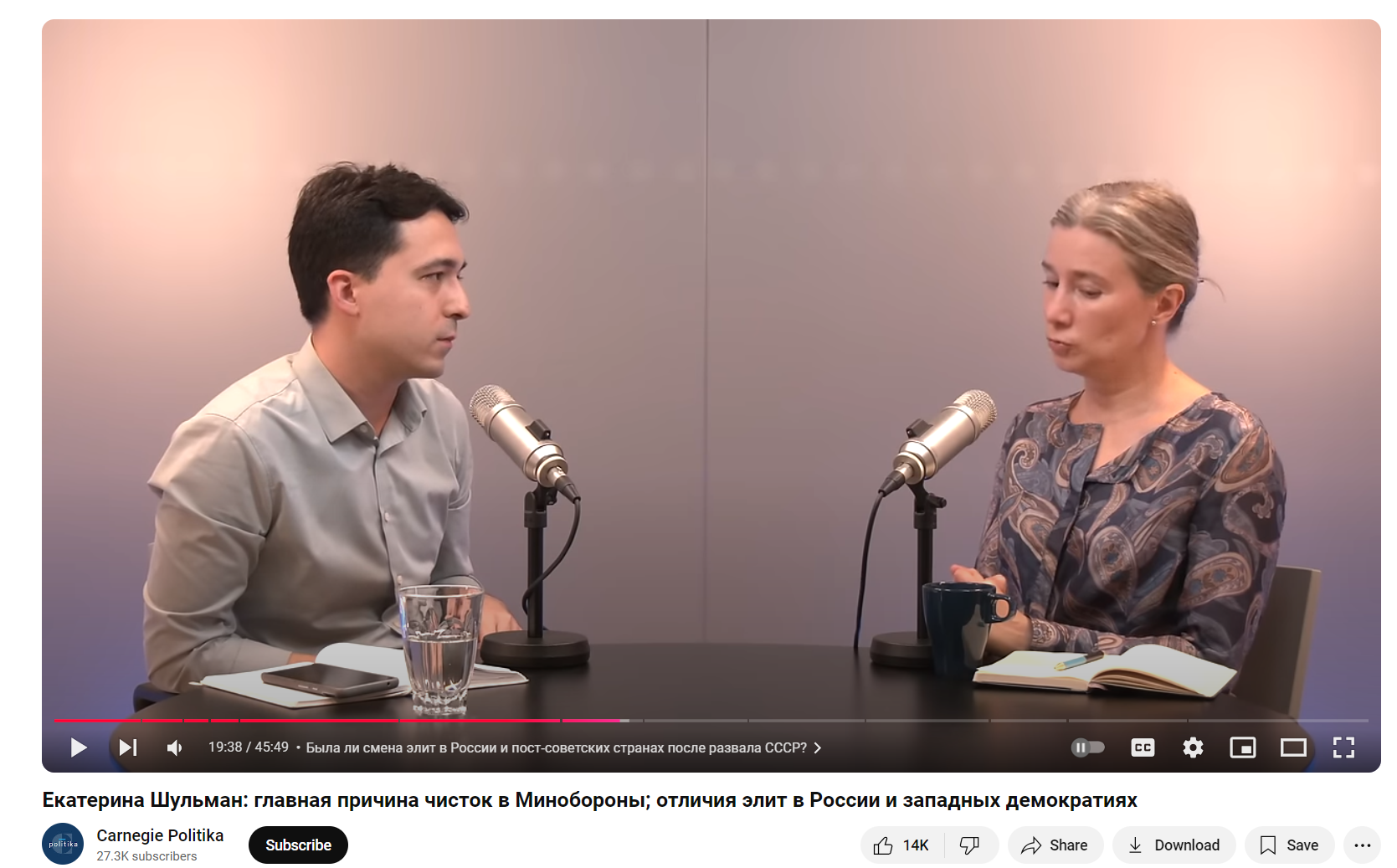
Schulmann has a brutal schedule – doing public talks seemingly almost every day. At the end of October 2025 she talked to Vot Tak channel (based in Poland with a pretty large online audience). As usual, she covers a lot of minutiae about what’s going on in Russia. What stood out in this episode was her reading of recent polling by Levada about ‘mass perceptions about the influence of the Special Military Operation on society’.  This part of the interview is a good example of how Schulmann has moved to a much more critical position about the meaning of polling in autocracies. She first talks about how Russian propaganda is not meant to be persuasive. It’s instead ‘the voice of force’. ‘Voice of the authorities’. This is why people pay attention to it in so far as it shows the strength and resources of the authorities.

Then she discusses the contradictions at the heart of polling questions: that support for the war appears high, yet, when polled, the majority agree with the statement that the war has mainly brought more ‘negatives’ than positives to Russia. Furthermore, attitudes towards veterans are quite informative: In answer to ‘what has the SMO done to participants in it?’, the main answer is (literally) ‘the war has crippled their souls’. Further, people see the mercenary choice a bit like they see the decision to take up a hazardous job in the Far North: sure, you can get money that way, and this is an ‘honest’ exchange (you know what you’re doing), but preferential treatment/certain social benefits should not accrue to this mercenary choice.

And moreover, society should not be forced into elevating veterans’ social status or respecting this choice. Schulmann adds that this could be symptomatic of a distancing mechanism on the part of society. We could interpret it as ‘infantile’. However, she wisely reserves her own interpretation. Later in the interview she talks more about the growing unhappiness at the government’s economic repression against ordinary people, and its unprecedented political repression against its own elite.

Natalia Zubarevich stayed in Russia after February 2022, teaching and researching in Moscow. She gave a lot of interviews from within Russia and was sometimes painfully careful in how she described the regional economic effects of the war. This interview with a journalist in Paris (November 2025) is therefore something a bit different. Not least because it’s nearly three hours long. I couldn’t sustain any notetaking for that period of time. It’s the usual thing she does, which is almost a self-parody now: barrage the viewer with statistics about employment, profitability, inflation and the like. Quite interesting here was a ‘meta’ moment where they discuss her teaching in Moscow and whether scientific exchange between Russia and the West is possible (c.30m) and what  economic geography in the UK has become: “spatial sociology” (in contrast to Russia where a more ‘traditional’ approach to geography remains). There are loads of moments of incredulity from the interviewer like this at juncture – which is always fun.  

A limitation of Zubarevich is that she confines herself to official statistics, occasionally colouring her assessments with anecdotes – which can also be a bit of a problem given she works at a super elite institution and lives in central Moscow. However, she always says some things that go for and against the ‘common sense’ of the pundit sphere. To summarise, she talks about a significant number of economic losers because of the war while ‘two thirds’ have seen sustained wage increases over inflation.  However, overall, this means competition between employers has been fierce (until recently). A wage spiral essentially is bad for a brittle and regionally-divided economy like Russia’s. She also talks about how the state trying to turn the tax screws on the population will backfire because people will resort to cash and hiding incomes. There’s some interesting stuff about financing and budgets in the occupied territories of E Ukraine. There’s an explainer on regional inequality in Russia and how it’s misleading because of the phenomenon of labour migration (who bring their high wages out of the North).

More interesting than the interview was the divided reaction of the audience. A lot of viewers interpreted the interview as providing cover for the economic choices of the authorities – as painting too rosy, or too detached a picture. Some said that it was unhelpful to use official Russian statistics to argue that there’d been a big uplift to most incomes. For example, some pointed out how the ‘basis’ wage had indeed risen sharply in many jobs but this did not mean a real rise in wages because for many, the main part of paid income is not the ‘basis’, but the discretionary bonuses – the latter being harder to capture in official statistics. It has been very convenient in many sectors to boost the tiny ‘basis’ wage by even 200-300% while cutting or making the achievement of targets for the bonus much harder. Would you feel better off if your basis wage rose from 200 Euro a month to 600 Euro, while the ‘bonus’, which was previously 800 Euro, was now at the mercy of the foreman? You might get a bonus of 1000 Euro when a monthly or bimonthly target is reached, but many are not – or are being forced to overwork for what was previously a given. Especially in service or while-collar work where the concrete output is not a hard quantity of product.

There are good points in the interview about how unsustainable the military ‘juicing’ of the economy already is in 2025. Zubarevich makes it pretty clear she thinks this sugar high will come with a massive crash. People were unhappy to about her repeating policy aims as if they were realizable – like a plan for rehabilitation facilities for veterans all over Russia: pie in the sky, was a criticism from the chat. People really didn’t like her repeating a point that many make – that within the Russian government there are smart, competent and effective pockets of policy making.

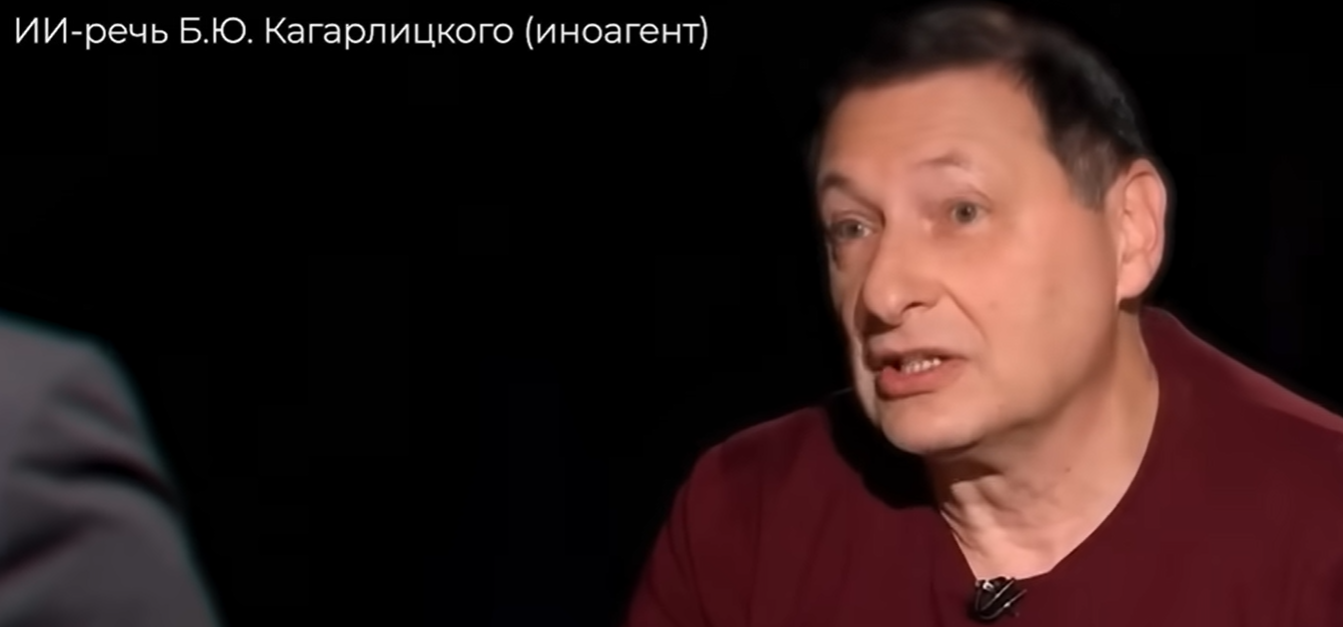
The third interview (also November 2025) is something of a landmark. An interview between Andrei Rudoi – a well-known leftwing Youtuber, and Boris Kagarlitsky. Only, Kagarlitsky – roughly speaking, a Marxist historian and public intellectual – is in a prison colony for mildly critical remarks about the conduct of the war. The interview was therefore reconstructed using an AI avatar of Kagarlitsky who spoke the words from the letters, phone call transcripts and such like, of the actual person siting in Penal Colony No. 4, Torzhok, Tver Region.  Even if one has no sympathy for the person of Kagarlitsky (and I certainly do), some of the interview feels poignant. Particularly since Kagarlitsky was also imprisoned by Soviet authorities in 1982 for ‘anti-Soviet’ activities.

Prison is not exactly the place where one improves one’s health, K notes at the beginning. Only it is a very healthy-looking, if a little uncanny avatar saying these words. You’re the first AI Foreign Agent (‘Inoagent’), remarks Rudoi.

What’s most interesting to the general audience is the first few minutes of the interview where K talks about the efforts to recruit soldiers from the penal colony. He’s too old and has a political sentence so is not a target of recruitment efforts. Prisoners are all forced out onto the football pitch to listen to the ‘recruiters’ tell them that even if they die, their relatives will get a good pay-out. Sometimes lectures about this are read and K has been present at them. K talks about the fluctuation in numbers recruited – there’s now few signing up. In 2023 there were hundreds, by May 2024 a few dozen a month. Now it’s less than a dozen a month at best. Recent recruitment was because of a false impression that one could sign up to get out of prison and that a ceasefire would be called. Even recruiters used this argument. K emphasises that ideological arguments are entirely absent – even antiwar people sign up, particularly if they have been jailed for desertion/avoiding mobilization (337th article of the Criminal Code). There are pro-war prisoners in the colony, but not a single one has signed up. Therefore we should really take stock of the real motivations for signing up from prison.

Often those who have been in Ukraine seek to dissuade others from signing up. But they themselves then sign up themselves as a way of getting the punitive 337 label removed. One should not think that because someone went to fight that they are for the war, and that if someone refused to fight they are against.

K is asked why he didn’t leave Russia when he had the chance. He says he does not regret his (in)actions. Where you are doesn’t matter to how to speak about things. And at the same time there’s no shame for those who choose to leave. It’s solidarity that’s important. (full disclosure: I was on a discussion panel with K before he was arrested – he was quite confident he was safe from arrest).

Then the interview discusses the causes of the war from a leftist perspective – putting events into the context of the dead-end choices made by the elites since 2010 – the acceleration towards a form of authoritarianism away from managed democracy, and that most importantly this was a ‘choice’ supported by most liberal elites.

There’s a discussion of how the left can use the demand for Soviet nostalgia and quasi-nationalist figures’ big social media presence to get their own voices heard. But about how the biggest problem for left public presence in Russia was always the visceral hatred for progressive politics among the liberal journalist caste. This, however, is changing because younger people are less politically tribal. There’s interesting discussion about how the war forces leftists to think anew about their attitudes towards the USSR – a split between people who can assess the progressive aims of the Revolution, and those seduced by ‘Red Imperialism’. The latter invariably support the regime since 2022. At the same time, those liberal ‘fellow travellers’ of Putinism are also forced to confront some home truths, such as their cynicism and deep mistrust of democratic transformation.

At the end of the interview the speakers look forward to possible outcomes at the end of the conflict. It’s hard to imagine how weird this is – quite open political discussion coming from within a prison colony. One of the final metaphors K uses is a ship adrift in the Arctic sea with the officers on the bridge unable to even reach the captain let alone get him to make decisions. There’s an iceberg out there in the fog, but no one has time for it. Kagarlitsky reminds us that the great title of Alexei Yurchak’s book on the end of the USSR is still very relevant for today: ‘everything was forever, until it was no more’.
Russian expert media monitoring – September 2024

This will be a short review (well, actually not short) of some Russian media commentary (A. Pliushev, E. Schulmann, N. Zubarevich) and my reactions. If you think this kind of post is useful, let me know. It is often the case that informed discussion in Russian language on YouTube never really cuts through to anglophone audiences for Russia content. I don’t ‘endorse’ the persons or positions of any of these public intellectuals and journalists, but this kind of content is important for non-Russian speakers to get access to.

Virtual Autocracy?

At the beginning of September there were simultaneous elections of various kinds throughout Russia. The results were not very interesting but the strong push to ‘virtualize’ voting as much as possible is. Why not continue to rely on the physical and very visible power expressed in falsifying actual ballot papers and busing in people to vote on pain of losing benefits? The resort to a virtual electoral autocracy shows the authorities have a good idea of their genuine unpopularity and the continuing risks, even now, of all kinds of upsets. Not only that, they also understand the advantages of digitized authoritarianism (I’m hoping to do a big write up of this soon). You can geolocate voters in the app they use and this exerts a coercive power of its own.

But, as Ekaterina Schulmann pointed out in her review of the elections, getting rid of the spectacular in-person falsification reduces two powerful indirect effects: the visible demonstration of loyalty by voters to the state (which goes back to Soviet times) and which speaks to the main reason for elections in autocracies – the idea that legitimization still needs a public audience. Secondly, in the Russian case, virtualization means that the army of state workers – mainly schoolteachers and local council employees– are ‘let off the hook’ they’d previously been sat on: being implicated as ‘hostages’ in the falsification process as counters and electoral polling workers. Cutting out the middleman is interesting and perhaps reveals a real buy-in among the elite to the idea of “full-fat digital autocracy” maintained by technocratic management of populations. But, thinking sociologically, normalization of involving the morally-important category of teachers in illegal compliance with the diktats was the strongest spectacular effect of Putinism. Here, I’m also reminded of the big conflicts even now between parents and teachers over the disliked patriotic education lessons, with the latter stuck in the middle and largely unhappy at carrying out this task (more on this in my forthcoming book).

The election also revealed other indirect information about the emerging post-2022 Putinism ‘flavour’. There’s no sign of the much-expected ‘veteran-politician’ wave. Special Mill Op vets are not getting elected positions – many supposed examples of this in the media are just low-level bureaucrats who had to go to the ‘contact zone’ (frontline) to exculpate some disgrace and then came back. A big thing to watch for in 2025 also related to the war is the fact that on paper, the proportion of the national budget devoted to defence is due to fall according to the Finance Ministry. Watch this space.

The non-appearance of the Great Russian Firewall

On media use, Alexander Pliushev looked into VPN usage, and estimated that around 50% of internet users in Russia are now forced to use these services to access content, but probably not because they’re looking for subversive information. But there are plans afoot to root out VPN usage, along with the slow-down on services like YouTube. However, it is estimated to take years to root out VPNs, and this doesn’t take into account measures to develop new forms of avoiding blocks. Pliushev feels confident in this because while number of views of his content fell a lot from Russia, the overall picture is unchanged – meaning people just switching to VPNs. He should know: the ex-Moscow Echo journo has an audience of 300k viewers on Bild, and 700k viewers on his own channel. Already we see the emergence of IT service providers of ‘partisan’ packages to customers which improve the speed of YouTube.

Television as domestic wallpaper

A good accompanying piece on TV and media use came out in July by Denis Volkov of Levada.  In this piece he claims TV as a source of information is still really important, and I have some questions about that. It’s true, as he says, that the TV news is always on in the background of people’s homes, but other sources have reported that TV ad revenue has ‘followed’ the decline in audiences since 2022 because people are generally turned off by the very visible war coverage on main channels. Indeed, at one channel I know intimately, worker’s contracts are not being renewed and people are not getting the pay increases they expect. What’s more interesting about the Volkov piece is how rapidly the coverage of social media has changed – the rise in Telegram: readers of ‘channels’ there (mainly news and current affairs) has gone from 1% to 25% of the population since 2019. This is a sobering reminder to be cautious about state’s capacity to control informational dispersal. The unparalleled rise in the onlineness of Russian means we should also avoid too many historical parallels (Vietnam war, Afghanistan, WWI, WWII). We really do live in a different age.

There’s a lot I don’t agree with in the Volkov piece, but it’s worth a read. As I’ve frequently written here, if you’re attentive then stuff like this from Levada people reveals deep-seated ideological assumptions about Russian society that can surely be questioned. I don’t agree with his insistence on uncritical media consumption and the simplistic ideas about how TV shapes views. Nonetheless we get more interesting points – like that 28% of people don’t watch TV at all, that the audience for Twitter and Facebook is tiny at 2%. Late in the article we get the statement that the share of television as a news source fell by 33% in the last 15 years, somewhat undercutting Volkov’s insistence on the relevance of TV as a regime-population conduit for propaganda.

“It’s the regional economy, stupid!”

Moving on to Natalya Zubarevich’s frequent and detailed online talks (with Maxim Kurnikov here in mid-Sept) about regional economy and demography in Russia, she lets slip some interesting observations beyond her usual scrupulous (and self-censoring) focus on the ‘facts and figures’ from official documents. She talks about how noticeable it is that in military recruitment in Moscow there are few young faces and a preponderance of ethnic minorities. She talks about the current ‘hostile migration environment’ led to harassment of gig workers in taxi-apps (Yandex). But not due to war-recruitment pressure, rather to increase bureaucratic monitoring of taxi drivers in the capital, reiterating the point above about the government staking more on digital control. She says we have good evidence for this squeeze because of the rising visibility of Kyrgyz drivers for whom there are fewer migration hurdles. (Gig workers from Kyrgyzstan represent a case study about the gig-economy in my forthcoming book).

Zubarevich makes the point that low paid blue-collar workers are being sucked dry by the war machine. If we accept the national soldier replacement rate target is 30,000 recruits a month then yearly Russia is losing around 1% of the available male workforce – but it hits harder in logistics, warehousing, manufacturing, and so on and hardly at all in, for example, local government. She also provides good examples of agency within the state: where the Agriministry was able to get the enlistment offices to back off men who work as mechanics for farms.

Some criticise Zubarevich for her insistence on talking only about published statistics. Here, without openly saying it, she pours cold water on the idea of sustained income rises keeping pace with inflation. She doesn’t believe the figures of high annual percentage rises in salaries as sustained or ‘real’ (net effects). She also points to clear slowing in wage inflation in 2024. This then allows her to demolish part of the military Keynesianism argument. Low incomes have seen big increases but from very low base starting points (an apple plus an apple is two apples for the blue-collars; but the people in white collar jobs were already earning 10 apples. If you given them one more apple do the blue-collars feel less unequal?). Periphery growth (in regions including war factory locales) is not significant because it does not begin to affect the overall level of inequality in society.

What conclusions do we draw from Zubarevich’s dry statistical analysis? It’s a paradox that in Russia’s ‘necrotopia’, where multiples of annual wages can be earned for surplus people by offering themselves as victims to the death machine, the overall value of blue-collar labour has increased to a degree that alters the bargaining power of workers who remain uninvolved directly in the business of dying for cash. Nonetheless, productivity, whether in military or other parts of the economy has not increased at all because of human and technological limits. You can introduce another shift, pay people 30% more, but that doesn’t mean that the output/hour of tanks, or washing machines or nuts and bolts (another case study in my book) goes up. Zubarevich comes around to a quite conservative position. It might seem like the war has the potential to break a pattern of decades of very high income inequality and massive underpayment of ‘productive’ people, but the inflationary effects of war are already bringing the pendulum back to ‘normality’. She also reminds us that inflation and the isolation of the Russian economy mean that ‘veteran’ incomes will never have significant levelling effects on inequality either.

On the Russian Defence Ministry shake out

Back to Schulmann in conversation here with Temur Umarov. The purges in the Defence Ministry are like the Malenkov-Khrushchev pact after Stalin’s death. A new deal: not only will you not be physically exterminated in the war-of-all-against-all where there are no institutions to regulate political life, we won’t punish your relatives either.

What’s happening in the Defence Ministry is a Putin-style purge: not based on ideology, one could even call them ‘nihilistic arrests’, supporting the idea of nihilism at the heart of Putinism. And as Schulman says, this only serves to destroy any idea of narrative structure to the war aims. Umarov: it is Stalinist in the one sense that it’s a structural process of social mobility: unblocking of avenues for advancement for sub-elites. This should also give us some ideas about ‘where we are’ in the maturing or even autumnal days of this regime. Are these arrests signs of sub-elite impatience for more radical regime transition (in terms of personnel, not necessarily politically)? Stalin-Khrushchev-Brezhnev? It is probably a mistake to interpret this in terms of anyone thinking that these new faces will be ‘better’ at the job of war. Schulmann asks: are these repressions for the war, or repression instead of war? What she means is that instead of the fantasy that the overturn of corrupt military elites will allow real competence and patriotic leaders from the ‘ranks’ to emerge, in reality we just get new clients and relatives of those still at the top.

Schulmann reveals perhaps more than usual in this ‘academic’ talk setting. Her view now is that the core hawkish elite really did want to go to war in 2020 and only Covid intervened. There was a test run of an alternative ‘institutionalization’ of elite wealth and status transference in the 2020 constitutional amendment. It was a groping towards cementing the ‘rules of the game’ to lock in elite self-reproduction. But in reality few could believe that this this compact would survive Putin.  For Schulmann the rejection of this compact as unworkable, and subsequent turn to war as a ‘solution’ for the problems of elite consolidation really, shows the genuine narrowness of political imagination in Russia – no one really believes institutionalization is possible, and that even in the West it must also somehow be a ‘show’ or ‘fake’.

Russians: We don’t know what the war is for

One final nugget is the latest Russian Academy of Sciences’ sociology centre monitoring report from April 2024.  There are many surprises, but one stat stands out. People are asked, towards the end of a questionnaire containing sometimes absurdly slanted questions, about the Special Military Operations’ “solution”. They don’t get to choose their own answer, only pre-selected ‘options’.

Comparing the mid 2022 version with mid-2024, the results are interesting:

What should be the aim of the SMO on demilitarization of Ukraine and liberation from nationalists?

Liberate all Ukraine: 2022: 26%, 2024: 16%

Liberate Donbas: 2022: 21%, 2024: 19%

Liberate ‘Malorossiia’: 2022: 18%, 2024: 20%

Liberate UA minus west: 2022: 14%, 2024: 20%

Other opinion: 2022: 3%, 2024: 1%

Difficult to answer: 2022: 18%, 2024: 25%

There we have it: the plurality are ‘don’t knows’. The ‘other opinion’ includes the possible selections, destroy fascism, destroy Nazism, end Ukraine as a state, destroy Banderism, preserve Russian territory, keeping only Crimea. (A bit ambiguously worded, that. Did they mean to write: ‘keep Ukraine as it was, but leave Crimea to Russia?) Who knows. As my interlocutor writes: likely this document was heavily ‘curated’ and then the sociologists tried to rewrite it to make sense while not annoying the powers-that-be. Imagine a guy in epaulettes standing behind the bozo writing the report.  

Imagining Kursk. On Russia’s metaphorical blockade economy

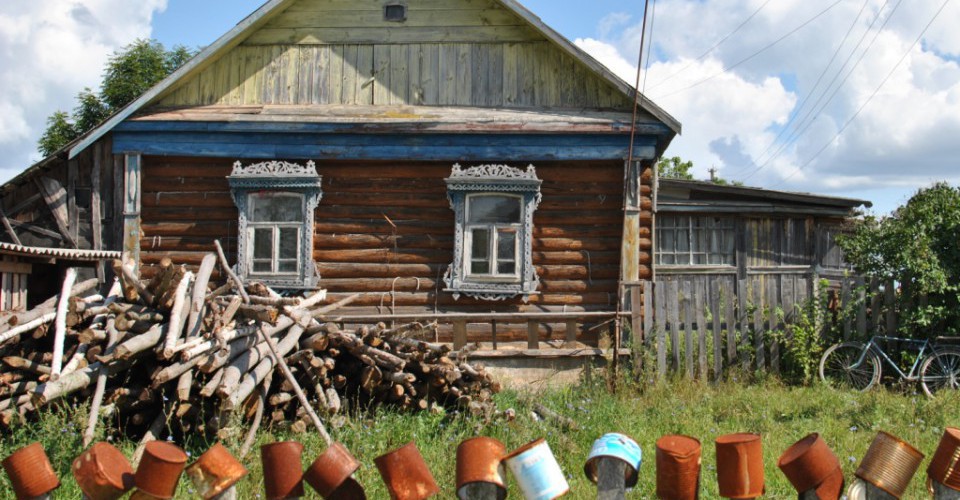
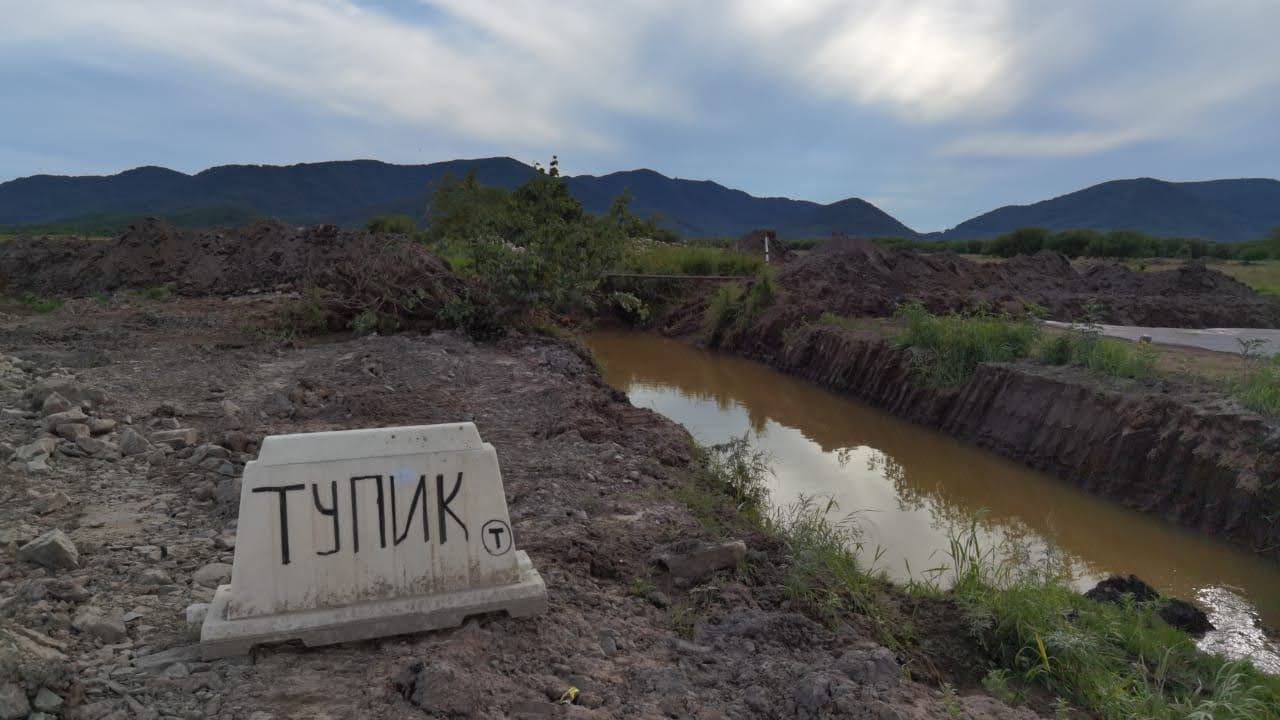
The sign reads: ‘no-through-road’

I had been meaning to write a ‘roundup’ summer post, but didn’t get around to it. The Ukrainian push into a part of Russia’s Kursk region was obviously the most relevant event to write about, but even now there’s questionable value in trying to interpret. Here, though, I try to offer a number of quick summaries of events. And then some more speculative stuff. If you think this more topical genre worth reading, let me know.

Kursk is a kind of nowhere region in the Russian imagination (1943 tank battle not withstanding). It is not quite steppe country, not Cossack country, but neither is it core European territory either. Nikita Khrushchev was born here, but his formative years were in Donbas. Today, Kursk is a landscape of relatively successful black soil farming broken up by river ravines. I went on a road trip there in the late 2010s and one of my key interlocutors is going there next month for a family visit. When we visited together, despite the agricultural pride of the region, our hosts asked us to bring processed meats and cheeses (too expensive locally for poor people to afford), and essential medicines. The final leg from Kursk city took nearly as long as the one from Kaluga-Kursk along the highway.

In some ways Kursk’s dismal demographics and patchy economic geography are quite comparable to other regions – population depletion everywhere but the capital; agroholding expansion into spaces vacated by surplus populations; some economic specialization (iron and agri) despite not really having a competitive advantage; neglect from the centre and the pitiless poverty of rural life reminiscent of 19thC novels. Kursk is kind of representative in size too of many ‘central’ Russian regions. Kursk, Jutland (where I work), Maryland, and Belgium cover similar areas but compare populations. Jutland – 2.5m, Maryland – 6m, Belgium – 12m. Kursk, by comparison, is almost empty (well below 1 million inhabitants – and probably less given that population stats are inflated for budgetary reasons by the local authorities). Nearly 45% of the region lives in the single large city.

“What to say about Kursk?”

No, that’s actually the response my Russian interlocutors would likely say, if I was guileless enough to bulldoze them into talking about it. I did an experiment. I purposefully didn’t mention it to them for the whole of August (recall incursion began 6th August). By now, most people have had time to digest, but it still doesn’t have a political shape in Russian society. This is not because of propaganda, nor ‘indifference’. To some degree it illustrates the normalization of sequentialness of ‘externalities’ of the Russo-Ukrainian war. Invasion, routing of ‘our’ forces, war crimes, missile strikes on the mother of ‘Russian’ cities (Kyiv), counterattacks, drone strikes by Ukraine. Most ‘real’ is the indirect effect of inflation, loan terms and percentages, labour shortages, ‘opportunities’ for those able to relocate jobs. A handful of people reference Kursk. They’re not callous. They mention, wryly, the conspicuous absence of it on TV. They talk about helping displaced persons. They collect money and send it on. They bring collections of food, clothing and money to the temporary accommodation points (summer camps, ‘sanitorii’, disused student halls). Part of the story is one of the belatedness of meaning. It’s too early to say what the meaning of Kursk is on any level. We’ll incorporate it into the ‘meaning’ of 2024 probably long after New Year’s eve of this year.  

“There aren’t enough men”; alarm versus calm

“There aren’t enough men”, was heard from that most loyal source. A ‘security-adjacent true believer’. Don’t ask me what that means, for now. Certainly ‘throughput’ or ‘flow’ of meat (because that’s what it is, and on the Ukraine side too) is inadequate. Something, somewhere will break. Or is right now breaking. Concerning a new mobilization wave I have many contradictory thoughts. On the mobility and ‘small tricksterness’ of post-socialist populations. On the tiredness of ordinary Ukrainians and Russians alike. Could mobilization just mean continuity? Yes, but continuity of what? Would it accelerate tectonic changes. Yes, that too. But that’s the point. We stand, as sociologists, reading a seismograph that’s too far from the epicentre to make predictions.

Ekaterina Schulmann in one of her August podcasts: ‘deprivatization and transfer of property in Russia is far more alarming to the elites than any loss of bits of Russian land, whether that land is canonical or non-canonical’. Schulmann in the same broadcast warned that direct measuring of public opinion is futile, but even the official pollsters can’t hide a real fall in the confidence of people in the centre.

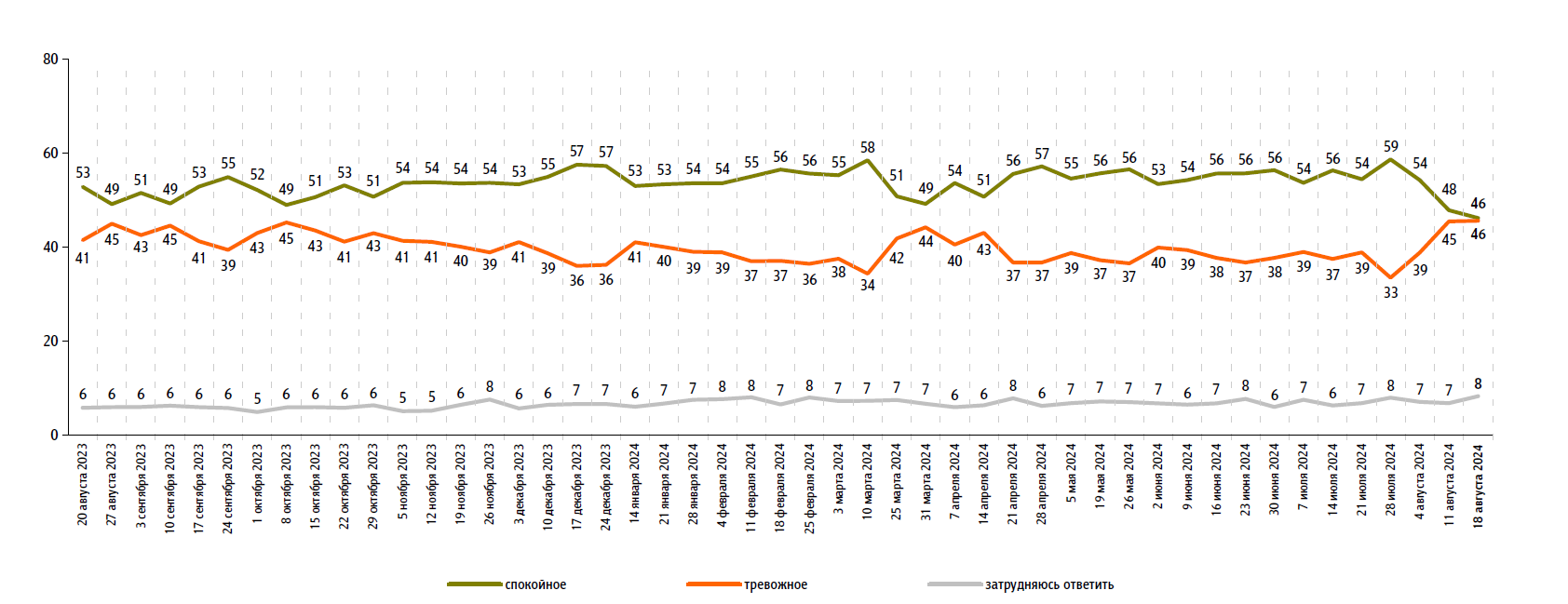
‘It is better to look at proxies’ for public opinion, is pretty much what everyone says now. There’s media consumption, internet search terms, politically ‘safer’ polls like the one about Russians’ biggest ‘fears’. But even here, Kursk does not register as much as one would expect. Schulmann gives a nice history of the relationship between ‘things are alarming/things are calm’ polling. In Feb. 2022 the split between alarming/calm was 55/39; Mobilization in late 2022: 70:26; Moscow drone strikes: 53/42. Now, post-Kursk: 46/46.

calm is green, fearful is orange

You can’t imitate Schulmann’s ironic style. She points out that when you ask Russians about the ‘Special Military Op’ they invariably speak like “schizos”: ‘Everything is going great… Let’s make peace right now!’ For Schulmann, we can compare Russian society to a person being smothered with a cushion while around them the world burns. In some sense they want to be smothered.

Viacheslav Inozemtsev, the Russian economic observer, covered the Kursk incursion in an interesting way. He notes that Kursk and Belgorod are centres of pork, poultry and milk production – 25% of pork production, in fact. Inozemtsev is more forthright than usual in the piece, arguing that new mobilization might be forced on the Kremlin by events like those in Kursk and that this would entail the defacto dismantling of Putinism. What he means by this is the ability of people to detach themselves from political life in the country, content that they will be largely left alone. If mobilization is needed, he seems to say, the system would have to fundamentally change, in order to survive.

Alexei Levinson, of Levada argues that Russians are indifferent to what’s happening in Kursk, citing, as usual, his brand of Wizard of Oz sociology: ‘focus group data showed that there was no significant concern’. He cites emotional anesthesia and numbness in the population, who seek denial and escape. This is a long interview and some readers will know I criticize Levada-type sociology on methodological grounds and more. Objection here, here, and here. But you don’t have to listen to me. Here are the words of Professor Gulnaz Sharafutdinova of KCL in her latest book on Rethinking Homo Sovieticus. Writing about the obsession of Levada with the totalitarian paradigm and the accusation of moral failure of the Russian people, ‘such a mixing of the political, the ethical and the analytical created “a blind spot” that many scholars did not see’ and that ‘labelling an entire society with the use of ideas from the 1950s is lamentable’. Why do observers like Levinson remain so wedded to the idea of inertia and atomization? (Rhetorical question. The answer is here)

That Levinson comes out with such a strong claim reveals more about the universe of ideas he lives in, than any empirical reality. I can’t help but mention a different ‘data point’ –  vox pops that BBC’s Steve Rosenberg did in Aleksin after the Kursk incursion. Even though people knew they were talking to a foreign journalist with a camera, a very different, and charged atmosphere was evident (the subtitles are a bit misleading, by the way). And that chimes well with what I hear from people who are able to speak without restrictions to their friends, colleagues and relatives.

Holy war falls flat

One interlocutor noted that people struggle to connect with WWII tropes (resisting invasion as holy war) as a useable emotional catalyze, and that this has destabilizing effects, even as they are forced into using some of those same limiting tropes: heroism, sacrifice, faithfulness to the fatherland. Does this mean that through war, via ‘dialogic’ interaction of old tropes which are inadequate with the ‘new’ reality, a novel orientation towards the future might emerge? I can’t help think of a different kind of belatedness, this time relating to hegemonic cultural orders. In a society like Russia we must be doubly sensitive to the notion that organic crises (which we can argue Russia has been in for at least 15 years, or longer) eventually culminate with such unpredicted rapidity, that they overtake even the key actors involved. Indeed, this isn’t about the end of the Russian state or Putin – they may both ‘continue’ seemingly in their present form, even while overall the system transitions to a new steady-state and new forms of ‘common sense’ take over. Essentially the crisis might even resolve itself before we know it has, and be recognizable as such only much later. ‘Everything must change, so that everything remains the same’. Is this so different from Andrei Pertsev’s musings here on the cross-over in trends for relative popularity of Head of State and government

But back to those vox pops and my own interactions: when people use familiar tropes of heroism, these is a strange hybrid of sacredness and meaninglessness and also criticism of the army and civilian authorities.

If emotions performed publicly are political performances, then Kursk shows that the mechanism of performance itself is broken. This is even visible in the comments about it from people like Kara-Murza. Because rationality and emotion collide in his answer, his usually eloquent expression is literally blocked. He has to go off on a long tangent to get to the point of saying, rather tiredly, that he doesn’t like seeing Russians being killed just as he doesn’t like seeing Ukrainians murdered. ‘Strashno… strashno…. Strashno… bol’… strashno.’ [horror, horror, horror, pain, horror] overtake his whole commentary for a while. Until he comes out with the trite: ‘all they that take the sword shall perish with the sword.’

In the end there can be neither rationality nor affectivity: things that the surveys like Levinson’s are aimed at measuring, as if they can be extracted as distilled fractions. Instead, there is a large (or small), depending on the person, black hole, about which there is nothing to say. Because the blockage of different orders of expression and feeling is right inside you. You can only shout into a void. But this too is not normalization of war, but like an explosion in the deep and dusty places where different available hegemonic discourses are stored.

For a while now the sociological person has ‘died’; it’s not that they are traumatized, which might be more true of Ukrainian victims. It means they are living in what Irina Sandomirskaya calls a ‘blockade economy’ a ‘powerful proving ground for the testing of technologies of power’. One in which money and power, and death and destruction overwhelm the capacity to gather together one’s own circulating and contradictory thoughts as meaningful currency.