Tag Archives: Trump

Unmaking the Ukrainian working class Part II

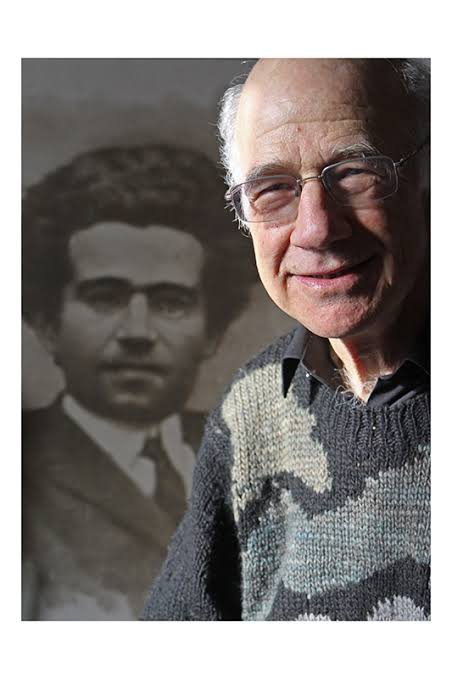
Rest In Power, Michael Burawoy

This is the second post about Denys Gorbach’s new book on Ukraine: The Making and Unmaking of the Ukrainian Working Class. The first post is here.

In the period between writing the first post and this one, Michael Burawoy has died. Burawoy was one of the formative influences on both Gorbach and me. Here’s a short excursus on how he influenced our approaches to writing a novel (in the Ukraine and Russia contexts) form of political-economy-ethnography. I hadn’t intended to focus on Burawoy (because there’s so much else of interest in the book), but here goes.

Both Gorbach and I try to synthesise our cases from what Gorbach calls ‘participant truth’ and ‘sociological truth’ – and here he cites Burawoy’s 2017 piece. Burawoy there argues that ethnography needs to be liberated from the naïve empiricism that still plagues anthropology and sociology and which is continuously re-invented by scholars unwilling (or afraid) to confront the political implications of their own work. Burawoy uses this opportunity to make the case again for bringing structure and comparison to any micro-level work. Only by linking specific ethnography cases to the broader structural constraints (oligarchic capitalism in Ukraine/authoritarian neoliberalism in Russia) can research do justice to the ‘common sense’ of interlocutors. This is what Gorbach and I attempt. The social ‘facts’ of cases do not  speak for themselves. And this, via Bourdieu, is a point Burawoy hammers home in his robust writing. At the risk of overshadowing the discussion, it’s worth citing Burawoy further (here reviewing contemporary ethnography of Wisconsin):
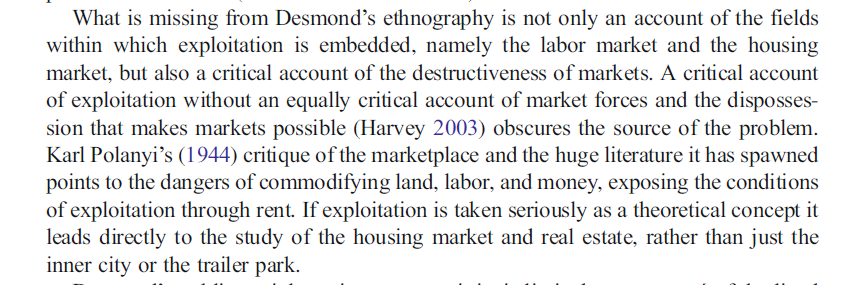
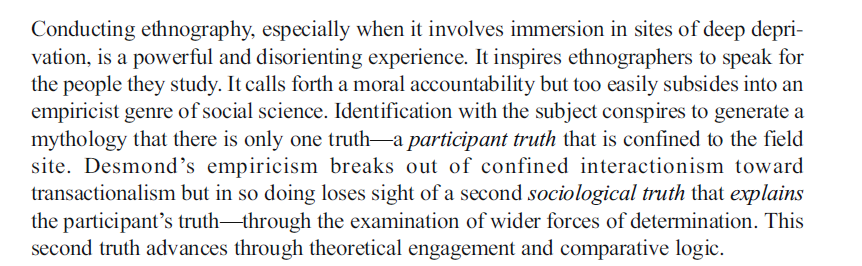
While there’s much more to say about Burawoy’s influence, I want to turn to Gorbach’s very extensive discussion of politics in his second chapter (and the empirics of Chapter Nine). As I wrote previously, Gorbach makes a pitch for those interested in Ukraine to take more seriously ‘everyday politics’ and ‘moral economies’. Having said that, he starts off with a welcome ‘intervention’ – one highly topical to the ascent of Trump 2.0: to paraphrase – to take populism seriously we need to move beyond discourse analysis (MAGA, get rid of woke, etc), and use empirical tools like ethnography to uncover the material basis for populists’… popularity. I’ve mentioned in this blog many times Arlie Russell Hochschild who wrote two books on the Tea Party and Trumpism, but it’s indicative of the timidity of indigenous US political sociology/anthro that this barely scratches the surface and does not qualify as ethnography in way that Gorbach’s or my work does. Gorbach has lived and worked with his interlocutors, as have I. One can barely imagine this possibility in the class-fractious society of the USA. Yes there are some exceptions, but they still amount to general handwringing, or poverty porn.  The truth is, an intersectional yet working-class ethnography is just not going to be interesting to the scions of Anthro in the US who get to do PhDs by virtue of precisely that privilege that would make it unthinkable for them to do the necessary work. (For a good general anthro account of Trumpism, see Gusterson who rightly says it ain’t all about class, yet…. ‘Trump’s victory confronts US anthropology with an incompleteness in the project of repatriated anthropology. While anthropologists of the United States have been busy studying scientists and financial traders at one end of the social scale and crack dealers and immigrant communities at the other, we have not had so much to say about the middle ground, the people who supported Trump—people we tend not to like.’ Shout out here to someone who HAS done this work, only in the UK context: Hilary Pilkington. Shout out to, to Christine Walley

Gorbach reminds readers that the best work on postsocialist populism emphasizes its shadow relationship to democracy, avoiding the normative stance that opposes democracy and populism and which is so frequently deployed to show how ‘defective’ Eastern Europe is by mainstream observers. Gorbach, following the work of Tarragoni and Canovan, argues that populism, while expressing a crisis of representative liberal democracy, is not a ‘thin ideology, but contains a radical democratic critique of representative government. But what’s missing is what Gorbach and others aim to provide – the material basis of populism’s rise which ‘aspires to distribute income and, nourishing illusions about the function of the state, is politically disorganized (Boito 2019: 135.)’. In an abrupt turnaround though, Gorbach’s innovation is to relegate populism as just a Gramscian ‘morbid symptom’ of the crisis of capitalism. Parapolitical processes that themselves are generative of populist ‘supply’ are more important to look at and these are perfectly adequately grasped using the long-standing terms ‘moral economy’ and ‘everyday politics’. The ‘crisis of representation’ that populism reflects is then doubled in scholarship: mainstream liberal political science has no tools with which to move towards a diagnosis of the disease (it ignores those that Gorbach offers here), instead offering ‘game theory’ or the pseudoscience that is ‘mass’ social psychology and which includes bizarre claims about whole ‘national groups’ on the basis of dubious experiments conducted on American undergraduates which cannot be replicated and remain ‘WEIRD’.

Gorbach returns to his problematizing of ‘populism’ in the empirical chapter on language politics in Ukraine. There’s an enlightening discussion of how pro-Ukrainian language narratives align with upwardly mobile citizens after Maidan, how the far right may find allies in LGBT organizations in opposing ‘vatniks’. A ‘thin patriotic identity’ (before 2022) emerges that papers over deep ideological differences among liberals and nationalists (p. 224). Uniquely in Ukraine, language affiliation plus civic involvement then serves as a way of denying (or exiting) a stigmatized working-class identity. But, as Gorbach continues:
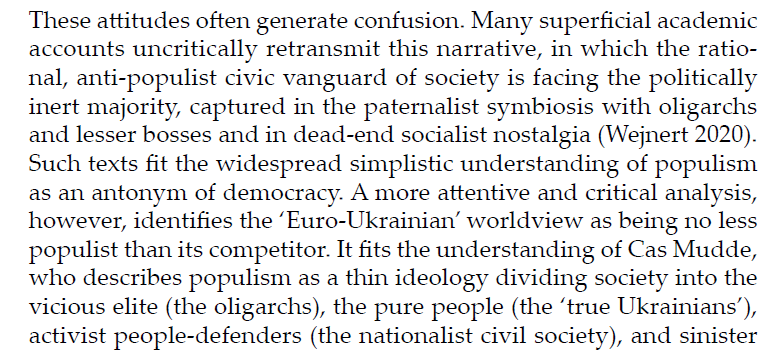
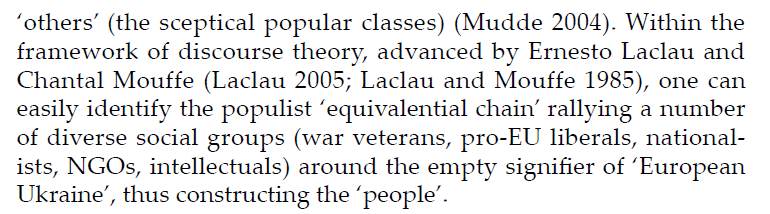
At the end of the same chapter, Gorbach shows how ‘East Slavic’ Nationalism acts no less powerfully (and does not necessarily conflict with) the ‘ethnic’ Ukrainian model. Indeed, in a place like Kryvyi Rih (recall, Zelensky is from this city), Gorbach uncovers an inversion of the ‘vatnik’ theme – ‘stupid nationalists’ and ‘civilized Soviet-type people’.
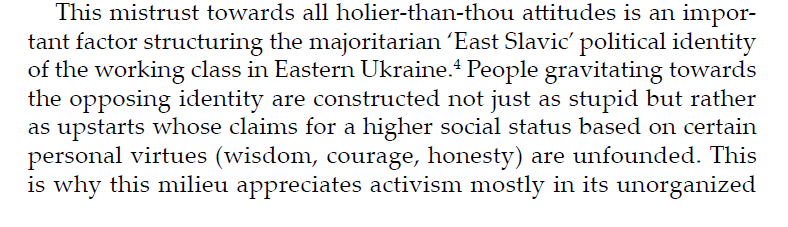
After a long discussion of the mayorship of O. Vilkul who would later become a key figure that confounds stereotypes about the political views of Eastern Ukrainians, Gorbach concludes this section:
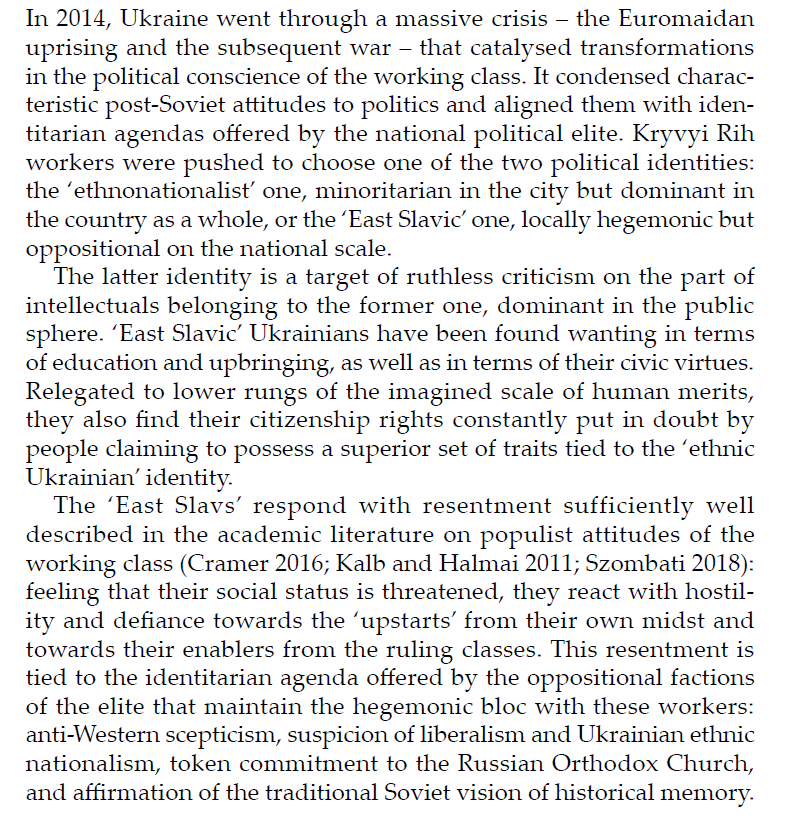
However, ‘One must take seriously the words of many adherents of both camps when they say they are not ethnic Ukrainian or Russian nationalists. The root of the political cleavage is the per­ceived moral difference between the self and the other rather than ethnic animosity.’ And in a subsequent final post about this book we will return to that topic of moral economy how it expresses everyday politics.
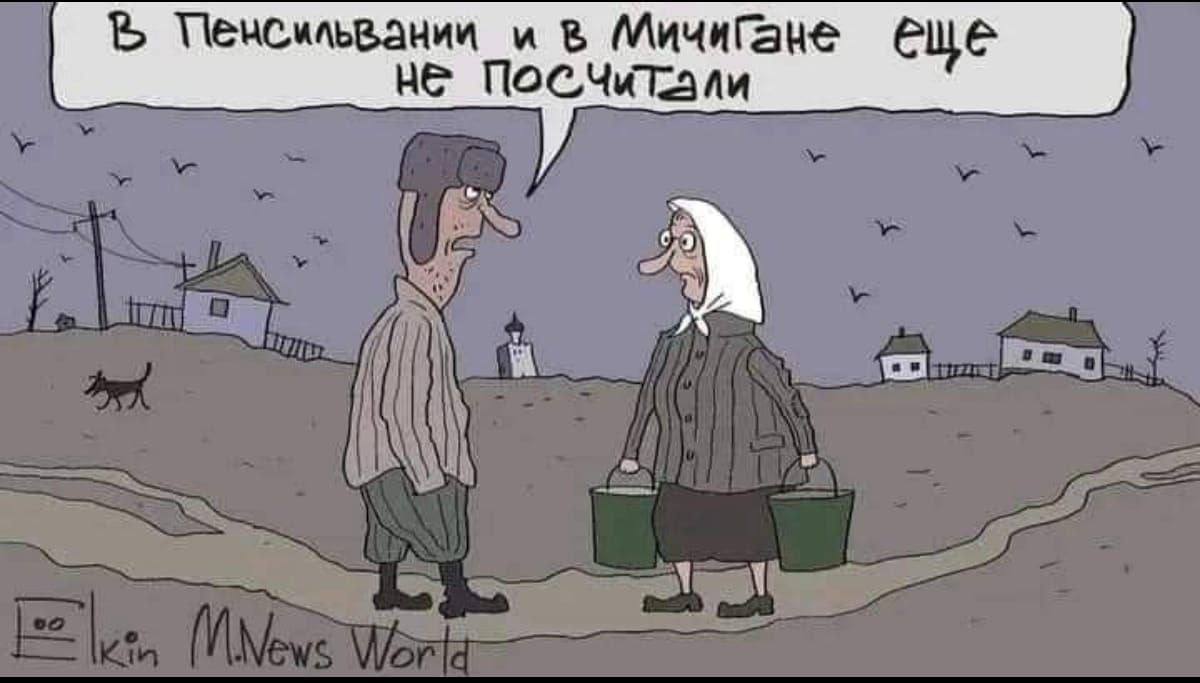
Trump and the Russians (vernacular politics again)

old memes about the count in Michigan are best

In 2016 I asked: what have Trump and Russia got in common? At that time there was a debate – still visible – about a revolt against ‘the elites’. But electorally, there has never been a consistent way for Russians to express similar sentiments – although in 2016 I tried to show how the many Russians still meaningfully cast ‘social’ protest votes. One observation at the time was the ‘insiderness’ of figures like Nigel Farage, Trump, and indeed Zhirinovsky, was irrelevant to voters. Such figures channelling of impotent and inchoate anger was much more animating. While Russians still have no meaningful way of expressing discontent electorally, surely, in 2024, emotional resentment as a global political vernacular fully come of age.

More than a few people note the misunderstanding about Trump’s undeniable ‘charisma’ among a swathe of people who’d like to stick it to the ‘man’. Or among those who misguidedly think he can improve their material lot by deporting illegals and imposing tariffs. What’s surprising was the number of observers puzzled by the Biden-Harris punishment for an economy than on paper is supposedly booming. This for me is indicative of the tyranny of ‘presentism’ as revealed in the pundit’s favourite type of analysis. We’ve had growing consumer spending, growing wages, falling inflation – surely voters would thank Biden-Harris for that? What this ignores is that people have a feel for the longer-term rises in inequality and increases in economic insecurity, the very real hollowing out of the middle-class, not to mention lower-middle. There’s good evidence that the latter are core to Trump’s support. Russian (not quite) parallels too: the big war spending by the government hardly fools people. They know that they are net losers from the war. And this sentiment is growing ever larger.

Another point of connection (between vernacular politics in Russia and America) is the substitution of muscular foreign policy in the absence of meaningful policies addressing domestic crisis. In the liberal Twitter bubble we see endless expressions that Harris lost part of her ‘base’ because of her business-as-usual attitude towards Israel. But more open-ended group studies have found that, unprompted, some opted for Trump because of anxiety about the USA’s loss of prestige and ‘face’ in the world. Rings any bells in the Russian context? Is this another ‘resentment’, or an ‘anxiety’? Is it a sublimation of domestic fears? Or deep-seated imperial thinking? It’s getting to the point where we might have to unpack these words a bit better.

In my 2016 work I pondered the paradox of ‘outsider-loyalty’ identity among Russian voters. This was my ethnographic version of the ‘Crimea consensus’ view among my political science colleagues. That people might harbour deep resentment about elite corruption, social decay, and the hegemonic discourse of social Darwinism that reigns in domestic politics, but that geopolitical victory over adversity had the potential to consolidate diverse people around the symbol of the leader. But this consolidation, like the current Ukraine-war-based one is hollow and brittle because it offers no satisfaction beyond the immediate distraction from worldly cares.

Another topic back in 2016 was that of competing ‘structuring feelings’. If the political histories weren’t so different, it might be worth comparing Russia to the Jacksonian world-view of middle- and lower-class Americans that is argued swung Trump’s 2016 and 2024 elections. Jacksonian tradition is not an ideology, but a political ‘feeling’ of self-reliance, opposed to big federal government and in favour of the 2nd amendment. It’s a ‘folk belief’ opposed to the other Jeffersonian and Wilsonian traditions when it comes to foreign policy, channeling atomized and lonesome feelings about a hostile world (of ‘chaos and darkness’) in which the US needs to act tough merely to maintain its position. If you object to this rather gauche characterization of Americans, pause for a minute to think about the broad strokes painted about Russian historical (or maybe even ‘genetic’) ‘disposition to tyranny’ that a respectable scholar near you is pitching as we speak.

But we can turn this around another way. Stories about national values are also about who has the right to tell them. And we’re all affected by the fact that Americans tell the best stories about themselves. Jacksonians are ‘rugged individualists’ and all about ‘self-reliance’. Surely that’s a good thing? Once again, turn that around and it maps uncannily on to a set of values that scholars have imposed on post-1991 Russians but negatively: focussed on a ‘cult of the winner’, ‘aggressive pursuing of self-interest’, seeing ‘personal independence as the new ideology’. Or, from a different school of thought, Russians are like Trump voters in another deficient way: they are ‘unable to adapt to liberal values’, lack empathy for those unlike them, are cultural incompatible with contemporary modernity and all its complexities.  Does every (post-) imperium have its intersectional politics that allow domestic hurt to be sublimated into resentment of the Other? Or are so many of these deficiencies actually symptoms of our own search for a too simple answer to the question: ‘why Trump?’ Like in Russia, America must just have the wrong kinds of people (ne tot narod).  

[I could say more about the Jacksonian tradition and foreign policy: skip this if you like. As one observer pointed out back in the Bush era: it is not so much that the US public takes pride in the overwhelming superiority of firepower at the disposal of the United States, it needs to see it demonstrated from time to time. ‘Realist’ emotion is also a thing. (Proxies in Isreal don’t cut it – if anything they make it seem like the MIC is not acting in the interests of the United States). If it’s not clear what the point of a digression about US ‘values’ is, then perhaps you haven’t been paying attention to what this blog is about.]

The inadequacy of an interpretation of Trump as ‘white working-class’ identity politics writes off more intersectional and structurally feeling-based approaches relating to resentment. Again, Arlie Russell Hochschild’s Strangers In Their Own Land: Anger and Mourning on the American Right (2016) should be getting renewed attention. Hochschild links anti-establishment voting and ‘deep story’ – internalised emotional value systems. Deep story for lower middle-class white Americans, for Hochschild, is a story of resentment of being overtaken by Others, of exclusion and neglect. Hochschild followed this up later with another book more squarely focussed on Trump voters.  

To revisit a point made in 2016: whether we’re looking at Russia or the US, we must move closer to the social worlds that quantitative social science largely fails to adequately represent.  How to plot the intersection of ‘unfairness’ and ‘prospectlessness’ as a representation of resentful values? These are, essentially, the Hochschildean ingredients for Trump’s (mercurial) popularity. Whatever else he is, he can channel dark desires of the moment.

Dominant narratives attempting to explain the war continue to focus binaries (pro- or anti-war) which continue the ‘pro or anti Putin’ tales we’ve been subject to for a long time. But thinking again about the adequacy of interpretation, unfairness and prospectlessness, the long-term structuring of feelings of hurt are intersectional ‘deep stories’ which animate the Russian people in my research. And war only exacerbates them. More on this soon.