a wall displays a directions towards a padlocked bomb shelter thousands of kilometres from Ukraine, February 2026.
In a wide-ranging interview for Die Zeit a few weeks ago I said: ‘for most, a national catastrophe seems more conceivable than that Russia could succeed in subjugating Ukraine. The prevailing mood is pessimism.’ In terms of parsimonious analysis, this is probably the most anyone studying Russia can offer.
Outside of Russia however, it’s noticeable how this analysis is not enough for students, colleagues, and media and public alike. After four years of war we are all supposed to have a definitive take. Things must be moving, according to some established rules of causality, in a particular direction. But a marker in time is arbitrary. There’s nothing about the passing of four years that gives much more insight than six months ago, or six months hence. There’s very little value in giving an assessment of where we are, or where we are going. Furthermore, the temptation to stock take, while useful, often leads off in the direction of causal inference and prediction.
But the invasion of Ukraine, like the collapse of the USSR, should remind us that social sciences are not predictive. And this has been just as true of the part of the social science spectrum that claims the most “scientific” of approaches – economics. While there was a good lot of literature that said sanctions and embargoes could have effects on belligerents, that same literature also pointed out that this was only likely to work in contexts of massive and overwhelming differences in power.
Nonetheless, after four years, I still think it’s ‘the economy stupid’ that will make a difference. This was discussed in our recent Russia Unfiltered podcast where I made the point that Russia has far fewer resources overall than even Europe alone. The ‘economic’ argument, also offers – I think – a middle way between the rock of the realists, and the hard place of hawks that Seva Gunitsky outlined in January 2022. Incrementally increasing economic pain might make the supposition – that the Russian government cares much more about the outcome of the conflict, and is therefore able to pay much more for it and raise the stakes – irrelevant if the coming real stagnation of the Russian economy becomes visible and felt by everyone (and indeed, it will expose political fractures precisely because it will also reveal who has profited handsomely, and who is cynically protected from pain).
French historian Marc Bloch argued that the most meaningful comparisons are those which are maximally similar and consequentially different in only a few respects. Comparative study might very well be more meaningful within regions like the former Soviet one than across them. This is why most of the best work on the war to date has avoided historical and political parallels that are too distant from the immediate context. Nonetheless, one that I risked making myself – a comparison between the Iran-Iraq war in the 1980s and the Russo-Ukraine war, perhaps is still helpful for one good reason: its lesson about unpredictability due to the intractable process of long regional wars.
Iran-Iraq showed that outcomes were not at all predictable based on available evidence; outside interventions had effects but not immediately or in direct causative ways. The relative weight of the intervention of individuals and elites changed multiple times (and like in many wars, elites’ non-decisions were sometimes more important). And, to go against one of the points I made earlier about the danger of historical parallels, Iran-Iraq’s outcome was the strengthening through war of both countries’ militaristically-minded core elites. With terrible consequences shorter and longer term for their societies and their prior limited pluralisms.
It might be professionally satisfying for me to say ‘I told you so’ in response to Meduza’s new investigation that shows that Russian battlefield losses are severe but not half as bad as Western intelligence agencies are reporting. Well, I did tell you so, repeatedly – pointing out that because of a lack of professional analysis, Western agencies were mainly just repeating Ukrainian figures which were understandably propaganda. However, even if it were true that losses were much higher it would not change the calculus that it’s the relationship between money, interest rates, exchange rates and oil prices that run the war, not bodies. Bottom line: for Russia war mortgages the state. But sometimes it does so in a way that is unsustainable for non-core powers, of which Russia is a classic peripheral player vulnerable to numerous economic forces beyond its control.
So, beyond this perhaps limited historical comparison, what can I say I got right? Looking back at some of the posts on this site since 2022, a few stand out. There’s my reading of Snyder and Laruelle from May 2022, where the former argues that Russia is fascist and the latter retorts that Putin is not even Pinochet. In the same piece I emphasise the axiomatical political instincts of the regime remain focussed depoliticization and demobilization, but that of course this also creates major weaknesses in governance during wartime.
In October 2022 I wrote about the Donbasification of Russia itself, using the metaphor ‘North Korea-lite’ to show how historically, the erosion of norms and laws in occupied territories and conflicts has a boomerang effect on the imperial core. Little has changed in my assessment and in any case this is hardly an original idea. The problem really comes if the conflict ends, because the erosion of the rule of law, the high corruption within the MIC, and the need to scapegoat insiders, particularly in the security and economic elite only intensifies after a peace is signed.
In April 2022 I returned to my pre-war predictions as to what would happen in Russia and found them overall to be sound. One thing I didn’t anticipate because of my own blinders was how effective the politics of fear would become:
In that same post I also refined a little my ideas about defensive consolidation which later appeared in a further revised form in my 2025 book:
Defensive consolidation involves magical thinking and denial… It involves a cleaving to authority (not necessarily the government, but your boss, your factory, your town leader), not out of loyalty or enthusiasm…The more Russians cleave to authority the more they are effectively ‘admitting’ to themselves how bad things really are.
DC is something of a ‘sweaty concept’ – I keep reframing it because it only exists as a very affective and interactive structure of feeling about the war and the state that Russian people have. Maybe the best exploration of it is only possible by reading across various chapters of the book. And reading out from Lisa Wadeen’s work on how, to paraphrase here, the simulacrum of charismatic authority tends towards shabbiness, decay and deformation in such regimes. It produces anxiety as much as compliance.
Finally, I wrote way too many posts about the problems of relying on survey data showing high war approval among the Russian public (a public which of course does not exist and knows as individuals that it cannot have an opinion). One of my most viewed posts in the last four years is this one about the shabby and unprofessional reality behind the smooth veneer that is the curation and presentation of much survey data about Russian political opinion. But don’t believe me, check out this pretty devastating indictment of interview practices which shows how the majority of answers to questions involve information loss, misunderstanding and distortion.
The title of that article is ‘communication breaches’ and for me this continues to be the lesson of the war when it comes to its impact on scholarly discussion and public understanding. Will this change before the war ends? I doubt it, meaning that publics and politicians are also not ready for the new European reality the end will bring – in terms of the new kind of Ukrainian and Russian regimes and states which will emerge and the necessity to have some kind of plan to engage with both. Will they be ‘the same, yet worse’ as I predicted in January 2022?
In the period between writing the first post and this one, Michael Burawoy has died. Burawoy was one of the formative influences on both Gorbach and me. Here’s a short excursus on how he influenced our approaches to writing a novel (in the Ukraine and Russia contexts) form of political-economy-ethnography. I hadn’t intended to focus on Burawoy (because there’s so much else of interest in the book), but here goes.
Both Gorbach and I try to synthesise our cases from what Gorbach calls ‘participant truth’ and ‘sociological truth’ – and here he cites Burawoy’s 2017 piece. Burawoy there argues that ethnography needs to be liberated from the naïve empiricism that still plagues anthropology and sociology and which is continuously re-invented by scholars unwilling (or afraid) to confront the political implications of their own work. Burawoy uses this opportunity to make the case again for bringing structure and comparison to any micro-level work. Only by linking specific ethnography cases to the broader structural constraints (oligarchic capitalism in Ukraine/authoritarian neoliberalism in Russia) can research do justice to the ‘common sense’ of interlocutors. This is what Gorbach and I attempt. The social ‘facts’ of cases do not speak for themselves. And this, via Bourdieu, is a point Burawoy hammers home in his robust writing. At the risk of overshadowing the discussion, it’s worth citing Burawoy further (here reviewing contemporary ethnography of Wisconsin):
While there’s much more to say about Burawoy’s influence, I want to turn to Gorbach’s very extensive discussion of politics in his second chapter (and the empirics of Chapter Nine). As I wrote previously, Gorbach makes a pitch for those interested in Ukraine to take more seriously ‘everyday politics’ and ‘moral economies’. Having said that, he starts off with a welcome ‘intervention’ – one highly topical to the ascent of Trump 2.0: to paraphrase – to take populism seriously we need to move beyond discourse analysis (MAGA, get rid of woke, etc), and use empirical tools like ethnography to uncover the material basis for populists’… popularity. I’ve mentioned in this blog many times Arlie Russell Hochschild who wrote two books on the Tea Party and Trumpism, but it’s indicative of the timidity of indigenous US political sociology/anthro that this barely scratches the surface and does not qualify as ethnography in way that Gorbach’s or my work does. Gorbach has lived and worked with his interlocutors, as have I. One can barely imagine this possibility in the class-fractious society of the USA. Yes there are some exceptions, but they still amount to general handwringing, or poverty porn. The truth is, an intersectional yet working-class ethnography is just not going to be interesting to the scions of Anthro in the US who get to do PhDs by virtue of precisely that privilege that would make it unthinkable for them to do the necessary work. (For a good general anthro account of Trumpism, see Gusterson who rightly says it ain’t all about class, yet…. ‘Trump’s victory confronts US anthropology with an incompleteness in the project of repatriated anthropology. While anthropologists of the United States have been busy studying scientists and financial traders at one end of the social scale and crack dealers and immigrant communities at the other, we have not had so much to say about the middle ground, the people who supported Trump—people we tend not to like.’ Shout out here to someone who HAS done this work, only in the UK context: Hilary Pilkington. Shout out to, to Christine Walley
Gorbach reminds readers that the best work on postsocialist populism emphasizes its shadow relationship to democracy, avoiding the normative stance that opposes democracy and populism and which is so frequently deployed to show how ‘defective’ Eastern Europe is by mainstream observers. Gorbach, following the work of Tarragoni and Canovan, argues that populism, while expressing a crisis of representative liberal democracy, is not a ‘thin ideology, but contains a radical democratic critique of representative government. But what’s missing is what Gorbach and others aim to provide – the material basis of populism’s rise which ‘aspires to distribute income and, nourishing illusions about the function of the state, is politically disorganized (Boito 2019: 135.)’. In an abrupt turnaround though, Gorbach’s innovation is to relegate populism as just a Gramscian ‘morbid symptom’ of the crisis of capitalism. Parapolitical processes that themselves are generative of populist ‘supply’ are more important to look at and these are perfectly adequately grasped using the long-standing terms ‘moral economy’ and ‘everyday politics’. The ‘crisis of representation’ that populism reflects is then doubled in scholarship: mainstream liberal political science has no tools with which to move towards a diagnosis of the disease (it ignores those that Gorbach offers here), instead offering ‘game theory’ or the pseudoscience that is ‘mass’ social psychology and which includes bizarre claims about whole ‘national groups’ on the basis of dubious experiments conducted on American undergraduates which cannot be replicated and remain ‘WEIRD’.
Gorbach returns to his problematizing of ‘populism’ in the empirical chapter on language politics in Ukraine. There’s an enlightening discussion of how pro-Ukrainian language narratives align with upwardly mobile citizens after Maidan, how the far right may find allies in LGBT organizations in opposing ‘vatniks’. A ‘thin patriotic identity’ (before 2022) emerges that papers over deep ideological differences among liberals and nationalists (p. 224). Uniquely in Ukraine, language affiliation plus civic involvement then serves as a way of denying (or exiting) a stigmatized working-class identity. But, as Gorbach continues:
At the end of the same chapter, Gorbach shows how ‘East Slavic’ Nationalism acts no less powerfully (and does not necessarily conflict with) the ‘ethnic’ Ukrainian model. Indeed, in a place like Kryvyi Rih (recall, Zelensky is from this city), Gorbach uncovers an inversion of the ‘vatnik’ theme – ‘stupid nationalists’ and ‘civilized Soviet-type people’.
After a long discussion of the mayorship of O. Vilkul who would later become a key figure that confounds stereotypes about the political views of Eastern Ukrainians, Gorbach concludes this section:
However, ‘One must take seriously the words of many adherents of both camps when they say they are not ethnic Ukrainian or Russian nationalists. The root of the political cleavage is the perceived moral difference between the self and the other rather than ethnic animosity.’ And in a subsequent final post about this book we will return to that topic of moral economy how it expresses everyday politics.
Parents of quadrobers, ‘kvadrobery’, are to be fined according to proposed new laws
Another post this week reviewing some goings-on in the Russia-sphere.
Biopolitical entrepreneur Katya Mizulina and head of the ‘Safe Internet League’, who is the daughter of politician Elena Mizulina – herself a pioneer in socially conservative legislation – was asked at an event by a brave journalist why she rails against Western ‘child-free’ ideology while not having any children of her own. ‘Child-free ideology’ (sic) is just the latest addition to the not-very convincing attempt to consolidate Russian identity around the message that ‘we’re the protectors of the real Judeo-Christian tradition unlike the decadent Ukraine-nazi-supporting West’.
My new book (announcement forthcoming) opens with a look at the imposition of a new kind of civics lessons on school children. The very first ethnographic scene features a middle-aged male Life Skills and Personal Safety teacher who implores a room of teenagers to read the bible and recant of their pro-Western attitudes. Let’s just say these unwelcome distractions from the curriculum by unqualified and under-prepared instructors don’t go down very well with children and parents alike. Unlike the new social conservatism, there is an audience for patriotic education classes, where they are accompanied by genuine social and economic resources like preferential places at university. Young people are just as entrepreneurial as politicians in using political agendas in education to get ahead.
I’m not much of a fan of podcasts, but the Meduza Russian-language ones are often hidden gems. Like this talk with Maksim Samorukov about the informational isolation and blinkered world-views which ‘informed’ Saddam Hussein’s decisions to invade Iran and Kuwait. In making links to Putinism, Maksim stressed how subsequent endless uprisings were easily put down, even after military defeat… And that society’s dissatisfaction just isn’t part of regime calculus once elites get used to the idea of supposedly limited wars as a substitute for domestic programmes and legitimacy.
Maksim also emphasized the irrelevance of ‘new’ or contradicting information for these leader-types. Revelations that to you and me could challenge our priors (like the effect on US foreign policy of an election year – very topical) is merely incorporated into the existing world-view of the isolated person (Mr Putin, or Saddam). This podcast prompted me to finally start reading this book about the Iran-Iraq war. Some day I’ll do a post on the parallels between that war and the current Russo-Ukraine conflict. An interesting note about Saddam’s decision-making: some argue we have a really good idea of this because he recorded himself so much on audiotapes which were subsequently captured by the Americans.
There’s so much being written right now about the looming problems in 2025-26 for the Russian economy and I can’t fit it all into this short post. In 2019 I discussed neo-feudalization of Russia’s political economy (“people as the new oil”). Many others have takes on this, from the idea of a new caste-like society with state bureaucrats as an aristocracy, to a more nakedly transactional ‘necropolitics’ where blood is exchanged for money (death payments for volunteer troops). Nick Trickett’s piece in Ridl argues against the ‘hydraulic Keynesianism’: that military spending boosts economic growth. Demographic decline and war are like a Wile E. Coyote cliff-edge for growth, a precipice towards which the Russian war stimulus merely accelerates the economy. Monetary policy like a 20% bank rate, ‘cannot tame what’s driving inflation’.
One of my informants on a very good blue-collar supervisor wage played ‘jingle-mail’ recently and moved back in with his parents. He’s 39 with no children and working in a booming manufacturing sector. He’s also working double-shifts to keep up with demand, but there’s a human limit to over-working in place of capital investment. Nick’s piece points to the stagnation in productivity in Russia.
Another sign of the endless war to make citizens fiscally-legible to the state is this story about ratcheting up penalties for Russian drivers who obscure or hide their number plates. Traffic cameras are, to an absurd and unpopular degree, relied upon to raise tax revenue in Russia. I’ve written about this many times on this blog. The details this time are not so important, but the story illustrates a number of things – penalties are still pretty low for all kinds of avoidance and ‘resistance’; Russians are ingenious in making their fiscal radar-signature as small as possible; the technocratic approach (blocking an AliExpress webpage selling revolving number plates) of the government is wholly ineffective because the state is losing capacity due to the drain of the war.
Does this shorter and more frequent posting by me signal a trend (a move towards the style of Sam Greene’s excellent, short-form weekly posting)? We’ll have to see. Though the news from my Dean of Faculty that she proposes closing all language-based Area Studies degrees may indicate I will have more time on my hands in the future. At Aarhus University we’ve developed unique programmes where students attain a high competency in one language out of Russian, Chinese, Japanese, Hindi, Brazilian Portuguese, and then can go on to a Masters degree where they are team taught by experts beyond their region. So a Russian student gets exposed to expertise in Chinese politics, Brazilian environmental studies, and so on, regardless of their continuing focus on a single language. We also just began to expand Ukrainian studies and have two Ukrainian scholars working with us now. ‘Dimensioning’ [Danish Orwell-speak for cuts to staff and student numbers] of Area Studies will likely mean no language teaching in these areas in the future. We live in a time of narrowing horizons for students, unfortunately.
I leave you with this advertisement for war-time intimacy from Rostov: ‘If you’re at war I can provide a service to support you. We’ll communicate as if we love each other and support each other. Photos and video for an additional fee. Agreement about price subject to personal negotiation.’
This will be a short review (well, actually not short) of some Russian media commentary (A. Pliushev, E. Schulmann, N. Zubarevich) and my reactions. If you think this kind of post is useful, let me know. It is often the case that informed discussion in Russian language on YouTube never really cuts through to anglophone audiences for Russia content. I don’t ‘endorse’ the persons or positions of any of these public intellectuals and journalists, but this kind of content is important for non-Russian speakers to get access to.
Virtual Autocracy?
At the beginning of September there were simultaneous elections of various kinds throughout Russia. The results were not very interesting but the strong push to ‘virtualize’ voting as much as possible is. Why not continue to rely on the physical and very visible power expressed in falsifying actual ballot papers and busing in people to vote on pain of losing benefits? The resort to a virtual electoral autocracy shows the authorities have a good idea of their genuine unpopularity and the continuing risks, even now, of all kinds of upsets. Not only that, they also understand the advantages of digitized authoritarianism (I’m hoping to do a big write up of this soon). You can geolocate voters in the app they use and this exerts a coercive power of its own.
But, as Ekaterina Schulmann pointed out in her review of the elections, getting rid of the spectacular in-person falsification reduces two powerful indirect effects: the visible demonstration of loyalty by voters to the state (which goes back to Soviet times) and which speaks to the main reason for elections in autocracies – the idea that legitimization still needs a public audience. Secondly, in the Russian case, virtualization means that the army of state workers – mainly schoolteachers and local council employees– are ‘let off the hook’ they’d previously been sat on: being implicated as ‘hostages’ in the falsification process as counters and electoral polling workers. Cutting out the middleman is interesting and perhaps reveals a real buy-in among the elite to the idea of “full-fat digital autocracy” maintained by technocratic management of populations. But, thinking sociologically, normalization of involving the morally-important category of teachers in illegal compliance with the diktats was the strongest spectacular effect of Putinism. Here, I’m also reminded of the big conflicts even now between parents and teachers over the disliked patriotic education lessons, with the latter stuck in the middle and largely unhappy at carrying out this task (more on this in my forthcoming book).
The election also revealed other indirect information about the emerging post-2022 Putinism ‘flavour’. There’s no sign of the much-expected ‘veteran-politician’ wave. Special Mill Op vets are not getting elected positions – many supposed examples of this in the media are just low-level bureaucrats who had to go to the ‘contact zone’ (frontline) to exculpate some disgrace and then came back. A big thing to watch for in 2025 also related to the war is the fact that on paper, the proportion of the national budget devoted to defence is due to fall according to the Finance Ministry. Watch this space.
The non-appearance of the Great Russian Firewall
On media use, Alexander Pliushev looked into VPN usage, and estimated that around 50% of internet users in Russia are now forced to use these services to access content, but probably not because they’re looking for subversive information. But there are plans afoot to root out VPN usage, along with the slow-down on services like YouTube. However, it is estimated to take years to root out VPNs, and this doesn’t take into account measures to develop new forms of avoiding blocks. Pliushev feels confident in this because while number of views of his content fell a lot from Russia, the overall picture is unchanged – meaning people just switching to VPNs. He should know: the ex-Moscow Echo journo has an audience of 300k viewers on Bild, and 700k viewers on his own channel. Already we see the emergence of IT service providers of ‘partisan’ packages to customers which improve the speed of YouTube.
Television as domestic wallpaper
A good accompanying piece on TV and media use came out in July by Denis Volkov of Levada. In this piece he claims TV as a source of information is still really important, and I have some questions about that. It’s true, as he says, that the TV news is always on in the background of people’s homes, but other sources have reported that TV ad revenue has ‘followed’ the decline in audiences since 2022 because people are generally turned off by the very visible war coverage on main channels. Indeed, at one channel I know intimately, worker’s contracts are not being renewed and people are not getting the pay increases they expect. What’s more interesting about the Volkov piece is how rapidly the coverage of social media has changed – the rise in Telegram: readers of ‘channels’ there (mainly news and current affairs) has gone from 1% to 25% of the population since 2019. This is a sobering reminder to be cautious about state’s capacity to control informational dispersal. The unparalleled rise in the onlineness of Russian means we should also avoid too many historical parallels (Vietnam war, Afghanistan, WWI, WWII). We really do live in a different age.
There’s a lot I don’t agree with in the Volkov piece, but it’s worth a read. As I’ve frequently written here, if you’re attentive then stuff like this from Levada people reveals deep-seated ideological assumptions about Russian society that can surely be questioned. I don’t agree with his insistence on uncritical media consumption and the simplistic ideas about how TV shapes views. Nonetheless we get more interesting points – like that 28% of people don’t watch TV at all, that the audience for Twitter and Facebook is tiny at 2%. Late in the article we get the statement that the share of television as a news source fell by 33% in the last 15 years, somewhat undercutting Volkov’s insistence on the relevance of TV as a regime-population conduit for propaganda.
“It’s the regional economy, stupid!”
Moving on to Natalya Zubarevich’s frequent and detailed online talks (with Maxim Kurnikov here in mid-Sept) about regional economy and demography in Russia, she lets slip some interesting observations beyond her usual scrupulous (and self-censoring) focus on the ‘facts and figures’ from official documents. She talks about how noticeable it is that in military recruitment in Moscow there are few young faces and a preponderance of ethnic minorities. She talks about the current ‘hostile migration environment’ led to harassment of gig workers in taxi-apps (Yandex). But not due to war-recruitment pressure, rather to increase bureaucratic monitoring of taxi drivers in the capital, reiterating the point above about the government staking more on digital control. She says we have good evidence for this squeeze because of the rising visibility of Kyrgyz drivers for whom there are fewer migration hurdles. (Gig workers from Kyrgyzstan represent a case study about the gig-economy in my forthcoming book).
Zubarevich makes the point that low paid blue-collar workers are being sucked dry by the war machine. If we accept the national soldier replacement rate target is 30,000 recruits a month then yearly Russia is losing around 1% of the available male workforce – but it hits harder in logistics, warehousing, manufacturing, and so on and hardly at all in, for example, local government. She also provides good examples of agency within the state: where the Agriministry was able to get the enlistment offices to back off men who work as mechanics for farms.
Some criticise Zubarevich for her insistence on talking only about published statistics. Here, without openly saying it, she pours cold water on the idea of sustained income rises keeping pace with inflation. She doesn’t believe the figures of high annual percentage rises in salaries as sustained or ‘real’ (net effects). She also points to clear slowing in wage inflation in 2024. This then allows her to demolish part of the military Keynesianism argument. Low incomes have seen big increases but from very low base starting points (an apple plus an apple is two apples for the blue-collars; but the people in white collar jobs were already earning 10 apples. If you given them one more apple do the blue-collars feel less unequal?). Periphery growth (in regions including war factory locales) is not significant because it does not begin to affect the overall level of inequality in society.
What conclusions do we draw from Zubarevich’s dry statistical analysis? It’s a paradox that in Russia’s ‘necrotopia’, where multiples of annual wages can be earned for surplus people by offering themselves as victims to the death machine, the overall value of blue-collar labour has increased to a degree that alters the bargaining power of workers who remain uninvolved directly in the business of dying for cash. Nonetheless, productivity, whether in military or other parts of the economy has not increased at all because of human and technological limits. You can introduce another shift, pay people 30% more, but that doesn’t mean that the output/hour of tanks, or washing machines or nuts and bolts (another case study in my book) goes up. Zubarevich comes around to a quite conservative position. It might seem like the war has the potential to break a pattern of decades of very high income inequality and massive underpayment of ‘productive’ people, but the inflationary effects of war are already bringing the pendulum back to ‘normality’. She also reminds us that inflation and the isolation of the Russian economy mean that ‘veteran’ incomes will never have significant levelling effects on inequality either.
On the Russian Defence Ministry shake out
Back to Schulmann in conversation here with Temur Umarov. The purges in the Defence Ministry are like the Malenkov-Khrushchev pact after Stalin’s death. A new deal: not only will you not be physically exterminated in the war-of-all-against-all where there are no institutions to regulate political life, we won’t punish your relatives either.
What’s happening in the Defence Ministry is a Putin-style purge: not based on ideology, one could even call them ‘nihilistic arrests’, supporting the idea of nihilism at the heart of Putinism. And as Schulman says, this only serves to destroy any idea of narrative structure to the war aims. Umarov: it is Stalinist in the one sense that it’s a structural process of social mobility: unblocking of avenues for advancement for sub-elites. This should also give us some ideas about ‘where we are’ in the maturing or even autumnal days of this regime. Are these arrests signs of sub-elite impatience for more radical regime transition (in terms of personnel, not necessarily politically)? Stalin-Khrushchev-Brezhnev? It is probably a mistake to interpret this in terms of anyone thinking that these new faces will be ‘better’ at the job of war. Schulmann asks: are these repressions for the war, or repression instead of war? What she means is that instead of the fantasy that the overturn of corrupt military elites will allow real competence and patriotic leaders from the ‘ranks’ to emerge, in reality we just get new clients and relatives of those still at the top.
Schulmann reveals perhaps more than usual in this ‘academic’ talk setting. Her view now is that the core hawkish elite really did want to go to war in 2020 and only Covid intervened. There was a test run of an alternative ‘institutionalization’ of elite wealth and status transference in the 2020 constitutional amendment. It was a groping towards cementing the ‘rules of the game’ to lock in elite self-reproduction. But in reality few could believe that this this compact would survive Putin. For Schulmann the rejection of this compact as unworkable, and subsequent turn to war as a ‘solution’ for the problems of elite consolidation really, shows the genuine narrowness of political imagination in Russia – no one really believes institutionalization is possible, and that even in the West it must also somehow be a ‘show’ or ‘fake’.
Russians: We don’t know what the war is for
One final nugget is the latest Russian Academy of Sciences’ sociology centre monitoring report from April 2024. There are many surprises, but one stat stands out. People are asked, towards the end of a questionnaire containing sometimes absurdly slanted questions, about the Special Military Operations’ “solution”. They don’t get to choose their own answer, only pre-selected ‘options’.
Comparing the mid 2022 version with mid-2024, the results are interesting:
What should be the aim of the SMO on demilitarization of Ukraine and liberation from nationalists?
Liberate all Ukraine: 2022: 26%, 2024: 16%
Liberate Donbas: 2022: 21%, 2024: 19%
Liberate ‘Malorossiia’: 2022: 18%, 2024: 20%
Liberate UA minus west: 2022: 14%, 2024: 20%
Other opinion: 2022: 3%, 2024: 1%
Difficult to answer: 2022: 18%, 2024: 25%
There we have it: the plurality are ‘don’t knows’. The ‘other opinion’ includes the possible selections, destroy fascism, destroy Nazism, end Ukraine as a state, destroy Banderism, preserve Russian territory, keeping only Crimea. (A bit ambiguously worded, that. Did they mean to write: ‘keep Ukraine as it was, but leave Crimea to Russia?) Who knows. As my interlocutor writes: likely this document was heavily ‘curated’ and then the sociologists tried to rewrite it to make sense while not annoying the powers-that-be. Imagine a guy in epaulettes standing behind the bozo writing the report.
I had been meaning to write a ‘roundup’ summer post, but didn’t get around to it. The Ukrainian push into a part of Russia’s Kursk region was obviously the most relevant event to write about, but even now there’s questionable value in trying to interpret. Here, though, I try to offer a number of quick summaries of events. And then some more speculative stuff. If you think this more topical genre worth reading, let me know.
Kursk is a kind of nowhere region in the Russian imagination (1943 tank battle not withstanding). It is not quite steppe country, not Cossack country, but neither is it core European territory either. Nikita Khrushchev was born here, but his formative years were in Donbas. Today, Kursk is a landscape of relatively successful black soil farming broken up by river ravines. I went on a road trip there in the late 2010s and one of my key interlocutors is going there next month for a family visit. When we visited together, despite the agricultural pride of the region, our hosts asked us to bring processed meats and cheeses (too expensive locally for poor people to afford), and essential medicines. The final leg from Kursk city took nearly as long as the one from Kaluga-Kursk along the highway.
In some ways Kursk’s dismal demographics and patchy economic geography are quite comparable to other regions – population depletion everywhere but the capital; agroholding expansion into spaces vacated by surplus populations; some economic specialization (iron and agri) despite not really having a competitive advantage; neglect from the centre and the pitiless poverty of rural life reminiscent of 19thC novels. Kursk is kind of representative in size too of many ‘central’ Russian regions. Kursk, Jutland (where I work), Maryland, and Belgium cover similar areas but compare populations. Jutland – 2.5m, Maryland – 6m, Belgium – 12m. Kursk, by comparison, is almost empty (well below 1 million inhabitants – and probably less given that population stats are inflated for budgetary reasons by the local authorities). Nearly 45% of the region lives in the single large city.
“What to say about Kursk?”
No, that’s actually the response my Russian interlocutors would likely say, if I was guileless enough to bulldoze them into talking about it. I did an experiment. I purposefully didn’t mention it to them for the whole of August (recall incursion began 6th August). By now, most people have had time to digest, but it still doesn’t have a political shape in Russian society. This is not because of propaganda, nor ‘indifference’. To some degree it illustrates the normalization of sequentialness of ‘externalities’ of the Russo-Ukrainian war. Invasion, routing of ‘our’ forces, war crimes, missile strikes on the mother of ‘Russian’ cities (Kyiv), counterattacks, drone strikes by Ukraine. Most ‘real’ is the indirect effect of inflation, loan terms and percentages, labour shortages, ‘opportunities’ for those able to relocate jobs. A handful of people reference Kursk. They’re not callous. They mention, wryly, the conspicuous absence of it on TV. They talk about helping displaced persons. They collect money and send it on. They bring collections of food, clothing and money to the temporary accommodation points (summer camps, ‘sanitorii’, disused student halls). Part of the story is one of the belatedness of meaning. It’s too early to say what the meaning of Kursk is on any level. We’ll incorporate it into the ‘meaning’ of 2024 probably long after New Year’s eve of this year.
“There aren’t enough men”; alarm versus calm
“There aren’t enough men”, was heard from that most loyal source. A ‘security-adjacent true believer’. Don’t ask me what that means, for now. Certainly ‘throughput’ or ‘flow’ of meat (because that’s what it is, and on the Ukraine side too) is inadequate. Something, somewhere will break. Or is right now breaking. Concerning a new mobilization wave I have many contradictory thoughts. On the mobility and ‘small tricksterness’ of post-socialist populations. On the tiredness of ordinary Ukrainians and Russians alike. Could mobilization just mean continuity? Yes, but continuity of what? Would it accelerate tectonic changes. Yes, that too. But that’s the point. We stand, as sociologists, reading a seismograph that’s too far from the epicentre to make predictions.
Ekaterina Schulmann in one of her August podcasts: ‘deprivatization and transfer of property in Russia is far more alarming to the elites than any loss of bits of Russian land, whether that land is canonical or non-canonical’. Schulmann in the same broadcast warned that direct measuring of public opinion is futile, but even the official pollsters can’t hide a real fall in the confidence of people in the centre.
‘It is better to look at proxies’ for public opinion, is pretty much what everyone says now. There’s media consumption, internet search terms, politically ‘safer’ polls like the one about Russians’ biggest ‘fears’. But even here, Kursk does not register as much as one would expect. Schulmann gives a nice history of the relationship between ‘things are alarming/things are calm’ polling. In Feb. 2022 the split between alarming/calm was 55/39; Mobilization in late 2022: 70:26; Moscow drone strikes: 53/42. Now, post-Kursk: 46/46.
calm is green, fearful is orange
You can’t imitate Schulmann’s ironic style. She points out that when you ask Russians about the ‘Special Military Op’ they invariably speak like “schizos”: ‘Everything is going great… Let’s make peace right now!’ For Schulmann, we can compare Russian society to a person being smothered with a cushion while around them the world burns. In some sense they want to be smothered.
Viacheslav Inozemtsev, the Russian economic observer, covered the Kursk incursion in an interesting way. He notes that Kursk and Belgorod are centres of pork, poultry and milk production – 25% of pork production, in fact. Inozemtsev is more forthright than usual in the piece, arguing that new mobilization might be forced on the Kremlin by events like those in Kursk and that this would entail the defacto dismantling of Putinism. What he means by this is the ability of people to detach themselves from political life in the country, content that they will be largely left alone. If mobilization is needed, he seems to say, the system would have to fundamentally change, in order to survive.
Alexei Levinson, of Levada argues that Russians are indifferent to what’s happening in Kursk, citing, as usual, his brand of Wizard of Oz sociology: ‘focus group data showed that there was no significant concern’. He cites emotional anesthesia and numbness in the population, who seek denial and escape. This is a long interview and some readers will know I criticize Levada-type sociology on methodological grounds and more. Objection here, here, and here. But you don’t have to listen to me. Here are the words of Professor Gulnaz Sharafutdinova of KCL in her latest book on Rethinking Homo Sovieticus. Writing about the obsession of Levada with the totalitarian paradigm and the accusation of moral failure of the Russian people, ‘such a mixing of the political, the ethical and the analytical created “a blind spot” that many scholars did not see’ and that ‘labelling an entire society with the use of ideas from the 1950s is lamentable’. Why do observers like Levinson remain so wedded to the idea of inertia and atomization? (Rhetorical question. The answer is here)
That Levinson comes out with such a strong claim reveals more about the universe of ideas he lives in, than any empirical reality. I can’t help but mention a different ‘data point’ – vox pops that BBC’s Steve Rosenberg did in Aleksin after the Kursk incursion. Even though people knew they were talking to a foreign journalist with a camera, a very different, and charged atmosphere was evident (the subtitles are a bit misleading, by the way). And that chimes well with what I hear from people who are able to speak without restrictions to their friends, colleagues and relatives.
Holy war falls flat
One interlocutor noted that people struggle to connect with WWII tropes (resisting invasion as holy war) as a useable emotional catalyze, and that this has destabilizing effects, even as they are forced into using some of those same limiting tropes: heroism, sacrifice, faithfulness to the fatherland. Does this mean that through war, via ‘dialogic’ interaction of old tropes which are inadequate with the ‘new’ reality, a novel orientation towards the future might emerge? I can’t help think of a different kind of belatedness, this time relating to hegemonic cultural orders. In a society like Russia we must be doubly sensitive to the notion that organic crises (which we can argue Russia has been in for at least 15 years, or longer) eventually culminate with such unpredicted rapidity, that they overtake even the key actors involved. Indeed, this isn’t about the end of the Russian state or Putin – they may both ‘continue’ seemingly in their present form, even while overall the system transitions to a new steady-state and new forms of ‘common sense’ take over. Essentially the crisis might even resolve itself before we know it has, and be recognizable as such only much later. ‘Everything must change, so that everything remains the same’. Is this so different from Andrei Pertsev’s musings here on the cross-over in trends for relative popularity of Head of State and government
But back to those vox pops and my own interactions: when people use familiar tropes of heroism, these is a strange hybrid of sacredness and meaninglessness and also criticism of the army and civilian authorities.
If emotions performed publicly are political performances, then Kursk shows that the mechanism of performance itself is broken. This is even visible in the comments about it from people like Kara-Murza. Because rationality and emotion collide in his answer, his usually eloquent expression is literally blocked. He has to go off on a long tangent to get to the point of saying, rather tiredly, that he doesn’t like seeing Russians being killed just as he doesn’t like seeing Ukrainians murdered. ‘Strashno… strashno…. Strashno… bol’… strashno.’ [horror, horror, horror, pain, horror] overtake his whole commentary for a while. Until he comes out with the trite: ‘all they that take the sword shall perish with the sword.’
In the end there can be neither rationality nor affectivity: things that the surveys like Levinson’s are aimed at measuring, as if they can be extracted as distilled fractions. Instead, there is a large (or small), depending on the person, black hole, about which there is nothing to say. Because the blockage of different orders of expression and feeling is right inside you. You can only shout into a void. But this too is not normalization of war, but like an explosion in the deep and dusty places where different available hegemonic discourses are stored.
For a while now the sociological person has ‘died’; it’s not that they are traumatized, which might be more true of Ukrainian victims. It means they are living in what Irina Sandomirskaya calls a ‘blockade economy’ a ‘powerful proving ground for the testing of technologies of power’. One in which money and power, and death and destruction overwhelm the capacity to gather together one’s own circulating and contradictory thoughts as meaningful currency.
[this is an op-ed piece about op-ed pieces. It’s a long version of a newspaper piece for the Danish press]
Even as we move well into the third year of war in Ukraine, the media sphere, dependent as it is on the economy of attention seeking, is still pretty narrowly focused. I can read millions of works a week penned about military technology, grand strategy, geopolitics or even tactics, and much of it is good, informative and interesting. Yet, at least in English, I can read relatively little on the actual details of things like military mobilization in Ukraine and Russia. Or, for that matter, analytical summary of how the war affects the structure of employment, the relationship between war production and the rest of the economy, and logistics within the two countries. The fact that I know by name and even by sight the few people writing consistently well on these topics should itself be a cause for concern.
Now, that’s not to say that such analysis doesn’t exist or even that it’s truly in short supply. However, there are only a handful of organizations and individuals really putting resources into granular coverage of the political economy of the war and how it interacts with wider society. Usually we talking about lone researchers within organizations of a much larger staff, many of whom seem to be busy with little more than the diminishing returns of punditry on what Putin said or didn’t say in 2007, or what Zelensky ‘really means’ today. There is often great journalistic follow up on human-interest or human rights stories, but even these suffer from 1. Belatedness; 2. Distortion because of the way journalistic truth is produced in close contact with official sources, and 3. The Mutual-Distrust-distance between journalism and expert research.
One piece that got me thinking along these lines was an article with the click-bait title: ‘Ukraine is heading for defeat’. Of course, the author is not really arguing that. Now, I want to say right up that I think this is a decent enough article for Politico! (LOL to the folk who decided Axel-Springer Politico ‘leans left’). I think the journalist tries to cover lots of bases – breadth and depth that are often missing. Furthermore, it’s an opinion piece and pretty short. Let’s cut the guy some slack.
What exercised me though, and not only me, but more than one Ukrainian researcher, was the impression that only now can the media start ‘discovering’ stories for their readership like widespread draft avoidance in Ukraine and the gross human rights violations by the Ukrainian state in press-ganging. Once again, its unfair to pick on this one point in an article. The fact is, however, so much coverage is really not interested in the rights and opinions of Ukrainians, the social dynamic in the country. Which is a pity because attending to it might tell us more about the prospects for Ukraine withstanding Russian aggression than paying attention to prime ministers doing photoshoots with Zelensky sitting in the cockpit of a F-16 (this is Danish political snark).
The story of ‘draft-dodging’ is presented with a curious addition – that would-be recruits now spend their ‘afternoons’ in nightclubs instead of volunteering. Then there’s a few alarming quotes of key political figures in the war leadership. This, and other framings make it seem like the journalist is uncritically repeating the – frankly – political spin of the presidential coterie (Yes! Why not call it that!) in Ukraine. Spin: that there is a feckless youth that need to steeled by fire. Spin: that it’s not Zelensky who wants to mobilize more young people, but that his hand is forced. The fact is that those kids in nightclubs (in the afternoon!?) are there because they already paid off the commissariat or paid bribes for ‘medical’ exemptions. Conscript wars are class wars, after all. Even in a short article, a left-leaning journalist should be able to do better.
Whether we read something about Ukraine or Russia, the journalistic or think-tank product has been filtered through contact with various gatekeepers of knowledge. In this case it’s (too much) contact with people peddling the Ukraine president’s line. Once again, it would be better reader service to say that Ukraine is a complex political society and there are lots of competing centres of authority, interest and even ideology operating, regardless of war. I dunno, you could do a vox pop on what people think of press-ganging! (answer: it would cause cognitive dissonance among Americans, so we won’t do that). It would also be good to say that it’s normal in wartime for even most men to not want to die, even if their country is a victim. Someone commented on the forgotten history of draft avoidance during WWI. Journalism has to operate in tolerable frames of propriety – the idealised morality of the society it speaks to. Zelensky is the good tsar who cares about Ukrainians. The Russian General Staff are monsters shoving meat in a grinder. Both might be ‘true’, but does it aid understanding to rely so much on personalities and pretend we can have moral clarity by proxy?
The third point is my self-interested criticism as a person whose job it is to produce country-based knowledge (in Russian and Ukrainian). Journalists need an answer ‘now’, for sure, but don’t always make much of an effort to reach out to the genuine country experts for help. Here in Denmark, we have the luxury of a professionalized journalism. Most journalists actively seek out expert knowledge, accommodate the views, and even promote them, of scientists. Indeed here, the foremost Russian foreign policy expert won a public communication prize last year for his work with the press to bridge the divide between research and public.
However, we can always do better from both sides: open to the challenge of different kinds of knowledge. Journalists often have the multi-level connections that academic researchers can only dream of. After all, journalists can get up-close to powerholder much more easily. At the same time, academics often have the advantage of being able to devote time and energy in chipping away at issues in a holistic and systematic way – like social attitudes and responses to things like military mobilization in both countries. Furthermore, there’s a deficit of critical (in the sense of social scientific) Ukrainian voices in the press in the ‘West’. The fact that I’m writing this post stems from interacting with Ukrainians who just don’t feel comfortable with the future consequences of voicing these kinds of criticisms.
Finally, academics are more to blame than journalists. We still live in a world where academics are afraid of journalists (that they will distort things); are in a kind of dysfunctional envy-snobbery disposition towards them. We’d all love to see thousands read our work, to be able to make bigger knowledge claims with often less evidence, to get to travel to places more easily and report on them, to get to talk to powerful people and even just legitimately be present in ‘hot spots’.
A few final points about the vicious cycle of Ukraine coverage. This is itself a product of the interaction between simplistic media narratives and western elites who avoid confronting hard choices and instead flip-flopping on real commitment. Being Politico (Atlanticist, not left-leaning!), the piece can’t say out loud that US patronage is a zero-sum game. You want to sponsor Israel against Iran, sure: have some more Patriots. Ukraine comes to the window: ‘sorry, we’re out today, come back tomorrow.’ Now that the US military aid bill has passed, so many people are acting like we can breathe a sigh of relief and ‘move on’, yet, an attentive reading of even the Guardian reveals that only a fraction of the money ($8 out of $61bn) will go to Ukraine soon, and mainly to keep the state functioning. A lot of the rest will go primarily into the coffers of US corporations. And only much later materialize as materiel on the battlefield.
People can tolerate autocracy, but they can’t tolerate the absence of hope in the future
The Russian presidential election presents us with a paradox that itself is something of a sea change for the meaning of politics today in that country. There was a pronounced shift. The election was likely no more unfair than before, but this time it’s almost as if the riggers had clear instructions – don’t even bother to try to make it look like you’re not rigging it. Just write in unbelievable numbers – unbelievable even for loyalists. At the same time, people I know who had long given up voting, and who more or less openly had admitted the disaster that had befallen their country since February 2022, almost with a sense of comfort went to the polls to cast a ballot for Putin. And thus, you have three likely truths of the electoral process – 20 to 30 million of the 64 million votes for Putin were just written in; the true turnout was pretty low because with electronic voting you don’t actually need physically coercion of voters; perhaps many more apolitical people than before voted for Putin. Why the last one?
Precisely because of fatigue, anxiety about the war and the knowledge that the decision was his alone but that the whole country is hostage to it. So, in my sample it was notable that while there is a hard core of Left Nationalists and Right Nationalist voters (let’s face it, the names of the parties are unimportant now), many switched for the first time since 2004 to Putin. For me, it’s just a bit unfortunate that few observers ever really go beyond the “falsification yet genuine popularity” framing of elections in Russia. This means that in 2024 they are not really prepared to unpack the genuine consolidating effect of the war on voting. Once again, I have to choose my words carefully, but let me offer an illustration:
My good friend Boris* is 40 years old. He’s a metal worker in Obninsk, a town an hour and half from Moscow. He has a degree in marketing but can’t find a ‘white collar job’ that’s worth the hassle. He took this job in an aluminium factory as a hedge against being drafted to the war. He has two dependents and a wife who works for the state. He likes reading American self-improvement literature: ‘how to think yourself into getting rich’, and he mainly talks to me about how to trade crypto currency and neuro-linguistic programming.
He, like many, had a kind of mini-breakdown in February 2022, saying things like ‘now the Americans will destroy us – what the fuck was the old-geezer thinking?’ But now he generally communicates in a highly ambivalent way – in memes that are not pro-war, but which always indicate the double-standards of the West. He approvingly notes the jailing of regional businessmen who have resisted the nationalization of factories important for the war effort. Like many interlocutors, he’s rather keen on any news stories, even obvious hatchet jobs, which paint the Ukrainian leadership as cruel, evil, or mad. One could say he’s ‘indignant’, rather than ‘resentful’.
He’s not upset though, that drones are falling close to his house. ‘What did people expect? It’s a war, you know?’ Later, he comments at length on the parade of religious icons to protect Moscow and about the satanism of the Ukrainian leadership: ‘It’s hard to tell whether they [propagandists] are telling on themselves with this or not. Certainly they are smoking a lot of good quality marijuana in the church these days’.
Or, reflecting on a TV programme about Ivan Ilyin as the ‘most popular Russian philosopher today’, notes that ‘as they say, the past really is unpredictable in this country. An openly fascist thinker [the favourite of the President] gets rammed down our throats. Who has the good fascists? Us, or the Ukrainians [despite what you read on Twitter, almost no one uses derogatory terms for Ukrainians in real life]?’
One of the underappreciated aspects of so-called ‘public opinion’ is not the capacity for people to hold contradictory opinions about it and the Russian leadership. There is very limited open talk among people with different opinions about the war and it’s quite varied: despair at destruction, ridicule of propaganda, anger at the incompetence of the army, disgust at the ignorance and indifference of most, resentment of the West’s support for Ukraine, longing about the end. But seemingly regardless, for most, their talk about the war itself is sublimated into a form of consolidation using double-meaning, humour and irony.
Boris never voted for Putin before. Like many younger people, he did not vote in 2004 (the first time anyone had the chance to judge at the ballot box the performance of Putin’s policies). He voted Right Nationalist as a kind of protest in 2008, because he liked the (duplicitous? distracting?) populist social messaging of Zhirinovsky, and because of the general dissatisfaction with the government that had made little to no progress on improving the prospects of younger people. We should note that both his parents – well educated Soviet technical intelligentsia are hardcore Putin voters – loyally they articulate that ‘there is no alternative’. However many such ‘loyalists’ are also an overdue disaggregation by observers. Some will break quite soon, I think. Many of Boris’ friends would vote Communist – or we should say ‘Left Nationalist’.
Boris didn’t vote in 2012 and observed from afar the For Fair Elections protests in Moscow. He did pay attention to things like local trash protests, strikes in the car factories locally. He signed petitions, he went to public meetings. He put up flyers made by a local group called the People’s Front that protested corruption in his town.
In 2018 he didn’t vote again ‘why would I? I’m not a stupid person’ – once again this ironic comment works on three levels – liberals are stupid, loyalists are stupid. Even the question reveals a tiring sense of naivety. But in 2024 he did, and for Putin. Why? Putin is the war candidate, but also the only peace candidate. Boris sent me a meme shortly after the election [actually it’s an old meme]: A ballot paper is depicted. There are two choices: ‘Are you not against Putin becoming President?’ The two boxes say: ‘Yes, I’m not against’. And ‘No, I’m not against’. There are multiple negative reasons not to be against voting for Putin.
*** [academic parts incoming]
For me, the focus once again on electoral politics, and plebiscitary indicators more generally reveals a fundamental problem with the framing of the political in Russia, the misleadingness of the term ‘authoritarianism’, and other analytical terms to describe regime types. Karine Clément in 2018 wrote that the presence of authoritarianism in places like Russia, from the perspective of ordinary people is not so obvious and almost undetectable in everyday life. She pointed to the way that civil liberty restrictions and control over the media, undeniably harsher under such regimes than in other types of state, were way less important to most people than the legitimate grievances they had with social and economic policies. As Tom Pepinsky wrote about Malaysia – ordinary and everyday authoritarianism is ‘boring and tolerable’ to the vast majority. Does that mean these same people support authoritarian rule (in the sense of giving up voice)? Absolutely not.
The authoritarian personality type was strongly critiqued in sociology forty years ago. This is an idea from the 1950s that there’s a socially significant sadomasochistic disposition that emerged and thrived in authoritarian societies and which then maintained them. However, it’s still overlooked that the ‘original’ theory of authoritarian personality was developed to explain how people in capitalist societies in the West sustained a broad submission to authority, emotional identification with leadership, belief in the naturalness of hierarchy, esp. in organizations, the heredity of natural differences between persons, the fusing of legitimate authority and tradition, and so on.
Later in the 1970s, the ‘Western’ variant was refined to refer to ‘rigid conventionalism’, where different social anxieties can be overcome by conformity. However, even supporters of the ‘type’ complain that psychologization becomes meaningless without attending to the social conditions which would produce them. Indeed, the whole psychological basis of authoritarian values when tested experimentally, tends to fail when presented with groups who hold even mild political convictions. ‘Ideological’ belief itself serves to reduce anxiety – and these may be ‘right wing’ or ‘left wing’ values. Furthermore, the development of authoritarian personality to talk about more or less ‘pathological’ types prey to demagoguery completely inverts the original concept, which, after all, was developed to explain why all of us, generally, are ‘normal’ and ‘well adjusted’ when we defer to authority, as this is how our (capitalist) society is structured and functions. Even today, to have a problem with legitimate authority is a sign of ‘maladjustment’ (Oppositional Defiant Disorder can be diagnosed in children who ‘are easily annoyed by others… excessively argue with adults’).
Back to Russia, Clément notes, perhaps even too mildly, that ‘Russians are quite critical thinkers’. She rejects stereotypical ideas about the ‘Putin majority’ and says this is partly an artefact of misinterpreting opinion polls where people answer as they are expected to. Like my own work using long-term and in-depth interviews, she finds that the vast majority are highly critical towards the state, in a sophisticated and reasoned way, in a way that connected from local and personal issues to broad social problems which affect all. ‘People make great claims against the state, and the first of them is its dependence on the oligarchy and independence from the people’.
Does the war change this? Hardly. Clément’s other point was that, by and large, people are able to exercise a sociological imagination about their own society – that it is not all about ‘Putin the tsar’. Indeed, one of the sources of support for the status quo is the realistic and relatively sophisticated conclusion that Russia is a pluralistic state with lots of competing interests and that if anything, Putin’s ability and power is quite circumscribed. And the war would only underline such a view. And this is not the same as the old saying ‘the king is good, the boyars are bad’. It’s a much more sober assessment. Clément concludes by saying that the most pertinent authoritarianism-from-below is the call for ‘more social state’, ‘a less rapacious financial elite’, and, we can add, today, ‘defence from the effects of war, and of ‘peace not on Ukrainian terms’, whether we think that is callous or not.
If there is not much ‘authoritarian’ in the values of Russians to distinguish them from the inhabitants of states where people have little access to power or voice to change things, then what is the value of the term?
***
Is Russia authoritarian because of the lack of accountability of the elite? Because elections don’t matter (actually, they do). Because the press is controlled by the regime and dissent harshly punished? Professional political scientists usually refer to the lack of free elections, but that does not generally extend to the evaluation of the responsiveness or not of leaders to populaces. This is Marlies Glasius’ argument (2018), to which he adds that the three main problems with “authoritarianism” is that
1., It’s overly focussed on elections
2., the term lacks a definition of its own subject at the same time as
3., it is narrowly attributed as a structural phenomenon of nation states.
Lack of accountability of bureaucracies, the lack of choice in elections, and the impact of globalization as a disciplining mechanism means that the differentiation between authoritarian and democratic states is overstated.
(sidebar: a Danish colleague the other day said: ‘where else but in Denmark is social conformity enforced more fiercely than by citizens themselves, with an internalized snitch culture?’ Where the state tax authority can use your mobile phone location data to check you’re paying tax right. Every day British newspapers run stories of women jailed for not paying TV licenses, disabled people forced into homelessness for being paid 30 pence too much through a state error, or, indeed, the complete untouchables that are state-sponsored corrupt oligarchs).
If Russia is now a personalized dictatorship, as many would assert, why is Putin so hesitant, distant (and even scared of being seen as responsible for) even from decision-making? Why does he appear wracked by indecision and inconsistent in his war aims? Why is the state so poor at carrying out adequately even basic logistics in the war? Further, following Glasius, to really evaluate authoritarianism in Russia we would need to look at disaggregated practices of the state structures: social policy, the courts, regional authorities.
Is accountability in these milieux sabotaged in a way that sets them apart from democratic states?
Are authorities of any kind able to dominate without redress?
Is meaningful dialogue between actor and forum prevented by formal or informal rules?
To what degree are there patterns of action embedded in institutions which infringe on the autonomy of persons?
These are much clearer definitions of authoritarian and illiberal practices, consistent over time, and which are easily documented in the Russian case. However, as Glasius points out, free and fairly elected leaders, from Modi, to Trump, and also parliamentary governments in Europe, also engage systematically in such authoritarian practices and increasingly so over time as national authority is diluted by transnational forms of power.
To turn finally to a very recent critique of authoritarianism by Adam Przeworski, he complains that existing models ignore the provision under authoritarian regimes of material and symbolic goods that people value. Przeworski says that we should pay attention to ethnographic accounts such as that of Wedeen’s work on Syria where peoples strongly denied (in the 1990s) they lived in an authoritarian regime and deployed rationalizations that were not ‘duplicitous’. Further, Przeworski argues that:
autocrats can enjoy popular support
it is difficult to interpret elections
often internal repression enjoys broad support
actual performance of economies matters and provides a real base of support
manipulation of information is never sufficient to compensate for poor performance
propaganda is an instrument of rule in every regime (including democracies)
censorship does not fundamentally provide a test of whether preferences are genuine or not.
Further, the psychological processes of people in authoritarian regimes cannot be explained by game-theories about belief. Enforced public dissimulation presents a challenge to both the regime but also to scientists in discovering ‘real’ attitudes. Further, a lá Wedeen, performance of belief might become a comfortable and natural disposition to the degree that deviance from this norm is socially disruptive but without implications for the ‘real’ attitudes of persons engaging in ritualistic performance. We get a sign here of what’s missing, the social life of authoritarianism may be more relevant and powerful than the cognitive feedback by people to all the signals around them. Many critical assessments of society and processes in Russia, as Clément notes, are not visible at all in the public sphere, and yet are universals in interviews, especially when there is less or no prompting from the researcher. The social prerequisites for positive change are always there, and people are ‘keyed’ to respond to them by human (social) nature. By the same token the desire to cleave to authority is characteristic of the most ‘democratic’ and liberal groups throughout history. The resort to social psychology models of dispositions according to a legacy of regime types is as open to criticism as it ever was.
*Obviously Boris is not a real person, but an ethnographic composite of real interlocutors.
A plume of water vapor from a failed heating line in a Russian city, 13.1.2024
The framing of the catastrophic failure of heating/electrical systems in Russia as inevitably a Ukrainian plot perfectly underlines the ‘pundit problem’ coverage of Russia, which I recently tweeted about to the complete misunderstanding of most people.
Gonzalo Lira’s book collection, from the Ukrainian raid on his flat in July 2023
I tweeted a picture of the reading ‘desk’ of the deceased YouTube grifter-cum-incel-coach Gonzalo Lira – there were three books – two of them very person-focussed (with ‘P’ in the title). The point is not that those authors were ‘bad’ or part of the grifter universe of Gonzalo, but that they set the frame of reference for 95% of the debate on what is going on in Russia/Ukraine. It’s all about personal history, personal ideology and animus, personal networks of the elite, dodgy social psychology and even dodgier personal psychology.
That the central heating grids of many towns and cities in Russia are not fit for purpose has been written about endlessly in sociology and anthropology. Someone attending to even this narrow ‘sociology of physical networks and infrastructure’ might learn a lot more about the war, about Russian politics, about Russian people’s preferences, than a zillion more books about a wimpy lad from Leningrad who’s resentment and greed propelled us to the brink of WWIII (parody).
To summarise, the seemingly too-coincidental-to-be-accident-failures of the heating network should be viewed in the context of the multiple social factors at play – far more likely than sabotage (in this particular case). First there is the privatization of a critical and vulnerable network. Heating plants feed communal hot-water pipes just below the surface which then have a single ingress to housing blocks – in a severe frost which penetrates the ground up to two metres, these can fail and effectively shut down the whole grid. Privatization, as has been demonstrated again and again, while not the proximal cause, leads to the sweating of former public assets and inadequate investment in long-term upgrades and even basic repair (in the UK where against the advice of most, water was wholly privatized a similar cascade of failures is occurring right now). Where assets at municipal owned, the starving of local authority financing has the same effect.
Then there is human capital “depreciation”. One thing preventing the catastrophic failure of networks like town heating systems was the intangible knowledge and good-will of former Soviet-era managers. These are dying off now leaving a hole in the metaphorical fabric of post-socialist governance. This was in any case a patchwork of personalized relationships between these non-political ‘specialists’ and politicians. The former often continued to work for the common good (a complex relationship I go into in my new book) after being excluded from the corrupt compact between local and federal elites. In my 2016 book, I undertook participant observation (anthrospeak for following someone around and working with them) of a heating network technician in Kaluga region. Without this 50-something guy working almost for nothing and effectively ‘managing’ the town’s heating supply the residents would have experienced annual outages of hot water. Most importantly, this man was only informally in charge and at any moment could have left or retired (which he did eventually). Yet the municipality gave him access to a car, driver and assistant.
There is loss of such human capital, but also general labour shortages – long a problem before the war. It’s not so much that the war drew down ‘low-skilled’ men away from maintenance (as many people argue), but that, as in line with the generally punitive and neoliberal labour compact in Russia, there has been mass flight away from poorly-paid municipal jobs like those maintaining essential infrastructure. Even the ‘well-paid’ gas and oil industries struggle to fill roles (for details, again, see the article linked below and my new book). Pay is woefully inadequate and conditions terrible. It’s also true that the war accelerated austerity policies sucking money away from infrastructure, but again, that’s the proximal, not main cause. As scholars like Ilya Matveev have been pointing out for years, Russia is an austerity state on steroids.
There is something to this point, it’s true:
Add to all of this climate change. I remember harsh winters in Moscow in the 1990s, but Russians have got used to much milder winters in the last twenty years. This, like so many ‘freak weather’ events was just a return to what used to be normal winters with prolonged temps below minus 20 in European Russia. Except there’s been 20+ years of looting and neglect in the meantime.
Finally, overlaid, but not overdetermining, is the centralized, reactive nature of Federal governance – content to let the country rot, only effective in extracting and lifting rents upwards towards the cosseted world of Moscow – which is not Russia. I address this as part of this piece I wrote a few years ago on ‘capitalist realism’ (doffs cap to Mark Fisher) – an argument that also features in my new book.
Back to punditry. The problem is not authors like Galeotti or Belton (though there are legitimate gripes with them), but the obsessive media attention to a super narrow framing, reductive to absurdity. Galeotti is a great example of a capable, seasoned and expert researcher (on organized crime and security studies) structurally trammeled by the war (and before) into providing ever more commentary to serve demand by the whole media assemblage of Russia coverage. People misread my tweets as equating grifters like Lira to specialist pundits. There’s a gulf between them, but their output inevitably ends up serving the same media ‘interests’/: obfuscation of complexity in cause and effect, preventing sociological understanding, ‘orientalization’ of the subject matter (making it exotic instead of what it really is – mundane).
To go back to my January 2022 post about the problems of punditry before the war, the issues I sourced there from various colleagues about Russia coverage remain the same going into 2024 (scroll to the bottom of the linked post to see these topics unpacked):
Structural weaknesses in Russian journalism and Western coverage.
Putin-centric coverage the tells us nothing (led by publisher and editor demand)
Detachment from in-country knowledge (our man may be in Havana but he rarely leaves the bar)
Presentism (as we see now on the war – endless mind-numbing takes on weapons and lines on maps)
Gresham’s Law (bad punditry drives out good, bad think-tanks out-compete good ones, bad scholars outcompete good ones)
Absolute paucity of non-metropolitan coverage, whether of Ukraine, or Russia.
Guest post translation of Oleg Komolov’s ‘Prime Numbers’ YouTube video channel. With thanks to him for permission to reproduce here.
What prompted the Russian state to launch a military operation in Ukraine? And, of course, what interests us is the true motives, not those contradictory and vague explanations which gullible people are fed by state propaganda: fascist drug addicts among the Ukrainian authorities, oppression of the Russian language, trampling on traditional values of historical truth. These political arguments can be juggled as much as one likes, revealing them from up one’s sleeve and then hiding them again, over and over for eight years. However, a scientific understanding of social phenomena and processes entails the search for material causes underlying them. It is economic prerequisites which set the vector of state’s conduct and that of classes and individuals. People then can act in one way or another to change or preserve the prevailing objective conditions they find themselves in.
I love watching Russian “guardians”: those who, whether sincerely or for a small fee, justify any action of the ruling class. Even the most cannibalistic economic reforms, draconian laws or political adventures will be explained to you as cunning plans of 5-dimensional chess, or as in the national interests, or as intricate pseudoscientific constructions. The purpose is not to simplify, so as to make social processes understood, but on the contrary, to confuse people. The ‘Special Military Operation’* is no exception. Watch what people do and not what they say.
Before the outbreak of hostilities, anyone who respected himself or herself as a propagandist-“patriot” had for years admired the successes of the Russian economy. This went along the lines of, “look at what’s made in Russia”, etc., and, “everything is thanks to Putin’s wise leadership and his team”. As a result, Russia rose from the ashes, got up from its knees, became energized and some kind of superpower. Construction, industry, agriculture: in all these areas Russia has already surpassed or is about to surpass the indicators of the USSR. And the country’s economy whether today or tomorrow was about to enter the top five of the world’s largest. And how else are corporations to develop not only the Russian interior, but initiate large projects abroad? The state helps friendly regimes by supplying them with the most modern military equipment.
A lot has changed since 2022, of course. But even today there are those who with foam in the mouth who will prove the greatness of the Russian economy and the invincible power of the second army of the world. However, such ideas are already no longer fashionable. Since the outbreak of hostilities in Ukraine, state propaganda has found it necessary to retouch the aggressive nature of foreign policy and re-present it as if selfish, predatory interests were nothing to do with it. There is incredulity if anyone uses the term “imperialism”. Russia is, after all, a backwards and peripheral economy. The only thing its companies and oligarchs are capably of is to send abroad natural resources while doffing their hats obsequiously to the western buyers in return for the right to be admitted to respectable London society.
For such a ruling class there can supposedly be no imperialist ambitions. What’s the point in coming into conflict with the countries of the centre of the world economy? In short, the reason for the start of the special operation* was exclusively a humanitarian mission, initiated personally by the President. He is sincerely concerned about the fate of the inhabitants of Donbas and is doing his best to protect Russia from disintegration, which certainly would have happened otherwise. The oligarchs do not understand these threats or do not want to understand the power of their comprador nature, and that’s why they negatively reacted to the beginning of the SMO*. And then they lost money due to the arrest of Russian assets abroad. It’s a familiar point of view, isn’t it? I won’t even name those who actively promote it in the media field. I think most would recognize who it is disseminating these ideas. However, this is already part of the ideological mainstream, which of course has little to do with reality.
Who are the sub-imperialists?
However, there are still some points of intersection with reality. It’s possible to find simultaneously peripheral comprador features in countries at the same time as signs of aggressive imperialist behaviour. These components are mixed in different proportions and the formulation of this mixture is determined by the country’s place in the international division of labour. Here, Russia belongs to that group of countries where these contradictions manifest themselves in the most vivid way. South African Marxist Patrick Bond uses World-Systems Analysis to describe the contradictory nature of such countries. He applies the term sub-imperialists, revealed for example in the BRICS association, which includes Brazil, Russia, India, China and South Africa. In the world capitalist hierarchy, they are below the imperialists, inferior to them in economic power and political influence.
However, they adopt practices very similar to those used by the imperialists. By exporting capital to backward regions, they get the ability to extract imperialist rent. That is, to appropriate free of charge a part of the surplus value created by the labour of workers in less developed countries.
At the heart of such a relationship of non-equivalent exchange lies the theory described by Karl Marx: value is created by labour but is distributed according to the power of capital. Meanwhile, the possibilities for the exploitation of poor countries by sub-imperialists is generally limited in comparison with classical imperialist predators. Therefore, they compensate for lost earnings abroad by harsher oppression of workers in their own countries. This phenomenon is called internal devaluation. It manifests itself in the consistent state-sponsored austerity policies which include high taxes on households and low taxes on business, reductions in spending on education and science, oppression of trade unions, artificial undervaluation of the national currency. All these purely peripheral practices coexist with extensive appetites beyond the national borders, and form the phenomenon of sub-imperialism. It probably sounds complicated, not every journalist will figure it out.
The main question is about what criteria there are for classifying a country as belonging to one or another group of imperialists. The easiest way is to assess with how much intensity capital is exported. That is, direct foreign investments with which multinational corporations penetrate peripheral markets. A reminder: direct investments are those related to the creation of new industries, as well as gaining control over existing ones. We can collate a ranked list of countries by calculating their cumulative net FDI as a percentage of their GDP. It is possible, to a certain degree, to call this an index of imperialism.
UK: 93%
Germany: 70%
France: 66%
Norway: 60%
USA: 47%
Japan: 41%
Italy: 35%
Brazil: 29%
Russia: 27%
Saudi Arabia 18%
China: 14%
Indonesia: 9%
Turkey: 6%
India: 6%
Ukraine: 1%
Bangladesh 0.2%
Congo: 0.1%
[figures from 2020 based on the World Bank and UNCTAD]
The top lines are, as expected, the biggest capitalist predators: European countries, the United States and Japan, followed by a group of sub-imperialists: Brazil, Russia, China, Saudi Arabia, Turkey. At the end of the ranking are Ukraine, Bangladesh and dozens of other less developed economies which show almost no investment activity abroad. Thus, the larger the volumes of investment sent by a party to the outside world, the more effort in political, diplomatic and military relations will be exerted by their nation-states to protect their interests.
Foreign assets of Russian companies
The key regions for Russian capital are the post-Soviet countries. Companies from Russia sent several tens of billions of dollars in direct investments to the economies of nearest neighbours in various industries from mining to financial sectors. In the economy of Ukraine, before the Maidan period, about $17bn was invested. However, most of these assets were lost as a result of raider seizures, nationalization and forced sale. Western capital acting indirectly via Ukrainian officials, security forces and informal paramilitary associations ejected Russian business. Without having other ways to save a big chunk of its food supply, the Russian ruling class resorted to the argument of last resort: the application of armed force.
However, it would be a mistake to assert that the interests of domestic oligarchs are limited only to territories of the republics of the former USSR. Russian TNCs carry out direct investments far beyond the CIS, including in a number of developed capitalist countries. After the crisis of the 1990s, the rise in the oil price led to the saturation of the Russian market with foreign currency. Commodity companies were the main recipients and have become exporters of the oil and gas sector metallurgy and chemical industry The state abolished the requirements for them to sell foreign exchange earnings into the domestic market and did not interfere with capital’s withdrawal abroad. As a result, the net outflow of capital from the country has reached colossal scale: tens, and in some years, hundreds of billions of dollars. Approximately two-thirds of these funds went to offshores, and then turned into yachts, luxury real estate, football clubs, and deposits in Western banks. In short, it went into luxury consumption by the elite.
However, another third went to the economies of other countries in the form of direct investment, ensuring the promotion of Russian business abroad. Commercial expansion relied on the forces of private military companies, the most famous of which, PMC Wagner, has for several years expanded its presence in Africa, participating there in local conflicts and clearing the road for the investments of Russian oligarchs.
The geography of the business of the largest Russian TNC, Lukoil, does not end only within the post-Soviet space, but extends to Western and Northern Europe, Africa North America, Asia. Lukoil Group’s exploration, production, wholesale retail sales of gas, oil and petroleum products amount to about two percent of the world market. In the last years, the company owned large oil refineries in Bulgaria, Romania, Netherlands. And in Italy, the third biggest refinery in Europe was under the control of Russian oligarchs. Another international corporation based in Russia is Rosneft.
At its peak, the geography of its business included 25 countries: in Europe, America, Africa and Asia. In terms of hydrocarbon reserves, Rosneft has outstripped many large Western companies. In Germany, through subsidiary Rosneft Deutschland the Russian corporation owned significant shares, from 24 to 54 percent of three refineries. It controlled more than 12 percent of the country’s oil refining capacity and ranked third in terms of oil refining volume in Germany: 12.5 million tons of oil per year. In India, Rosneft owned half of the second largest refinery Vadinar, with a processing capacity of 20 million tons of oil per year. In Egypt, the company received ownership of 30 percent of gas development deposits in the Zohr field. In Venezuela, since 2008 Rosneft together with, BP, Lukoil, Surgutneftegaz and Gazprom oil, began to develop oil deposits, In Brazil, Vietnam, Mozambique, everywhere, Rosneft acquired large chunks of local extraction projects of natural resources. Until recently, the other energy Russian giant Gazprom controlled 40 percent of the gas market in Europe. Not only in the CIS, but also in Africa, in the Middle East, in Central and South America, Gazprom was engaged in the exploration of hydrocarbons, gas and oil production, and their transportation, refining process and sale, as well as the production of electricity and thermal energy. Gazprom oil is not far behind. The company is represented in 110 countries, including in Africa and Asia. Its extractive and productive assets are located in six countries. Russian transnational capital does not live by oil and gas alone.
RUSAL spread its networks across 13 countries across five continents. It owns aluminium smelters in Sweden and Nigeria. Bauxite is mined in Guinea and Guyana. Rusal owns aluminium production in Australia, Italy, Ireland, Jamaica. NLMK Group bought rolling assets in the United States itself, as well as in France, Italy, Denmark, and India. Finally, Norilsk Nickel opened a subsidiary division engaged in the sale of products in the United States Switzerland, China and in a number of other regions.
These examples, of course reveal only a small share of foreign assets of Russian transnational corporations. They grew at a particularly rapid pace before the crisis of 2008. Then the volume of accumulated direct investment abroad reached a maximum of $363 billion, which equated to 28 percent of the country’s GDP.
Losses of business of the Russian Federation abroad
But since then, world capitalism has transited from triumphant globalism to a state of deglobalization generated by uncertainty about the consequences of the global crisis. International economic relations stated to gradually reverse. States began to resort to protectionism more and more often in economic policy to administratively create favourable conditions for national capital. Sanctions became the most popular tools for the struggle for the redistribution of markets and property. Against Russia they were introduced for the first time after Crimea, and then tightened many times. As a result, the volume of Russian accumulated direct investment abroad in real expression, that is, adjusted for dollar inflation, fell by 2021 by a quarter. Many companies from Russia lost their foreign business.
For example, in 2020, Rosneft which had cornered the entire Russian share of the local oil production, left Venezuela. Though it sold its assets to another Russian company. But the production process was disrupted. A Rosneft geological exploration project has been frozen for several years in Solimões, Brazil. In 2018, Rosneft had to withdraw from work in Iran. Due to U.S. sanctions cooperation with local companies was also suspended by Lukoil, Gazproneft, and Tatneft. Lukoil withdrew from the development project of gas fields in Romania. The company had to leave the Black Sea. The same thing occurred in the Ghana Shelf Development Project and developments in Côte d’Ivoire, where the corporation had worked on deep-sea projects since 2006. Lukoil exited a project with Saudi Arabia. In addition, Lukoil completely lost its retail business in Eastern Europe, having sold 2,500 petrol stations in Lithuania, Latvia and Poland.
Gazprom under pressure from the authorities left the joint venture with Bulgaria’s largest company Overgas and lost its stake in the gas transmission network in Poland. And in 2018, Naftogaz of Ukraine in the course of a commercial dispute, achieved the freezing of Gazprom’s assets in England and Wales. And many such examples can be cited. The capital of the big imperialist countries in the struggle for the redivision of the world pushed out from the market weaker players: those whose economic development and political influence does not allow them to keep the prey between their teeth. The pressure from the outside has increased. Russian business lost spheres influences and as a result, profit. A successfully conducted SMO* in Ukraine was designed to show the world that no one messes with us. Russian oligarchs can take decisive action to protect their capital, not only toothless expressions of diplomatic concerns after the introduction of another portion of sanctions.
Under the pressure of military force, Ukraine was supposed to fall. As for the Western world, it was supposed to make any concessions just to calm down a raging bear. But these plans were not meant to be. The gestures of ‘goodwill’ by the Russian army in Ukraine showed that Western capital had nothing really to worry about. The degradation of all and sundry after the fall of the USSR and the destruction of socialism affected not only industry. The armed forces, intelligence agencies, public administration, diplomacy, the military-industrial complex: all degenerated together with the embedding of the Russian economy into the world economy as a raw material-supplying appendage.
Having been gifted with trillions of oil dollars in the 2000s, the oligarchiate decided that it no longer wanted to be a bunch of entitled nobles anymore. The nobles wanted to be the masters of the sea. Parasitizing on the Soviet legacy, they dared to bite the hand that had fed them, but clearly did not calculate their real strength. Imperialist ambitions turned out to be based on nothing, and now Western states have had a demonstration that in practice they may act more decisively. In this way, without hesitation, 300 billion dollars of government reserves were frozen in Western banks. Accounts and yachts of the Russian rich were seized. And their displacement from the world market significantly accelerated. Thus, in 2022, Germany nationalized the subsidiary of Gazprom, Gazprom Germany. And also three Rosneft refineries including a giant refinery in Sweden. In Italy, Lukoil was obliged to sell the ESAB refinery to an American energy company. Russian metallurgists also lost their European market and many assets abroad. The owner of Severstal Alexey Mordashov got poorer by a whole 11 billion dollars.
The conclusion is this. In conflict with the West, Russian business which lost out cannot be called in any way innocent victims of the imperialist aggression. Russian business itself was an active player in expanding the sphere of economic influence. However, ambitions do not always reflect capabilities. The raw material nature of the Russian economy, which previously allowed those close to the authorities to enrich themselves and become billionaires, led to the degradation of all state institutions. They turned out to be incapable of performing their key functions to protect and promote business interests. means Now, this task will be entrusted to you and me. So stock up on dry rations, army boots, bulletproof vest, helmet and preferably a Chinese drone. After all, the lost billions of Mordashov won’t return themselves.
*throughout, I reproduce the wording the author uses.
I just got back from CBEES conference – a really positive experience for me because I was part of a panel that was mainly about Ukraine and which was able to ‘provincialize’ Russia, and Russo-centric approaches to the war. This is the kind of academic practice that I feel scholars should be engaging with. So for example, while my own work remains focused on Russian society, I learnt a lot about civil society at war, authoritarianism, and activism by listening to my colleagues talk about Belarus and Ukraine.
Provincializing Area Studies is an idea from Dipesh Chakrabarty who made famous the concept of ‘provincializing Europe’. It doesn’t have to be the same thing as ‘decolonizing’, but certainly CBEES was successful in the former. Our own panel was called “Exaggerated Structure, Exalted Agency: What Russian and Ukrainian Studies Failed to See before the Invasion” and was planned and led by young Ukrainian scholars. Ukrainian sociologist Anastasiya Ryabchuk of INALCO Paris and Kyiv-Mohyla started us off with a critical view of International Development work on the frontline in Donbas. Among other questions, she asked: “How to continue fieldwork ethically when as researchers we are mainly in safety?” Some groups will be very much over-researched and others invisibilized and this risks doing more violence. It will also be a challenge to rebuilding solidarity after war given divergent experiences of it.
Finnish researcher Emma Rimpiläinen, now based at Uppsala, has done fieldwork with Russian and Ukrainian speakers in Donbas and elsewhere. Her paper was about knowledge production of the war since 2014 and the divergent experiences among IDPs and others. She was able to tracing different types of explanation for war that people use, depending on their experience and their locality: the geopolitical frame; perspectives on Ukraine’s internal politics; The economic frame about the importance of industry in Donbas; Seeing the conflict through a local elite frame; and finally using tropes of ‘purging’ of particular types of identity. Emma adds a new meta-level perspective on ‘conspiracy thinking’: everyone thinks it is others who are ‘zombified’ by propaganda, it is others who have a ‘vatnik‘, or ‘soviet mentality’. In Emma’s research these claims of zombification have classist overtones.
Denys Gorbach of Sciences Po’s Centre for European Studies and Comparative Politics in Paris spoke about the multiple positionings and negotiations of identity that labour activists in E Ukraine use vis-à-vis the now hegemonic ‘national-populist’ position. They both resist and manipulate it to serve their collective struggle for labour rights, for example by leveraging their status as veterans of 2014-15 flighting against Russia. Denys was forthright on the collective narcissism of Ukrainian liberal public sphere in self-mythologizing and how this projects an imaginary unified Ukrainian public. He asks: “What about those who are silenced in the public sphere? How do they relate to the world of the political in a Mouffian sense? In Denys’ view scholars need to challenge the stereotype of ‘apolitical’, ‘slavish’, ‘passive’ – forms of self-orientalizing discourse in East Ukraine when this was place of an immense strike in 2017 and the “fortress of the mobilized workers”. Denys uses a telling turn of phrase that many in Russia would recognize: “the facebook people” to characterize how some Eastern Ukraine unionists view the liberal metropolitan Ukrainians.
Taras Fedirko of Glasgow by way of St Andrews recounted some of his findings about informal and formal organization of armed groups in Ukraine. Once more he challenges the view that conflict and violence can be monolithically grasped. Violence is organised in hybrid ways and the role of nationalist civil society changes under conditions of militarization where once more, there is a divergence in expectations and understandings between ‘civil’ and ‘state’ actors. The nationalist forms do not replace the state, but supplement it resulting in formal-informal coordination in a manner that has long frustrated scholars who labour under a western-centric view of ‘state capacity’ and institution-building.
My paper combined various versions of things I’m writing at the moment. Based on my long-term fieldwork among union organizers and more recent work with socialist and eco-activists I reflected on how the war puts into perspective the nomadism of political activism in Russia and how networks are sustained when they come under different pressures, not least of which is the dispersal of activists away from Russia. Based on Charles Tilly’s use of the ‘catnet’ concept (categoriness = shared ideological framing, and netness = the density of networks). I argue that the ‘experiential entanglement’ of activists is much more ‘elastic’, which should prompt reevaluation of activism as a sociological phenomenon and bring us back to Tilly’s original problematic: what really are common objectives and interests? How to deal with the slippage between ‘collective action’ and ‘collective behaviour’ with regard to political contention?
Finally Volodymyr Artiukh of Oxford took the stage with a high-level analysis and survey of techniques of authoritarian control in Belarus and the new quality of postsocialist authoritarianism. He spoke of the LNR as Belarus’ Guantanamo and the Ryanair hijacking as examples. “Violence works and it is more efficient than we think it is”. Artiukh argues that we need to examine the ‘sociological imagination of reaction’: not casting the war in terms of Russia’s defensive geopolitical considerations based on delusions of elites, but on internal elite reaction that led to aggression. Artiukh’s research makes reference to Steve Reyna – who offered a model on how ‘delusions’ of small elite circle are spread in broader society. First elites talk themselves into war, then inject their delusions into circulating ideologies. ‘Sociological imagination of reaction’ is part of this spreading. This general observation can be extended to the post-socialist context where elites are both rational and irrational, capable of learning, but also burdened with a particular construction of reality. Lukashenka’s Caeserism via passive revolution and preemptive authoritarianism (after Vitaly Silitski) made him the pioneer of authoritarian populism and Putin learned from this. The “Special Military Operation” in his imaginary is exactly that: the suppression of an uprising for countries under ‘Putin’s protection’, hence the attempt to continue the fiction of partial mobilization, and paramilitary action as witnessed in the role, regardless of the reality, imputed to the Vagner Group rather than the Russian Armed Forces, for example.
Our 6-speaker, two part panel was very well attended and audience asked good questions. It was humbling to speak alongside some of the best sociological and anthropological researchers from Ukraine at this time. And also a reminder of why these researchers – now at Oxford, Glasgow, Paris, alongside other Ukrainian researchers, need sustainable sources of support for their work and more than just temporary funding.
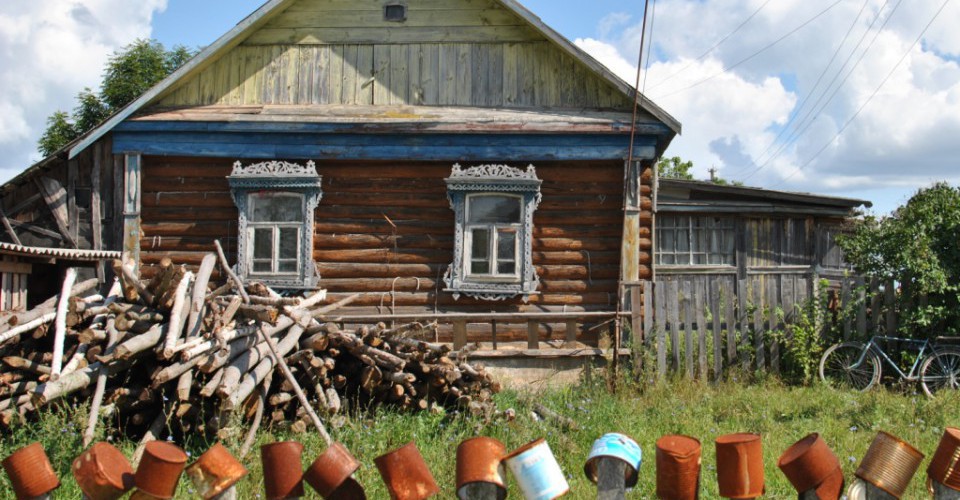
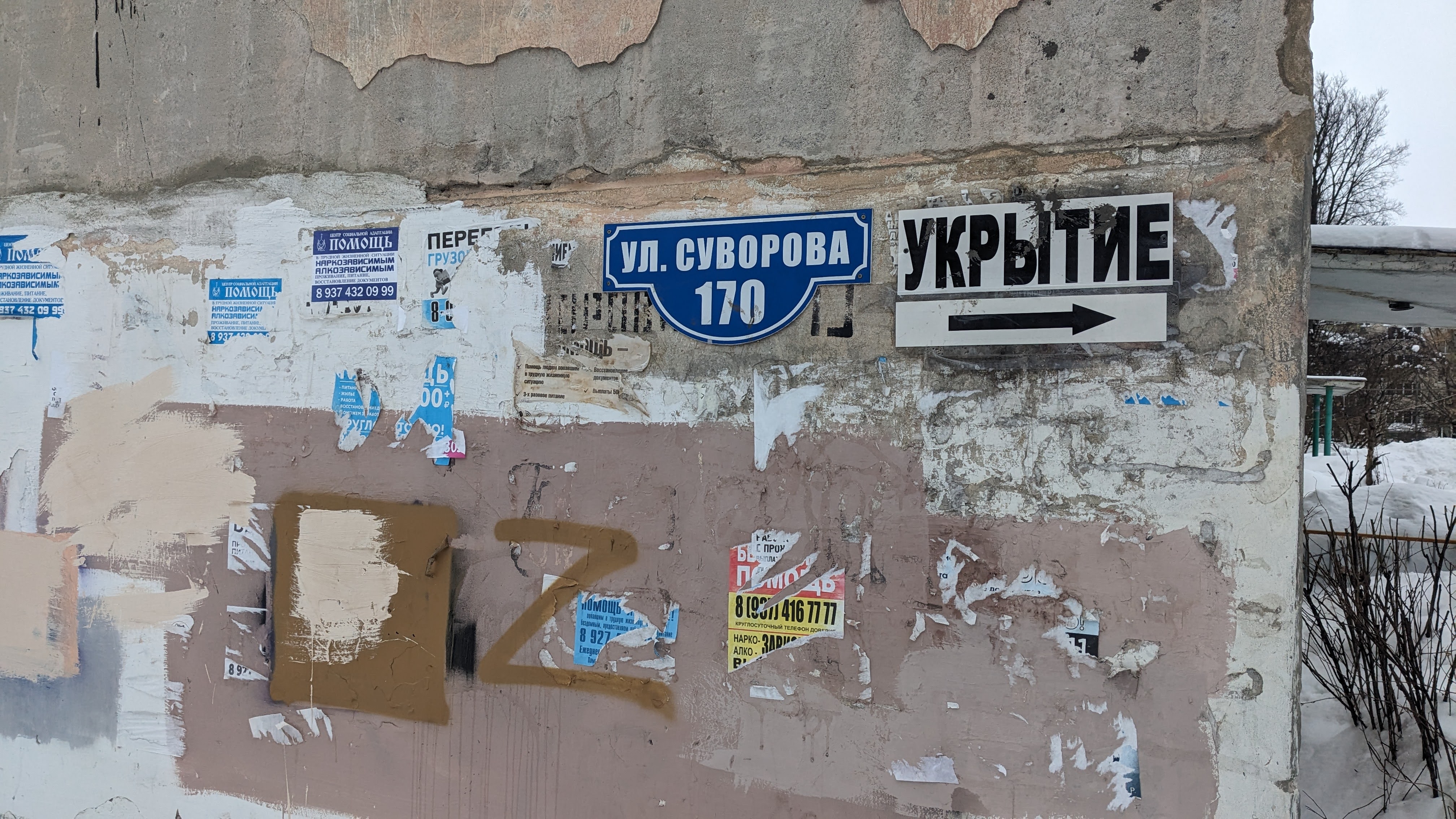
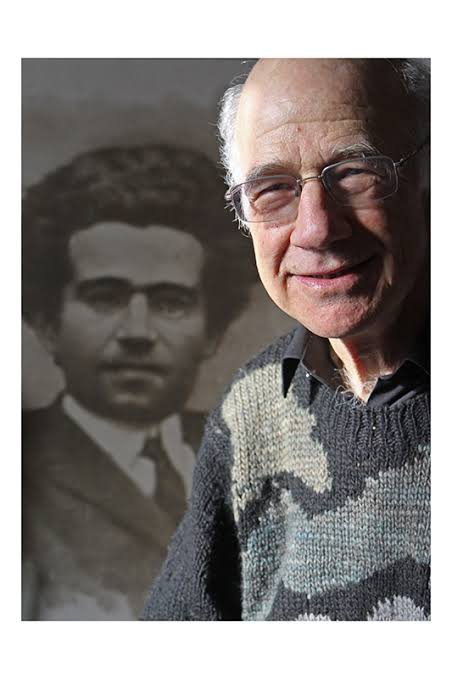
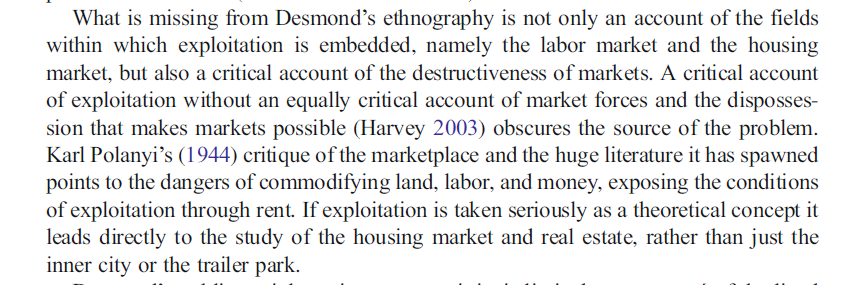
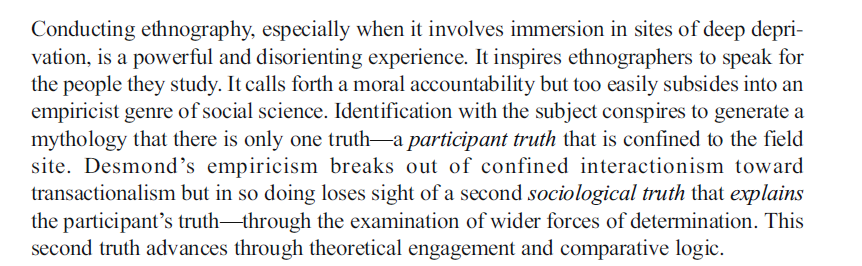
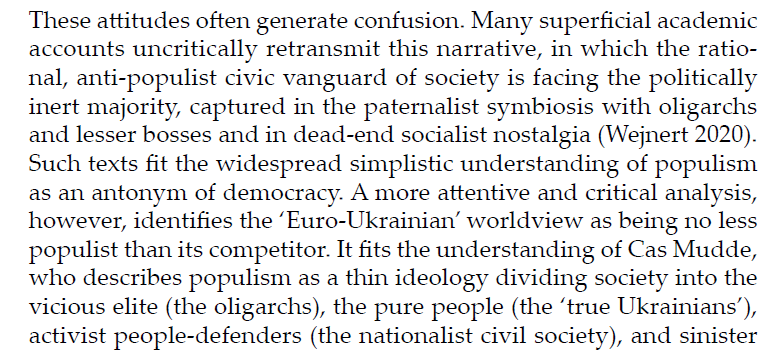
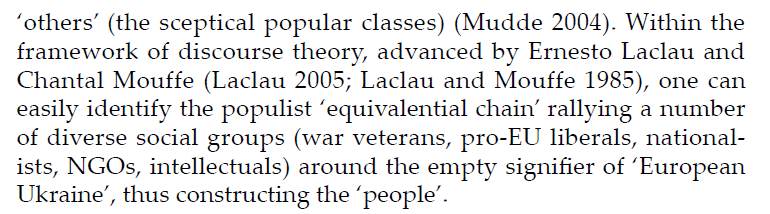
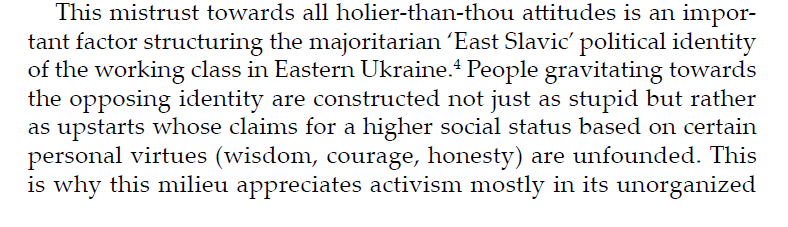
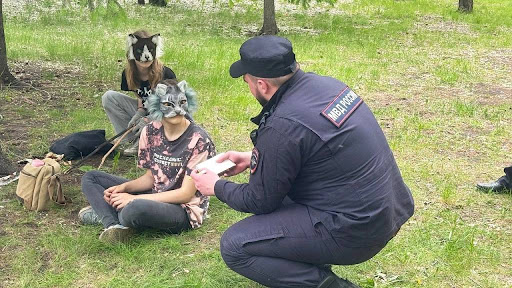
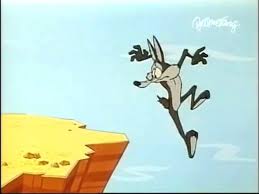
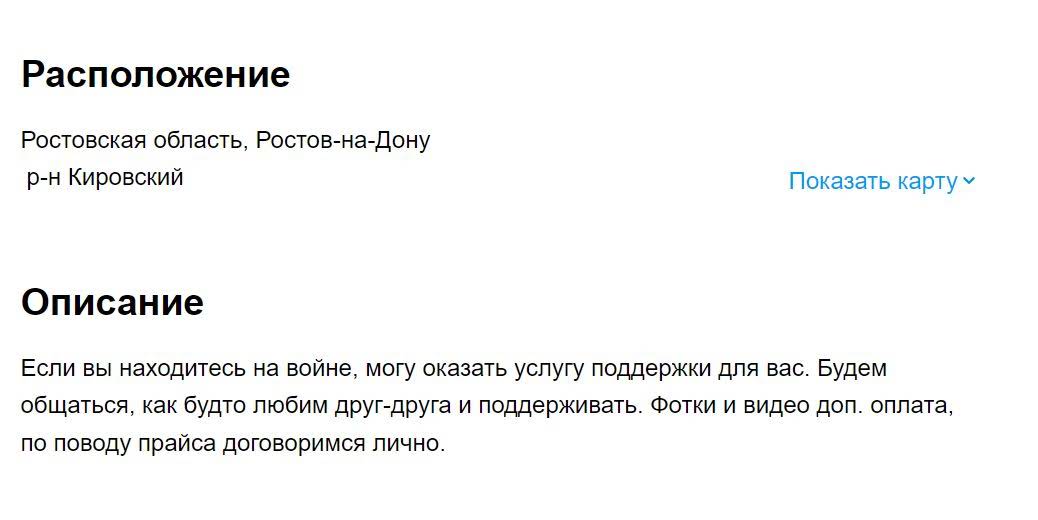
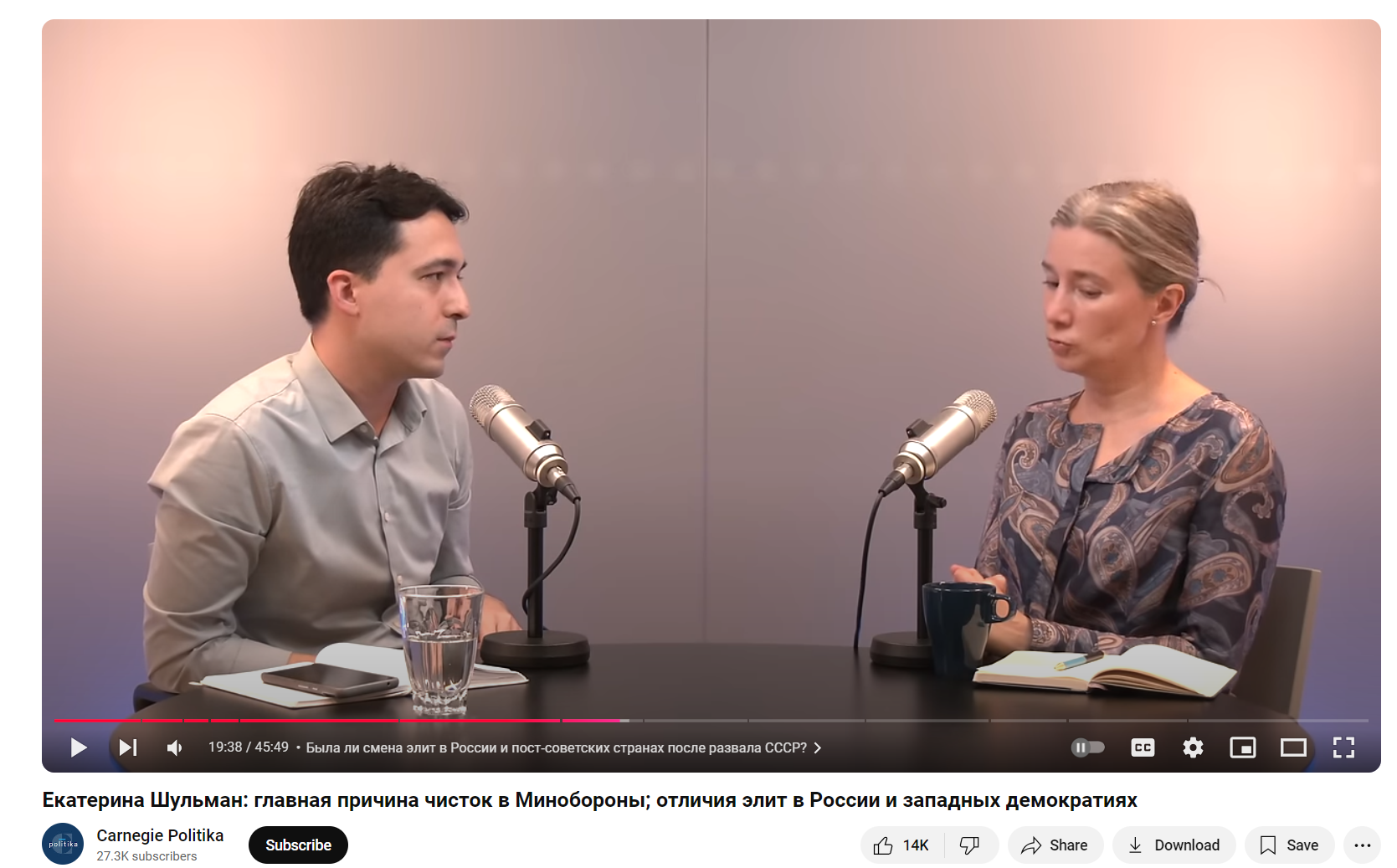
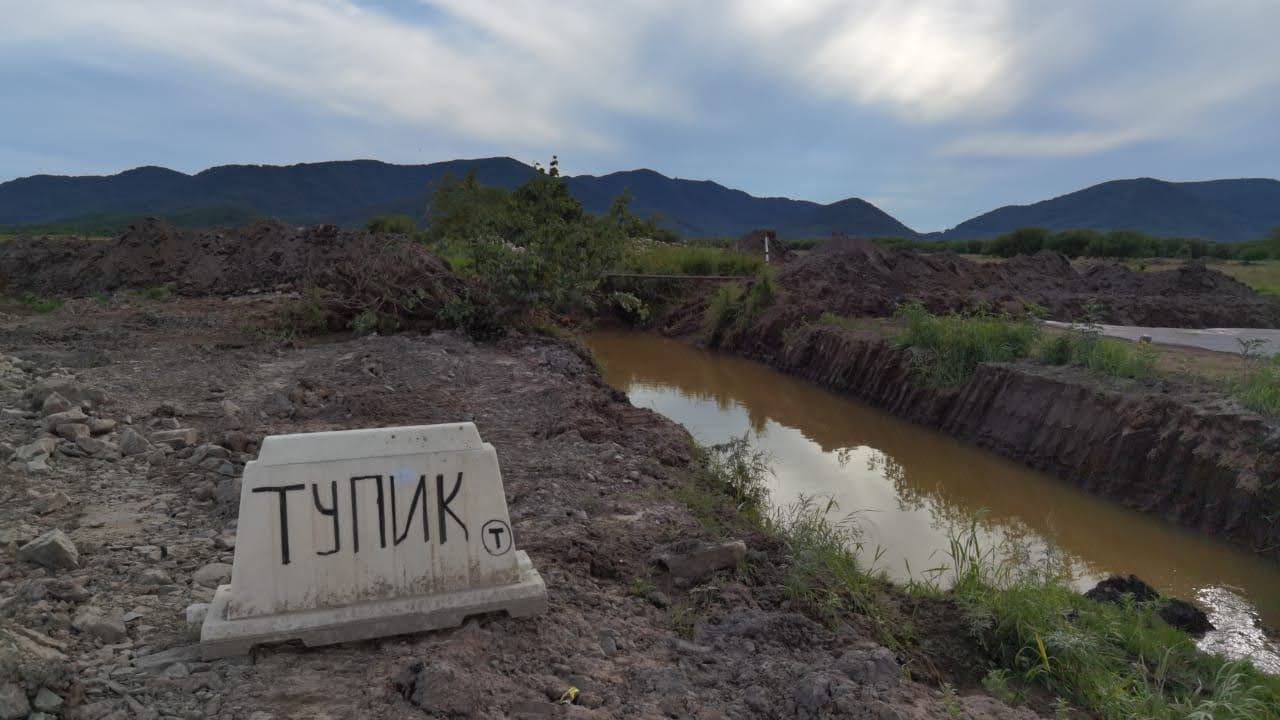
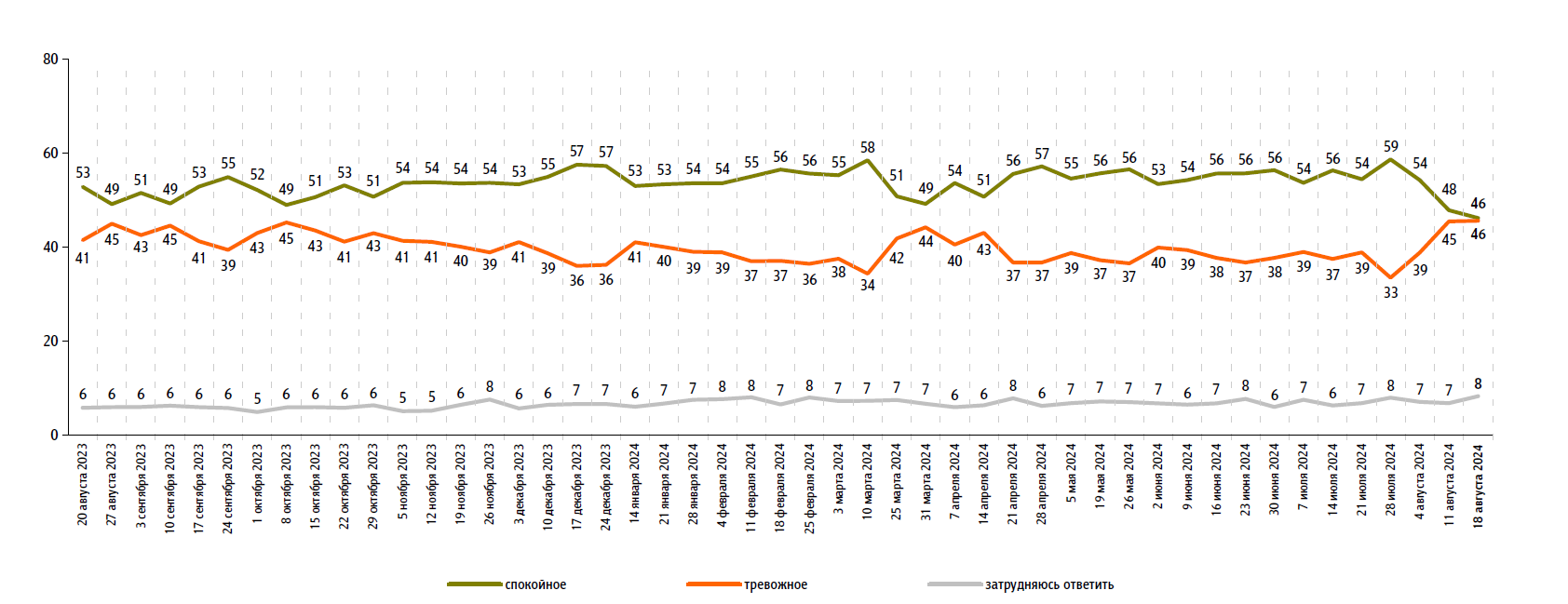

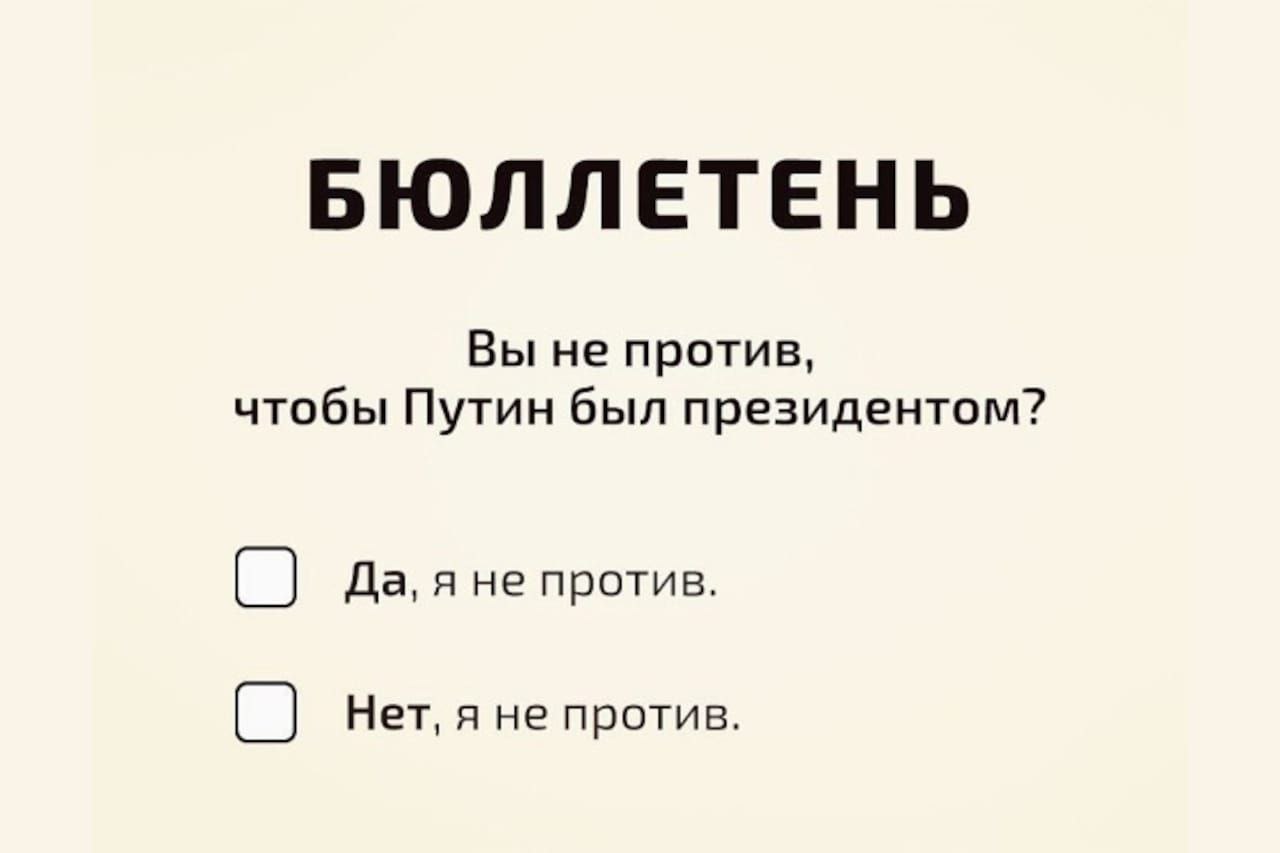
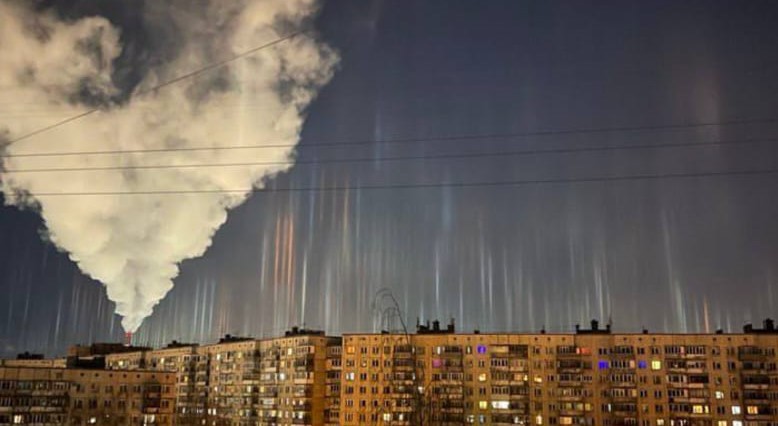
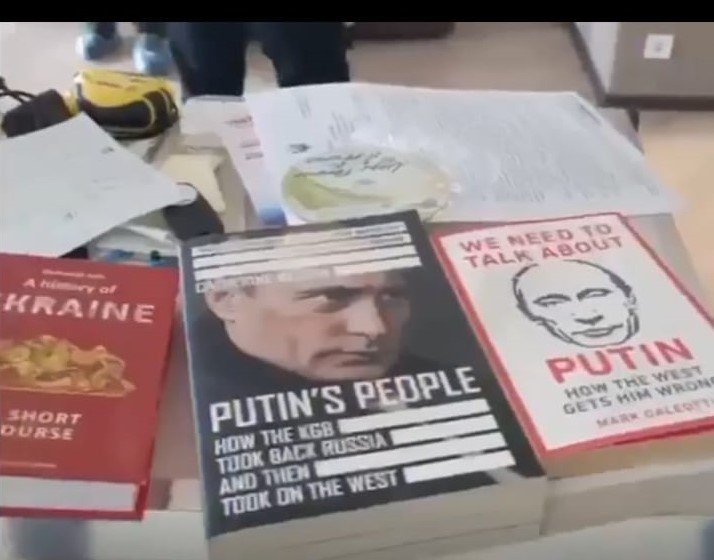
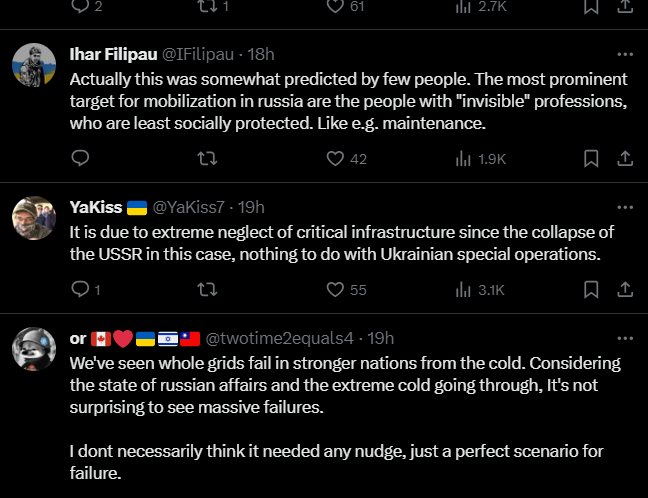
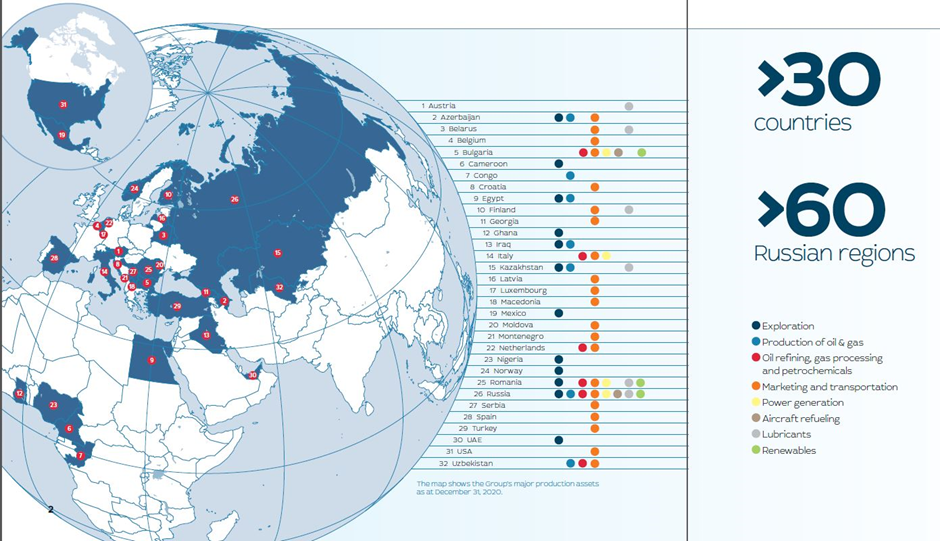
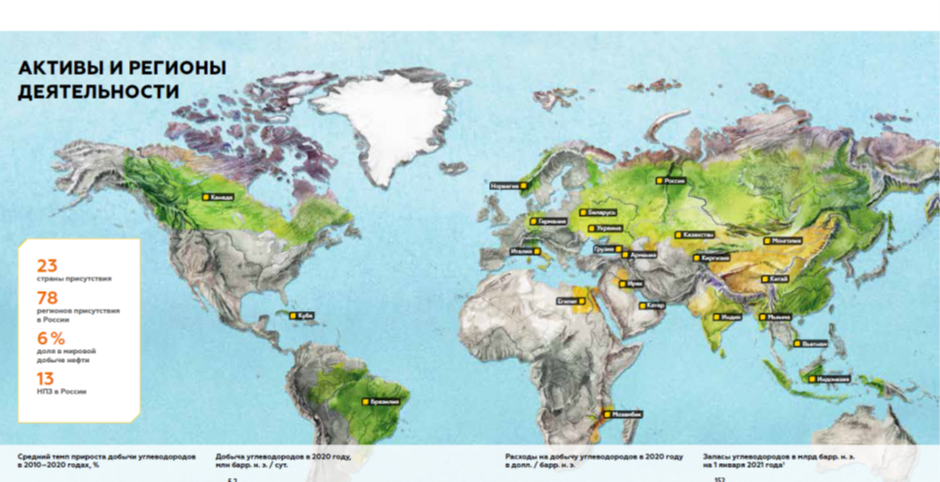
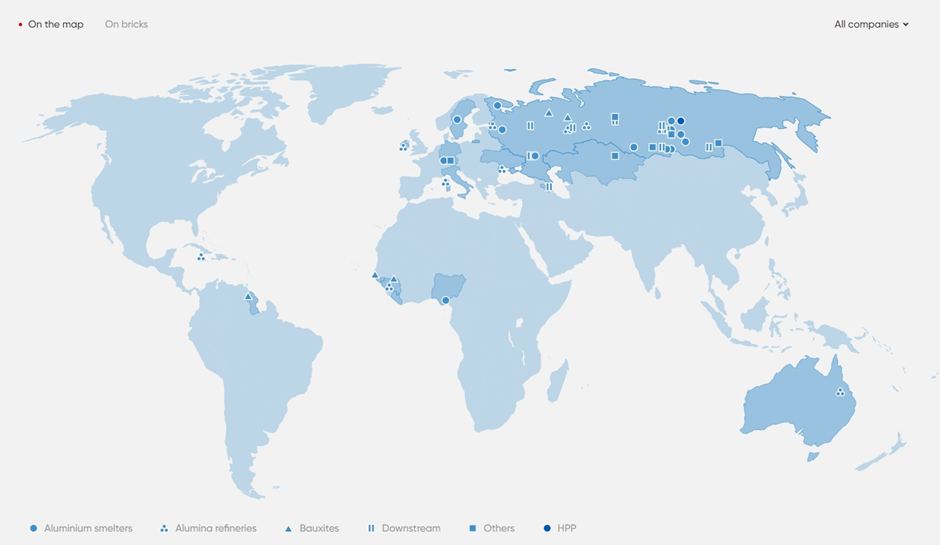
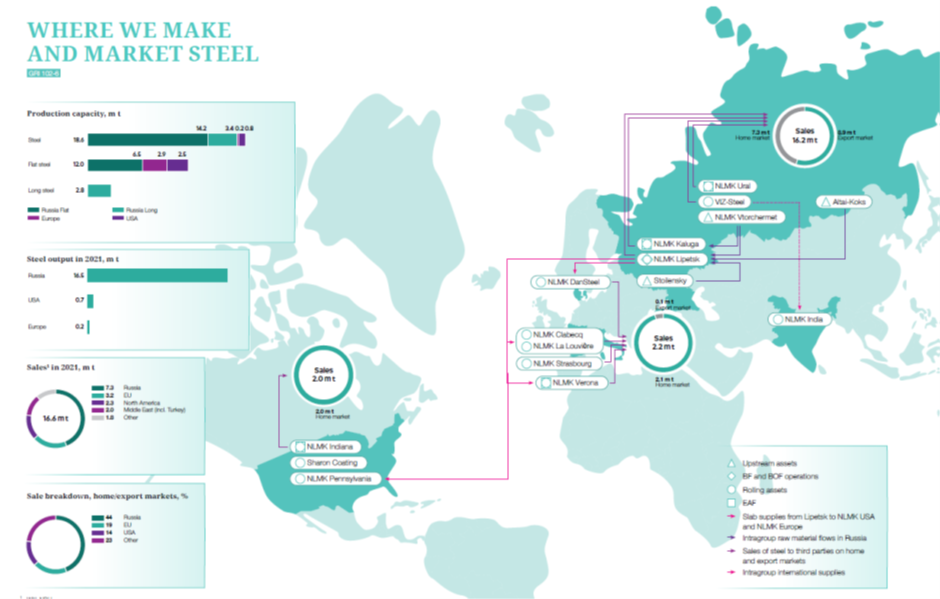
 Postsocialism