My article on homophobia and juvenile justice finally came out in Europe-Asia Studies. You can get a pre-print copy here. I’ll do a quick summary and reflection in this post.
The article started as a series of dissatisfactions about the way ‘culture war’ and conservative turn were extended from application to the Russian elite and big politics to ordinary people. As if to say, that as the media propagate intolerance, people blindly and automatically follow. Now, sure, I’m not saying there isn’t a strong effect when the media consistently demonises a group – just look at the xenophobic British press. However, my argument is that there is never a neat translation into everyday life of a trope like gayropa. I started thinking about this in a post from 2019.
Another prompt for my article was Greg Yudin’s demolition of a notorious poll on attitudes to Stalin and the problematic preconceived ideas that shape much Russian polling. Greg was writing around the same time Levada’s latest poll on ‘attitudes to LGBT people’ came out. I commented then that more methodologically robust studies find that while Russia is ‘medium-high’ in terms of preference for ‘traditional’ values in comparison to other European countries, there are big long-term shifts towards ‘tolerance’ in general, and away from extreme attitudes towards LGBT people in particular.
This week we see something similar with disproportionate attention and interpretation afforded to a Levada poll showing a fall in people answering ‘yes’ to the question: “do you consider Russia a European country” (from 52% in 2008 to 29% today). I pointed out that at the very least this is a very slippery question that tells us nothing about the substantive meaning of people’s answers – whether they say yes or no.
In my article I bring out the many conversations I have had with my long-term research participants about homosexuality, childrearing, corporal punishment and so on. Certainly there is some reflection of ‘official’ values in talk, but these are overshadowed by longer-term ‘structures of feeling’ – some of which do emphasise ‘traditional’ values. I also engage with Chantel Mouffe, Michael Herzfeld’s work on ‘cultural intimacy’ and similar work by Alexander Kiossev. They critique an unsophisticated version of cultural hegemony. This allows a space for ‘everyday politics’ to emerge in talk, even in what might appear as unambiguously intolerant or conservative attitudes.
Some things I didn’t have space for in the article – how some perspectives on intolerance in places like Russia are a form of psychological projection; I highly recommend this piece by Katharina Wiedlack on the ‘Western gaze on Russian homophobia’. There’s a long discussion about cultural attitudes to childhood in the article; with the effect of Covid and various other things, I more and more tend to the conclusion that British people utterly despise children…
In Chechnya and elsewhere in Russia, men are murdered for being gay, and official homophobia causes untold suffering and the perpetuation of intolerance. But as Wiedlack argues, there are ways of criticising and condemning prejudice and violence without perpetuating notions of western hegemony and counterproductive ‘leveraged pedagogy’ (Kulpa 2014) around sexuality and gender.
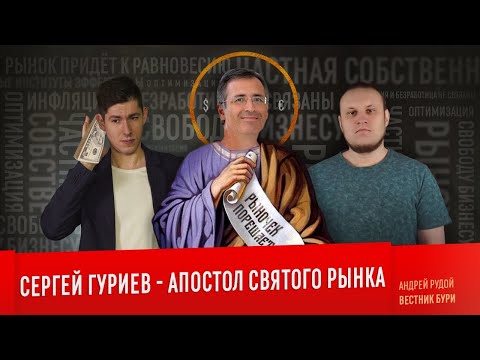
still from Vestnik Buri’s video on Sergei Guriev “An Apostle of the Free Market”
When I was writing recently here and here and here about Navalny, what was at the front of my mind, but mainly left unsaid in those pieces was the vibrant activism of the far less visible Left in Russia. So, to try to restore balance in this blog, I’ll say a little bit about my scholarly turn of attention to left-activism. After all, this blog is supposed to reflect my core research agenda – which is the micro-scale and the ‘everyday’ experience in society that is often overlooked in work on Russia, but which, I would argue is a good barometer of social change itself.
The Belarus protests are a good example of how we can focus too much on the visible elite actions (and here Navalny is an ‘elite’, if I may) and not enough on the interplay between, dare I say it, structure and ‘ordinary’ agency. I was also interested in the Belarus case because of the possibility of coalitions between different parts of Belarus society. The jury appears to still be out, but Volodia Artiukh’s piece from late last summer shows some potential futures and pathways. I engaged with Artiukh and others because my hunch is that like in Russia small successes of ‘political’ unions can have an outsize indirect effect on worker-militancy more widely and on ‘traditional’ unions themselves (who start feeling they have to up game). But I don’t really know much about Belarus. Update here from an interview with activist group ZabastovkaBY from March 2021 that mentions the importance of informal associations of workers.
Late summer 2020 I also started writing about left activists and the Moscow food courier strike. My main argument was that there is clear evidence of ‘learning’ by activists in ‘political’ unions that this learning can be transferred to completely new terrain (the gig/service economy). Not a very original argument, but again, not something many scholars are working in Russia, so why not build a case study around it. One of the left activists I studied for the courier protests got arrested around the time of the recent Navalny protests. However, this was a clear political punishment not related to Navalny, but because of the union organiser’s solidarity action in support of Azat Miftakhov – an anarchist student stitched up because of his expressive eyebrows. Subsequently, the union organiser made a very detailed and evocative youtube interview on his experience in a ‘spetspriemnik’ (holding jail for administrative prisoners).
The effective use of social media resources – both for organising, but also then reflecting on the experience of arrest and providing practical advice to future arrestees – reflects another aspect of my interest in this case. In parallel to the attention Navalny gets as a smooth media operator (perhaps too smooth), anticapitalist Russian YouTube has undergone a real breakthrough (as far as anticapitalist media can be said to breakthrough at all!). That’s not really the main subject of my writing, but in passing I reflect on the advantages of a loose affiliational model of activism sustained by ‘transverse’ online communication. That is to say – one way of hanging on in the hostile (to leftists) environment of social media/journalistic circles is the proliferation of different leftist mini-media projects that might look like isolated corals in a sea of liberal smirk, but which actually exchange direct (and offline) communication, personnel, and experience, online. This is based on the ‘streamer’ model – on platforms like Twitch gamers build (million-strong) subscriber bases for their live streams of video games by engaging in small yet constant acts of solidarity, mutual aid, cooperation, collaboration, and promotion of like-minded others. I hope to come back to this topic again, but in the meantime, spare a thought for the many, many activists (of different stripes) who take great personal risks, but get little attention.
“the case brings into focus long-standing debates about the outsized role western NGOs play in how Russia is perceived, and whether the retreat of the U.S. as a global hegemon has the effect of rendering “liberal” ideas of human rights less credible. Yet the problems of unequal access to palpable measures of human flourishing with which these same NGOs grapple — be they free elections, the rule of law or decent working conditions — are more pressing than ever.”
others thought I was unfair on Navalny’s programme, or that I was vague:
“As narrow and short-sighted as the dissidents of the Soviet past. The competitive, transparent elections and a “fair” and functioning market economy that Navalny advocates are not the same thing as a truly “universalist” approach to human rights — the right to human flourishing and full and equal development of human potential.”
You can see I repeat the phrase – ‘human flourishing’. I chose this phrase because it’s a way of broadening the rights perspective – to social and cultural conceptions of rights. It’s also a topic I close my book with – a rhetorical question about what we mean when people say Russia lacks something we (in the imagined West) take for granted, or as an ideal good – be it political rights, personal autonomy, social safety nets, or economic freedom. In the book, one of my points is that measuring by comparative yardsticks to say that human development in Russia is ‘lower than it should be’, is important (for example we can argue that many people in Russia lack access to economic security, a clean environment, healthcare and other goods that ensure an adequate life expectancy at birth). However, this metric ignores wider and equally important ways of thinking about human potential via what I call ‘habitability’. In the book, I identify these in concepts like ‘meta-occupational communities’, mutual aid practices, but also communities of craft and labour. There is also what others would call ‘social capital’, but I call local ‘authority’, autonomism, and reciprocal dignity based in webs of social ties of ‘extent, commitment and deep content’.
Similarly, with ‘human rights’, do we focus on trying to establish international public law predicated on an idea of an international order where such rights can be protected, or do we widen the debate to talk about how to defend wider perspectives of ‘human potential’ based on maximising people’s ability to take autonomous action? Now Amnesty already does this by including campaigning on biopolitical rights like the right to abortion, children’s rights, and racial justice. But, there remains a big gap between awareness raising and action that translates into enforceable legal mechanisms. This relates to a debate about the limits of legal positivism that underpins the global human rights industry.
The weakness of this version of ‘universality’ is that it tends to disconnect ‘rights’ from the social context of actual historical development and in particular the role of social movements in altering what we consider ‘rights’, and in moving forward agendas to realise them. We focus on the ‘ends’ of the claims, and not enough on the ‘means’ – in particular the historical non-legal and pre-institutional forms of fights against injustice. Today, the human rights agenda as pursued by organisations like Amnesty, is despite its claim to universalism, mainly focused on ‘negative rights’: political and civil rights rather than ‘positive rights’, like economic and social rights. Amnesty, as an international NGO, is ironically highly state-centric and ‘realist’ (it is the Russian state hailed in the plea to free Navalny and has a ‘duty’ to comply). At the same time, as I hinted in the article, the legalist model also relies on a model of unequal inter-state relations where via realpolitik, offenders are forced to comply. These are not my ideas – but mainstream debates in the social constructivist approach to rights discourses and the turn towards social movements as engines of change, along with the need for institutional democratisation. (Side note) – my current research is interested in the transition from new social movements to ‘social non-movements’. But that’s a post for another day.
How does this relate to Navalny himself? Well, at the back of my mind were various misgivings about his chameleon populist appearance – that his social populism was merely that – convenient rhetoric. What does he himself think about Russians’ social rights? (we know what he thinks about cultural rights – that beyond the ethnic ‘russkie’ they should be limited). My hunch on social rights is that he remains an incorrigible (neo)liberal, which would be understandable given his biography. But is that fair? Well, after writing my piece, I thought I’d better actually review my prejudices! My conclusion is based on a trawl of high-visibility interviews – with Yuri Dud’ and Sergei Guriev, as well as his campaigning materials.
Firstly – his ‘social programme’. People talk about his shift to focus on inequality, but really, I’m quite shocked they are so easily satisfied by pretty sparse detail and empty rhetoric (in fact, as empty of the ‘social guarantees’ rhetoric of the state itself). While many laud his anti-corruption campaign, his message of ‘better social equality via higher living standards’ relies on a kind of magical thinking related almost exclusively to removing corrupt elites. This will supposedly allowing lowering taxes and raising the minimum wage to… a paltry 25000rb. Navalny was fast to attempt to co-opt the pension protests from 2018, but as critics point out, prior to that he was quite consistent on the need to raise the retirement age.
As we dig a bit we find some unguarded comments about Singapore as a model (!) and the merits of ‘complete deregulation’ – whatever that means. Again, if he wasn’t so prominent an opposition figure his naïve voluntarism married to his moist-eyed belief in markets might even be charming. He’s learned the word ‘deregulation’, but it doesn’t appear he’s thought of what the end point looks like for a country like Russia (that, by the way, isn’t a city-state in South Asia – followers of the Brexit debate on Britain’s future may be getting déjà vu here).
Should a future Russian leader revisit the corrupt and deeply flawed privatisation processes from the 90s? Largely, the answer is no. Yes, he talks about the fundamental problem the ‘loans-for-shares auctions’ of being that its injustice meant that the institution of private property does not exist (because the illegitimacy of the process meant that later state confiscation could always be justified). But, Navalny’s answer is mainly about windfall taxes on privatised companies ‘like in the UK’. So we get a good idea that his ideas about public goods are horribly atrophied. He’s a ‘realist’: you can’t put the toothpaste back in the tube – which is fair enough on one level. However, again it’s kind of funny that the rhetoric of his support and his own message is ‘idealist’ (We can change Russia), yet the policy is somewhere economically to the right of Rishi Sunak (UK’s finance minister). It is telling that his talk about privatisation – probably the one issue that still encapsulates unfairness, corruption and inequality in Russia today– even shocks the orthodox economist Sergei Guriev. (Here’s an old evaluation by Guriev of Navalny’s economic policy positions).
De-monopolize the media in Russia? Firewalls of ownership. Impartial judges? Pay them a lot (and professionalise them). Taxes up, taxes down. Taxes to pay for this and that. ‘It’s easy in the world now’ – as if even the state of California hadn’t failed to address monopolies (this time Uber). As if off-shoring would stop after Putin. Everything is either a technical-legal solution or…. you guessed it: ‘taxes’ (sometimes up, sometimes down). ‘Vot etogo byt ne dolzno’, – ‘that shouldn’t happen’! I had to laugh when this was his response about quasi monopolies in new tech as if one could flick a regulatory switch. What to do with Oligarchs? ‘Get him to pay a tax, not confiscate or shoot him’.
Now this is mean of me. Who am I to criticise? Well on the one hand, yes it is unfair to carp like this. (Although I am by no means the first to view the programme as wafer thin). Navalny remains a ‘not-yet’ politician – untried, with limited resources to develop a detailed policy position. On the other, my point is not about politics or politicians in Russia, but instead about how skewed to the right the ‘Overton window’ is –especially when it comes to the idea of social and economic rights. Outsiders forget that, as Olga Shevchenko has investigated – especially among better off Russians there’s a brand of common sense in matters economic that align with ‘neoliberal rhetoric’, or at least right libertarianism and often extreme forms of social Darwinism. If you want another illustration of this with reference to Navalny, check out the rebuke to him from a patriotic right libertarian perspective from Yuri Dud’: “I get the feeling you don’t respect capitalism – all these demands that people make restitution payments for privatisation.” Cue, Navalny spluttering that Russia has many good capitalists. The point is the Navalny is wholly unexceptional with regard to views among the tiny group of ‘winners’ in Russia. As I keep pointing out, that also means there is a reasonable objection to his politics from the left, and from the majority of Russians who have experienced economic stagnation for the last ten years.


 Postsocialism