Charismatic and intelligent. But too keenly aware of himself as both these things. Angry, frustrated – for good reason. Perhaps reckless, lacking strategic thinking. Narrow-minded and naïve. Who could better represent an entire group? The bright and irrepressible liberal middle-class.
Yes, more than all the other things, Navalny was a talisman – he had magical powers over his people, but was hardly stimulating to others. To some he represented hope for a different Russia. He represented incarnate individual responsibility, competition (‘fair’ elections are ‘competitive’ ones), self-actualization. A personal antidote to apathy. He was in earnest, fired up – something to aspire to. An anachronism ( ‘out of time’) in a system designed to disempower and demotivate, close ranks and watch your back… in the end he transcended his actual views to become a symbol of Russia’s inability to find a way out of personalist politics.
Martyrdom was a choice. People won’t say it – but he would have been better off saving himself. His was a stance both more principled than many others, but which also reveals the personalized nature of his appeal and his politics – he was ‘anti-Putin’ and positioned himself that way on purpose. And clearly Putin felt personally challenged on some level – hence his refusal to even name him.
But the anti-Putin contains many ingredients of Putin himself – as numerous people point out (privately, of course) even now. The style over substance. The cultivated charisma which stems from a rather overweening masculine pitch to authority (very, very few feminists are given any airtime to express their deep-seated discomfort with his language). The temporary and fickle try-out of different ideas and slogans. The super-narrow political imagination – one might even say ‘anti-political’ imagination (anti-corruption is not politics).
After building his career as a blogger and activist, in 2013 Navalny stood for mayor in Moscow (he could have won in a fair fight). Less internet savvy Russians were barely aware of him at this point, beyond a name. A measure of how the ratcheting up of repression makes time elastic in Russia is that it feels as though 2013-2020 (to his poisoning) was a short period, but that an absolute age elapsed between his return to Russia in Jan 2021 and his death nearly exactly 3 years later.
People in the West paid oversized attention to Navalny because they believed he captured a kind of Russian ‘zeitgeist’ in the 2010s. But the true zeitgeist was a general misrecognition on the part of that liberal middle-class: they were just as invested in maintaining the unequal system of crony networked capitalism as the elite. Navalny campaigned against electoral and political corruption and his fatal success was investigating the personal self-enrichment beyond measure of the leaders. But his most ardent supporters were also among the main beneficiaries of the system.
It is a misunderstanding to think that his (anyone’s) ‘liberal opposition’ excluded nationalism, chauvinism even. A model of individualism in a hostile environment, a self-made man who believe in the invisible justice of the market makes one myopic and prone to blame others for their misfortune. Here in Russia, liberalism is about protection from the rapacious state and personal responsibility for one’s actions. But being for ‘fair competition’ can also code as protecting ‘ethnic’ Russians from ‘immigrants’.
Navalny was pointedly hostile to people who have every right to live and work anywhere they like in Russia – Russian citizens in fact, who happen to be Muslim and racialized as such. It’s mistaken to see him as ‘cannily’ channelling nationalist sentiment in an acceptable way to urban Russians. Instead, we should read this as an essential script of liberal failure; in a country with millions of Muslims and rich diversity – and where inequality and ethnicity go hand-in-hand – playing the race card shows political immaturity at best and was ominous.
Thirdly, he was lauded for his supposed turn to ‘social issues’ (sic) in 2018 as if this was a smart pivot. In fact, it was years too late, and because it was too late it failed to resonate. The ‘social sphere’ for Navalny was hardly visible except in a negative sense – that corruption makes the state and the individual poor. He represented everything that is naïve about liberals in Russia – ‘if only we could just get on with being a normal country like the USA, everything else will fall into place’. In a sense, he traces an ideological line back to the Komsomol boys who privatized opportunity in the late Soviet Union and deluded themselves they were building a market where all would prosper.
His honest and principled disgust with corruption never led to diagnosis of root causes. Corruption was a byproduct of total social transformation that the elite and a large part of the Soviet nomenklatura had actively chosen and supported since 1990. Corruption exacerbated inequality, but the original sin of economic looting and wholesale destruction required more radical politics to mend. Way back in 2009-11, I did many political interviews with ordinary voters. They really disliked Navalny because of his naivety and smugness (seeing the problem as merely replacing ‘crooks and thieves’ with ‘honest’ representatives). His achievement in mobilizing the middle class to actually try to do politics was laudable but also doomed to failure. It should be seen in the light of similarly well-meaning people in democratic societies who think they can break cartel politics from the inside, through the ballot box or a more appealing offering in electoral politics.
Navalny as a political phenomenon is a warning. Like any charismatic project it shows that without a movement that can connect different kinds of people and show them that they have common material interests, clever slogans, social media, and urban youth organizing isn’t enough. The media write ups (just like the exaggeratedly glowing scholarly accounts) showed what an exceptional individual he was and how an individual can become symbolic of change for many people… but exceptional people do not really change history – despite what a popularized view of “great men” pretends to show. Churchills, Stalins, Trumps are ultimately just part of the structures of feeling that dictate their eras. Navalny was, despite everything, an anachronism not so different to Putin: out of step with what most Russian people want.
*title partly stolen from the genuinely great A.A.
Igor “Strelkov” Girkin, a military reenactor, monarchist, and probable ex-security officer held by many to be responsible for escalating the Donbas war in 2014 was sentenced to 4 years imprisonment today, not for shooting down the Malaysian airliner MH17 but for “extremism” (specifically, for complaining about incompetent Russian military and political leadership).
Unlike the ever-increasing numbers of political prisoners serving time for actions against the regime, Girkin will have quite a lot of freedom in the so-called ‘zona‘ as an inmate in the ‘general’ category of prison. In fact he is not going to prison, more like a guarded dorm/hall of residence in a kind of camp. He will get lots of time outside the shared dorm, walking around in the grounds and he will probably get nearly unlimited access to postal services and relatively unrestricted ability to spend money. I would take a bet that he could be transferred to a ‘colony-settlement’ where he’s effectively free to leave during the day. Some of my informants from my 2016 book were ‘colonists’ – i.e. on day release from prison. Formal and informal rules meant they could in reality spend loads of time in my little town of Izluchino. They used to ask us to buy them vodka and some of them were harmless while others scared the life out of me.
Meanwhile, the hapless Daria Trepova gets 27 years for the bomb murder (‘terror attack’) of blogger and pro-war activist ”Vladlen Tatarsky” (a name originally coined by author Pelevin). If you don’t know the case, Trepova bought a statuette as a gift to Tatarsky at an event in a cafe. It blew up and killed him. She will go to a stricter regime of prison colony than Girkin, as one would expect given the more serious charge.
I am still baffled by this case and whatever explanation you choose to believe is just bizarro-land. Estonian sim cards, the video of her close to the blast, the networks of people involved…. it’s just a gift to conspiracy theorists the world over. You can comfortably subscribe to a set up by the Ukrainians or the Russians. Then there’s the narrative account heard in the courtroom: that Trepova was very nervous herself, and that she and Tatarsky had a joke about a bomb (Tatarsky’s venue security had halted the statuette in the cloakroom)!
But the version of her knowingly bringing the bomb is then undermined – pretty comprehensively – by her own actions then and since. In the video she’s a few metres away from the bomb!
If you believe the version heard in court in Russia – Trepova is instructed by journo-cum-revolutionary cosplayer (coincidental link to Girkin!) now in Kyiv, but he in turn is linked with a pretty non-descript Ukrainian operative. It’s ironic that while the Girkin case gets some coverage today in Ukrainian media, Trepova gets none (which is only partly understandable given the Belgorod Ilyushin shootdown, which Russia alleged killed Ukrainian service personnel).
BBC Russian Service have a good write up. There’s no coverage on BBC Ukrainian service, despite them covering Girkin. Anyway, one take-away is: if you’re an antiwar liberal in Russia, be careful and don’t be naïve! Trepova might have gravitated to ‘anti-war’ action because of her sympathy with the liberal cause and then been exploited for it.
Why draw attention to Trepova case? Because it does rhyme with some allegations about the academic spying case in Estonia (inadvertent recruitment, exploitation for other purposes). I commented a few days ago on the generalities of that case and the missing links – I will write these up when we have more information. There are also big differences of course. The take-away from Trepova case, and also recent Insider interview with Bellingcat associate Grozev is that the Russian security services (and Ukrainian side, it would seem) are more likely to target the liberal-activist universe, not academics. These are largely separable spheres, even if individuals straddle them.
Once more, I’m not (yet) commenting on the Estonian case, but if you look at the logic of recruitment it is connected to accessing networks that are of immediate relevance to the aims of Ukraine/Russia and using ideological commitment of dupes as leverage.
Does that mean academics are not useful? No, I’m not saying that. Does that mean academics cannot be dupes or even willing accomplices. No, of course not. But it indicates the relative priority of targets. Academics are low down on that… Except, perhaps when intel services actually misunderstand the academic world (as having more influence and access than in reality) – as is clear from the Estonian interview from a few days ago. Perhaps the majority of academics even (outside tech/mil) are targeted in “error” (considered more useful than they could ever be).
Christo Grozev shows how much more useful/interesting is the activist diaspora community. He says that of 70 operatives, one targeted Russian human rights diaspora orgs, including the Sakharov Centre and Free Russia Foundation. The operative had been invited and attended many of their events. Grozev: ‘he had infiltrated and attended one of the important committees of these organizations on sanctions’…And was particularly interested in G. Kasparov. In that interview Grozev emphasises that, yes Russian foreign operations are still stupid (their documents are easily tracked), but so are Western organizations – allowing Russian agents unfettered access to the West on fake passports for years and years. It’s hard not to see the enthusiastic McCarthyite attacks on my colleagues in the past week as absurdly misplaced given the complacency of Western states in the face of what they now acknowledge as a major security threat – actual operatives bent on infiltrating and killing ‘enemies’.
A plume of water vapor from a failed heating line in a Russian city, 13.1.2024
The framing of the catastrophic failure of heating/electrical systems in Russia as inevitably a Ukrainian plot perfectly underlines the ‘pundit problem’ coverage of Russia, which I recently tweeted about to the complete misunderstanding of most people.
Gonzalo Lira’s book collection, from the Ukrainian raid on his flat in July 2023
I tweeted a picture of the reading ‘desk’ of the deceased YouTube grifter-cum-incel-coach Gonzalo Lira – there were three books – two of them very person-focussed (with ‘P’ in the title). The point is not that those authors were ‘bad’ or part of the grifter universe of Gonzalo, but that they set the frame of reference for 95% of the debate on what is going on in Russia/Ukraine. It’s all about personal history, personal ideology and animus, personal networks of the elite, dodgy social psychology and even dodgier personal psychology.
That the central heating grids of many towns and cities in Russia are not fit for purpose has been written about endlessly in sociology and anthropology. Someone attending to even this narrow ‘sociology of physical networks and infrastructure’ might learn a lot more about the war, about Russian politics, about Russian people’s preferences, than a zillion more books about a wimpy lad from Leningrad who’s resentment and greed propelled us to the brink of WWIII (parody).
To summarise, the seemingly too-coincidental-to-be-accident-failures of the heating network should be viewed in the context of the multiple social factors at play – far more likely than sabotage (in this particular case). First there is the privatization of a critical and vulnerable network. Heating plants feed communal hot-water pipes just below the surface which then have a single ingress to housing blocks – in a severe frost which penetrates the ground up to two metres, these can fail and effectively shut down the whole grid. Privatization, as has been demonstrated again and again, while not the proximal cause, leads to the sweating of former public assets and inadequate investment in long-term upgrades and even basic repair (in the UK where against the advice of most, water was wholly privatized a similar cascade of failures is occurring right now). Where assets at municipal owned, the starving of local authority financing has the same effect.
Then there is human capital “depreciation”. One thing preventing the catastrophic failure of networks like town heating systems was the intangible knowledge and good-will of former Soviet-era managers. These are dying off now leaving a hole in the metaphorical fabric of post-socialist governance. This was in any case a patchwork of personalized relationships between these non-political ‘specialists’ and politicians. The former often continued to work for the common good (a complex relationship I go into in my new book) after being excluded from the corrupt compact between local and federal elites. In my 2016 book, I undertook participant observation (anthrospeak for following someone around and working with them) of a heating network technician in Kaluga region. Without this 50-something guy working almost for nothing and effectively ‘managing’ the town’s heating supply the residents would have experienced annual outages of hot water. Most importantly, this man was only informally in charge and at any moment could have left or retired (which he did eventually). Yet the municipality gave him access to a car, driver and assistant.
There is loss of such human capital, but also general labour shortages – long a problem before the war. It’s not so much that the war drew down ‘low-skilled’ men away from maintenance (as many people argue), but that, as in line with the generally punitive and neoliberal labour compact in Russia, there has been mass flight away from poorly-paid municipal jobs like those maintaining essential infrastructure. Even the ‘well-paid’ gas and oil industries struggle to fill roles (for details, again, see the article linked below and my new book). Pay is woefully inadequate and conditions terrible. It’s also true that the war accelerated austerity policies sucking money away from infrastructure, but again, that’s the proximal, not main cause. As scholars like Ilya Matveev have been pointing out for years, Russia is an austerity state on steroids.
There is something to this point, it’s true:
Add to all of this climate change. I remember harsh winters in Moscow in the 1990s, but Russians have got used to much milder winters in the last twenty years. This, like so many ‘freak weather’ events was just a return to what used to be normal winters with prolonged temps below minus 20 in European Russia. Except there’s been 20+ years of looting and neglect in the meantime.
Finally, overlaid, but not overdetermining, is the centralized, reactive nature of Federal governance – content to let the country rot, only effective in extracting and lifting rents upwards towards the cosseted world of Moscow – which is not Russia. I address this as part of this piece I wrote a few years ago on ‘capitalist realism’ (doffs cap to Mark Fisher) – an argument that also features in my new book.
Back to punditry. The problem is not authors like Galeotti or Belton (though there are legitimate gripes with them), but the obsessive media attention to a super narrow framing, reductive to absurdity. Galeotti is a great example of a capable, seasoned and expert researcher (on organized crime and security studies) structurally trammeled by the war (and before) into providing ever more commentary to serve demand by the whole media assemblage of Russia coverage. People misread my tweets as equating grifters like Lira to specialist pundits. There’s a gulf between them, but their output inevitably ends up serving the same media ‘interests’/: obfuscation of complexity in cause and effect, preventing sociological understanding, ‘orientalization’ of the subject matter (making it exotic instead of what it really is – mundane).
To go back to my January 2022 post about the problems of punditry before the war, the issues I sourced there from various colleagues about Russia coverage remain the same going into 2024 (scroll to the bottom of the linked post to see these topics unpacked):
Structural weaknesses in Russian journalism and Western coverage.
Putin-centric coverage the tells us nothing (led by publisher and editor demand)
Detachment from in-country knowledge (our man may be in Havana but he rarely leaves the bar)
Presentism (as we see now on the war – endless mind-numbing takes on weapons and lines on maps)
Gresham’s Law (bad punditry drives out good, bad think-tanks out-compete good ones, bad scholars outcompete good ones)
Absolute paucity of non-metropolitan coverage, whether of Ukraine, or Russia.
Summary: Larger-scale mobilization after the Presidential elections will not break a so-called social contract because informal forms of avoidance and negotiation of directives from the centre still trump state capacity.
Analysis of the war does not pay enough attention to the elective affinity between informal institutions and many people’s resistant agency towards the war. Draft avoidance is a long-standing informal institution (including openly corrupt practices, but not only those). There are openly advertised paid services for the middle-class to get their sons’ documented draft deference – rather like the story of Donald Trump’s ‘bone spurs’. What’s missing is that mobilization develops its own informal institutional arrangements. Given their scant resources, there is evidence of commissariats targeting only the socially most vulnerable, and not even bothering with those likely to be harder to find or catch. In my own research I have many examples of young, healthy and active men with vitally needed military experience who have not been mobilized and indeed, do not fear this risk. The promise of digitizing military records and creating a live database remains a pipedream.
Some talk about luck, but many make informed calculations and gather knowledge of who is being targeted, what informal quotas are being fulfilled, and even how reliable commissariats’ information about them is likely to be. Paper records are hard to keep up to date over decades, and smaller firms do not always observe the requirement to inform the commissariat about their employees. Similarly, given the massive labour shortages in precisely those demographic categories where the most ‘soldiers’ might be found (manual and skilled labour), there is evidence of informal agreements of regional politicians protecting local firms. Important Stories published a leaked spreadsheet in November 2023, drawing together data from different ministries and agencies, presumably as a way to try to enforce quotas for each region.
Targets and indictors are counterproductive and lead to fake numbers
But as the report indirectly indicates, the method – a top-down ‘command’ approach to recruiters – is a copy of all the other not-very successful performance indicator systems (‘palochnaia’ ) that the government has been developing in the last two decades. The centre is beholden to information collected via crude spreadsheets and methods open to fraud and fiddling. The recruitment method is a tortuous multichain form of governance. At many links in this chain the information may be manipulated or outright faked. While there are more or less competent managers capable of interrogating dodgy figures, the overall result is that people can connive to produce what sociologist Martha Lampland calls ‘false numbers as a formalizing practice’. Numbers that are ‘good enough’ to please superiors but which have scant relationship to reality. The practice of recording false numbers as ‘true’ is a universal in all complex societies, but in Russia, the obsession with manual control quickly bumps up against physical and organizational impossibilities and so results in an acute case of creative accounting at all levels. Lampland is an expert on Stalinist Hungary and emphasises the incentives in authoritarian systems to fudge the numbers.
Then there’s ordinary people’s agency to content with – also overlooked because of the influential voices insisting that Russian society largely supports the war and so there are allegedly social sanctions in avoiding mobilization. Nothing could be further from the truth in my considered view. While most attention was paid to the hundreds of thousands of men who left Russia, those of mobilizable age who remain are not just fatalistically waiting to be snatched off the street (indeed this practice has been much more widespread in Ukraine than Russia). Physically moving is not particularly difficult so that one cannot be summonsed by post or by commissariat visit. Among the target group there is a well-documented but not widely known phenomenon of mass seasonal migration. This means many ordinary people have good knowledge of potential domiciles far away from their home region. Then there is the long list of reserved occupations from which mobilization is not allowed. There is also evidence of collusion between low-level bureaucrats and locals – prior warnings of potential raids by commissariats and up-coming targets. In my quite broad group of informants and the wider circle they inhabit accessible to me, no one has been mobilized, despite most men having served in the past. Similarly, no one has volunteered or signed a contract. Quite possibly this is because they have some meaningful social capital, however meagre it might appear to the outside world. Without romanticizing as ‘grassroots resistance’, which would be wide of the mark, insurgent social capacity increasingly comes from below, not above. This includes many groups directly or indirectly helping Russian soldiers wage war on Ukraine. But equally this capacity is not under the control of the state’s aims (or should that be aimlessness) in the war. That is why it is increasingly useful to compare to the scholarship on insurgent citizenship from other parts of the world. This is a point my co-authors and I make more generally about Russian society in our recent work on Russian activism.
As a result, the Russian state shows how weak it is by relying on a lumpen mercenary solution, but these are no Landsknecht, despite coverage misreading brutality as effectiveness. As ‘Important Stories’ reported in November, the spreadsheet refers to more vulnerable categories: people with criminal records and similar, debtors and bankrupts, unemployed, those who recently acquired citizenship and migrants. All these groups could be pressured and blackmailed with some evidence of police raids on groups of migrants for this purpose. This tactic is a sign of desperation and unlikely to be effective. For a start the lumpen category is finite and unsuitable as soldiers. The geographical quota system imposed from on high is counterproductive because concrete localities are forced to compete with each other, or even fight for bodies who are highly mobile (living in one place, working in another, registered domicile in a third place). Important Stories emphasises the power of coercion among agencies to get people signed up on a military contract, but they are less attuned to the way dysfunction and overlapping jurisdiction can lead to powerful incentives among even loyal functionaries to mislead and trick their superiors. Faced with impossible targets, multiple layers of bureaucracy connive in ‘fixing’ things so that paper and reality strongly diverge.
We don’t know whether there will be a stalemate on the battlefield moving into 2024, or more dramatic changes in the frontline like we saw in May and November 2022. It remains to be seen whether a more ambitious mobilization campaign will be attempted after the presidential elections in March 2024. It would face the same problems as those I have described here. Utter lack of capacity and resources among the commissariat, informal institutionalized ways of avoiding or undoing the will of the centre to recruit. Massive labour shortages which make industry hostile. A counter-productive administrative system of coercive command. Active and passive agency of the vast majority to avoid the draft. There are various indirect signs that the authorities collectively fear the results of having to implement further mobilization.
The botched first mobilization created an atmosphere of bitterness, fear and hostility to the state’s conduct regarding the war. It would be a mistake to say that mobilization in 2022 broke the social contract between state and people, because there was none to begin with. If the war continues, Russian society will become ‘insurgent’. Not literally, but figuratively, people will become more actively resistant to recruitment to the meatgrinder. No monetary offers, nor spreadsheet autocracy will be effective.
Catching up on the impossible-to-keep-up-with output of Russian journalism and punditry in emigration, I was reminded by Ekaterina Shul’man [Schulmann], speaking in her inimitable soundbite machine-gun style that Putin’s elite does not have an ideology but merely a collection of memes. Shul’man made this comment as a kind of rebuke to the idea that the conservative ‘trad’ politics of the elite are more than skin-deep sentiments. This was on the eve of the events of this last week where Russia’s top court effectively banned any visible LGBT identity expression from public and discursive space. Since then, police have raided the numerous gay-friendly clubs in Moscow. The real and lasting damage to the lives of LGBT people should never be downplayed, but I found myself agreeing with Shul’man that the apparent obsession with deviant sexuality on the part of the Russian elite is more a reflection of their own homosocial and homoerotic projections and denialism, than a broad social conservative consensus or homophobic collective consciousness.
The idea that elites may think they are ‘leading’ when in fact they are quite distant from the (low) salience, or indeed relative unremarkableness [read: ‘social liberalism’] of the majorities’ sexual and gender politics, is at the heart of a number of research writings I’ve published in the last few years – see the end of this post for details.
It is nice to see a mainstream liberal commentator like Shul’man agree with what actual sociological research and opinion polls taken together indicate: that if it were not for the endless homophobic, anti-trans, and gender-conservative messaging from the centre, Russians would barely give a thought to these issues and would likely score lower on scales of traditionalism/social conservativism than the US, Poland and even Ukraine. It is also good for such a visible commentator as Shul’man to imagine a near future when both elites and ordinary people might quickly ‘forget’ the recent past of active homophobic state policy. After all, as I have argued, that is precisely what Western societies have been good at doing since the 1990s. In fact, despite ‘forgetting’, real episodes of hate-crimes against visible others continue to blight ‘liberal’ countries.
However, when it comes to parsing ‘values’-orientations for a general audience, Shul’man is less confident, and her own biases become visible. She can almost never complete an interview without revealing her stark disdain for Soviet culture and society which goes beyond any reasonable sociological critique. She correctly diagnoses homophobia as a symptom of the authoritarian repressed personalities of the elite (clearly some little Soviet boys growing up in the 50s never got past their anal-fixation stage). But she herself exhibits an unhealthy disgust with all things ‘Sovok’. We won’t go into the ‘why’ of this now – but I’ve written plenty about this as projection of status anxiety and overcompensation (guilty conscience) among the liberal intelligentsia.
Shul’man quickly gets on to her hobby-horse about the emptiness and down-right harmfulness of Soviet culture/society because she subscribes to the idea that Soviet and Post-Soviet people were damaged goods thanks to the values they internalized in the USSR. These usually include low social trust, an orientation towards survival over self-expression, a lack of a firm sense of the self in society, ingroup conformity, etc. And, as usual, the evidence for this is pretty unconvincing to anyone who wants to look at a range of indicators beyond the ubiquitous Inglehart–Welzel cultural map which divides every nation into a plot on an pair of axes measuring ‘survival-self-expression values’, and ‘traditional versus secular values’.
We are also on familiar ground when Shul’man bemoans the lack of genuinely cohesive or ‘healthy’ national identity values beyond the Russian language (a rather weak post-colonial glue), the myth of WWII (we saved the world), the anchor of the president as national authority (we know his name and face and he exists). This follows in the footsteps of authors like Vera Tolz who really brought this argument to prominence in the English-speaking academic world 25 years ago, with her question of whether these national characteristics were enough to sustain a civic sense of Russian identity (reader: the jury is still out). However, in Shul’man’s case I would argue we have projection once again: if only Russia could become a normal post-imperial country like the UK or France! I would really like to know how she thinks those those civic ideals are doing in France – famous for its nonracist policing, or the UK, famous for its healthy relationship to its myths of WWII and Empire (irony off).
The other problem with an obsession about Russians lacking so-called liberal or democratic civic values is that we get lost in the weeds of a normative ranking of populations (Russians are supposedly still beholden to authoritarian or populist demagoguery, but Americans are not!) instead of at least tempering a discussion of values with material interests and, frankly, experience of, and reflection on the real world. Now, to be fair to Shul’man, she again makes a positive contribution, saying that any maladaptive Soviet personality is on the wane – Russians are no different really from any other Europeans in their values because of the 30 year-experience of the market economy (and ‘neoliberalism’ – a word she would never willingly utter). She even says later in the interview that she really disagrees with Levada’s framing and agenda (that Russians are dysfunctional maladaptive post-Soviets).
From here we get some better analysis, albeit cloaked in Shul’man’s continued bias towards a narrow understanding of ‘value’ categories over material interests and experiences. Before the war, Shul’man was good on reminding people that even official polling shows that Russians were most concerned with social inequality. In the context of nearly two years of war she again insists that ‘national-patriotism’ is not really a strong, or motivating value, rather that (social-ist) ‘justice’, order, human rights, and peace, are most important. Here she even pauses on the word ‘socialist’ values for emphasis, knowing how discomforting/surprising this notion is to her audience. The interviewer here cannot contain himself, implying that ‘freedom’ must therefore be somewhere lower down in the order of preferences. To give her credit, Shul’man again shows the perspicacity to remind him that freedom is an element of human and particularly social rights. For example the right to be free of fear of poverty in a socially democratic state.
Overall then, we can see the uses, but also limitations of applying a ‘values’ prism to examining Russian society. I recommend the full interview to Russian speakers, whether they like Shul’man’s output or not (she can be a bit Marmite). For me, it’s useful to see how when intelligent observers really drill down they can’t help starting to examine material interests which in turn reveal the real woes of Russian society – not gays, but GINIs.
My only major objection is this continuing reluctance to take the socialization of the Soviet period seriously as productive of both ‘good’ and ‘bad’ instincts and feelings (can we stop saying ‘values’ now?). One could therefore say that the liberal discourse Shul’man so expertly deploys ignores the insistent legacy of ‘popular socialism’ produced by the USSR experience (whatever we think of the Soviet reality itself), as well as its grave contribution to today’s Russian-imperial chauvinist complexes. In some respects you cannot have one without the other. Nor is it necessarily the case that social change (read: people becoming more socially liberal) will shift people to make them more economically liberal or geopolitically post-imperial.
Some self-promotion (readers can always email me if they want pdfs):
ABSTRACT: An understanding of gendered homophobia in authoritarian states like Russia provides insights into intolerance as a function of propaganda. What is the effect on ordinary attitudes of “political homophobia” (Boellstorf, 2009) disseminated at fever pitch by state-controlled media intent on dividing the world geopolitically into debauched gay-friendly states, and those willing to defend “traditional Christian” values? Despite authoritarian societies appearing very different from pluralist ones, attitudes are plastic, diverse views possible, and survey polling unreliable. The ethnographic materials presented here show the need to meaningfully engage with vernacular prejudice and differentiate it from regime and media messaging. Everyday forms of homophobia and heterosexism have their origins in complex social phenomena and historical legacies beyond geopolitically-motivated hatred.
Morris, J. B. (2022). »Har vi nogensinde været europæiske?« Hverdagsrefleksioner fra Rusland om køns- og seksualitetskulturkrigen. [‘Have we ever been European?’ Everyday reflections from Russia on gender- and sexuality culture wars] Nordisk Østforum, 36, 103–120. https://doi.org/10.23865/noros.v36.3384
ABSTRACT: Whereas the influence of Russia’s state-led policy of conservatism is reflected in everyday talk – especially in relation to the idea that Euro-American values of permissiveness and ‘tolerance’ are misplaced – the findings reveal more nuanced ideas ‘from below’ about cultural differences between Russia and the putatively ‘other’ Europe. The article further notes the volatility and variance in survey methods that seek to measure ‘intolerance’ and cultural difference. They can exacerbate what, as Katherina Wiedlack and others have pointed out, is a colonial and orientalizing discourse that features an ‘enlightened’ West and a ‘passive, backward’ East. This article shows how ‘intolerance’ and acceptance of non-normative sexuality in Russia do not differ greatly from the situation in comparable societies of the global North.
Jeremy Morris & Masha Garibyan (2021) Russian Cultural Conservatism Critiqued: Translating the Tropes of ‘Gayropa’ and ‘Juvenile Justice’ in Everyday Life, Europe-Asia Studies, 73:8, 1487-1507, DOI: 10.1080/09668136.2021.1887088
ABSTRACT: the essay argues that vernacular social conservatism re-appropriates official discourses to express Russians’ feelings towards their own state. Intolerance is less fuelled by elite cues but rather reflects domestic resentment towards, and fear of, the punitive power of the state, along with nostalgia for an idealised version of moral socialisation under socialism.
Dagestan and other events since the war indicate the futility of attaching cause and effect and predicting unrest. It is equally futile to extrapolate future scenarios from them.
Proximal causes might well be connected to media coverage of events in Gaza, local anti-Semitic entrepreneurs, and the conspiracy peddling that Jews from Israel were to be accommodated in Dagestan. But then we would have to account for differences between forms of “vernacular” and elite discourses of antisemitism within Russia and Dagestan (one of the most ethnically diverse places on the planet). This is hard to do, because social media research offers only a pale reflection of this reality. Then there is another factor: consumption of global media (including that sponsored by Ukraine and emirate states) which research usually fails to account for.
What’s missing is the deeper current of sociological examination. After all, if “Dagestanis” (an analytically meaningless definition) suddenly became virulent progromists against Jews, how have numerous communities of European and Caucasus Jews not attracted their ire until now? Russia across the board has deep currents of anti-Semitic conspiracy theories, racial and political antisemitism going back to before the Soviet Union. But these are only weakly relevant here. (By the way, there are probably fewer than 500 Jews in the city of Makhachkala).
Yuri Levada, the ‘godfather’ of hegemonic social thinking on Russia noted in the late 1990s that organised and clearly addressed public protest was the exception not the rule. Whenever discontent (at social conditions) actually rose to the surface it was immediately revealed to lack any appropriate social or political language capable of expressing the meaning of such discontent. At the same time there was an absence of appropriate structures that might reroute such language into forms legible to the powers that be. This gave rise to the predominance of protest based on emotion and which then degenerates into primordialist and conspirological hijacking. – “We are poor and it’s the Jews at fault – after all they control the World Government”. (in fact World Government conspiracies is much more likely to be a hobby of the middle or upper classes)
Now the problem with Levada was that he was working with a functionalist set of ideas about social psychology. In the version applied to events like those in Dagestan this is often reducible to clichés about the danger of the crowd and maladaptive personality. Observers cannot imagine, indeed, they completely discount coherent protest action. There is only the mob. But this is not really how pogroms actually happen – historically they required coordination with authorities and were based on long-standing processes of othering and blame-shifting, which do not seem to be the case here. ‘Mindless’ or ‘duped’ crowd theory was passé generations ago in sociology. But for the inheritors of Levada’s tradition (social psychology neo-functionalists) – something beyond reactive or maladaptive ‘politics’ is hardly imagined. In my view the main problem with social science analysis of Russia in general is the legacy of Levadesque social psychology of the Soviet and post-Soviet individual (although he is but one of a number of influential authors who take a reductive perspective, but of them in another post).
The ’distal’ or indirect cause of protests like those in Dagestan is of course much more complex and we should be spending more time attending to the toxic cocktail of coercive military mobilization and failing social and economic life, and ‘colonial’ forms of governance. There are many excellent scholars and observers working on the N. Caucasus who show how Moscow’s attempt to exert control has led to governance failure after governance failure. Indeed, the defining book on the North Caucasus argued twenty years ago that you can’t understand larger flows of historical trends and social configurations without attending to micro-scale empirical situation. But while religion, unemployment, poverty, ethnic strife, climate change and territorial/land conflicts are a unique toxic burden on the life Caucasian, the rest of Russia is not so different in terms of the fundamental pressures of hopelessness and resulting impotent rage that require but a little prod (Ilya Ponomarev of course was just one of the Telegram tricksters inciting people) to provoke widespread unrest. Mark Fisher’s idea of the effects of a ‘slow cancellation of the future’ is featured extensively in my unpublishable book. (Running joke about my publishing problems).
***
Planning this blogpost I actually wanted to write about the ‘failure’ of military mobilization and its unpredictable social effects in Russia. I don’t have the space now to really pursue this, but I wanted to explore the falsity of the numbers that all ‘experts’ use when they try to understand mobilization/volunteers for the Russian army, etc. This recalls work like that of Martha Lampland on how ‘false’ numbers become embedded in formalized practices of expertise. A number can become ‘correct’ (useable, passable, acceptable), even if it’s fake. This is the ‘quantitative’ part of how we fool ourselves as ‘experts’ on the war, and it goes hand in hand with the ‘qualitative’ part of self-deception – as we saw with people rushing to judgement about Dagestan with zero-context takes.
Did you know that all the English-language sources which ‘count’ mobilized and other troops can be traced to a few uncheckable sources? Did you also know that many Russian sources refer back to the English sources as ‘authoritative’, but that these English sources merely cite (with caveats) Russian government ones? There is incredible circularity in ‘data’ which mainstream and even experts rely on when ‘reporting’ empirical reality. And then there is the problem of how fast this data ages. I reviewed various sources writing on mobilization one year ago in 2022 and pretty much all predictions (even those not based on extrapolation from official source) turned out to be wildly wrong (remember the 1 million army?).
Every day I read more sources about recruitment in Russia. As a result I do not become more confident, but less about our knowledge. I hate falling into the predictive/descriptive trap myself, but cannot resist it on this last point. Russia may be recruiting (not fielding) c. 15k troops a month (less than half of most estimates). This figure I get from drilling down various sources. Few have really paid attention to the actual composition of Russian forces – that the volunteer pool is small and shrinking, that the funnel from conscripts to contracted is extremely narrow (and yet is the main conduit), and that there is no adequate replacement of technical-specialist roles. Numbers are not enough by any measure. Enough for what? you ask. Well, instead of thinking about concrete military objectives like a ‘winter counter-counter offensive’, I prefer to think more globally about just sustaining basic functions of a modern armed force across a massive space. In a sense we are already seeing not an ‘army’ in any sense of the word, but a subnational set of fighting outfits – whatever you want to call them. These have competing aims and needs. I think Russian recruitment is key to various outcomes of the war and that it requires sociological examination (embedded knowledge and massive triangulation of sources which people are not willing to really countenance).
But even thinking in terms of numbers of people is not the most important thing. Maybe there are other numbers that are more important – numbers related to the material motivation – money numbers. I started to address this in a recent post where I argued that it is a classic liberal metropolitan mistake to think of money rewards on offer as offering the final word. I think this is a misunderstanding, and it is where ethnography has an important role. At the beginning of the war many of my interlocutors said: ‘this money is not worth killing and dying for’. Now the situation is much worse for many reasons. In the words of one, ‘I could understand greed as a motivator if it were real money, but it really isn’t. I’m sorry, 200k a month is not real money and for what? You can get snuffed out at any moment – in my mind it just doesn’t compute.’
The realm of recruitment and mobilization does not herald the coming of the Russian ‘necroworld’ that many distant observers have called it, but one of calculation and computation of real people and real possibilities.
The Aleksanteri Institute in conjunction with the University of Helsinki and other funders asked me to take part in a Plenary Roundtable at their annual conference entitled “The End of Area Studies, or a Brand New Beginning?” Tune in here on Wednesday 25 October at 17.00 EEST (one hour ahead of most of Europe)
The discussion will start along the lines of these question from the Chair:
About area studies: how is the understanding of what we considered as area studies changing? What are the main reasons for this? How do you perceive concepts that emerged lately like a) decolonization of area studies; b) the Global East?
While many think that the war will bring big changes to Area Studies, I believe the biggest problem is the general defunding of the humanities and the almost preternatural aversion to genuine interdisciplinary studies. These are ‘secular’ (i.e – long-term structural) trends working against holistic models of knowledge production. I am lucky to have worked for most of my professional life in genuinely interdisciplinary departments but this is the exception not the rule. Tellingly, they were always ‘in the shade’ of better funded and respected disciplinary units.
How do I know these are long term problems? Because every year of my professional life I have experienced the threat of defunding, downgrading, or the like. Area Studies was a Cold War child. Does this mean we will ‘benefit’ from the war? Hardly. We can see that expertise best received comes from think-tanks – particularly those embedded in foreign policy networks and the defence establishment.
Regarding decolonization and the related phenomena. Decolonization is (inter alia) a process where we shift focus to the subaltern, or contexualize (or rethink) the centre by focusing on the experience of the periphery. And as I’ve written elsewhere, it is wrong to blame ‘Russian Studies’ for people in the West who support Putin or who do not sufficiently support Ukraine. Some of the best decentering works of scholarship are decades old. The best scholars who continue this shift are those who combine novel (or underused) methods, theories and ‘territories’ to improve understanding. And the key here is that these territories might initially look really familiar. But the best scholars are able to ‘make them strange’ and thereby make us look at them anew.
So, just to take a counterintuitive example, Moscow the global city could be at the heart of a decolonizing agenda – by looking at, for example, the way the subaltern peoples who run its cooking, cleaning and digitized transport systems act upon the urban space in new and solidary ways (obligatory plug for my co-edited book). How, for example, economic and social imperatives in Fergana Valley have a real effect in Moscow and are not just ‘one-way’. This obviously requires a novel method (well, novel to some mainstream scholars in particular disciplines). Theoretically too, while scholars have tended to ‘apply’ or adapt theoretical concepts from the anglophone academy to Russia, a counterprocess which I think will accelerate is the insistence on taking more seriously and giving more space to what some call ‘indigeneity’, others, the ‘idiographic’ and yet others, ‘emicness’. Another area where this has been going on for some time in the area I work on is in sexuality and gender studies. For example in the work on queer identities and looking beyond the ‘global gay’.
As Claudia Snochowska-Gonzalez pointed out long ago, the danger with the ‘levelling’ effect of the call for postcoloniality is that it ceases to be a theory to apply, instead it becomes dogma that actually reinforces a monochrome view of human diversity and striving. Once again, think about the image of the ‘global gay’ as representing subaltern sexualities. In reality he is only made legible if he is actually a safely white, middle-class American-lifestyle gay. The danger is that what Snochowska-Gonzalez calls the ‘hysterical’ mode of postcoloniality reproduces in even starker terms social and cultural divides within a decolonized polity (the example she works with is Poland but it is easily mapped on to any country you wish to choose). Snochowska-Gonzalez warns us well that we risk co-creating neocolonial discourses of eurocentrism and orientalism if we replace the former colonial positioning with our selection of new subalterns within our midst (typically cast as ‘enemies of progress’).
Global East is a tricky one. Numerous people propose this as a recovery term to avoid the problems of ‘PostSoviet’, ‘postsocialism’, ‘Eastern Europe plus or minus’, and ‘Eurasia’. Martin Müller makes a powerful case for Global East to avoid the binary of North-South. It might help replace the Second World, which of course did not actually vanish in 1991 but did quickly disappear from discourse. For him, East is an epistemic space. Müller is absolutely right to see the problem as more than branding, but he inevitably comes up against the problem of self-identity. The war just accelerates the volume of protests from Balts to Bulgarians that they have nothing to do with this ‘East’, however sexy we might want to try to make it sound to students. Müller also notes correctly that the biggest problem is the fact that our geopolitical framing itself is a product of our privileged positioning in the core. The anglophone world produced these artificial ranking (1st-2nd-3rd) divisions, as Madina Tlostanova pointed out long ago. Perhaps the war will reinvigorate the political distinctions used in the Cold War and, ironically the ‘totalitarian’ world will reappear as a highly flawed, yet deployable definition (not least because those aforementioned think-tanks require Washington’s MIC money). I hope not.
I still remain wedded to the now unfashionable term ‘postsocialism’ because it refers to the legacy in social and economic organization of life across vast spaces. And we can (I would add, not too quickly) collectively forget the ‘socialism’ part of it while the ‘post’ has this stubborn habit of remaining visible – whether in the build environment of the microraion, in the prominence of informal economic relations as part of social reproduction, grassroots local civicness, or in so-called ‘paternalistic’ modes of social hierarchy. To me this is a more useful ‘strategic essentialism’ than the one Müller proposes in the ‘Global East’. I accept that I am probably in a minority now.
For Elena Trubina et al., Global East would be a statement about the willingness to decolonize knowledge. It forces us to acknowledge the right of the ‘East’ to be the source of theorizing and producing knowledge about itself, for itself without the ‘approval’ of Western gatekeepers. However, Trubina’s proposal also comes up against the wartime reality – the very people (mobile and international Easterners) who could break the gatekeeping of Westerners are now forced to choose. They can become those very ‘Westerners’ and assimilate to the market in knowledge as it circulates in anglophone (and German and Scandinavian) rich universities, or they can entrench behind the new Cold War curtain.
About ethics: what is the role of ethics in an increasingly polarized world, polarized societies and polarized academia?
Hopefully the reader can see that the answer to the question of ethics in the academy is indivisible from the question of who gets to produce knowledge that is read and cited – as the example of the Global East debate shows. Whoever the winner is in the refocus or reorientation of Area Studies this process will produce losers. As I have pessimistically said, if we think of a rebooting of Cold War scholarship then we can see that those who offer enticing tales of missile gaps (perhaps drone gaps now) and ‘mentalities’ might well be net beneficiaries. Especially if they happen to be accessible to our newly minted military industrial managers.
My cynicism aside for a moment, for different audience I was recently asked to reflect on the irony of a situation where there is higher ‘demand’ for all kinds of knowledge about Russia at a time when those producing that knowledge are selected from an increasingly narrow band. Specifically in demand as knowledge producers are those Russian citizen-experts who have left Russia, while those who remain in the country are largely the object of secondary interpretation via polls. Any questioning of the de-facto ban on institutional contact with Russian colleagues is an ethical issue, but one that gets very little attention for obvious reasons. A further irony is the reality that Ukrainian-based scholarly voices are hardly heard in comparison to their Western-based colleagues and public intellectuals.
In the Russian-Western academic community, in reality of course, there are vibrant one-to-one and unofficial contacts, but the mere fact of the ban on institutional contacts with Russia means that the ethical question is even more acute. In many cases Western scholars are using the same fixers and collaborators they have always used, only now they are not even allowed to acknowledge them. As my historian colleague put it me rhetorically: are we to regard dead, historical Russians as valid interlocutors while living ones are off limits? Are we entering a deglobalized community of scholarship and a return to speaking for the others because we deem them unfit to speak for themselves?
Finally, I intentionally say little about Ukraine in this piece, but the performative pressure of Ukraine-based scholars is, in fact, no less than that burden imposed on Russian citizens. I have seen more than once the ‘wrong kind of answer’ from a Ukrainian colleague and the effect it has on how her knowledge is received in ‘the core’.
About methodology: What are the challenges to do research in times like this? We are restricted to travel, we have difficulties to access sources, we have grave concerns about the reliability of sources. How does these affect or limit the scholarly gaze, the methodology and the theoretical development?
I have perhaps a unique insight and interest in this question. But this question is largely covered in the previous answers I’ve given. Indeed, I wrote about this already last year where I discussed how the preexisting problem of extractivist scholarship (where ‘local’ scholars do not get enough credit for their contribution) will likely get worse. Only a minority of active and critical scholars actually left Russia. Many remain and contribute/submit scholarship to their colleagues in the West/do fundamental social, cultural and historical research. The restrictions on travel and collaboration exacerbate existing inequalities of all kinds (think about the difference between Russian citizens with second passports, with money, etc), and of course this affects what scholarship does and does not get published. This situation could last a long time.
For similar reasons there might well be a retreat to core disciplinarity – because of the lack of access, because of political and practical reasons. But this would be a terrible mistake and retrograde step. My own hobbyhorse is about arguing that interdisciplinarity was never really taken very seriously, but is more useful than ever. Think about, for example, the benefit of sociologists of the armed forces working with ‘hard’ war studies people and with economists working on sanctions. I know this already exists, but usually it is not built into the institutional structure of research.
About the future of area studies: What are the new approaches or new paradigms taking shape? What is your vision of your field of study? How do we tackle the challenges we now face?
Area Studies always depended on broader largess from governments and from institutions. I think that despite the war there are tectonic changes in student interests and socialization that mean universities increasingly will not even be willing to argue for the relevance of ‘language-based area studies’. The only hope is in genuine interdisciplinary research institutes which have the respect of the policy community (itself a cliché) and, possibly, better and more flexible pathway provision for undergraduate students. Even in the anglophone world, in conditions of falling enrolments, there is some resistance to actually allowing students to be more omnivorous. Even if language provision is reduced further (which is regrettable but probably inevitable), there is no reason why the model of ‘research institute plus satellite language centre’ cannot serve well into the future.
But of course all this requires intellectual foresight, leadership, courage and maturity to look past the myopic and cyclical decision-making processes in higher education everywhere. In my own university I am lucky enough to work in a Global Studies department which could also serve as an innovative and vibrant model of the future of area studies, but only if barriers to student mobility and research collaboration within the university are reduced.
And that, off the top of my head, is how I’d answer some of these questions. Many more things could be said, given greater or less weight. However, as an Area Studies academic I have a significantly higher teaching workload than many of my disciplinary colleagues and my students are waiting for me.
What do Russians really want? It seems that the less in-depth interviewing is carried out with Russians, the firmer people’s opinions get about them. As with many sources of animus, whether Trump voters, Brexit supporters, ‘the Russian public’ is now an object of sociological reductionism to an absurd degree. It goes like this: ‘sure there are some antiwar Russians, but the majority are if not active supporters, then callously passive supporters of Putin’. The next step is this: if the majority are deplorables, we don’t need to inquire any further. We can write them off and feel both intellectual and emotional satisfaction. Some things are just bad. Or like Hilary Clinton mused aloud in a recent interview: the best we can hope for is a ‘formal deprogramming of the cult members’ (CNN interview 6 October 2023).
So why should be care about what Russians think? In a recent piece for Russia.Post, Karine Clément posed the problem well: Putin and the West agree on one thing, the irrelevance of the Russian people – ‘infinitely manipulable, cannon fodder’. While we might not agree with her that people power will end the war, two things are certain: the war will end, and Russian society in many ways will not change so much. Inquiring into what social mechanisms end up sorting them into groups with sometimes distinct characteristics such as those who willingly choose to fight and those who actively resist is surely important. Especially if we want to gauge the chances for the recovery of a post-war society.
Of course, that too is a simplification. In reality scholars and observers alike should be reflecting on the ever shifting and quite diverse currents in Russian society which remains as diverse as any other. Russian Field and the Public Sociology Lab have made impressive strides in showing how stratified and ‘divided’ Russian society is in relation to the war. On the basis of interviews, they highlight differences based on geography, income, education and professional identity. In my own ethnographic research, I trace all kinds of dispositions towards the government and towards the war on Ukraine. Without interrogating complexity we can only offer simplistic answers which will then end up disappointing us, and policy communities too. But the fact is, these kind of interpretative approaches get little traction in the wider scholarly and media spheres. People prefer to look at opinion polling data from organizations like Levada, despite the many valid methodological and other criticisms leveled at them.
The broad dissemination of polling data indicating support for the war does not exist in a vacuum. In the Western press polling data is inevitably accompanied by academic or other commentary which reinforces the validity of such data, without any attempt to educate the reader about epistemological limitations. And Levada itself is often careful to curate its own polls in the media – as Lev Gudkov did for this important poll in January 2023 in an interview with Spiegel International. He chose to press home his interpretation of mass moral nihilism among Russians, while his poll actually provided startling evidence of a deeply morally divided populace.
Furthermore, in an insidious way, polling results gain spectacular power in concert with two deeply flawed phenomena: the vox pop from Russia and the ‘cultural’ history piece. I’ll deal with the latter first. Time after time broadsheet media have rolled out their favourite columnists to hold forth on the violent or slavish nature of the Russia soul. They might put a scholarly historically-determinist veneer on it. But let’s be clear that it is not analysis and would not pass a smell test if we (in the West) were on the receiving end of similar. It is a short trip to imputing almost genetically inherited imperialist mindsets and murderous drives. But the vox pop is what particularly exercises those of us who do long-term field-work based research.
As most journalists have left Russia, those few individuals doing street interviews about the war now gain greater visibility. Just like polling, regardless of the intentions of those doing vox pops they suffer from the same fatal flaws as polling does. Sergei Chernyshov’s first-hand account about life in ‘provincial’ Russia won fulsome praise from many experts for its attempt to shine a light on the effects of the war far away from the cosseted metropolises. He was writing about his family and the place where he came from.It is not a vox pop, to be sure but it is an example of the ‘Facebookization’ of liberal Russian commentary. In it he drew attention to the money brought back to marginal spaces by Wagner fighters and local people’s pride in such veterans. Chernyshov’s is a welcome reminder of the limited impact of sanctions on ordinary people in far-flung places. But in my reading it suffers from many of the same prejudices, flaws, and misunderstandings that polling and vox pops reproduce. While sympathetic to structural causes of poverty which make a few desperate people join the war effort, Chernyshov is guilty of a common sin when the privileged take the time to enquire into the lifeworlds of society’s least fortunate. He argues that if people are brutalized and poor they give in to the basest of instincts and are fatalistic. Except there’s no real evidence for this generalization, which was in any case subject to strong critique even fifty years ago by sociologists. The anecdotalization of observations about Russian society is of course inevitable given the circumstances, but the vulgarization of knowledge should be resisted by serious observers and social scientists. And indeed, anyone interested in more than simplistic answers to difficult questions.
This isn’t a call to police the borders of inquiry, quite the opposite. I want to draw attention to how much knowledge is produced about Russia from highly situated, we can even say, biased perspectives. This was true before the war and will be true afterwards. So what can we do? Admit that interactions, from polling, through to focus groups and vox pops are highly artificial situations. They are at best refracted forms of knowledge creation. The light produced is bent in the process and can change in intensity and colour depending on the lens the observer is using. Now I’m not saying my own method – long term immersion and ethnographic triangulation – is free of bias. I would freely admit that it took me time to come to terms with those of my informants who clearly do delight in the destruction of Ukraine, however tiny a share they represent. For a better example of careful eye-witness reportage, here is a report from Mother Jones on mobilization.
From around the 1920s, field researchers distinguished themselves from social scientists who sought to ape the natural sciences through applying the principles of positivism. They emphasised that the researcher must first experience what their research subjects experienced before being able to take a more ‘objective’ or ‘detached’ view. This emphasises retaining the context of the social phenomenon under study. As a result, ethnographers tend to relinquish claims to repeatability [‘reliability’]. But they try to overcome this by repeatedly revisiting the field. They go to other field sites to compare results there, and they ‘triangulate’ – cross-checking accounts in the same place, with other external observers, and by observing what people actually do, alongside their speech. The point about going beyond ‘logocentrism’ – focussing too much on talk – is really important. Embedded field researchers may end up with a quite robust level of case study ‘saturation’, have spoken to and observed at length many dozens, if not hundreds of people. And in terms of ‘representativeness’, if not generalizability, their findings might be more valid than those of other methods.
Reflecting on what that means in the context of Russia’s war, I keep returning to the roots of Cold War knowledge production and even earlier scholarship about ‘the enemy’. History shows that some of the most highly influential studies led to deeply flawed and counterproductive ideas which then influenced not only policy but the wider society in which they were produced. Two famous examples are Ruth Benedict’s The Chrysanthemum and the Sword: Patterns of Japanese Culture (first published in 1946 it proposed that Japanese have no concept of freedom, only conformism and shame) or Margaret Mead’s Swaddling Hypothesis (published in 1951, it suggested that Russians are hateful yet dependent on external authority because they are tightly bound in bedclothes as infants). We should seek to resist the mysterious power of highly refracted takes from whatever source.
The parallels are ominous. Benedict ended up imputing ruling class ideology (refracted through newspapers) to the whole of society. She relied on one informant without reflecting on the highly specific circumstances of that person’s life. Like Benedict, Mead had access only to narrow or biased sources of information. In both cases neither had access to the actual country they were researching. I wish I could offer a more satisfying conclusion, but without acknowledging complexity and accounting more for biases, we will end up repeating the mistakes of the past. This will help neither Ukrainians nor Russians. And will leave our understanding impoverished and faulty. The best work we have on Russian publics shows strong centrifugal tendencies despite desires for social consolidation. Ideological or ‘hegemonic’ explanations fall flat in the face of evidence of a lack understanding about the reasons for the war. Further military mobilization, if attempted, may provoke even deeper fissures to propagate up to the surface. Prolonged intensity of the conflict will lead to the same, not least because, unlike the impression given in Chernyshov’s piece, ordinary Russians are paying a terrible economic and social price for the invasion, and most importantly, most of them know it.
Russia.Post is an expert journalism platform that has published many interesting and important articles about the war. Sergei Chernyshov recently wrote an article there called ‘The Majority Never Had it So Good’. It’s a shorter English version of this Russian article. Chernyshov gives an ‘eye witness’ account of the beneficiaries of the war in Russia – poor people who got a sudden windfall from participating as soldiers. The article sets up a number of generalizations smuggled in via anecdote: that the underclass is happy at the prospect of fighting and dying for money. Second, that Wagner veterans are everywhere and lording it. A windfall means return soldiers are blowing it all on conspicuous consumption. The veterans feel part of something and are prowar; they are revealed as fascistic. They are somehow so inured to everything they are unreachable. Magically even, the author knows that it is precisely these rural and feckless folk who actually voted for Putin. (Wait, I thought the author lived in a city?)
Chernyshov is billed as a historian, but people are loving this piece because they crave ‘eyewitness’ accounts that confirm their dark prejudices. The war has made us all go a bit mad.
For me there are many problems with this piece which indicate the dangers of how knowledge about the war is framed. Without generalizing, it’s indicative of what might become a trend. High-minded yet misguided liberal people with no real claim to unbiased and socially scientific knowledge make some grand claims. Not only that, but the personalistic ties of Russian journalism via Facebook mean outlandish stuff gets promoted because some very detached emigres in Washington DC see it on their feed. Perhaps unintentionally such people project onto the Western audience their own deep-seated fears and misgivings about Russia. What’s wrong with that? Well, it’s not even good journalism and it’s just plain wrong. I’ve been writing about this for years and it never gets old.
I wouldn’t have bothered writing about it here if I hadn’t encountered broad incredulity when I criticised the piece. Sure, as you, dear reader, know, I’m a bit snarky. But I think in this case it’s entirely justified. I have no doubt in the sincerity of the author. But I do think he lacks the capacity to reflect on how his interpretation of the confused anecdotes reveals more about him, and not any social reality.
But let’s do some quick fact checking. A very small number of people got temporarily a relatively larger amount of cash money than they could earn outside of the war. Not a lot of people. This is why this kind of article is dangerous. First, there are not so many surviving Wagnerites, but the author gives the impression that his Russia is being taken over by militarised thugs. Nothing could be further from the truth. Veterans of any kind are a drop in the ocean – something less than 1% of the working-age population. And that’s a generous calculation, not counting the lots of dead people who stop earning when they come home in a coffin.
And even in ‘provincial’ Russia, not to mention Novosibirsk (?), which the author is writing about, the money is not going to go far. It is ten times a poverty wage. But only ten times. It is somewhere approximately what a good white-collar manager earns in a big city in Russia, or a middle-rank academic in a good Moscow university. The article writes off inflation and other economic effects in a disturbing way: ‘Russians live like animals and so it doesn’t matter to them’ (my paraphrase, but it’s really what he seems to think). Nothing could be further from the truth: absolutely people do know that living standards are precipitously declining because of war, and have been deteriorating for many years. This has political effects, if only the author wasn’t so detached from life to see them.
What is the result of this ‘windfall’ when it comes? Widows and survivors tend to pay of debts (author does mention this, to be fair). If they’re lucky, they tend to buy apartments (or rather put down deposits on them – does the author not know how expensive housing is?). What else is missing? The author doesn’t even seem to realise how socially divisive the war ‘dividend’ is. How many, if not the majority of working-class Russians look very askance, if not with derision on the people the author sees as the ‘majority’.
Next up, the ‘sociological’ thesis of the piece is this: Russians always lived in poverty so thinking that material privation from sanctions will change things is naïve. They are inward looking and prone to swearing and shouting. This is the ‘two-thirds’ of Russians the author mentions. Neat, huh? Sounds like a basket of deplorables to me. Now, I’m with the author when he draws attention to socio-economic despair. This is absolutely the biggest problem in Russia today. But he falls completely for a kind of ‘cultural essentialization of poverty’, a sociological idea debunked in the 1970s, but somehow allowed in the case of Russia. Orientalizing, isn’t it? To be fair to the author, he does mention how it is the regime which stole all the cash, but to him, these lumpen don’t really care. I would say even that the piece veers pretty close to a racialized view of the subjects the author so obviously fears and loathes.
The other tone of the piece is about soldiers embracing neoimperialism and militarism. The underclass prone to violence and crime are living their dreams. Where is the evidence? It is one thing to say the war selects the people with fewer social ties and those with little to lose. But this piece would be laughed out of town if it were suggested as explanatory of a ‘veteran mindset’ in any other societies with aggressive foreign policy. Let’s just say a piece like this could not, for good reasons, be written about US service-personnel. And need I remind, the vast majority of people in Russia fighting are from all walks of life, not from prisons. And they fight for many different reasons because they feel powerless, because of social sanctions, and, yes, to overcome a sense of powerlessness. Oh, and by the way, any serious piece employing the word ‘mindset’ in the first sentence like this one does, should set off all kinds of alarm bells. (Admittedly that’s the editor’s frame).
The purpose of the piece seems to be to say that there are ‘winners’ and that they are a desperate lot. And that perhaps Putin can buy these bad people off. Some people who commented said it was a wake up to those who thought war fatigue had set in, and that sanctions had started to wake people up in Russia. The ‘military Keynesianism’ argument has been bandied about without much evidence about effects on real incomes at the aggregate level. In short, the impact on incomes of ramping up weapons production and mobilization is small because capacity is small and demography in crisis. The ‘negative shock’ to the economy as Nick Trickett call it, including to all Russians’ income apart from a tiny number, is real and highly palpable.
Even more surprising to me, some colleagues whom I respect, wrote that it seemed to show support for war aligns with being less affluent. The evidence we have says that there’s a strong correlation with war support and being comfortably off. Whether it is polling, or ethnographic work like my own the people precisely least enthusiastic for the war are the socio-economically vulnerable of working age.
Finally, the tabloid framing doesn’t help ‘The Majority Never Had it So Good’. What does that even mean? The accompanying picture is typical ‘ruin porn’ – a depressing yard with some déclassé types drinking. It this the majority? Hardly.
This piece and the response to it frightens me. It makes me think that we are already entering a Cold War 2.0 space for social science. The reason articles like this are published is because actual Russian sociologists and anthropologists are in exile, or cannot safely counter such caricatured and distorting pictures for fear of repression. Furthermore the academic boycott of Russia means there are no ways for the professional remaining scientists in Russia to speak out either. The ground is then left to people who are not professional scientists but who are in a precarious or desperate position and choose for unknown reasons to write this kind of thing. We should sympathize with them, but not take his emotive impressions as sociologically representative. In the first Cold War emigres and dissidents often gave an equally distorted impression of life in the Soviet Union. Even giants like Solzhenitsyn were obviously politically motivated to present a particular version of reality, even as they told themselves they served a higher truth. In some senses things are different – we have access to lots and lots of Russians and some still can travel. But we should not lose sight of the fact that they, by and large, represent a much more coherent and real class (an educated metropolitan upper-middle class, in fact) than the mythical one the author describes. And with them they bring a particular set of class interests and phobias.
Guest post translation of Oleg Komolov’s ‘Prime Numbers’ YouTube video channel. With thanks to him for permission to reproduce here.
What prompted the Russian state to launch a military operation in Ukraine? And, of course, what interests us is the true motives, not those contradictory and vague explanations which gullible people are fed by state propaganda: fascist drug addicts among the Ukrainian authorities, oppression of the Russian language, trampling on traditional values of historical truth. These political arguments can be juggled as much as one likes, revealing them from up one’s sleeve and then hiding them again, over and over for eight years. However, a scientific understanding of social phenomena and processes entails the search for material causes underlying them. It is economic prerequisites which set the vector of state’s conduct and that of classes and individuals. People then can act in one way or another to change or preserve the prevailing objective conditions they find themselves in.
I love watching Russian “guardians”: those who, whether sincerely or for a small fee, justify any action of the ruling class. Even the most cannibalistic economic reforms, draconian laws or political adventures will be explained to you as cunning plans of 5-dimensional chess, or as in the national interests, or as intricate pseudoscientific constructions. The purpose is not to simplify, so as to make social processes understood, but on the contrary, to confuse people. The ‘Special Military Operation’* is no exception. Watch what people do and not what they say.
Before the outbreak of hostilities, anyone who respected himself or herself as a propagandist-“patriot” had for years admired the successes of the Russian economy. This went along the lines of, “look at what’s made in Russia”, etc., and, “everything is thanks to Putin’s wise leadership and his team”. As a result, Russia rose from the ashes, got up from its knees, became energized and some kind of superpower. Construction, industry, agriculture: in all these areas Russia has already surpassed or is about to surpass the indicators of the USSR. And the country’s economy whether today or tomorrow was about to enter the top five of the world’s largest. And how else are corporations to develop not only the Russian interior, but initiate large projects abroad? The state helps friendly regimes by supplying them with the most modern military equipment.
A lot has changed since 2022, of course. But even today there are those who with foam in the mouth who will prove the greatness of the Russian economy and the invincible power of the second army of the world. However, such ideas are already no longer fashionable. Since the outbreak of hostilities in Ukraine, state propaganda has found it necessary to retouch the aggressive nature of foreign policy and re-present it as if selfish, predatory interests were nothing to do with it. There is incredulity if anyone uses the term “imperialism”. Russia is, after all, a backwards and peripheral economy. The only thing its companies and oligarchs are capably of is to send abroad natural resources while doffing their hats obsequiously to the western buyers in return for the right to be admitted to respectable London society.
For such a ruling class there can supposedly be no imperialist ambitions. What’s the point in coming into conflict with the countries of the centre of the world economy? In short, the reason for the start of the special operation* was exclusively a humanitarian mission, initiated personally by the President. He is sincerely concerned about the fate of the inhabitants of Donbas and is doing his best to protect Russia from disintegration, which certainly would have happened otherwise. The oligarchs do not understand these threats or do not want to understand the power of their comprador nature, and that’s why they negatively reacted to the beginning of the SMO*. And then they lost money due to the arrest of Russian assets abroad. It’s a familiar point of view, isn’t it? I won’t even name those who actively promote it in the media field. I think most would recognize who it is disseminating these ideas. However, this is already part of the ideological mainstream, which of course has little to do with reality.
Who are the sub-imperialists?
However, there are still some points of intersection with reality. It’s possible to find simultaneously peripheral comprador features in countries at the same time as signs of aggressive imperialist behaviour. These components are mixed in different proportions and the formulation of this mixture is determined by the country’s place in the international division of labour. Here, Russia belongs to that group of countries where these contradictions manifest themselves in the most vivid way. South African Marxist Patrick Bond uses World-Systems Analysis to describe the contradictory nature of such countries. He applies the term sub-imperialists, revealed for example in the BRICS association, which includes Brazil, Russia, India, China and South Africa. In the world capitalist hierarchy, they are below the imperialists, inferior to them in economic power and political influence.
However, they adopt practices very similar to those used by the imperialists. By exporting capital to backward regions, they get the ability to extract imperialist rent. That is, to appropriate free of charge a part of the surplus value created by the labour of workers in less developed countries.
At the heart of such a relationship of non-equivalent exchange lies the theory described by Karl Marx: value is created by labour but is distributed according to the power of capital. Meanwhile, the possibilities for the exploitation of poor countries by sub-imperialists is generally limited in comparison with classical imperialist predators. Therefore, they compensate for lost earnings abroad by harsher oppression of workers in their own countries. This phenomenon is called internal devaluation. It manifests itself in the consistent state-sponsored austerity policies which include high taxes on households and low taxes on business, reductions in spending on education and science, oppression of trade unions, artificial undervaluation of the national currency. All these purely peripheral practices coexist with extensive appetites beyond the national borders, and form the phenomenon of sub-imperialism. It probably sounds complicated, not every journalist will figure it out.
The main question is about what criteria there are for classifying a country as belonging to one or another group of imperialists. The easiest way is to assess with how much intensity capital is exported. That is, direct foreign investments with which multinational corporations penetrate peripheral markets. A reminder: direct investments are those related to the creation of new industries, as well as gaining control over existing ones. We can collate a ranked list of countries by calculating their cumulative net FDI as a percentage of their GDP. It is possible, to a certain degree, to call this an index of imperialism.
UK: 93%
Germany: 70%
France: 66%
Norway: 60%
USA: 47%
Japan: 41%
Italy: 35%
Brazil: 29%
Russia: 27%
Saudi Arabia 18%
China: 14%
Indonesia: 9%
Turkey: 6%
India: 6%
Ukraine: 1%
Bangladesh 0.2%
Congo: 0.1%
[figures from 2020 based on the World Bank and UNCTAD]
The top lines are, as expected, the biggest capitalist predators: European countries, the United States and Japan, followed by a group of sub-imperialists: Brazil, Russia, China, Saudi Arabia, Turkey. At the end of the ranking are Ukraine, Bangladesh and dozens of other less developed economies which show almost no investment activity abroad. Thus, the larger the volumes of investment sent by a party to the outside world, the more effort in political, diplomatic and military relations will be exerted by their nation-states to protect their interests.
Foreign assets of Russian companies
The key regions for Russian capital are the post-Soviet countries. Companies from Russia sent several tens of billions of dollars in direct investments to the economies of nearest neighbours in various industries from mining to financial sectors. In the economy of Ukraine, before the Maidan period, about $17bn was invested. However, most of these assets were lost as a result of raider seizures, nationalization and forced sale. Western capital acting indirectly via Ukrainian officials, security forces and informal paramilitary associations ejected Russian business. Without having other ways to save a big chunk of its food supply, the Russian ruling class resorted to the argument of last resort: the application of armed force.
However, it would be a mistake to assert that the interests of domestic oligarchs are limited only to territories of the republics of the former USSR. Russian TNCs carry out direct investments far beyond the CIS, including in a number of developed capitalist countries. After the crisis of the 1990s, the rise in the oil price led to the saturation of the Russian market with foreign currency. Commodity companies were the main recipients and have become exporters of the oil and gas sector metallurgy and chemical industry The state abolished the requirements for them to sell foreign exchange earnings into the domestic market and did not interfere with capital’s withdrawal abroad. As a result, the net outflow of capital from the country has reached colossal scale: tens, and in some years, hundreds of billions of dollars. Approximately two-thirds of these funds went to offshores, and then turned into yachts, luxury real estate, football clubs, and deposits in Western banks. In short, it went into luxury consumption by the elite.
However, another third went to the economies of other countries in the form of direct investment, ensuring the promotion of Russian business abroad. Commercial expansion relied on the forces of private military companies, the most famous of which, PMC Wagner, has for several years expanded its presence in Africa, participating there in local conflicts and clearing the road for the investments of Russian oligarchs.
The geography of the business of the largest Russian TNC, Lukoil, does not end only within the post-Soviet space, but extends to Western and Northern Europe, Africa North America, Asia. Lukoil Group’s exploration, production, wholesale retail sales of gas, oil and petroleum products amount to about two percent of the world market. In the last years, the company owned large oil refineries in Bulgaria, Romania, Netherlands. And in Italy, the third biggest refinery in Europe was under the control of Russian oligarchs. Another international corporation based in Russia is Rosneft.
At its peak, the geography of its business included 25 countries: in Europe, America, Africa and Asia. In terms of hydrocarbon reserves, Rosneft has outstripped many large Western companies. In Germany, through subsidiary Rosneft Deutschland the Russian corporation owned significant shares, from 24 to 54 percent of three refineries. It controlled more than 12 percent of the country’s oil refining capacity and ranked third in terms of oil refining volume in Germany: 12.5 million tons of oil per year. In India, Rosneft owned half of the second largest refinery Vadinar, with a processing capacity of 20 million tons of oil per year. In Egypt, the company received ownership of 30 percent of gas development deposits in the Zohr field. In Venezuela, since 2008 Rosneft together with, BP, Lukoil, Surgutneftegaz and Gazprom oil, began to develop oil deposits, In Brazil, Vietnam, Mozambique, everywhere, Rosneft acquired large chunks of local extraction projects of natural resources. Until recently, the other energy Russian giant Gazprom controlled 40 percent of the gas market in Europe. Not only in the CIS, but also in Africa, in the Middle East, in Central and South America, Gazprom was engaged in the exploration of hydrocarbons, gas and oil production, and their transportation, refining process and sale, as well as the production of electricity and thermal energy. Gazprom oil is not far behind. The company is represented in 110 countries, including in Africa and Asia. Its extractive and productive assets are located in six countries. Russian transnational capital does not live by oil and gas alone.
RUSAL spread its networks across 13 countries across five continents. It owns aluminium smelters in Sweden and Nigeria. Bauxite is mined in Guinea and Guyana. Rusal owns aluminium production in Australia, Italy, Ireland, Jamaica. NLMK Group bought rolling assets in the United States itself, as well as in France, Italy, Denmark, and India. Finally, Norilsk Nickel opened a subsidiary division engaged in the sale of products in the United States Switzerland, China and in a number of other regions.
These examples, of course reveal only a small share of foreign assets of Russian transnational corporations. They grew at a particularly rapid pace before the crisis of 2008. Then the volume of accumulated direct investment abroad reached a maximum of $363 billion, which equated to 28 percent of the country’s GDP.
Losses of business of the Russian Federation abroad
But since then, world capitalism has transited from triumphant globalism to a state of deglobalization generated by uncertainty about the consequences of the global crisis. International economic relations stated to gradually reverse. States began to resort to protectionism more and more often in economic policy to administratively create favourable conditions for national capital. Sanctions became the most popular tools for the struggle for the redistribution of markets and property. Against Russia they were introduced for the first time after Crimea, and then tightened many times. As a result, the volume of Russian accumulated direct investment abroad in real expression, that is, adjusted for dollar inflation, fell by 2021 by a quarter. Many companies from Russia lost their foreign business.
For example, in 2020, Rosneft which had cornered the entire Russian share of the local oil production, left Venezuela. Though it sold its assets to another Russian company. But the production process was disrupted. A Rosneft geological exploration project has been frozen for several years in Solimões, Brazil. In 2018, Rosneft had to withdraw from work in Iran. Due to U.S. sanctions cooperation with local companies was also suspended by Lukoil, Gazproneft, and Tatneft. Lukoil withdrew from the development project of gas fields in Romania. The company had to leave the Black Sea. The same thing occurred in the Ghana Shelf Development Project and developments in Côte d’Ivoire, where the corporation had worked on deep-sea projects since 2006. Lukoil exited a project with Saudi Arabia. In addition, Lukoil completely lost its retail business in Eastern Europe, having sold 2,500 petrol stations in Lithuania, Latvia and Poland.
Gazprom under pressure from the authorities left the joint venture with Bulgaria’s largest company Overgas and lost its stake in the gas transmission network in Poland. And in 2018, Naftogaz of Ukraine in the course of a commercial dispute, achieved the freezing of Gazprom’s assets in England and Wales. And many such examples can be cited. The capital of the big imperialist countries in the struggle for the redivision of the world pushed out from the market weaker players: those whose economic development and political influence does not allow them to keep the prey between their teeth. The pressure from the outside has increased. Russian business lost spheres influences and as a result, profit. A successfully conducted SMO* in Ukraine was designed to show the world that no one messes with us. Russian oligarchs can take decisive action to protect their capital, not only toothless expressions of diplomatic concerns after the introduction of another portion of sanctions.
Under the pressure of military force, Ukraine was supposed to fall. As for the Western world, it was supposed to make any concessions just to calm down a raging bear. But these plans were not meant to be. The gestures of ‘goodwill’ by the Russian army in Ukraine showed that Western capital had nothing really to worry about. The degradation of all and sundry after the fall of the USSR and the destruction of socialism affected not only industry. The armed forces, intelligence agencies, public administration, diplomacy, the military-industrial complex: all degenerated together with the embedding of the Russian economy into the world economy as a raw material-supplying appendage.
Having been gifted with trillions of oil dollars in the 2000s, the oligarchiate decided that it no longer wanted to be a bunch of entitled nobles anymore. The nobles wanted to be the masters of the sea. Parasitizing on the Soviet legacy, they dared to bite the hand that had fed them, but clearly did not calculate their real strength. Imperialist ambitions turned out to be based on nothing, and now Western states have had a demonstration that in practice they may act more decisively. In this way, without hesitation, 300 billion dollars of government reserves were frozen in Western banks. Accounts and yachts of the Russian rich were seized. And their displacement from the world market significantly accelerated. Thus, in 2022, Germany nationalized the subsidiary of Gazprom, Gazprom Germany. And also three Rosneft refineries including a giant refinery in Sweden. In Italy, Lukoil was obliged to sell the ESAB refinery to an American energy company. Russian metallurgists also lost their European market and many assets abroad. The owner of Severstal Alexey Mordashov got poorer by a whole 11 billion dollars.
The conclusion is this. In conflict with the West, Russian business which lost out cannot be called in any way innocent victims of the imperialist aggression. Russian business itself was an active player in expanding the sphere of economic influence. However, ambitions do not always reflect capabilities. The raw material nature of the Russian economy, which previously allowed those close to the authorities to enrich themselves and become billionaires, led to the degradation of all state institutions. They turned out to be incapable of performing their key functions to protect and promote business interests. means Now, this task will be entrusted to you and me. So stock up on dry rations, army boots, bulletproof vest, helmet and preferably a Chinese drone. After all, the lost billions of Mordashov won’t return themselves.
*throughout, I reproduce the wording the author uses.
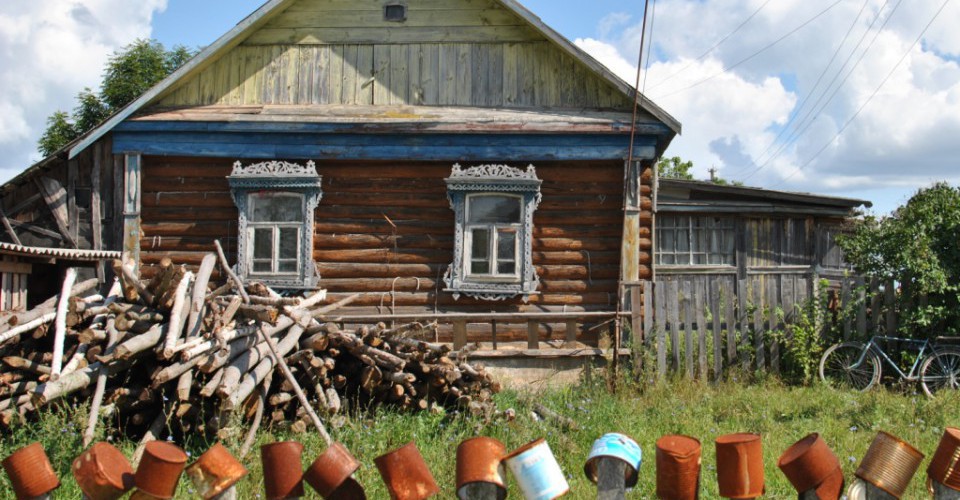

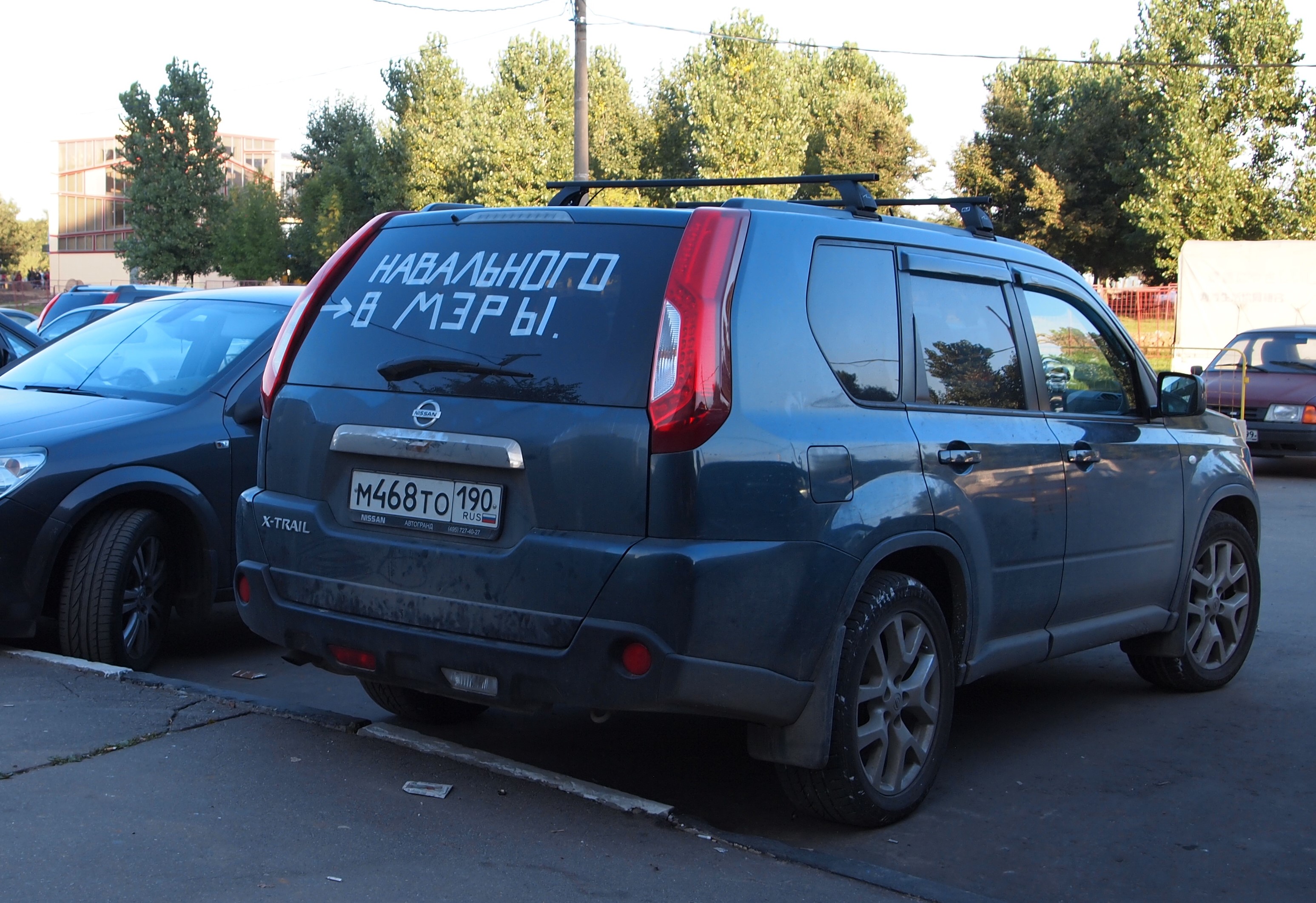
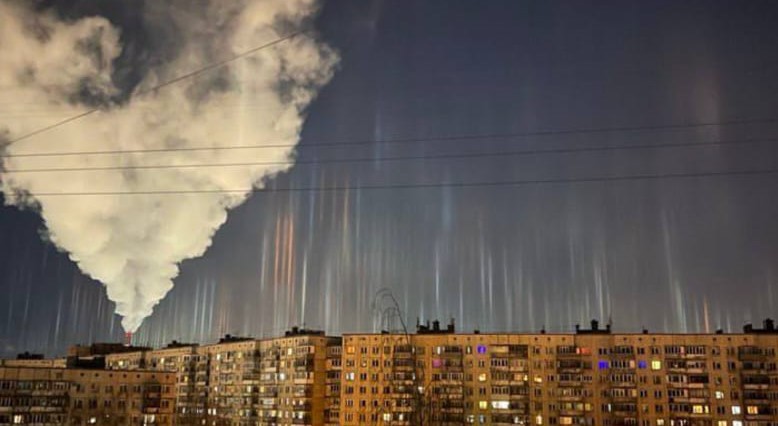
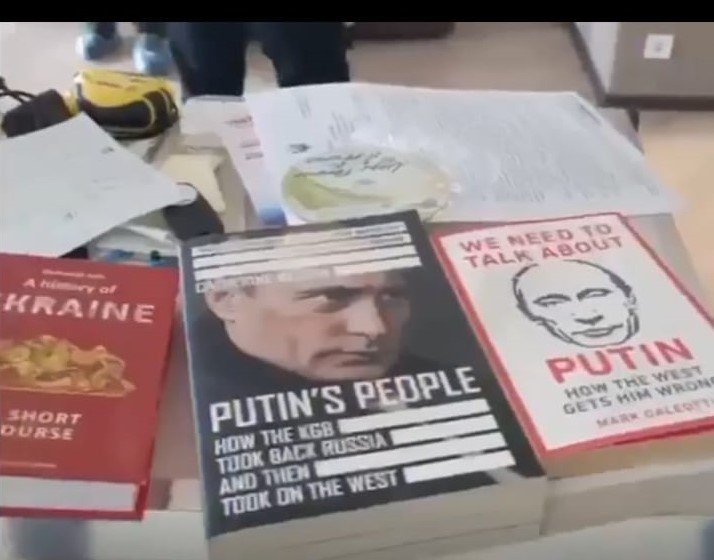
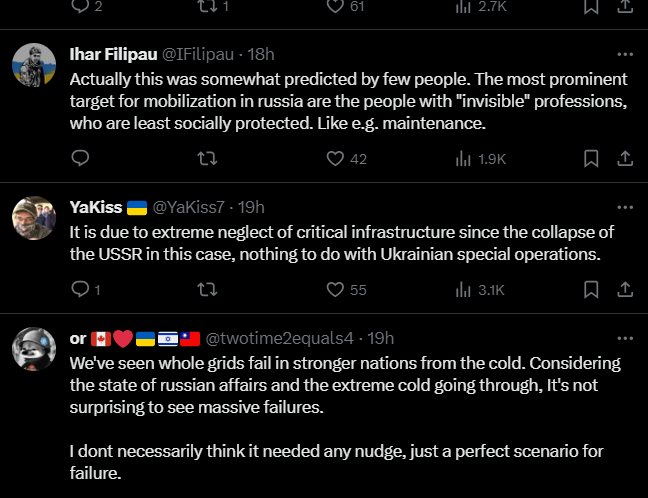



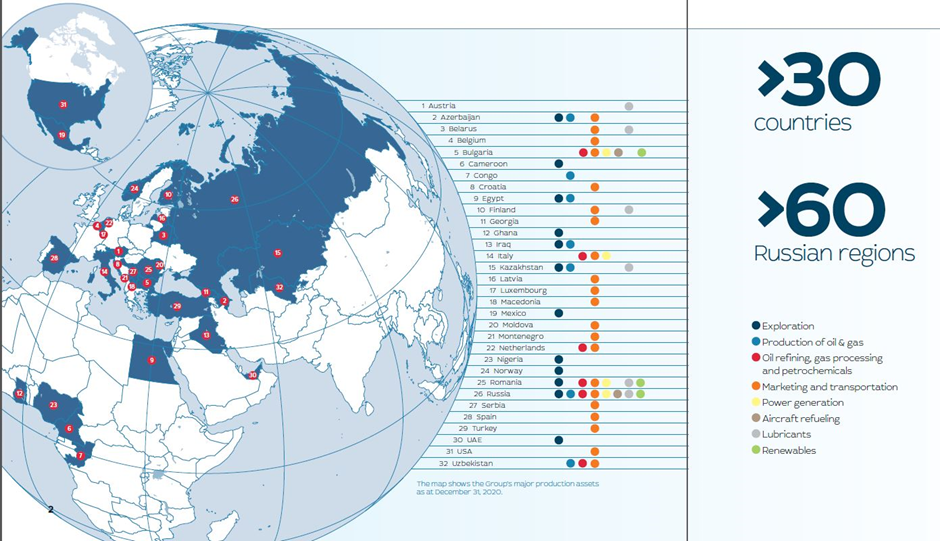
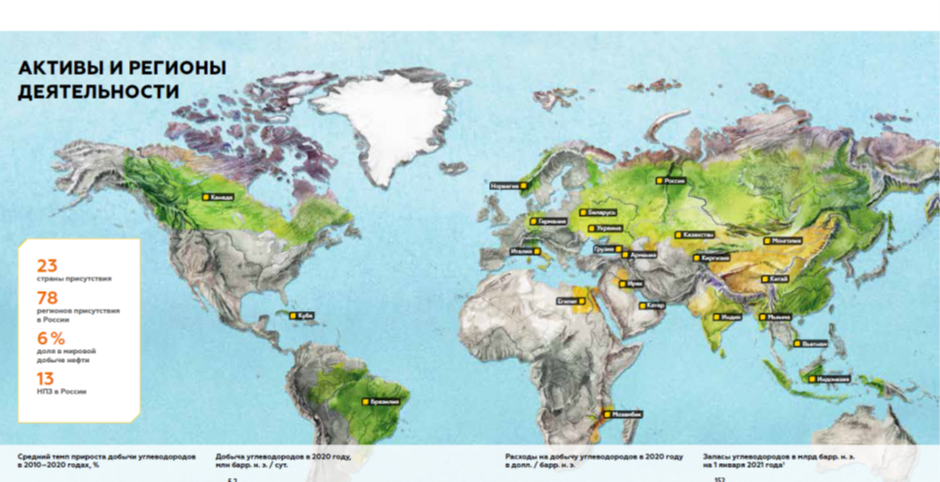
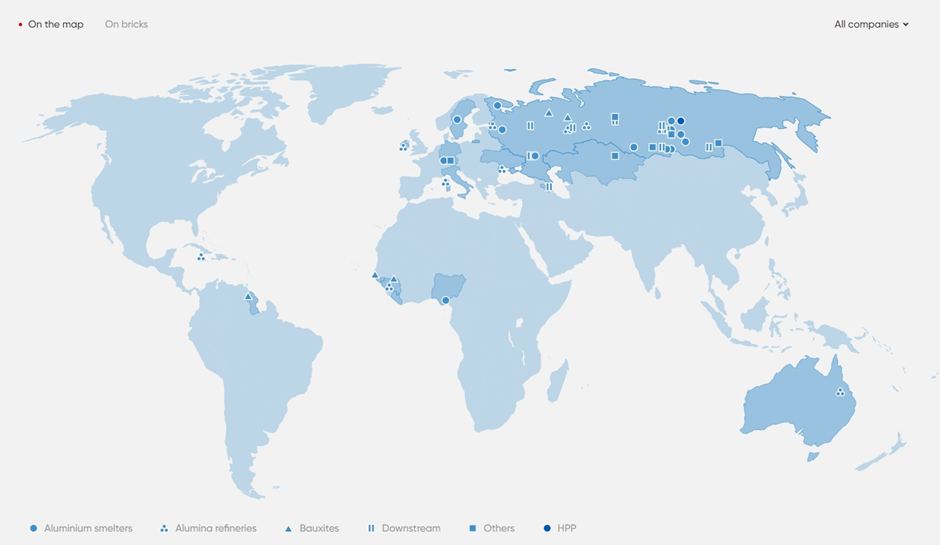
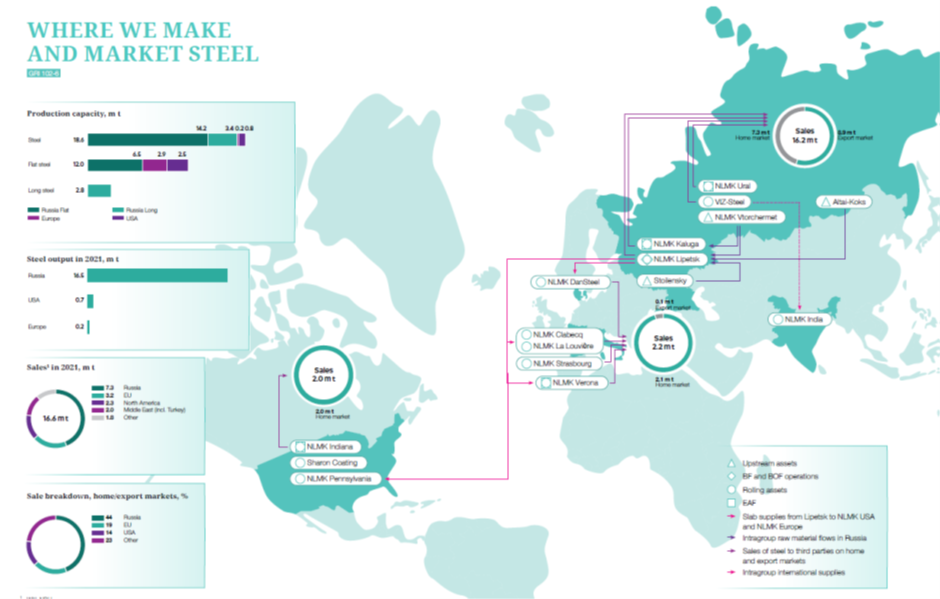
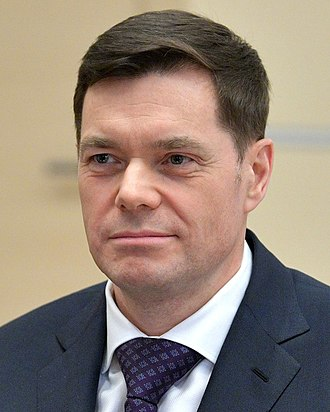
 Postsocialism