Category Archives: Russia

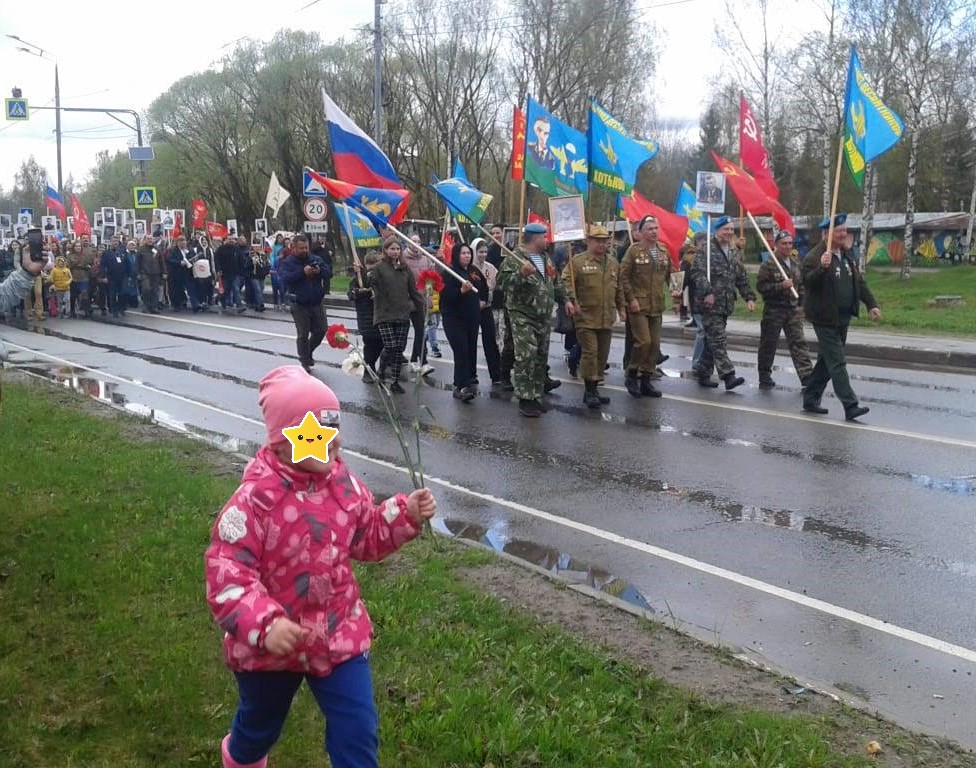
Can Soldiers’ Mothers End a War?

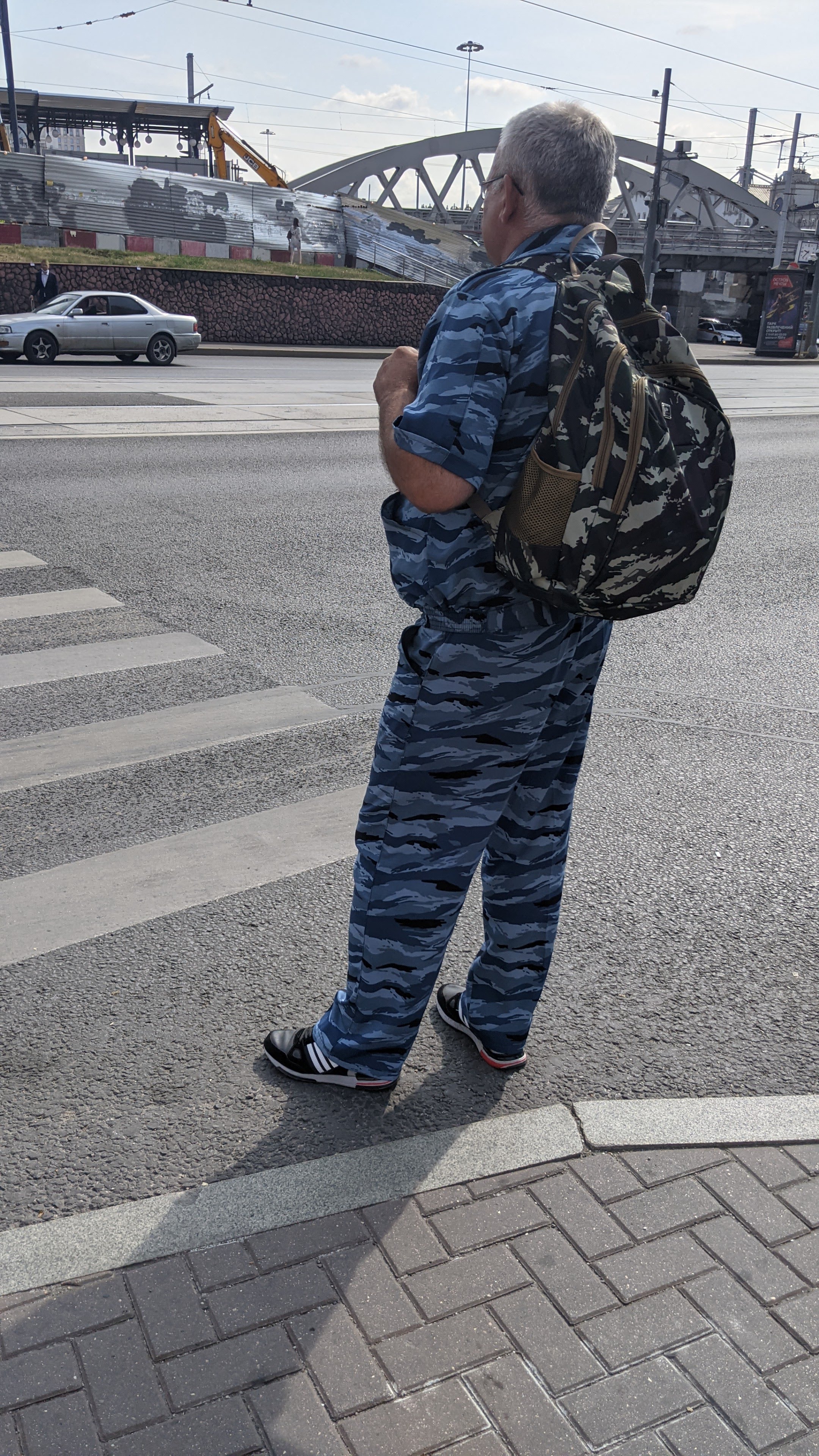
Middle-aged man in camo in central Moscow. In what way is Russia a ‘militarized’ society?

A conversation somewhere in Russia:

“So, did you get him an exemption yet?” [‘otkosili’ is a slang term which can mean legally or illegally get exemption or avoid service]

“Finally got him a ‘V’ ticket – legally – thanks to the hospital. It means he can’t be called up in peacetime. I talked to some people whose kids are serving right now. Some places it’s ok, other places it’s totally fucked up and they come back fucked up beyond all recognition. Better not to go. There’s still hazing.”

Whether or not the interlocutors were talking about ‘some places’ in Ukraine, or just military service in general I don’t know.  The mother went through a six-step procedure to get the ‘ticket’ and could not have afforded a bribe. The father had said: ‘either he gets a job or let him go to the army’. In any case, since 2016 it has become almost impossible to give a bribe successfully to get an exemption ticket.

Why write about this? I was asked to go on US cable TV to talk about ‘The role of soldiers’ mothers in ending the war in Ukraine’. I’ll post a link when it comes out. I don’t know why I was asked, or where this idea came from.*

I guess I could summarize my answer: domestic NGOs like the Committee of Soldiers’ Mothers (CSM) could historically put a lot of moral and political pressure on the Russian government. Now, with no independent press in Russia, they can only play a role in giving parents and soldiers good legal advice on their rights. They are not the only way of undermining the war though. There are always informal messenger and social media groups that can make a difference. Perhaps this war is different in that the personal contacts and social pressure of one’s immediate peers is the most important factor.

The longer answer:  

The first Chechen war in the 1990s saw a freer Russian press strongly criticize the loss of life of Russian soldiers and the conduct of the war. Mothers’ actions (sponsored by CSM) ‘had a profound effect on raising awareness and turning public opinion against the war’ wrote Amy Caiazza in 2002. Its members often kidnapped their own sons from military bases. What was different in the first war was that everyone had clear information from the press about the incompetence of the military campaign. The government was not trusted, and the army did not have a high standing in society.  Furthermore, the mothers had strong support from wider society for their actions. Caiazza writes that CSM was able to be quite activist in the 90s, though its success was more down to publicity and its influence on institutions low in the longer term.

She also notes the organizing principle based not on objection to men making war, but on mothers’ suffering. At least part of the success of the messaging was based on a bio-essentialist version of maternity and instinct. Mother’s activist actions were a ‘natural’ biological imperative to protect their sons and therefore they fulfilled their duty as mothers. This exploited well an ideological opportunity structure to gain legitimacy that has mainly been unavailable for groups trying to undertake civic action in Russia. This is not only ‘smart’ from a perspective that would see Russians more receptive to a conservative message like this. CSM avoided being identified as a feminist organization and instead proposed women’s rights as human rights (Caiazza 2002). This caused conflict with more radical feminist organizations in Russia, but the CSM’s public activities also drew plaudits. Caiazza also writes about the men’s anti-draft movement, which was largely unsuccessful.

CSM lobbied Parliament and got concessions on deserters. (Interestingly only Yabloko and LDPR voted against full amnesties!). Caiazza claims further success in the campaign influencing Yeltsin’s cuts to the size of the military. CSM failed, however, to prevent army service being extended from 1.5 years to 2. CSM also was successful in publicizing the individual resistance to military service – i.e. draft dodging and getting medical exemptions legally.  The second Chechen war saw more mobilization of public opinion behind the conflict and a controlled press coverage of it.

This present conflict shows how effective Putin’s destruction of free press has been in the long term, and how the new laws against discrediting the Russian military and spreading ‘fake’ information about the war, mean everyone is afraid to speak out. He has shown himself a master at demobilizing Russian society, but that does not mean that Russians are all falling into line, or that they automatically support the war. Much has also been made of the social profile of soldiers – many hail from peripheries – becoming a soldier is a way of getting social mobility, education, and ‘escape’ from places with no prospects. Most of my informants, even those who served at the time of Chechnya are quite nostalgic about some aspects of military service. However, if further mobilization is attempted, it is likely there will be large scale resistance to the draft. This resistance will be active and passive and it’s important we pay attention to the passive part because like similar phenomenon, it is a huge substratum of Russian political action that can easily be overlooked.

Soldiers Mothers Committee is still active. We should note in passing that soldiers rights were and remain a barometer of health of Russia as a civil society, not least because of the extremely brutalizing experience of being conscripted. Since 2014 it became harder and harder to do even the basic work of a human rights NGO in Russia because of NGO oversight laws. This law was used against organizations like CSM who got funding from abroad. Now, such organizations can mainly just observe and give free legal advice to the families of soldiers – for example on how to claim compensation for death or injury of the son. Here’s a more focused organization – the ‘Rights of the Mother’ NGO Fund, that operates mainly as a legal aid team with funding from various small firms within Russia, along with the small-scale online donation platforms that exist. RMF also provides free legal representation in court cases about discrimination in providing social benefits to the relatives of dead soldiers. NGOs can also document coercion of conscripts in the current conflict – young men forced to sign up to military contracts. The regime shows it is not willing to even allow a mild oversight by civil society of the most vulnerable citizens it asks the most of (laying down their lives). What does it tell us about the regime – that it cannot function without breaking its own rules and laws.

There’s also more qualitative research on how mothers responded to war by organizing – there is a book by Sergei Oushakine partly on this topic from the early 2000s. This research argued that sympathy for traumatic suffering is an effective mobilizer in Russia – more effective that claims of human rights or justice. However, there is always a risk that others and the authorities think there are suspicious motives (and the influence of the West). Finally, it’s possible that mobilization of civil society does not necessarily lead in the direction of claiming rights or righting wrongs, but risks leading to public calls for revenge and retribution. This is what Oushakine found after the Chechen wars. He called this the Patriotism of Despair which is the title of his book.

My own more recent research tends to partly support Oushakine’s earlier findings. Faced with the war there is a form of ‘defensive consolidation’ around the idea of a nation under threat, and of supporting the armed forces, ‘right or wrong’. However, that doesn’t mean over the course of the conflict more positive forms of solidarity cannot emerge. In fact, given the effects of the sanctions, Russian people might be inspired to work harder at permissible forms of social organization and support for each other. There might emerge politically acceptable grass-roots veteran associations and organizations that provide a muted or Aesopian form of opposition to war.

A final point is about ordinary resistance to the war – we find evidence of this among soldiers, ordinary people and among mothers. Russia is not so different to other societies during periods of harsh control – there are only a few percentages of the population willing to take risks to stand up. But even this is encouraging.  At a more basic level, Russia is not North Korea – you can’t shut it down completely. People communicate in messaging services and create support groups including for soldiers’ mothers. It is thanks to informal groups we know how soldiers were tricked into signing contracts and so on. The formal organizations can only provide legal advice to relatives, but we also find out useful things from their interviews with the media brave enough to produce coverage of the war’s results

Journalists are trying to write about the human costs of the war in Russia. Here is an example about the many military funerals in Buryatiya – a poor region with disproportionate losses among the ethnic minority Buddhist population. The journalists writing this piece (published in Russia in Russian) also interviewed other journalists who report they are pressured not to write about the war. The parents of killed soldiers are also pressured not to talk to press. They are told their words (or photographs of funerals) will be used by ‘hackers in Ukraine who will steal the information and make fakes’. The relatives are even told not to answer calls from unknown numbers. Another interesting point from this article is that many soldiers felt a strong sense of responsibility to their comrades. This meant it was hard to refuse to go to Ukraine. But they did not mention patriotism, their martial vows, or their duty to the Commander-in-Chief and his aims.

“The military stands at attention at the head of the dead. The backs are straight, machine guns on belts are pressed to the chest. The faces are young, they look like high school students in the guard of honor near the Eternal Flame. Some of the soldiers are crying. Tears cannot be wiped away, and they flow down the cheeks.”

[from the Buryatiya piece]

*my piece was apparently aired, but the journalist at MSNBC did not get back to me.

UPDATE 1.12.2023

Moscow Times has a report on infrapolitical campaigning by soldiers’ mothers using car stickers. A Telegram group representing this campaign has 28k members and a recent post comparing the fate of soldiers to the submariners who died in the Kursk tragedy over 20 years ago. https://t.me/PYTY_DOMOY/452

“Mobilization was a terrible mistake. We were punished for our law-abidingness. Behind the screen of stability for the majority, our men pay in blood, and we pay with our health and tears”.

Many other interesting rhetorical and discursive angles in the Telegram posts. It very much recommends the work of Elena Bogdanova on genres of ‘complaints’ to the authorities, about whom I’ve written frequently in these pages

What did I get wrong and right about the Russian Invasion?

At the end of January 2022 I made some educated guesses at the effect of a war on Russian society but I didn’t really believe it would happen. Now I take stock briefly.

‘More of the same, yet worse’ – this prediction so far is right. Russians are starting to – very slowly – wake up to the very significant reduction in living standards the war brings. However, like many other issues, we can observe delays and still partially effective efforts of the Russian government to lie to people about the causes. Some people are still ready to believe that inflation and shortages of some goods are due to Covid or other factors.

What I underestimated was the effect of nearly a decade of stagnant or falling living standards. People were already in a state of extreme pessimism and resignation. ‘Boiling the frog’ metaphor doesn’t even come close. This is a frog in a pan where the water long since evaporated. The frog is now a desiccated husk.

This weekend is the spring clean for those who own a garden plot. There was no enthusiasm for this task that many thought they’d left behind, but now planting vegetables is confirmation of a return to the worst of the 1990s

‘Mass civilian causalities and Russian confusion and chaos’. Again, while I’m no expert, this was proved prescient.

lack of appetite for war’. This is now controversial because every day someone points to polling and says: ‘the Russians enjoy this war and love Putin’. I’m not going to repeat my and other people’s criticism of polling. I stand even more strongly by my prediction. There’s a visible group of the usual idiots you can see in any country that because of their personal inadequacies just love to parade their skin deep patriotism. There’s good evidence that the majority of Russians feel either disdain or indifference towards the Z-people [thanks to Anton Sh for prompting me to rethink the wording here]. My research participants are mainly ‘blokey’ working-class guys. They have no time for this b-s. They’re more interested in whether their factory will still be working in June. In short, people are fearful for their material wellbeing and, yes, often callously indifferent to Ukraine. No one even mentions Putin any more, apart from the odd old person who leads a sheltered TV-centric life. For me his lack of visible leadership (since February) in explaining and arguing for the war speaks volumes as to the diminution of his status in actual fact among Russians.

‘Initial limited panic’ at shortages (real or imagined). Here too I think I got it right. Although I did not get right the massive sanctions. I underestimated coordination from the West. Can Russian agriculture feed Russians now? Maybe. There are issues with things like animal vaccines and seeds (remember that most commercial seed produces crops whose seed cannot then be re-sown). Nonetheless, with Chinese help, most Russians will only have to suffer high inflation on food staples.

Continuation of the ‘politics of fear’. Again, I underestimated how fast Putin would clamp down and allow the narrative of internal enemies and traitors to justify all kinds of score-settling. I also did not foresee significant emigration by the upper-middle class. Fascism lite? Bonapartism? Others (Greg Yudin here) are very quick to go down those roads. I think for the time being I’ll stick with my version of authoritarian statism inspired by reading Nicos Poulantzas. “the ‘masses’ are not integrated (partly because politics is replaced by a single party centre), and pernicious networks like security interests are ‘crystalized’  in a permanent structure in parallel to the official state”.

After the invasion happened I wrote a follow up post about defensive consolidation. This is a way for people to deal with cognitive dissonance around the Russian aggression. Defensive consolidation involves magical thinking and denial (China will help; the war crimes are staged). It involves a cleaving to authority (not necessarily the government, but your boss, your factory, your town leader), not out of loyalty or enthusiasm, but as a kind of relationship like that of an abused victim to abuser. The more Russians cleave to authority the more they are effectively ‘admitting’ to themselves how bad things really are. So my friend says ‘Russian troops are not aggressors’ and then says ‘we should delete this chat and move to Signal (an encrypted message service). She later talks about how many nightmares she has and cannot watch the news because they are so ‘rabid’ there. This is an example of ‘knowing and not knowing’. The finale is ‘I have to support my country in my own way now that everyone hates us’.

Recently, Sam Greene wrote that he thinks there is now a real rally around the flag. A top-down process using propaganda and repression. Sustaining such negative emotions is hard work and will not last, he predicts. Yesterday Ben Noble did a great thread on the same topic. A general increase in support for state institutions shows that a rally is not about particular actors and what is important is ‘social-desirability bias‘ strengthened by the costs of going against the war (prison, fines, or worse).

What’s next. Escalation with the West? A WWI scenario in Donbas? No one knows. Unrest and coups are unlikely but of course possible, especially if sanctions really do work or Russian forces keep taking very big losses. Can Russian people find a way to relate to their own state other than like a helpless abuse victim? Can they recognize their country’s guilt without resorting to excuses and whataboutery?

Don’t trust opinion polling about support in Russia for the Ukraine invasion

testing artificial teeth. Buy the print https://shop.heathrobinsonmuseum.org/collections/unmounted-prints/products/pf-testing-artificial-teeth-2

A few posts like this have been written already. There was this post by Greg Yudin. And then this by Alexei Miniailo DoRussiansWantWar.

A major misunderstanding appears to be that people used to dealing with public opinion surveys fall into thinking in terms of ‘majorities’ when a careful examination reveals big holes.

Greg Yudin has consistently attacked polling. On philosophical grounds (that polling frames narrowly questions that are very complex and a reality that ‘opinions’ are never fixed or coherent) and technically – that Russian polling in particular is deprofessionalized and politically sabotaged. Yudin points out the very narrow pool of people willing to answer polls in Russia which could indicate a core of conservative-irredentist-chauvinist support for the regime and its aims at around 15%. These are my terms by the way, not his. Second, his point is about the meaning of polling in authoritarian states as ‘feedback’ to the regime. People can’t voice fears and complaints easily in other ways, so they do it in polls. This means we should treat them not as ‘preference’ sorting, but as a very partial and narrow form of communication. I would add that this also exacerbates a tendency that only those that think they will be heard are willing participants, because the regime has been effective in closing its ears to the genuine majority for a long time. Yudin makes another point more broadly that meaningful political subjectivity is not really possible, and a broad wave of privatisation of expression occurs where people retreat into private and personal matters. Maksim Kats supplements Yudin’s point about non-responses to polling, having apparently got only a tiny response from 31000 calls just the other day. His story is one of refusal to respond to polling.

Alexei Miniailo did some polling experiments two weeks ago. The main point is one that Samuel Greene has made previously. People in a state like Russia tend to give what they think is a consensus/agreeable answer and, according to Miniailo, clump out of fear to what they think is the politically mainstream opinion: that the ‘special operation’ is limited, is intended to denazify Ukraine or defend Donbas, etc. This means the 40% that follow prompts can be said to be a ‘group’, but what they actually believe is not clear. Similarly, maybe 7% lie about their opinion. What cuts through? Talks between relatives and close friends.

My own contacts, in both private and ‘state’-sponsored market research are more critical than Yudin of political and social polling. I collate the thoughts of four people who have special marketing or survey expertise.

  1. Boris Sanich (former big-polling company exec)

Yes, there’s a Hobbesian morass in society and it’s detectable. But that’s true of any society. And of course TV ‘pumping’ up has an effect – but it’s more emotional than rational-or even measurable – one week it’s there in the news and ‘relevant’, the next it isn’t. Does that make it opinion? No. It’s like a balloon you have to keep feeding. But Yudin I think underplays how much metastasised resentment there is internally as a result of the terrible economy and this bleeds out in all polls – against Gayropa, against Ukrainians now, but tomorrow it could be against Martians. So Putin in a sense rides this dangerous, clifflike wave. So like the person that says ‘I’m with our boys and our cause is just!’ in the next sentence says ‘but this is like Pinochet and that concert with Putin was just downright scary!’.

Since even 2000 there’s been a veneer of professionalization in polling – a use of software and training in the Western techniques. Statistical ‘education’. But this masks a stronger countercurrent – faking results, ‘correcting them’, and extremely poor field practices in reality. It’s like those badly maintained trucks in Ukraine. They look nice from a distance on parade, but really the oil is old and the tyres about to fall off. People don’t actually hit the numbers, because they pocket the money and can use their expertise to simulate the ‘correct’ results that in any case they know the client wants. And right at the top there’s corruption in polling. And field research is expensive, calls are expensive. Yes of course there are reputable firms that will take your money but there is always a weak link with people – the human factor. Also, any political or even social polling is so politicized so even when you do a ‘real’ good job, you end up binning it or changing it. So if you’re still in the market doing this research you are compromised down to your toes. And you ending up lying to yourself. Remember also that again, Levada, VTsIOM, FOM they don’t do any of this work themselves. It’s almost all contracted out. Of course a person with expertise can tell when a result has been fixed or fiddled with, or corrected for a weird standard deviation. We call it ambiguously, ‘cleaning the database’. But like me, a lot of principled people left the business because anything political ends up as ‘mut’ i pizdezh’ [murk and BS].

  • Gena Maximovich (owner of private market research firm since 90s)

Private sector market research and specialized social and political polling have parted ways. I agree with your previous commentator 100%. The biggest problem is poor field work, poorly trained polling staff and cleaning the data to suit the client. For my own part, this is why my firm is so strong, because we don’t do any of that and focus – until now – on private companies, particularly in the transnational sector. The elephant in the room that these political pollsters can’t openly discuss is their samples are shit – old and poor people answer and especially if there are inducements they spout all kinds of shit. ‘Bad field’ we call it. A lumpenaudience is all that remains. That’s why my firm only does scoping polling and any results we publish are based almost entirely on focus groups where I, or my subordinates have personally conducted the work and then signed off on it. Even there, with the main pollsters I don’t trust their focus groups because of the ‘bad field’ effect. Low professionalism is a problem with these mainstream pollsters who depend on the state. My customers need predictive power and if my focus groups are not corroborated with results in sales, I lose customers. But the political pollsters are focussed on supplying a self-fullfilling prophesy. Sure there is an impression of professionalism – auditing of results, recordings of call-centre polls, but they still are massively manipulated.

  • Galina Vasilievna – survey fieldworker.

I did phone surveying, before call centres became the main method, and I also did a lot of street and door-to-door. I can just summarise that the supervisors knew we made up results. They taught us how to do it so that it would not be obvious, although sometimes we got caught and our data got thrown out or cleaned. We would never get enough respondents and so some of us would just go home early and fill out the rest by hand. We would adopt the mentality of the kind of people we’d got answers from and make up variants based on these. [note to readers – this person was also a fieldworker for one of the most cherished databases at the heart of Western research on Russia]

  • Jeremy Morris – former focus-group manager in ex-Soviet states.

My own experience is limited, but I think, revealing. I consulted for a Western media company who wanted market research on internet and TV consumption. They contracted to a Belarusian company. I was the ‘quality control’ and intermediary. The contractor continuously cut corners, basically bullied the focus groups into a particular line, and oversimplified the results to an egregious degree. When I tried to intervene the client was not really interested. There was a marked difference in the quality of the facilitator’s work between when I was physically present in the groups and when I was absent (and reviewing a recording). Just getting the contractor to hand over the tapes was hard. Of course, if I’d not cared, I would not have reviewed the tapes. Indeed, I was paid only to review 5% of the actual recordings. As I indicated with Galina’s story – this affects Western research too. The elephant in the room is how many scholars rely on ‘off-the-shelf’, contracted out data collection where more than one intermediary has a financial incentive to make the results ‘look good’ (or just look plausible).

Does public opinion exist? Does the majority support war? Opinion is highly managed via polling to produce clear results, legible to the political technologues in the Kremlin. Even now, Ukraine is not highly relevant to most Russians’ everyday lives and so any polling about the war is suspect. With the most recent results we see the clear effect of fear. Are people ignorant? No, not at all. Some avoid news. But that just delays the inevitable. The war is not ‘salient’, yet, but soon it will be. Lumping people into ‘war camp’, or ‘opposition’ is very problematic as these are not static, demarcated categories, even now. Like Aleksei Miniailo proposes, perhaps there are 40% who are agreeable – but is that ‘opinion’? Who are they agreeing with? Perhaps they align with the 20% (?) within that cohort who are genuinely enthusiastic for elite messaging around great power status, and a general conservatism. But regardless we cannot talk of a pro-war majority.

If you want more detail on polling debates and the background to Yudin’s interventions, then check out this post from 2019 on a similar topic.

Moscow war diary. Part 5. The absent voice of the Russian intelligentsia in the land of aspic

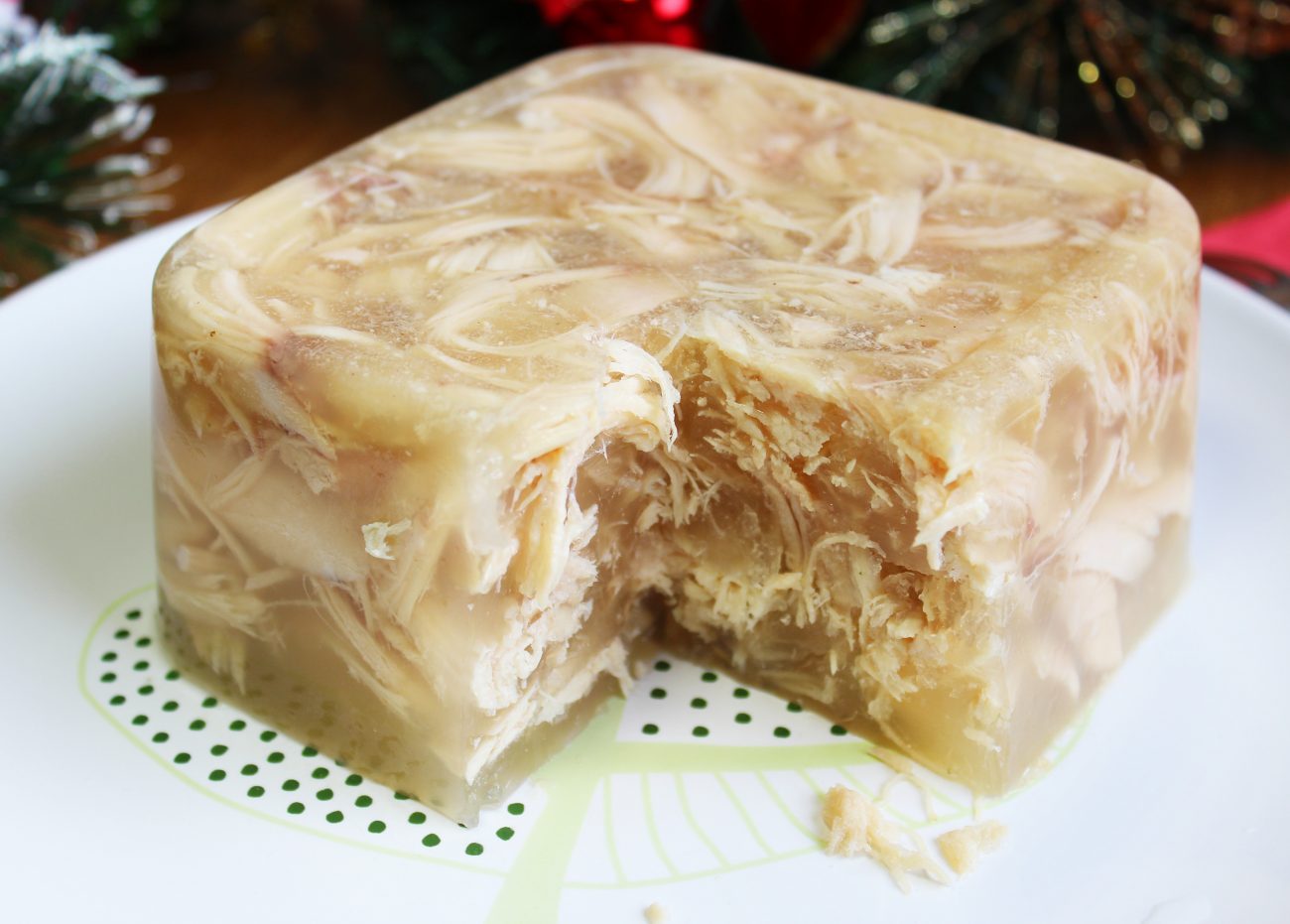
kholodets (Ukrainian recipe)

Final Guest Post by Valery Kostrov, a resident of the capital, a humanities graduate

March 9, 2022
The flight of many representatives of the Russian intelligentsia, which many pro-European and anti-Putin residents of Russia admired for many years, now causes unpleasant surprise and annoyance for many, it seems. There is an understanding that there could be political persecution of Dud, Dmitry Bykov or Anton Dolin. But after all, it was they who for many years turned to the enlightened European audience of the country, to show citizenship, courage, etc., believing that it was important to fight the regime in this way. And what? Where is their courage and citizenship? They left the country of the new “Z-intelligentsia” like Zakhar Prilepin… Now the voice of the “Russian European” will not only not be heard, it will be absent. And it must be admitted that Navalny became the only truly courageous leader, person and intellectual. Others were unlikely to be threatened by what Navalny received (although Dmitry Bykov seems to have survived the poisoning attempt in 2019), but the haste of this flight is somewhat amazing for many and has not yet been meaningfully understood by anyone. Moreover, with the introduction of total censorship, this can only be understood in kitchens, as it was in the 1970s.

The metaphor of the “kholodets country” (jelly, aspic) was also born – it trembles around the edges when shaken (middle class and big cities), but remains almost unchanged in a viscous state in the depths. It seems to be ready to melt, but vlast’ freezes it all the time, it can be stabbed with knives, but this will not have such a noticeable effect on integrity when frozen. So it is with us – sanctions pierce the country with economic knives, but the authorities will simply keep this jelly with a frost and a distributive economy. Pieces in the form of the middle class will fall off of course, but it seems that it was so superficial … Moscow especially – like fat, appearing on the surface of the jelly. They’ll sieve it off and put it in the trash and all will be well.

March 13, 2022
It is interesting that business in Russia no longer considers itself as an independent political entity, but only as one of the classes according to Simon Kordonsky, which is trying to reduce costs and increase profits in the conditions of corporate capitalism, which the country has become for some time ago. In this sense, it can be said that business, like the military class, is depoliticized in Russia. The so-called “oligarchs” from the 1990s. after the Khodorkovsky cases found their place between the glamorous life of eternal travelers on luxury yachts and the role of cosmopolitan emissaries of the state and their interests in global capitalism. The most cosmopolitan of them tried to find a compromise in the new military reality – abstractly calling for peace like sophomore students. It seems that this was the worst solution for their image in Russia and abroad – for some, their statements seemed to be a surrender of national interests, while for others they were not anti-war enough. As a result, many of them rush around different countries on their business jets and quickly lose influence and money. At the same time, there was an influential cohort of state-owned businessmen in Russia who are at the helm of state-owned corporations, show high management efficiency and strive to implement advanced management technologies in their structures. The most striking figure here remains German Gref, who seems to have not yet expressed a clear position on what is happening and his Sberbank is still in working condition. “Systemic liberals” in business and government should soberly assess the depth of the defeat inflicted by the sanctions on the Russian economy, but they did not outline a visible political position. It is quite likely that now this is impossible, since the stunning economic attack of the West on Russia leaves them no other option than to put out the fire on the ship together with everyone, so as not to be branded as a traitor to national interests. In this regard, the West acted tough and consistently, but not entirely far-sighted, leaving no room for communication.


After the closure of McDonald’s and other global fast food chains that have been operating in Russia for many years, the question arises of replacing them with local businesses. At the level of government officials (Volodin), the departure of foreign networks was perceived with optimism, but Russian businessmen themselves react to this prospect with skepticism. A few days ago, the opinion of the owner of the well-known and large fast food chain based on Russian cuisine (mainly pancakes with filling) “Teremok” Mikhail Goncharov appeared. He believes that the unique technological, logistical and marketing solutions that McDonald’s possessed cannot be replaced in Russia and complains about the lack of targeted government support for national businesses:


“Teremok and other representatives of Russian business were not created as competitors to McDonald’s simply because we don’t know how to do it (meaning – as well) as they do. Neither technologically nor in terms of management and marketing.” https://tjournal.ru/opinions/562982-osnovatel-seti-teremok-mesto-makdonaldsa-v-rossii-nikto-ne-zaymet-my-tak-ne-umeem

“All this comes from decades of hard work by hundreds of thousands of executives, marketers and engineers, and even with the help of stimulating development (!) Government measures. So far, we do not have these measures at all. On the contrary, the existing measures and modes of operation stimulate the degradation and decay of any large business.”


In other words, Russian business was a diligent student of its Western competitors, but it is extremely difficult to make a quick import substitution under the current conditions. In addition, many medium-sized Russian companies are already facing problems with the supply and renewal of equipment, spare parts, with the breakdown of established supply chains and are experiencing a state of shock. Many people think about survival, not about development. Of course, regional producers of food and alcohol will survive by switching to a simplified product line, but this will not be a full-fledged replacement for Western companies. In fact, no one seems to know how the situation will develop in the coming year.


If we talk about the political subjectivity of medium-sized businesses (which are often a large employer in the regions), then we must remember that this subjectivity was also very limited and concerned only those aspects, inclusion in power structures that helped this business to have insider information and to influence the regional authorities in their interests. After the turbulent 1990s, when “power entrepreneurs” and “new Russians” actively entered politics, other times came: after building the “vertical of power”, regional entrepreneurs became part of the “Big deal” or “new social contract” between Putin and society . They remained loyal and donated to the needs of the regions within the framework of “social responsibility”, they could be deputies of city and regional parliaments, but almost never participated in non-imitation political activity. They kept quiet and made money. Various public associations of small businesses “Opora Rossii” or large corporations of the RSPP rather resolved government relations issues and lobbied for the interests of individual business groups, but also were not civil subjects.


It must be said that the position “business is not politics” or “business is not politics” or the neo-liberal version of corporate social responsibility (CSR) “we pay taxes, we give jobs and in this way we perform our civic function” (Milton Friedman) has become very popular in Russia . In the 1990s, a right-libertarian individualist cult of money and an “American story” of success in the vein of Henry Ford or Herbalife network marketing came into vogue among the country’s younger generation, who had abandoned any Marxist interpretation of the social order. Interestingly, the “dollar” and personal success in caricature form captured the minds of many Russians who believed that they could and should become personally successful outside the state and public institutions. In the 2010s, on the wave of new ideologization, Ayn Rand and her famous novel Atlas Shrugged came into fashion when they began to think that minimizing the participation of the state in one’s destiny and a competitive market economy would be a salvation from corruption and bureaucracy. Then the popularity of the idea of ​​“passive income” began to grow – playing on exchange electronic platforms in order to obtain long-term income, which will become the basis of well-being instead of a state pension.


Thus, business (small, medium and large) turned out to be politically subjectless and could only complain to the state about bureaucratic barriers and tax burdens. Now they all suffer from sanctions and each chooses his own path to salvation or survival. A thin layer of the urban creative class and innovative industries (IT, advertising, design) will most likely be suppressed or many will emigrate, there will be more state corporations and derizhism in industry and technology, small and medium-sized businesses will survive on their own – existing in a gray zone of increasingly less clear economic rules and chaotic market.


Will business have political subjectivity? Hard to say. Among the employees and office managers of large advanced Russian companies, their own “Ukrainian war” is already underway; many of them considered the earned style of Western consumption an important element of class superiority, they wanted to travel to Western European countries, someone even had real estate there. Now things have become complicated and they are of course unhappy. But they also have mortgages and are now afraid of losing their jobs, so their readiness for political mobilization is not so easy to believe.

March 14, 2022.
In the early autumn of last year, I became interested in the topic of the Latin American dictatorships of the 1960s and 80s. I watched the film “Kamchatka” (2002, directed by Marcelo Pinheiro) and read the novel by Marcelo Figueres. Somehow the clouds were gathering in Russia. Now everything is becoming more relevant – under different scenarios, it seems that there will be no good outcome for Russia. In the meantime every day I find out how colleagues leave the country – the intellectual circle is getting poorer. We stay. Nobody is waiting for us. Will there be something tomorrow? The war will continue…

“The film is seen through the eyes of a ten-year-old boy, Harry (Matías del Pozo), who does not know that Argentina’s 1976 coup d’état is impacting his life. After witnessing the “disappearance” of dissident friends, a human rights lawyer (Ricardo Darín) and his research scientist wife (Cecilia Roth) flee the city and hide from the military police in a vacant summer house. With them are their two kids: Harry, who is fascinated with the escape artistry of Harry Houdini, and El Enano, his little brother. (Translated as “Little Guy” in the English subtitles, played by Milton de la Canal. The actual translation is “dwarf”.) The family adopts new identities and attempts to lead a normal life. Later, they are joined by a student who is using the alias Lucas (Tomás Fonzi). Their new life is difficult, but a visit with their estranged grandparents (Fernanda Mistral and Héctor Alterio) reveals that they are still a close-knit family. Subtly hinted, however, and used as a metaphor, is the mother’s constant smoking and El Enano’s renewed bed-wetting. Both serve to show how stressful and precarious their situation is.” Kamchatka (2002) – Plot Summary – IMDb

Moscow war diary. Part 4: Incriminating Evidence? Or polling fallacies

March 7-8, 2022.

Fourth Guest Post by Valery Kostrov, a resident of the capital, a humanities graduate


Can the results of public opinion polls be incriminating evidence against Russia? Such a question arises when various well-known polling companies publish the results of their latest polls dedicated to supporting the so-called “special operation in Ukraine.” Following the well-known Russian intellectuals (Grigory Yudin), I would raise the problem of the status of public opinion poll data in non-free and non-democratic societies. I think that in addition to the system bias, which is caused by the specifics of the mode, there are some other aspects.


According to polls. FOM, VTsIOM and Levada find mass support for the war (special operation). But there are several buts. First, in the wording, instead of the clear and real word “war” (moreover, on a large scale), the official euphemism “military operation” and so on is used. This greatly reduces the drama: “war” is an important and emotionally laden word for any resident of Russia, some other term greatly reduces the attention of respondents to questions. Secondly, it is important how the structure of the questionnaires looked like – what topics and plots were asked before this block of questions about the “military operation”. The previous context of the blocks also affects the responses. Thirdly, G. Yudin is right – of course, there is an effect of socially approved answers, but no one knows how strong it is and how it is represented in different social and age groups. But similar effects can be observed to a lesser extent in Western countries – only in authoritarian regimes they are afraid of political persecution for “wrong” answers, and in democratic ones they are afraid of public censure and moral condemnation. This must also be taken into account. Fourth, the media (in any country) have a major impact on public opinion. And here, not only censorship or propaganda also begins to influence (let’s not be naive, it exists in countries with any regime, but in totalitarian ones it plays an outsized role), but the effect of self-developing mass information waves (mass “infection”) exists everywhere – in Russia with militaristic hysteria and in a world with a total rejection of Russia as part of the world. The echo of social networks and interactive communication – “moral wars” only intensifies this infection and information waves. Of course, the surrounding news agenda is now extremely pressing on public opinion and poll results.

[editor: Yudin updates his criticism of polling in Russia here. Others have more fundamental accusations of outright fraud and shady practices, but that’s for a later post]


And further. Leading Russian survey companies conduct their surveys according to international methods and the data is not drawn arbitrarily. All samples are accurate and measurements are made according to the methods. But technical sophistication does not mean that surveys show the complex processes that take place in societies at critical moments. [editor: other qualified persons disagree with this assessment and make a distinction between political polling and commercial commissioned surveys – again for a later post]


And most importantly, in a situation of social storm and obvious force majeure, public opinion polls in authoritarian or democratic countries give big failures. They measure something in an instantaneous jump in sentiment or in a situation of a giant information wave and a massive “infection” of public opinion with one idea. But what happens in different social groups and in everyday life – polls do not measure this – they falter like a compass at the moment it is affected by a magnetic anomaly. “Military field” operational anthropology works here – communication with people, all-round, correspondence, included observation. Here and now. At this moment. At the same time, it is important to focus not on the mood of your intellectual friends from the Facebook or Instagram feed, but to try to see the broader social picture in its complexity and ambiguity. Now in Russia it is difficult, the more valuable are the rare anthropologists and ethnographers who know the Russian language, who have been in Russia not only in the circle of prestigious universities, but there – in the very depths where poor people live …

Moscow war diary. Part 3: The double steel curtain descends

Third Guest Post by Valery Kostrov, a resident of the capital, a humanities graduate.

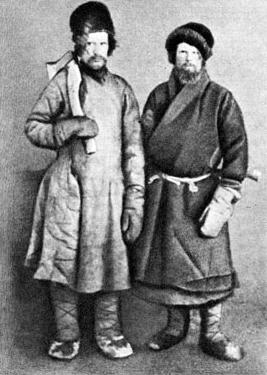
otkhodniki – seasonal migrant workers. Source https://ilovevaquero.com/obrazovanie/84267-othodniki-opredelenie-krestyane-othodniki-eto.html

March 4-6, 2022
During these two days, the situation is as follows – when an endless stream began of all companies leaving us, then even my very, very anti-Putin acquaintances became perplexed and angry. Not towards Putin, which is already customary, but to the West. Annoyance at the very least, because it already seems to them that this whole “cancellation” campaign was carefully prepared, since everything happens so quickly. The thought involuntarily creeps in that perhaps “Putin knew something” by starting this war. The shock of the Great Business Exodus from Russia arises among supporters of a market economy and those who do not support Putin. They ask themselves the question, “how does it feel to cut business ties?” Perhaps if only Apple had left, many would be upset and angry at Putin. But when all companies leave the country in an endless series, the effect is the opposite – from indifference to the desire to survive on their own.


It turns out that in the current situation, the total withdrawal of foreign business from Russia and catastrophic sanctions have played into the hands of strengthening the regime, around which those who have never supported the Russian bureaucracy are beginning to gather. Now it is the chinovniki who will help us survive, since the government of the country is in their hands. The old vulgar slogan of the pro-government “patriots” – “Russia is concentrating” is starting to work, but it works against what the West is trying to achieve – against the escalation of discontent, but in favour of internal mobilization of survival. Orientation towards the coming economic and social problems distracts people from the terrible pictures of the war, everyone thinks about how to stock up food, medicine, how to buy a dacha for a garden, etc. It is difficult to say what is happening in the administrative and business elites, among whom there were many “enlightened Europeans”, but it seems that they still feel like they are in the same submarine, locked from the inside and under torpedo attack from the outside. A noticeable part of the intellectuals and people of art have left, but it is difficult to say how this emigration is assessed by public opinion.

There are more and more statements in Russia from different sides that “in this situation you cannot take a neutral position – this is how you help the enemy.” This enemy could be Putin or the “Ukronazis” – substitute the right one. Probably something similar has happened to intellectuals everywhere: civic passion has become the main feature of discourse, which is understandable against the backdrop of active hostilities in peaceful cities in the center (or in the East? or already on the outskirts) of Europe. It is impossible to be indifferent, but it is proposed to seek understanding – an analytical understanding of what is happening. An analytical understanding of what is happening does not mean support, although the anti-war agenda is win-win. Probably, reflection and understanding is required where and when Europe (the West) lost Russia and how it happened. It would be foolish to believe that everything is the result of the KGB Lieutenant Colonel Putin, who became the Sauron of the cold Siberian Mordor. Of course, this also applies to Russia and its population, where the trauma of the imperial collapse of the early 1990s and deindustrialization could not fully drag on even with the help of the external gloss of the consumer society that engulfed the country’s major cities. The older generation and “poor Russians” – the heroes of the studies of the Russian sociologist Simon Kordonsky – did not forgive the fact that the former Soviet workers and engineers lost their class outlines – they ceased to be workers or employees and became small traders and otkhodniks. They are more comfortable and comfortable in the new world of the post-Soviet market in the end, but the trauma of losing turned out to be inescapable. They wanted not only to be a foreman at a car repair shop, but to be a part of something big – a mythologically creative Soviet project that came to its spiritual and economic collapse in the 1980s, but still possessed positive energy, including for some Western intellectuals.


Now many of the older Russian generation are “losers” from the reforms of the 1990s and not understood by the new Russian intelligentsia, which at first mocked their low taste (as P. Bourdieu would say) in the field of culture – from the vulgar humor of the popular mass satirist Petrosyan to the stupid tik tok videos, and now considers these people a mindless crowd. But there has never been an attempt to bridge the gap and find something in common. Western researchers were also very weakly involved in understanding what is happening in Russia “on the ground”, talking a lot about post-Soviet geopolitics, doing research on opposition rallies on Bolotnaya Square, the Russian LGBT+ community, or exoticizing “poor life in a poor country”. All this sold well in the Western academy and the media, but said little about who these people were – who the post-Soviet worker and lower middle class are, who lives in small towns, how they build their life trajectories. Only 2-3 books have been published. And now, probably, such studies will be very difficult because of the double steel curtain – from Russia and from the West.

Moscow war diary. Part 2: March 2-3. “Playing at the 90s”

Second Guest Post by Valery Kostrov, a resident of the capital, a humanities graduate.


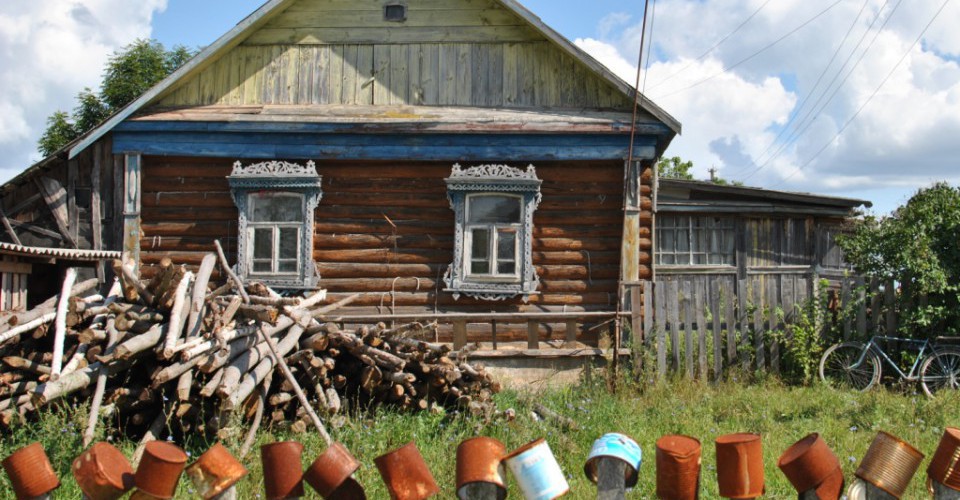
Suddenly, after the zoomers in Russia began to recall the fashion and lifestyle of the Russian nineties (the famous song of the popular singer Monetochka “In the nineties they killed people, And everyone ran completely naked, There was no electricity anywhere, Only fights for jeans with Coca-Cola .. “), they were joined by a generation of those who were teenagers and young people in the difficult Russian 1990s. Neighborly work chats immediately went into threads about how they would buy everything at the clothing markets, how Moscow Mayor Sobyanin would again start building retail stalls (points) in Moscow, how modern shopping centers would be given over to compartments for small entrepreneurs, how everyone would start using pirated software and watch pirated movies with bad translations. How everyone gets poorer and goes to dig forgotten vegetable gardens for potatoes.


My friend today was glad that he bought a walk-behind tractor for cultivating the land in OBI at the old “pre-war” prices, using credit money from a card. Grassroots connections have already begun on the topic of delivering spare parts from China for expensive cars or household appliances and everything that is needed in modern society. Everyone understands that the time has come. Will the criminalization and disintegration of the country become a consequence of this, as it almost happened in the 90s? It’s hard to predict.


But now (despite all the problems of corruption and incompetence) the Russian state bureaucracy is well built (even better than ten years ago), there are digital means of control over taxes and citizens, and these tools are being developed. In addition, smuggling existed before – my father on the outskirts of the Central Russian regional center for a long time in 2018-19 bought Marlboro cigarettes with the inscription “only for duty free”. Where are they from? There are several places in Moscow (large or local markets) where they sell inexpensive and very high-quality cheese from Iran or Serbia. It is almost of Swiss quality, but costs 3-4 times cheaper … There is also a huge segment of regional medium and small businesses that, after some difficulties (of course, many will go bankrupt) will be able to work and produce degraded copies of goods from IKEA (from wood for sure) or beer no worse than Carlsberg. Yes, these entrepreneurs will use foreign machines – but most often they were bought second hand in Europe for next to nothing and restored by craftsmen from the same Russian cities.


Yes, the middle class is shocked by the departure of everyone from the country. But the Russian middle class grew in the 90s. It started in poverty and destitution, he then had black nails from picking potatoes with his hands. And he begins to remember those habits – installing pirated software, visiting the abandoned village of his great-grandfather to plant potatoes and plow the land. Plus everyone already has experience of living in the market and plus there is a huge infrastructure. Now the general consumer exodus of Western companies, the rupture of cultural, social, and scientific ties is beginning to work for the Putin regime, and not in the short term, but for a long time. Everyone knows, everyone says – “these will be difficult years, but.”
Those who leave, they leave. The rest will stay and live, and they are unlikely to fall in love with Western brands as passionately as they are now. Yes, Russia is becoming a practically unfree state with total censorship, which affects the educated middle class and the cultural elite very strongly. But the “deep people” have always been drinking in the kitchens. And they will complain about the government by planting potatoes or drinking pickles with vodka. Cucumber, vodka, boiled potatoes, ‘Discount price’ stores with pirated fake cheap copies of Western brands will grow ever more frequent. Chinese household appliances and cars – too. Yes, people will become much poorer and go through a period of scarcity. My neighbors and acquaintances have already stocked up on food and essentials, and the shelves are still full, although prices have gone up a lot. The excitement is palpable. Will it be worse? Yes. It will probably be a tough summer and fall. But it will be the spring of planting the crop, the summer of taking care of it and the autumn of harvesting.

One thing is not clear – an endless rehearsal of public refusals of everyone from Russia, is it supposed to achieve? That Russian tanks will stop, mothers will call their sons and say that they did not bring a new collection to Uniqlo. Most of the wives and mothers of soldiers and officers already led a modest life – like in many armies of the world, the Russian army consists of a “deep”, very poor people, for whom the army is a means of social mobility. In addition, the West has already done a deal with the Russian oligarchs [giving them six months to put their affairs in alternative offshore instruments], but punishes the people. Did Navalny call for this in his heated speeches? Why does Western civilization give Russia to China and Iran… World, give me an answer. It doesn’t give an answer.

Moscow war diary. Part 1: “Birth of the Winter World”

Valery Kostrov, a resident of the capital, a humanities graduate. Guest Post.

A few weeks have passed since February 24th and the start of a large-scale war in Europe, and living and staying in the country, you begin to feel the outside world again. The first weeks are a keen understanding that everything has changed so dramatically and radically that both for oneself and for the country, for decades, the time has come “before” and “after”. And this “after” will be bad, but no one understands how bad it is – since it is just beginning. Next, I offer my very chaotic notes that I made in correspondence with friends or on the basis of some feverish observations of my condition, news and situation. There is no system here, no analytics here, only impressions. If something seems to be analytics, then all the same, these are impressions.

February 25-27 “Birth of the Winter World”
Researchers working with the geography and temporality of Europe after the fall of the Berlin Wall have used a variety of concepts to designate this space at a certain point in historical time. In different periods – this was called the countries of transition (“transit”), and what is happening in them is “transformation” – “transitivity” and “transformation” described the laminar stage of the reassembly of the collapsed socialist bloc, but not only it. Throughout the 1990s. Germany has been sewing itself into a single economic, political and cultural space, and it seems only in recent years that these seams have become less noticeable. The former Yugoslavia has always been not quite part of the socialist bloc, retaining much political independence from Moscow and the Warsaw bloc, but also not fully become a Western social democracy, playing its own version of frontier socialism. Its decay was long, bloody, and everyone seemed to breathe a sigh of relief when peace was established there. The conflicts in Tajikistan and the Chechen war were no less difficult, but distant for many Eurocentric researchers. They were going at the moment of reformation, that very “transit” and “transformation” that turned the former space of socialism into a boundless “field of experiments” in the economy, business, crime, mass culture, methods of government and in everyday life. It seems that all this continued until the early 2000s or began to end after the financial crisis of 1998, which for the main territory of this field, Russia, became a tough test, but rejuvenated its economy. Other countries of former socialism also found their way in the new state – from the chosen path of the Scandinavian democracies, as happened in Estonia, to the maximum autarky of the North Korean type, as happened in Turkmenistan. The rest were somewhere between these two extreme points, but not on a straight line, since all acquired their own unique features of political, social, economic life.
It seems that since the beginning of the 2000s, the words “transit” and “transformation” have become less and less common in official documents and scientific articles on the space of former socialism. Now they began to talk more and more about the “post-Soviet space”, stating the self-sufficient influence of the historical legacy of the Soviet infrastructure, traces of institutions and thinking in the structure of most countries that were part of the orbit of socialism. Also, the concept of “countries of Central and Eastern Europe” was often used, which only remotely correlated with the intricate history of this space, more than once divided between different empires and more than once united, and then again which became a place of national and state building. True, in this case, the countries of the former USSR, which included states in the Asian part of the world of socialism and the Caucasus, fell out of the conversation. Yes, indeed – all this is complicated and ambiguous for any observer …

And now we see that since the Maidan of 2014, the concept of “post-Soviet” has become more and more archaic, becoming an analytical anachronism. Firstly, it was this second Maidan (“revolution of dignity”) that drew a new ideological divide between the (post)Soviet and something else – the new ideologies of national identity that began to prevail in Ukraine. This is no longer “post-Soviet” and not “transit”, it is something that, on the one hand, has become “anti-Soviet” in relation to the legacy of that period, and on the other hand, “out-of-Soviet” – outside the logic of the legacy of socialism. Of course, in this regard, Turkmenistan and other countries have chosen completely different paths. It can be said that the reality of the territories of the former socialist countries has ceased to be described by something general, by some kind of unified logic. In this regard, the departure from the “post-Soviet” as a general way of describing the life of this world is becoming increasingly relevant.


Those who started hostilities on the morning of February 24 are redefining not only the historical position of the countries of the former socialist world, but, it seems, the world as a whole. We are probably in the stage of accelerated crystallization of a new bipolar (it is not clear how many repulsive poles it will have) world, where Russia and territories close to it remain on one side of this world, and the countries of the West, Central and Eastern Europe go to the other. When these lines are written (February 26, 2022), a large-scale military operation is underway on the territory of Ukraine, a kind of cosplay of the entry of American troops into Iraq in 2003, and on the other hand, Russia and Belarus are disconnected from the Western world. The sanctions war can be viewed as a phased civilizational split – the restriction of the issuance of visas, the rupture of diplomatic relations, economic, financial, cultural relations and ties. It seems that we are talking about a new Great Wall, which will be even stricter and tougher than the Iron Curtain of the Cold War – which began to actively rust already in the mid-1970s and finally collapsed along with the fall of the Berlin Wall.


Now the “post-Soviet” is over. It is necessary to look for new definitions and new concepts. Probably, one should not focus on returning to the old patterns of opposition of the generalized “democratic world” to some new empires, which Russia and China can become. Probably it is necessary to understand, realize and describe how this new reality will look like and how it can be characterized by researchers – anthropologists, sociologists, historians, political theorists. Maybe this is already a “post-global world” or just a “(post) world”, or we are entering a situation of new Dark Ages, as novelists working in the fantasy genre would pathetically describe it. Winter is coming. And it would be naive to believe. that this Great Winter and this Winter world will remain only in “terrible” Russia. By disconnecting from a huge part of its East, Europe is disconnecting important parts of its history, its past and present, and possibly its future… Something is coming…

to be continued….

Public opinion, disinformation and moral disengagement: social media and the Russian invasion of Ukraine

Guest post by Dr Charlie Walker of Southampton University

Many thousands of Russians have protested against the war in Ukraine, and have been imprisoned for doing so. However, the available public opinion data suggest that we should not expect hundreds of thousands of people to take to the streets anytime soon. This is not only because of the obvious dangers of social protest in an increasingly authoritarian state, but because a large proportion of the broad mass of the Russian population either supports the war or, at least, does not object to or condemn it. Given that Russian media has acted as a propaganda tool for Putin’s regime for more than twenty years now, and that there is very little independent media, we should not be surprised that many will be following the disinformation directed from the Kremlin, especially those who watch television, which Russians have long referred to as the ‘zombie box’.

A campaign to break through the wall of disinformation that surrounds many ordinary Russians, the CallRussia initiative, was recently launched in the UK, and involves Russian speakers randomly telephoning Russian citizens, working on the assumption that many are simply starved of alternative viewpoints to those pushed by the Kremlin. However, if we look at Russian social media such as VKontakte.ru it becomes clear that providing alternative forms of information about the war is unlikely to break down the wall of disinformation, not least because ordinary Russians themselves (sometimes bots and trolls, but often real) are busily engaged in reinforcing it.

Responses to war-related posts on social media replicate what social psychologists refer to as mechanisms of moral disengagement. As McAlister et al. (2006) argue, in order for a country to go to war, it must create conditions that enable both soldiers and publics to suspend the moral evaluations and self-sanctions they would ordinarily undergo in the face of inhumane conduct. The psychosocial manoeuvres that enable moral disengagement take a number of different forms, all of which are amply demonstrated in responses to the present conflict amongst Russian social media users…

Continue reading the full post on Charlie’s page:

Public opinion, disinformation and moral disengagement in the Russo-Ukrainian War: evidence from social media – Charlie walker (cwsociology.com)

Guest post: Subjunctive Russia: notes on discursive grammar of conservative utopia

Guest post by Ivan Gololobov

Thinking about why did we end up here, in the situation where Russian troops bombard Ukrainian cities and towns and significant part of the population in Russia either support and justify this or deny the fact that it is war following official state version of calling ‘military operation’ I couldn’t stop coming back to the concept of utopia. It seems to me that is a particular type of utopian thinking, born after the fall of the Soviet Union and installed as a mainstream discourse a decade or so ago, which can explain why for so many people in Russia it is difficult to look at the events in Ukraine in any other way than the official propaganda suggests.

What is utopia? It is a belief in a perfect society. Why is it important in politics? Because, as Laclau and Mouffe, for instance, suggest, without utopia, strictly speaking, there is no politics and no society: society as a project which links communication, institutions and practices into a common discourse.

What is particular in this period of history is that Russia seems to have fallen for a particular type of utopian thinking which I can call here ‘conservative utopia’. What is classic utopia? This is important to note to see the difference.

The French, American and October Revolution of 1917, are the typical examples of classic utopias. The perfect society they are looking at is in the future and the transition to this perfect society is seen through a radical, if not complete, break with the past. «Весть мир насилья мы разрушим до основанья, а затем, мы наш мы новый мир построим, кто был никем тот станет всем».

What is conservative utopia based upon? The perfect society here is in the past. In Russia this utopia started to grow straight after the fall of the Soviet Union. ‘The Russia We Lost’ by Stanislav Govorukhin, released in 1992 is a clear example. We, the society, need to move to re-build something which we already had but which we somehow lost. But this gaze in the past has a very interesting nuance. Mikhail Elizarov pointed it our in his ‘Librarian’. The past which is in the centre of Soviet nostalgia is not about the grief for country which was, it is a grief for the country we could have had. This utopia is a subjunctive utopia.

Why this particular nuance is interesting. Because this subjunctive mood is inherent in all conservative utopias in Russia of the last few decades. From monarchists a-la Nikita Mikhalkov, through Stalinists of USSR 2.0 project to neo-imperialism of expanding Russia recently articulated by Surkov. The perfect Russia is the Russia which we could have had if there would be no perestroika, no greatest geopolitical catastrophe of the fall of the USSR, no Washington obkom, no gay-ropa around the corner etc. This subjunctive mood sets a clear discursive grammar which is then followed by the participants of political communication.

Let me introduce few key elements of this grammar.

Boris Uspensky writes about how different perception of historical type organises discourse around it. According to him, the mode when the present is seen as the beginning of the future, which is what classic utopias are about, constitutes what he calls ‘historical’ or ‘scientific’ time.  The mode where the present is seen as first and foremost the consequence of the past is ‘cosmological’ or ‘religious’ time. Interesting here is when this time is projected to the future it is not projected historically or scientifically, not rationally, but as Uspensky puts it – ‘symbolically’ where the image of the past is transferred to represent the future passing by the present. One can clearly see the subjunctive move here.

Then, how do these modes of thinking claim their discursive validity? In theoretical tradition of Moscow-Tartu semiotic school, where Uspensky comes from symbol is isomorphic, i.e. it is not transparent, its logic is not open. It holds because of discursive authority of the speaking subject. In direct contrast with the scientific mode which holds because of its argument, logic which is open, tendentially non-hierarchical discussion.

Now think how the Russian oppositional  discourse is constructed: argument, transparency, discussion. Look what is the role of the present: the present is the beginning of the future. Russian invasion in Ukraine is looked through its consequences.

How the official governmental discourse is built. The present is not important. The future, which is a subjunctive imprint of the past which has not been, but which needs to be realised, is. What makes these claims valid? The authority of the speaking subject. This is where the laws criminalising ‘insulting the feelings of …’ become normal. That is why, in its extreme, public debate is reduced in extorted apologies from your critics.

And this is where the tacit consent, or the absence of vocal criticism and active stand against what Russia is doing in Ukraine can be found. For those who operate in ‘cosmological’ or ‘religious’ discourse (the exact names are not that important here, what is important is claims of validity and particular role of the  present) what is going on right now, the present, is numb, it is unimportant, while the subjunctive future and the past, especially the past, however illusionary and constructed it is, is what they fix their picture of the world around. Therefore anything, which hits their present, and even more – anything which may hit their future, the one that may be derived from the present, the rational one – is a foreign language. What is not foreign – who won WWII? Was Soviet Union the best country in the world? Was Russia a civilising power in 19th century? Was it a saviour in Donbass  after 2014?

In the light of these observations, it might be wrong to expect that sanctions, economic hardship, lower life standards are going to play significant role in shifting the attitudes. Or, in fact, any rational and causal argument. What would, however, is the loss of the discursive authority of those who hold symbols of subjunctive utopia together. And to shake this authority is a more difficult task. Especially, since the supreme guarantor of Russian conservative utopia seems well aware of the danger to lose it. 

Ivan Gololobov is a Lecturer in the Department of Politics, Languages and International Studies at the University of Bath.