Category Archives: Ukraine

Is Russian society ready for a ceasefire?

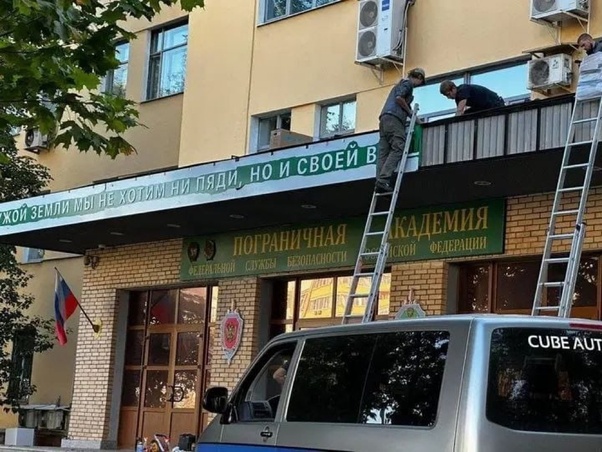
workers dismantle the motto of the Russian Borderguards Academy which reads ‘We do not desire even an inch of another’s land’

Tl/dr: yes, Russian society wants an end to war, but the core hawkish elite craves recognition, at least for Crimea and thinks maximalist extraction from Ukraine via Trump is possible.

Firstly, it’s important reiterate a point I’ve made many times: treat public opinion measurements in Russia by Levada, Vtsiom and others with a healthy dose of skepticism. They of course, do give us a picture of what most Russians perceive to be the politically correct answers to the questions they are being asked. Even Vtsiom admits that only a small minority of people polled believe that their participation in surveys allows them to express their opinion. This figure is 22%. And only 18% of people believe that the authorities are interested in their opinion. This has significant implications for how seriously we should treat surveys as a reliable barometer of public sentiment.

What’s more helpful is tracking over time the proportion of people who answer that they would support withdrawal from Ukraine without reaching Moscow’s military goals. Especially important are those findings, such as those of Chronicles, which recently show a higher percentage who say they would support a ceasefire without achieving these goals than the percentage who oppose such a decision – Chronicles recently measured this as 40% versus 33%. Significantly, the latter figure has fallen quite quickly from 47% previously. Chronicles overall thinks that the implacable pro-war cohort, or ‘maximalists’, is only 12% of the population. I would agree overall.

We can compare these kind of findings to research undertaken by American political scientists on the structure of Russian society in terms of types of popular conservatism. In a recent article, Dekalchuk and her coauthors argue that there are four clusters of non-conservatives in Russian society and five clusters of distinctly conservative groups. The latter are a majority of the population at 60%. The number of ‘die-hard’ conservatives who align with cultural and military patriotism is 15%, whereas the number of loyal and agreeable authoritarians is around 25% combined. Now, I should say I have some criticism of the overly complex methods of Dekalchuk’s study, but it serves as a complement to other approaches. Importantly, it shows that a similar number c.20% of ‘conservatives’ are not aligned with the authorities, or are even opposed to them, or have interests diametrically opposed to the elite.

At the same time  there is a big core of people who are essentially liberally-minded – perhaps 40% (and in reality if the winds changed, this number would easily be a majority). Thus, if we discount liberals from consideration the die-hard conservatives who are highly trusting in the authorities but not even particularly xenophobic, and then count them together with the group of agreeable authoritarians at 25% we can see that any decision about ending the war is not likely to have any problems justifying itself to these cohorts. Indeed, the paper in question argues that the core conservative groups have relatively weak value systems and can quickly adapt to new geopolitical circumstances.

I would add to this my own observation from polling done before the war on the salience of Ukraine to most Russians. It was very low to be almost statistically insignificant – meaning that if the elite want to drop Ukraine down the agenda this could be achieved almost without political costs among the Putin constituency. Finally, I would mention longitudinal monitoring carried out by Levashov and others at the Russian Academy of Sciences. This shows aggressive forms of patriotism to be extremely low in the general population: ‘patriotism’ as meaning the readiness to take up weapons is measured at only 25% by his team in 2023. A remarkably low number if we consider that this polling was conducted a year after the beginning of the full-scale invasion. In the same survey conducted in June 2023, only 4% of respondents named ‘patriotism’ as a source of national pride in Russia. 13% named the army. And 27% could not answer the question. The highest scoring answer was ‘The Russian People’ at 16%.

Economic imperatives

Deteriorating macro-economic situation is a major factor which will become more salient in the course of 2025 and 2026 regardless of any decision about a ceasefire. The increasing economic costs of the war for ordinary Russians was possible to offset or hide for much of 2022 and 2023, but the cumulative effect of inflation on basic foodstuffs has been relentless. Even where workers have received indexed pay increases, if we take a longer-term view, living standards for the majority have stagnated since at least 2013. It is important to remember that regime legitimacy has been primarily based on economic stability. Defence spending rose by 30% in 2022. For 2024 military spending was nearly 7% of GDP which accompanied the first serious deficit spending by the state of around 2-3%.

Wartime spending has boosted the apparent size of Russia’s GDP relative to other economies but what many observes fail to account for is that most of this spending has little multiplier effect in the economy outside military cities (which are small and isolated) and that given the grave infrastructural deficiencies in the economy and poor level of social protection spending, the decision to cut budgets that would actually improve life for Russians is an increasingly visible political choice by the elite that cannot be hidden even from notionally loyal citizens. The majority of people are less than enthusiastic about seeing a further reduction in living standards like that experienced after the integration of Crimea in 2014. People have economic ‘memories’. People often talk about their grievances about paying pensions to people in Crimea and now in the occupied territories of E. Ukraine to people who did not contribute to the Russian economy and so have not ‘paid their way’. This sense of undeservingness among new Russian citizens is a factor few have discussed.

To reiterate, one of the current major failings in analysis is the attention paid to the apparent growth and robustness of the Russian economy. With or without a ceasefire – the shift to military spending stored up major pain down the line for the main Putin constituency – state workers – in the forms of eroded purchasing power, deterioration in the quality of public services and reduced state capacity. (I will post later on the much commented-upon findings about a rise in life satisfaction among Russians)*.

Furthermore poor choices will only become more apparent as part of a conscious zero-sum policy choice as things like water infrastructure and public transport are characterized by breakdowns which are impossible to hide. Coupled with the plan to abolish the lowest level of municipal governance in favour of clusters of urban forms and the accompanying pressure this will bring on the performance of regional governors, it is highly likely that social strife will be an ever present political risk outside the 10 biggest cities – particularly in the rust belt and secondary cities, even in cities that have been the beneficiaries of military spending like Nizhnyi Tagil.

This is because the multiplier from higher military industrial salaries is much less than people in the West appreciate. If you go from earning 40,000 roubles to 100,000 roubles, that is still a drop in the ocean, especially when the real level of inflation is around 20% for wage-earners. For Russian military spending on soldiers salaries to have a significant impact it would have to change the share of national income accruing to labour. And Russia remains a country where despite very high human development, the share is around 10% less than in other highly developed countries. Consequently while there is an inflation shock, this is not primarily due to increased discretionary spending, which remains low even by East European standards. Similarly, soldiers salaries certainly have an impact on the family fortunes in the short term of the 500,000 -plus service personnel who have received them or who have received injury payouts or death benefits, but again, in the perspective of an economy of 140 million people, this impact does not scale, while it certainly does act as a drain on spending on other social priorities like child benefits, school budgets and hospital maintenance.

Elite opinion on ceasefire

What about elite attitudes? We can take a metalevel perspective on the information they receive about social mood. Likely, because of the ideological positioning of sociologists working for the regime, they get relatively good answers to questions they might ask. But we should be cautious about the quality of the questions they are willing to ask. We see the problem with this in wording of questions that sociologists ask in opinion polls: these are generally quite narrowly worded and focussed on identifying consent among people for decisions already taken or likely. Furthermore, we should recall that there is evidence of conspiracy theory belief and mindsets focussed on the possibility of betrayal by Western interlocutors.

As many have pointed out, the Russian leadership craves, almost pathologically recognition by the West more than anything else, and in the Trump leadership, it is clear they believe it may be possible to get some kind of recognition for Russia’s Great Power status and also carve out at least most of the territorial gains they have captured from Ukraine. It was interesting to observe the recent comments by Trump concerning American recognition of Russian sovereignty over Crimea. It’s quite possible to imagine that this is a kind of psychological priming or imprinting originating from the Russian side. Recognition of Crimea by the US would be a significant win worth having in exchange for even a relatively long ceasefire commitment. It would also be more realistic than trying to get acceptance of recognition of 2022-2025 territorial gains.

It seems very unlikely that any Ukraine government would agree to giving up more territory that would include the other parts of the regions partly occupied by Russia. The only other area under almost complete control is Luhansk region. Thinking back to how unworkable Minsk Agreements proved to be for both sides, it’s not likely that even after a prolonged ceasefire that the Ukrainian side would agree to any withdrawals. This means a frozen contact line and militarization of the existing contact line as a new border for Ukraine. This is far short of the maximalist aims of Russia, but Crimean recognition would easily compensate for this in terms of justifying a long-term ceasefire to the population. After all, there is significant war weariness, economic fatigue, a lack of belief that Russia can win in the long term, a lack of interest in the territories of Donbas, in comparison to broad and strong belief that Crimea is historically part of Russia.

This kind of ceasefire could easily be sold to the population along with the narrative that Russia can now rearm and regroup – take a breather, so to speak, that Russia has effectively held off the combined power of the collective West, and that it has saved those “Russians” who were in Donbas. Furthermore regime intellectuals can spin a tale of how this agreement effectively means recognition of Russia as one of the three great powers and having surpassed her European peers.

*I’ve been asked multiple times to write about rises in life satisfaction and will do when time permits. In short, the war has led to people focussing on small things of satisfaction and fragility of existence. Furthermore, people express satisfaction with less, as if they are ‘grateful’ the state has protected them from the dire prognoses of ‘blockade’. I would also say that the coverage of the report in question tends to gloss over the fact that the life satisfaction levels are still not that great! Where do they define happiness? What does it mean, cross-culturally, ‘to be happy’? There’s a massive anthropological lit on this, and I’ll unpack that in a future post, but one thing to consider is the extent that cross-cultural ‘contentedness’ derives from the ability to adapt to disappointment and frustration.

Three years after the disaster: mourning and melancholia, but we should look to everyday politics and civics-from-below

Today, on the third anniversary of the full-scale invasion of Ukraine, my institution asked me to write about how my research helps provide perspective on the war. Here’s an edited version of what was posted in Danish here.

What are you researching?
My area of specialism is Russian and Global Studies – my research areas are political anthropology, working life, the informal economy, social trust and the welfare state, with a particular focus on Russia, Ukraine and Eastern Europe. I use ethnographic methods to examine everyday life and personal experiences in post-socialist societies. My book on Russia at war will come out with Bloomsbury Press in a month. In the book – the only book since the war based on first-hand and in-depth fieldwork, I look at the contours of society – both the longterm tendencies as people adapted to ‘Putinism’ and the immediate responses – often of shock and fear, since the full-scale invasion in 2022.

What perspectives does your research on the war provide?
In both Russia and Ukraine, we see that the conflict after three years of war has been normalized and incorporated into people’s life strategies in ways that are similar to each other. After the initial shock, people come to terms with the great changes that the war brings, typically in ways that try to distance them from it, even close to the frontline in Ukraine. Surveys in both countries show political support for their leaders, but at the same time there is a strong depoliticization and attempts to avoid the war and its longer-term consequences. Denial and fear are still, for me, the most important emotional contours of how people in Russia talk about the war (even when they say they don’t talk about it – which is of course a lie).

In Russia, it is becoming more and more difficult to find volunteers, and the government now has to pay huge sums of money for what are essentially modern-day condottieri: mercenaries with no ideological skin in the game. Most men of fighting age seek to avoid mobilization or volunteering for the fight, and the majority of the population does not contribute directly to the war effort even while looking for outlets for defensive consolidation of society. In Ukraine, the government avoided mobilizing young men with good reason, and after three years, war fatigue is high in the general population. As in Russia, there are major problems in finding willing soldiers.

While major wars only slowly destroy the economies or the other capacities of highly developed countries, this apparent societal resilience masks a strong aversion to wars of attrition. Those looking for parallels to the patriotism and commitment to a long-term slog evident in the two great European wars of the twentieth century should look elsewhere. Even after years, Americans, Soviets, British people and even Germans knew more or less what they were fighting for. That’s not true today. Even many Ukrainians today find it hard to articulate what (an eventual and realistic) victory would look like.

How does the war affect everyday life in Russia and Ukraine?
While taxes and other costs have risen and inflation is a significant burden, many in Russia can still turn their backs on the economic costs of the war, at least for now, and focus on their private cares, or local causes. While great emphasis was placed on the hundreds of thousands of more economically privileged Russians who chose to emigrate at the beginning of the war, their choices did not differ significantly from the majority of Russians who stayed at home. Both groups have largely tried to avoid the war – either by leaving or by remaining passive. On the other hand, many forms of grassroots civic activities continue and even grow in their significance as the state capacity of both countries is degraded. The massive volunteer-coordinated and para-state response to the oil spill in Kerch is a great example of this – very visible, but merely the tip of the iceberg. This is a major theme in my book of ‘civics from below’ – for want of a better term.

At the samet time we should be sensitive to how much cynicism there is in Russian and Ukrainian societies – towards elites, towards the ‘winners’ and the shallow self-promoters around the war efforts. In Russia there is a tendency to avoid the relatively shallow and symbolic elements of militant patriotism – most people find the endless aggressive propaganda shown on television repulsive. Apart from a few public events and locations, there is no spontaneous celebration of the armed forces or the Russian military. The minority that actively supports the war complains about the indifference and even hostility of the majority to their efforts to help the war effort.

This is why I sometimes criticize the BBC for its silly focus on militarism when its capable of much better, more human coverage (thanks to Mediazona and Chronicles). Nonetheless, any sociology of Russia should look at who and why they actively support the war, but this requires going beyond opinion polling and actually talking to people about why they knit camo nets or send donations to the front. And this is something only people like Public Sociology Lab and Aleksei Miniailo’s colleagues at Chronicles are doing – along with the interviews and observations in my own book. Chronicle’s latest field research shows that 54% of Russians are willing to admit the war negatively affected their ‘everyday lives’ and we know this is an undercount. Only 9% agree that the war improved their lives.

Of course, there remain important differences: for Ukrainians the future of their state is still immediately in question. But for Russians too, so much musing is about what started this war in the first place – the beginning of the end of Putinism. Despite what some people write about Russian war salaries, few have benefited materially from the greatest disaster of Russian statesmanship of the 21st century. Citizens of both countries feel inflation and the transition of resources from social to military purposes intensely – and with increasingly resentment. Indeed, different kinds of political resentment should be an important part of research for both countries.

If there is one insight from your research that should be clear to the public – what is it?

Despite war fatigue, and in Russians’ case, deep-seated unease about the decision to go to war, in both countries ordinary people are more civically active than ever as they try to make small changes to improve the lives of people and the environment around them. Without ethnographic (anthropological) research, it’s hard to dig down to uncover the strong forces of social connectiveness that have a life of their own beyond a focus on ‘big politics’. That’s why my book is called ‘Everyday Politics’ – because this term allows us to unpack the long-term, tectonic shifts in the social desires of people. They coalesce into small ‘intersubjective’ actions which exceed the sum of their parts and make people more than individuals or representatives of their respective nation-states.

Unmaking the Ukrainian working class Part III

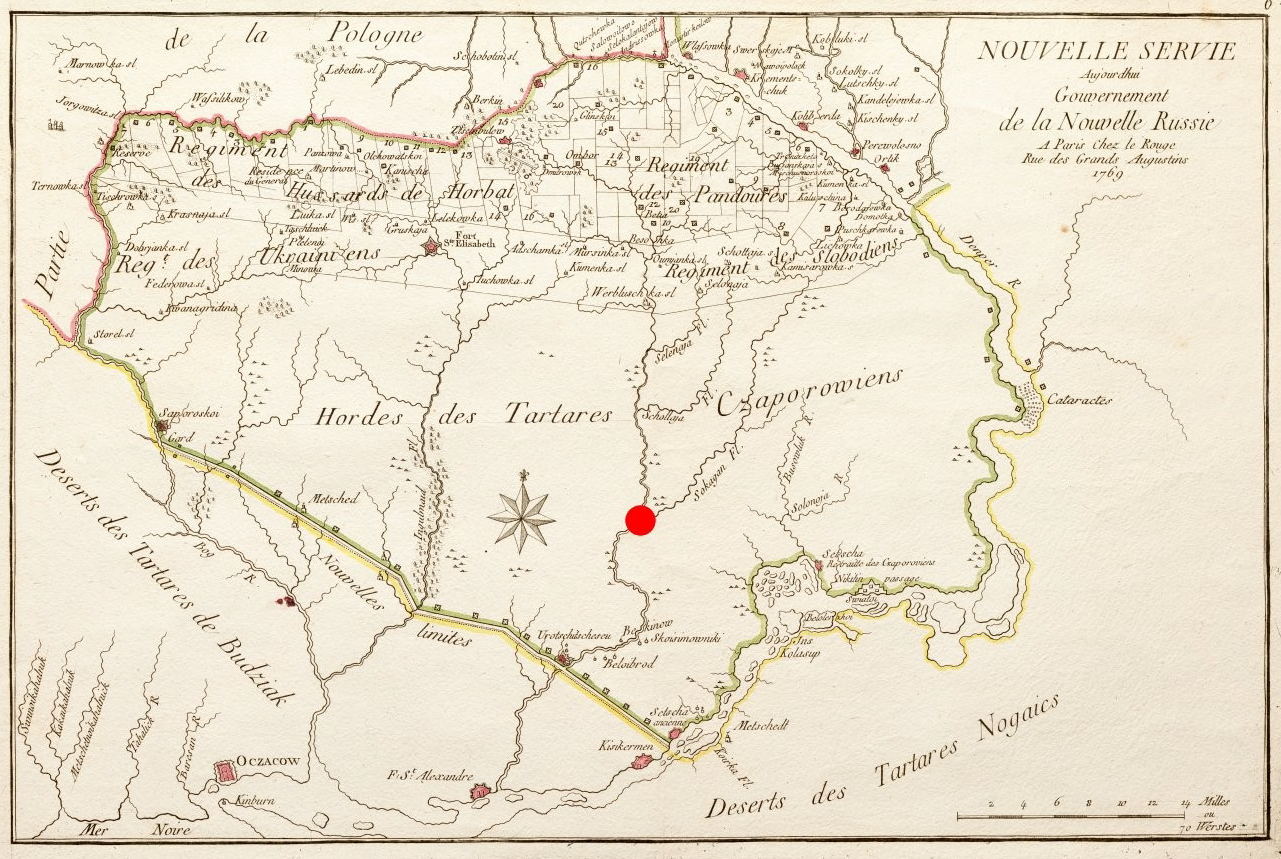
The location of the future city of Kryvyi Rih on a 1769 map

This is the final post about Denys Gorbach’s new book on Ukraine: The Making and Unmaking of the Ukrainian Working Class. The first post is here. The second post is here.

In the previous post I focussed on how Gorbach treats populism as merely a ‘morbid symptom’ and distracting to the purpose of getting into the vibrant ‘everyday politics’ of Ukrainian cities. Gorbach early in the book shifts to ‘ordinary’ political actions and talk of Ukrainians as codetermining the scope and contours of ‘big’ politics. Using the example of the German tradition of microhistory allows Gorbach to stake a claim for the very ‘apolitical’ withdrawal from the public sphere and ‘familism’ in Ukraine and Russia as deeply political phenomena because they are a collectively shared and reflected upon. Gorbach doesn’t go quite that far here, but we can add that the often bemoaned ‘privatism’ is often misunderstood. Withdrawal provides space and time for alternative forms of organization and world-making to emerge – something I expand on in my book.

The summary of ‘moral economy’ is rather perfunctory here, although in a footnote Gorbach provides the nugget that after Tilly and Thompson, the ‘moral economy’ frame shows that claims-making from below implies the recognition by elite actors of the legitimacy of non-market-based rights. Furthermore claims are inherently political in terms of recognition – as when, for example, property laws are enforced or not enforced (e.g. as forms of recognition of customary rights among peasants and working-class folk). Wartime nationalization – even when it tends to prebendalism is also genuinely popular for the same reasons.

Gorbach gives more room to the breadth of ‘informality’ as applied to Post-Soviet politics – from Hale’s patronalism, to Matveev’s bureaucratic neopatrimonialism developing into Bonapartism. Here, Gorbach criticizes the application of Weberianism to the Ukrainian state, which can only result in seeing it as a ‘backwards’ essentialized ‘uncivilized’ polity and, indeed, plays into views that bifurcate into ‘good Ukrainian’ values (of and emanating from the West), and Bad Soviet values in the East. This will be a major target of Gorbach’s work and one that won him numerous enemies among established mainstream liberal scholars embedded in the West for whom it is beneficial to maintain this fiction.

Like in my own work, however, Gorbach insists that informality in the microscale of people’s lives is just as important as patrimonialism. This is because the informal pacts and agreements, including the invisible ones like turning a blind eye to informal employment, represent a key political arrangement of life in contemporary Russia and Ukraine. These include ‘paternalism’, a key referent of Gorbach’s book. His overview is helpful in thinking of paternalism, clientelism and patrimonialism as all nested concepts (Gorbach credits me with coining informal ‘imbrication’ but others have found this term a bit pretentious). Forms of informal obligations comprise an overall mutualist web. Importantly there are coercive, exploitative but also solidaristic, empathetic and – as I expand in my book – fictive kinship relations which may be more or less enduring and binding. As Gorbach mentions – this perspective offers a sharp critique of rational actor/methodological individualist economy and political science approaches.

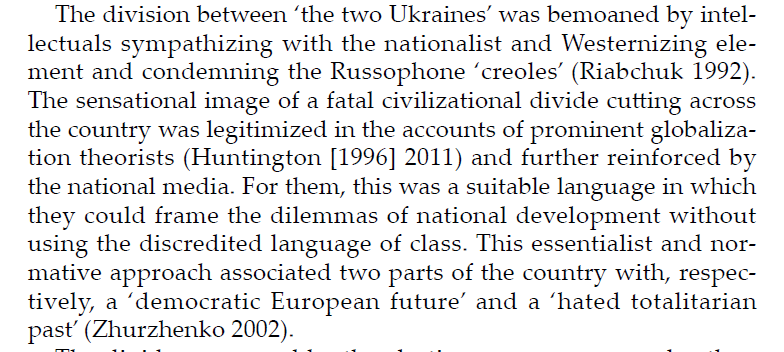
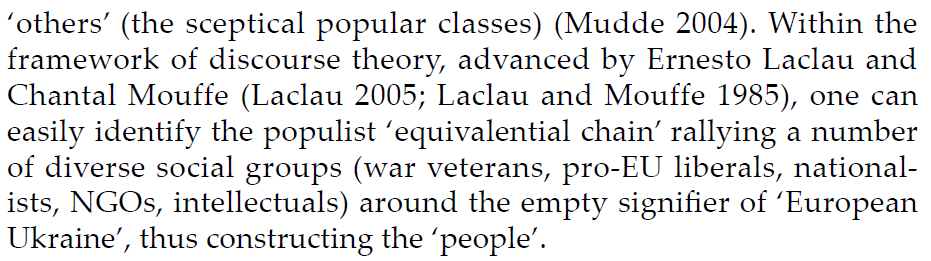
Chapter Two asks: Why does awareness of inequalities and class domination not prompt workers to contest this through collective political action in Ukraine? One answer is the informal alliances of old and new elites, and at first the Ukrainian nationalist project was weak. Here we have a great breakdown on the legitimation of the ‘fatal civilizational divide’:

The failure of Ukrainian ethnic nationalism to muster its case outside its Western heartland led to its radicalization as documented by Andrew Wilson. The heterogeneous Ukrainian elites trod a fine line and their attempts to achieve social peace contributed to ongoing proverbial state weakness. Symbolic capital of the ‘national democrats’ competed with the ‘clanlike’ structural capital of the industrial cluster elites. I’m not going into detail about this part of the book, but it represents a welcome corrective to the usual blinders that pass as political history on 1990s Ukraine, notwithstanding the more impartial work done by scholars like Wilson and D’Anieri. Shout out to the use of the Marx’s ‘potatoes in a sack’ metaphor to describe the fragmented-yet-tied bloc of budget workers and city-making enterprises. What follows is a good account of the Orange Revolution, coming on the back of the rise of the resources of the ‘second-rank bourgeoisie…which grew strong enough to dare challenge the “closed access order” controlled by oligarchs’.

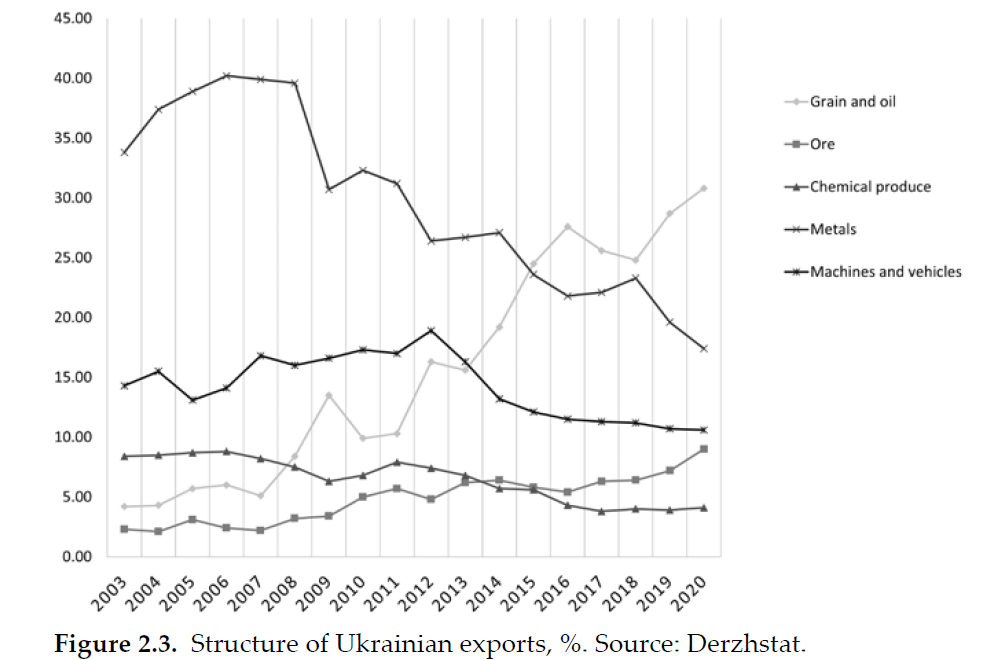
Gorbach ends this chapter by showing how political changes reflected economic ones – the failure of Euromaidan was mirrored by the downgrading of the Ukrainian economy from higher value chains to commodity export.

In the next chapter Gorbach masterfully recounts the actual colonial history of the steppe country around his city. In Chapter 4 he expertly uses the example of mass transit to illustrate the maintenance of moral economic regimes and the unwilling acquiescence by elites to the expectations of ordinary people. This chapter is about both the ‘privatization’ of minibuses but also the ‘resovietization’ of residual ‘public’ transit as a social good. Later Gorbach also identified three property regimes around housing: personal property where state intrusion is seen as illegitimate; private property where capital accumulation is seen as legitimate (here drawing on C. Humphrey’s work); and public property whose poor state is a result of normalized austerity. Finally, Gorbach talks about the moral economy of heating provision.

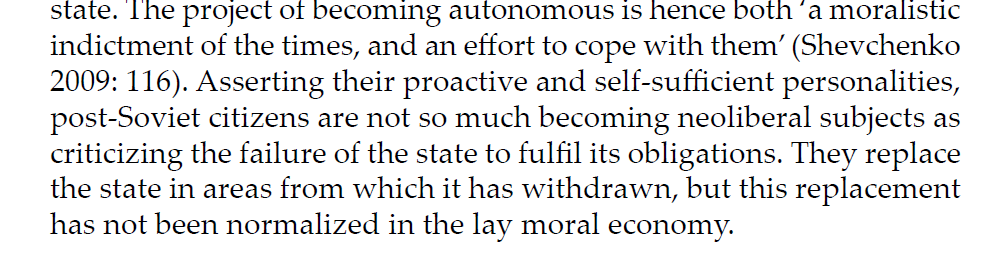
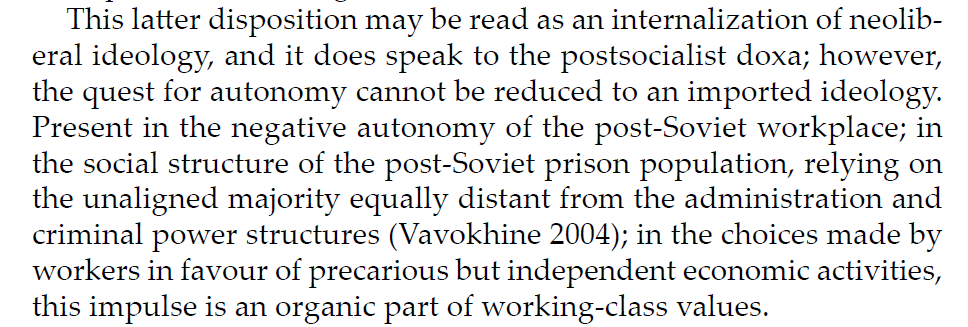
In chapter 5 – on Informality and the Workplace, Gorbach argues that instead of suc­cumbing to anomie, Ukrainian workers implicitly gravitate towards a residual social project that owes a lot to Stalinist modernity, built upon the ultimate Fordist principles of enterprises as nodes of civi­lization. If this is so, the shopfloor should be a privileged fieldsite, likely to shed light on non-verbalized shared assumptions about hierarchy and social order. Of course researchers like me bemoan our marginalization as our colleagues focus on much more ‘sexy’ projects. Gorbach continues this focus in the follow chapter 6 on Paternalism in Decay. “Unable to accomplish the real subsumption of the labour process, the enterprises remain stuck in an extensive mode of economic devel­opment instead of a Toyota-like intensive mode based on technical innovations. However, such a shift would entail risks, costs and dis­ruptions that are unacceptable to new enterprise owners. Instead of launching classic neoliberal managerial transformations, they chose to tacitly introduce new power configurations that ensured a residual paternalist consent, an undisturbed production process on the old technological and material basis, and the extremely low costs of capi­tal upkeep. These low costs allow owners to preserve the machinery of the social wage and thereby help to protect their property rights in the case of a politico-corporate conflict.”

In Chapter 7, Gorbach looks at politicized embeddedness and disembeddedness in two profoundly different, yet quite typical business outfits in the post-Soviet city. “For Charles Tilly (2007: 78), authoritarian patronage pyramids are an important medium through which subaltern groups can be involved in macro-level political pro­cesses and discussions. This is one of the possible developments for the neo-Fordist factory regime. However, the atomized nature of these configurations in Kryvyi Rih, which remain more individualist than classic patronage politics, lead to a different kind of politiciza­tion: passive resentment, politicization of identities or striving for individual distinction.”

In Chapter 8, Gorbach shifts to a focus on everyday politics beyond the world of work, looking at strategies of self-valorization via class distinction. Here, he references Andrew Sayer, Bev Skeggs, Don Kalb, and of course Olga Shevchenko and Oleg Kharkhordin.

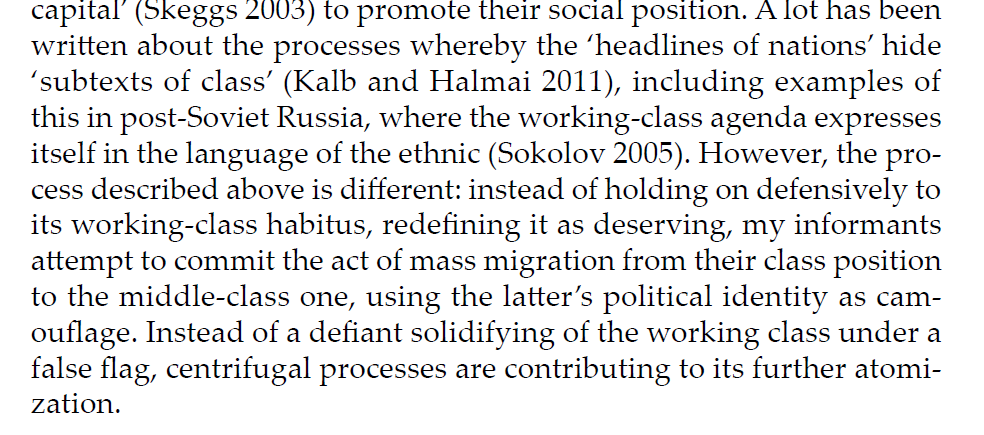
Chapter 9 maps Lay Virtues on the National Political Landscape. While in places like France and Britain, working classes have (more or less successfully) made use of ‘national(ist)’ or indigenous capitals to promote their marginal social position, things in Ukraine are different because of the valorization of particularized Ukrainianness after 2014 (and before).

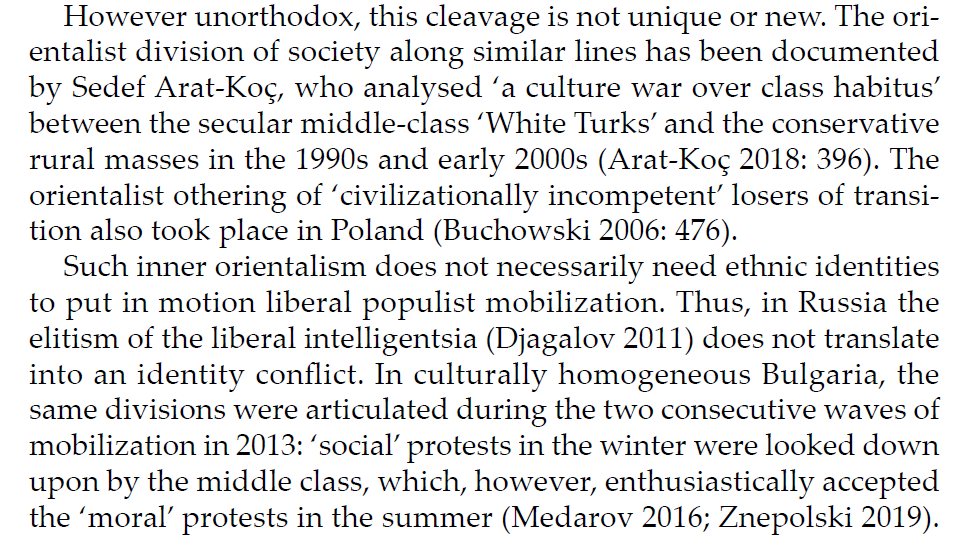
At the end of this chapter, Gorbach makes the comparison of ‘internal’ orientalization, like that observed in Turkey and elsewhere.

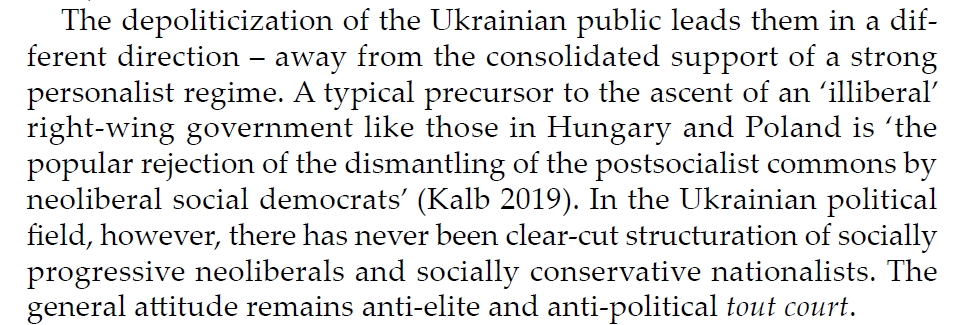
In the final empirical chapter 10, Gorbach applies the findings of Nina Eliasoph’s well known ‘avoidance of politics’ work to the Ukraine context. To be ‘authentic’ in lay discourse is to devalue what is seen as ‘ideological’ as dishonest. It’s ok to be a ‘volunteer’, but it’s important to mask one’s politics. There is ‘frontstage’ avoidance of ‘politics’. There are also ‘cynics’ who have strong and informed opinions but who cultivate disengagement. All of these positions are recognizable in postsocialist contexts. As in Don Kalb’s pioneering work, this reasoning produces the ‘neo-nationalist’ outlook well-known in other contexts.

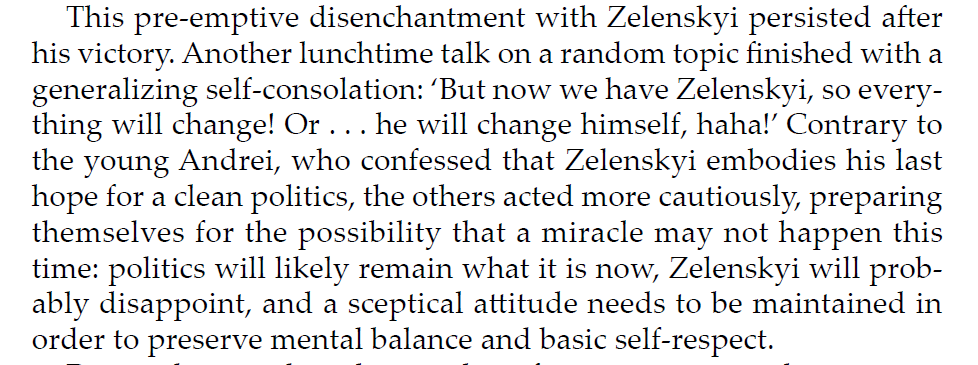
What follows is a useful discussion of the Zelenskyi phenomenon explained as a the outcome of this structural situation in Ukrainian lay politics. Gorbach is refreshingly balanced, not willing to preach to the choir, as other treatments of the ‘Zelensky effect’ have.

Subsequently, Zelensky’s channeling of the desires for ‘technopopulism’ and ‘valence populism’ (rejecting consistent ideologies in favour of vague overtures to morality, transparency, etc), sustained him nationally up the invasion in 2022, after which Zelensky successfully transitioned as a war leader.

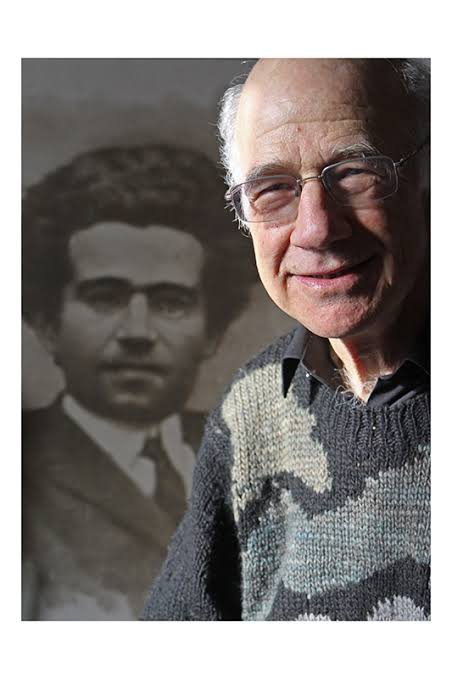
In the last twenty or so pages, Gorbach concludes with a discussion of the ‘incomplete’ hegemonic rule in Ukraine. This is the same case as in Russia – but there we have the unambiguous move towards Bonapartism. What remains in Ukraine is the inability of national elites to claim moral leadership and the growing distance between subalterns and the institutions of representative democracy. So far, so Gramsci. But beyond that framework, Gorbach makes space for looking via the lens of Uneven and Combined Development.

And on wartime mobilization, Gorbach asks:

Unmaking the Ukrainian working class Part II

Rest In Power, Michael Burawoy

This is the second post about Denys Gorbach’s new book on Ukraine: The Making and Unmaking of the Ukrainian Working Class. The first post is here.

In the period between writing the first post and this one, Michael Burawoy has died. Burawoy was one of the formative influences on both Gorbach and me. Here’s a short excursus on how he influenced our approaches to writing a novel (in the Ukraine and Russia contexts) form of political-economy-ethnography. I hadn’t intended to focus on Burawoy (because there’s so much else of interest in the book), but here goes.

Both Gorbach and I try to synthesise our cases from what Gorbach calls ‘participant truth’ and ‘sociological truth’ – and here he cites Burawoy’s 2017 piece. Burawoy there argues that ethnography needs to be liberated from the naïve empiricism that still plagues anthropology and sociology and which is continuously re-invented by scholars unwilling (or afraid) to confront the political implications of their own work. Burawoy uses this opportunity to make the case again for bringing structure and comparison to any micro-level work. Only by linking specific ethnography cases to the broader structural constraints (oligarchic capitalism in Ukraine/authoritarian neoliberalism in Russia) can research do justice to the ‘common sense’ of interlocutors. This is what Gorbach and I attempt. The social ‘facts’ of cases do not  speak for themselves. And this, via Bourdieu, is a point Burawoy hammers home in his robust writing. At the risk of overshadowing the discussion, it’s worth citing Burawoy further (here reviewing contemporary ethnography of Wisconsin):

While there’s much more to say about Burawoy’s influence, I want to turn to Gorbach’s very extensive discussion of politics in his second chapter (and the empirics of Chapter Nine). As I wrote previously, Gorbach makes a pitch for those interested in Ukraine to take more seriously ‘everyday politics’ and ‘moral economies’. Having said that, he starts off with a welcome ‘intervention’ – one highly topical to the ascent of Trump 2.0: to paraphrase – to take populism seriously we need to move beyond discourse analysis (MAGA, get rid of woke, etc), and use empirical tools like ethnography to uncover the material basis for populists’… popularity. I’ve mentioned in this blog many times Arlie Russell Hochschild who wrote two books on the Tea Party and Trumpism, but it’s indicative of the timidity of indigenous US political sociology/anthro that this barely scratches the surface and does not qualify as ethnography in way that Gorbach’s or my work does. Gorbach has lived and worked with his interlocutors, as have I. One can barely imagine this possibility in the class-fractious society of the USA. Yes there are some exceptions, but they still amount to general handwringing, or poverty porn.  The truth is, an intersectional yet working-class ethnography is just not going to be interesting to the scions of Anthro in the US who get to do PhDs by virtue of precisely that privilege that would make it unthinkable for them to do the necessary work. (For a good general anthro account of Trumpism, see Gusterson who rightly says it ain’t all about class, yet…. ‘Trump’s victory confronts US anthropology with an incompleteness in the project of repatriated anthropology. While anthropologists of the United States have been busy studying scientists and financial traders at one end of the social scale and crack dealers and immigrant communities at the other, we have not had so much to say about the middle ground, the people who supported Trump—people we tend not to like.’ Shout out here to someone who HAS done this work, only in the UK context: Hilary Pilkington. Shout out to, to Christine Walley
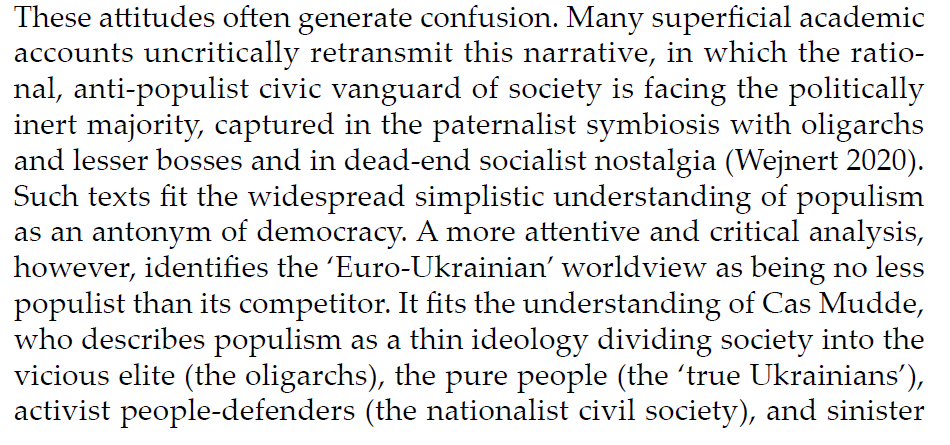
Gorbach reminds readers that the best work on postsocialist populism emphasizes its shadow relationship to democracy, avoiding the normative stance that opposes democracy and populism and which is so frequently deployed to show how ‘defective’ Eastern Europe is by mainstream observers. Gorbach, following the work of Tarragoni and Canovan, argues that populism, while expressing a crisis of representative liberal democracy, is not a ‘thin ideology, but contains a radical democratic critique of representative government. But what’s missing is what Gorbach and others aim to provide – the material basis of populism’s rise which ‘aspires to distribute income and, nourishing illusions about the function of the state, is politically disorganized (Boito 2019: 135.)’. In an abrupt turnaround though, Gorbach’s innovation is to relegate populism as just a Gramscian ‘morbid symptom’ of the crisis of capitalism. Parapolitical processes that themselves are generative of populist ‘supply’ are more important to look at and these are perfectly adequately grasped using the long-standing terms ‘moral economy’ and ‘everyday politics’. The ‘crisis of representation’ that populism reflects is then doubled in scholarship: mainstream liberal political science has no tools with which to move towards a diagnosis of the disease (it ignores those that Gorbach offers here), instead offering ‘game theory’ or the pseudoscience that is ‘mass’ social psychology and which includes bizarre claims about whole ‘national groups’ on the basis of dubious experiments conducted on American undergraduates which cannot be replicated and remain ‘WEIRD’.

Gorbach returns to his problematizing of ‘populism’ in the empirical chapter on language politics in Ukraine. There’s an enlightening discussion of how pro-Ukrainian language narratives align with upwardly mobile citizens after Maidan, how the far right may find allies in LGBT organizations in opposing ‘vatniks’. A ‘thin patriotic identity’ (before 2022) emerges that papers over deep ideological differences among liberals and nationalists (p. 224). Uniquely in Ukraine, language affiliation plus civic involvement then serves as a way of denying (or exiting) a stigmatized working-class identity. But, as Gorbach continues:

At the end of the same chapter, Gorbach shows how ‘East Slavic’ Nationalism acts no less powerfully (and does not necessarily conflict with) the ‘ethnic’ Ukrainian model. Indeed, in a place like Kryvyi Rih (recall, Zelensky is from this city), Gorbach uncovers an inversion of the ‘vatnik’ theme – ‘stupid nationalists’ and ‘civilized Soviet-type people’.

After a long discussion of the mayorship of O. Vilkul who would later become a key figure that confounds stereotypes about the political views of Eastern Ukrainians, Gorbach concludes this section:

However, ‘One must take seriously the words of many adherents of both camps when they say they are not ethnic Ukrainian or Russian nationalists. The root of the political cleavage is the per­ceived moral difference between the self and the other rather than ethnic animosity.’ And in a subsequent final post about this book we will return to that topic of moral economy how it expresses everyday politics.
Unmaking the Ukrainian working class, Part I

Two days ago I joined a discussion of Denys Gorbach’s new book on The Making and Unmaking of the Ukrainian Working Class at University of Bremen organized by Seongcheol Kim. This post is one part of my contribution to the discussion. Gorbach’s book partly inspired my own forthcoming book, and here I focus on those aspects which are most relevant and interesting to me.

First off, Gorbach focusses squarely on a key question about class domination in Ukraine which is of relevance in Russia too: if enterprise paternalism – both materially and symbolically – is so decayed then why aren’t workers more militant? This is a question I also ask in my book and in a spin off article about Russia. While Gorbach’s book is not really about wartime Ukraine, the question of how to coopt or placate workers during a period of unprecedented social stress is even more relevant now than it was when he completed most of his fieldwork in 2019.

Gorbach’s book is unprecedented in its range, intellectual ambition and empirical quality. He manages to do a deep dive on the roots of populism, oligarchy, the misnomered language ‘divide’ in Ukraine and even has time for a pitstop in Russian imperial colonial history in his native Kryvyi Rih (a city of iron ore production formed by Belgian, British and French capital, Polish landlords and the power of the Russian imperial state). He looks at how today, organic intellectuals are made within the Ukrainian working classes and how this consciousness is mapped onto ethno-linguistic identity in often contradictory and unpredictable ways. He even shows how the war makes some into ‘East Slavic Ukrainian patriots’, and how people hold simultaneously incommensurate views about social democracy, private property and populist politics.

Gorbach starts off with an analysis of the 2017 coordinated yet wildcat strike in Kryvyi Rih around falling wages. He illustrates that regardless of the strength and weaknesses of alliances and leaders, strikes in the postsocialist world still have the potential to trigger broader protest and act as catalysts for change – coalescence and contagion are distinct possibilities for any future labour unrest as a result of war…. or peace. And a part of this is because workers themselves are increasingly able to access a sense of their demoralized place in society and experience historical learning. However, Gorbach also illustrates that the key paradox of labour unrest in such states remains operative:  one can find militancy and class consciousness at the same time as timidity, cynicism and distrust – the partial success of an ‘anti-politics’ hegemonic discourse (later Gorbach will critically discuss both Chantal Mouffe and Nina Eliasoph).  In this way, while not developing it fully, Gorbach explains how elite reshuffle to maintain domination, ordinary people get alienated from ‘big politics’ but intense political contestation and strife still occur. Indeed, both the Zelensky and Putin phenomena are end products of the exasperation and desperation of people in this situation, of course noting the fundamental differences between regime type and political system in Ukraine and Russia. This is my view, not Gorbach’s, as he is careful not to discuss Russia, which lies beyond his empirical base – his book is based on impeccable Ukrainian fieldwork which many would envy.

Gorbach is all the more impressive for having done ethnographic work on five different factory sites in Ukraine and charts informants living in three different ‘scales’ of existence in the post-Soviet city: individual life, their embedding in value hierarches, and their use of survival strategies. This is what makes the book so rewarding to a reader who wants to get a feel for the granularity of Ukrainian life beyond the redundancy of so many Ukraine politics books (even the few very good ones) or the political science literature focused on moments such as elite contestation, or voting, or the overall political relations of Ukrainian and Russian elites.

I preserve in full Gorbach’s key questions from the intro:

Gorbach then provides a reminder of the failure of both liberal and Marxist theories about capitalist transformation; both predicted their own normative versions of transformation and both were wrong. ‘Instead of capitalist and liberal democratic normalization of the local politico-economic field, the transition produced unorthodox polarizations and populist political templates that were later exported westwards, reversing the expected direction of the flow of ideas and models (Kalb 2015)’. This was also the subject of a post from a couple of months ago about David Ost and ‘semi-peripheral innovation’.

I will summarise more of Gorbach’s book in later posts. For the time being, its worth noting that point 3 above – about how ‘personal trajectories’ tell us a lot about political shifts and how worldviews ‘from below’ exert pressure upwards on the immediate urban context, on the formal economy (because of the availability of the informal economy as a material and symbolic source of alternatives). Various ‘moral economies’ (Gorbach and I prefer the E. P. Thompson pedigree of this term) coexist and influence each other – in particular around how people relate to property relations. They acknowledge as legitimate despotic behaviour by bosses in new businesses, but refuse to pay for a tram ticket because such transport is deemed part of the state, or pay taxes on their side hustles.

Patriotism and nationalism among ordinary Russians today

FmwPUc3_rk7CwBmePQQiUg

I am giving a paper at Malmo University for the second RUCARR conference and this is a great excuse to revisit a topic I wrote about some time ago – Russian everyday nationalism and patriotism since the Ukraine conflict. So this blog post is in lieu of a paper for the conference – I hope I finish it in time!

In my article on ‘everyday diplomacy’ in the Cambridge Journal of Anthropology, I was encouraged by Diana Ibanez Tiraldo to write about my experience of how geopolitical ‘events’ impacted my fieldwork relationships in Russia when I returned there in 2014.

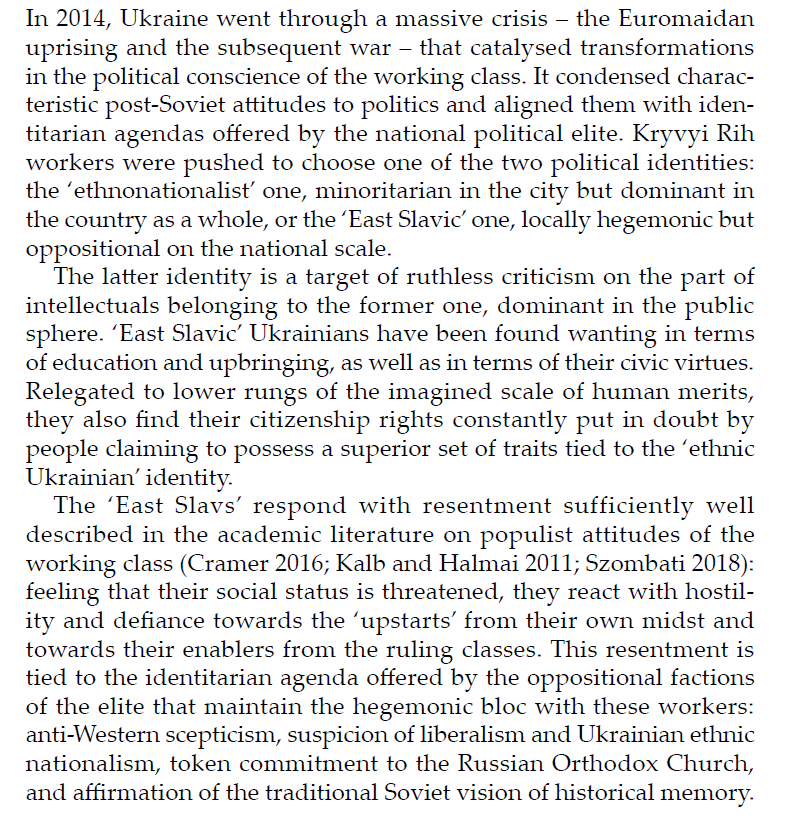
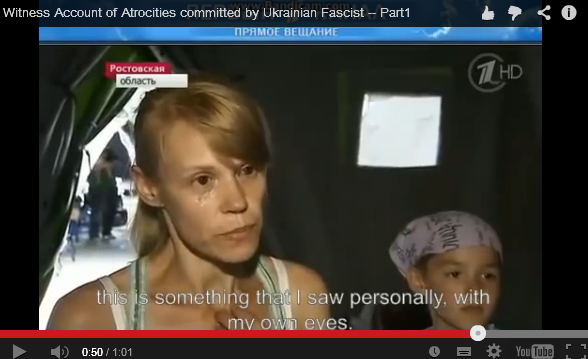
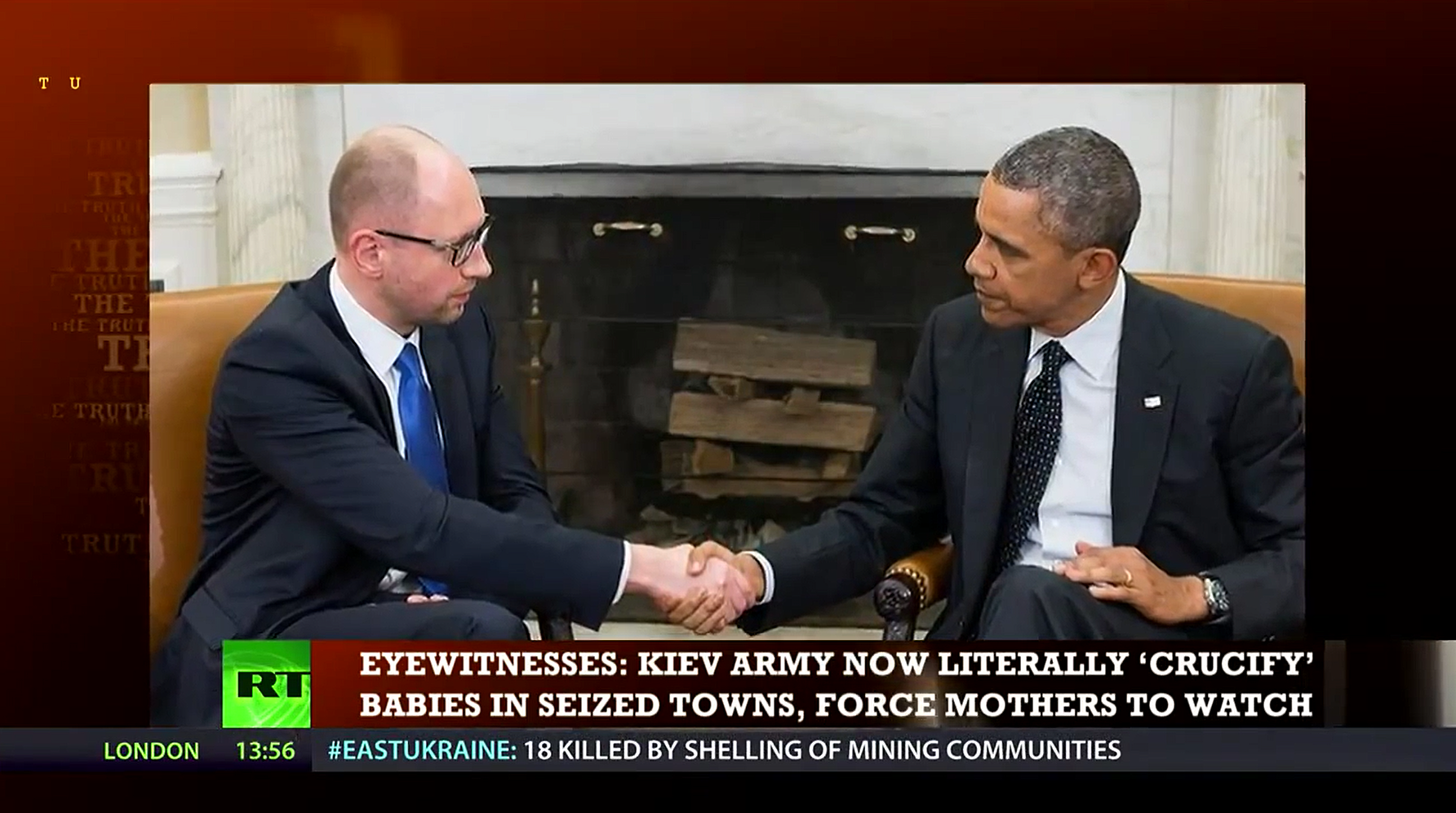
In that article I talk about my sense of myself as unwilling representative of my origin country during fieldwork, and how, despite the unrelenting media campaign in Russia, most of my encounters that involved political talk were characterised by ‘civility’ and ‘silence’, or the agency of ordinary people in negotiating their way between the strident tones of state propaganda on the one side, and their genuine feelings of patriotism on the other. So the article is something of a contribution to what has been called ‘everyday geopolitics’ or popular geopolitics, but specifically thinking in terms of subjectivities. Therefore I make some use of the term ‘intimacy-geopolitics’, that comes from geographers Pain and Staeheli 2014. Consequently, I think about how ethnographers resemble or don’t resemble diplomats, or are inevitably hailed as representatives of their origin countries’ international policies. The article ends, not by focusing on how media propaganda around the Ukraine conflict activates nationalism in everyday contexts, but on the contrary – TV and internet endless, in-your-face, over-the-top rehearsal of tropes like ‘Kiev’s fascist junta’ and ‘crucified Russophone children’ seems to traumatise my Russian informants. The Russian state does such a ‘good’ job of speaking to the most unpleasant nationalistic perspectives that most people are left mute, bereft of any position of their own. As a consequence, if anything, nationalist discourse is externalised from the subjectivities of my informants – the state performs it for them, thereby replacing them as nationalist subjects.

pic171

However, one thing I really wanted to return to was an issue touched on only tangentially in the article – the distinction between patriotism and nationalism and the ‘classed’ nature of discourses around nationalism. Orwell’s 1945 essay Notes on Nationalism was an important reference point here. Orwell sees nationalism as a ‘moral’ failing in modern societies and as present in all individuals. At the same time he makes the case for a kind of positive identity politics of place that does not require an ‘other’ to justify and sustain itself. For him this is patriotism. What starts out looking like a leftist apology for patriotism actually comes closer to a sense of unstructured, yet embedded communitas. I am particularly influenced by Stephen Lutman’s article on Orwell and Patriotism, published in the Journal of Contemporary History in 1967. Not only Lutman has highlighted how Orwell describes patriotism as defensive, originating in a communitarian political posture where one’s origin culture is cherished, but not to the detriment of others. Lutman traces how Orwell’s essay is the culmination of a long process of his thinking about the left’s need to acknowledge the power of patriotism and thus begin to consider how to utilise it in the cause of social change (in 1945 when the essay was written, much of Orwell’s earlier optimism on this count had dissipated – by this point patriotism has been reduced to at best a kind of defence against totalitarianism).

1333818462_381567_66

Orwell contrasts patriotism to nationalism, which is often an ideological commitment that is intellectualised, yet not standing up to rational analysis – it is always negative because it is founded upon a commitment to competitive prestige. The most famous quote of the essay, actually relating to a leftist illusion runs as follows: ‘One has to belong to the intelligentsia to believe things like that: no ordinary man could be such a fool. ’  Orwell’s vision of patriotism can be compared to the idea of cultural intimacy proposed by Michael Herzfeld.  And this may provide us with a way of thinking through Russian nationalism and patriotism today. That both the ‘positive’ and ‘negative’ aspects of group loyalty can be simultaneously present and ‘performed’ by people. This resonates with many of my encounters with my Russian research participants, both before and after the Ukraine conflict, and before and after the Russian state-controlled media ratcheted up nationalist rhetoric against the perceived enemies in the West. Ukraine and Ukrainians as an ‘object’ of xenophobia and chauvinism, mainly (although not exclusively) take on a minor aspect of the ‘everyday discourse’ of nationalism, despite the media propaganda’s attempts to the contrary.

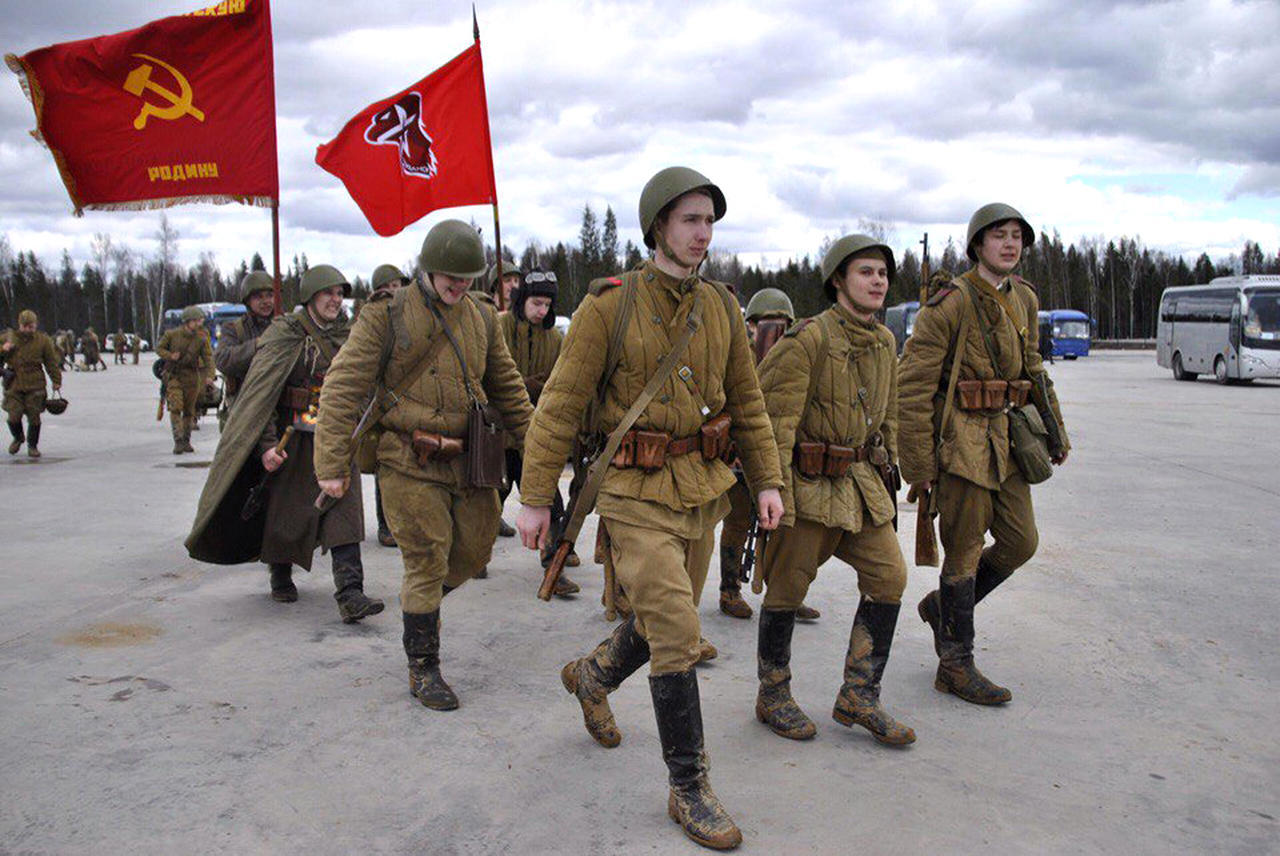
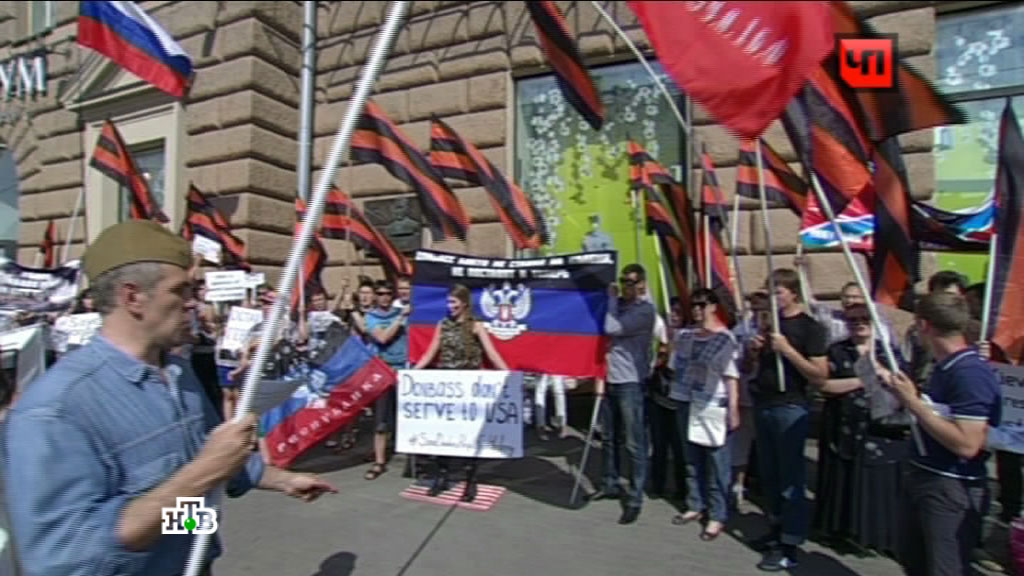
I offer three examples (all of which are included in the article) of thinking about nationalism-patriotism in a more nuanced way. Firstly, a long-term low level badgering by a few (the minority) of working-class research participants which I term ‘political testing’. This include provocative statements about Russia’s ‘victimhood’ status in recent history: from accusations about Western delays in opening the second front in WWII, allegations of separate negotiations for peace with the Nazis, to more recent events like the bombing of Belgrade in 1999.

chp_usa_vs

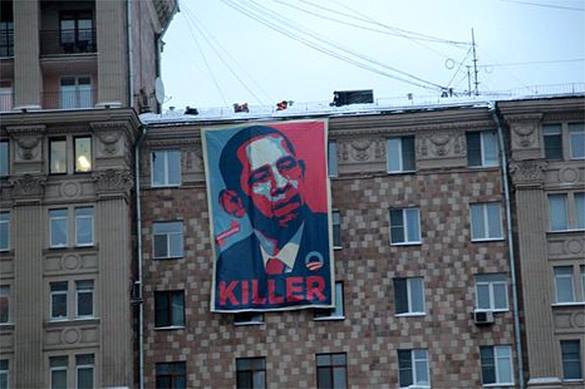
What did I really think about these things? I was prodded repeatedly, although usually in a relatively good-natured way. In the article I mainly focussed on this political talk, not as expressing nationalist views, but as a kind of invitation for acknowledging the traumatic Russian past, the often double-standards of the West in more recent history, and even, ethnographically speaking, asking me to acknowledge a kind of privileged positionality (I talk more about this in the article). Certainly, it does not relate to the now widely discussed ‘whataboutery’ of Russian discourse when presented with criticism (although I encounter a lot of that from some Russians). I’ve largely given up trying to engage with whataboutery – there’s a revealing anecdote about that in the article regarding Obama, Libya and Ukraine.

57194

The second example is related – a kind of generalised resentment about the ‘post-communist compact’ in Russia that has mutated into what certainly looks like negative nationalism as Orwell’s terms it (anxiety about the loss of Russian/Soviet prestige). One informant – Sasha, a factory worker – in particular is frequently fervent in his ‘bury the west’ rhetoric and likes to fantasise about cutting off Russia’s gas supply to the whole of Europe (‘to see how you like it, when you’re begging us for a crust of bread’). Certainly, this fits a  classic frame of analysis about nationalism as a response to decline. However, this is the same informant who despises the Russian government and insists on muting the television when any representative, including the president appears – ‘they don’t care about people like us’.

I call this response the ‘national patriot’ reaction to events. But how deeply does it go? One thing I’m interested in is how quickly a lot of analysis of current events seems to readily fall back into an adoption of a kind of uncritical acceptance of the old hypodermic needle effect of nationalistic rhetoric from the media. Sasha wasn’t particularly nationalistic before, so he seems to fit that model. However, he is the tiny minority. Overall, I’d say he, like many of my informants, is a patriot more than he is a nationalist (we’ll come back to Orwell in a moment). His problematic positioning does illustrate Paul Goode’s contention that every patriotism and nationalism are not easily distinguished and that one may easily transform into the other.

1CvdZvVVjP7s50_YuomIFg

Third and final ethnographic example. This is a recent acquaintance and not really an informant. A Professor of Physics from Moscow with whom I had a number of arguments in the summer of 2014. His basic position was that Ukrainians were inferior to Russians and that Ukraine historically had never been a coherent nation, and was in the present undeserving of statehood. This intellectualising, (flawed and false) rationalising of national superiority and inferiority is at the heart of Orwell’s argument.  My example nicely illustrates also how class difference may play a role; for Orwell, patriotism is largely unconscious, operating at the level of affect, whereas nationalism is a rationalising force – making it all the more dangerous and unpleasant.

RT-TRUTHSEEKER-CLIP-12

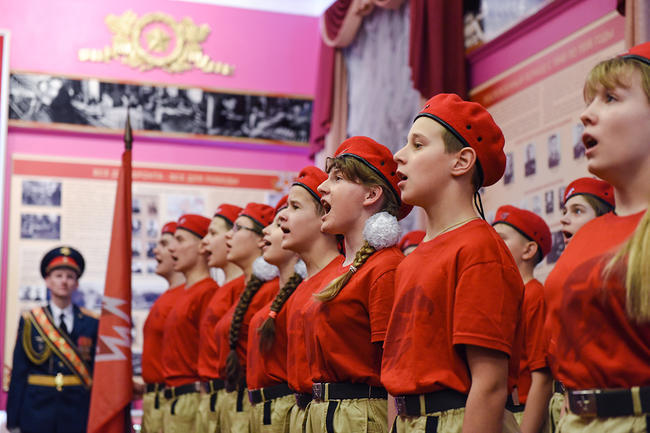
Two further reflections are in order. The first is on the the role of the state as an agent in forming public opinion. The second is on the artefact of polling data. While naturally sceptical of the very concept of public opinion, we can note one thing – states can be effective in amplifying sentiments, but the roots of those sentiments may be diverse – resentment at decline, loss of prestige geopolitically, are perhaps the least problematic ‘nationalist’ levers brought to bear here. However, I’d like to pause for a moment to consider whether it’s really the case that Russians, even after all these amplifying and mobilising efforts, are more ‘nationalist-minded’ than other Europeans, or even Americans. Here I follow the lead taken by Edwin Bacon in his latest book ‘Inside Russian Politics’. There he points to how survey polling reveals very little difference in xenophobic sentiment between different countries. In fact his headline finding is that Russians are far more optimistic about the chances to avoid conflict than those in the West. On the topic of patriotism he also notes that polling reveals people in the US and UK as more strongly patriotic than Russians.

annonce-df

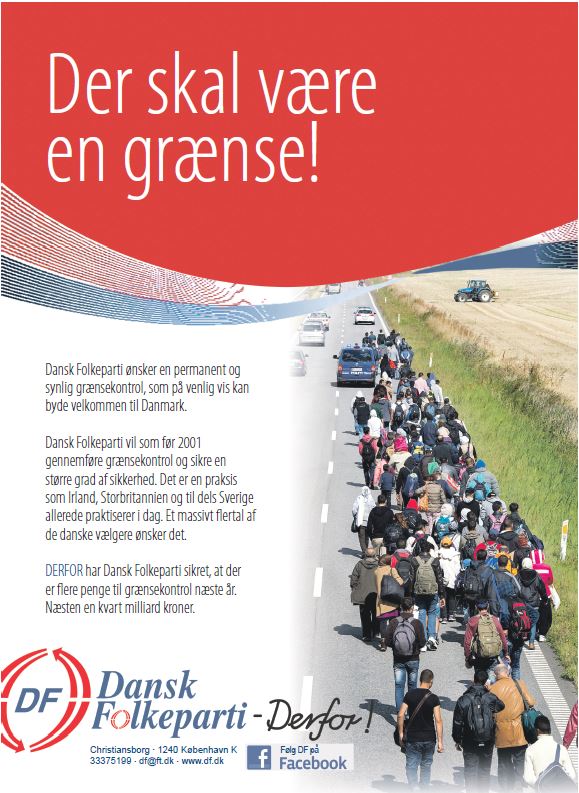
‘There must be a border!’ Danish People’s Party

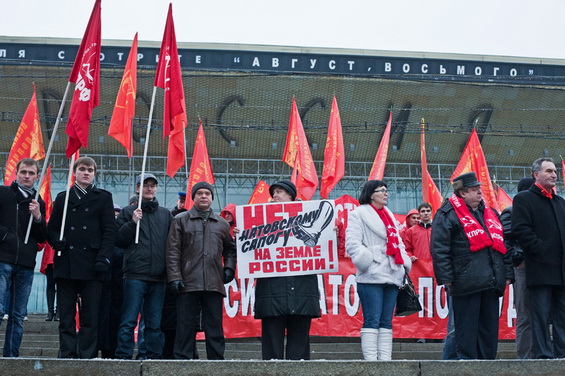
A further look at some recent polling is even more revealing: Levada finds that in 2017 attitudes towards ‘foreigners living in Russia’ are the most positive since polling on this topic began (albeit only 13 years ago). As a proxy for ‘xenophobia’ this doesn’t sit well with a view on a sustained upsurge in nationalism. 54% think there should be limits on foreigners’ rights to live in Russia (in 2013 it was 81%). In the UK and US these figures are significantly higher. In my own country of residence, Denmark, the second biggest political party believes in a kind of immutable ethnic purity for the Danes, and around 50% of people don’t believe immigrants should enjoy equal rights. Back to Russia, but this time on ‘external enemies’. If in 2014 84% thought Russia had external enemies, now that figure is falling somewhat (in 2016 it was 68%). More encouragingly, 30% of respondents think that ‘talk of enemies is pursued by the authorities in order to frighten people’.

I hesitate to say that polling really tells us much about actually-existing, let alone ‘everyday’ nationalism. Certainly the amplifying effect can be measured, as I’ve said earlier. But what exactly is being amplified? Here I would return, tentatively to the idea that it is as much about a generalised resentment, disillusionment about the whole processes of social and political change in the last three decades in Russia, as it is about nationalism. Yes, some of this can be redirected towards external enemies, and yes, a lot of this resentment can be easily amplified thanks to the real hypocrisy of the ‘West’ in matters geopolitical.

Another way of saying this is to think of ‘nationalism’ as a ‘social fact’ in the same way Durkheim examined suicide. But Durkheim was wrong. His social fact of suicide turned out to be an artefact of different ways of recording deaths, rather than the ‘real’ meaning and causes of suicide itself. It is the same with nationalism – we should be careful of not mistaking state-discourses for ‘everyday’ nationalism and patriotism, which may turn out to be something quite different.  (Of course banal nationalism is another story, but something I’ve written about elsewhere).

What I’m not trying to do here is downplay the significance of the increase in nationalist propaganda at all levels propagated by the Russian state – from schools, to television, to the highest level of government itself. Indeed it was that elite-directed signalling that prompted my interest. What I hope to draw attention to is how it is problematic to impute a clear transmission belt effect to so-called ‘ordinary’ Russians, who are usually more than sophisticated enough to see they are being hailed in a particular way. Again, Paul Goode’s focus-group and interview research on this topic back that up. Secondly, I draw attention to a fact that I’m sure my political science colleagues wish to stress themselves – that this is a clearly conscious elite strategy of chauvinism and xenophobia.

f6040370-3f48-4f03-8247-98edcf8893b8_150_100

Surkov in suitable company

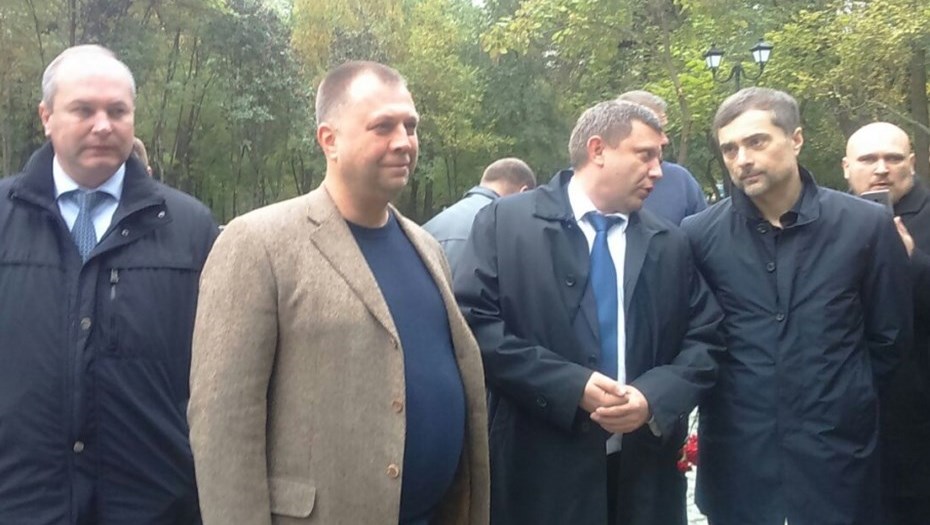
Indeed, there appears to be evidence that a lot of the Ukraine ‘adventure’ and its attendant rhetoric is associated with a particular individual – Vladislav Surkov. A better example of the arrogant intellectual one would struggle to find in Russia today. Recall the Orwellian reference point again: ‘one would have to be an intellectual to believe that…’. Surkov also strikes me as being a good example of the salience of the other point I wish to make – patriotism versus nationalism. Surkov wears his sophistication, dare I say it given the associations of the word, ‘cosmopolitanism’ as a badge of honour. Now, as the chief ‘theatre-maker’ of Russian politics, it’s not difficult to imagine that while having a vivid understanding of the meaning and potential for nationalist rhetoric, he would struggle to understand everyday Russian patriotism, as expressed by the kind of people in my research, and as distinct from nationalism. I can’t help but imagine he would react cynically to my position here. Any maybe that would just prove my point.


Ukraine, Russia, solidarity, trauma, and keeping it in the family.

soslbjndyd8jDoes the West make sense without the East?
This subtitle paraphrases Marci Shore’s reflections on Tony Judt in the context of Maidan and could serve as a fitting summary to the way the Ukraine conflict is mainly framed in terms of its impact on West-Russia relations and the way Ukraine, or rather Ukrainians, and their agency, gets lost in the discussion.

Two weeks ago I took part in a round-table in Warsaw on the Ukraine conflict, and as I mentioned in my previous post, I don’t feel we did justice to cause of European solidarity with Ukraine. In fact, I was surprised how, in an audience of Poles and academics critical of Russia, my call for a solidary response was not received sympathetically.

So I want to lay out this position again, more clearly than is possible in a round-table.

Really my position started to emerge in my own research into the responses of ordinary Russians to their ‘hailing’ by the relentless ‘black PR’ of Russian state-controlled media, about which I wrote a little in my previous post. This research became an article about the ethnographer as diplomat – or otherwise. At the same time as writing on Russians, I have seen many, too many, talks by political scientists on Ukraine in the last two years. One stands out: a book launch by my colleagues Kasia Wolczuk and Rilke Dragneva in CREES where Sarah Whitmore was discussant.

Wolczuk summed up her presentation of the book content with the pithy phrase: ‘The EU doesn’t care enough about Ukraine… and Russia cares too much’, adding ‘It’s up to Ukraine to live up to its integration choice and confront the consequences’.

While I don’t disagree in principle with that statement, at the time and now I feel this ignores the agency of ordinary Ukrainians who have already made that choice. Not only that, but focusing on the failures of Ukrainian politics avoids us confronting our own failings – particularly, the failure of European solidarity in providing enough support to Ukraine – however that ‘support’ is defined (actually in the round-table there was mention of the need for a Marshall plan for Ukraine).

So that, in essence was how I framed my contribution to the round-table.

In particular, the question of the meaning of solidarity seemed particularly apt since previous speakers at the Warsaw event – particularly Rick Fawn from St Andrews, had stressed the idea of the ‘family’ of European nations, and of course the Poles had highlighted the idea of the return to Europe of former USSR satellite states.

So this idea of familial relations – what could be a better example of solidarity? – seems a fitting way of framing things. Kinship relations demand reciprocity and mutuality – as any anthropologist will tell you.

However, I am aware of the problems with the ‘kin’ analogy. I tried another kin metaphor – how, if a family member has a drug problem (endemic corruption and the oligarchic relations that perpetuate this), then what that person needs is a therapeutic treatment, not punishment. Of course here lies a trap – sceptics of Ukraine’s ability to reform will say that this metaphor is all too apt – the addict needs coercion, as well as encouragement, they would argue. In the end, Rick Fawn and others had a better metaphor for the need for solidarity – the family member who is the victim of domestic violence – the relative has a duty to support the victim.

But in my contribution to the round-table I only had the opportunity to say a fraction of this. I had more luck in presenting some facts that indicate that Ukraine has irreversibly changed, and that these facts alone mean that an urgent ‘meeting more than halfway’ is needed from the EU. I drew attention to the fundamental fact of Ukrainian decoupling from Russia – trade with Russia is now a fraction of the figure of trade with the EU (44%) and Ukraine has, with the connivance of the IMF, of all bodies, defaulted on the Russian loan of $3bn made under Yanukovych. Gas demand, believe it or not, is half what it was ten years ago. Yes, much of this is due to the incredible economic crisis that continues, and the loss of the industrial east – all the more reason why even more help is needed now.

A simple act of solidarity that is of relevance here would the long awaited visa-free regime with the EU – this would allow remittances in hard currency to flow into Ukraine from the EU via migrant workers – hardly the argument hard pressed EU citizens want to hear, but a practical, realistic help. In fact, this would be the best ‘medicine’ for Russia too, the best way of showing true European values. There are many migrant workers from Ukraine among my informants in Russia. Visa-free travel to the EU would see decoupling increase.

But the fact is that almost no one focusses on the human cost among the most vulnerable in either Russia or Ukraine. The average pension in Ukraine is about $53 and 17% of GDP spent on pensions – the highest figure in Europe. Before the devaluation of the rouble, in Russia average pensions were around 10 times that figure. (Now they are around $240, not enough to live on). Inflation is 20% in Ukraine. It was nearly 50% last year. There will probably only be a 12% increase in indexation of benefits this year. Another practical extension of solidarity might be, not military aid of lethal weapons as many have argued, but medical, material and psychological support to the thousands of ex-service personnel now struggling with PTSD leading to alcoholism, homelessness and other ‘side-effects’ of war.

So I come back to solidarity again and the problem of ‘conditionality’: unless you fulfil ‘x’, we cannot provide ‘y’. Conditionality just doesn’t work in crisis situations like this. Just like the Greek crisis, Europe is at least as morally responsible for the situation in Ukraine now as much as any other party. Therefore Ukraine will continue to serve as a barometer for the health of a wider European project.

Back to Russia – back to the past

But what of Russia? Partly my interest in Ukraine stems from the highly poisonous effect of the conflict on ordinary Russians. And this was evident in the fieldwork encounters I began to relate in my previous post.

Really, the long piece I’ve written for the Cambridge Journal of Anthropology is about Russians and their inability to deal with Ukrainian conflict (and that inability as reflecting a wider and deeper impasse: the psycho-social effect of 25-years of not being able to deal adequately with the past) – its psycho-traumatic effects, and, among other things, its effect on the relations in fieldwork.

But let’s start with the more tangible results any political economist can see. First there is the massive demand destruction, and no end in sight of sharp income falls for most Russian citizens – note again, the pension figures mentioned above and compare the ‘before’ devaluation and ‘after’. Oil price slide aside, Ukraine is the marker, if not the overriding cause, of ordinary Russians going back to the 1990s in terms of economic insecurity – with a fall of 10% in average incomes in 2015, a figure not seen since 1990.

And in a sense the idea of the Ukraine conflict symbolizing a barrier to Russia moving to the future and repeating the past is something we see in all sorts of contexts – a retreat to ‘kitchen relations’, both in terms of not having any money to do anything else and in terms of a fear to speak too openly of one’s misgivings; a return to the garden plot; the way public life is now a party loyalty test, of any position of power, in any context.

If anything the Ukraine crisis is revealing of the Russian people as a clinical psychological case of trauma that is unresponsive to treatment. Alexei Yurchak’s most famous finding is 1991 as a ‘break in consciousness’ on the part of Russians, but really he’s just talking about the intelligentsia, and then only the progressive intelligentsia. There remains a large swathe of people, and many of them highly educated, who have not been able to collectively overcome their sense of trauma about the past.

Elena Bogdanova, in an unpublished work, puts it in this way – as a ‘bottling up’ of the past – and the Ukraine conflict sees this made evident in various psycho-social dysfunctional effects – the pathological need to believe in state propaganda, the dehumanisation of Ukrainians, the aggressive xenophobia, or, at best, the neurasthenic reaction – evident in the ‘Moscow bombing’ comment in my previous post – ‘irritability’ and lassitude are key affective states I talk about in my paper – certainly I also felt them (here I am indebted to Navaro-Yashin’s work). At the same time, there is a revealing of cognitive dissonance between the strident response of patriotic enthusiasm and the realisation that this state is untenable in the long term. And can have unpredictable consequences of disaster for Russians.

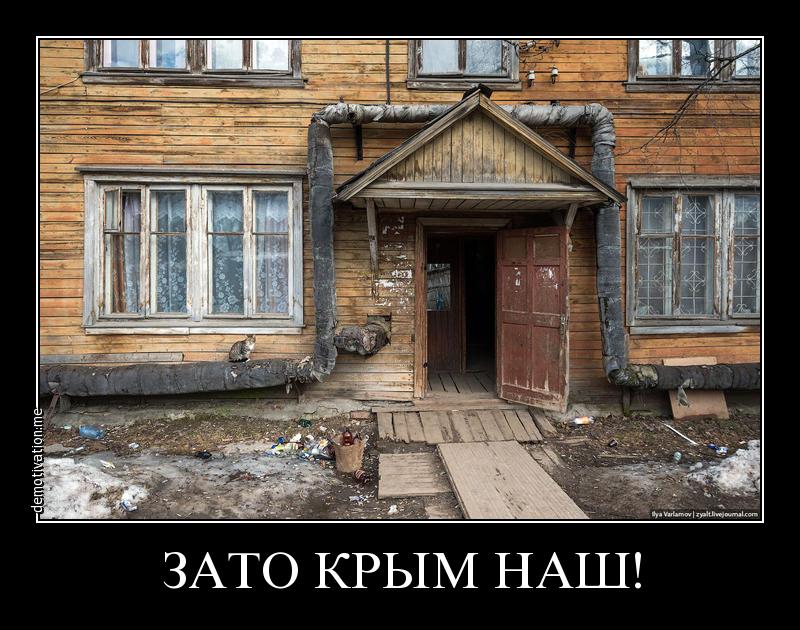
I was in Russia when the Malaysian ‘Boeing’ was shot down – and a cardinal change in perspective occurred. Russians didn’t so much say it. In fact the more strident the response: ‘Putin will show you lot’, the more I detected a fundamental disquiet. Everyone understood the long-term, devastating consequences of the ‘Boeing’ (note the metonymy as an indicator of trauma!) Even the term ‘zato Krym nash’ (but we’ve got Crimea!) is used ironically now even by those most patriotically inclined.

But the last words go to those remnants of the independent Russian media. They talk of the social catastrophe the conflict in Ukraine has accelerated in Russia: the ‘loss of public understanding of the reality of its own existence, economically, socially, culturally and politically; this far reaching process has been the cause of the moral degradation of society’ (Kobrin 2015).

Russia-Ukraine conflict and fieldwork relations

I am going to make a couple of posts that touch on the Ukraine conflict. This is prompted by three things. First, I was invited to contribute to a panel some time ago at the 2015 ASA. I spoke there on ‘diplomatic relations’ as a metaphor for field relations with Russians after the Ukraine conflict. Second, I then developed that talk into a paper for Cambridge Journal of Anthropology which should come out this year – and some bits didn’t make into the final cut – so I’ll use them here. Finally, this month I was invited to an event at the University of Warsaw International Relations Institute to take part in a round table on the Ukraine conflict with other academics and the Ukraine Ambassador. This was my first foray into the territory of IR and I can’t say it was successful. My attempt to focus on the missing agency of Ukrainians and my perception of the lack of European solidarity for their situation didn’t get a very sympathetic hearing. I will write more about that in the next blog post.

OLYMPUS DIGITAL CAMERA

Moscow scene I passed daily in 2014 – was always empty!

Researchers as Insider/Outsiders

Here I want to highlight some of the reflections on fieldwork relations that in part will appear in the CJA piece. Following up on a chapter in my book, I wanted to look at how the ethnographer and informants alike are unwilling ‘diplomatic’ representatives of their origin countries. I talk about political neutrality in field relations, indirect communication, and affective states that both facilitate and threaten ‘everyday diplomacy’.  In their examination of the researcher’s positionality in fieldwork in both Turkey and Azerbaijan, Ergun and Erdemir (2010) discuss how foreignness and cultural familiarity interact with research contexts. They summarize well some of the problems with insider status that are particularly relevant to the Russian context: an ‘insider, for example, may be perceived as being untrustworthy because of his or her knowledge of and connections to the community under study’.

Ironically, it was my outsider status – as non-Russian – which allowed a degree of greater access in my fieldwork (as well causing distrust and disbelief by others). Did the lime kiln technicians my monotown genuinely believe that our conversations might get back to the director? Russian reality suggests that their fears are reasonable. While cross-cultural issues constitute the ‘elephant in the room’ for foreign area studies researchers working on Russia, outsider status can help not only to mitigate, but also to reverse the researcher–researched relationship, particularly when it is understood in terms of cultural exchange (see Charlie Walker on this – 2011). This is no less true as Russia moves further away from its closed past (if anything since the Ukraine conflict, a sense of cultural difference has been emphasized by the state itself and people are more inquisitive than ever about ‘representatives of Europe’). By the same token, my foreignness, allowed me to witness both first hand and in stories, significant illegality – particularly in the informal economy, but also in terms of stealing from work, and so on. What possible risk would there be from a foreigner – the status of whom in Russia is always viewed as contingent, powerless and temporary? At the same time, what Ergun and Erdemir call ‘cultural proximity’, evidenced by linguistic competency and lived experience, can allow a researcher to cross over temporarily into partial ‘insider’ status which can build rapport, trustworthiness and openness.


IMGP5253

My ‘lime kiln technicians’. Eventually they talked to me!


In the book I go on to talk about the challenge of justifying ethnography to a Polsci/Area Studies ‘audience’ in the academy – particularly departmental colleagues, grant agencies and REF committees. In fact, I just got back my own internal REF evaluation – done anonymously at College level. It draws attention to the small ‘data sample’ of my ethnography to justify not awarding a higher number of ‘stars’. For those unfamiliar with the REF there is some commentary here. In the ‘Diplomacy’ paper for ASA, I talk at length about two ‘groups’ of people in my research – ‘national patriots’ who drew attention to the Ukraine conflict in our talk, and others who more subtly reflected politicisation by referring to my ‘Europeanness’. Here’s a shortened version of some of the reflections in the original paper. (The Europe stuff got cut for the CJA version)

The national patriot informants

From some informants their response to the researcher after the Ukraine conflict was predictable based on their previous clearly expressed patriotic and anti-West views: Sasha is a long-standing key informant who has always enjoyed making combative and provocative statements about the decadent and treacherous West. For as long as I have been visiting Russia, informants like Sasha have readily made reference to geopolitical issues, British and US foreign policy, and in linking the researcher and origin country, history, and politics in the widest sense. Partly reflecting popular history broadcasting and publishing in Russia in the Soviet Union (think of the series Seventeen Moments of Spring), informants have commented, seriously and jokingly about issues such as WWII: ‘where was the second front when we needed it?’ The ambiguous role of Britain as an ally to the USSR – as reflected in popular Russian history –  is attached in conversation to the person of the researcher, albeit temporarily. More recently, in the late 1990s, British nationals in Russia were likely to encounter personal antagonism during the NATO bombing of Serbia. I recall not being able to avoid adopting a ‘public’ position in conversation with a group of informants then. In a discussion characterised by anger on the part of my interlocutors at NATO actions, I stated that ‘generally’ I was against the air campaign, without ruling out a view that military intervention of another form against Milosevic might be acceptable to me.

In current fieldwork, Sasha is representative of the politicised, national-patriot encountered.  A former factory forklift driver and now eking out a living in the informal economy, Sasha, in one conversation in 2014 he expressed himself thus: ‘wait until winter. Over there in your Europe you’ll be cold and hungry enough when we cut your gas off. You’ll be begging us for breadcrumbs’. Sasha and his circle reflect some of the most disenfranchised Russians who readily latch on to official narratives about Russia’s renewal of greatness and the enemy of the West. They are partly the target group for state-controlled televisual framings of the conflict as a proxy for geopolitical victimisation of Russia and her refusal to be ‘bullied’. Putin here is presented as a rational, calculating and honest, if cunning, resistor of Western neo-imperialism. At the same time, when discussing aspects of domestic politics, they are extremely critical of the Russian government and Putin too.

This ‘group’ of informants if I can generalise, are well known for their perpetual ‘political testing’ of foreigners. In the best traditions of official state diplomacy, one possible response from the researcher is polite silence or ambiguous deflections (Blackman 2001). But how realistic is long term ‘field neutrality’ in such circumstances – when the researcher is from a country with a long history of political enmity or mistrust? As during the 1990s NATO intervention in Serbia, the current Ukraine conflict means researchers in Russia are unwillingly interpellated as national representatives – everyday diplomats, if you will.

OLYMPUS DIGITAL CAMERA

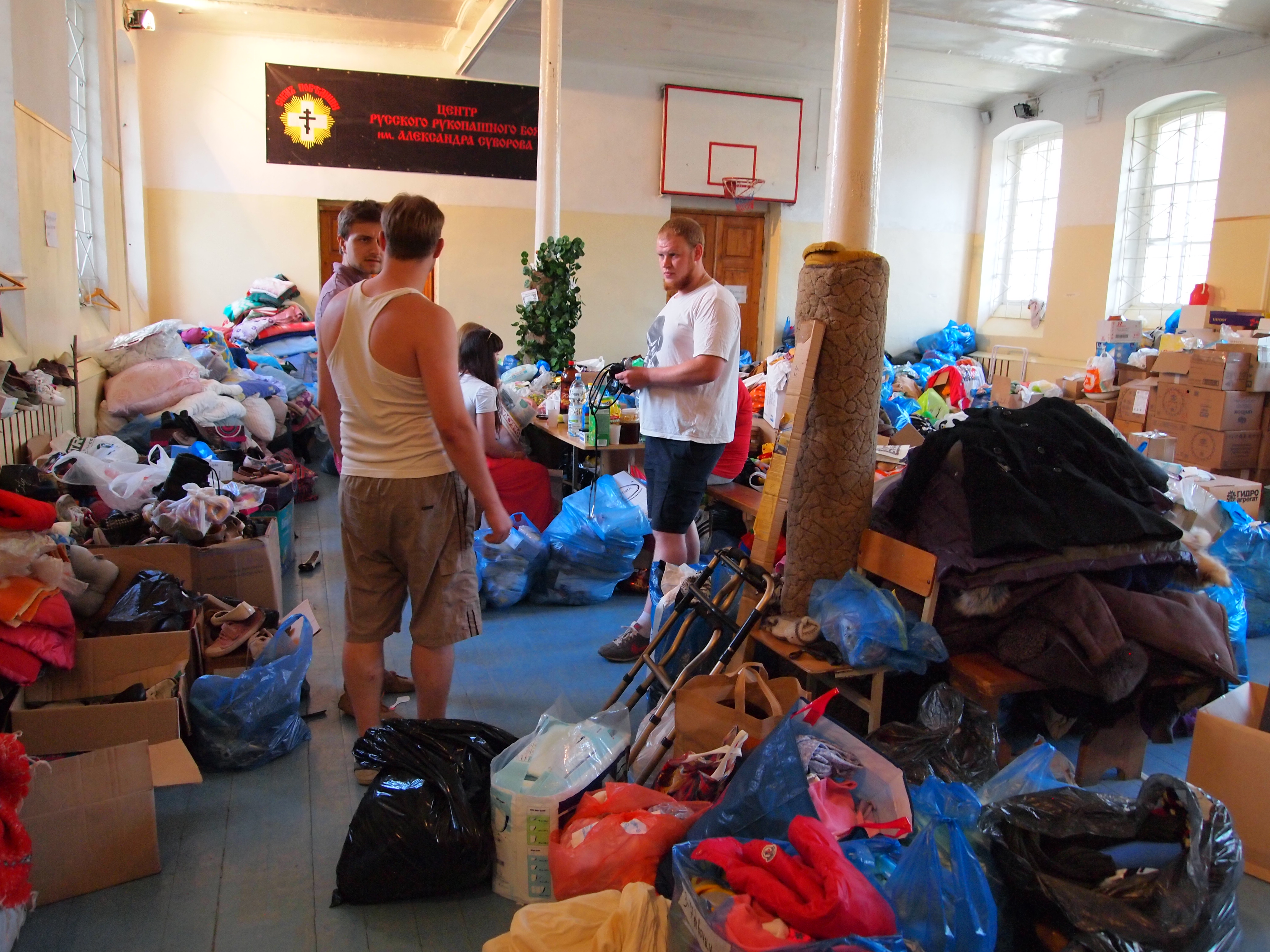
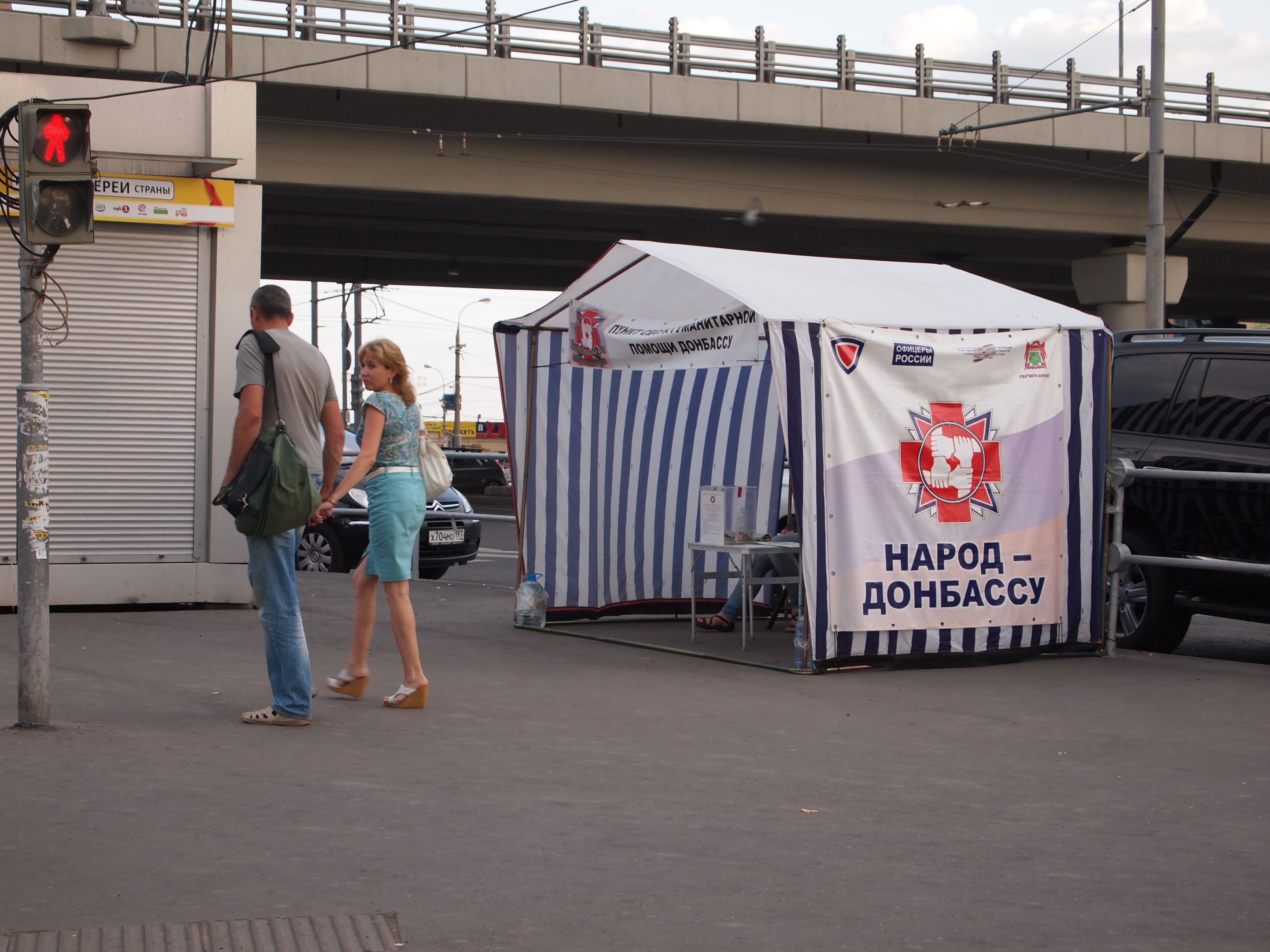
my 2014 visit as to a Russian org collecting supplied for refugees from Ukraine conflict. ‘Diplomacy’ needed here as they would only allow entry after quizzing me.

My response to Sasha’s initially aggressive ‘testing’ or posturing on the Ukraine-Russia-sanctions issue was deflective – to avoid a response – silent even. However, as with the Serbian context, this was untenable – a semi-public-facing response had to emerge. This involved politely insisting that things were going to be fine in the UK and that we had our own gas supplies, and so on. Sasha quickly became much more like his usual self and ‘normal’ conversation continued without reference – at least for a while – to the conflict. Nonetheless the conflict had led to a re-interpretation of the researcher and researched as national representatives. Willingly or unwillingly, we had come to embody public diplomacy. Public diplomacy (of which ‘soft power’ is a recent scholarly sub-category) are about building credibility abroad through the display and demonstration of particularistic values and policies (Melissen 2005: 3).  It is also about ‘openness and cooperation’. On the one hand, these diplomatic roles are similar to those normally adopted by the ethnographer: credibility is built with informants, rapport established with a means to an end, but tempered by ethical values that are supposed to be transparent and demonstrable to informants. The paradox of diplomacy therefore extends to ethnography – it is simultaneously means and ends directed activity. Hence the long-standing comparisons of ethnography with espionage and liminality. For ethnographers, like it or not, as for official representatives of a state who reside as aliens in another jurisdiction, ‘trust’ is a necessary by product of activity that has ‘transactional objectives’ (Rose and Wadham-Smith 2004: 34-35). Taking into account the intrusion of geopolitics into field relations, the diplomatic comparison appears equally apt.

Nevertheless, the metaphor breaks down, and in some respects necessarily so. Unlike the diplomat the informant and researcher alike can pursue various tactics not available to the official state representative. Firstly, and importantly, continual deflection through disavowal of the national representing role – ‘I am not a representative of my state’. But this, as indicated above, is not tenable over time as the usual response is: ‘yes, but what do you think about this conflict?’ More powerfully than disavowal is ‘silence’ and continuing ‘civility’ – two modes of indirect communication, both ‘diplomatic’, but equally available to researcher and researched as tools to resist interpellation by politics and open up avenues for alternative interpretation of cultural and national difference in the field. To a degree these responses by the researcher to Sasha’s kind of aggressive discourse are already suggested: what could one say in response? More or less my reaction was civility and silence over time when the topic came up in similar circumstances. For informants, this was also, increasingly, a micro-political response encountered. Silence and civility against the backdrop of international conflict involving people’s respective states is both self-censorship, but also pregnant with affective meaning: the beginning of the mutual acknowledgement of trauma of some kind. ‘Performing the script’ of national representative breaks down in the face of the inadequacy of politics to express the intimacy of field relations and vice versa. A quieter politics inevitably ensues (cf. Askins 2014 on the script performance of refugees, affect and friendship). Silence speaks to acknowledgement of the other in a way that open discussion and argument would not. While new meanings of globalised ‘intimacy’ are currently being calibrated in anthropology, which the accent put on the problem of differentiating ‘authentic’ from purely performative (Sehlikoglu and Zengin 2015: 23), the “‘deep’ knowledge of the field is also a realm of the intimate” (24). transnational intimacies are highly shaped by and embedded in specific social relations of inequality, based on perceived gender, ethnic, racial, national (23).  As Pain and Staeheli suggest, the ‘stretching of intimate spaces’ – of private conversation – to accommodate geopolitical meaning should not verify the political as primary, but acknowledge the geopolitical itself as always already intimate and the multi-scalar (Pain and Staeheli 2014: 345).

OLYMPUS DIGITAL CAMERA

‘Let’s not talk about Ukraine’ – silence is better

‘European’ and ‘Boeing’ metonymy: ‘we are the victims’

Sasha’s use of the word ‘your Europe’ (alternatively given as your ‘West’, when in more combative mood) gives an indication of another group of interactions with informants. The Ukraine Maidan movement is of course associated with the desire for some Ukrainians to join the EU. A number of informants, while avoiding mention of the conflict itself, framed certain seemingly innocuous discussions in terms of the adjective ‘European’: Thus, a certain approach to child rearing, or choice of food, cooking or something else illustrated a ‘European mentality’. In the last couple of decades the adjective European has not been marked in this way in everyday discourse – if anything it is associated with ‘quality’ – the ‘Euro apartment’, ‘Euro food quality’. In this second subset of encounters it is possible to characterise this cultural distancing by informants as a proxy for discussing, or not discussing, the international conflict. Often these same informants had previously been some of the most reflexive about cultural difference and often more critical of their own culture and politics.

A corollary of the ‘European’ approach was when informants with ambiguous or critical viewpoints avoided expressing their disapproval of the Russian government – a very understandable approach – but instead talked about impending ‘punishment’ or catastrophe befalling their country as a result of the ‘Boeing’ (the type of airliner shot down over Ukraine) – note also the metonymic distancing in the use of this word. One woman, Marina, who had relatives in Moscow said: ‘I just hope it is quick. I wake up in the night thinking about a nuclear attack on Moscow. Hopefully they [the relatives] are close to the centre that they will all be killed outright.’ Another said, ‘I suppose we won’t see you again. We will be completely isolated now and they won’t let you come here.’ The ‘they’ were the all-powerful UK government, not the Russians. Externalising feelings of fear and stress to an outside punisher was a common reaction and in some ways inflects the ‘victimhood’ discourses adopted at a state level (Russia as the victim of NATO expansion and Atlanticist encirclement). In a politically highly charged environment, a focus on the reaction of the other, rather than the actions of one’s state was also understandable.

In a follow-up post I will write more about the Ukraine conflict and its effect on my field work, but more importantly, how I see its effects at work on ordinary Russian people.