Today, on the third anniversary of the full-scale invasion of Ukraine, my institution asked me to write about how my research helps provide perspective on the war. Here’s an edited version of what was posted in Danish here.
What are you researching?
My area of specialism is Russian and Global Studies – my research areas are political anthropology, working life, the informal economy, social trust and the welfare state, with a particular focus on Russia, Ukraine and Eastern Europe. I use ethnographic methods to examine everyday life and personal experiences in post-socialist societies. My book on Russia at war will come out with Bloomsbury Press in a month. In the book – the only book since the war based on first-hand and in-depth fieldwork, I look at the contours of society – both the longterm tendencies as people adapted to ‘Putinism’ and the immediate responses – often of shock and fear, since the full-scale invasion in 2022.
What perspectives does your research on the war provide?
In both Russia and Ukraine, we see that the conflict after three years of war has been normalized and incorporated into people’s life strategies in ways that are similar to each other. After the initial shock, people come to terms with the great changes that the war brings, typically in ways that try to distance them from it, even close to the frontline in Ukraine. Surveys in both countries show political support for their leaders, but at the same time there is a strong depoliticization and attempts to avoid the war and its longer-term consequences. Denial and fear are still, for me, the most important emotional contours of how people in Russia talk about the war (even when they say they don’t talk about it – which is of course a lie).
In Russia, it is becoming more and more difficult to find volunteers, and the government now has to pay huge sums of money for what are essentially modern-day condottieri: mercenaries with no ideological skin in the game. Most men of fighting age seek to avoid mobilization or volunteering for the fight, and the majority of the population does not contribute directly to the war effort even while looking for outlets for defensive consolidation of society. In Ukraine, the government avoided mobilizing young men with good reason, and after three years, war fatigue is high in the general population. As in Russia, there are major problems in finding willing soldiers.
While major wars only slowly destroy the economies or the other capacities of highly developed countries, this apparent societal resilience masks a strong aversion to wars of attrition. Those looking for parallels to the patriotism and commitment to a long-term slog evident in the two great European wars of the twentieth century should look elsewhere. Even after years, Americans, Soviets, British people and even Germans knew more or less what they were fighting for. That’s not true today. Even many Ukrainians today find it hard to articulate what (an eventual and realistic) victory would look like.
How does the war affect everyday life in Russia and Ukraine?
While taxes and other costs have risen and inflation is a significant burden, many in Russia can still turn their backs on the economic costs of the war, at least for now, and focus on their private cares, or local causes. While great emphasis was placed on the hundreds of thousands of more economically privileged Russians who chose to emigrate at the beginning of the war, their choices did not differ significantly from the majority of Russians who stayed at home. Both groups have largely tried to avoid the war – either by leaving or by remaining passive. On the other hand, many forms of grassroots civic activities continue and even grow in their significance as the state capacity of both countries is degraded. The massive volunteer-coordinated and para-state response to the oil spill in Kerch is a great example of this – very visible, but merely the tip of the iceberg. This is a major theme in my book of ‘civics from below’ – for want of a better term.
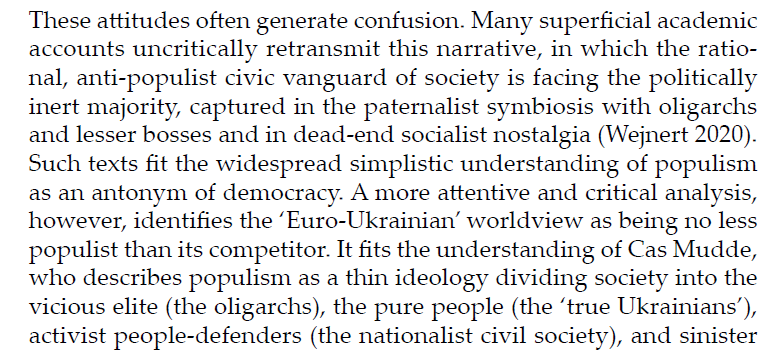
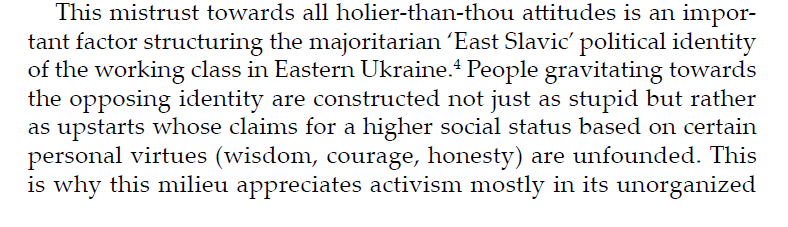
At the samet time we should be sensitive to how much cynicism there is in Russian and Ukrainian societies – towards elites, towards the ‘winners’ and the shallow self-promoters around the war efforts. In Russia there is a tendency to avoid the relatively shallow and symbolic elements of militant patriotism – most people find the endless aggressive propaganda shown on television repulsive. Apart from a few public events and locations, there is no spontaneous celebration of the armed forces or the Russian military. The minority that actively supports the war complains about the indifference and even hostility of the majority to their efforts to help the war effort.
This is why I sometimes criticize the BBC for its silly focus on militarism when its capable of much better, more human coverage (thanks to Mediazona and Chronicles). Nonetheless, any sociology of Russia should look at who and why they actively support the war, but this requires going beyond opinion polling and actually talking to people about why they knit camo nets or send donations to the front. And this is something only people like Public Sociology Lab and Aleksei Miniailo’s colleagues at Chronicles are doing – along with the interviews and observations in my own book. Chronicle’s latest field research shows that 54% of Russians are willing to admit the war negatively affected their ‘everyday lives’ and we know this is an undercount. Only 9% agree that the war improved their lives.
Of course, there remain important differences: for Ukrainians the future of their state is still immediately in question. But for Russians too, so much musing is about what started this war in the first place – the beginning of the end of Putinism. Despite what some people write about Russian war salaries, few have benefited materially from the greatest disaster of Russian statesmanship of the 21st century. Citizens of both countries feel inflation and the transition of resources from social to military purposes intensely – and with increasingly resentment. Indeed, different kinds of political resentment should be an important part of research for both countries.
If there is one insight from your research that should be clear to the public – what is it?
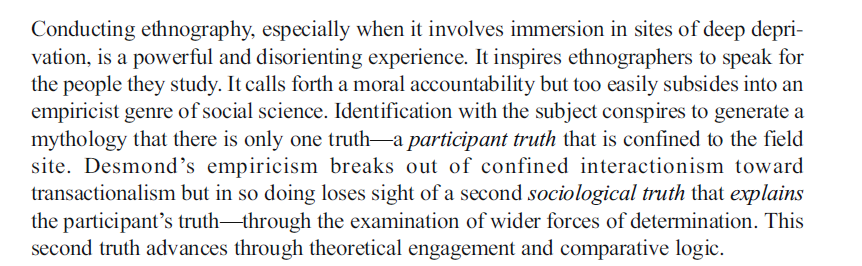
Despite war fatigue, and in Russians’ case, deep-seated unease about the decision to go to war, in both countries ordinary people are more civically active than ever as they try to make small changes to improve the lives of people and the environment around them. Without ethnographic (anthropological) research, it’s hard to dig down to uncover the strong forces of social connectiveness that have a life of their own beyond a focus on ‘big politics’. That’s why my book is called ‘Everyday Politics’ – because this term allows us to unpack the long-term, tectonic shifts in the social desires of people. They coalesce into small ‘intersubjective’ actions which exceed the sum of their parts and make people more than individuals or representatives of their respective nation-states.



 Postsocialism