conscripts in Rostov clean up after Wagner has left. June 25, 2023.
I just wrote a piece on the Prigozhin farce for oD [link to article]. There, I talk a little about how frustrated I am with how social media is ‘event captured’ leading to people uncritically echoing grifter takes and no-nothing hacks. I also say a little about how the ‘march of justice’ on Moscow shows how easily we are pushed off balance. People immediately assumed a coup and the collapse of the hyperventilating paper-bag that the Kremlin appears to be at the moment. I am writing in my book right now about how difficult it is to separate the regime as a political constellation of players and interests from the ‘state’. The state is often seen through a rather narrow lens of complete dysfunction, or narrow coercion, or just incompetence and infighting. And sure, all those things are there. In my book I detail many examples of improvised governance that belie a simplistic framing based on notions of ‘state effectiveness’ and ‘state capacity’ – both of which are actually much harder to clearly define than you would think.
Of course there’s a lot going on that is opaque, but on one level Rob Lee best summarised things: this was a ‘factional dispute’ that became a public challenge and which gained a temporary solution (Prigozhin goes into internal exile in Belarus and his motley crew are somehow subordinated to the army). Joshua Yaffa wrote that Putin’s rule rests on cynicism and detachment – hence Yaffa saying that many were sitting on the sidelines. I argued that focussing on factional elite conflicts leads to those aspects overdetermining the picture. In simpler terms, sure, ‘politics in the absence of politics’ matters, but so do institutions, even in Russia. And my gut turned out to be right – institutions of state, in a lacklustre manner, still have a shape and an agency of their own. I pondered whether this was more than just Prigozhin versus Shoigu as a political conflict. In reality it saw the army as an institution ‘win’ in terms of who is running the war. Ultimately this means Putin backtracking on a major decision to dangerously flirt with allowing a suspension of the idea that the state is the only legitimate monopoly on violence. And I noted that this is entirely of a piece with Russian history – with the army as a trusted institution that balances between extremes. This seems perverse. People don’t trust their kids to the army because it is corrupt and brutal. But they do trust it as an institution because, as we saw in Gorbachev and Yeltsin’s time, it correctly perceived which faction had broad legitimacy. Under Putin the promises of genuine military reform gave way to more cronyism and corruption. The army is a shadow of its former self under Shoigu which should give more than pause for thought about the nature of his political identity. Despite that, it’s remarkable how little attention is paid to the army as a genuine institution with its own identity, history, and preferences. It still is a world apart from the security services. And by ‘institution’, I am mainly talking about how many rules, shared-assumptions and agreements persist and reproduce themselves informally within the shell of the formal institution – a state of affairs that needs much more attention in all social science on the Russian state.
Similarly, it seems we have it all the wrong way around with thinking of Prigozhin as this widely popular populist warlord. Sure, there’s a constituency that would like him as one in a long line of outsider extremists (although he’s consciously playing a part there too). These are, frighteningly, the war supporters – that minority who genuinely believe in a fated and fatal mission. Yesterday though, Prigozhin was little more than a chthonicKaren, driven to shooting down some defenceless aircraft and bleating at two extremely experienced and integrated elite military figures that they were ‘dissing’ him. He was, by the way, armed and in his usual cosplay fatigues, while they, not needing to try to appear something they were not, were in loose military office attire, disarmed, but merely mildly discombobulated and a bit embarrassed. For me this showed that Prigozhin remains that wannabe capo not quite in the mob. He’s carried out a series of murders and the boss smiles at him from time to time, but he’ll never be a made man, let alone sit in the poker game with them. And these, rather non-descript military men knew that, even as he made a theatrical flourish of holding a gun to their heads. Prigozhin is a buttonman and a bagman needed for the emergency stage in the war, but probably no longer. And while he verbalized his Karen complaint to the authorities, because he can’t get through to the boss, he really understood the writing on the wall and quickly acceded to the offer of internal exile. No one will forget he was just a petty crook and hotdog seller, stirring up mustard in his mother’s apartment.
We know that the army did not want this war. We know that before the war less than 10% had any enthusiasm for military action, let alone invasion. We know that the war is at best seen as a massive challenge by the military. At worst it’s privately acknowledged as a mistake and even a disaster. The regime insists, but the state persists. This of course is highly disturbing to the vocal Anglophone war bros, hence the enthusiasm among them for a coup. Short-sighted and highly counterproductive to Ukrainian interests, that outcome was never likely. Even now, looking at this as weakening the regime is misplaced. It might hasten the departure of Putin himself, but that may not change very much at all. This was the classic Russian bunt [mutiny], or miatezh [insurrection]; spectacular (but not necessarily extensive) violence as a form of political communication. As a ‘complaint to the authorities’ in a land where politics has to take place without Politics. Everyone knows they up-there are largely indifferent, but there is always a dirty protest one can make and who knows, it might have an effect.
If Prigozhin served as the Chthonic Karen, the war machine nomad who wants to undo the state to keep on moving through smooth space and break all the rules, then what is the regime? The Chthonic flip-flopper who doesn’t really know what to do but knows it wants to survive? Meanwhile the real plasticity and improvisation is observed in the institutions of state – they have their own agendas, their own interests in continuing the charade. They see that Prigozhin type figures are a threat to the continuous state-formation, its sedimentation – as Deleuze and Guattari characterise it. And what about the people waiting for selfies with the main character of the hour? Observers mistakenly seemed to think there was broad support for a potential populist replacement for Putin. On the contrary, there’s little enthusiasm for Prigozhin. Here again we have a great example of the problem of online punditry and social media analysis. There were scenes of jubilation and the greeting of Wagnerites, but others with local knowledge tell a more convincing story – of widespread fear and the understanding that Rostov was now ‘hostage’. But there was a kind of ecstatic discharge of tension, as it became clear that Rostovians were not going to have to share the fate of Mariuopolitans. After all, Russians are well aware of what their state is capable of. Whether it acts coherently or not.
Me on my way home, pondering the deep insights of the latest Pomerantsev piece
Peter Pomerantsev wrote a piece in the Observer (Guardian) about Russia and Russians. As readers will know, this kind of thing triggers me.
Here’s some things he wrote. He starts with some incisive and original political analysis:
“The Kremlin [is] like a loser smearing their faeces over life.”
“senselessness seems to be the sense”
“To Russian genocide add ecocide”
Then he quickly moves on to historical destiny:
“Russia is [not] driven by some theory of rational choice – century after century the opposite appears to be the case.”
“Few have captured the Russian cycle of self-destruction and the destruction”
Citing Tetyana Ogarkova and Volodymyr Yermolenko [yes, that guy who deleted an infamous tweet on how Russians are the new Asiatic hordes that Ukraine defends Europe against], Pomerantsev talks about
“Russia [as] a culture where you have crime without punishment, and punishment without crime”… “while Nazis had some rules about who they punished (non-Aryans; communists) in Stalin’s terror anyone could be a victim at any moment. Random violence runs through Russian history.”
Maybe someone should remind Peter that this kind of speech is considered by many to be Holocaust trivialization and a gateway drug to antisemitism.
After a left-field lurch into psychoanalysis of the death drive (Did the author pinch this from Etkind? He doesn’t appear to really understand it), Pomer writes:
“In a culture such as Russia’s, where avoiding facing up to the dark past with all its complex webs of guilt and responsibility is commonplace, such oblivion can be especially seductive.”
The author ends on the confident note:
“Pushing the strange lure of death, oblivion and just giving up is the Russian gambit.”
***
The Observer asks people to send comments to their op-eds. I wrote one and sent it off immediately, but curiously, for this piece there are no published comments. By contrast, a piece about Elizabeth Gilbert pulling her novel set in Siberia garnered 150 published comments almost immediately.
I won’t bore you with my short unpublished response as anyone reading my blog would already know what I would say. Instead here are some comments from Twitter accounts:
“Alright, since everyone is commenting on it one way or another… I suppose yesterday was the day of the week when The Observer publishes some Nazi apologetics. To say that, at least, “Nazis had some rules about whom they punished” is a woeful thing to write.” [Legal Scholar]
“This exercise in psychoanalytical cultural relativism is a gift to the Kremlin. By locating the origins of Putin’s genocidal war in Russian culture and history, it exonerates the leaders who ordered it and the security forces and mercenaries that implemented it. 1/6” [renown scholar of nationalism, sanctioned by Russian government]
“it’s understandable why some Ukrainians would react to the invasion by lashing out with cultural essentialism, but less understandable why the guardian would endorse it”[anon account]
“Russians worship death, Russians hate life, etc. This stuff has been written about Palestinians & Arabs more generally since the 60s. It’s racist dehumanisation. In the case of its original targets it said everything about the authors of this propaganda than those targeted by it.” [anon account]
“Maybe I’m being unreasonable here but I really think that “Russians have a culturally innate psychosexual death urge” isn’t the sort of thing that ought to be acceptable to say in the pages of mainstream newspapers” [anon account]
“stupid icing on a stupid cake.” [anon account – specifically about Pomerantsev’s grasp of Russian literature]
Of course, most responses were not like this. They were fulsome praise. Often from respected academics and journalists.
Maybe I’m completely jaded, but I do think this could happen. Not for political reasons (there is no public ‘demand’, nor law-enforcement logic), but because it would be a great new post-Covid scam for siphoning money to cronies (the PPE scandal in UK): a new frontier for the carceral state-capital matrix.
Channeling the Testimony of John L. DeWitt, April 13, 1943, House Naval Affairs Subcommittee to Investigate Congested Areas, who almost said: “I don’t want any of them here. They are dangerous elements. Their loyalty is in doubt… It makes no difference whether they’re citizens, a Russian is a Russian. Citizenship does not determine loyalty… We must worry about the Russian until he is wiped off the map.”
However, we now know, thanks to the progressive press, that Russians are psychoanalytically predisposed to morbid feelings and a tendency to ‘sink back into inorganic matter’ (thanks, Peter). Therefore they should be paired carefully to suitable locales. Perhaps the Fens and Norfolk? In WWII it was the Isle of Man. After all, the Russians are likely to be more or less ‘normal for Norfolk’.
Nonetheless this being UK/EU we should also make this process as bureaucratically painful and opaque as possible. Therefore instead of WWII’s three categories of Enemy Alien, we should have at least 7. Category A, privatized prison; B, tagged at own cost ; C, exempt on basis of writing for the Guardian; D, fruit and veg pickers; E, Bexhill-on-Sea internment (Alfonso Cuarón scheme); F, Dancing on Ice posted worker; G, Normal for Norfolk scheme.
Once more, all this will increase GDP and help struggling companies like Capita – not content with hounding disabled people to their death – could be contracted to do the RIP assessments. Russian Ideal Person assessment. Just like in 1940, I’m sure the very smart people who write those clever columns at the Observer, who write about the ‘seduction of oblivion in Russian culture’, will sail through such assessments.
Although there remains the tricky topic of racial purity laws. Like that pioneer, the government of Germany in the 1930s, we need a judicial body to work out where to draw the line – 1/16 Russian, like in the US? Or only 3/8 “Mischling ersten Grades”? Again, I foresee a new legal industry. We could even get a bright young legal mind to come up with this: “A mixed-race child originating from forbidden extramarital sexual intercourse with a Russian that is born out of wedlock after 31 July 2025 will be classified as a Russian.”
But, before you object, no, I’m not trivializing the Holocaust because I’m making comparisons which the Guardian says are ok! “while Nazis had some rules* about who they punished (non-Aryans; communists) in Stalin’s terror anyone could be a victim at any moment.”
This post is a shortened translation of an interview A. Yurchak gave in April 2023 to Radio Svoboda.* Any mistakes of translation are my own.
The original is here. I mainly cut the interviewer’s text
Interviewer: I was sure that the Soviet Union would stand for another thousand years, but I was not at all surprised when it disappeared. I kept thinking that during the years of Brezhnev’s stagnation, disbelief was universal, and people pretended to be serving a number at meetings, rallies and demonstrations. In fact, the entire nation was a dissident. But you have a more complex theory. What was it, if not a pretence?
Yurchak: Let’s start with your term, “believe” or “do not believe.” As a social scientist, an anthropologist, it seems to me that, in principle, we should not start with this kind of description of the psychological attitude of a person: people do not believe in all this, everyone pretends. You yourself just described your family to me, which launched ships into space for the sake of all mankind. One doesn’t have to believe in the statements of the party, in communism, but some socialist ideas, values - they were certainly important to them. The point here is not faith, but the fact that the ethical, philosophical fabric of this society was arranged in this way, where people worked as doctors, teachers, engineers, mechanics or in the space field. They didn’t do it because they were forced to. They might not have been listening at the meetings to particular resolutions they then voted for, but that didn’t mean the vote was meaningless. The very process of voting allowed them to then participate in the life that made sense to them. And often this life was filled with meanings that were not completely controlled by the state.
That is, to say that everyone was pretending is wrong. In general, the concept of “pretence” […] Is it possible to describe the structure of some society in such terms – “everyone pretends”? Basically no. Because, of course, in our daily behaviour we manifest ourselves differently in different contexts, we have many different masks. This does not mean that we are more real in some of them, in some less. You will not say to your friend after a serious illness: “How terrible you look!” Maybe you will say in one context, but in another it will be completely inadequate. Not because you are hiding the truth, but because the meaning of your statement is not just how a person really looks, but that you need to support a person, preserve your friendship, your social fabric, in which you are woven together.
The same during voting, for example. The meaning of this act, the voting ritual itself, remained important in many respects, because it allowed people to reproduce their subjectivity. They understood that the statements “We will all live under communism” do not make sense, in principle, it was not even expected from the state that everyone would believe in it, but it was important to participate in the ritual, because it allowed the entire fabric of socialist society to be reproduced. Including quite important meanings, which afterwards lost. […] Secondly, it is trivial and wrong to talk about a democratic “normal” society as a society of some kind of truth, and the Soviet one as a society of general pretence.
Let’s start with the term “nostalgia” […] People have a certain emotional relation to the past, to the memory of what was, and this cannot be described in terms of their attitude to the entire Soviet civilization in a general sense, with all its slogans, with all its lies. Much of it was due to the fact that people had solidarity, they believed that they were doing some important things, a doctor in a hospital or your relatives at the cosmodrome. Accordingly, for many, and not only in the 1990s, as they say now, but in general throughout the post-Soviet period, this solidarity, the idea that something important must be done together, was destroyed. Maybe this was sometimes in spite of the party, completely without thinking about the slogans about communism, but it was part of the socialist existence. There were important moral values that people, when choosing their profession – maybe not all, but very many – really shared, without thinking too much about it. They reflected about it only in retrospect when they lost it.
What happened in the 1990s? It is often said that there was shock therapy, everything was privatized, everything collapsed – this is partially true, this is one feature, but at the same time there was the other side of the same coin – this is that there was a complete political deconstruction of what promised to be democracy. For the sake of not going back in time, let’s rig the 1996 elections. For the sake of not returning to the past, let’s shoot the Parliament. That is, your opinion is not important to us, it is important for us now to quickly pull some levers in order to simply create the impossibility of a rollback, and the mass shared agreement of people is not important. In fact, it was, of course, pure deconstruction, the dismantling of everything that was expected, of this entire democratic machine. Then Putin brought it to its climax with his centralization and verticality, but it started in the 1990s.
Accordingly, people can be nostalgic, perhaps without even realizing it for what exactly: for solidarity, for the community that existed after these Komsomol meetings were over. They then went back to work, had parties, they had normal institutes, laboratories, friends, and many of them did this, fully conscious of their existence as something important. Again, I can go back to your example of circles of shared interest and hobbies. The loss of this, the atomization of society, the loss of solidarity, the loss of an idea aimed at the future and that this was important for everyone, important for history. Someone was engaged in literature, space, physics, philology, someone, maybe, had other ideas. But then everyone was in a particular relation to moral and cultural values, which were not necessarily articulated by people on a daily basis. They could speak very cynically about “sovok” [typical Soviet person/way of living], but nevertheless, these values existed and there was solidarity. I call this in the book “communities of one’s own people.” There were a lot of such communities, I’m not saying that everyone, but a huge number of people. Accordingly, in the post-Soviet period, many of them were destroyed. And for people of the older generation, it is very difficult to recreate it.
We remember the 1990s very well. People lost friends, lost communication, lost economic and political opportunities, their world narrowed. For some, on the contrary, borders opened up, a cosmopolitan existence appeared, trips. And someone had such an emotion of some longing, directed to the past. This is not longing, as you put it, for “sovok”. By the way, I would also warn against this term, because it lets us know in advance that it was the wrong emotion, “sovok” is something bad, it’s not a positive term in principle, but something sneeringly bad. It’s best to approach this in a neutral way.
It seems to me there is not so much nostalgic for “sovok”, at least among the majority, but for those things that I described, which were lost by so many. And there was an idea that with the emergence of freedom and democracy, on the contrary, these things would flourish. But it turned out that the reforms in post-Soviet Russia were carried out in such a way that democracy was equated with a rather cynical version of the market. But they are not the same thing, often they are in conflict with each other. Accordingly, instead of blossoming, all these things were lost, crushed for many people. I think that’s where this longing came from, this emotion that we call nostalgia.
There are a lot of studies on nostalgia. Of course, I’m simplifying a little, because there are different types of nostalgia for the past, people have very different attitudes. In principle, I have described the general meaning of how to relate to this kind of memory. Nostalgia, in principle, does not mean a return to a specific past – it is a return to a past that you know and feel as impossible, you cannot return to it. This knowledge of the impossibility of returning in a certain way structures nostalgia. This is not a desire to return – this is a longing for what’s lost and for some elements of the lost that can no longer be recreated.
[…]
I have already spoken about social solidarity or about the idea that you are doing something that, in principle, has value in itself, because it has historical value. Not everyone will necessarily think in those terms, but it is a future-oriented value. For many, this has disappeared, business has appeared, for example, for people who are successful, but they are cynical about it. Some people like it, but for some it’s just a way to make money. They can be nostalgic for some philosophically global things, they can be nostalgic for communication until four in the morning in the kitchen with friends. That is, this emotion does not necessarily have to be manifested only in people who now live in the role of losers.
[…] one cannot reduce Soviet reality to pretence, and Soviet reality to ideological slogans. Soviet television, theater, all these performances – it was all part of the socialist project. Quite a paradoxical part. It often seemed that it did not coincide with what was happening at the political meetings, but in principle it was all part of the socialist project. Why didn’t I write about television? Because the task of my book was not and is not to create a portrait of late socialism. I wanted to find some changes within the system, some breaks, when you can participate in paradoxical things at the same time, change their meaning by such participation. Which ultimately led to the fact that, on the one hand, the collapse was unexpected, because it was impossible to describe such an expectation, there was no common language, there was no way to look at the system from the outside. On the other hand, it happened very quickly. In retrospect, it became clear why it happened.
I had to feel for the mutations within the system that were taking place before it began to collapse, which prepared this collapse in an invisible way. To do this, I had to collect a certain number of examples from different areas. I describe various circles there, I describe physicists, I describe Komsomol committees, I describe various official and unofficial artists, I describe various physical laboratories. Television is not important to me. You insist that it was an important part of everyday life, so I had to describe it. But I am not describing a portrait of socialism, I am groping for mutations inside it that prepared its collapse, but at the same time were invisible to those who participated. You can say the same about the theater, you can say: why don’t you describe mathematicians, and why don’t you describe the cosmos, why don’t you describe the kishlak in Kyrgyzstan? I do not describe, because I do not create an average portrait of a certain Soviet person. In general, I think that this is a completely absurd project – to draw some kind of portrait. It is not interesting for me, it is not my task. My task is to answer the question: why did no one expect a collapse, and yet everyone was ready for it, without realizing it?
You use the word “propaganda”. You understand it as some political statements: “we are building communism”, “they are rotting” and so on. Propaganda under socialism was a broader concept. It also included what you yourself are talking about – about the universal dimension. Let’s drop the term “believe” because it’s not about faith. This is also part of the socialist project. It’s not that other societies do not have this. But in socialism it was some very important part, it was talked about all the time. The comprehensively developed personality: one should have an interest in literature, one should have interest in science, one should have interest in space, and so on. Not everyone was interested, some were completely cynical about it, but a lot of people were doing it. Is this part of propaganda or not? Yes.
“Propaganda” is a bad word. If we discard the negative meaning of this word, then, of course, part of the propaganda worked well. It created a Soviet person […] who may have treated Leonid Brezhnev’s speeches on television cynically and with laughter, but this does not mean that they were not Soviet people. Therefore, if we talk about the language that I call “authoritative” in the book – the ideological language of editorials, slogans, speeches by various secretaries of the Komsomol, the party, and so on – indeed, it was transformed in the late period of the Soviet Union into a rather ritual language. It was necessary to reproduce it, and it was possible not to go into it too much, at least in most contexts, in the literal sense of these statements. So you could laugh at them. But at the same time, these ritual speeches, ritual elections, voting for some resolutions at meetings – these ritual actions allowed many other socialist things to continue to exist, which were also a part, a product of propaganda, but in a good sense.
All these little groups of yours that you went to, what you studied, the fact that your relatives launched ships into space, and so on – this is also part of the entire revolutionary project, which carries ethical values, this is not in spite of the party and Brezhnev. There was a huge distortion of everything through the party nomenclature, but to say that it was completely emasculated is also impossible. That is why these things were important to you.
The Putin system is fundamentally different from the Soviet one – in terms of the world order, the economic system, of course. It does not propose any ideology, it does not propose any project, it does not build any concrete future. Rather, it says that we must reconstruct something, return something, we must somehow feel offended. Even in this regard, if we start to understand, it turns out that it, this very large propaganda machine – television, telegram channels, a huge number of different other channels, various kinds of propagandists, various “troll factories” and so on – gives a lot of contradictory messages and meanings that are not built into one coherent ideologeme.
The task of Putin’s system is not to plant some coherent picture, but to create the impression that there is no truth at all, that any truth hides certain financial and power interests. In principle, it is impossible to believe in anything, it is impossible to fully understand anything. No wonder they keep throwing new versions of different events all the time. Remember the Malaysian “Boeing” in 2014. I was then amazed at how many versions there were of how he was shot down, and these versions contradicted each other. This is not a problem for such a propaganda machine, because here it is important not so much to describe what actually happened, but to give the impression that it is impossible to understand what actually happened. This is completely, radically different from the Soviet message, where there was a specific idea of a specific classless society. We can talk about how it was all completely distorted, completely cynical, and so on, the entire Brezhnev nomenklatura class no longer believed in it, but nevertheless the propaganda was built around this, it had a specific message, a specific orientation towards the future. And here, on the contrary, there is no specific message, there are a lot of contradictory things. The only thing that unites them is that they all together must reproduce a specific vertical of the Putin regime. Because the only way to bring all these different versions together is to have a centralized vertical.
Not without reason, by the way, one of the main mechanisms of this propaganda can be called a “troll factory”. This is a metaphor. It is not the only mechanism, of course, there are still all these propagandists like Vladimir Solovyov on television. “Troll Factory” is a good metaphor. What are these trolls doing? They sit in social networks, pretending that they are ordinary participants in the discussion, they share some memes, write some comments. If you look at the whole array of what they do, you will see that they write contradictory things. As we now know, Prigozhin’s “troll factory” in St. Petersburg tried to influence the American elections. They wrote from the far right of the Republicans, and from the position of Democratic Socialists, and BLM, and from the pov of those who are their opponents. Again, the idea was not to promote some true description, but rather to confuse, create the impression that there is no single picture, it is impossible.
How does television work today ? You look at Solovyov – it’s basically a talk show where there are a bunch of screaming people, they have different opinions, they don’t necessarily agree with each other. This is not like an analytical broadcast of the Soviet era: they describe to you specifically how you need to understand what is happening. But here, with Solovyov, outwardly everything looks like a struggle of opinions, but the main idea is that nothing can be trusted. A very important effect of this propaganda is not that it is believed. I think that people who are not fools do not believe, moreover: qualitative sociological, anthropological studies show that the majority is not sure, they do not believe anything, they are not fooled at all, they are just trying to protect themselves from all this. This is the main effect – the feeling that nothing can be trusted. Let’s see how this propaganda describes what is happening today regarding the war in Ukraine: either this is a special limited military operation, then this is the salvation of Donbass, then this is denazification, then this is a fight against the West, then it’s not about Ukraine at all, then Ukraine does not even exist. There are many different versions, they are constantly changing. It is clear to everyone that there is no single truth. This is very important, this cacophony is the main principle of Putin’s propaganda. that there is no single truth.
Now, moving on to the second part of your question: why are people fooled? They are not fooled by anything. I don’t know where we get this information from. If from some sources such as surveys, then I must tell you that these surveys are completely impossible to trust. Polls in which a person is asked a question that must be answered “yes” or “no” do not work well even in peacetime. It works well if you ask, “Who will you vote for tomorrow, this one or that one?” But when they ask: “How do you feel about the operation, do you support this war?”… Excuse me, first of all, today it is very dangerous. We know that recently the father of a girl who drew an anti-war picture was arrested, the girl was sent to an orphanage. Everyone knows about it, in all the news – “a traitor and agent.” That is, to answer the questions put by a person whom you do not know, who most likely represents a certain organization, and the results of the survey will then go to the media, to various bodies, and so on – how will you answer him? If you are not sure, you are more likely to say: yes, I support it. Interestingly, the vast majority of those approached say: sorry, I’m busy. They just don’t answer. And when they say “I am for”, it is very difficult to understand what it means. Most likely, this means: if I say that “I am for”, this is the same as voting “for” at the Komsomol meeting, then they will leave me alone, I will be able to exist inside the system and do things that are important to me, for my country the things that, thanks to this “I am for”, I am allowed to do. I can be quite independent of the state then. If I say that I am against it, I may become dependent on the state, I may be arrested, I may be exposed, who knows?
Second, people don’t really understand what’s going on. The vast majority of people are neither “for” nor “against”, they are somewhere “in between”. In principle, they do not really want to participate in thinking about how they should relate to this, because it is terrible for them. In principle, of course, they do not support the war, but it is difficult for them to say it out loud for various reasons. Firstly, fear, I have already said, and secondly, it does not lead to anything. People have been taught by long experience throughout the post-Soviet period, especially during Putin’s time, that any political activity does not lead to anything good. In addition, when you speak out against something, if you are alone, then this also does not give any result. If there was any opportunity to hear the opinion of others who are also against it, to come out with them, some kind of movement, then very many, who today say “I’m busy” or “I don’t know” would say “Yes, actually I’m against it.” But there is no opportunity to mobilize people for such an action, there are no mobilization channels, no people who would do it, no opportunity to be on the street – you will all be tied up and imprisoned. In such a situation, it is very difficult for a person standing in front of the one who asks him a question to answer “I am against it.”
In addition, everyone reads polls by the Levada Center and VTsIOM, which say: 80 percent of Russians, or 60 percent, support the war. Since they all support, if I now say that I am against it, then I am in the minority, no one will understand me. That is, polls carry a negative message in this sense – they support the system, they support Putin’s power, because people hear that everyone supports it, which is not true at all, but when they hear about it, they also don’t say “I am against”. By the way, the fact that Radio Liberty and all our independent media say that such a percentage of support the war is also bad. We need to be analytical, and not just repeat after them that everyone supports, because in this way we all pour water on the mill of the Putin regime, greatly simplifying the result. Social networks are not an independent platform where you can speak anonymously. You know very well that there is no anonymity there, you can be exposed in a jiffy. Therefore, it is also dumb to speak out there.
As for how to measure people’s feelings… Indeed, many, perhaps, in principle, support not a war with Ukraine, but the idea that NATO is trying to put pressure on us, that Russia has been surrounded, and so on. Thus, if you ask the question not “Do you support the war?”, but “Do you think that the West behaved incorrectly for a certain number of years?”, give examples, I think that the figure will be different. Many will say yes, I think so. If you ask the question: “Do you support the bombing of Ukrainian cities, the fact that Mariupol was razed to the ground, what happened in Bucha?”, the answers will be completely different, the vast majority will say no. In addition to these surveys, there are also so-called qualitative studies. They are also very difficult to carry out now, but there are people who do it, sociologists and anthropologists. I know two groups in Moscow and St. Petersburg. They have very interesting methods. They conduct hundreds of interviews. It is an interview where people simply begin to trust them, because they explain who they are and what they are. Not even an interview, but semi-structured conversations, not a “question and answer”, but a conversation with a person. And there are completely different numbers.
When a person can talk about what is happening, and not answer a question on the run in the street, the numbers turn out to be different, there is much less support for the war. There is a lot of confusion in these results, people are not sure what is happening, they just do not understand. Because no one can explain to them what is happening, I think that Putin himself does not know what is happening. He thought one thing, began to do another, today a third, and so on. The general idea of ressentiment, that we should punish everyone, they do not support. With a long, long tirade, I try to answer the question of why everyone is so fooled. No one is fooled, people understand a lot more than we think. You just need to understand the context.
It’s not my job to comfort you. In fact, this is a catastrophe, including a moral one, we are all participating in a moral catastrophe. The catastrophe is not that everyone in Russia is fooled and supporting the war, but that people are simply powerless, they cannot mobilize against it, at least not yet. I will tell you more: if there are changes at the top, if there is an opportunity, as it was in 1985-1986, of a mass movement for reforms in the country, for democratization, real democratization, for the decentralization of the country, then this will be a huge movement, there will really be the support of the majority of people. Now they can’t do it – that’s the catastrophe. The problem is that people are powerless now, or feel they are.
I write in my book that the term “internal emigration” is not entirely correct, because it means leaving for a completely different reality. It is impossible inside the country, you still remain in it. Describing the Soviet way of slipping away from state control, while remaining inside a completely Soviet person, I use the term “vnenakhodimost” – [outsidedness/exotopy]. You seem to be both inside and not inside at the same time – this is somewhat different than emigration. Internal emigration is a metaphor.
Of course, now the majority of people live in a state of outsidedness. The main message of today’s propaganda is: don’t interfere in anything, everything is incomprehensible anyway, they’ll figure it out up there. Accordingly, you need to take care of your life. The state has narrowed this field, before it was quite wide, you could go about your life, provided that you don’t delve into it, that you don’t go to any rallies, don’t participate in political movements. Not only is it possible – you are called upon to live like this today. This is a way to demobilize the population.
This way of living outside, inside and out at the same time, has political potential. Because it is precisely for this reason that if people do not fully understand the political agenda of the state then they don’t have to support it, and this is not required of them. They are required not to participate. They have the potential for political mobilization. When everything changes, it will turn out that this potential is very large, I think. It was the same during Perestroika: no one expected that the circulation of Ogonyok and other publications would grow a hundredfold in one year, that people would leave the Communist Party, that then there would be all these demonstrations, that people will participate in political discussion and so on. It seemed that it was such an amorphous mass, not interested in anything. But this was not the case at all. I think it will be the same now.
Alexey Yurchak. 11 April 2023
*At the time of the original’s publication I thought it was a really important contribution by an anthropologist to understanding Russia at war and thought it should be translated. In my commentary on Twitter I made a number of egregious mistakes and so this blogpost is in part my way of apologizing to Alexei.
In the piece I talk about four ‘misconceptions’ about Russian society. I won’t repeat the full piece here. And really they’re not quite misconceptions, more assumptions that get wide coverage online and in the media. The first is passive and active war approval. I’ve written about this often.
Second, I question the simplistic views about mobilization as a ‘success’ and about how people relate to it. I presented on this topic at a conference in Glasgow last month. That paper will serve as material for two book chapters I’m working on now.
Third, I saw some pieces about how there’s a new economic compact between Putin and the people. And even a long post about how the government has bought off Russians. I disagree. Anyone reading this blog will remember I frequently write about the parlous economic situation. War hasn’t changed that. We’re fortunate that Nick B-T is posting again. My piece relied on some of his recent political economy writings.
Fourth, general war salience is low. This is hard to write about. People cannot imagine the way others’ filter information and media – that’s why ‘connective ethnography’ is a thing – actually observing how people use the internet! War is both normalized out of mind, at the same time it is ever present. If I want to say anything in this piece is that dissociation is a ‘normal’ part of normalizing war. Once again, its an unpalatable message, but it’s important to be honest about it. And really, dissociation is something we all do, all the time – when we walk past homeless people, when we watch the news.
Having said that, when forced to confront the bigger picture, some people continue to consolidate ‘defensively’ around feelings (not really coherent ideas) that justify or explain the invasion and which allow them to continue their lives in as mundane a way as possible – that it’s the West who is the aggressor, or that Ukrainians are dupes of their ‘fascist regime’. Some of these feelings are based on internally-coherent reasoning, others are not. Once again, my main point is that defensiveness is ‘sticky’. Just like everyone is liable to prejudice, most people are subject to irrational defensiveness of their homeland, their world-views, their way of life. This is not the same thing as ‘imperialmindedness’, although it correlate or cohabite with it. I discuss this briefly in the piece, and at at length in the book.
[Hi publishers out there, it would be great to hear from you!]
+++
Before the war started, I spent time trying to answer the question of how war would change Russia. My hunch was ‘the same, but worse’. As a researcher I continually ask that question, both of myself and my many interlocutors (obligatory doffing of cap to the work of Public Sociology Lab who do similar, but distinct forms of fieldwork). I am a researcher with long-term contacts from all walks of life who can get credible responses and avoid many, if not all biases those studying Russia are unavoidably subject to.*
My job as an ethnographer is to observe, record, and interpret, hopefully seeing through people’s guile and denial. This applies to perspectives in the West too, where often we have as many biases as those in Russia. I don’t pretend to complete objectivity, but I do have confidence in my sources and in the parlance of social science, their ‘reliability’ and ‘validity’. So much of what we see about the war is filtered heavily. What we see among ‘Russia watchers’ is almost always ‘secondary’ data, manipulated, whether consciously or unconsciously – this is true of surveys, focus groups, and social media research.
*Unusually, oD allowed me to include a word on methodology in the piece. The more I write about Russians in wartime (and my view is not exactly controversial among scholars), the more pushback I get – often on methods. I keep coming back to this very old but gold piece on the reliability, validity and credibility of ethnographic research – what it does and does not do. It’s hard to have a conversation with other approaches when so often ethnographers are dismissed as using ‘journalistic’ methods. When it comes to validity of research in wartime, there’s a decent argument to say embedded ethnography has more going for it than any other way of getting to people’s feelings and opinions.
Kazan’s Day of Slavic Writing celebration on the steps of the Kamal Tatar State Academic Theater, which puts on performances in Tatar and other languages. (May 24, 2014)
In Varieties of Russian Activism, my chapter starts off the section on “The Building Blocks of Everyday Activism: Identity, Networks, and Social Trust.” Cultural spaces and events like national theaters and concerts, can serve as ideal spaces for fostering these building blocks. As the Russian political space for electoral politics and protesting closes, the cultural sphere remains a viable space for activism, especially concerning politics related to language and identity. Although government engagement with and management of cultural activity has been increasing, such as through the 2022 executive order on the “preservation and strengthening of traditional Russian spiritual and moral values” and the ensuing creation of Cultural Front of Russia divisions in Russia’s regions, it is not possible to entirely shut down the use of culture for alternative identity and political community building. Doing so would delegitimize the use of these venues and cultural forms for pro-regime activity.
In the chapter, I examine how regime supporters and anti-regime activists both utilize these cultural spaces in the capital cities of three of Russia’s ethnic republics, Karelia, Tatarstan, and Buryatia. Like that of many other authors in this book, this work contributes to the decentering of Moscow and the Kremlin in our approach to understanding Russian politics. People experience politics, and especially policies and activities aimed at nation-building, close to home. My comparative regional approach examines variation and similarities in how people engage with national theaters, concert halls, and other venues using observations from fieldwork and interviews conducted in 2014 and 2015-2016.
Some of the venues and activities I examine are connected to Soviet-era legacies. For example, the regional capitals, Petrozavodsk, Kazan, and Ulan-Ude, each have national theaters that were utilized in the early 20th century to promote regional language and culture as a means for bringing people across the USSR into the socialist project. Today, these theaters still receive government funding and support to put on plays and other activities in minority languages. When people come together to watch a play in the Karelian, Tatar, or Buryat language, they are supporting those languages at a time when their promotion is challenged through restrictive educational policies and clamp downs on language activist protest (see Guzel Yusupova’s contribution to this volume). While this activity does fall within the boundaries of permissible engagement with minority languages set by the government, it can still provide opportunities for those “building blocks of everyday activism” to form.
Cultural activities can serve multiple purposes that are both activism in their own right and can provide the foundation for future activism in other forms. First, they can promote and construct an identity linked to the particular language, dance form, composer, etc. featured at the event. Minority language learners can use a play for practice, or non-ethnic Russian cultural figures can gain a larger following, for example. Second, they are an opportunity for bonding over a shared experience of that identity, potentially strengthening community ties and revealing preferences. Audience members see others attending, cheering, and showing interest in the same language or topic that may be counter to the pro-regime line. Third, they are sites for Scott’s (1990) infrapolitics, or hidden politics that don’t appear political or threatening to government censors and officials, but that can convey messages intelligible to the opposition, pushing back against centralizing nation-building policies.
As the government tightens controls on language, culture, and values, it differentiates treatment of cultural activities. Promotion of Karelian language is okay within the bounds of the National Theater of the Republic of Karelia, but its promotion is not permitted through granting it official language status or through Nuori Karjala’s UN funding and engagement with Finnish groups, which resulted in a “foreign agent” label in 2015. Still, even the government funded cultural spaces can be sites for contestation over national identity and language politics. In the chapter, I demonstrate how the degree of this contestation varies across the capital cities and is shaped by regional contexts related to history, international ties, and intergroup relations..
Alexei Titkov posted this on his Facebook feed and, with his kind permission, I translated into English and edited it a bit. I repost it because it reminded me of some of the conversations I had in Russia last autumn when mobilization was at its height:
An almost invisible hero of last week:
head of the city of Nevinnomyssk (Stavropol Region) Mikhail Minenkov
Minenkov is a Lieutenant colonel (in the reserve), former paratrooper, sambist, chairman of the regional rugby federation. He went out to the square in front of the city administration – handing out stickers “SvoikhNeBrosaem Z” [We don’t leave a man Behind Z] and St. George ribbons.
Here we have direct quotes from Minenkov’s Telegram channel:
“Good evening! Good weather. People are already walking around without jackets.
So I brought stickers with me – a whole pack of St. George ribbons. I ask why there are so few St. George ribbons on cars – among friends, comrades, acquaintances. And everyone is afraid.
This is really embarrassing guys. The boys need to be supported. May 9 is coming soon, symbols must be supported. I urge everyone, printers, to print these stickers and hang them up without fear that they will scratch your car. To wear this St. George ribbon, to support our boys, to remember our grandfathers, this is very important.
And hello to all the chickenshits who are afraid of a scratch on their car.”
***
Alexei: Our editors are already being asked: what does this say about the mood in Russian society, its trends.
Answer: practically nothing. Only what we observe.
Wearing Z-symbols to ordinary people in everyday situations is most often inconvenient, or something. Even if ideologically “for” – they do not express it by external signs. And the matter is, most likely, not only of cars, which they don’t want touched.
For comparison here’s a story that I myself observed in recent months. Nearest Moscow region. On the way to the bus stop, every time I noticed the same balcony of the same five-story building. Balcony like any other: glazed. Last spring it began to look ceremonial: behind the glass is the Russian tricolor, on the glass is the letter “Z” glued together from stripes.
Nothing bad happened to the balcony: no cracks from thrown stones, no lumps of dirt. But in the summer, for some reason, the letter “Z” was gone, only the flag remained. By autumn, the flag was also removed, now it’s just a balcony like a balcony. Like all neighbors.
I do not think that the inhabitants of that apartment have changed dramatically or, as they say, “seen the light.” At least, we don’t hear “Chervona Kalina” being sung. But something made them remove it. Quietly, imperceptibly.
It would be good if someone studied such cases. The smallest of small.
Everything is made up of them.
***
Alexei ends his post there. But if you go to the Telegram channel, which, it turns out is a super patriotic channel, you find an equally telling comment under his video.
Natalya: “Excoose me [sic] maybe it’s off-topic, but maybe not. Who has heard that the Governor has decreed that blocks of flats must have toilets installed in their basements? In connection with the situation?”
The most liked comment under the feed is an anonymous attack on the mayor’s use of WWII symbols.
Maybe the point of my repost is that there’s a right way and a wrong way of doing social media research. The right way being not to hurry to draw conclusions and not to see online speech as ‘reality’, but to merely triangulate that speech online with what can be observed offline. And even then, be careful about biases. Given the amount of patriotic Z channels with lots of “likes” one could conclude the war is popular. Given the amount of downvotes and poo-emojis in response to such patriotic posting, one might conclude the opposite.
*Warning: this post contains both irony and seriousness. If you would prefer a milder academic, please ask for one.*
PostRussia meets today in Washington, Philly, and New York.
They agreed on the territorial dismantling of Russia, but they are less certain on their own name, styling themselves variously ‘Northern Eurasia’, ‘PostRussia’, ‘FreeNationsRf’.
As a self-avowed decolonization movement of the Russian Federation, which you would assume meant a degree of indigeneity in its make-up, it’s ironic that it is funded by US military-industrial money, peopled by mainly Ukrainian public figures, a Lithuanian, a Tatar (the only member with decolonial credentials), and one Russian political consultant in employment with a Ukrainian political party.
A recent interview with their most media savvy rep was entitled:
‘Russian mentality comes from Great Horde’.
Personally, I’m not happy as a Kalugan resident to be assigned to the “Republic of Chernozemye-Yugorussiya”. For one thing the flag is really shit and the capital is Voronezh.
Regarding the conference in the US, there are some respected names*, which I guess leads me to reflect on my own public engagement in the last 12-or-more months which could be summarized as ‘speak less and with more discernment about one’s interlocutors as well as one’s knowledge claims’.
Looking at the programme with 60-or-so named speakers at the event there are many speakers claiming representative credentials for ethnic and geographic communities within the Russian Federation. However, among the many political scientists, journalists and activists there is not a single sociologist. Not a single researcher – as far as I can tell – who is qualified to speak about the potential or otherwise of Russian people themselves to engage with a process of post-colonial transition, let alone decolonization. Not a single person curious as to how to build civic capacity to assist in the ”peaceful and non-violent decolonization… [and] control the collapse” [sic].
In the words of Ilya B writing for Doxa a while ago: ‘Real change is possible only if “decolonization” becomes a process by which Russians rework their own self-consciousness, their past and present, whose imperial and chauvinistic foundations have largely led to today’s war’.
It would be useful for people who want to constructively engage in this debate to revisit the work of one of its leading scholars: Madina Tlostanova. (I will write about others another time)
Memorably she employed three phrases: Russia, the ‘second-class Empire’, engaged in ‘secondary orientalism’ as a result of its ‘secondary Eurocentrism’. The old propaganda myth of the Russian Empire (Russia as liberator) has been reworked – Russian elites today appropriate the decolonial agenda as a tool for criticizing the West. For Tlostanova, Russian Imperialism lives on and was always a European colonial project; communism is a distraction. Decolonization needs transverse, coalitional forms of governance, not a recreation of ethno-states. Tlostanova seems suspicious of the ‘internal colonization’ perspective and the idea that ethnic Russians comprise a subaltern subject.
Whether you agree with Tlostanova or not, it is hard to see how the Forum in Washington advances the decolonial agenda in Russia. Some of her writings from more than 10 years ago have a certain resonance:
Russia’s complexity is a timebomb. The empire did not entirely disintegrate even today, continuing to impose its imperialist ideology onto the remaining colonies at the same time proclaiming a new nation-state image in its most reactionary, ethnic-nationalist form, multiplying internal racialized others with Russian citizenship yet no rights. Hyphenated identities are not really possible in Russia, as it does not even accept the western idea of the civil (not ethnic) nation, sliding more and more in the direction of biological racism and bubbled-up xenophobic constructs. The rotting ex-empire will finally disintegrate into smaller parts. Yet this will not help much, because the imperial difference does not generate anything promising, particularly given the specificity of Russian religious, political and cultural traditions. The looming completion of its disintegration as an empire would lead to even more chaos, bloodshed, and poverty for the population which simply had the misfortune of being born in this space, which still speaks a common language, but is no longer united spiritually or ideologically. [edited for length – original here]
This type of writing has a strong rhetorical effect today though there are numerous points Tlostanova makes that I and other scholars disagree on. Do you agree with her?
*It may well be that some representatives of indigenous peoples within Russia believe this is a worthwhile forum to advance their interests.
Regina Smyth*, Andrei Semenov and I have just published an edited book on activism. The book has nine chapters and 18 contributors. In the introduction the editors discuss the framing of the volume – broadly relying on three approaches to the study of activism: social identities and connections, frames, and local political opportunity structures.
Activism is any type of grassroots collective action aimed at redressing failures of governance, protecting rights, or demanding changes in policies enacted or imposed by elites. These actions emerge from and redefine participants’ relationships to their local communities and their perceptions of the meaning of citizenship (Fröhlich 2020). Activism varies widely across groups, issues, and regions. It also varies across individuals as they decide to participate or not participate, dip in and out of activism, engage in actions across issues, or move from local activism to national protest, as observed in the Navalny rallies that burst out in Russia in winter 2021. And since the war on Ukraine began and the scope of activism seemed to narrow.
In the Russian context, most local activists regard their actions as nonpolitical. As in other authoritarian states, the futile and aggressive nature of power politics leads citizens to distance themselves from institutionalized political arenas. For many local activists, politics is a dirty business. In contrast, actions that address local concerns are acceptable. After 2005, many local movements limited alliances with political parties or political opposition groups to attract social support (Clément, Miryasova, and Demidov 2010). Over time, depoliticization defines a significant schism between political and civic activists (Semenov 2021).
For social scientists, any action, even localized events, taken to alter power relations, redistribute funds, or demand policy change goes to the heart of politics. Yet Nina Eliasoph (1997) argues that there is no dissonance in nonpolitical activism in a culture of political avoidance. The nonpolitical construct emerges as residents experience shared feelings and understandings based on the disruption of their everyday lives that are distinct from high politics (Clément 2008). In Russian society, the distinction remains crucial to the dynamics of societal participation and individuals’ movement from nonpolitical to political engagement, a pattern examined in the volume.
Despite many examples of successful activism in the 2000 which we review in the introduction, it remains widely believed that Russian society is largely passive. This impression stems from a dominant paradigm in Russian sociology in which the traumatic Soviet and post-Soviet experience engendered distrust and atomization, rendering “new social forms of interaction impossible” (Gudkov 2011, as quoted in Sharafutdinova 2019, 189). Even in critical approaches observers remain trapped by the idea that sustained expression of or demand for civil liberties is all but impossible. It is a measure of the stubborn persistence of this perspective that the growth in local activism remains understudied.
As Gulnaz Sharafutdinova notes, “At a minimum, intellectuals owe the public a degree of self-reflection to avoid turning their disappointment with the absence of democratic change in Russia into a suggestion that change is not possible” because of societal passivity (2019, 195). Our studies take up this point, acknowledging that Russian society has changed enormously even over the second, more repressive decade of Putin’s leadership. And even since the invasion of Ukraine, new activism has emerged with new actors and methods, such as the feminist antiwar resistance, direct action, and passive resistance to the draft and mobilization.
The Societal Building Blocks of Activism: Identities, Communities, and Social Capital
Clément’s pathbreaking work (2008) underscores the first set of factors that our authors bring to the book: shared understandings, identities, networks, and experiences that influence worldviews and shared grievances. This focus on the interactions or relations among actors has much in common with the concept of social capital and the emergence of prosocial norms that enable collective action. While Russian civil society remains underdeveloped, existing social ties and identities are the building blocks of joint action and organization. Our authors suggest that they are at the root of activism and are strengthened and extended through activism, creating a new type of activist identity that can transcend the boundaries of local issues. They also emerge via social entrepreneurs, who shape the frames and narratives we discuss in the next section of the introduction.
Generating Grievances and Forging Solutions: Information and Framing Processes
In political contexts where few independent social organizations or movement structures exist, social activism is coordinated through communication that emphasizes shared identities and grievance or framing. Social entrepreneurs can provoke participation by providing three types of information: a diagnosis of the shared problem, a prognosis of how taking a specific action will solve that problem, and a call to arms that brings people together. Our chapters illustrate this dynamic: how individuals come to see action as a meaningful path to achieve common goals.
Grassroots activists rely on new media and alternative tools to generate collective action frames despite these controls. These frames emerge from the daily interactions noted by Clément and articulated by activist leaders, civic organizations, and independent media. The information that facilitates frame resonance comes from daily activities such as grocery shopping, or coping with medical problems. These personal experiences shared by family, neighbors, and colleagues counter the regime’s depiction of social reality and are reinforced by personal networks, independent media, and online discussions.
Opportunity Structures, Arenas, and Incentives for Action: State in Society
The concept of opportunity structure focuses on factors that shape the probability of collective action: the ability to engage formal state institutions, state repression, available partners within government, partners outside of government, and potential financial supporters. This list includes media allies, business support, nongovernmental organizations (NGOs) and social organizations, and other existing civic associates. It also includes local planning officials and priests.
In nondemocratic regimes, the opportunity structure defined by the multiparty system, formal institutions, and frequent elections appears to be open. Yet the policy process—a hegemonic party, mechanisms of legislative co-optation, and bureaucratic coercion—renders the system closed. For almost two decades, the regime has increased harassment of social organizations that support local actions (Semenov and Bederson 2020) when actions previously aimed at overtly political actions have been directed at nonpolitical initiatives.
Despite increased direct state action, the chapters in this volume show that these factors vary across local contexts. Many of our chapters focus on urban action spaces, where mobilization is more likely to emerge. The Russian state is not a unitary actor but a “melange of social organizations” (Migdal 2001, 49). Even in the state’s seemingly least responsive periods, activism has the potential to manipulate a calculus of pressures rooted in broader state aims. For example, bureaucrats can find it useful to align themselves with, or make implicit concessions to, activists to meet these aims, especially in the arenas of social provision, education, and cultural production. This more nuanced view of state-society relations recognizes the state as both a source of grievances and a potential partner in solving the problems in everyday life.
From this perspective, we need to look beyond national state actions to understand the compromises inherent in authoritarian governance (Fröhlich 2012). Echoing Clément’s body of work, these approaches call for a focus on how state authority operates in people’s daily lives and how people come to imagine, encounter, and reimagine the state. Activism often exists in a bureaucratic ecosystem comprising what Russians call formal volokita—or red tape and informal fixes and workarounds (Morris 2019).
The Repertoire of Contention
At its core, social activism is about communication among social actors and between society and elites, expressing preferences, interests, grievances, and demands. The range of available forms of protest actions, or repertoire, has evolved through history with changes in opportunity structures, resources, and technology (Tilly 2008). Contemporary repertoire varies in size from a protest involving tens of thousands to the action of a single citizen who engages in a picket or wears a symbolic color or piece of clothing.
Influenced by Deleuze’s (1987) concept of the rhizome, Kapferer and Taylor (2012) highlight the contestation of hegemonic state processes via overlooked or less visible processes. They identify societal practices counteracting the state that are open-ended, relational, and structured by “processes that spread out laterally in all directions” (5). Clément (2015) notes that the informal mechanisms that Russians relied on to solve problems for decades can be read as infrapolitics—including the reliance on blat, or personal relationships, that Ledeneva (2013) notes as marking Soviet-era social relations. This rhizomatic logic is relevant to some of the more successful examples of activism in our volume and may yet prove decisive tools in opposing mobilization, even electronic mobilization of soldiers.
The theme of infrapolitics reemerges throughout our book, underscoring how everyday hidden actions shape political behavior and provide a platform for the organization. Through this lens, the universal experiences of powerlessness and marginalization do not necessarily lead to anomie and atomization. Rather, hidden transcripts, which prefigure organized activism, are plentiful, from the online sharing of creative memes ridiculing the government to sophisticated forms of microresistance, such as cheat sheets on how to avoid traffic fines. These actions foreshadow our discussion of how activism shapes state-society relations, allowing for change, in fits and starts, in both social and state structures. Creativity and learning are implicit in these actions.
In the next post I will summarise the separate sections and chapters of the book.
*While our names appear in alphabetical order on the book’s cover, no one should be in any doubt that Regina Smyth is the intellectual motor driving this volume. Her resourcefulness, care, tact and organizational skills made it possible.
[Drunk Wisconsin wrote this after I asked why people were unwilling to challenge some of Snyder’s more outlandish claims – like the one about eugenics. There will be a follow-up on child abductions from Ukraine when Sasha Talaver publishes about it soon]
I first became suspicious of Tim Snyder when I saw his Twitter thread about how Russia’s soldiers “sent to die were largely Asians” and that “[i]n the mobilisation the people forced to serve will also be largely Asians.”
Criticizing the Russian Federation, especially since the start of its war with Ukraine, is easy. The Russian government makes it easy with every single utterance from an official figure, with every single action is takes on the battlefield, with every hypocritical whataboutism it engages in online. There is no need to make up nonsense, no need to skew statistics, no need to lie. The truth speaks for itself.
As I wrote in response, he is wrong and he has nothing to back up his claim. A randomly selected video of a dead or captured Russian soldier will immediately show that the soldiers Russia uses are not “largely Asians” by any reasonable definition.
I believe that Mr. Snyder’s incorrect beliefs are driven by reporting that has been severely misunderstood by the general public and by important personalities active in the public discourse. People who don’t know any better look at the statistics reported by outlets like Mediazona and incorrectly assume that soldiers from places like Bashkortostan or Dagestan or Buryatia are of non-Russian ethnicities.
Tim Snyder is not someone like that, he should know better. He should be honest with the facts and he should apply basic logic to the data we have available. The data speaks for itself: the majority of Russia’s population is ethnically Russian. Ethnic Russians (in the American understanding – white people, not Asians) make up about 70-80% of the population. They are found all over the country and make up a majority of the population in almost every region in Russia, including many “ethnic republics” like Buryatia, which is intended to be a republic within the Russian Federation that serves as a home to the native Buryat population.
As a matter of fact, only a handful of subjects within the Russian Federation are overwhelmingly majority non-Russian, and they’re located in the North Caucuses (Dagestan, Chechnya, etc.) and in Tuva. The rest either have ethnically Russian majorities or are a strong mix of Russians and non-Russians, like Tatarstan or Chuvashia.
When looking at the places within Russia where soldiers are are coming from, regardless of if they’re serving by contract or if they are mobilized, the common trend is not that those places are non-Russian, but that they are poor. Poverty is the link between Russian Chelyabinsk and non-Russian Dagestan. You cannot explain the disproportionate numbers from both Bashkortostan (~30% Russian and ~30% Bashkir) and nearby Sverdlovsk Oblast (~90% Russian) by ethnicity. If Buryatia provides a disproportionate number of soldiers relative to its overall population, you cannot assume that all those soldiers are non-Russian. After all, ~60% of Buryatia’s population is ethnically Russian, and no one has so far been able to provide any evidence that the selection mechanisms the government employs to obtain men to throw at the front are explicitly selecting for non-Russian ethnicities.
Moreover, the extremely strong claim that the majority of the soldiers sent to fight are “Asian” can’t possibly be true when you think about the numbers. If ~20% of Russia’s population is non-Russian, that takes the pool of potential soldiers down to ~14 million men, only a portion of which are of fighting age (20% of 140 million citizens is 28 million, only half of which are men). Do you really think that Russia has managed to get hundreds of thousands of people from a limited pool of 14 million to the fight? Why would they limit themselves in the number of soldiers they can muster in what they claim is an existential battle? It doesn’t pass the smell test in any way. Again, look at a randomly selected video of Russian soldiers, dead or alive, and see how many look “Asian.”
I bring up that single Twitter thread because it demonstrates Snyder’s thinking on one of the major points he makes in his piece titled Russia’s Eugenic War. It’s one of many flawed arguments he makes in the article, one of many logical leaps that have no grounding, and it’s the reason why we cannot take him seriously as a commentator on the war – he is not interested in trying to objectively understand the situation, he is actively taking a side in the conflict and choosing to go out of his way to make Putin and the Russian Federation look as evil as possible, even at the expense of factual accuracy and reasonable assumption. Again, there is no need to do that, they make themselves out to be evil all by themselves.
Snyder’s article doesn’t start off too bad. While I disagree with the “genocide” label he gives to the situation in Ukraine, it’s undeniable that the Ukrainian identity is showing its full potential as Ukrainians defend their homeland against a war of aggression. He’s on to something very profound, something many Russian intellectuals have been commenting on for years at this point, when he states “[i]ndeed, the war raises the question: what is Russia? Putin has failed to answer this question in any positive sense.” It’s true, Putin has failed in that goal entirely. It’s one of his regime’s biggest and most important failures, and has very serious ramifications for Russia. It seems, though, that Snyder and I disagree on why he failed and what it means.
“Judging from Russian mass media, including the all-important talk shows, the dominant Russian self-understanding at the moment is that of an “anti-Ukraine.”“
Sergei Markov, a pro-Putin Russian commentator, has coined the term “anti-Russia” to label Ukraine and its government, which he believes is a puppet state of the boarder West (led by the United States). Markov is an insane clown of a man, he’s wrong on almost every point, but the fact that Snyder uses the exact same terminology is telling because neither Markov nor Snyder are actually digging in to the complexities that make up either Ukraine or Russia.
Just as it would be wrong to define Ukraine’s entire existence as “anti-Russia,” it is wrong to do so in the other direction. Despite the fact that Ukraine is engaged in a war for its sovereignty, it still has broader ambitions that have nothing to do with Russia directly. Ukraine wants to join the EU, for example. Ukrainians want a government free from corruption, a government that answers to the people and performs the basic functions one would expect from a government, like building roads and funding high-quality public education. Snyder himself, at the very end of the piece, says “Ukrainians persist in defining their highest goal as “freedom,” in the sense of an open future, full of possibilities.”
If we were to actually judge Russia’s self-image by Russian mass media, including “the all-important talk shows,” we would come away with only one reasonable narrative; that Russia is the last bulwark against an aggressive and expansive West that seeks to dominate the entire world and impose its corrupt ideology on everyone. This can be seen in the way the talking heads on TV excuse Russia’s military failures by saying that Russia isn’t fighting Ukraine (which should be an easy enemy, in their eyes), but fighting literally all of NATO. This can be seen in Putin’s own speeches and addresses about the war, the majority of which are spent talking around Ukraine, not about Ukraine, and focusing on the evils and wrongdoings of the US and its allies.
What can’t be gathered from consuming that propaganda is that Russia is an “anti-Ukraine,” at least in part because Ukraine as a independent agent comes up less often than does “the collective West” or NATO. Russia may be portrayed as an “anti-West” or as an anti-Nazi force, considering that the propaganda claims Russia’s soldiers are fighting literal Nazis serving a literal Nazi regime in Ukraine. It would be easier to make the argument that Russia’s true aims in this war is to stop the spread of “gayness” to Russia (see Putin’s multiple references to gender-related Western culture war topics) than it would be to back up Snyder’s claim.
He then goes on to make an argument surrounding this claim: “There is no explicit image of Russia to be found among Russian elites; there is, however, an implicit racial notion to be found in policy.” It’s tough to know where to start on this topic because Snyder is wrong on every count.
He mixes the “self-cleansing” of Russia from internal threats like anti-war Russians who have either fled the country or who have been prosecuted by the authorities with the flawed claim that ethnic minorities are being sent to die in the war with the fact that Russian prisoners are being used as recruitment centers for the Wagner Group. First, the majority of anti-war Russians are ethnically Russian (because the country is majority ethnically Russian), so the “self-cleansing” can only be an ideological cleansing, not a eugenics-style purification of the race, as Snyder implies. Second, as I have already covered above, ethnic minorities are not being intentionally selected to fight and die in the war. The majority of Russia’s soldiers are ethnically Russian and the majority of casualties are subsequently ethnically Russian. Again, the country is majority Russian. Third, the prisoners that are being recruited (and it is recruitment, we haven’t seen forced expulsion of prisoners reported by anyone) by the mercenary Wagner Group are not being recruited out of a desire for “purification” as Snyder argues, but out of a desperate need to find warm bodies to fill the front line and rush the enemy’s positions. Russians are not eager to volunteer to fight in this war, so the government has to use other means, any means, to find more men. Snyder never provides any source that this prisoner use is “explicitly presented as a purification of the Russian population.”
While I can’t prove what is in Putin’s head, I can pretty confidently say what is not. Specifically, I can say that while Putin may be a bigot of the homophobic or transphobic variety, he is highly unlikely to be a racist bigot. Russia’s government is an autocratic pyramid with Putin at the top, so the alleged “implicit racial notion to be found in policy” necessarily has to emanate from Putin himself.
Let’s take Putin at his word. In order to avoid potential bias in my own translation, I have entered Putin’s address to the country that started the war into Google Translate. Here are some parts of the speech that I think are directly relevant to the topic I am covering here. The bolded emphasis is my own.
“In this regard, I appeal to the citizens of Ukraine. In 2014, Russia was obliged to protect the inhabitants of Crimea and Sevastopol from those whom you yourself call “Nazis”.”
“Today’s events are not connected with the desire to infringe on the interests of Ukraine and the Ukrainian people. They are connected with the protection of Russia itself from those who took Ukraine hostage and are trying to use it against our country and its people.”
“I should also appeal to the military personnel of the armed forces of Ukraine.
Dear comrades! Your fathers, grandfathers, great-grandfathers did not fight the Nazis, defending our common Motherland, so that today’s neo-Nazis seized power in Ukraine. You took an oath of allegiance to the Ukrainian people, and not to the anti-people junta that plunders Ukraine and mocks these same people.”
“..the fate of Russia is in the reliable hands of our multinational people.”
Here is another one from his speech on February 21st, 2022, three days before the invasion.
“Let me emphasize once again that Ukraine for us is not just a neighboring country. It is an integral part of our own history, culture, spiritual space. These are our comrades, relatives, among whom are not only colleagues, friends, former colleagues, but also relatives, people connected with us by blood, family ties.”
Here are excerpts from his address announcing the “partial” mobilization in Russia.
“Today I appeal to you, to all citizens of our country, to people of different generations, ages and nationalities, to the people of our great Motherland…”
And another very interesting quote from a speech to the Security Council in a meeting on March 3rd, 2022 in which he praised the heroism of an ethnically Lak Russian soldier, one of the first reported causalities that was publicly confirmed.
“I am a Russian person. As they say, I have Ivans and Marias in my family. But when I see examples of such heroism as the feat of a young guy Nurmagomed Gadzhimagomedov, a native of Degestan, a Lak by nationality, I want to say: “I am Lak, I am Dag, I am Chechen, Ingush, Russian, Tatar, Jew, Mordvin, Ossetian.” It is impossible to list all.”
To be clear, I despise Putin, I despise the war, and I do not accept any of the nonsense he spouts about NATO’s expansion or the “Nazi regime” in Ukraine. But as I said at the beginning, there is no need to create falsehoods to explain why Russia is in the wrong. Putin states it clearly himself, regardless of his clumsy attempts to coat the invasion as a measure of self-defense, that he intends to invade Ukraine and overthrow its government to establish a puppet regime. We take him at his word that he wants to invade Ukraine and overthrow the government, so why wouldn’t we take him at his word that he has no ill will towards Ukrainians as a people or the various ethnic minorities in Russia?
“Our multinational people” is a phrase that Putin has consistently used in all of his speeches for year. It’s an official part of the metodichka directives to state propaganda when it comes to TV and online media within Russia. The government always treads carefully around the issues of ethnicity and religion in Russia, always careful not to stir up any discontent. This is a major point of criticism of the Putin regime from Russia’s right wing. Yegor Prosvirnin and his wildly successful Sputnik & Pogrom project was a massive driver of critique that called out Putin for failing to use “русский/russki” and instead choosing to use the non-ethnically-specific “российский/rossiyski” when referring to the people of Russia. “Multinational” is an intentional choice by Putin’s regime because it avoids the difficult subject of Russia’s failed federalism and the internal contradictions of multiple nationalities/ethnicities existing alongside the Russian majority. In English, both of those variations are translated simply as “Russian” with no regard for which option is being used. Tim Snyder doesn’t have an out here; he should catch the difference and draw the appropriate conclusion that Putin and his government act in a politically correct manner when it comes to Russia’s internal politics.
Looking at the problems raised by the non-government-aligned Russian right wing is extremely useful. They point to the unregulated flow of migrants from Central Asia and the South Caucuses to Russia as a massive problem. How does that square with the alleged “eugenics” that Putin is supposedly engaging in? Importing Muslim non-Russians in massive numbers does not help build the “pure” society Snyder is claiming Putin wants to build.
Right wing bigots show their antisemitism and xenophobia by looking at the elite of the Russian Federation. “Look at who the oligarchs are!” they say.
Roman Abramovich – Jewish
Oleg Deripaska – Jewish
Alisher Usmanov – Uzbek
Petr Aven – Half Latvian, half Jewish
Vagit Alekperov – Azeri
The Rotenberg brothers (close friends of Putin from back when they were in the same sambo class when they were teenagers!) – Jewish
“Look at who is in major government positions!” they say.
Deputy Prime Minister Marat Khusnillin – Tatar
Head of the Russian Central Bank Elvira Nabiullina – Tatar
First Deputy Chief of Staff of the Presidential AdministrationSergey Kirienko – Jewish, but adopted his mother’s Ukrainian last name
Minister of Defense Sergei Shoigu– Tuvan
It must have taken Snyder a long time to put on all those blinders that allowed him to claim that the Russian Federation is intentionally sending ethnic minorities like Tuvans to die in the war when the Minister of Defense, the guy who is in charge of the war effort, is ethnically Tuvan himself.
Ramzan Kadyrov, the mini-dictator of Chechnya, is a huge public figure who allows himself a lot of freedom to make statements that are not at all in alignment with the eugenics theory. Would a dictator intent on building a purely Russian society allow the Islamist rhetoric that Kadyrov engages in? How does the “Akhmat is power” slogan cried out by Kadyrov’s personal forces work to attain this goal? What about “Allahu Akbar?” If Putin wants to purify Russia of anything non-Russian, why not start within Russia itself by going after a pseudo-Islamist semi-theocracy?
Listen to the leaked phone conversation between prominent Russian music producer Iosif Prigozhin and businessman (and former Russian senator) Farkhad Akhmedov. The first is Jewish and the second is Azeri. At no point in their private conversation are they lamenting the top-down discrimination they face. At no point are they afraid for their lives or their livelihoods because of the alleged “implicit racial notion to be found in policy.” As a matter of fact, they use both “русский/russki” and “российский/rossiyski” without a second thought when referring the their people and their country.
Where are the purges? Why hasn’t Putin been using his incredible autocratic power to remove the “undesirables?” Why can we find non-Russians in Putin’s inner circle stretching back decades into his early life? My answer is clear – Putin is not a bigot of that kind. He has a perception of ethnicity and nationality that was formed by his life in the Soviet Union, which, despite many flaws and contradictions, was not the type of racist society that Snyder needs for his narrative.
It is undeniable that he does not believe Ukraine should be fully independent from Russia. It is undeniable that Putin believes Ukrainians and Russians to be almost the same thing, certainly close enough that they should exist under one big umbrella. Putin’s thoughts on this topic and many others are illogical, based on skewed readings of history, clearly suffering from delusions of grandeur, self-contradictory to the fullest extent, but they are not at all leading him to conduct “wartime eugenics.”
Snyder references Ivan Ilyin twice in his piece. He could have referenced Alexander Dugin or any other right wing Russian thinker and have been as equally wrong. I recommend this video on the ideology of Putin’s Russia to show why it is a mistake to refer to any philosopher when it comes to trying to understand Putin’s Russia. The bottom line is that Putin’s Russia has no ideology.
This brings me to the last point that Snyder makes in his post, a point that is periodically echoed by others online, that Russia is abducting Ukrainian children and forcing Ukrainian female refugees to flee to Russia as a part of an effort to help shore up the declining fertility rates and to raise them as Russians instead of Ukrainians.
I am not a demographer by training, so I cannot speak from a position of expertise here, but I highly doubt that even a couple hundred thousand Ukrainian refugees successfully integrated into Russian society are going to make any difference in Russia’s demographic troubles. The Russian Federation has somewhere around 140 million people. Even though every single dead Russian solider takes Russia further away from demographic stability, it is still a drop in the bucket, and I’d wager that the Ukrainians who end up assimilated into Russia will similarly not make or break any demographic trends.
What I believe is happening to Snyder is that he has taken a position in the Russo-Ukrainian war, he has chosen the side of Ukraine. It’s understandable. As a matter of fact, I think it’s the only reasonable position for non-Russians and non-Ukrainians to take when looking at who is in the wrong (Russia) and who is in the right (Ukraine, as it seeks to defend itself from a senseless war of aggression). But while normal people who casually observe current events can be excused for not going out of their way to research the details of the situation, public personas like Timothy Snyder have to be held to a higher standard.
It makes it very difficult to pick up any of Snyder’s books or read any of Snyder’s articles on Substack or elsewhere without having a massive asterisk by everything he says. At the bottom of the page, the asterisk is explained: “Take with a grain of salt, this person is highly biased.” He is considered a leading expert on the region, he is invited to high-profile podcasts like Sam Harris’ and he gets articles published in prominent media institutions.
Snyder’s commentary drives the thoughts of many others downstream, and the inaccuracies and bad assumptions he makes find their way into creating narratives in the public conversation that make it harder to stop this war, help Ukraine, and end Putin’s regime. We have a responsibility to try our best to understand the reality in which this war exists. We have to accurately gauge Putin himself and his government so that we don’t fail to anticipate an invasion like this one or, god forbid, a nuclear strike. We cannot expect to successfully end this war with fair conditions for Ukraine and create a stable relationship with (a hopefully revived and revitalized) Russia in the future without avoiding the unnecessary errors Snyder makes.
This is the first of a series of short posts about a new book (Varieties of Russian Activism) I have had the honour to co-edit with Andrei Semenov and Regina Smyth. Details at the end of the post.
Western media regularly report on Patriarch Kirill’s support of the Russian invasion of Ukraine. But the media misjudge Kirill’s authority. They treat him as though he were a pope, whose word is law for the entire Russian Orthodox Church. To be sure, Kirill often seems to have this opinion of himself, and he has taken measures to centralize church power in his office. Nevertheless, these efforts have faced resistance. Bishops of dioceses and prominent priests in Moscow and elsewhere have learned how to carve out and protect a free space for themselves. None will speak out directly against Kirill or the war, but not all simply parrot his line. The range of opinion within the Church is even greater at the grassroots among ordinary priests and believers.
We might think of three categories: dissidents, true believers, and those who check the box, “difficulty in answering,” on public opinion surveys. The number of open dissidents is very small in a society in which public opposition to the war is strongly repressed. Soon after the invasion, about two hundred (out of 15,000) Russian Orthodox clergy signed an open letter calling on the government to cease hostilities. One signatory, Fr. Ioann Burdin, was arrested after a parishioner complained to the civil authorities about a sermon that Fr. Burden had preached against the war. A local court fined Burdin, and his bishop removed him from his post and instructed him to find another diocese in which to serve. Several other signatories have also been fined, and at least two have gone to the West, although others have faced no punitive measures, so long as they have refrained from further dissent in sermons or on social media.
At the other pole are those priests who gladly advertise themselves as true believers. They have actively supported the war effort, arguing, like the Patriarch, that the very existence of the nation is at stake. Some are prominent internet and media presences, such as Fr. Andrei Tkachev. They call on believers to donate money for projects in the Russian-occupied territories, to encourage enlistment in the armed forces, and to support new initiatives for patriotic education in schools, universities, and parishes.
Many ordinary priests and believers (the majority?), however, fall into a hard to define category. They privately express ambivalence about the war but refrain from public criticism. Their dominant reaction to the conflict is more like resignation than enthusiasm. Typical are comments such as, “the confrontation was probably inevitable,” or “the situation in the Donbass perhaps made a military intervention necessary,” allusions to the growing tensions between the two countries, especially since the Maidan Revolution of 2014. These church people want to be proud and supportive of their nation (and of the men going into war), but they are anxious that things may not turn out well, that Russia may again be humiliated, as it was when the Soviet Union collapsed.
Others, not knowing quite what to think or say—perhaps out of fear of repercussions, perhaps out of genuine confusion—nod their heads to the “special military operation” but refrain from taking an active pro-war position. Instead, they recommit themselves to doing what good they can in their small corners of the world: social ministries to recovering drug addicts, religious educational programs for children and adults, or restoration of church buildings that fell into disrepair in the communist days. These priests and believers will often say something like, “The Church should be above politics.”
Still others are too pressed by local concerns to worry much about church or state politics. The average priest in a rural village barely makes ends meet financially, and he serves people whose daily lives are often grindingly hard. Many lack access to good medical care (the average life expectancy of a Russian male is barely 65 years), are used to economic deprivation and personal setbacks, and fear that the world is passing them by, as young people move away and adopt new social values.
Jeremy Morris’ term “defensive consolidation” captures something of this mood. I call it “the politics of ambivalence.” Let me describe how it plays itself out in one diocese. The bishop still has warm memories of the hospitality that he received on a visit to the United States twenty years ago. He has many professional and personal connections to Ukraine and in recent years has expressed dismay at the growing political tensions. He once said, “What has happened is like a bad divorce. I think that Russians and Ukrainians will find a way to live together again, but it will take several generations.”
While faithfully posting Patriarch Kirill’s pro-war pronouncements, the diocesan website emphasizes local church events, not the war. The bishop’s own statements, reported by local media but not posted on the site, have been circumspect. He has noted that Russian attacks on Ukraine have come back to “hit us here at home,” referring to Ukrainian missile and drone strikes within Russia, sometimes damaging churches in border areas. He emphasizes the diocese’s humanitarian work, especially in providing food and medicine to refugees (primarily women and children) from eastern Ukraine and helping them relocate. He recently reported that dozens of Ukrainian Orthodox Church (UOC) priests have fled to Russia from areas that the Ukrainian army has reoccupied. They were afraid that they would be accused of collaboration, because they had helped Russian military authorities distribute food and clothing to the local populace.
What emerges from this particular diocese is a picture of the many different sides of the war as the bishop’s flock experiences it. The bishop would not think of challenging the Patriarch or the President, but neither does he talk like a “true believer.” Indeed, it is hard to know exactly where he stands. Even if he were opposed to the war (and I do not know that he is), he would regard public protest as counterproductive. What he does emphasize is his pastoral concern for the little people affected by the conflict. He wants his priests and parishes to continue their constructive, everyday work of worship and service.
Western critics of Russia and its church would like to see more dissidents—and perhaps Russia cannot change until there are. But it seems to me that many Russians, even those born after 1991, have learned the Soviet art of going with the flow publicly, while personally remaining ambivalent about the official state or church line. In the worst case, this ambivalence results in paralysis. People hunker down and quit thinking about others and their needs. I am convinced, however, that in some cases ambivalence impels creativity: the creation of spaces in which people commit themselves to acting humanely and therefore in quiet contrast to the hatred that rages around them.
The politics of ambivalence does not change the course of the war, but to many Russians it seems the only viable alternative to active, public support.
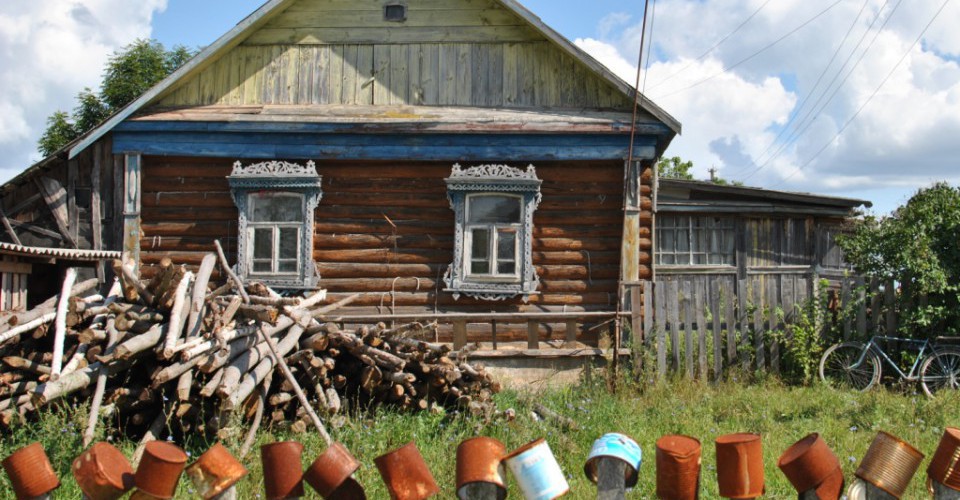
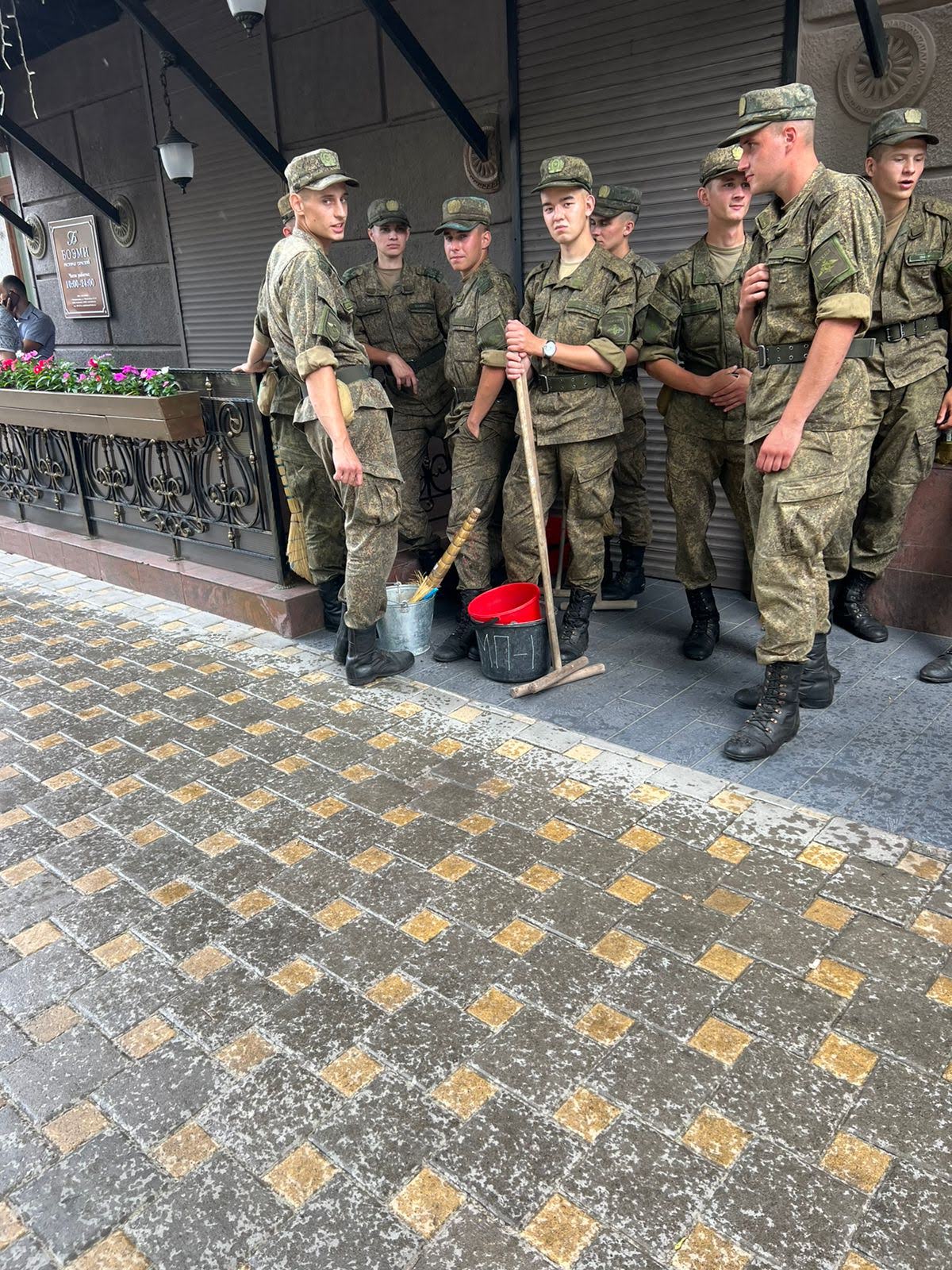

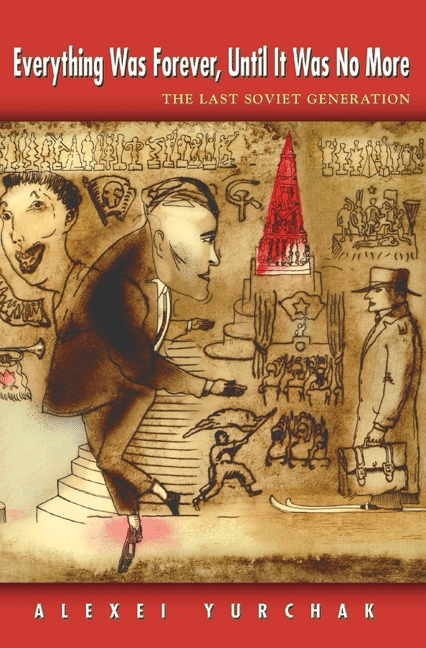


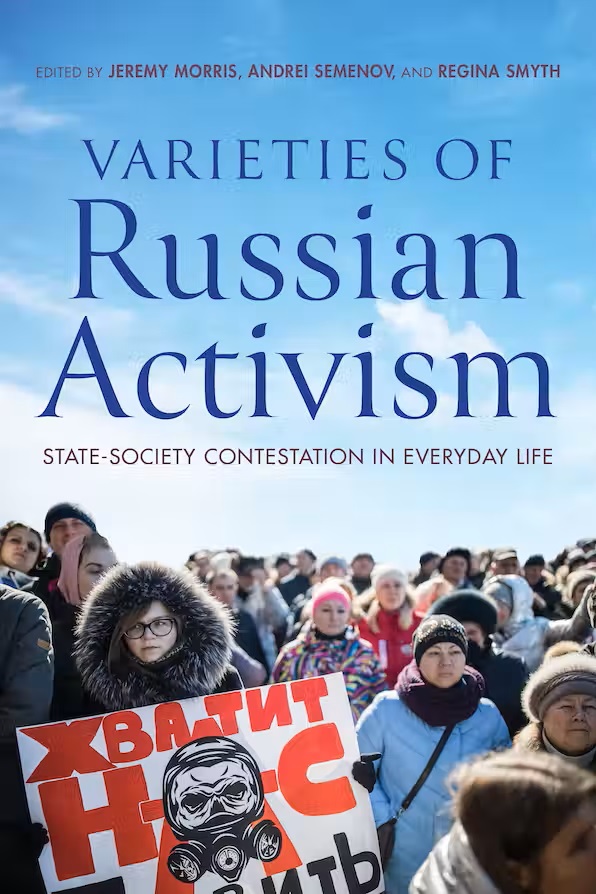
 Postsocialism