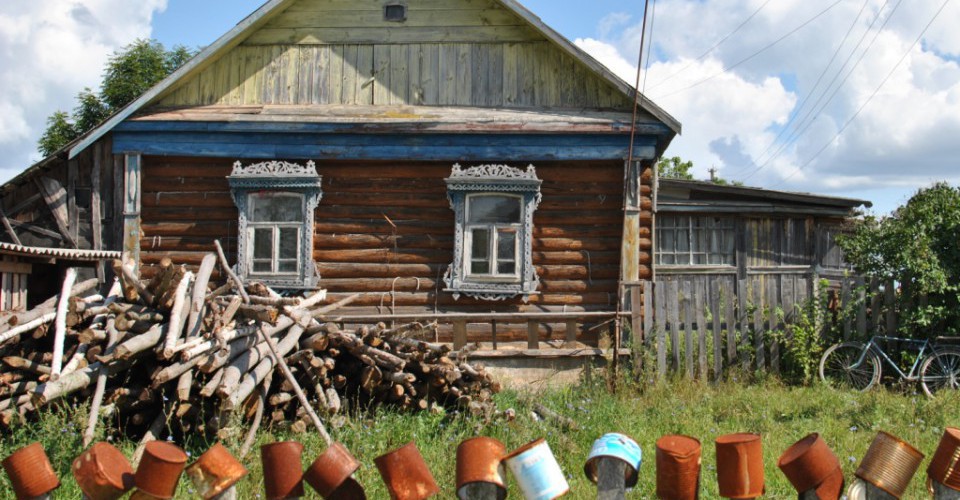

The quote is from my book, but I wanted to write a bit more here about inequality in Russia because it is often underplayed and misunderstood. Scroll to the end if you just want the ‘news’ about the statistical manipulation of inequality statistics for political reasons.
First though, why care about inequality (specifically, wage differences) at all? High wage people tend to spend a lot less of their incomes. This money-wealth ‘leaves’ the real economy or contributes to asset inflation – notoriously, real estate prices that are now many multiples of average wages in most developed countries. Russia is no exception. Moscow apartment prices are eye-watering, even for those on ‘decent’ salaries. Being in the top 2% of earners nationally, inherited or gifted wealth are the only ways of getting access to real estate ownership in the (greater) city centre. In that sense, Moscow is not very different from Greater London or Manhattan. Wage inequality directly leads to wealth inequality. The poorest are unable to accrue even enough wealth to stave off emergencies, and the richest are unable to recirculate it in society.
One way of measuring wage inequality is the Gini coefficient. Lower means less inequality. Ginis go up and down over time, and Russia’s famously went up after 1991. For every sustained 1% increase in the Gini, there’s a 0.3% increase in inflation – a persistent scourge for Russian citizens’ sense of well-being. In 2024, the Gini for where I work, Denmark, was 0.29. For the UK it was 0.33. For the USA, 0.49. For Brazil, 0.50. Russia sits around 0.40. It’s a national priority for the Russian government to get the Gini falling into the 0.30s. It is a revealing policy objective that shows elites believe Russia has more in common with Europe (and a welfare state) than the US or middle-income countries like Brazil. But wage inequality in Russia sits at a level 25% higher than most Western European countries even as Russia continues with failed policies of low public investment and almost no consistent policy-led redistribution or progressive taxation.
Then there’s the global trends. I was reminded of Branko Milanovic’s contribution to this when he remarked the other day that one of the problems with tackling inequality is that income distribution is not something mainstream economists really care about even though it is obvious that it affects economic growth. This is very true of Russia – high hydrocarbon incomes have not been redistributed much at all, hence the high Gini. As a result, now that the ‘punchbowl’ has been taken away and the country faces a stagflationary crisis not seen for 35 years, the ‘real’ rate of economic growth is shown to be close to zero. One of the reasons for low growth is that the average Russian has few savings or economic resources.
Milanovic became famous for his research that showed that despite global inequality falling (between-country inequality), the emergence of a middle-class in China would likely increase inequality there. Furthermore, in developed countries the reductions seen in inequality thanks to post-war social democracy were – by the 2000s – going into reverse: absolute gains in income went mostly to the richest 5% of the world after the Cold War ended. It is a ‘novel’ situation that while global inequality falls, we ‘feel’ the world is more unequal than ever because within countries inequality is generally rising and becoming more visible. Middle-income countries like Russia are important because they show us what it will be like to live in a world with a shrinking middle-class (spoiler – it’s not good). This is the sharp end of the social grievances stick in a country like Russia.
Now, I’ve been banging my scholarly head against a brick wall trying to emphasize why social inequality in Russia should matter to people interested in politics for a long time. This is not a topic many pundits or scholars think is important. One of the main conclusions of my recent book is that political ressentiment in Russia is driven as much by the frankly traumatizing experience of going from low inequality to high inequality overnight in the early 1990s, as it is to do with the fashionable explanation that geopolitical ‘resentment’ animates people. When a ‘political opening’ comes, as it must surely soon do, then the gulf between the haves and have-nots will feature somehow and a smart political operator may well exploit it.
It’s nice to feel vindicated then, when I recently found two pieces outlining how wage inequality is being downplayed and statistically manipulated in Russia. For me this is personal; whenever I present my work, there’s invariably a Russian person in the audience from a privileged background who flat out denies that inequality is ‘really that high’ in Russia. Or often they say that it’s a good thing. They necessarily say it exactly like that, but often it’s along the lines that either I’m being lied to when I say how little my interlocutors earn, or that ‘these people’ have significant hidden forms of income, alongside their earnings (which is not really true – but that’s another story: spoiler – there’s good reason to believe than money wages only get a 10-15% boost by hidden incomes).
Statistical manipulation of average wage rates is now widely understood
The first piece confirmed that, as long suspected, the average wage in Russia is distorted by the few with very high wages. We already knew this, but many ignored it for political reasons. Now an analysis conducted in Russia shows that by excluding outliers, the average wage is a much lower 60,000 rb a month ($800) and not 75,000 ($1000) – the figure used by the state statistics agency Rosstat. Yes, in Moscow to earn three times this sum is ‘average’, for the city ($2230). But Russia is regionally very unbalanced on pretty much any indicator you’d care to think of. The bottom line – according to the same analysis – is that only 17 million people (out of country of 143 million) have access to incomes more than equivalent to $1333 (or £1000) a month, before tax. And if we shift the picture from ‘average’ to median – the middle point of incomes, then we get an even more sobering figure: in 2024 the median wage was 47,000 rb ($630) – 26% lower than the statistical average. Officially, wages are expected to continue to rise above the rate of inflation in 2026. But that’s just officially.
The second piece of interest was from the analytical project Esli Byt Tochnym ‘if we’re going to be precise’ . It drew attention to how Rosstat recently started publishing internationally comparative inequality measures again for Russia but then abruptly deleted them from its website. These stats showed that Russian inequality had risen back to 0.422 after a falling trend for many years. This figure is a ‘return’ to 2007 inequality levels. And those levels, by any measure, were high given the quantity and quality of human development, industrialization, social and other infrastructures available in Russia to provide dignified lives and incomes to the majority. In contrast to the dominant narrative even in the West, the rising Gini is useful because it serves as a counternarrative to the one that says ordinary people have been beneficiaries on aggregate from the war economy spending.
On the contrary, inequality has increased in every year of the war according to these figures. Shares of income also tend towards record inequalities in the 21st century– around 47% of all income is captured by the top 20% (in the USA it’s 52%), the top 10% capture 30% of incomes in Russia. The poorest 20% get 5% of the pie (in the USA it’s 3%). Overall then, we can draw the conclusion that 2022 was a watershed year – the end of a trend towards lessening economic differences and a return to earlier trends, albeit compensated by the fact that absolute poverty is lower (well, maybe).
Of course, rising inequality sometimes means that everyone is getting better off, but the rich are winning out more than the rest. What’s also nice about Esli Byt Tochnym is that in their Telegram account they also provide decile breakdown of incomes – the fifth 50% to 60%) get 55,157 roubles ($730). A pretax income of 339,054 ($4520) would put you in the top 1% of wage earners. EBT is useful to draw attention to statistical manipulate for ideological and political reasons – they also previously reported on the covering up by Rosstat of the real levels of poverty in the country. These poverty rates may be relative (by any measure outside Africa and a few places in Asia), but they are still high for such a well-endowed country. Once again, many people are in denial about this because of the political implications. And they continue such fictions because their audience is from the same privileged class as they are and do not know any better.
Coda: one materialist critique of Gini, and one anthropological intervention
Another topic entirely is the problem with using wage differentials as an expression of ‘inequality’. As Oleg Komolov said the other day in his own commentary to the recent statistical adjustments, it may well be that low wages in Khabarovsk buy more than median Moscow wages in Moscow – if you follow me. But the Gini itself understates the whopping inequality when it comes to accessing the services that are needed for basic human flourishing such as education, medicine and infrastructure. On these ‘measures’, a life outside the metropole looks much more starkly unequal than one inside it.
Then, finally there’s anthropology. On the basis of work done in Russia it has tried to rethink inequality by foregrounding its political and discursive contours rather than treating it as an outcome of economic or distributive injustice. Caroline Humphrey wrote about this at the tail ends of the 1990s – a decade of massive apportionment of misery and riches seemingly at random in Russia. For Humphrey, the Russian ‘case’ allows us to sensitise ourselves to how inequality emerges not only from material disparities but also from political anxieties: about the integrity, unity, and governability of social groups. It calls back to some of her earlier work about institutionalism in Russia being about incorporation and the creation of ‘insider’-‘outsider’ status. In this framework, inequality is relational and fluid, rooted in historically variable discourses that construct categories of the dispossessed. This explains partly why material misfortune so often is accompanied by ‘social death’ in Russia – in a cycle that compounds misery. There’s no more space here to go into this, but if the Russian ’regime’ gets reconstituted, this less visible sense of inequality may become more salient that the purely economic one.


