
On the nature of depersonalized authority.
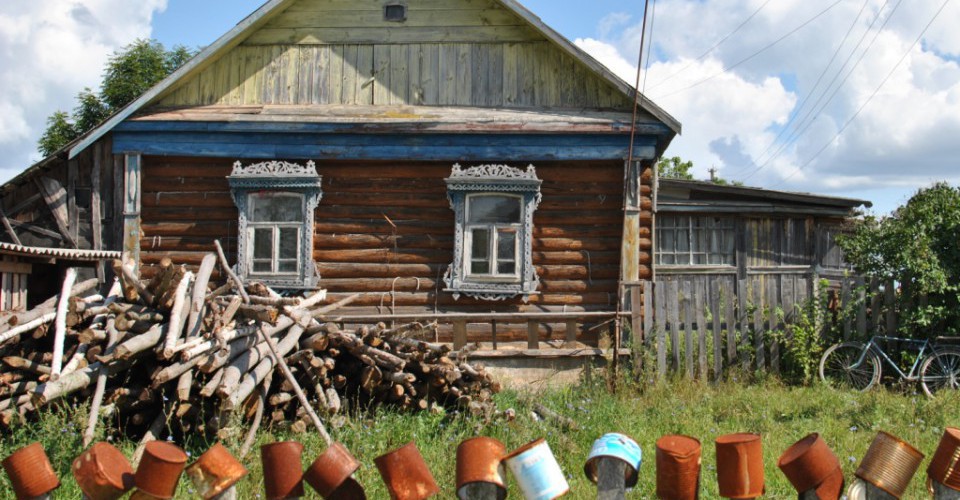
When I sit in the kitchen of Nikolai Viktorovich the TV above the fridge is always on. It’s impossible to ask him to go to another room to talk because there’s a screen in every room of this unusually spacious flat in Kaluga region. It’s invariably one of the main state channels. He loves the Army channel best, but we often watch what his wife disapprovingly calls ‘the shouting shows’ in the evening. These are the well-produced rants by the chief domestic propagandists, like slimy former Lake Como resident Vladimir Solovyov, or ‘Iron Doll’ Olga Skabeeva. Nikolai is in his mid-sixties but has limited mobility because of multiple health conditions. He rarely leaves the flat: these screen people are some of his favourite parasocials. His wife can’t stand them and usually scurries away to watch Korean soaps in another room.
I’ve known Nikolai since 2009. I know his views on most topics and they’re pretty standard for a man his age: not so much resentment towards the West but a fierce sense of loyalty to the Big Idea: the recreation of a powerful, purposive state to rival the Soviet Union, whose passing he regrets. The war ‘was inevitable’, he remarks, long after the fact and forgetting that it was the last thing he saw coming. The West is obviously to blame, and the Ukrainians are (not particularly sympathetic, mind) victims of their own hubris. However, these projections are more recently adopted ideas. The capacity for forgetting one’s own opinion is a mark of the effectiveness of public propaganda. The TV has helped him rehearse these ideas as his own. Having said that, he’s hardly what I would characterize as a ‘hurrah patriot’ – an even narrow demographic that loudly declares its xenophobia and glorifies the war, while doing its best to avoid incurring any of the costs. While I’m family to him, in my presence, Nikolai has never once uttered the words ‘Putin’ or ‘president’.
This is not a personal idiosyncrasy of Nikolai’s. It is a phenomenon I’ve come to witness again and again and struggled to explain: that Putinism survives not because ordinary Russians feel loyalty to the man himself, but because it has built a system of depersonalized authority, one that routes blame downward: to ministers, governors, and an unaccountable, shapeless ‘They’, while Putin alone floats above it, untouched. Consequently, people have more of a feeling for Putin than admiration or trust: a negative identification forged against the trauma of the 1990s, rather than any positive attachment to him. That structure is now beginning to fail.
Why do so few people ever mention the chief architect of today’s Russia and its (self-)destructive war? I’ve made it part of my professional life to become taken for granted among my dozens of interlocutors. They don’t see me as an anthropologist but as someone they hang out with, someone who brings them groceries and discusses (Korean or Turkish) soap operas, the price of petrol. I might remain a foreigner, but I’m certainly an adopted local in the compressed social geography of two little towns and a village not far from Kaluga, three hours’ drive from Moscow.
One of the most misunderstood things about Russian society is seeing it as mute or passive, or even worse, approving of the politics of war. Young or old, rich or poor, almost everyone constantly bemoans the terrible governance on offer from the ruling party (from which Putin began distancing himself many years ago). No one ignores the high inflation the war has brought, nor the inadequate rises in wages and pensions that never keep up. They complain about it constantly. Everyone knows a relative or acquaintance whose children go to school in a dilapidated building where teachers work in double shifts because so many have quit, and where even basic educational equipment supplies – such as pens and pencils – ‘cannot be afforded due to budgetary restrictions in the region at this time’.
After more than four years of war, it’s also likely they know of a nearby neighbour in their housing block whose hapless son took the shilling and lost his eyes, or his legs, or his life. There’s little sympathy there, but there’s also a muttering and shaking of heads when they relate the follow-up story: some or all the pay-out money was ‘lost’ or withheld pending a protracted legal process to convert ‘MIA’ to ‘KIA’. Or the relatives of the disabled veteran discover they are at the back of the queue for rehab at a centre that hasn’t been built yet, if it ever will. Then there’s the never-ending stories of mid-level corruption, bringing home the realization that one is only ever a couple of degrees of separation from a functionary – be it mayor, police captain, or chief hospital surgeon – who has siphoned off many millions to fund an apartment in Dubai, or an increasingly conspicuous high-end German car.
But here’s the thing – Putin never figures here – even though it is calculated bureaucratic corruption and rent-seeking that grew to monstrous proportions – perhaps as much as the war – that his reign will be remembered for in the history books. People talk endlessly about the hopeless ministers, governors, and even local and largely powerless bureaucrats. But in the unlikely event Putin comes up (often prompted by me, acting as the ethnographic provocateur), ‘He’ is unaware. Or maybe He’s poorly advised. Maybe He’s just really, really, busy. He’s got a war to fight after all.
One of my other dearest interlocutors is a Klara, a woman in her eighties living alone in a well-appointed brick house in the village. She doesn’t drink coffee herself but likes to invite me over as an excuse to use the fancy beverage machine her mercurial son gave her (he lives in Miami now – ‘He had some problems with the tax authorities and then there’s this SVO business’). Klara remembers Stalin’s funeral and often repeats the same stories. Once, and once only, she remarked to me how concerned she was about the toll on ‘The President’s’ mental health from having the fate of the nation on his shoulders. Even this rare, unprompted mention of him personalizes Putin only as an object of concern, never of judgment – depersonalized affect is the only register in which he can be discussed at all.

The village is my favourite place in Russia – and not only in the summer when there are so many visitors from the Big City. Gosha is a self-made man who ‘imports equipment – you know – the things that are needed right now’. He bought a big plot near me a few years ago. There, he built a rather ugly disproportionate house ‘in the classical style’ (I don’t know what that means either). Like Klara, he often seeks out my company because he’s bored. He likes to cook pancakes for his whole family and drops me a text to come over. His wife is a child psychologist in Moscow and works according to the principle of exclusivity: a few ‘cases’ a year, word of mouth, money up front. These are perfect representatives of the demographically narrowly, yet aggressively successful, upper-middle class. Yes, they are ‘upper-middle’, because if you take into account the lower cost of living and low taxes in Russia then essentially you can compare their sense of where they sit in society to the top ten percent, if not five percent in the US.
I am not just an ethnographer though. I am a troll, especially to Gosha’s wife, Masha.
I noticed your Gosha had to text me by SMS rather than Telegram. Have you, Masha, downloaded the new messenger Maks? I hear it tracks you, records you and other things besides.
Masha is totally unfazed. To paraphrase her:
We need Maks for the school chat. Teachers refuse to contact us on other platforms now. We’ll keep Telegram for when we go to Bodrum though – it’s useful there for meeting up with all the compatriots. We’ll be there for nearly a month after all. ‘They’ want to keep us safe after all and ‘They’ must have their reasons for blocking things. It’s annoying that ‘They’ don’t want us to watch YouTube because there were so many useful furniture restoration and DIY videos there. But after all, ‘They’ must have their reasons – it’s not my business to tell them theirs.
I take another risk: maybe all this nonsense with the internet signal blocking is because the president himself has never held a smart phone in his hand? No – a disinterested look to the side – it can’t be because of that. There are very talented people in the [Presidential] Administration, after all.
This is Putinism in essence: the state becomes a diffuse ‘They,’ its logic assumed rather than questioned, while the possibility that Putin himself authored its more absurd decisions is waved away before it can even be entertained. A variation on this is the theme of incoherence of the state. Quite rightly, some of the savvier surmise that actively harmful policies emerge from the infighting of agencies. Here it is supposed that security hawks have somehow outmanoeuvred the technocrats in the Administration and that’s why Telegram – which serves as a major source of revenue via marketing for tens of thousands of businesses – is being blocked.
Are there exceptions? Of course, and a growing number. There have always been plenty of people in my circle who from the outset knew what a security man would do to the country’s constitution – one that was only six years old when he came to power. I tend to separate these folk from my ethnographic core of interlocutors because they are the small yet vocal minority. They often consider themselves to be ‘awake’ in a land full of sleepwalkers with heads of cottonwool. But they too have their blinkers, preferring to blame the ‘majority’ for a series of political decisions and backslides that the more privileged were the chief beneficiaries of – like Gosha.

The success of ‘Putinism’ then, is that it operates as a system of depersonalized authority. The man himself sits apart. He still, broadly, enjoys the benefits of hovering above everything else. To be more precise – Putin does have a personal sense of authority, but the point is that actual responsibilities – for stuff the state does: build roads, fix up schools, shoot missiles at Kyiv – these are socially and politically distributed far and wide. This, along with the heavy-handed security theatre on display especially in Moscow, helps us understand why the system feels so unyielding.
One must also look at how Putin built such paradoxical authority – responsible for everything and for nothing. It’s something of a cliché that much of his legitimacy rests on negation rather than a positive vision. Putin may be (to put it mildly) unremarkable as a personality, but that blank canvas was always part of his attraction as someone who positioned himself – and got a supine media to work hard on curating this image – as (falsely in every case) the “anti-Yeltsin,” “anti-1990s,” “anti-oligarch” and now the “anti-West” incarnation of Russia’s pendulum-like political identity.
Many people felt Putin channelled their own minor or major resentments and so projected onto him their own psychological states which allowed them to identify with him – to feel for him – at least at a distance. It was always at a distance. Which is why there’s no need to mention him. Perhaps, after all then, it’s better to talk of a feeling for Putin, rather than his ‘authority’ or even legitimacy, let alone ‘approval’ – a largely meaningless artefact of polling. The feeling-in-common was there for many people, but it always rested on a kind of photographic negative – undeveloped, lacking warm colour, and predicated on assumptions of gradual amelioration through the 2000s of political and economic circumstances in the 1990s that almost all had experienced as dislocating, demeaning, and frightening.
There was a time (and that time was long ago) that even dyed in the wool opponents would, sitting at the dacha cottage over a beer and a barbeque, intone wistfully that ‘At least He knows what He’s doing, God help Him. Does He know where it’s going? He must do’. They would chide the killing of a journalist (committed as a birthday present to the man). They would lament the packaging of state tenders worth billions for his cronies. But overall, even they would hem and haw and consider that things could be much worse. Until they did get worse. For ‘stability’ and ‘order’ are not the same as economic growth and well-distributed prosperity.
The last time Russians actually experienced more than a fleeting experience of wealth trickling down from high hydrocarbon prices was 2007. Since then, it’s become harder to sustain the myth of Putin as the architect of a glorious revival and guarantor of order. Old habits of disassociating his authority from responsibility for the dysfunction of the state die hard. But die they must in the face of failure after failure. Today, we’re rapidly approaching an inflection point when Russians are more likely to associate him with stagnation, inertia and even social and economic ‘blocking’ of progress. The more engaged people, even back in 2020, were likely to guardedly talk about opposing the constitutional ‘corrections’ (not about Putin personally) that enabled his rule for life. Now there is danger for him, rapidly approaching, that the majority will start to ask the question: Whose war is this but his?
Few can yet allow themselves to ask that question – even to themselves. But silence is not consent. It’s pregnant with fear, foreboding, and imposed deference. People, little-by-little, trade it for cryptic remarks. I buy a new chain for a petrol saw and chat to the attractive late-middle-aged lady who owns the only DIY store in the little town. She recognizes me as ‘some kind of foreigner who used to come here with that strange plumber. Did he get your bathroom finished in the end?’ She is surprised ‘that you’re still coming here’. To her store? No, to Russia. ‘Let’s hope it ends soon. These circumstances affect everyone. I’m very sorry indeed about it.’ A masterclass of impersonal grammatical phrasing in which the Russian language excels. Once again, a mistake is to read this as cynicism, or a symptom social pathology. These kind of comments are almost the only politics possible for the majority, for the meantime.
Yet there is a paradox at the heart of this enforced political silence. The more a regime tries to maintain a voiceless endless present, the more it breeds an undercurrent of deep uncertainty, insecurity and quiet unhappiness throughout society. In a sense this is what makes a ‘regime’ authoritarian – a felt disjuncture between the shape of order and the flow of people’s needs and wants. The thing about Putinism – it’s strength and weakness – is that as the petro-wealth model started to fail, it has tried to populate the whole country with authoritarian institutions. These are the ‘They’ that give permission for people to normalize – if not consent to – the chipping away first at political, then social and now personal freedoms. But ‘institutions’ are not just government agencies; they also refer to particular workplace relationships (the boss is a dictator and unions proscribed), and, notably, families. It’s not for nothing that the leading ideological entrepreneurs are keen to decriminalize domestic violence, equate childlessness with psychological illness, and even propose denying women the right to higher education if they refuse to make babies first. The performatively conservative institution of parliamentary politics would like to silence them too.
How effective is this imposition of airless compulsion and mute submission? A new breed of researchers, such as Konstantin Gaaze and Anna Schwenck, in different ways urge us to examine authoritarianism ‘subjectively’. Through a lens of how it is actually lived and felt on the ground. Schwenck looks at why young people buy into the status quo: they understand its corruption but feel the only way to get ahead is to get on the ladder of state-sponsored ‘NGOs’ and entrepreneurial self-help ‘trainings’. Gaaze tries to break with historical and deterministic explanations about Russia by drawing attention to how autocratic rule is experienced as a kind of endless present, deferring any sense of future or alternative. And this can be internalized at a fundamental level of the personality by many people, even those who despise the regime.
Only by looking at these human element can we understand the fractures that prefigure and trigger political change. This sounds less radical than it is, but analysts often ignore it. After a regime collapses or transitions, pundits rush to blame grand structural forces. In the Russian case it would sound something like: ‘Russia’s history of political culture is inherently totalitarian leading to periodic overturn’. Or, more often, personalist perspectives crowd out everything: ‘Putin became isolated during Covid and went round the bend reading conspiratorial and messianic historical destiny literature and philosophy’. In choosing either of these media-friendly explanations, we miss the shifting tide of public sentiment, of feelings experienced by ordinary people long before the breaking point arrives. The danger for the Kremlin begins when people stop speaking about ‘the present state of affairs’ or ‘these circumstances’ and start speaking about Putin himself.
